STPUD board member, employee at odds

By Kathryn Reed

South Tahoe Public Utility District board members are expected to be given a report at their next meeting about an investigation into whether board President Dale Rise created a hostile work environment for an employee.

At the Oct. 6 board meeting Charlie Solt, employee rep with Local No. 39, said during public comment the worker is requesting the board take appropriate action. What that action might or could be was not discussed.

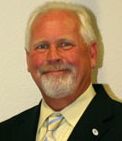
Dale Rise

Dale Rise

Solt said the matter stems from a July altercation.

Richard Solbrig, STPUD executive director, said, “We’ve done a thorough investigation. We have a preliminary report. We are waiting the recommendation from our labor attorney.”

Solbrig said the board at its Oct. 20 meeting should be given a copy of the executive summary for review.

The employee’s name has not been made public.

After the meeting Rise told Lake Tahoe News he received a letter Oct. 5 clearing him of the hostile work environment charge, but said he would not make the letter available until the board discusses the matter later this month.

Before speaking with LTN, Rise consulted with Solbrig and STPUD attorney Gary Kvistad about what he could say.

“I broke a policy issue. I’m not supposed to talk policy with employees,” Rise said.

Rise was at the sewer and water district on business for his construction business when the alleged incident occurred. He wasn’t there as a board member.

Although Kenny Curtzwiler spoke at Thursday’s meeting – saying how the investigation was one-sided and that he was part of the complaint – Rise told LTN that in fact Curtzwiler was not at the district office when the alleged incident occurred and therefore was not an eyewitness as he made it sound when he addressed the board.


DA: Fallen Leaf Lake voter fraud a case of poor judgment

By Jessie Marchesseau

In January 2010, there were 158 registered voters in the Fallen Leaf Lake Community Services District. By August 2010, that number had grown to 461.

This flood of voter registrations was spurred by political turmoil in the area. However, such a significant increase in voters over such a short period of time does not go unnoticed. A voter fraud investigation was opened by the El Dorado County District Attorney’s Office and the California Secretary of State’s Office.

It's a new day for voters at Fallen Leaf Lake. Photo/LTN file

It's a new day for voters at Fallen Leaf Lake. Photo/LTN file

Much of the political divide within the Fallen Leaf Lake CSD revolved around the replacement of longtime Fallen Leaf Lake store and marina operators John and Ruth Rich. Even though the board of directors voted unanimously to replace the Riches on two occasions, the community was sorely divided. In July 2010, residents petitioned for a recall election to replace two of the board members. The recall election was approved, and voter registrations started pouring in.

When the small district whose voter registration numbers generally hover somewhere around 100 to 150 voters quickly jumped to more than 400, red flags went up at the El Dorado County Elections Department. The elections office alerted the Secretary of State’s Office, which in turn alerted the El Dorado County District Attorney’s Office.

An investigation was launched that lasted just more than a year and identified felony voter fraud. The determination was that many of the voters who voted in the August 2010 election were not legally eligible to vote in the Fallen Leaf Lake Community Services District. Some were ineligible because Fallen Leaf Lake is not their legal domicile, and some were registered to vote in more than one district.

On Sept. 19, 2011, District Attorney Vern Pierson issued a letter to every voter registered at the time of the August 2010 recall election outlining the department’s decision in the matter.

The letter states, “This investigation revealed that improprieties had in fact occurred, and were criminally subject to prosecution as felony-grade offenses. Largely because the acts appear to have been precipitated by poor judgment, some misinformation which was circulating in the community, and a failure by some to accurately and fully appreciate the requirements of the pertinent law, this office has determined to decline prosecution at this time.”

While the fraud findings do not negate the results of the election in question, the letter goes on to say that any similar future violations will be prosecuted.

Pierson said he declined to prosecute because he saw no malicious behavior on the part of the voters, and attributed the fraud to negligence and misunderstanding of the law.

This type of issue comes up from time to time in areas with a lot of vacation homes, he told Lake Tahoe News. What it essentially boils down to is where a person’s domicile, or primary residence, is. Voters are entitled to vote and hold office where they intend their domicile to be, and only in that place.

The El Dorado County Assessor’s Office lists 289 land parcels in the Fallen Leaf Lake area, some of which are vacant land, commercial property and U.S. Forest Service cabins. The official list of voters from Aug. 10, 2010, lists some addresses as having five, six and seven voters registered at a single address.

With only about a dozen people living at Fallen Leaf Lake full time, this prompts the question that if only people who consider Fallen Leaf their primary residence can vote and hold office, would the entire district be run by that handful of people?

This quandary has left homeowners with the task of trying to figure out how to effectively and legally run their community. One idea being considered is allowing a set number of votes per parcel.

As for the election coming up in November, Fallen Leaf Lake CSD does not have anything slated for the ballot, but the registered voters will be receiving ballots for Measure R, Lake Tahoe Unified School District and Lake Tahoe Community College. The next scheduled election will be June 2012, leaving residents some time to find a solution.

In the meantime, however, the El Dorado County Elections Department has also issued a letter to Fallen Leaf Lake voters reminding them of registration regulations and the district attorney’s decision on the matter, as well as providing instructions on how to remove themselves from the voter list.

As of Aug. 8, the number of registered voters in the Fallen Leaf Lake CSD was down to 267.


Appellate court ruling could affect dispensaries thoughout Calif.

By John Hoeffel, Los Angeles Times

In a decision that could upend the way California cities regulate medical marijuana, a state Court of Appeal has ruled that Long Beach’s ordinance regulating dispensaries violates federal law.

The city held a lottery, issued permits to the winners and charged fees, which the three-judge panel said put it in the position of authorizing the distribution of marijuana in direct conflict with the federal Controlled Substances Act, which makes the possession and sale of the drug illegal. Marijuana use remains illegal under California law except for medical purposes.

The ruling, which was filed Tuesday, could require Long Beach and other cities, including Los Angeles, to rewrite their medical marijuana ordinances, a process that has been fraught with delay and chaos. Many cities that have long allowed dispensaries, such as San Francisco and Oakland, have permit-based ordinances that let officials decide who can sell the drug. Then they charge high fees and closely regulate them.

The decision by the 2nd District Court of Appeal in Los Angeles throws into doubt the legality of this approach.

Read the whole story


Feds escalate efforts to close pot dispensaries in California

By John Hoeffel, Los Angeles Times

Federal prosecutors are threatening to shut down medical marijuana dispensaries throughout California, sending letters that warn landlords to stop sales of the drug within 45 days or face the possibility that their property will be seized and they will be charged with a crime.

The stepped-up enforcement escalates the Obama administration’s efforts to rein in the spread of pot stores, which accelerated after the attorney general announced in 2009 that federal prosecutors would not target people using medical marijuana in states that allow it.

“It’s coming out of left field as far as we’re concerned,” said Joe Elford, the chief counsel for Americans for Safe Access, which advocates for medical marijuana use. “I really don’t know what inspired this. It’s a complete about-face from what [Obama] said when he was campaigning.”

The initiative, spearheaded by the four U.S. attorneys in the state, will focus on dispensaries selected by the prosecutors, said a person familiar with the operation. He declined to say what criteria would be used to target dispensaries and asked not to be identified because the prosecutors are scheduled to make the official announcement at a news conference Friday morning in Sacramento.

Landlords for some dispensaries have already received letters, including the owner of the building that houses the Marin Alliance for Medical Marijuana in Fairfax, Calif., the oldest dispensary in the country. “I assume the story you’re calling about is: Obama takes resources away from fighting terrorists and goes after old ladies with glaucoma,” said Greg Anton, a lawyer who represents the dispensary.

The letter to the Marin Alliance notes that the dispensary is within a prohibited distance of a park, raising the possibility that enforcement will zero in on stores within 1,000 feet of schools and playgrounds, a distance that can bring enhanced penalties for illegal drug sales. But letters received by dispensaries in San Diego make no mention of such prohibitions. “We’re trying to figure this out,” said Jessica C. McElfresh, who represents some dispensaries in the city. “I am surprised at the size of this. I am surprised by the vast amount of planning that has clearly gone into it.”

Read the whole story


Homewood ski area’s final EIR/EIS up for review

Homewood Mountain Resort’s final EIR/EIS was released this week, with meetings on the proposed project set to begin next week.

JMA Ventures, the San Francisco company that owns the West Shore ski area, wants to remake the resort into a destination. The project calls for a mixed-use base on the north area of the resort, a residential base on the south end, a mid-mountain lodge, and support facilities in the upper ski area.

Comments on the environmental document should be made by Oct. 12 so they can be part of the Oct. 13 6pm Placer County North Tahoe Regional Advisory Council meeting at the north base lodge at Homewood.

On Oct. 18 at 10:05am at Granlibakken in Tahoe City the Placer County Planning Commission will discuss Homewood.

TRPA’s Advisory Planning Commission will take up the topic Nov. 9 at 9:30am in Stateline.

Dates for the TRPA Governing Board and Placer County Board of Supervisors to hear the Homewood proposal have not been set.

For more information about the meetings, information about commenting or to receive a copy of the EIR/EIS, call (775) 589.5214, (775) 589.5278, or (530) 581.6284.

— Lake Tahoe News staff report


Kindertown granted reprieve until November hearing

By Kathryn Reed

El Dorado County Superior Court Judge Warren Stracener has ruled there is no harm to the public to keep Kindertown day care center open until next month’s final hearing.

The South Lake Tahoe facility has been embroiled in legal issues for more than two years. The state Department of Social Services keeps trying to close the facility.

The Kindertown bus was sold to pay bills. Photo/LTN file

The Kindertown bus was sold to pay bills. Photo/LTN file

The latest set of seven citations owner Maria Barrows-Crist is fighting includes a youngster being able to get out of the center who was later found a few blocks away walking along Highway 50.

The 41-page decision by Stracener grants the stay until the Nov. 18 hearing.

“He says there is an issue regarding the severity of the penalty imposed by the (state) department,” attorney Mike McLaughlin said of Stracener’s most recent decision.

Next month Stracener can agree with the state that revocation of Barrows-Crist’s license is appropriate, a lesser penalty or no action.


Number of same-sex couples rises dramatically in Nevada

By Steve Timko, Reno Gazette-Journal

Same-sex couples increased by 44 percent in Nevada from 2000 to 2010, revised U.S. Census Bureau figures show, while families increased by only 32 percent in the same period.

A Douglas County same-sex couple said there has been a significant change in attitudes toward gay and lesbian couples in Nevada in the past two decades. A University of Nevada, Las Vegas law school professor said changing cultural attitudes could affect how the law is interpreted for same-sex couples. And the man who led the effort in Nevada to define marriage as being between a man and a woman expects the U.S. Supreme Court will ultimately weigh in at least one more time on the issue.

Census figures originally released in August for same-sex couples in the United States were revised after the bureau discovered errors caused by the wording of questions. The revised figures released last week showed 7,140 same-sex couples in Nevada in 2010, compared with 4,973 in 2000. The 2010 figures showed 681 same-sex married couples in Nevada.

One was Joe Edson and Mike Hardie of Douglas County, who got married in Cape Cod, Mass., in August 2008.

Hardie, a math professor at Western Nevada College, moved to Nevada in 1981 and came out to his wife, who had been his high school sweetheart, in 1995 after 24 years of marriage.

Hardie said his wife wouldn’t let him move out until he explained to their daughters, then ages 18 and 16, why their marriage was ending, which he said in retrospect was a great decision.

“I have several friends who have tried to hide their sexual persuasion from their children, and it’s been disastrous,” Hardie said.

Hardie and Edson have been a couple since 1996. Edson, now systems/technical director for the Progressive Leadership Alliance of Nevada, moved to Nevada and in 1998 enrolled in the University of Nevada, Reno.

Edson said that, as a couple, they have “jumped through all the legal hoops backwards” to get many of the same rights and protections that come to opposite-sex couples. That includes legal powers of attorney for health issues and revocable trusts. Edson said he had to be treated for colon cancer in 2004 and that helped propel the decision to get family rights.

Read the whole story


Brown expands state auditor’s powers, bans BPA in baby bottles, allows nonprofits to run state parks

By Patrick McGreevy and Anthony York, Los Angeles Times

SACRAMENTO — Gov. Jerry Brown on Tuesday gave the state auditor broad new powers to investigate the misuse of taxpayer funds by cities and counties, signing legislation created in the wake of the financial scandal in the city of Bell.

The governor also approved a bill allowing nonprofits to take over the operation of state parks that otherwise would be closed because of budget woes and a clutch of proposals intended to protect children. He vetoed a measure that would have allowed child-care workers to unionize.

Jerry Brown

Jerry Brown

The Bell-related measure by Assemblyman Ricardo Lara, D-Bell Gardens, whose district includes the tiny city, allows the auditor to launch an examination of local government agencies, including special districts, to determine whether they are at risk of fraud, waste or mismanagement.

“It is critical for the state to have the tools and authority to help flag gross mismanagement at the local level,” said Evan Westrup, a spokesman for Brown.

The state auditor has an existing program to identify agencies at high risk of fraud or waste, but the law has limited it to state functions. The auditor could investigate local agencies only if directed to do so by the Joint Legislative Audit Committee, as the panel did recently for the city of Vernon.

Read the whole story


Apple co-founder Steve Jobs dies at 56

By Yukari Iwatani Kane, Wall Street Journal

Steven P. Jobs, the Apple Inc. chairman and co-founder who pioneered the personal computer industry and changed the way people think about technology, died Wednesday.

“Steve’s brilliance, passion and energy were the source of countless innovations that enrich and improve all of our lives,” Apple said in a

Steve Jobs

Steve Jobs

statement. “The world is immeasurably better because of Steve.”

His family, in a separate statement, said Mr. Jobs “died peacefully today surrounded by his family…We know many of you will mourn with us, and we ask that you respect our privacy during our time of grief.”

During his more than three decade-long career, Mr. Jobs transformed Silicon Valley as he helped turn the once sleepy expanse of fruit orchards into the technology industry’s innovation center. In addition to laying the groundwork for the modern high-tech industry alongside other pioneers like Microsoft Corp. co-founder Bill Gates and Oracle Corp. founder Larry Ellison, Mr. Jobs proved the appeal of well-designed intuitive products over the sheer power of technology itself and shifted the way consumers interact with technology in an increasingly digital world.

Unlike those men, however, the most productive chapter in Mr. Jobs’ career occurred near the end of his life, when a nearly unbroken string of innovative and wildly successful products like the iPod, iPhone and iPad fundamentally changed the PC, electronics and digital media industries. The way he marketed and sold those products through savvy advertising campaigns and its retail stores, in the meanwhile, helped turn the company into a pop culture icon.

Read the whole story


Mexican restaurant chain files for bankruptcy

Publisher’s note: A corporate official with Real Mex on Oct. 5 told Lake Tahoe News all restaurants are slated to remain open, including the Chevys in South Lake Tahoe.

By Jacqueline Palank, Wall Street Journal

Real Mex Restaurants Inc., the operator of Chevys Fresh Mex and other Mexican restaurants, Tuesday filed for Chapter 11 bankruptcy-court protection and said it plans to sell its assets after failing to strike a deal to restructure its debt obligations.

chevysThe casual-dining restaurant chain operates or franchises nearly 200 restaurants, mostly in California. In addition to Chevys, its brands include Acapulco and El Torito restaurants. It employs about 11,000 full- and part-time of workers.

Real Mex pinned its financial woes on the economic downturn that gripped the U.S. starting in 2008. As fewer consumers dined out, the restaurant chain’s revenue took a hit. Annual revenue fell to $478 million last year from $500 million in 2009 and $553 million in 2008.

The company’s struggles are familiar to many restaurant chains, from Sbarro Inc. to Perkins & Marie Callender’s Inc., that have endured a similar squeeze and filed for bankruptcy protection this year.

The Cypress, Calif., company said in court papers that its bankruptcy filing comes after months of talks with its lenders over a possible comprehensive debt-restructuring plan—talks that ultimately weren’t successful and placed the company at risk of default.

The company determined the most cost-effective way to preserve value and maintain uninterrupted business operations was to seek protection from creditors and pursue a sale of its assets, said Real Mex Chief Financial Officer Richard P. Dutkiewicz in a court filing.

Real Mex reported assets and debts each in the range of $100 million to $500 million in its bankruptcy petition, which it filed with the U.S. Bankruptcy Court in Wilmington, Del.

Read the whole story