No Whittell students test positive for drugs in 2010-11

By Kathryn Reed

ZEPHYR COVE – Students in Douglas County who want to participate in extra-curricular activities have apparently gotten the message – do drugs and you are on the bench.

The school board on Tuesday heard a report about the program. This is the third academic year the policy has been in place.

Of the 231 drug tests given to Whittell High students in 2010-11, not one came back positive. At Douglas High, eight of the 395 tests were positive, with one student refusing to take the test. Douglas is the only school in DCSD to have positive results.

The random drug tests look for alcohol, amphetamines, barbiturates, benzodiazepines (valium), cocaine, marijuana, methadone, expanded opiates (codeine, hydrocodone, oxycodone), phencyclidine and propoxyphene (darvon).

“It’s great drug counseling is part of it so perhaps it will change their behavior,” board member Teri Jamin said.

Students were surveyed; with 64 percent saying the drug program did not deter them from initiating drug or alcohol use. Almost half (43 percent) said the program promotes a safer, healthier school learning environment.

At the end of this academic year parents will also be surveyed to gather their opinions about the program.

Here is information about the first year the policy was in place.


Upper Truckee River scenic designation hits snag

By Kathryn Reed

It’s more about the fishing experience than anything else. That was the message delivered by proponents Tuesday to the El Dorado County Board of Supervisors during a lengthy discussion about whether the Upper Truckee River – the Meiss Meadow area in particular – should have the designation of National Wild and Scenic River.

Meeting in South Lake Tahoe for their once a year venture from Placerville, the five electeds tend to have a Tahoe-centric agenda on these days. Oct. 11 was no different.

However, at the end of the day only Supervisors Norma Santiago and Ray Nutting thought going on a tour of the new facilities at South Tahoe High School was worth their time.

A Lahontan cutthroat troat near Meiss Meadow. Photo/Dick White

A Lahontan cutthroat trout near Meiss Meadow. Photo/Dick White

But the five did work through the normal lunch hour to come to the conclusion more information is needed before a vote on the river designation will be taken. However, no date was given when it might resurface. It was already continued from September. The Oct. 11 continuance was done on a 4-1 vote, with Supervisor Jack Sweeney ready to vote no on the whole notion of the designation.

Meiss Meadow is where the Upper Truckee River begins. At 21.4 miles, it is the largest tributary to Lake Tahoe.

One thing that makes the area above the falls unique is this is where Lahontan cutthroat trout prosper.

While Jenny Hatch with CalTrout and David Lass with Trout Unlimited told the supervisors the Upper Truckee River is the only stream-based population of this fish, the U.S. Fish and Wild Service’s website says otherwise.

It’s 7.3 miles of the river that would be part of the larger 32 miles that would potentially receive the federal scenic designation. Included in the area are Round, Dardanelles, Showers, and Meiss Lakes, and other creeks in the watershed.

The U.S. Forest Service, which owns the land in El Dorado and Alpine counties that is being discussed, in 1999 determined the area met the criteria to be part of the National Wild and Scenic Rivers System. However, it takes an act of Congress for the designation to become a reality.

It would also take an environmental assessment or environmental impact statement to be done before it’s a done deal.

The Forest Service has done its part. Now it’s up to another entity to carry the torch, so to speak, to get Congress to act. The two trout groups want to be the torchbearers, but need the backing of a public agency like the Board of Supervisors to have the clout. Thus the reason for the hearing.

“We manage the area as though that designation has come through,” Nancy Gibson, Lake Tahoe Basin Management Unit forest supervisor, told the board.

After the discussion, Santiago told Lake Tahoe News, “The protections are temporary at best (for the area). Someone could say, ‘Let’s dam up the river.’”

While that is not likely to happen, with the LTBMU this winter set to release its updated Forest Plan for a 90-day review, it’s possible what is adopted could change how the Meiss Meadow area and Upper Truckee River are managed.

Four residents spoke at the meeting, with three against the designation.

Santiago, in the same post-discussion conversation with LTN, said she has more constituents than just those three who spoke.

Sue Novasel, who has a house on the river, is appalled the first she heard of the issue was at the meeting. She has experienced two fish kills on the river that no longer allow ample fishing from her back yard.

“I think less regulation is better,” Novasel told the supervisors.

Shirley Taylor, whose family once ranched a large part of the acreage being talked about, is dead-set against the proposal. She went to the September Alpine County Board of Supervisors meeting to speak her piece. The body agreed to send their El Dorado County colleagues and CalTrout a letter not supporting the scenic designation.

The trout enthusiasts believe the designation would mean being able to attract more people to the area just for the thrill of reeling in the rare Lahontan cutthroat trout. The opportunity exists today as well. The scenic designation would ensure the area is kept as is for future generations.


Moving may be required for lawmakers to run in 2012

By Torey Van Oot, Sacramento Bee

For some sitting legislators, preparing to run for re-election in 2012 includes packing up boxes and hunting for a new home.

California’s new district lines, drawn for the first time by an independent redistricting commission, have shaken up the political landscape for next year’s election. As a result, candidates and incumbents across the state are “diving and dodging” into districts that will give them the best shot at victory, said Paul Mitchell, a Democratic consultant who has tracked the redistricting process.

By Mitchell’s count, the maps left at least 60 current elected officials either outside the district they were eyeing or in the same district with a competitor. “It’s happening all over the place,” he said.

Unlike members of Congress, state legislators are required to reside in the district they represent. That means physically relocating can be part of the equation as candidates scramble to settle on a seat before the nominating period starts next spring.

“After redistricting, Realtors will be among the most popular phone calls placed by legislators,” Justin Levitt, an election law expert at Loyola Law School, said of this year’s decennial map-drawing.

The Sacramento region is expected to see as many as five incumbent legislators move to run for re-election.

The new lines left Assemblywoman Beth Gaines in her current district, but put her husband, state Sen. Ted Gaines, in the same seat as Sen. Doug LaMalfa, R-Richvale. Now the Roseville couple are considering relocating just a few miles away, to a home in a vacant Senate district, so both can run for re-election and live under the same roof.

Read the whole story


Stateline casinos post gains; state goes in other direction

For the second consecutive month, Stateline casinos posted an increase in revenue compared to the same month a year ago.

The five South Shore casinos won $27 million in August, a 16.2 percent increase from 2010.

Stateline casinos do well in August. Photo/LTN file

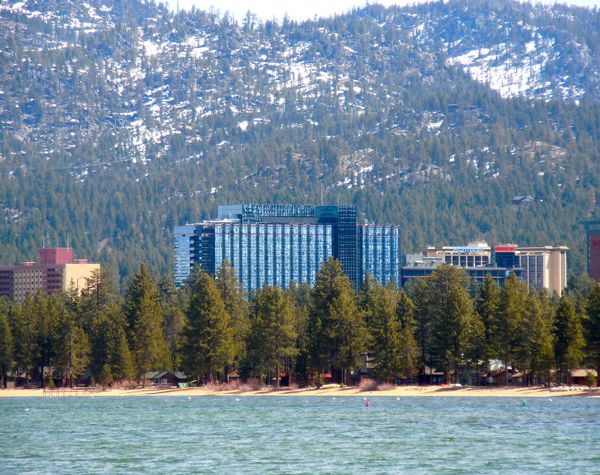
Stateline casinos do well in August. Photo/LTN file

With the weather being nice in Lake Tahoe and triple digits in the Central Valley, this often literally drives people to the basin.

The win, though, was an anomaly compared to the rest of state. Overall, Nevada casinos won $887 million for a 6.1 decrease compared to August 2010.

— Lake Tahoe News staff report


Big-rig collision closes I-80

By KCRA-TV

Westbound Interstate 80 is shut down Tuesday morning after two big rigs collided and caught fire, officials said.

It appears as though one big rig jackknifed and slammed into the other.

A second crash happened due to the backup, according to the California Highway Patrol.

Traffic is being diverted off I-80 onto Highway 20 between Colfax and Truckee, in the Gold Run area.

Officials aren’t sure what time the road will reopen.

No additional details were released.

To know if the I-80 has reopened, click on the road icon from the home page of Lake Tahoe News.


Nonprofit established for Angora survivors lives on — just in case

While the last check for Angora Fire victims was cut a year ago, the nonprofit Community Disaster Resource Center still exists.

No physical presence exists in South Lake Tahoe anymore, but board members meet once a year – partly because of legal reasons, partly to make sure they want to keep the group going.

“What we have done is we saved enough money in the fund to keep us operational for the near future, like 10 years, so we are still a nonprofit organization ready to go in action if there is any community need,” explained Dick Schwarte, president of CDRC.

Originally the group was called the Angora Relief Fund. It was set up to assist the 254 owners who lost their houses in the June 2007 inferno as well as renters.

The remaining landscaping vouchers were redeemed in summer 2010. That is the last any money was spent other than routine fees to maintain a nonprofit.

Schwarte said while the group hopes to never have to be called into action again, if that day does come, the CDRC is established and ready to help where needed.

— Kathryn Reed


10,000-acre thinning project may start in 2012 on S. Shore

By Kathryn Reed

With parts of the forest near developed areas being in prime condition for a wildland fire much like in June 2007 when the Angora Fire consumed more than 3,000 acres, the U.S. Forest Service is ready to do something about that land.

Once the long-awaited South Shore Fuel Reduction and Healthy Forest Restoration Project gets under way – which could be next summer — 10,112 acres will be treated.
The 10,000-plus South Shore fuels project could begin in 2012. Photo/LTN file

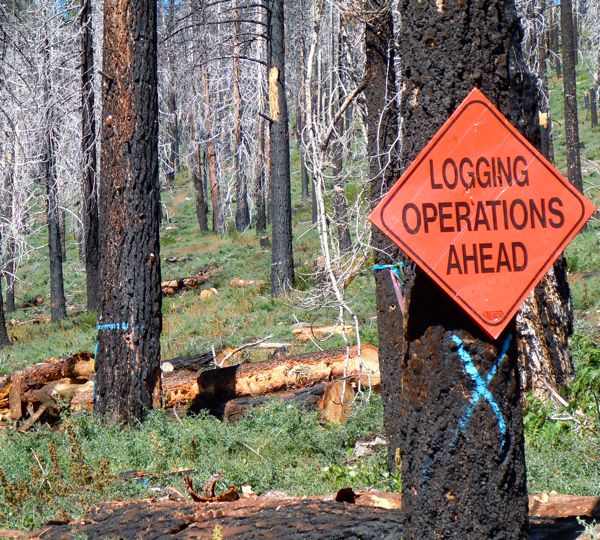
The 10,000-plus South Shore fuels project could begin in 2012. Photo/LTN file

Duncan Leao, U.S. Forest Service forester, calls the wildland urban interface (this is where the forest abuts development) on the South Shore one of the areas in the basin that most needs treatment.

“It’s important work to do. We don’t want another Angora Fire. The conditions we are looking at in many places on the South Shore are conditions we saw in Angora before the fire,” Leao told Lake Tahoe News.

It will take about four years to thin the trees, with another four years for follow-up treatments. In all, it is roughly estimated to cost $40 million. The U.S. Forest Service, mostly through the Southern Nevada Public Lands Management Act, has secured three-quarters of that figure.

Before a single branch is limbed or tree felled, comments on the project will be taken until Oct. 28 from anyone who submitted a comment when the environmental impact statement was first released. If anyone files an objection to the final EIS, it triggers a 30-day resolution period.

Ultimately it is up to the forest supervisor to sign off on the document, allowing the project to go forward.

Then comes the process to obtain the necessary permits. The one from the Lahontan Regional Water Quality Control Board is the biggie.

However, Lauri Kemper, No. 2 at the regional water board, said the draft of the permit has been on hold since February 2010. But it takes more than a signature to make it valid.

California Environmental Quality Act regs are what Lahontan is going by. Lahontan officials must certify the EIS addresses CEQA concerns.

The project will involve working in stream environmental zones – that’s a main sticking point for the water board. It doesn’t mean no permit; it means a thorough review and not just taking the Forest Service at its word that the EIS is complete and addresses those concerns.

“We’re all for fuels reduction,” Kemper said.

What could hold up the project is the Lahontan board may not grant a permit until its May meeting. The Forest Service cannot go out to bid until all the permits are in place. This could delay work in what is already a limited season for thinning because dirt in the basin, per TRPA rules, can only be disturbed between May 1-Oct. 15.

A combination of mechanical and hand treatments are likely to be used.

Whether hand thinning could begin without the Lahontan permit depends on what type of permit Lahontan decides to issue. There are three possible ways it can permit the project.

Trees 16-inches and less in diameter are likely to be felled by hand, while those up to 30 inches would be taken out by machines. Most likely the process will be similar to what is being done in the Angora area in terms of the machines used. The forest pattern will be different because Angora is mostly about removing dead trees.

“A lot of hand work goes pretty quick. Then (people) would see piles. Those may last a couple years,” Leao explained. “With the mechanical you do not see as many piles because most of it is removed.”

Trails used by recreationists will either be off-limits at times or rerouted to ensure no one is hurt as the work is being done.

“It will be a combo of biomass and merchantable material — stuff that could go to a mill will depend if there is a mill nearby. The market is very difficult to predict,” Leao said. “If no sawmill is open, then contractors would have to determine what to do with that. It’s very helpful to have both biomass and saw log markets.”

The USFS decides which trees to thin first based on size – taking out the smallest at the get-go. Then the health of the tree and species are determining factors.

Jeffery and sugar pine, incense cedar and larger trees are ones Leao said the Forest Service wants to keep.

Diseased trees, including ones with mistletoe, will be on the chopping block.

“Ideally, you want a forest with multiple sizes and age classes. You can’t do that with thinning alone,” Leao said. “As we get the WUI stuff done, the forest still has an even age to it. Fire and planting trees, and other methods could be used to get it into a healthier condition. That is more long term.”

To view the South Shore final EIS, go online.



Remains found in Washington may of S. Lake Tahoe woman

By Abby Sewell, Los Angeles Times

Human remains that may belong to a missing California woman who attended the countercultural Rainbow Gathering have been found in a Washington forest, officials said Monday.

Marie Hanson, 54, of Lake Tahoe, disappeared in July after attending the event in Gifford Pinchot National Forest. The countercultural event is held each year in a different national forest.

The Skamania County Sheriff’s Office released a statement Monday saying searchers had found skeletal remains and jewelry Sunday afternoon in the area where Hanson had disappeared.

Officials were still combing the area Monday for evidence.

Read the whole story


Police dog finds suicidal S. Tahoe man in woods

Argo, one of South Lake Tahoe’s police dogs, tracked down a suicidal man in the forest on Friday.

Argo led officers to a forested area near the intersection of Keller Avenue and Markofer Way where the subject was found lying on the ground in the tree line. Paramedics treated the subject for his injuries and transported him to Barton Memorial Hospital.

— Lake Tahoe News staff report


Brown OKS college aid for undocumented immigrants in state

By David Siders, Sacramento Bee

Gov. Jerry Brown signed legislation Saturday allowing undocumented immigrant college students access to public financial aid, marking California’s relatively liberal ground in a bitter row over immigration nationwide.

The California Dream Act allows undocumented students who came to the country before age 16 and attended California high schools access to public financial aid, including Cal Grants. Those students already are eligible for in-state tuition, and Brown in July signed a companion measure affording them access to private financial aid.

“Going to college is a dream that promises intellectual excitement and creative thinking,” Brown said in a prepared statement. “The Dream Act benefits us all by giving top students a chance to improve their lives and the lives of all of us.”

Brown, a Democrat, supported the act during last year’s gubernatorial campaign, and his signature was all but certain. He had negotiated amendments to the bill, Assembly Bill 131, to reduce costs, excluding graduates of technical and adult schools and delaying implementation until January 2013.

But anticipation was high, and news spread among students and young people via Twitter and text message within minutes of Brown’s announcement.

Read the whole story