Mount Rose-area property raises access issues

By Jason Hildago, Reno Gazette-Journal

A case involving a seemingly obscure easement law is raising questions about the interpretation of public access rights through other people’s property, including whether Washoe County has a bias that favors developers.

At the center of the dispute is a parcel map drawn by the Washoe County surveyor’s office in 2007.

The parcel map became the basis of a suit filed by Incline Village resident Scott Spittler in 2008 against neighbors John Routsis, Christine Haberstroh — formerly Christine Routsis — and Lawrence Purdon.

Spittler filed the complaint to obtain access from his neighbors’ properties to a 58-plus-acre parcel he bought near Fawn Lane, just off Mount Rose Highway. According to the parcel map from Washoe County, Spittler was allowed to use public easements through his neighbors’ properties to access his parcel.

But a Washoe District Court judge ruled against Spittler in 2010 — while also delivering a stinging rebuke against the county surveyor who drew up the map.

Now Spittler is being forced to sell his land plus his Incline Village home via a court-mandated sheriff’s sale to pay the $148,366.40 judgment against him.

The case is under appeal at the Nevada Supreme Court. Spittler, who was reached by phone while packing at his Incline Village home, declined to be interviewed for this story and referred all comments to his lawyer.

“This sets a very bad precedent,” said Jeffrey Dickerson, Spittler’s lawyer. “If this precedent carries forward, it’s possible that a lot of public easements across the state will be declared void.”

Read the whole story


Assembly speaker uses money to control members

By Jim Sanders, Sacramento Bee

Assembly Speaker John A. Pérez single-handedly doles out millions in public funds each year to his 80 members: No vote, no committee, no debate.

Like speakers before him, the Assembly Democrat gives and can take away, handing out or withholding leadership posts that can boost office budgets by six-figure sums. Assembly rules give him sole authority to control purse strings, with no appeal.

The power of his position differs from operations in the smaller state Senate and can be necessary in wrangling votes from an unruly house.

Yet the public’s inability to monitor the speaker’s financial decisions came into sharper focus this year after a dispute between Pérez and one of his own caucus members. When The Bee and Los Angeles Times asked that records of Pérez’s budgetary deals with individual lawmakers be made public, the Assembly said no.

Former and current members, some of whom will only speak privately, note that other speakers have used the powers of the office to impose party discipline. But Pérez, they say, mishandled the public records controversy and is an especially demanding leader.

Assemblyman Tony Mendoza concedes that he has felt the speaker’s wrath.

The Artesia Democrat’s office allocation was cut by about $80,000 last December when Pérez demoted him from Rules Committee member to alternate. Mendoza declined to discuss why, saying simply, “things happen for a reason, it’s only obvious.”

Mendoza, a five-year legislative veteran, said Pérez is aggressive with Democrats in imposing his will on key votes – sometimes demanding caucus unanimity when it isn’t necessary.

“I’ve worked with a few other speakers, and I don’t think they’ve taken it to this extreme,” Mendoza said.

Robin Swanson, Pérez’s spokeswoman, said he operates honorably within an Assembly system that has existed for decades. He was elected speaker by members from both parties and bases his decisions on public benefit, she said.

“The speaker makes decisions about who will serve in positions of leadership and chair committees in the Assembly based on what he thinks is best for the people of California,” Swanson said.

Read the whole story


Barton undertaking needs assessment study

By Kathryn Reed

By mid-2012 Barton Health expects to have completed a needs assessment study that will show its strengths and weaknesses when it comes to reaching actual and potential clients.

All nonprofit hospitals will be required to do these studies every three years as part of the Patient Protection and Affordable Care Act in the health care reform passed by Congress.

barton“This assessment will be led by Barton in 2012 and will identify the health issues that should be addressed in the South Lake Tahoe area. Barton plans to identify barriers to access to healthcare services, preventative healthcare needs, modifiable health risks, quality of life issues and overall health status of our community,” Monica Sciuto, spokeswoman for Barton Health, told Lake Tahoe News.

Phone interviews, focus groups and working with agencies on the South Shore will enable the health care provider to collect demographic and health data that is required by the feds.

One benefit is the quantitative data will allow Barton to know where it should focus efforts with programs and money.

A consultant will be hired to do the study to keep any biases out of the data collection.

“I foresee an increase in wellness programs for our community. The idea is to keep people out of the hospital. I know it’s confusing to people to say that,” Sciuto said. “The new health care model is focused on keeping people healthy.”

Keeping them healthy also keeps them out of the emergency room – which comes with a higher price tag for all involved.

Part of the assessment will also include determining what Barton can afford to provide. A small population does not allow all the specialists to be hired that a metropolitan area can employ.

The study, though, will also focus on specific needs to the South Shore.

“We keep seeing some of the same people come through our emergency department,” Sciuto said. “We need to talk to the police force, CASA, Tahoe Youth & Family Services, public health to see what are they seeing so we circle around in a real way and address their issues.”


Americans more often than Chinese can’t put food on table

By Zachary Roth, Lookout

The number of Americans who lack access to basic necessities like food and health care is now higher than it was at the peak of the Great Recession, a survey released Thursday found. And in a finding that could worsen fears of U.S. decline, the share of Americans struggling to put food on the table is now three times as large as the share of the Chinese population in the same position.

The United States’ Basic Index Score, a Gallup measure of access to necessities, fell to 81.4 in September–even lower than the 81.5 mark it reached in February and March, 2009. The recession officially ended in June of that year, but the halting recovery hasn’t given a sustained boost to the number of Americans able to provide for themselves. The government reported last month that a record number of Americans is living in poverty.

Read the whole story


South Tahoe man behind bars on domestic battery charge

The brother of the man who killed several people, including himself, at a Carson City iHop restaurant last month was arrested this morning on domestic battery charges.

The .45-caliber semi-automatic pistol he left his residence will has not been located.

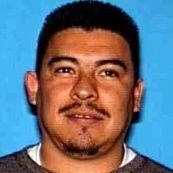
Israel Sencion Gonzalez

Israel Sencion Gonzalez

Israel Sencion Gonzalez, 38, was found about 9:30am Oct. 23 hiding in a bathroom at MontBleu casino in Stateline.

South Lake Tahoe officers had been looking for him since 2am when they were called to the 2500 block of Elwood Avenue. Officers said they found a 29-year-old woman with a bruised and swollen left eye and blood on her shirt. Officers said the victim told them Gonzalez, her boyfriend, inflicted the wounds.

— Lake Tahoe News staff report


Meters getting little credit for less water consumption

By Ed Fletcher, Sacramento Bee

As communities around the Sacramento region continue to install water meters, a number of local officials say the devices are not saving as much water as expected.

Water usage is definitely declining, but other factors – including a poor economy and years of conservation education efforts – are having as much or more effect than meters, they say.

“People are more aware of being green and using water efficiently,” said Shauna Lorance, general manager of the San Juan Water District. Water savings are less dramatic when people are already in conservation mode, she said.

Over the last decade, water usage by area households has dropped from about 290 gallons to 240 gallons per person per day, about 17 percent, according to the Sacramento Regional Water Authority, an umbrella agency of water districts from West Sacramento to El Dorado and Placer counties.

In Roseville – which just this week completed a 10-year, $12 million project to retrofit 16,000 homes with meters – usage has dropped steadily since 2006, according to city data.

Read the whole story


Obama administration going after whistle-blowers

By Morgan Watkins, Quill

Jesselyn Radack has blown the whistle. She’s also been punished for it.

As an ethics adviser in the Justice Department in 2001, she advised the government not to interrogate John Walker Lindh without his counsel present. When she learned that the FBI had questioned the American found fighting for the Taliban in Afghanistan, she warned government officials not to use his confession for a criminal prosecution.

The government used it anyway.

Radack later received a harsh performance review and was told she may be happier at another job. These unfavorable responses surprised her, as she hadn’t received any prior negative feedback about her work.

In early 2002, she learned that the judge in the Lindh case had requested copies of all Justice Department correspondence relating to his interrogation. She discovered that the government had not turned over most of her correspondence warning against the actions taken in the case. Radack resigned from her job and blew the whistle. It didn’t take long for retaliation to come.

Radack was placed on the no-fly list. The government tried to get her disbarred in Washington, D.C., and Maryland. While the Maryland charges were dropped in 2005, the D.C. charges are still pending nearly a decade later. She also became a target of a federal criminal leak investigation.

“Why crucify me when one of their cases tanked because of their own misconduct?” said Radack, who serves as the national security and human rights director for the Government Accountability Project.

She had a rough experience as a whistle-blower during the George W. Bush administration. When Barack Obama was elected president in 2008, she thought things would change under his leadership.

As far as she can tell, it’s only gotten worse.

Read the whole story


Grants to help with Tahoe area water issues

By Reno Gazette-Journal

More snow, cleanups along the Truckee River and projects to fight quagga mussels have been approved to help keep the Truckee River, Lake Tahoe and other reservoirs pristine.

The Truckee Meadows Water Authority has approved eight grants totaling $724,427 from its Truckee River Fund. The money comes from customer billings and will augment $393,000 being spent by other groups on these efforts.

Since the Truckee River Fund was created in 2005, TMWA has provided $7.1 million in 75 grants that have been matched by $5.8 million in funds from the grantees.

Read the whole story


Fanny Bridge on Placer County supes’ agenda

The Placer County Board of Supervisors will be discussing the Tahoe City Fanny Bridge at its meeting next week.

The Oct. 24 session starts at 2pm, while the Oct. 25 meeting is at 2pm. Both are at Grandlibakken Conference Center.

Issues include:

* An update from the Community Development Resources Agency staff on the status of various development projects in Eastern Placer County;

* The Planning Services Division and the County Executive Office will give the board an update on the Tahoe Basin Community Plan. Under previous direction from the board, staff began work on the update in November 2010;

* Consideration of a resolution authorizing the director of the Placer County Public Works to sign an agreement with the Tahoe Transportation District for the Highway 89/Fanny Bridge Revitalization Project. The purpose of this project is to reduce congestion and improve safety and operations of the intersection of highway 89 and 28 in Tahoe City.


DEA bans chemicals used in ‘bath salts’

By Elizabeth A. Harris, New York Times

The Drug Enforcement Administration took emergency action on Friday to ban three synthetic stimulants used to make products that are marketed at head shops and on the Web as “bath salts,” but are actually used as recreational drugs that mimic the effects of cocaine, LSD and methamphetamine.

The emergency measure places these substances — mephedrone, methylenedioxypyrovalerone (MDPV) and methylone — under the D.E.A.’s most restrictive category for at least a year, while they study whether they should be permanently banned. This classification is reserved for substances with high potential for abuse and no accepted use under medical supervision.

These products, sometimes called plant food, are sold in powder or crystal form under names like Bliss, Purple Wave, Vanilla Sky and Ivory Wave. Though not approved by the Food and Drug Administration for consumption, they have become increasingly popular, especially among teenagers and young adults, the D.E.A. said.

Read the whole story