Deputy accidentally kills bear; 2 cubs now without mom

By Kathryn Reed

A deputy not knowing he was shooting live ammunition and a tenant with more than a month’s worth of garbage contributed to one bear being killed Friday night in Stateline and two cubs being orphaned.

“The odds are against those cubs,” is what Chris Healy with the Nevada Department of Wildlife told Lake Tahoe News.

This is because normally the cubs would be spending the winter in a den with mom. It’s possible they will know to find a den, but it’s also possible the youngsters – albeit they are 60 pounds – won’t know what to do as winter arrives.

However, Healy said if the bears can be captured and they are healthy, they would probably be taken outside the Lake Tahoe area so they would be less likely to become garbage bears. The other possibility is taking the bears — if caught — to a rehab place that knows about hibernation techniques.

Chuck Arnold, who owns the trailer where the bear and her cubs were foraging for food, today began the eviction process for his tenants.

Arnold said he received a frantic call from his tenant about 9:30pm Oct. 28. They also had called the Douglas County Sheriff’s Office. He said the people had been living there three months and gave him no reason for storing garbage in the garage for more than a month.

“It’s unfortunate we lost a bear. She was part of the community,” Arnold said. “My issue is with the resident. I want to remind people not to hold on to trash in bear season – that there are consequences.”

According to the sheriff’s department, deputies scared off one bear and treed two. Two rubber-projectile wildlife control rounds were fired at the bears, but to no avail.

A deputy, whose name is not being released, thought he was firing a rubber bullet. Instead, it was regular rifle ammo. The wounded bear then had to be put down.

“In this incident, in the darkness the deputy incorrectly stacked his rounds by mistake, thereby making the second round fired out of the shotgun a rifled slug rather than a rubber-projectile wildlife control round,” Sgt. Jim Halsey said in a press release.

The sheriff’s office will be conducting an investigation.

Healy on Monday afternoon said a game warden is still waiting to speak with the sheriff’s department.

His department set a trap for the cubs, but instead an adult bear was trapped. She was released higher into the mountains.

Healy said it’s been a quiet year for bear nuisance calls – mostly because for the past three winters the abundance of moisture has meant enough food for the animals. Plus, people are slowly figuring out the appropriate ways to deal with their garbage so bears are not attracted to the rubbish.

The number of bear calls for the Northern Nevada area has not been tallied to day, but in 2007, there were 1,500 calls about problem bears.

Bears begin hibernating between Thanksgiving and Christmas. Right now they are loading up on calories – taking in up to 30,000 a day so sustain them through the winter. Normal is 3,000 to 5,000 calories a day.

“If there is not much of a snowpack, they will go into semi-hibernation. They will wake up, follow a garbage truck and then go back sleep,” Healy said. “That is why we always root for a big snowpack.”


Report: High number of Nevadans without health insurance

By David McGrath-Schwartz, Las Vegas Sun

A quarter of Nevadans under 65 did not have health insurance at some point in 2009, making the Silver State the third most uninsured state per capita in the United States, according to U.S. Census data released this month.

Nevada’s low rate of insured, which is not a surprise to state experts, is primarily the result of a lean state health care system compared with the rest of the country. Namely, Nevada has restricted access to Medicare to the poorest of the poor, while other states offer public health care coverage to more residents.

The statistics also highlight a looming problem the state is facing: how to get all those uninsured people covered by the beginning of 2014. That’s when the federal Patient Protection and Affordable Care Act mandates individuals have health insurance.

The cost facing states with a high number of people who are uninsured, like Nevada, has many state health officials concerned.

In 2009, soon after President Barack Obama signed the federal legislation, a state analysis found that Medicaid expansion would cost $636 million from 2014 to 2019. The state’s board for the Silver State Health Care Exchange is scheduled to have its first meeting this month to prepare to implement the rules. (States including Nevada are seeking to throw out parts of the federal legislation, calling unconstitutional the mandate that all be covered.)

Read the whole story


UC Davis study questions link of fast food to lower-income obesity

By Carlos Alcalá, Sacramento Bee

Fast food alone cannot be blamed for high obesity rates among people with low incomes, according to a new UC Davis Center for Healthcare Policy and Research study.

The research calls into question stereotypes that have led some cities in Southern California to cite obesity when passing laws limiting or banning new fast-food restaurants in poorer communities.

Nutritionists and food policy experts, however, said that doesn’t let fast food off the hook – and at least one of the UC Davis researchers agreed.

“I’m not a big fan of fast food,” said J. Paul Leigh, lead author of the study, which will be published in Population Health Management in December. “I’m sure that fast food in general has a big effect on obesity. This research does not contradict that.”

It does challenge the notion that those with low incomes eat more fast food than those with higher incomes.

Health economists Leigh and co-author DaeHwan Kim analyzed data from the mid-1990s and compared household income with visits to fast-food and full-service restaurants.

Rather than finding fast-food visits going down with income, they found visits peak at $60,000 in income, before falling slightly.

Read the whole story


Earth continues to shake in N. California

A 3.8 earthquake rocked just about the same area where a 4.8 temblor struck last week.

The 6:25am shaker Sunday was about nine miles south-southeast of Whitehawk — the same epicenter as four days ago.

People around Lake Tahoe felt it.

— Lake Tahoe News staff report


State allocates funds for regional road projects

Following last week’s general obligation bond sales, the California Transportation Commission this week allocated $784 million in funding for 61 projects.

Placer County will receive $40.413 million to build a water quality collection and treatment facility from 0.2 miles south of the El Dorado-Placer county line to the Truckee River Bridge.

Work is expected to begin next summer and be done by December 2015.

Caltrans expects to reduce the traffic restrictions between June 15 and Labor Day to better handle the increased number of vehicles during the peak summer visitor period.

Truckee will receive $144,000 for road slurry seal for approximately 40 miles of roadways. The El Dorado Local Transportation Commission will be getting $143,000, though no project was associated with it.

— Lake Tahoe News staff report


Tahoe Douglas picks chief from within department

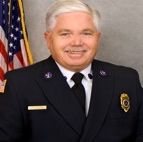
Tahoe Douglas Fire Protection District has promoted Ben Sharit to fire chief.

Sharit started with the district in 1985 as a firefighter/paramedic, rising through the ranks in the last 26 years. He started his career a volunteer with the Oakland department 30 years ago.

Ben Sharit

Ben Sharit

He earned his associate degree in fire science from Lake Tahoe Community College in 1999 and continued on as an adjunct EMT and fire science instructor. In 2009, Sharit completed a bachelor’s degree in fire administration through a joint program of the National Fire Academy and Cogswell College.

Sharit replaces Guy LeFever who retired in September after 32 years with Tahoe Douglas.


Barton on target to make profit after $1 mil. loss in 2010

By Kathryn Reed

Salaries and people unable to pay their bills are adding to the expense column for Barton Health, which is compounded by the number of patients being on the decline.

For 2010, Barton Health recorded a loss of nearly $1 million.

“The 2010 loss reflects a write down of value in real estate owned by the hospital as required by generally accepted accounting principle,” Barton CFO Dick Derby said. He added that the transaction did not impact cash flow.

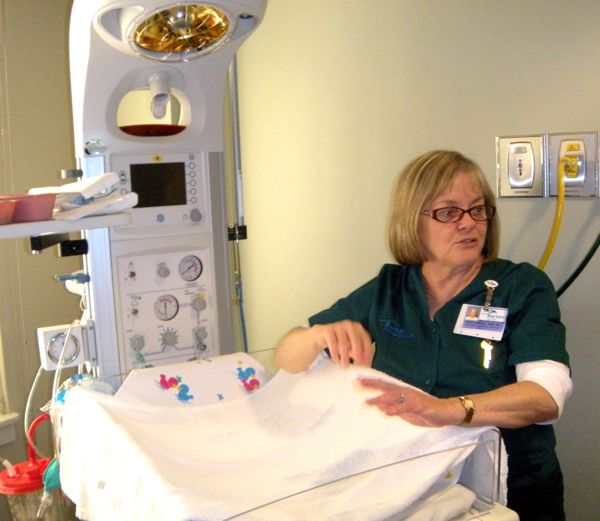
Barton tries to balance needs, with moder offerings like the improvements to the birthing center where Peggy Wright works. Photo/LTN file

Barton tries to balance needs, with modern offerings like the improvements to the birthing center where Peggy Wright works. Photo/LTN file

The other time the hospital reported a loss was in 2008 — $513,841.

As a nonprofit health care facility, the South Shore entity must file financial documents with the Internal Revenue Service that are in large part public documents.

Barton’s fiscal year is the same as the calendar year. The 2011 operating revenue was budgeted for $132,563,941, with operating expenses of $128,828,096. This leaves an anticipated gain of $3,735,845.

Employee costs (salaries, health, retirement, other taxes) represent about 47 percent of the annual budget. Barton employed 1,013 people in 2010.

Board of directors also receive compensation, mostly in the form of the same health benefits as employees. This is about $11,000 a year.

Even though Barton has laid off employees in the past few years, it remains South Lake Tahoe’s largest private year-round employer. No raises were given in 2010, matching retirement contributions were reduced, employee health insurance contributions were raised, health insurance deductibles were increased, and other benefits were suspended.

“The salary freeze was lifted at the end of 2010 and in 2011 employees have received salary increases. Starting in 2012, Barton will change to a merit salary policy where salary increases will be based on performance,” LeAnne Kankel, vice president of Human Resources, said.

Each year Barton compares its salaries to like-sized health care systems in Northern California and makes adjustments to “remain competitive”, Derby said.

Salaries from the 2010 IRS report for the top 10 highest paid Barton employees:

• John Williams, CEO, $410,622

• Clint Purvance, chief medical officer, $348,864

• Dick Derby, CFO, $281,579

• Kathy Cocking, VP hospital operations, $223,959

• Mary Bittner, VP nursing, $196,640

• LeAnne Kankel, VP human resources, $183,486

• Barry Keil, pharmacist, $162,815

• Robert Quadri, director information systems, $147,932

• Terriann Cherry, pharmacist, $147,462

• Richard Belli, project management, $144,937.

Those who can’t pay

Barton writes off some of the care it gives because either people can’t pay the full amount or they refuse to.

“In terms of accounting, bad debt consists of services for which hospitals anticipated but did not receive payment. Charity Care, in contrast, consists of services for which hospitals neither received, nor expected to receive, payment because they had determined the patient’s inability to pay,” Kelly Neiger, CPA and financial analyst for Barton Health, said.

Information about Barton’s Charity Care and discount programs are online.

The following are the costs Barton has had to absorb over the last five years:

2010: Charity Care – $4,192,426; Bad debt – $7,950,035

2009: Charity Care – $4,773,459; Bad debt – $8,335,322

2008: Charity Care – $3,427,349; Bad debt – $8,407,000

2007: Charity Care – $4,105,269; Bad debt – $7,875,451

2006: Charity Care – $3,096,213; Bad debt – $7,303,827.

The dismal state of the South Shore economy is also evident by the number of people using Barton’s Community Clinic. In 2006, 14,634 people received care at the clinic. By 2010 that number had swelled to 18,840.

“This is partially due El Dorado County sharply decreasing their medical services in recent years. During 2010, the Community Clinic operated a net loss of approximately $700,000,” Derby said.

Unemployment in South Lake Tahoe is at 16.7 percent, which is a percentage point less than the high. No hard statistics exist of how many people in the area don’t have health insurance. An indicator, though, is the fact 59.4 percent of the students in Lake Tahoe Unified in 2010-11 (stats for this year are not calculated yet) qualified for a free or reduced lunch. People who need help feeding their children often don’t have jobs that come with health benefits.

Barton has stats for all of it patients, which includes locals and out-of-towners, for how they paid in 2010:

Private coverage: 38 percent

Self pay: 5 percent

Workers’ compensation: 3 percent

Other government: 2 percent

County indigent programs: 7 percent

Medi-Cal: 14 percent

Medicare: 31 percent.

Community Clinic patients are mostly women and children – 60 percent. Teens and men make up the other 40 percent. Nearly half (43 percent) don’t speak English as their first language.

“Patients are often undocumented migrant workers not eligible for Medi-Cal or are insured low-income patients with very high deductibles,” Derby said.

Patient stats for Barton:

2010 – Inpatient admissions: 2,832

2010 – Outpatient registrations (including clinics): 159,198

2009 – Inpatient admissions: 3,116

2009 – Outpatient registrations (including clinics): 164,477

2008 – Inpatient admissions: 3,519

2008 – Outpatient registrations (including clinics): 151,309

2007 – Inpatient admissions: 3,909

2007 – Outpatient registrations (including clinics): 152,823

2006 – Inpatient admissions: 3,903

2006 – Outpatient registrations (including clinics): 141,200.

As people leave the basin, it means fewer people in need of health care. Good snow years can also hurt Barton’s bottom line because of fewer ski injuries in all that soft powder.

Barton is trying to increase revenue without raising rates.

With Barton’s emphasis on orthopedics, it is hoping to attract people to its facilities for the specialized treatment — call them the destination patient.


Brown’s pension package faces skeptical Legislature

By David Siders, Sacramento Bee

Even as Gov. Jerry Brown announced his plan Thursday to reduce pension benefits for public employees across the state, its prospects of passing intact appeared dim.

California’s powerful labor interests objected to major parts of the plan, and the leaders of the Democratic-controlled Legislature – neither of whom attended Brown’s announcement – reacted warily.

Brown said he thinks the Legislature will “rise to the occasion,” but even he wasn’t sure of the outcome.

In the Legislature, he said, “There isn’t a history of curbing pension benefits.”

Nevertheless, Brown promised pension changes in his campaign, and the proposal could blunt Republican criticism of his labor ties as he prepares next year to ask voters to raise taxes.

“He looks great asking for it,” said Thad Kousser, a political science professor at University of California, San Diego. “This is kind of like Obama’s jobs bill. He can take a stand, even though he knows it may be dead on arrival.”

Brown proposed at a Capitol news conference increasing the retirement age for newly hired state and local government employees and offering them less generous retirement benefits, a package he will ask the Legislature to put before voters in November 2012.

Read the whole story


AG goes after questionable ‘biodegradable plastic’ bottles

By Paul Rogers, San Jose Mercury News

In a move that could have a major impact on the recycling industry, California Attorney General Kamala Harris will sue three national companies that make plastic bottles or sell bottled water in California, contending that they illegally claim their bottles are “biodegradable.”

The lawsuit filed Wednesday, seeks to have tens of thousands of bottles of Aquamantra and Balance Water removed from supermarket shelves immediately. It asserts that the bottles used by those brands do not actually decompose naturally and that they contaminate other types of recycled plastic. Further, the suit states that their green-sounding labels could lead to increased littering if consumers believe that tossed bottles will decompose like apple cores or banana peels.

“The manufacturers of these bottles are taking advantage of Californians’ concern for their environment,” Harris said. “Consumers are led to believe they are being environmentally friendly by choosing these bottles. In fact, they could be further damaging our natural resources.”

The court action, filed in Orange County Superior Court, names ENSO Plastics, a bottle-maker based in Mesa, Ariz., along with the retail companies that sell bottled water: Aquamantra, of Dana Point, and Balance Water, of West Orange, N.J.

The products of all three companies are found in stores across California and other states, including major grocery chains such as Whole Foods and Albertson’s.

Read the whole story


South Tahoe man charged in roommate’s death

A South Lake Tahoe man is scheduled to be arraigned Oct. 31 on murder charges.

Brad Macewan, 55, is accused of killing his roommate Patrick Lee Rego, 52, at their South Tahoe residence. Macewan was originally arrested in July, but was released until the District Attorney’s Office believed enough evidence was presented to file charges.

The court hearing will be in Placerville. It’s possible at that time the presiding judge will decide if the case should be tried in Tahoe.

If found guilty, Macewan could face 25 years to life in prison.

— Kathryn Reed