Report identifies ways for Nevada to diversify economy

By Sean Whaley, Nevada News Bureau

CARSON CITY – A report outlining how Nevada can grow and diversify its economy says much more could be done now in the areas of health and medical services, and that clean energy and aerospace/defense are emerging sectors that could bring skilled jobs to the state.

The report, a joint effort by the Brookings Institution and the Stanford Research Institute, now known as SRI International, was presented this week to Gov. Brian Sandoval and the other members of the Board of Economic Development, a new panel created with bipartisan support from the 2011 Legislature.

It identifies seven economic sectors, some already in existence such as gaming and tourism, and some emerging such as clean energy, where Nevada should focus its efforts.

Sandoval has made job creation his top priority as governor, and said the report should help the state direct its economic diversification efforts in more targeted ways. In an interview in September, Sandoval said Nevada can’t take a “shotgun” approach to economic development, but instead must focus on those areas that can produce the desired result of economic diversification and job production.

Steve Hill, executive director of the Governor’s Office on Economic Development, said the study is “meant to inform Nevadans, and inform our office, as we work to develop a state plan, a state plan we will now begin to work on.”

“We obviously have a sense of urgency in the state right now,” he said.

The report, titled “Unify/Regionalize/Diversify: An Economic Agenda for Nevada,” notes that the state has lost nearly 170,000 jobs since the recession began in December 2007. Nevada continues to have the highest unemployment rate in the nation.

An overview of the research was presented to the board by Bruce Katz, vice president of the Metropolitan Policy Program of the Brookings Institution.

“There is much work to do,” he said. “Fortunately we believe AB449, which you signed into law over the summer, sets the frame for a new kind of economic development operating system for the state. And what our report, our agenda, has tried to do, is help put you on a path to a different kind of economic growth.

“Obviously more innovative growth, more balanced growth so you’re not subject to the same volatility that you were during the recession, and growth that is more globally engaged, so you can take advantage of rising global demand, particularly in emerging nations,” Katz said.

Nevada in the past has lacked an overarching strategy for economic diversification, he said.

“Nevada doesn’t lack for assets and opportunities, but it needs to do a better job of aligning diverse efforts, supporting creative initiatives in the regions, and putting in place a platform of innovation efforts, global outreach, and workforce upgrading on which regional clusters and sectors can grow,” said Mark Muro, a senior fellow at the Metropolitan Policy Program at Brookings and the lead author of the report. “That’s why we are calling this agenda “Unify/Regionalize/Diversify.”

The health and medical services sector was identified as underperforming in Nevada. Nationally this sector has a 9 percent share of employment, but represents only 5.9 percent of employment in Nevada.

Emerging industries Nevada should focus on are business information technology ecosystems, clean energy, logistics and operations and aerospace and defense, the report says.

The report also highlights ways Nevada can capitalize on its existing core industries of tourism, gaming and employment and mining, materials and manufacturing.

Southern Nevada, for example, is the global hub of the gaming industry, and it has the potential to develop in the areas of online gaming, among other opportunities, the report says.

Sandoval last week announced he will be convening the Gaming Policy Committee as part of an effort to preserve Nevada’s leadership role in gaming given the changing technology, including the potential of online gaming.


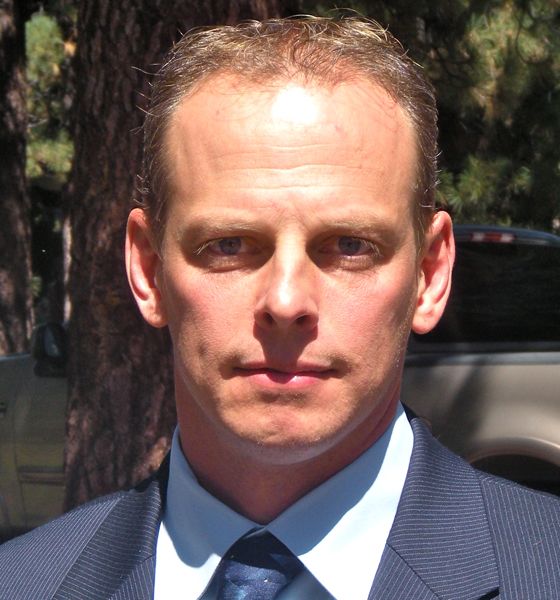

Sex offender in custody; attorney fighting for release

By Kathryn Reed

Joseph Scanio was taken into custody today after a court hearing in U.S. District Court in Sacramento.

Judge Morrison C. England Jr. ruled at the status conference that the South Lake Tahoe man is “a danger to the public.”

However, Scanio’s attorney, Assistant Federal Defender Timothy Zindel, told Lake Tahoe News, “This 63-year-old man is unfairly labeled as some sort of predator. I don’t think I’ve worked harder on anything than this.”

Joseph Scanio

Joseph Scanio

Zindel is working on an objection to the Nov. 17 ruling.

A decision about Scanio’s future is expected Dec. 1. He faces three to nine months in prison if found guilty of the probation violations.

Zindel said the problem is the probation department is not presenting all of the facts, including Scanio passing a polygraph and that the FBI in a forensics test of the computers seized from the Scanio residence turned up zero pornographic material.

Zindel makes the point that sex offenders come in different categories. He is adamant Scanio is not a threat to society.

“Psychologists’ reports confirm he is not a pedophile,” Zindel said.

Scanio keeps having run-ins with the law that all stem from his guilty plea in October 2006 to possession of child pornography. He was released from prison in February 2010.

Scanio, who lives with his wife and young daughter in South Lake Tahoe, is a registered sex offender on federal probation. Right now he is in Sacramento County Jail until the judge makes a final ruling.

He was arrested this past May 26 on a federal warrant for violating terms of his supervised released. The U.S. Attorneys Office has filed nine counts against Scanio.

Zindel labels them as technical complaints.

Some of the current charges also deal with having been convicted Aug. 4 in El Dorado County Superior Court on local charges of being in an area where registered sex offenders are not allowed.

South Lake Tahoe has a local ordinance that prohibits any sex offender from being at the recreation center/ice rink even if his/her child is there. Even though Scanio had been going to watch his daughter skate since his release, it was not until earlier this year that law enforcement went after him.

Zindel said because the judge did not allow testimony in that case it could be appealed.

Current charges also deal with the use of a computer without permission from his probation officer, not presenting truthful monthly reports to the probation officer, associating with a felon without permission, and contact with children under 18 without approval.

The latter, according to Zindel, was a party for the skating coach where adults and children were present. The association with the felons was writing to inmates about non-sexual, non-pornographic subjects under the assumption the prison was reading the letters and without the knowledge it was illegal to send them, Zindel said.


California transitioning kindergarten age requirement

By Diana Lambert, Sacramento Bee

Preet Sandhu wasn’t surprised to learn last week that her daughter Kirat wasn’t eligible for kindergarten. Elk Grove Unified staff had done a good job of getting the word out.

Sandhu’s daughter turns 5 on Nov. 5, 2012 – and a new law requires that kids be age 5 by Nov. 1 to enroll in kindergarten next school year. Currently, California children could enroll in kindergarten if they turned 5 by Dec. 2.

The new law changing the age requirement for kindergartners is being phased in over three years. In the fall of 2013, children must be age 5 by Oct. 1. In the fall of 2014, students must turn 5 by Sept. 1.

So what happens to these kids with later birthdays?

The law that changed the age requirement also called for a new grade level – transitional kindergarten, or TK.

Read the whole story


Synthetic drugs becoming prevalent in South Lake Tahoe

By Kathryn Reed

Epidemic is the word South Lake Tahoe police Officer Rebecca Inman used to describe bath salts and Spice.

These are not substances to be used in the bathtub or kitchen. Instead, they are manufactured drugs that are legal to possess or use in California and Nevada. On Jan. 1 they will be illegal to sell in California.

spiceInman gave a report to the South Lake Tahoe City Council on Nov. 15 about these drugs that she said are being widely used by students at South Tahoe High School.

Spice is a brand name for a synthetic cannabinoid. Cannabinoids have similar effects of THC, the main compound in marijuana.

With the makers of these drugs continuously changing the chemical components, it’s hard for lawmakers to write laws fast enough to keep up with what’s on the market. What makes it legal to sell is the packaging says “not for human consumption”. They both go by several different names.

What Inman stressed is users and parents don’t understand how addictive these drugs are and the damage they can do.

“They are consuming something where they don’t know what the full experience will be,” Inman said. The length of the high is unpredictable.

It’s what is sprayed on to the “herbs” inside the Spice package that is so addictive.

“We got a call the other day where a brother bit a hole in his brother’s ear. He was high on Spice,” Inman said.

Bath salts, though, are even worse, according to Inman. Cathinone chemicals attack the central nervous system in similar ways to methamphetamines and cocaine.

Inman said youths like to snort the salts. But it comes in capsules and pill form, too. Injection is another option.

Spice and bath salts can be found at gas stations, convenience stores, head shops and the Internet.

“We have documented cases of crimes in our city where the suspects have been under the influence of Spice. Our juvenile population has found it easier to buy and use Spice and bath salts than alcohol and marijuana,” Inman said in her PowerPoint.

Rich Barna, executive director for Tahoe Turning Point, said a test has been developed to see if someone is using Spice or bath salts. Cost is the problem — $120 per test for Spice, $30 for bath salts. (Tahoe Turning Point is a private, nonprofit agency that provides group care and residential treatment for boys ages 12-18.)

Barna said he’s made it a personal mission to get these drugs out of town. Barna said Germany has banned the import of the drugs, while the state of Georgia is considering doing the same.

“With bath salts it’s almost an instant physical deterioration. It’s worse than meth,” Barna said. “It will bruise and burn the veins it’s injected into.”

The council, with Claire Fortier at a TRPA meeting, agreed to have City Attorney Patrick Enright look at what the city could do to ban Spice and bath salts from being sold, possessed and used in the city limits. A letter will be written to Gov. Jerry Brown asking him to make possession a state crime. The League of California Cities will also be asked to weigh in on the issue.


South Tahoe Officer Poland under federal investigation

By Kathryn Reed

South Lake Tahoe police Officer Johnny Poland turned in his badge and gun Nov. 15, with Wednesday being his first day on paid administrative leave.

“He is under federal criminal investigation. It would be inappropriate for him to continue to serve in a day-to-day capacity,” City Manager Tony O’Rourke told Lake Tahoe News. “It doesn’t reflect any guilt. It reflects the process that needs to run its course so we can determine if there were any serious violations of the law.”

South Tahoe police Officer Johnny Poland is on paid administrative leave. Photo/LTN file

South Tahoe police Officer Johnny Poland is on paid administrative leave. Photo/LTN file

Poland was not available for comment. Nor was Police Chief Brian Uhler.

O’Rourke would not elaborate on what Poland is being accused of. He said the investigation is being handled by the Department of Justice. He said the allegations are “criminal in nature.” And he said whatever might have happened occurred was while Poland was “in the capacity of a police officer.”

“It’s just an investigation. It reached the point and time that it would be awkward for both the department and Johnny for him to be an active police officer,” O’Rourke said.

Poland, who has been with the department for 12 years, was fired by the department in 2007 for an incident stemming from 2006. He fought that case and eventually was reinstated.

The full cost of the Poland case from 2007-09 has never been disclosed.


No vote on transparency bill lets lobbyists in Nevada keep paying tab

By Ed Vogel, Las Vegas Review-Journal

CARSON CITY — Tonight if you see your state senator and a lobbyist dining on Châteaubriand and drinking red wine in a fine Las Vegas restaurant, it’s a safe bet they aren’t going Dutch treat. The lobbyist will pick up the tab and no one ever will know he did.

With much fanfare in April, legislative leaders called for approval of a plan to make government more transparent to Nevadans. A few weeks later, the Senate unanimously passed a bill to require lobbyists to report their year-round expenditures on legislators.

But the Legislature adjourned without taking final action on that transparency bill. An Assembly committee let it die without a vote. Not taking a vote on a bill is an old technique to keep the voters in the dark when their legislators oppose bills popular with the public.

The nondecision kept in effect the current open season for lobbying. Lobbyists can hunt legislators without any outside interference through the 2012 election cycle — when all Assembly members and half the state senators will be elected — and until the beginning of the next session on Feb. 4, 2013. State law requires them only to report what they spend on legislators during the four months the Legislature is in session every other year.

“Once the session ends, there are no rules,” said state Sen. Sheila Leslie, D-Reno. “Some legislators like it that way, legislators of both parties. I am not impugning anyone’s integrity. All I am saying is these expenditures should be disclosed.”

Leslie vows to introduce her Senate Bill 206 again in 2013, but doubts it will pass then, or anytime in the near future. Too many legislators of both parties like the status quo where they can be treated like royalty in between sessions by lobbyists without anyone knowing, she said.

“Until there is more of a public uproar, this bill is not going to pass,” Leslie said. “Public distrust of government is at all-time high. This would help win back the public trust.”

Read the whole story


Company takes carpooling to Tahoe from Bay Area to a new level

Zimride, the largest online ride-sharing service in North America, announced its San Francisco-Lake Tahoe route today, with service beginning Thanksgiving Day.

The idea is to bring Bay Area residents convenient, inexpensive access to the basin. To celebrate the launch, Zimride is giving away a free tank of gas ($40 value) to the first 500 drivers who successfully book a ride along the Tahoe route between Thanksgiving and the end of the year.

Zimride allows drivers to sell the empty seats in their car to passengers who need a ride along popular routes, like San Francisco to Tahoe. As part of their mission, the company facilitates monetary transactions and connects individuals.

Zimride is used by university students and corporations in 30 states. The first public route was launched in August between San Francisco and Los Angeles. The Tahoe route will be Zimride’s ninth public route; all of which are on the West Coast.

“We’ve been looking forward to opening the Lake Tahoe route all fall because we know it will be a popular destination for our Bay Area users — from college students to weekend travelers, skiers to snowboarders,” Logan Green, co-founder and CEO of Zimride, said in a statement. “Tahoe has over 3 million visitors every year, and over 20 percent of the people headed to the South Shore come from the Bay Area. Even more important, nearly 80 percent of North Shore visitors arrive by car. So that’s a lot of potential for Zimriders to save money and gas, while making friends.”

For the drive between San Francisco and Lake Tahoe, Zimride is suggesting $25 per seat, each way. Drivers selling their empty seats, however, can name their price.

Before a rider accepts a seat in a car or a driver accepts a passenger, he or she can view the person’s profile information to ensure he or she is comfortable with the match.

Sign up online.


S. Tahoe officials jittery about legalities of medical pot

By Kathryn Reed

Cities across California are fearful of what a medical marijuana decision out of Long Beach will mean to them as well as what the feds may do.

South Lake Tahoe and Sacramento’s city councils on Tuesday wrestled with what to do with their respective ordinances. In predictable fashion, South Lake Tahoe couldn’t make a decision. Sacramento voted to essentially put its 38 dispensaries on hold – with their permit application deadlines extended seven months.

potAfter nearly three-dozen people spoke to the issue Nov. 15, the South Tahoe council voted to continue the meeting to Nov. 29 at 5pm.

The city has three dispensaries that are allowed under an ordinance that was voted on in September. A separate ordinance regulates growing marijuana in residential areas.

One of the options discussed was similar to what Sacramento decided to do. Other alternatives include banning dispensaries or doing nothing – as in keeping the status quo. There is also the Berkeley method that essentially lets the collectives operate under a permit and not an ordinance.

City Attorney Patrick Enright was tasked with finding out more about what Berkeley does.

What many of the people at the Tuesday meeting didn’t seem to get was the council has no desire to deny people medical marijuana. What they want to avoid is literally or figuratively having the feds come in with guns drawn.

The federal government in the past has used money as a way to force compliance – just look at how the states all have 21 as the legal drinking age instead of 18 and how speed limits are 65mph. The threat of federal dollars going away brought states to their knees.

South Tahoe would also like to avoid being sued. After all, as was pointed out by Councilwoman Claire Fortier, the Long Beach case was a result of the dispensaries not selected in a lottery system suing the city.

The Pack vs. Long Beach decision by a state appellate court says that city’s medical marijuana ordinance violates federal law. The feds believe marijuana is an illegal drug.

A petition has been filed with the state Supreme Court. The court has until mid-January to decide if it will take up the case; then it could be another year before it does. An application has also been filed to have the Long Beach case de-published. This would mean the ruling would only pertain to Long Beach and nowhere else in California.

Michael Stallings, one of the few people who actually spoke to the issue at hand, was articulate as he expressed his desire to suspend permitting of dispensaries – essentially the route Sacramento took.

“The responsible thing to do is allow the state Supreme Court to rule,” Stallings said.

Kashon Kohler said, “Be bold and continue to stand up for your community. The country is learning from what is going on in Tahoe.”

Even though states are supposed to be able to govern themselves – and 17 have legalized medical marijuana – the Obama administration says otherwise. It is cracking down on weed as medicine. No firm number is out there as to how many collectives exist in California because not all are permitted by a city or county. Estimates range from 500 to 2,500.

South Tahoe Councilman Bruce Grego said he’s heard of two in the city limits that are operating beyond the three that are legally allowed.

Californians approved Proposition 215 in 1996. This allowed marijuana for medicinal purposes. Some have said the medical marijuana industry is a $1.5 billion business in California.

Not all cities are running from the feds. The Marin Alliance for Medical Marijuana is the oldest licensed dispensary in the state, having started 14 years ago. The Fairfax Town Council on Nov. 4 voted to keep the $1 million-a-year business operational despite the threat by the feds to prosecute the landlord.

In other action the council:

• Put off a decision and discussion about funding the economic analysis of the South Shore Vision until the Dec. 13 meeting.

• Agreed to go forward with altering business license fees. The idea is the higher grossing businesses would pay more, while the smaller businesses would pay less. Councilman Tom Davis is against having automatic increases tied to the Consumer Price Index. It was left that the CPI would not be part of the new funding structure. However, that would ultimately mean the city would be collecting less from businesses than it does now because the current fee is tied to the CPI. No one on the council or staff brought the funny math to light. The council will have the business tax as a formal agenda item to approve in January, with the projected date for voters to cast a ballot being in June.

• Heard from Bill Crawford questioning why Measure S (now Measure R) bonds might become taxable. He also said the city should take over operation of the recreation bond instead continuing to have John Upton be the sole paid staff member.

• Sided with Michael McKinney in allowing him to be a BlueGo bus driver.

• Agreed to spend an extra $6,000 on the annual survey that goes out in December to be published in Spanish. This brings the cost to $16,000. Davis voted against it. Councilwoman Fortier had left for the TRPA meeting by this time.

• Was adamant in not wanting to increase fees for vacation rental owners. They were disappointed Finance Director Christine Vuletich didn’t bring forward ways to increase revenue. The fees are only supposed to cover the cost of doing business, not be a revenue generator. She was directed to bring back in more detail the idea of hiring a company that would be paid a percentage of taxes currently not being collected or fees not being collected.

• Wants to implement a utility cut fee so the entity mucking them up the roads would fix them.


Vehicle of missing Gardnerville woman found; body not ID’d

The vehicle belonging to a missing Gardnerville woman was found Nov. 14 90-feet down the side of an embankment near the old power dam on the East Fork of the Carson River in Gardnerville.

The vehicle matched what 56-year-old Patricia Loraine Bosch was driving when she was reported missing by family members Nov. 11.

Bosch was last seen Nov. 2 when she left her home in Bodie Flats, South Gardnerville, to drive to the FISH Thrift store in Carson City.

Deputies said because of the extensive crushing damage on the vehicle and inverted positioning of the vehicle when it came to rest, the body inside the vehicle could not be removed or fully observed; therefore identity of the decedent is unknown. However, based upon the description of the vehicle and the recent missing person circumstances, it is suspected the body is that of Bosch, deputies said.

The vehicle is expected to be hauled out of the ravine today.


Increase in pot grows tied to rising number of foreclosures

By Ashley Powers, Los Angeles Times

LAS VEGAS — The Ballard house was as unassuming as any in the stucco outskirts of Las Vegas: a two-story box the color of an oatmeal cookie. Police charged inside one night searching for a domestic violence suspect. Instead, they smelled something skunky.

Marijuana. Lots of it.

Two-foot-tall plants fought for space in a hallway, police later testified. Half a dozen jars of buds hid in a closet. The master bedroom was something of a jungle, with two Ballard children, ages 8 and 9, asleep on the bed.

The home — with four bedrooms and 61 plants — was one of the smaller alleged grow operations authorities have dismantled this year. At another home, authorities seized 878 plants worth an estimated $2.6 million.

Las Vegas has a pot home problem. And like many of the region’s maladies, it’s tied to the housing slump.

Last year, authorities took down 153 indoor grow sites in Nevada and seized more than 13,000 plants, compared with 18 sites and 1,000 plants in 2005, the U.S. Drug Enforcement Administration said. (By comparison, California busted 791 indoor sites last year.)

“You can’t have crime without opportunity,” said William Sousa, a criminologist at the University of Nevada, Las Vegas. “And all those empty homes present an opportunity for criminal activity.”

Read the whole story