A whole lot of shaking going on near Markleeville

The earth has been moving this morning near Markleeville.

A 3.4 temblor was recorded at 1:38 am, followed by a 3.7 less than a minute latter. Both were about 18 miles south east of Markleeville or 36 miles south east of South Lake Tahoe.

At 2:05am a 2.0 quake struck the same area, then a 1.7 at 2:48am, and a 1.5 at 2:59.

People as far away as Susanville – 240 miles from the epicenter – felt the strongest of the earthquakes.

— Lake Tahoe News staff report


Study: Coupons driving up the cost of health care

By Sean Whaley, Nevada News Bureau

CARSON CITY – The proliferation of brand name drug “co-pay coupon” promotions lure insured consumers from generics to more expensive brands and will increase health care costs by $253 million in Nevada over the next decade, a new national study says.

The use of these promotions by state and local government workers alone will cost Nevada taxpayers an extra $31 million over ten years, the study says.

The practice of offering the co-pay coupons will mean increased costs for employers, unions and state employee plans, according to new research from Visante and released by the Pharmaceutical Care Management Association (PCMA). The association represents the nation’s pharmacy benefit managers who work for the health care plans operated by governments, unions and private employers.

“Brand co-pay coupons lure patients from generics to expensive brands and stick employers, unions, and government employee health programs with the extra costs,” said PCMA President and CEO Mark Merritt. “In Nevada, taxpayers will pay an extra $31 million just to cover the use of brand co-pay coupons by government workers in state and municipal employee health programs.”

The report says the co-pay promotions are aimed only at those who already have prescription drug coverage. The coupons are banned in both the Medicare and Medicaid programs, but are allowed in the commercial market except in Massachusetts because of its comprehensive health care law.

Pharmaceutical Research and Manufacturers of America (PhRMA) Vice President Karl Uhlendorf issued a statement in response to the study: “For years, America’s biopharmaceutical research companies have helped patients suffering from disease access programs that can help them get the medicines they need. Co-pay assistance programs are an example of this kind of help.

“Coupons and vouchers provide an important benefit to patients by defraying the cost of out-of-pocket payments, breaking down barriers to access and encouraging better medication adherence,” he said.

PhRMA represents the country’s leading pharmaceutical research and biotechnology companies. PhRMA members invested an estimated $49.4 billion in 2010 in discovering and developing new medicines. Industry-wide research and investment reached a record $67.4 billion in 2010.

In a telephone interview, Merritt said the purpose of the study is to educate consumers about the true costs of the promotions to themselves and their health care plans, many of which are paid in part by taxpayers.

“I think the first step is education to show payers, whether they be taxpayers or businesses or unions, how much money is being wasted by these co-pay coupons,” he said. “And I think that people have not realized that by getting people to switch from generics to brands, and from less expensive brands to more expensive brands, it costs billions of dollars a year and hundreds of millions to each state around the country.”

Merritt said the practice is increasing because their brand drugs are coming off patent, opening them up to competition from generic drugs.

The coupons may be seen as a value by consumers, but the co-pay does not reflect the real cost of the brand drug, he said.

“Health insurance, two-thirds of it is paid by the companies, by the unions, in the case of public workers, by the taxpayers; and so people need to understand there is a cost to this,” Merritt said. “And I think most people don’t know that. They see the coupon and they think, ‘hey great, I’m saving money and no one gets hurt.’ But the reality is ultimately this will lead to higher premiums for consumers.”
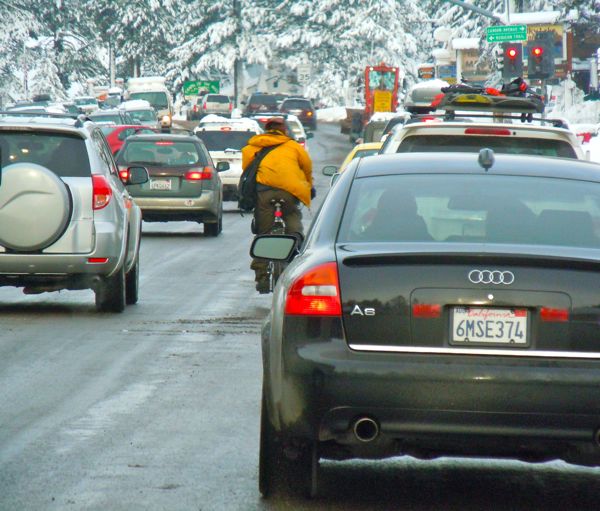



More people expected to travel during Thanksgiving holiday

AAA forecasts 42.5 million Americans will travel 50 miles or more from home during the Thanksgiving holiday weekend (Nov. 23-27), a 4 percent increase from the 40.9 million people who traveled last year.

“This is the first significant increase in any holiday travel this year,” Bill Sutherland, vice president of AAA Travel Services, said in a press release. “Memorial Day travel was statistically flat, while Independence Day and Labor Day travel experienced decreases of 2.5 percent and 2.4 percent, respectively.”

Expect the roads to full with Thanksgiving travelers. Photo/LTN file

Expect the roads to full with Thanksgiving travelers. Photo/LTN file

With volumes still below historical averages, pent-up demand will be a contributing factor in increased holiday travel, despite current economic conditions.

Approximately 38.2 million people (90 percent of holiday travelers) plan to take to the nation’s roadways this Thanksgiving holiday weekend, a 4 percent increase compared to Thanksgiving 2010 when auto travelers totaled 36.8 million. Automobile travel remains the preferred choice of transportation for holiday travelers as it is often more affordable, convenient and flexible. The current national average price for regular unleaded gasoline is approximately $3.39 per gallon, about 50 cents more than one year ago. However, the national average price is about 60 cents less than this year’s peak price of $3.98 on May 5.

Almost 3.4 million leisure travelers (8 percent of holiday travelers) will fly during the Thanksgiving holiday weekend, a 1.8 percent increase from 2010. Fuel costs, combined with steady air travel demand and capacity cuts have resulted in rising airfares over the past year. According to AAA’s Leisure Travel Index, Thanksgiving airfares are expected to be 20 percent higher than last year, with an average lowest roundtrip rate of $212 for the top 40 U.S. air routes. The combination of higher fares and lower availability of seats is expected to limit air travel growth this holiday to less than half of total traveler growth.

Other modes of travel (bus, trains, watercraft, multi-modal travel) will make up the remaining two percent of the total person-trips, with just over 900,000 people expected to travel by these modes, 14.7 percent higher than in 2010.

Hotel rates for AAA Three Diamond or mid-range lodgings are expected to increase 6 percent from one year ago with travelers spending an average of $145 per night compared to $136 last year. Travelers planning to stay at AAA Two Diamond hotels can expect to pay 7 percent more at an average cost of $103 per night. Weekend daily car rental rates will average $37, an 11 percent decrease from one year ago.

According to a survey of traveler intentions, the average distance traveled by Americans during the Thanksgiving holiday is expected to be 706 miles, which is a decline of 13.5 percent from last year when travelers planned to log an average of 816 miles. Median spending is expected to be $554, which is a 12 percent increase from $495 last year. However, Thanksgiving holiday travel is typically less expensive than other travel holidays because of the emphasis on the Thanksgiving meal and gathering of friends and family. Fuel and transportation costs combine to consume the largest share of holiday spending (33 percent), followed by shopping (18 percent) and food and beverages (18 percent. Other expenditures include accommodations (16 percent), entertainment and recreation (12 percent), and other costs (3 percent).


3 fire captains in South Tahoe to be promoted

Three captains in the South Lake Tahoe Fire Department are being promoted to shift commander, a new position since the rank of battalion chief was done away with (and those three positions eliminated) when the City Council approved the 2011-12 budget.

fireJim Drennan, Rob Hembree and Dan Sullivan will be officially promoted Nov. 21 at 2:30pm at the city offices at Lake Tahoe Airport.

They report directly to the fire chief, a position being filled this fiscal year by Police Chief Brian Uhler.

This link provides a job description of what is expected of the men and their salary range.  This reflects a boost in pay of 10 percent from what they were making as captains.

Drennan has been with South Tahoe since December 2002, having started as a reserve two years before that. He has lived in the area since 1989. Drennan is also an instructor at the Lake Tahoe Community College Fire Academy.

Hembree also started his fire career as a reserve before joining the department full time in 2002. He moved to South Tahoe in 1995.

Sullivan is a South Tahoe High grad and one of the original EMS coordinators. He has been with the department since 1999, serving as a reserve three years prior to that.

A position still to be dealt within the department is that of fire marshal. Ray Zachau, as battalion chief, was also fire marshal. And he still is. Even though his job was eliminated last month, city officials have not determined when his last day is. They city also has not posted the job of fire marshal.

— Lake Tahoe News staff report


Business leaders, politicians want collaborative approach to economy

By Sean Whaley, Nevada News Bureau

RENO – Officials and business leaders attending a regional summit on economic development here on Thursday emphasized the need to work together regionally to bring in new employers and create jobs.

The summit, called ReCharge Nevada, was attended by about 300 government officials and business representatives to help create a unified front on efforts to help reverse the state’s highest-in-the-nation unemployment rate.

Reno Mayor Bob Cashell said his hope is that all the western Nevada communities will learn to work together on economic development and diversification. It’s not just Reno-Sparks anymore, but job creation efforts have to encompass the counties and cities from Fernley to Yerington, he said.

“Businesses have to quit undercutting each other,” Cashell said. “And we need to work together. Businesses need to work together. Because what’s good for your business is good for my business. There’s a lot of hard work in front of us now.”

Mike Kazmierski, the newly appointed president and CEO of the Economic Development Authority of Western Nevada who came to the job from Colorado Springs, said the meeting is an important first step to getting everyone to work together.

“The first thing we need to do as a region is accept the fact that together we’re going to be stronger,” he said. “And it’s really not just an agency’s responsible to do economic development, it’s every single person’s responsibility.

“And people while they are flying, while they are talking to friends, and neighbors and businesses, need to talk about why they live here,” Kazmierski said. “That’s all they need to say because they live here for a reason.”

At the same time officials were gathered at the Reno-Sparks Convention Center to work on economic development strategies, Gov. Brian Sandoval was in Las Vegas making a similar pitch to the Nevada Development Authority.

The emphasis on diversification and job growth come just as a new report on how to achieve the state’s goals was released Monday to Sandoval and the members of the newly constituted Board of Economic Development, created with bipartisan support from the 2011 Legislature.

The report, a joint effort by the Brookings Institution and the Stanford Research Institute, now known as SRI International, identifies seven economic sectors, some already in existence such as gaming and tourism, and some emerging such as clean energy, where Nevada should focus its efforts.

The state has put some green, in the form of cash, into the effort as well.

Steve Hill, executive director of the Governor’s Office on Economic Development, said the state has established a $10 million Catalyst Fund to help firms relocated or expand in Nevada. The money will be used to provide grants to local governments for economic development projects.

Hill said it is important the money be spent efficiently and strategically to pursue the types of economic sectors the state is targeting.

Sandoval and local government officials around the state are focusing on economic development and job creation as Nevada continues to suffer from the recession that first emerged in December 2007. The state has lost 170,000 jobs in that time.


Charter schools impress half of California voters

By Howard Blume, Los Angeles Times

Charter schools have won over about half of California voters, but these independent, non-traditional public schools are not widely viewed as the solution to the state’s education problems, according to a new poll.

Among those surveyed in the USC Dornsife/Los Angeles Times poll, 52 percent had a favorable opinion about charters; only 12 percent had an unfavorable impression.

Asked whether charter schools or traditional schools provided a better education, 48 percent gave superior marks to charters; 24 percent considered traditional schools more effective.

“As people learn more about what charter schools are, they tend to like the idea of choice,” said USC professor Priscilla Wohlstetter, who directs the university’s Center on Educational Governance.

The charter model appealed to Latino parents in particular. Overall, 52 percent of parents — those who have a child or grandchild age 18 or under living at home — said they would consider enrolling their children in a charter, compared to 38 percent who said they would not. Among Latino parents, 56 percent were in favor and 30% disinclined. More than half the state’s public school students are Latino.

Read the whole story


Placer County continues hearing on Homewood appeal

At a special meeting in Tahoe City on Tuesday, the Placer County Board of Supervisors had a public hearing on a third-party appeal of a Planning Commission decision to approve the Homewood Mountain Resort project.

The board heard from approximately 40 people representing both sides of the issue.

At the conclusion of the hearing, supervisors decided to allow the appellants to submit documents until Nov. 28. That information will be considered by the board at its Dec. 6 meeting. At that time, the board will again take up the project at a regularly scheduled meeting in Auburn.

The project had previously been unanimously approved by the Planning Commission and the North Tahoe Regional Advisory Council.


Power being restored to area impacted by Reno fire

By Reno Gazette-Journal

5:16pm update: Utility crews have nearly finished restoring power and gas to homes impacted by Friday’s Caughlin Fire in southwest Reno.

Only 15 homes on Feretto Lane are still without power but are expected to have electricity restored by about 7pm, said NV Energy spokeswoman Faye Anderson.

Only about 50 homes still are without natural gas service, Anderson said.

Homeowners have to be home before utility workers can turn pilot lights back on, Anderson said.

Anyone needing that to be done should call the utility at (775) 834.4100. Anyone that still has power problems should do the same, Anderson said.

3:15pm update: Gov. Brian Sandoval and Rep. Mark Amodei are now touring the neighbors burned during Friday’s fire.

Sandoval said he was surprised at the number of homes firefighters were able to save, considering the conditions.

“It’s hard to have words for all this — the proximity to the homes,” Sandoval said. “It’s so amazing.”

Sandoval and Amodei met with homeowners as well as firefighters still conducting mop up operations.

Dick Rottman had his home leveled by fire.

“I’m sorry. Anything you need, just let us know,” Sandoval told him.

Read the whole story


Red Hawk Casino beginning to turn a profit

By Dale Kasler, Sacramento Bee

Red Hawk Casino is making progress.

The troubled Shingle Springs casino generated higher revenue and profit during the third quarter, its management company announced this week.

In a conference call with investors Wednesday, executives with Lakes Entertainment Inc. of Minneapolis said customers were responding to marketing changes at Red Hawk, including better deals at the restaurants. The conference call mainly focused on Lakes’ third quarter financial results.

Tim Cope, Lakes’ chief financial officer, said Red Hawk has bounced back from a slump encountered in July 2010, when rival Thunder Valley Casino in Lincoln opened a luxury hotel.

“Red Hawk has recovered from that well,” Cope said on the conference call. “They’ve recaptured many of the customers.” Profits and revenue are higher, although the company didn’t release specific numbers.

The casino has struggled since opening in late 2008. Its owners, the Shingle Springs Band of Miwok Indians, halted payments earlier this year on a $66 million loan to Lakes.


Voters may be asked to weigh in on Nevada education spending

By Sean Whaley, Nevada News Bureau

CARSON CITY – A Nevada labor union leader said his organization is “looking seriously” at launching a ballot initiative to put a tax hike to increase funding for education to the voters at the 2012 general election.

“We are looking seriously at this process because the legislative process is an impossible one,” Danny Thompson, executive secretary-treasurer of the Nevada State AFL-CIO, said this week. “With the two-thirds requirement in the constitution, what in effect that does – it has the minority control the majority wishes. You cannot solve the problem at the Legislature alone without some help from the people.”

Nevada has a two-thirds vote requirement in the Legislature to raise taxes or fees.

Thompson said Nevada needs more tax revenue to properly fund education, which in turn would help in the diversification of the state economy and lead to the creation of jobs.

A survey of Nevada voters by the Retail Association of Nevada showed 57 percent would prefer to raise taxes rather than see further cuts in spending to education and health care. Sixty-four percent also said higher taxes would lead to job losses, however.

Other polls conducted in Nevada over the years have often shown voter support for specific types of tax increases, such as those imposed on gaming or on alcohol and cigarettes. Voters have typically not favored increases in the sales tax or property tax.

Asked to comment on a potential tax ballot initiative, Nevada state Sen. Michael Roberson, R-Las Vegas, said the issue properly belongs in the Legislature.

“I don’t think there are very many people in the state that believe that tax policy should be through ballot initiative,” he said. “We can talk about it now, we should be talking about it now, between now and next February (2013). But it is the job of the Legislature to make those decisions.”

The Nevada Legislature will convene again in 2013.

Ballot measures are not always well thought out and often cause more problems than they solve, Roberson said.

“We all want to have more revenue and more funding for education,” he said. “Education and job creation are the two biggest issues facing the state. This state is certainly at a crossroads. We have got to reform education but we all know we need to fund education better.”

Roberson said he and his Senate Republican colleagues would be happy to sit down with Thompson, as well as with legislative Democrats, to discuss and work toward an acceptable solution regarding tax policy and tax reform.

“People are fed up,” Thompson said. “We have the lowest spending on education in the nation and we have the highest unemployment with no solution to these problems in sight, and we have a total dependency on a single industry for paying our bills.”