Plans to ‘tax the rich’ hold risks and rewards for California

By Kevin Yamamura, Sacramento Bee

Fueled by a backlash against the wealthy, Gov. Jerry Brown and left-leaning groups want voters to tax the rich next November.

Californians have shown strong support for the idea in polls so far, despite the fact that they haven’t passed a statewide tax hike since 2004. Brown said this month “the only tax that’s overwhelmingly popular is the tax on wealthier people.

“Partisans have feuded for years at the federal level over tax rates for the rich. Republicans argue that tax cuts spur investment and economic growth. Democrats say such “supply-side” theories are unfounded and that lower rates are merely a giveaway to the wealthy. As a state, California has particular considerations.

Chief among them are a fear that taxpayers will flee for lower-cost states, a widening gap between rich and poor, and a volatile income tax stream.

Critics say high-income earners and business owners will leave California for states with no income taxes, such as Nevada or Texas.

“There’s nothing more portable than a millionaire and his money,” said state Sen. Bob Huff, R-Diamond Bar, the ranking Republican on the Senate budget committee.

The concern is not limited to Republicans. In July, Democratic state Treasurer Bill Lockyer told the Sacramento Press Club he thought California was near its reasonable limit for taxing the rich.

California voters in 2004 opted to tax millionaires to pay for mental health programs. In 2006, they rejected a tax hike on the top 1 percent of earners to pay for public preschool.

A 2004 “millionaire’s tax” in New Jersey had little effect on migration, according to a study by Stanford University sociologist Cristobal Young and Princeton University sociologist Charles Varner published this year in the National Tax Journal. Moving from California to escape taxes is even more difficult.

“Many people in New Jersey could move 30 or 40 miles and find themselves in lower-tax Connecticut or Pennsylvania,” Young said in an email. “If you are in the Bay Area, it is a 500- to 700-mile move to competing urban areas such as Las Vegas or Phoenix. That is a tough move – you will be starting a new life.”The New Jersey Department of the Treasury issued its own research in October that countered the Young-Varner study. The department is led by an appointee of Republican Gov. Chris Christie, a vocal opponent of a new “millionaire’s tax.”

In a state with 8.7 million residents, the department said that all tax increases – not just those on the wealthy – resulted in 20,000 fewer taxpayers.For California business owners, such a change would be one more factor among many to consider when thinking about location. Businesses consider weather, transportation, regulations, market size and labor costs, among other factors, said Brad Williams, former chief economist for the Legislative Analyst’s Office.

“Businesses will need to think about what they’re getting for those taxes,” Williams said. “Do businesses think they’re getting something in return?”
Read the whole story


T.J. Maxx signs deal to open store in South Lake Tahoe

By Kathryn Reed

T.J. Maxx will be opening in South Lake Tahoe this coming spring.

With the old Mikasa-Miller’s Outpost building being vacant for more than two years, it has been a long wait for city residents, officials and the landlord for the building at the Y to be filled.

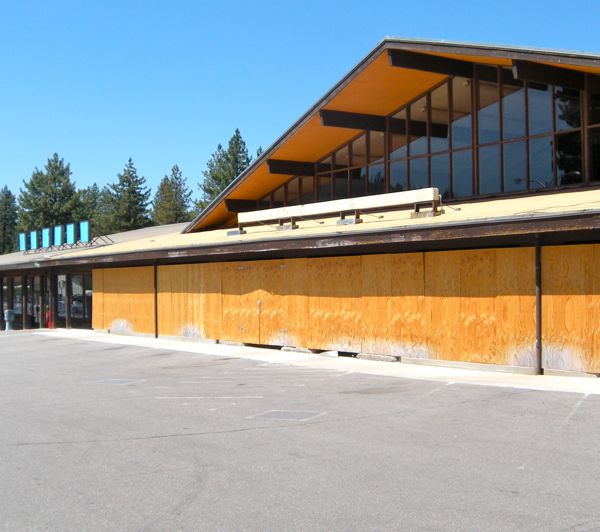
The South Lake Tahoe Y center has been revamped from its boarded-up days and will have a T.J. Maxx in the spring. Photo/LTN file

The discount clothing store filed the necessary paperwork with the city Dec. 29 and the city has sent out a press release saying as much.

However, in an email to Lake Tahoe News, Carrie Garfield, T.J. Maxx media relations supervisor, wrote, “We do not have a lease signed for a new T.J. Maxx store in South Lake Tahoe, so I cannot confirm anything for you at this time.”

While this had been the store long-rumored to go in at that location, differences between the out-of-town landowners and tenants got in the way of this happening sooner. One of the issues was the minimum amount of square footage a T.J. Maxx likes to have. The additional 10,000 square feet was obtained by going into the connecting building.

Who the tenant will be in that section has not been disclosed.

The city says it is expected the store will employ about 70 people, with the bulk being part-time positions. City officials would not estimate what this might mean in terms of revenue for local coffers.

The façade of the store is complete, with more interior work to be done. Expect the doors to open in March or April.


Court: California can eliminate redevelopment

By Kevin Yamamura, Sacramento Bee

In a significant budget win for Gov. Jerry Brown and lawmakers, the California Supreme Court ruled Thursday the state can eliminate the local agencies that subsidize construction in blighted areas.

The decision strengthens the state’s ability to take $1.7 billion from redevelopment agencies for the current budget. It also provides leverage for state leaders to continue using redevelopment property tax dollars to balance future budgets.

The court ruled invalid a second bill that would have reconstituted redevelopment agencies in a different form.

The court called the elimination of redevelopment “a proper exercise of the legislative power vested in the Legislature by the state Constitution.”

Read the whole story


Same-sex couples pay more in taxes than heterosexuals

By Blake Ellis, CNN Money

NEW YORK — Same-sex spouses are paying as much as $6,000 a year in extra taxes because the federal government doesn’t recognize gay marriage, according to an analysis conducted for CNNMoney by tax specialists.

While marriage provides tax benefits for many heterosexual couples, same-sex families don’t enjoy the same perks because they are not allowed to file their federal returns jointly.

The imbalance persists despite increasing acceptance of gay marriage as a legal right. More than 12 states now grant full or partial marriage rights to same-sex couples, and a recent Gallup poll showed — for the first time — that a majority of Americans favor gay marriage.

But not the federal government, which is constrained by the 1996 Defense of Marriage Act. Even as more same-sex couples are able to file jointly at the state level, they are still forced to file as single when submitting federal returns to the IRS.

This means they can’t combine their income and deductions to take advantage of lower tax rates. It’s also harder for them to qualify for certain tax breaks because the credits phase out sooner for single filers.

Read the whole story


Nevada cracking down on campaign ads

By Anjeanette Damon, Las Vegas Sun

Skip Daly chuckled the first time he saw the website erected last year to anonymously attack his credibility during the Democratic assemblyman’s campaign.

“It was just so over the top, of course, no one would believe it,” Daly said.

TheUnionBoss.com was filled with ugly clichés about burying bodies in the desert and sending jobs to brothers-in-law.

It was an attempt to mock Daly, who as secretary-treasurer of the Laborers Union in Northern Nevada is an actual union boss.

Daly didn’t laugh for long.

“I sat back and said, ‘You know, this really isn’t very funny. And it’s not true,’” he said. “But it was a shadow group. I didn’t have anybody I could confront. And that’s not fair.”

Daly filed a complaint with the Secretary of State’s office but quickly found there was little that could be done to discover the identity of who had funded and created the website, which is still up .

“That just dumbfounds me,” Daly said.

As Nevada heads into another election year, an onslaught of such third-party campaign ads — many of them paid for by anonymous donors — are sure to come, particularly in the presidential and U.S. Senate races as federal third-party groups ratchet up fundraising in the wake of court decisions loosening campaign finance restrictions.

But on a state level, Secretary of State Ross Miller has been fighting anonymous third-party groups — taking some to court, investigating complaints made to his office and successfully pursuing legislation that will make it easier to compel such groups to disclose where they get their money and how they spend it.

Thanks to a bill sponsored by Daly, the Legislature gave Miller limited subpoena power to obtain documents from Internet hosts and the post office to help determine who’s behind the anonymous groups.

Read the whole story


State panel to reconsider Washoe Meadows decision

By Kathryn Reed

Second thoughts are what the California State Park and Recreation commissioners are having regarding the October decision to approve the final EIR for the Upper Truckee River restoration project, and to swap land between Washoe Meadows State Park and Lake Valley Recreation Area to allow Lake Tahoe Golf Course to be reconfigured.

Commissioners at their Jan. 27 meeting in the Bay Area are having another public hearing on the state park in Meyers.

The agenda item says: Reconsideration of, and upon reconsideration, action on approval and findings for the Environmental Impact Report, General Plan Amendment & Classification Adjustment related to the Upper Truckee River Restoration & Golf Course Reconfiguration Project.

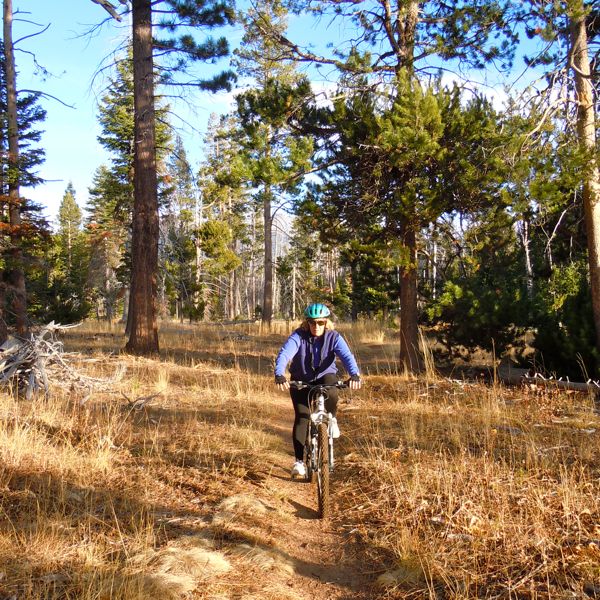
Without snow, Washoe Meadows is still good for mountain biking -- though if the decision is not overturned, this section will become a golf course. Photo/Kathryn Reed

No one from State Parks or the commission was available for comment Tuesday night. So it’s not known who asked for the issue to be heard again or how often this happens by the state commission.

At the Lake Tahoe meeting two months ago the decision was unanimous to accept staff’s recommendations.

The decision by the commissioners came as Ruth Coleman, director of the Department of Parks and Recreation, sat to their left. She is now in jeopardy of losing the job she was appointed to in 2002 by then-Gov. Gray Davis.

The State Parks Peace Officer Management Association sent a letter Dec. 14 to Gov. Jerry Brown that said 93 percent of the 56 percent of the members polled want a new director.

Whether her tenuous situation played a roll in rehearing the Washoe project is not known.

Before the public items are addressed next month the commission will go into closed session to discuss the lawsuit filed by the Washoe Meadows Community. This group filed a lawsuit Nov. 23 in Alameda County Superior Court on various grounds in an attempt to halt the project as approved.

Both sides have agreed to push back some of the deadlines regarding filing of papers in the case.

Washoe Meadows Community supports Alternative 3 – which would take the 18-hole course down to nine holes or convert it to an 18-hole executive course.

The reason the golf course would be altered is to accommodate restoration of the river – an ongoing project by all parties who own property where the river runs through it. It’s all about reducing sediment that reaches Lake Tahoe and restoring the ecosystem.

The Tahoe Regional Planning Agency Governing Board still needs to vote on the Washoe Meadows section, but that has been pulled indefinitely at the request of State Parks.

Lynne Paulson, a member of the Washoe Meadows Community, said her group would be present at the January public hearing.

She had not been given a heads up about the issue being on the January agenda; learning about it when notification of the meeting was sent via mass email Dec. 27.

“I hope this leads to a better alternative,” Paulson told Lake Tahoe News of the Jan. 27 meeting.

Regarding the lawsuit, Paulson does not expect a settlement conference to be scheduled before the commission meets.

—————

Meeting info:

• Jan. 27 at 9am in the Community Room of the Brentwood Community Center, 35 Oak St., Brentwood.

• To comment on agenda items, write to State Park and Recreation Commission, Box 942896, Sacramento, CA 94296-0001, or email LNastro@parks.ca.gov, or call (916) 653.0524.

• The meeting agenda is online.


Court: Tahoe beaches do not have to be open to the public

By Cy Ryan, Las Vegas Sun

CARSON CITY — A general improvement district that purchased four beaches on the Nevada side of Lake Tahoe in 1968 is not violating the U.S. Constitution in barring the public from the areas, a federal court has ruled.

The U.S. Ninth Circuit Court of Appeals has denied the petition of Frank Wright, who contends the ordinances of the Incline Village General Improvement District are invalid.

The appeals court, in a decision Tuesday written by Judge Milan D. Smith Jr., quoted a prior ruling that said, “The First Amendment does not guarantee access to property simply because it is owned or controlled by the government.”

Smith wrote, “The government may limit the use of properties under its control to the uses to which the properties are lawfully dedicated.”

Read the whole story


Youngster walking after fall from Diamond Peak chairlift

A 4-year-old boy survived an 8-foot fall from the Schoolhouse chairlift at Diamond Peak in Incline on Dec. 27.

Steve Eikam, North Lake Tahoe Fire Protection District battalion chief, told Lake Tahoe News his department first called for a helicopter, but canceled that when it was determined the injury was minor. An ambulance transported the boy to Incline Village Community Hospital so X-rays could be taken.

Neither the name of the youth nor his hometown was released.

This is the second time this month a child has fallen from a Lake Tahoe area chairlift. John Hendersn, 7, of Davis died from the injuries he stained after falling 60 feet from a Sugar Bowl chairlift.

 — Lake Tahoe News staff report


Fire destroys 2 houses, kills 2 dogs on South Shore

By Kathryn Reed

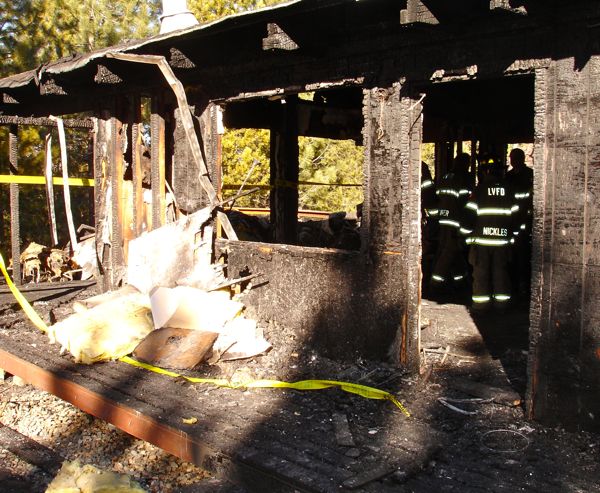
Two dogs are dead and the residents of two South Shore houses have been displaced after a fire raced through both structures Monday night.

Hot ashes left in a trash can on wood deck smoldered before erupting into flames, engulfing the first house and spreading to the one next door.

Firefighters from Lake Valley on Dec. 27 help residents of a burned out house search for possessions. Photo/Provided

“This is the third structure fire we’ve responded to because of (hot ashes) in the last couple weeks,” Leona Allen, spokeswoman with Lake Valley fire, told Lake Tahoe News.

Lake Valley and South Lake Tahoe firefighters responded Dec. 26 at 8:30pm to the 900 block of Onontioga Street, which is off Pioneer Trail.

A dollar amount has not been put on the loss. No people were injured. The dogs who were killed resided in the house where the fire started.

The fire spread a bit into the adjacent forest as well.

“The safety message is it has to be an approved container with a lid and put on a non- combustible surface,” Allen said of where to place hot ash from fireplaces or wood stoves.


Dream Act students live in state of limbo

By Stephen Magagnini, Sacramento Bee

Mandeep Chahal is a young woman in limbo.An honors student at UC Davis, Chahal has plans for medical school and a career spent healing children in poor communities.

She is also undocumented, which means no matter what academic degrees she ultimately earns, her ability to work in her chosen profession in the United States remains clouded in doubt. In just more than a year, under the California Dream Act legislation Gov. Jerry Brown signed into law in October, Chahal and more than 10,000 other undocumented students in the state can start competing for millions of dollars in public and private college financial aid.

The legislation allows undocumented students who came to the country before age 16 and attended California high schools access to public financial aid, including Cal Grants. Those students already are eligible for in-state tuition, and Brown in July signed a companion measure affording them access to private financial aid.But nothing in the legislation eases their path toward citizenship; and no matter how well those students do in college or graduate school, they will have a tough time landing professional jobs because undocumented students can’t get the Social Security cards required by hospitals, law practices, engineering firms, universities and other employers.

Chahal, who was 6 years old when her mom brought her to the United States from the Punjab region of India, wonders if her hard work and growing debt will pay off.”People like me are in this limbo state,” said Chahal, now 21. “I don’t have a path to legalization. You can absolutely get into medical school, but if I don’t have legal status, all that work will go down the drain. I won’t be able to help anyone here in California, where I grew up.

“President Barack Obama is pushing federal Dream Act legislation that would create a path to citizenship for young people who were brought to the United States illegally as children and went on to attend college or serve in the U.S. military. But the bill has failed to get out of Congress, opposed by some Republicans who argue it would draw more undocumented immigrants.

Assemblyman Tim Donnelly, R-Twin Peaks, makes the same argument about the California legislation. He is gathering signatures for a referendum that would repeal Assembly Bill 131, which he calls “The California Nightmare Act.”Donnelly rails against the “unfairness” of AB 131, saying the children of parents who broke the law shouldn’t go to college “on the backs of taxpayers” while “California is billions of dollars in the hole, 2.5 million people are out of work, the governor has cut our schools, shut down job centers, closed our state parks and slashed veterans’ reentry services … “The architect of the Dream Act legislation, Assemblyman Gil Cedillo, D-Los Angeles, counters that California’s future depends on undocumented students who, once they get legal status, will shore up California’s economy and tax base.”Many parents of these children pay taxes for many services they cannot get,” said Cedillo.

Even without citizenship, the so-called “Dreamers” can work as tutors, researchers, caregivers, architects and lawyers, Cedillo said.

“We want them to be prepared to optimize their God-given talents so they can make a constructive contribution,” he said. “By not educating them, they may end up being illiterate, ignorant and a burden on society.”

Read the whole story