3 El Dorado County residents survive cruise ship accident

By Denny Walsh, Sacramento Bee

The final leg of a European vacation ended abruptly early Saturday morning for three El Dorado County residents when the Costa Concordia cruise ship ran aground and tipped on its side off the Tuscany coast.

Adam and Joanne Lynch of Pollock Pines and Phyllis Egan of Placerville were unhurt during what they described to Joanne Lynch’s sister, Melody Rainwater, as a chaotic and somewhat unnerving experience.

Rainwater called the Bee to share news of her family’s narrow escape.

Egan and the Lynches did not return messages left by the Bee at their hotel in Rome.

“Their cabin was on the dry side, and they were able to get out pretty easily,” Rainwater said Joanne Lynch told her. Her sister telephoned from the U.S. Embassy in Rome to assure Rainwater they were safe. In a news release, embassy staff estimated that as many as 130 Americans were on board the Costa Concordia.

Like many of the other 4,231 passengers and crew, the El Dorado County trio spent the night on the tiny island of Giglio, where they took shelter in a church.

Read the whole story


Nevada trying to protect its tobacco payments

By Sean Whaley, Nevada News Bureau

CARSON CITY – A state panel this week supported a request from the Department of Taxation for $260,000 to hire a team of auditors to track cigarette sales to protect a $40 million a year payment to Nevada from the nation’s major tobacco companies.

As much as $360 million paid to the state beginning in 2003 is at risk as Nevada engages in arbitration over the annual payments made by the nation’s major tobacco companies as part of the 1998 Master Settlement Agreement (MSA), said William Chisel, director of the Tax Department.

“The stakes for the arbitration are high,” he said. “The risk of losing substantial amounts of money increases over the years if we do not institute this team.”

The tobacco payments help fund the Gov. Kenny Guinn Millennium Scholarship for eligible Nevada high school graduates, among other programs.

The Board of Examiners, made up of Gov. Brian Sandoval, Attorney General Catherine Cortez Masto and Secretary of State Ross Miller, approved the request for the funding from the Legislature’s contingency fund to establish the three-person enforcement unit.

Lawmakers who serve on the Senate and Assembly money committees will meet as the Interim Finance Committee Feb. 9 to consider the request.

Sandoval asked Chisel if the request should have been submitted to the 2011 Legislature so tobacco funding could have been used to fund the unit. The Attorney General’s Office said the funding from the master settlement agreement has historically funded its oversight of the tobacco agreement, but that the Tax Department has not been funded in this way.

Sandoval said the enforcement unit costs should be built into the next budget with tobacco funds identified as the funding source.

Chisel said it is important for the state to monitor the sales of cigarettes by the smaller tobacco companies that are not part of a master settlement agreement.

As part of the MSA, there is a requirement that these smaller companies set aside a portion of their tobacco sales in an escrow account in an amount proportionate to the payments made to the state by the major tobacco companies. The MSA provides for a reduction of the required annual payments by the major tobacco companies to any state which fails to adequately enforce these laws in a particular calendar year.

Chisel said the team will work to protect the payments that have already been made to the state.

“Well, we’re in arbitration right now with the big tobacco companies and our concern is that we want to track these nonparticipating manufacturers, the ones that did not get involved with the MSA,” he said. “We’re responsible to make sure that they pay into an escrow account of two cents per cigarette. At stake is the $40 million we get each year for the MSA payment.”

Nevada has not tracked these sales and payments before, and doing so would lessen the risk of losing any portion of the MSA payments in the arbitration process, Chisel said.


Seismic deficiencies require changes to Fanny Bridge

By Kathryn Reed

STATELINE – News that a main sewer line may possibly run under where the intersection of highways 28 and 89 in Tahoe City could be relocated came as a surprise to transportation officials.

Marcia Beals, general manager for the Tahoe-Truckee Sanitation Agency, dropped this piece of information on the Advisory Planning Commission of the Tahoe Regional Planning Agency at the Jan. 11 meeting.

She was one of nine people to share her views and concerns about altering the highway configuration to accommodate Fanny Bridge. Fanny Bridge has been deemed seismically unsafe for a state highway.

Fanny Bridge in Tahoe City does not meet seismic standards.

“We’ve looked at relocation concepts and have difficulties in how that could be done,” Beals told the board.

Jeff Smith, a consulting engineer for the sewer district, pointed out there could be problems with manhole covers, the weight from the road placed on the lines, and if a rupture occurred during construction what that would mean to contaminating the Truckee River.

After the meeting Tahoe Transportation District officials spoke briefly with Beals and Smith, with the plan to have more in depth discussions soon.

At this stage, all lines on a map are rough and no decisions about a route have been made.

Originally five alternatives were proposed by the Tahoe Transportation District to reroute highway traffic from this busy intersection and off the bridge that crosses the Truckee River.

Two other alternatives were introduced at the APC meeting from comments brought forward at the two scoping meetings in December.

“There’s a lot of conflict in that area,” Alfred Knotts, TTD planner, told the APC board.

One alternative is the standard do nothing. That alternative could bring load restrictions for trucks crossing it – which in turn could affect commerce along the West Shore.

Some alternatives have a section of Highway 89 running along the lake becoming a road Placer County would own, with a bypass going through 64 acres owned by the U.S. Forest Service to the west to connect with Highway 89 farther west of the current Y in Tahoe City.

One idea is to not allow any traffic crossing Highway 89. This would create a more pedestrian, bike friendly area.

Another is to build a bigger, more stable bridge.

“A new or improved bridge would reflect that cultural value,” Knotts said.

Roger Kahn, who owns two parcels at the Tahoe City Y, would have preferred TTD staff met with him and others whose property are likely to be affected.

He said closing the road would have a huge economic impact at that end of Tahoe City. The Bank of the West branch manager echoed that concern.

Leigh Cullen said she’s concerned if Placer County is responsible for Fanny Bridge that necessary repairs won’t be made.

Richard Courcier took issue with studies that say part of the project is designed to relieve congestion, when in fact he said it’s only busy in July and August at the Y. He also said having two roads – not closing off the bridge – would be better to help on high traffic days.

He owns the rafting company that operates on the Truckee River. Courcier said shutting Fanny Bridge off to vehicle traffic would create more vehicle miles traveled by anyone coming up the West Shore wanting to go into the heart of Tahoe City.

The APC board took no action last week.

Comments on the Fanny Bridge project are being taken until Jan. 30. Documents are on TTD’s website.

All of the alternatives will be studied in the environmental impact statement, environmental impact report, and environmental assessment. It’s expected a draft of the three environmental documents will be released in the fall for a 60-day comment period. The final EIS/EIS/EA could come out in the first quarter of 2013. Project approval would be on target by summer 2013, with construction possible in 2015.


Communities turning wastewater into drinking water

By Wendy Koch, USA Today

Drinking wastewater? The idea may sound distasteful, but new federally funded research says more Americans are doing so — whether they know it or not — and this reuse will be increasingly necessary as the U.S. population expands.

Treated wastewater poses no greater health risks than existing water supplies and, in some cases, may be even safer to drink, according to a report released Tuesday by the National Research Council, a science advisory group chartered by Congress. “We believe water reuse is a viable option” to deal with growing water scarcity, especially in coastal areas, says Jörg Drewes, an engineering professor at the Colorado School of Mines who contributed to the report.

“This can be done reliably without putting the public at risk,” he says, citing technological advances. He says it’s a waste not to reuse the nation’s wastewater, because almost all of it is treated before discharge. This water includes storm runoff as well as used water from homes, businesses and factories.

Of the 32 billion gallons of wastewater discharged every day in the USA, the report says 12 billion — equal to 6 percent of total U.S. water use — is sent to an ocean or estuary and is thus a lost resource.

Read the whole story


Prime piece of real estate for sale at Lake Tahoe

By Kathryn Reed

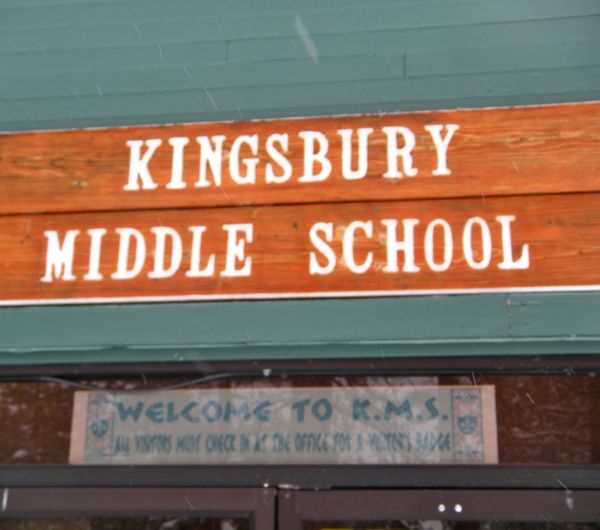
Kingsbury Middle School is officially for sale. The asking price is $4 million.

The Douglas County School District board agreed to sell the parcel and buildings at its Jan. 10 meeting. This was one of many votes during the last few years about the closed site.

Not enough students forced the closures of KMS. Now it's for sale. Photo/LTN file

The 36,000-square-foot school sits on 10 acres of pristine lake ridge property above Lake Village in Stateline.

Greg Felton told the board that property like this doesn’t come along that often and if the district’s circumstances were to change, it may be impossible to buy land at Lake Tahoe.

“He was right,” Superintendent Lisa Noonan told Lake Tahoe News after the meeting.

But Noonan added, “This was a carefully considered process. We’ve looked at projections, at the enrollment trends. The board feels we owe it to the students and district to go forward. (The money) goes to capital projects that do help children in the district.”

The board is expected to look at any offers at its April 10 3:30pm meeting at Zephyr Cove.

“If there are no buyers, then we have to look at fixing up Kingsbury and having a lease arrangement,” Noonan said.


Nevada seeks waiver from No Child Left Behind

Publisher’s note: Nevada Department of Education is taking a survey about No Child Left Behind until Jan. 27.

By Sean Whaley, Nevada News Bureau

CARSON CITY — Nevada is joining with many other states in seeking a waiver from the requirements of the federal No Child Left Behind Act, a state panel was told this week.

If granted, the waiver being sought by the Nevada Department of Education will still require a major ongoing effort at measuring and improving student achievement, said Keith Rheault, state superintendent of public instruction. Rheault updated the waiver effort for the P-16 Advisory Council.

The waiver being offered by the U.S. Department of Education gives states flexibility on certain requirements of the law, which just saw its 10-year anniversary. The waiver is only valid for two years, however, unless Congress takes further action, Rheault said.

“The biggest complaint about No Child Left Behind right now is that if one or two students in a particular category, like special education students, fall below the proficiency, that can cause the whole school to be determined as not making adequate yearly progress,” he said.

Fifty-five percent of Nevada’s 680 public schools failed to meet adequate yearly progress for 2011.

“Nevada will take this opportunity to build the type of school and educator accountability system that reflects our values,” says a Nevada Education Department memo on the waiver process.

Dale Erquiaga, senior adviser to Gov. Brian Sandoval, said the governor supports seeking the waiver.

“The governor has been kept abreast of the waiver application by the superintendent and the core team that is working and he absolutely supports the direction that they are headed,” Erquiaga said. “The current system, as he has talked about for a long time, is too narrow.”

No Child Left Behind has been useful in providing a foundation for introducing accountability into Nevada’s public school system, he said.

“But we know that if we look at growth, and climate, and some of the other issues that they will address in the waiver, that we’ll be better off than we are today,” Erquiaga said.

State Sen. Barbara Cegavske, R-Las Vegas, chairwoman of the P-16 Council, said she was proud that the No Child Left Behind Act became a reality because accountability in public education is so important.

“I think it was a great start,” she said. “With education we need to continuously be moving, and re-looking, re-thinking. Sometimes it takes us longer than we wanted.”

In order to be granted the flexibility provided for by the waiver, the agency must submit an application that explains how it will create a system that includes college and career-ready expectations for all students, state-developed recognition of and accountability for schools, effective instruction and the reduction of duplication and unnecessary burdens.

Nevada plans to submit its wavier application by Feb. 21.

Rheault said the decision to seek the waiver came after discussions with Nevada’s 17 school districts.

It will still require an assessment of how each school is performing, he said. Idaho is opting to use a star system with five stars identifying a top performing school, Rheault said.

Nevada plans to use a measure of individual student growth in achievement as part of the new assessment under the waiver, he said.

Eleven states sought waivers in the first round of applications, and a total of 39 states ultimately are expected to seek the waivers, Rheault said. Another 11 states say they don’t want waivers, he said.

Rheault had praise for what the act helped Nevada accomplish.

“Our accountability system wouldn’t be anywhere near where it’s at if we didn’t’ get forced into moving faster through No Child Left Behind,” he said. “I think it was just the designation of how it was so limited in how you defined what a good school was. That’s really the focus of these waivers and that’s why I thought it was important the state at least put in an application to change that.”


Workshop to focus on WHS’ 4-day school week

Douglas County School District is looking for input about how the four-day school week is working at Whittell High School.

The Jan. 19 6pm meeting at the Zephyr Cove school will be facilitated by Steve Mulvenon, a consultant hired to lead the project.

The 7-12 school went to four days a week starting in fall 2009. Much of the change had to do with 80 percent of the students participating in athletics, which often meant losing all day Friday out of the classroom. Many of Whittell’s events require driving long distances.

At the meeting next week there will be workstations for people to visit.

A report is likely to be made to the school board at the April 10 3:30pm meeting in Zephyr Cove. A decision could be made that Tuesday as to whether the four-day week is continued next school year.

 — Lake Tahoe News staff report


Truckee hires police chief from San Joaquin Valley

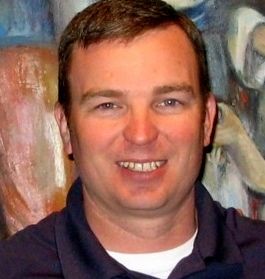
Adam McGill, 39, has been hired as Truckee’s police chief. He will be sworn in Feb. 22 at 4pm.

He was the police chief in Newman, a small town in the Central Valley. For the last 18 months, McGill has worked for the U.S. State Department in Iraq as a senior police adviser.

Adam McGill

McGill has a master’s degree in emergency services and 20 years of experience in law enforcement.

McGill’s wife and two children will join him at the end of the school year.

He replaces Nicholas Sensley who retired in November.


LTUSD enrollment leveling

Enrollment at all four elementary schools in Lake Tahoe Unified School District is up from 2010, indicating declining enrollment is stabilizing.

Overall enrollment is down by 20 students – the smallest drop since the decline started in 1996-97.

Free and reduced lunch counts are up from 59.4 percent in 2010-11 to 62.5 percent this school year.

 — Lake Tahoe Unified School District


Winter forecast to arrive in Tahoe next week

By Jeff Delong, Reno Gazette-Journal

The winter that didn’t come may be on its way.

Hopefully, anyway.

After a record-making spate of sunny, dry weather kept conditions bone dry through December and half of January, a pattern change in the Pacific could be sending wet weather on its way.

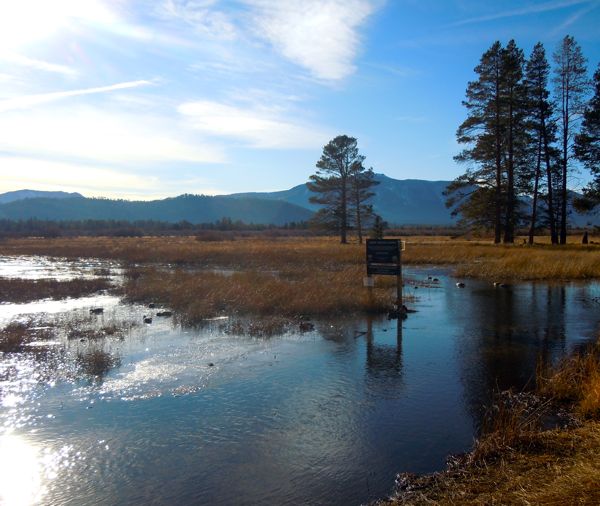
Despite the lack of moisture this winter, the Upper Truckee Marsh on Jan. 10 is still flooded. Photo/Kathryn Reed

It’s still a ways off — probably not until late next week or even next weekend — but forecasters said Thursday that rain and snow could finally make an appearance in the Reno-Tahoe area.

“It’s quite a shift from all the doldrums,” said Shane Snyder, a meteorologist with the National Weather Service in Reno.

It would be welcome news for Reno-area residents watching lawns brown under winter sun and water suppliers anxious to build on reserves for the future. Skiers and snowboarders are biting at the bit to take to slopes white with fresh snow while ski resort operators are eager to improve upon a season thus far characterized by costly dryness and mostly barren mountains.

The first hint at expected change comes Sunday as the region is brushed by a storm system forecast to bring cold air and high wind but only a slight chance of showers to the north, Snyder said. Sunday’s system is expected to be more associated with increased fire danger than any real chance at wet relief.

Read the whole story