Gingrich win in S.C. makes Nevada relevant again

By Karoun Demirjian, Las Vegas Sun

Remember Wednesday? When Mitt Romney was poised to win South Carolina, becoming the first non-incumbent Republican in history to take every early GOP presidential contest in a sweep that would render Nevada all but moot by the time the caucuses swung out West?

What a difference just a few days makes.

Newt Gingrich’s South Carolina win Saturday — combined with the revelation earlier this week that Rick Santorum actually won Iowa — has split the spoils of this GOP nominating contest so fully that there’s no way the early states, even once Florida votes, will have unequivocally determined a front-runner, putting Nevada back in position of influence in picking a presidential candidate.

“This speaks volumes for Nevada’s relevance. … No matter who takes Florida, Nevada is vital,” Nevada GOP chairwoman Amy Tarkanian said Saturday night. “I’m very excited.”

Gingrich staged a decisive victory in South Carolina’s Republican presidential primary Saturday after managing to overcome a double-digit point deficit in just a few days. But what’s more significant is how he did it: by coalescing the conservative Republican vote.

Read the whole story


Climate change skepticism seeps into classrooms

By Neela Banerjee, Los Angeles Times

WASHINGTON — A flash point has emerged in American science education that echoes the battle over evolution, as scientists and educators report mounting resistance to the study of man-made climate change in middle and high schools.

Although scientific evidence increasingly shows that fossil fuel consumption has caused the climate to change rapidly, the issue has grown so politicized that skepticism of the broad scientific consensus has seeped into classrooms.

Texas and Louisiana have introduced education standards that require educators to teach climate change denial as a valid scientific position. South Dakota and Utah passed resolutions denying climate change. Tennessee and Oklahoma also have introduced legislation to give climate change skeptics a place in the classroom.

In May, a school board in Los Alamitos passed a measure, later rescinded, identifying climate science as a controversial topic that required special instructional oversight.

“Any time we have a meeting of 100 teachers, if you ask whether they’re running into pushback on teaching climate change, 50 will raise their hands,” said Frank Niepold, climate education coordinator for the National Oceanic and Atmospheric Administration, who meets with hundreds of teachers annually. “We ask questions about how sizable it is, and they tell us it is [sizable] and pretty persistent, from many places: your administration, parents, students, even your own family.”

Against this backdrop, the National Center for Science Education, an Oakland-based watchdog group that supports the teaching of evolution through advocacy and educational materials, plans to announce on Monday that it will begin an initiative to monitor the teaching of climate science and evaluate the sources of resistance to it.

NCSE, a small, nonpartisan group of scientists, teachers, clergy and concerned individuals, rose to prominence in the last decade defending evolution in the curriculum.

The controversy around “climate change education is where evolution was 20 years ago,” said Eugenie Scott, executive director of NCSE.

Read the whole story


Profits dip for El Dorado Savings

By Mark Glover, Sacramento Bee

Placerville-based El Dorado Savings Bank, one of the area’s most consistently profitable financial institutions, saw a slight decrease in net income in 2011.

The bank, which operates 32 branches in Northern California, on Friday reported a full-year profit of $10.2 million, down from $10.9 million in 2010.

Fourth-quarter net income was $3.3 million, down from $3.5 million in the final quarter of 2010.

Assets as of Dec. 31 totaled $1.7 billion, up $50 million from 2010.

Chairman and CEO Thomas Meuser said he was pleased with bank operations and a flow of new customers amid “challenging conditions” in 2011.


Washoe Drive Fire contained, people allowed to return home

By Reno Gazette-Journal

The Washoe Drive Fire was considered 100 percent contained as of 6am, Sierra Fire Protection District spokesman Mark Regan said.

All evacuation requirements were lifted by 8am, Regan said.

“The weather helped, but also the crews working helped speed things along,” Regan said.

That included NV Energy, which made sure there were no dangers to the public from power lines, and the Nevada Department of Transportation, which fixed the guardrails and cleaned the roads of debris.

“We couldn’t lift the evacuation order until the area was secured,” Regan said.

About 2,000 people in the area of Pleasant Valley and Old Highway 395 was reopened about 11 on Friday night, Regan said.


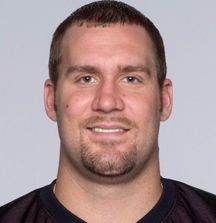
Lawsuit alleging rape by Steelers QB in Tahoe settled

By Martha Bellisle, Reno Gazette-Journal

The civil lawsuit filed by a former Harrah’s Lake Tahoe casino host claiming Pittsburgh Steelers quarterback Ben Roethlisberger raped her while he was visiting Lake Tahoe for a celebrity golf tournament in 2008 has been resolved.

But neither side will say whether the Super Bowl star paid Andrea McNulty any money as a settlement.

Ben Roethlisberger

McNulty filed the suit in Washoe District Court in 2009, claiming Roethlisberger lured her into his penthouse suite and forced her to have sex. The suit also named a list of Harrah’s employees, claiming they covered up the alleged sexual assault.

In August 2011, the Nevada Supreme Court ruled against Roethlisberger and the other defendants, who had filed motions to move the case out of Reno. The Supreme Court affirmed a judge’s ruling that the case should stay in Washoe District Court.

In December, all of the parties in the suit signed stipulations to dismiss the case.

McNulty’s lawyer, Cal Dunlap, refused to discuss the terms of the stipulation.

Roethlisberger’s lawyer, David Cornwell, and his agent, Ryan Tollner, did not respond to calls and emails requesting comment.

Read the whole story


Real estate numbers show no neighborhood is recession-proof

By Robert Stiles

Single-family residential home sales increased 7 percent in the South Lake Tahoe area last year. Distressed home sales accounted for 49.4 percent of the single-family residential homes sold. That’s 269 distressed home sales divided by 544 total annual sales.

We currently have a median sales price in the area of $265,000. This is a 17 percent decline from December 2010 values when the area median price was $319,000.

The last time we saw prices this low was in 2002.

Short sales increased by 18.6 percent last year. Bank owned property sales increased by 9.3 percent.

The condominium and town home median price value increased 45.3 percent from 2010 to 2011. Condominiums sold in 2010 mostly averaged less than $200,000, while last year those costing more than $200,000 finally hit the market.

Same thing happened in the Tahoe Keys, with the highest priced area holding out on price declines until it also finally succumbed.

The recession is hitting on all cylinders, with no neighborhood area exempt.

Robert Stiles is a real estate broker with Tahoe Real Estate Services.


JPA agrees to refinance South Shore recreation bonds

By Kathryn Reed

While it’s up to the recreation JPA board to decide how to spend the $15,000 that is estimated to be saved each year by refinancing the bonds, it is likely to go toward recreation on the South Shore instead of saving taxpayers a few cents on the $18 a year they pay now for the measure.

That will be an agenda item if and when the bond sales go through and there is actual money to talk about.

The South Lake Tahoe Recreation Facilities Joint Powers Authority – made up of Hal Cole (South Lake Tahoe), Norma Santiago (El Dorado County), and Debbie Henderson (Tahoe Paradise Resort Improvement District) – agreed Friday to go forward with changing 75 percent of the bonds from tax-exempt to taxable and refinancing the remainder as tax-exempt.

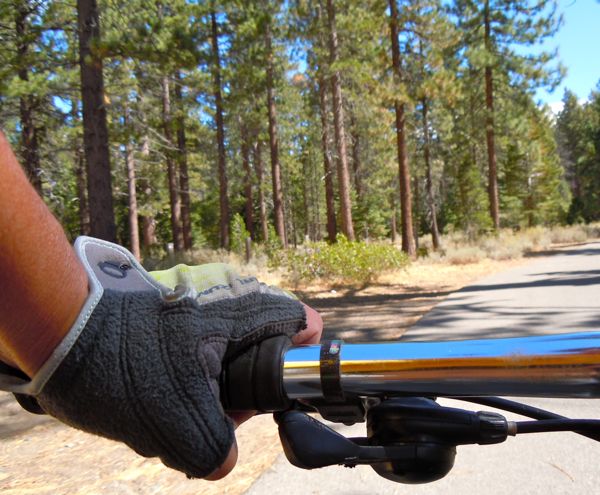
Refinancing the recreation bonds should provide more money for bike trail and ball field maintenance. Photo/LTN

A contingency is the JPA board wants the county Board of Supervisors at its Jan. 24 meeting and Tahoe Paradise board on Jan. 26 to endorse the refinancing idea.

Santiago and Henderson after the meeting told Lake Tahoe News they believe their respective boards will give the green light. Both boards have been apprised of the proposal that will be before them.

However, the JPA board can do what it wants without the approval of the three member agency boards. What the JPA board would do if a no vote were given next week by either or both boards, remains a large question mark.

What has changed since the South Lake Tahoe City Council on Jan. 17 approved the refinancing is interest rates have decreased. Compass Bank is now a better alternative than Alliance Bank.

While financial advisor Mark Northcross would receive a bonus from Alliance if he were to bring the JPA’s business there, he is recommending Compass because of the cost savings to his client – the JPA. (He was the financial advisor when the original bonds were sold in 2001.)

On Wednesday, Compass’ taxable bonds dropped from 5 percent to 4.75 percent and their tax-exempt bonds dropped from 3.25 percent to 3.2 percent.

Northcross noted if the JPA were to refinance all the bonds at the current tax-exempt status, that the annual savings would be $50,000.

The city, though, maintains changing the bond structure will save taxpayers at least $150,000 more a year because the ice arena will stay in the hands of a private operator. With that entity paying the city rent and other money, the city’s coffers could expand even more. City Manager Tony O’Rourke’s mantra is the JPA taxpayers benefit if the city is saving money.

Talk of refinancing the bonds was never brought up by the JPA board until South Lake Tahoe realized the contract it had with private operators of the ice rink had to be altered to comply with IRS rules as they relate to for-profits. That meant creating a 50-day termination clause that is black and white.

The original contract between the city and Tahoe Sports Entertainment (and one that is likely to be reinstituted after the bond sales are finalized) was for 10 years, with a 90-day out clause. Dissolution, though, had many strings attached. The longer contract provides incentives for TSE to make substantive investments in the rink.

The ice rink was built with voter-approved Measure S money.

Property owners on the California side of the basin – roughly encompassing the boundaries of Lake Tahoe Unified School District – pay $18 for Measure S. The JPA collects about $630,000 a year. There is $4.5 million in principal owed on the bonds that were approved in 2000 and sunset in 2030.

It’s expected the bond sales/refinancing will go through at the end of February.

Also at the meeting, the JPA board appointed people to the bicycle and ball field committees. Creation of the committees fulfills a requirement of the revised recreation measure – called Measure R – that was approved in November.

The two committees will have a joint meeting Feb. 3 at 9am at Lake Tahoe Airport where they will be given a primer on California’s opening meeting law and officers will be elected.

All committee meetings will be open to the public.

On the bicycle committee are:

• Russ Dahler

• Peter Fink

• Lauren Lindley

• Shay Navarro

• Charles Nelson

• Eric Thelin

• Mary Lou Whitcomb.

On the fields committee are:

• Marilyn Breisacher

• John Dalton

• Brian Hogan

• Charles Leonard

• Steve Noll

• Ken Riegal

• Steve Weiss.


Man says he is responsible for Washoe Drive Fire

By Reno Gazette-Journal

10:13pm:

Southbound Highway 395 is open at Mount Rose Highway. Northbound Highway 395 to reopen later tonight, Nevada Highway Patrol reports.

8:15pm (summary story)

The Washoe Drive Fire that destroyed 29 homes and charred 3,177 acres south of Reno started Thursday afternoon because a man improperly discarded hot fireplace ashes on the northern end of Washoe Valley, officials said Friday evening.

The blaze was 65 percent contained as 300 firefighters continued to work to extinguish hotspots amid another weather system that brought high winds and the threat of potential flash flooding in the areas that burned.

The elderly man, who officials declined to name Friday, came forward to investigators earlier in the day to admit he had discarded of the ashes in a utility trailer shortly before 1pm Thursday. This is about the time the Washoe Drive Fire started. So far, the cost of the response has been estimated at $690,000 while the damage is likely to be in the millions, officials said.

“He was overcome with remorse,” said Reno Fire Chief Michael Hernandez, who added the Washoe County district attorney will investigate and determine if criminal charges should be filed against the man.

Meanwhile, officials confirmed the only fatality associated with the fire was an elderly woman who lived on Old Ophir Road. The cause of death remains unknown, but authorities believed she died because of smoke inhalation. An autopsy was pending.

Officials had no word on when the 2,000 residents who remained evacuated from the area Friday night could return.

Read the whole story


Debate grows over exporting U.S. natural gas

By Simone Sebastian, Houston Chronicle

Debate is brewing over whether to keep the nation’s glut of natural gas at home for cheap energy or export it at five times the price, possibly creating jobs and boosting the domestic economy.

Businesses that purchase natural gas for industrial and residential use have rallied against proposals to liquefy and export the fossil fuel to Asian and European nations willing to pay much higher prices.

Nine companies have sought federal approval to export about 10 billion cubic feet of liquefied natural gas per day, which would boost prices for U.S. customers.

Cheniere Energy’s Sabine Pass LNG plant in Louisiana already has won approval to ship out more than 2 billion cubic feet of liquefied natural gas a day.

In total, the proposed export volume equals about 14 percent of the natural gas produced in the United States – 26.8 trillion cubic feet in 2010, according to the U.S. Energy Information Administration. The U.S. consumed about 23.8 trillion cubic feet.

There’s little doubt that exports will cause the price of natural gas to rise. The debate is whether the rise in gross domestic product and gas field employment might offset the negative effects of higher domestic energy prices.

“I don’t think anybody knows the answer to that question, which we think argues for slowing down these (export) facilities,” said Dave Schryver, executive vice president of the American Public Gas Association, a trade group for municipal gas utilities.

“Until you have a strong, accurate view of what the impact is going to have on consumers, it’s premature.”

The price of natural gas in the U.S. has plummeted as technology has made it economical to extract natural gas from dense shale rock.

Read the whole story


California top state for how it treats animals, Nevada ranked 30th

By Sean Whaley, Nevada News Bureau

CARSON CITY — Nevada ranked 30th among the states in how it protects animals in 2011, scoring only 25 points out of a possible 66, the Humane Society of the United States said in a national report this week.

Ranking first with 46 points was California, followed by New Jersey and Oregon with 40 points. In last place was South Dakota with eight points, with Idaho second to last with nine points.

Nevada improved its score from 2010, but the organization noted that the state’s laws regarding the possession of dangerous wild animals are weak. Nevada ranked 30th in 2010 but had 24 points, one fewer than in the 2011 report card.

The third annual rating evaluates the states on a wide range of animal protection laws, including animal cruelty codes, equine protection standards, wildlife issues, animals in research and farm animal policy.

“Our Humane State Ranking provides a big-picture look at how states are faring on animal-protection policies, and how they rank in the nation,” Wayne Pacelle, president and CEO of HSUS, said. “There are some states that are adopting innovative and strong policies to protect animals, while others are lagging badly. Animal protection is a serious matter for tens of millions of Americans, and we hope state lawmakers fulfill their moral responsibility and help us crack down on abuses.”

Nevada’s ranking was unchanged despite several measures approved by the 2011 Legislature to further protections for animals.

They included Senate Bill 223, sponsored by Sen. Shirley Breeden, D-Henderson, and Sen. David Parks, D-Las Vegas, known as “Cooney’s Law” after a dog brutally killed with a box cutter, was the highest profile animal welfare measure considered during the session. The new law makes willful or malicious cruelty to pet animals a felony on the first offense. Under previous law, a felony charge could be issued only after a third act of cruelty.

Also winning approval were:

– SB226, sponsored by Sen. Sheila Leslie, D-Reno, Parks, and Assemblywoman Peggy Pierce, D-Las Vegas, requiring the wildlife commission to regulate leg hold traps in congested areas.

– SB299, sponsored by Sen. Mark Manendo, D-Las Vegas, requiring commercial dog breeders to be licensed and to have regular county inspections, bans the stacking of cages and the use of wire floors in puppy mills, and prohibits the breeding of dogs younger than 18 months of age. The bill applies only to commercial breeders selling dogs as pets, and exempts hobby breeders.

– SB102, proposed by the Senate Natural Resources Committee, imposes civil penalties for illegally killing or possessing a trophy big game mammal, or for illegally killing or possessing certain wildlife species.

Not all measures were successful.

SB364, which proposed to ban horse tripping, a practice of roping a horse’s legs used in some non-sanctioned rodeos, failed to win approval in the Senate Natural Resources Committee. Supporters of the bill, including the Humane Society, said the practice is cruel and does occur in some non-advertised rodeos in Nevada.

Opponents said the proposal was an attempt to open the door to banning other types of rodeo events, and ultimately, rodeos themselves.