Court: Gay-marriage ban unconstitutional

By Maura Dolan, Los Angeles Times

SAN FRANCISCO — A federal appeals court Tuesday struck down California’s ban on same-sex marriage, clearing the way for the U.S. Supreme Court to rule on gay marriage as early as next year.

The 2-1 decision by a panel of the U.S. 9th Circuit Court of Appeals found that Proposition 8, the 2008 ballot measure that limited marriage to one man and one woman, violated the U.S. Constitution. The architects of Prop. 8 have vowed to appeal.

The ruling was narrow and likely to be limited to California.

“Proposition 8 served no purpose, and had no effect, other than to lessen the status and human dignity of gays and lesbians in California,” the court said.

The ruling upheld a decision by retired Chief U.S. District Judge Vaughn R. Walker, who struck down the ballot measure in 2010 after holding an unprecedented trial on the nature of sexual orientation and the history of marriage.

In a separate decision, the appeals court refused to invalidate Walker’s ruling on the grounds that he should have disclosed he was in a long term same-sex relationship. Walker, a Republican appointee who is openly gay, said after his ruling that he had been in a relationship with another man for 10 years. He has never said whether he and partner wished to marry.

Read the whole story


Ballot initiative is pot industry’s next move in California

By Peter Hecht, Sacramento Bee

A proposed ballot initiative aimed for the November elections begs a key question looming over California’s medical marijuana industry: Can stricter state regulation keep the federal government from shutting it down?

Dispensaries, medical marijuana growers and a powerful union local are rallying behind an initiative that would regulate California’s $1.5 billion pot trade.

They predict they will be able to raise $2 million from medical marijuana businesses and drug policy groups to qualify the measure for the November ballot. A drive to gather a required half-million valid voter signatures could begin this week after Attorney General Kamala Harris completes a legal summary and petitions are certified by Secretary of State Debra Bowen.

California’s medical marijuana economy is mostly governed by local governments, often with conflicting rules. The proposed initiative, the “Medical Marijuana Regulation, Control and Taxation Act,” would largely put the state in charge.

It would establish a medical marijuana enforcement bureau in the Department of Consumer Affairs. A commission – with majority representation from the medical cannabis community – would oversee the enforcement bureau, license dispensaries and marijuana cultivators, and set standards for the pot trade.

The effort is a political compromise by wary factions.

The “Emerald Growers Association” from the Humboldt and Mendocino counties pot country signed on after initiative backers rejected a model based on the dispensary-run pot growing centers used in Colorado. The group wanted assurances that rural outdoor pot cultivators wouldn’t be cut out of the market by urban indoor growers.

The United Food and Commercial Workers Union Local 5, which two years ago backed the Proposition 19 effort to legalize marijuana for recreational use, signed on to the new initiative after deciding it was the best option to protect union jobs in the pot industry.

The effort also includes Americans for Safe Access, an Oakland-based advocacy group for medical cannabis users that stayed out of the Proposition 19 fight.

Read the whole story


California school funding measure being whittled away

By Kevin Yamamura, Sacramento Bee

When teachers unions and education groups backed Proposition 98 nearly a quarter-century ago, they told voters it was “a well-thought-out plan for California’s schools to once again be among the very best in the nation.”

But as public schools pack more than 30 students into kindergarten classrooms, cut a week of instruction and shutter campus libraries, education advocates wonder to what extent Proposition 98 has served its purpose.

The state ranks among the worst in students per teacher and spent 12 percent below the national average per pupil even before the recession. Compared to their high-water mark in 2007-08, K-12 schools and community colleges will receive 12 percent less in state and local funding this year.

“It certainly doesn’t appear as if education has been treated as a favorite child over the last few years when you look at all the cuts,” said veteran schools lobbyist Bob Blattner.

The law, approved in 1988, is complex enough that watching a video tutorial by the Legislative Analyst’s Office feels like upper-level college work. The measure is designed to ensure that K-12 schools and community colleges receive about 40 percent of state revenues, as well as increases for growth in taxes and student enrollment.

Proposition 98, and a revision in 1990, allow for a safety valve in bad fiscal years. California can cut schools as long as it vows to send enough money to districts in the future. Though it may be of little comfort to families with children in schools now, the state eventually owes about $10.4 billion more to education.

“I think schools would be worse off without it,” said John Mockler, the education consultant widely credited as author of the initiative. “I can’t imagine how much worse, but they would be worse.”

Many say Proposition 13’s limit on property taxes led to Proposition 98 as schools had to compete more with other public programs for resources. Mockler contends the real tipping point came when Gov. George Deukmejian and lawmakers used a $1.1 billion surplus for tax rebates in 1987 rather than education.

The initiative itself has become a battle cry in state politics. Politicians now claim they “fully funded schools” if they follow Proposition 98 formulas, regardless of the condition of classrooms.

“I think that has hurt us over the years because nobody really understands what Proposition 98 is,” said Robert Miyashiro, vice president of School Services of California and an expert in K-12 finance. “People understand high class size, shortest school year, fewest textbooks.”

Read the whole story


Low caucus turnout has Nevada GOP contemplating primary

By Ray Hagar, Reno Gazette-Journal

The dismal turnout for the Nevada Republican caucus had some GOP leaders and lawmakers on Sunday considering replacing the system with a presidential primary election.The idea was discussed by Washoe County GOP officials Saturday night after just 6,700 Republicans attended the county caucuses, although the party was expecting about 17,000.

Caucus participation was down across Nevada. Although final numbers have not yet been released by the Nevada GOP, the projections are that the final turnout would be about 34,000, or 10,000 below the 2008 caucus mark of 44,000. GOP officials had predicted a turnout that could hit 60,000.

“We were talking about this last night,” said Dave Buell, chairman of the Washoe GOP. “We think the real issue is that Republicans hate the caucus system.

“And I’ll tell you, the people that did come to the caucus, overwhelmingly want a primary in this state and not a caucus,” Buell said.

Buell is not alone in his desire for a primary, a leading political consultant said.

“I think it is an idea whose time has come, especially with the way the count has gone today,” said Reno political consultant Greg Ferraro, referring to the troubles the Nevada GOP has endured in counting caucus ballots. “I think there is growing support among Republicans, even Republican leaders, that maybe a primary, even though it does cost some money, may be the way to go.”

Read the whole story


No charges to be filed after glider lands at Heavenly

By Kathryn Reed

National Transportation Safety Board officials have told El Dorado County sheriff’s officials they will not be investigating Sunday’s unplanned glider landing at Heavenly Mountain Resort.

“At this time it’s just being handled as an accident,” Deputy Greg Almos told Lake Tahoe News. No charges will be filed because no crime occurred.

The glider, which is owned by Soaring NV in Minden and operates out of the Minden Tahoe Airport, didn’t have enough wind to stay on the Nevada side of the ski resort. The pilot ended up landing about 1:30pm Feb. 5 near First Ride – a beginner chairlift – just steps from the California Lodge.

“The winds were not in their favor and forced them to come down on this side of the mountain crest,” Almos said.

Almos said the pilot realized he didn’t have enough wind to get him to Lake Tahoe Airport, trees were a problem for landing at Bijou Golf Course, and the ski resort then seemed like his best option.

No one at the resort was injured, though skiers and boarders did scramble to get out of the way.

“We’re outraged that something like this could happen. We’re glad that everyone came out of this OK, but there’s no excuse for this kind of irresponsible behavior,” Russ Pecoraro, Heavenly spokesman, told Lake Tahoe News. “We’ll do everything in our power to make sure this doesn’t happen again. We’re extremely lucky no one was hurt (Sunday).”

Dan Schuler with Soaring NV told Lake Tahoe News, “We had one of our instructors with an experienced pilot on a flight review who got on the wrong side of the mountain and had to land.”

Names of the pilots have not been released.

The glider was damaged slightly.


Glider plane makes emergency landing at Heavenly

Updated Feb. 5 at 8:40pm.

By Kathryn Reed

A glider plane made an unexpected landing at Heavenly Mountain Resort on Sunday afternoon.

There are no reports of injuries.

“We had one of our instructors with an experienced pilot on a flight review who got on the wrong side of the mountain and had to land,” Dan Schuler with Soaring NV out of Minden told Lake Tahoe News. The company operates the glider business out of the Minden Tahoe Airport.

Winds were calm to almost non-existent Feb. 5.

Schuler said he was not permitted to release the names of the people involved. He did say no one was injured.

A witness told Lake Tahoe News when she was on the Nevada side of Heavenly she saw the glider disengage from the plane as is normal. But then she got to the California side just after 1pm and the plane was landing near the beginner lift by the California Lodge.

No one from Heavenly returned phone calls.

A dispatcher with El Dorado County Sheriff’s Department said the U.S. Forest Service is handling the case. The Forest Service said the incident was on private property.

The National Transportation Safety Board and Federal Aviation Administration could not be reached Sunday.


Study: Nevada’s science curriculum receives a D grade

By Sean Whaley, Nevada News Bureau

CARSON CITY — As Gov. Brian Sandoval and the Board of Education move ahead with the selection of a state schools chief to push forward with education reform, a new report gives another reason for urgency: Nevada has received a D grade for its science standards from a national group.

The Thomas B. Fordham Institute this week released its report, “The State of State Science Standards 2012”, and if there is any good news, it is that Nevada is not alone in its poor marks.

“American science performance is lagging as the economy becomes increasingly high tech, but our current science standards are doing little to solve the problem,” the report says. “Reviewers evaluated science standards for every state for this report and their findings were deeply troubling: The majority of states earned D’s or F’s for their standards in this crucial subject, with only six jurisdictions receiving A’s.”

The District of Columbia and five states: California, Indiana, Massachusetts, South Carolina and Virginia received A’s. Seventeen states received D’s. Another 10 received F’s.

Nevada received two of seven points for content and rigor, and one of three points for clarity and specificity for its science standards.

The report said: “The Nevada science standards are lamentably brief. Complicating matters, educators must piece together information from two separate and confusing documents to form a complete picture of what students must know and be able to do. Altogether, the materials furnish a very shaky foundation in the sciences.”

Ray Bacon, executive director of the Nevada Manufacturers Association and a long-time advocate for education reform, said the report isn’t all bad news for Nevada.

“The good news is, that this is a test, if you take a look at the last time this thing was scored, which I think was either three or four years ago, Nevada was pretty much down at the bottom of the pole,” he said. “So we’ve done something in our science programs to move up substantially. I think that is wonderful. We have a long way to go, obviously.”

Bacon said Nevada still has inequities in its science programs statewide because of the difficulty some districts have, particularly rural districts, in recruiting qualified chemistry, biology and physics teachers. A teacher shortage problem in the past in the Clark County School District also led to the use of long-term substitutes to teach math and science, he said.

Bacon said the recent adoption by the state Board of Education of the Common Core State Standards could make further improvement in science a challenge because the focus will be on English and math.

“I hate the thought but I suspect that we probably are not going to make as much progress in the next couple of years as we have made in the last few years because the common core standards are going to shift the focus back to the two primaries,” he said.

But getting the math standards in place will make it easier in the future to address the science standards, Bacon said.

The report identified four areas in particular where science standards are flawed: In the handling of evolution in the face of anti-evolutionary pressures; standards that are so vague as to be meaningless; attempting to teach science through discovery instead of direct instruction of specific content; and failing to link math to science.

In commenting on the findings, Fordham President Chester Finn Jr. said: “If America is to remain a prosperous, scientifically-advanced and economically competitive nation, then we must ensure that every school is teaching science to a very high standard. In this subject as in others reviewed by Fordham experts, the states set the bar, prescribing what schools should teach and students need to learn. They then develop assessments keyed to those standards. If our expectations are low and unclear, we’re guaranteeing the failure of our students and the weakening of our nation.”

Sandoval pushed hard for education reform in the 2011 legislative session, and has said the appointment of a new schools chief will be one of his most important as governor.

The Nevada Board of Education is set to interview five finalists next month for the position of state superintendent of public instruction. Three names will be forwarded to Sandoval for his final selection.

Education reform is also viewed by policy makers as a key element of Nevada’s efforts to grow and diversify its economy by producing an educated and well-trained workforce.


California gasoline consumption continues to drop

By Nancy Rivera Brooks, Los Angeles Times

California drivers are keeping their feet on the brakes, with gasoline demand falling for eight months in a row.

Gasoline consumption in California totaled 1.23 billion gallons in October, down 1.8 percent from the 1.26 gallons used the previous October, according to a report released Tuesday by California State Board of Equalization Chairman Jerome E. Horton. The last time gas use increased was in January 2011, when consumption rose 2.7 percent. Consumption was flat in February.

“High gas prices appear to be directly affecting fuel consumption in California,” Horton said. “We are seeing a trend of Californians consuming less gasoline in the last eight months of 2011.

“We’ll see what coming months show as California begins to turn the corner and shows signs of economic growth.”

Read the whole story


Romney easily wins Nevada caucus

By Mark Z. Barabak, Los Angeles Times

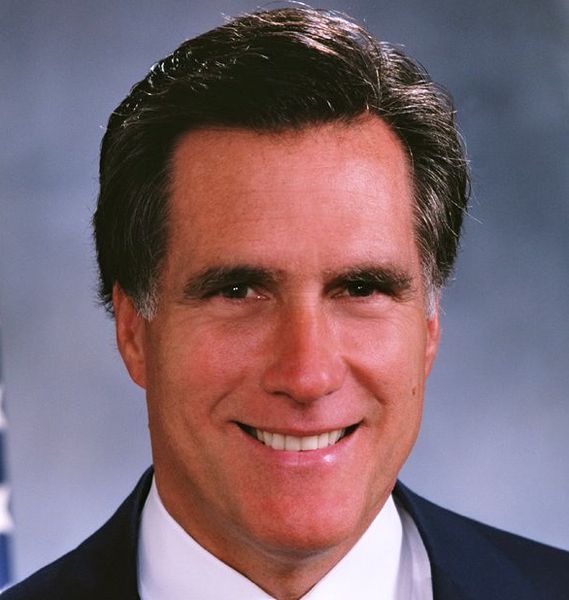
LAS VEGAS — Mitt Romney spent years cultivating voters in Nevada, and it paid off with a commanding victory that not only pushed him closer to the GOP nomination but laid a strong marker in a state both parties will fight to carry in November.

Romney also won the Nevada caucuses in 2008, one of the few impressive performances of his failed bid for the Republican presidential nomination, and he never really stopped campaigning here. The only question was whether Romney on Saturday would top the 51% he received four years ago; he was winning just less than that in early returns.

Mitt Romney

Trailing far behind were former House Speaker Newt Gingrich and Rep. Ron Paul of Texas, who were locked in a fight for second. Former Pennsylvania Sen. Rick Santorum, who eked out a win in Iowa but has faded since, was a distant fourth.

“Thank you, guys. What a great showing,” an exuberant Romney told supporters Saturday night in Las Vegas, as they waved white-and-blue placards reading, “Nevada believes.”

“This is not the first time you gave me your vote of confidence,” he said, “and this time I’m going to take it all the way to the White House.”

Gingrich, at a late-night news conference, said he would stay in the race until the late-summer national party convention.

Read the whole story


El Dorado County public health director quitting

By Brad Branan, Sacramento Bee

El Dorado County’s public health officer is expected to take the same job in Sacramento County.

Olivia Kasirye has been El Dorado County’s top health official since August 2009. She previously had health positions with Sacramento County.

The Sacramento County Board of Supervisors will vote on her recommended appointment Tuesday. She would fill the spot vacated by Glennah Trochet, who was public health officer for 12 years before citing frustration over budget cuts as a reason for resigning last year.

Kasirye is board certified in public health and general preventive medicine.

On Tuesday, El Dorado County is expected to appoint an interim public health director.