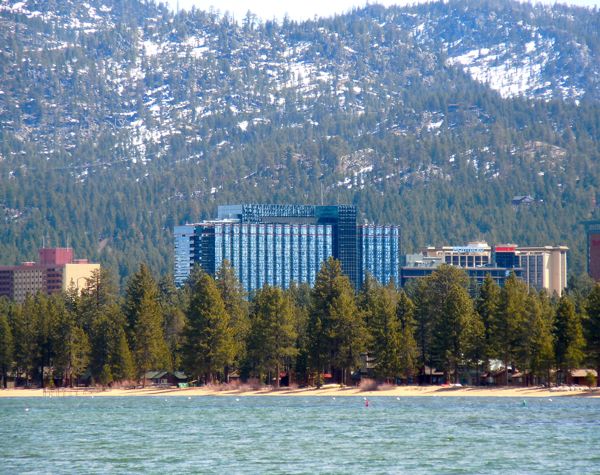
Incline man wins case agains Merrill Lynch

By Bill O’Driscoll, Reno Gazette-Journal

An Incline Village man was recently awarded $1.375 million in an arbitration case against Banc of America Securities, now Merrill Lynch. The damage award returns his entire investment, plus interest, which was made a year before the 2008 banking crisis unfolded.

A stock broker for Bobby Hayes, a retired businessman, put $883,122 into a complex multi-level security known as a collateralized loan obligation in July 2007. The terms were 12 years at 8 percent interest, said his lawyer, Tom Bradley of Reno. Hayes said he had instructed his broker not to make high-risk investment with the money.

Hayes lost his entire investment within 14 months, Bradley said. He took his case before the Financial Industry Regulatory Authority, or FINRA, an independent agency which regulates securities firms and financial brokers under the Securities and Exchange Commission.

In three days of hearings in Reno last year before a three-person FINRA panel, Bradley claimed breaches of written and oral contracts and fiduciary duty, fraud, negligence and state securities violations, according to FINRA’s dispute resolution. Representatives of Banc of America Securities LLC and Merrill Lynch sought dismissal of the claims.

Read the whole story


4 Santa Cruz men arrested on drug charges in Stateline

Four Santa Cruz men were arrested this week on charges of transporting and distributing cocaine in Stateline.

The monthlong investigation by the Tri-NET Narcotic Task Force, Douglas County sheriff’s deputies and Santa Cruz officers ended March 2 with Joseph Perez, 26, and Oscar Madriz, 25, booked on charges of trafficking and sales of a controlled substance.

Officers also seized approximately 255 grams of cocaine with a street value of $25,500. A vehicle, firearm, and cash were also confiscated.

Sheriff’s deputes said Madriz, an ex-felon out of California, had a loaded semi-automatic handgun in his possession which he will face an additional charge for.

These arrests led deputies to another Stateline hotel room where they said small amounts of cocaine and marijuana were found, along with drug paraphernalia. Arrested in the room were Tyler Silveira, 28, and Joaquin Lara, 27, both from Santa Cruz, on various drug related charges.

 — Lake Tahoe News staff report


California water settlement may be bad for Nevada

By Karoun Demirjian, Las Vegas Sun

What happens in California holds sway over many of Nevada’s most important industries: Californians populate the state’s casinos, they are the state’s best would-be buyers of renewable energy, and now, they may be setting a standard for how Nevada’s scarce water resources will be allocated in the future.

Or at least that is what Nevada, along with a host of other Western states, fears will happen if a federal bill to restructure California’s system for sharing water among urbanites, farmers and conservation projects passes Congress.

This week, the House of Representatives voted to approve the Sacramento-San Joaquin Valley Water Reliability Act. The bill upends a 2006 settlement on water distribution that ended almost 20 years of lawsuits, as well as five years of planning to implement the settlement to replenish the San Joaquin river — a move California’s governor believes will make it a more reliable resource for both wildlife and thirsty Californians.

Farmers have never liked the irrigation restrictions that came with the deal. One influential Republican representative of California’s agricultural areas said the water pumping limitations had caused a “man-made drought” hampering the local economy in the San Joaquin Valley.

The particulars of the dispute are localized to California. But some Nevadans believe that if the federal government can successfully intervene to impose a water settlement on California, there’s no reason government won’t meddle in Nevada’s water disputes too.

Read the whole story


Medical marijuana supporters taking cause to Legislature, not voters

By Peter Hecht, Sacramento Bee

Medical marijuana advocates are dropping efforts to qualify a November ballot initiative to regulate California’s dispensary industry and instead plan a media campaign to lobby the Legislature to tackle the issue.

Cannabis industry groups including dispensaries, medical marijuana growers and a powerful union drafted the proposed measure in the face of an ongoing federal crackdown on California’s $1.5 billion medicinal pot trade.

But a top campaign director said today initiative planners instead have decided to run television and radio ads to urge lawmakers and Gov. Jerry Brown to enact rules governing how medical marijuana outlets operate in the state.

“We’re not doing the initiative. We’re pulling the plug on it,” said Dan Rush, director of the Medical Cannabis and Hemp Division for the United Food and Commercial Workers, which has been organizing California pot workers for the past two years.

Read the whole story


Debate reignites over private entities doing work for California

By Jon Ortiz, Sacramento Bee

The debate over whether government runs best with civil service workers or privately contracted help is re-igniting in the Capitol over legislation that, among other things, would give state workers first dibs whenever the state has work to do.

Assemblyman Roger Dickinson, D-Sacramento, contends the civil service-first provision in his “Public Employees Bill of Rights” would produce better and cheaper government. Unions backing the measure agree.

Critics say the bill reads like a union wish list and could make government more expensive.

“If your goal is for the state to provide the best services and do it most efficiently, you shortchange yourself by limiting the ability of qualified individuals to compete for and earn the job,” said Mitch Zak, a Republican strategist whose firm, Randle Communications, works with a number of trade organizations.

The tense business relationship between government and the private sector has existed since the Revolutionary War, said James Fossett, a senior fellow at the Nelson A. Rockefeller Institute of Government.

“George Washington wrote memos griping about the poor quality of (military) clothing,” Fossett said, “and how rations arrived spoiled.”

Today, California state government writes checks to private business for a vast assortment of goods and services, from lawyers to levee work.

Read the whole story


Stateline aids state with surge in gaming revenue

Stateline casinos helped the state top the $1 billion mark in gaming revenues for the first time since September 2008.

South Shore’s win in January was 2 percent higher than in 2011 at $17 million.

Overall, Nevada saw gaming revenue increase by 18.4 percent from one January to the next, with a total of $1.038 billion collected.

Stateline casino revenue is on the upswing. Photo/LTN file

The Gaming Control Board released the latest figures this morning.

Las Vegas has been boasting of a slight recovery from the recession. Gaming revenue from the Strip and downtown reflect this with the former posting a 29 percent year-over-year gain with $623 million in revenue, and the later a 14 percent gain with $47 million.

Those figures compare to the opposite end of the state where Reno’s numbers dropped 16.5 percent or $69 million.

 — Lake Tahoe News staff report


Game devices become tools in education, business

By Andy Vuong, Denver Post

Elliott Anderson loves his Xbox and Nintendo, though it’s not all fun and games.

Navigating a Professor Layton adventure on his Nintendo DSi recently helped the Denver sixth-grader breeze through a math problem in class.

In the game, Anderson had to divide a circle filled with numbers into three pieces so that each totaled the same amount.

“If I hadn’t played that part of the game, I wouldn’t have been able to do it as easily,” he said. “It was pretty much the same as the math problem, except different numbers.”

It is one example of the blurring line between gaming and education, as iPads and social media sites such as Facebook are now incorporated into classroom instruction. Beyond that, some experts say kids may be paving the way for education and business training by hammering away on those joysticks.

Termed “gamification,” the trend refers to the application of elements typically tied to gaming, such as virtual role playing, for business and school use.

More than 70 percent of top 2,000 publicly traded companies worldwide will have at least one gamified application by 2014, according to a study released last year by research firm Gartner.

Read the whole story


South Lake Tahoe to undo decades of neglect to its roads

By Kathryn Reed

Without a single member of the public to witness the discussion or vote in person, the South Lake Tahoe City Council unanimously agreed March 6 to borrow $5 million to begin repairing roads.

With interest it will cost more than $10 million in taxpayer money in the next 30 years to pay back that $5 million certificate of participation.

About 14.5 miles of roads will be improved with $4 million starting in June. The other $1 million will be divvied up between improvements to Harrison Avenue and Linear Park. (There are 259 lane miles belonging to the city.)

Rocks fill a hole on Venice Drive in an attempt to keep vehicles from needing a wheel alignment. Photo/LTN

Councilman Hal Cole in particular was miffed no one was in the room to witness the councilmembers merely doing the job they were elected to do. He thought they were doing something grander. The reality is these five are cleaning up the mess of previous councils and administrations that put infrastructure as a low priority and in turn has resulted in taxpayers paying twice as much for what many consider basics in city government – roads.

One street that will be repaired is Venice Drive. Cracks and holes are so wide a mountain bike is needed to ride on it because thin road bike tires are likely to get a snakebite flat.

Evan Williams, who lives on this street in the Tahoe Keys, says he remembers when it was so smooth roller skating on the street was like being on glass.

The city has a backlog of $320 million in deferred maintenance and rehabilitation to its roads.

Jim Marino, capital improvements manager, told the council it’s important to spend money on maintenance to protect prior improvements and to get the most longevity out of a road.

“It is nearly six times more expensive to rebuild a road than it is to maintain it,” Marino said.

What’s called the collector and arterial roads will be focused on first.

A chip and cape approach will be tried in some areas to determine if this method is effective in Tahoe’s winter environment. Instead of stopping after the seal part, which is normal, the cape is a second step where thicker petroleum is used.

Some discussion centered on whether any of this work would resonate with Lahontan Regional Water Quality Control Board. “No” was the answer because credits in the Total Maximum Daily Load initiative are not given for fixing roads even though that fine sediment is often touted as one of the main contributors to the decline of lake clarity.

When the City Council a year ago approved the strategic plan the goal was to spend 80 percent of the borrowed $25 million in five years to bring the city’s streets up from what many call Third World conditions. (The council is expected to revisit the strategic plan at the March 20 meeting.)

The city has the resources to pay back $10 million in loans, or two year’s worth of work.

The plan is to go to the voters in 2013 to ask for the transient occupancy tax to be increased starting the following year. That in addition to an amusement tax would fund the remaining three years of significant road repairs.

Part of the theory is the influx of vehicles on city streets from tourists is speeding up the degradation of the roads so those people should help pay for the upkeep.

The reason to put off the TOT hike is to let the hotel industry recover after such a dismal winter when it came to occupancy. City Manager Tony O’Rourke told Lake Tahoe News the city expects TOT for January and February to be down $300,000.

When it comes to the work that will be done this summer, Marino said the price of oil could play a role in how much work gets done. He also said to expect delays when the construction season begins, especially with Caltrans coming back to work on Highway 50.


Family of deceased twin 73-year-olds located

By Jonathan Mum, News 10

Late Wednesday afternoon, the El Dorado County Sheriff’s Office was finally able to locate a relative of 73-year-old twins Patricia and Joan Miller, whose bodies were found after a welfare check at their South Lake Tahoe home in late February.

The search for family members to notify them was hampered by the twins’ naming only each other as next of kin. Apparently, they were always guarded about their private lives and were said to have been almost reclusive in the last year or two.

“I’ve had information from the neighbors,” Detective Matt Harwood said. “One hadn’t seen them in six months, one hadn’t seen them in a year.”

A neighbor, who has lived across the street from the twins since back in the 1970s, was surprised to learn the two had been entertainers; they apparently started in show business as children.

“Maybe Mom and Dad got them in the entertainment business,” Harwood said. “Mom played piano and Dad did some singing.”

Read the whole story


Nevada think tank publishes sourcebook for policymakers, public

By Sean Whaley, Nevada News Bureau

CARSON CITY — A conservative Nevada think tank last week published a guide for policymakers and the public on issues ranging from the state spending to public education to tax policy.

The 88-page sourcebook, called “Solutions 2013” is a compilation of research and policy recommendations from the Nevada Policy Research Institute addressing 39 different subject areas.

The publication comes 11 months before the Nevada Legislature will convene in 2013 to consider a host of critical issues, and just as the 2012 election season gets officially under way with candidate filing that began Monday.

“This collection dispels many popular misconceptions about Nevada, while highlighting new approaches to policy making,” said NPRI President Andy Matthews in an introduction to the guide. “My hope is that, regardless of where your political sympathies may lie, you will consider these ideas on their merits.”

Geoffrey Lawrence, NPRI’s deputy policy director, said even those who disagree with the recommendations can use the data cited in the guide.

“I think this is valuable for everyone who is interested in public policy regardless of their particular political persuasions because there is a lot of objective data in there that you can draw your own conclusions from if you like,” he said. “I think one of the other values of it is that you can see that our conclusions are drawn straight from these objective data sources so they are not just things that we’re coming up with out of thin air.”

The organization weighs in on the potential of a Texas-style margin tax being imposed on Nevada businesses, which it says should be rejected. A coalition of education and labor groups is contemplating putting such a revenue generator on the state ballot, but no such proposal has been filed yet with the Secretary of State’s office.

“The business margin tax is a hybrid, combining negative features of both corporate-income and gross-receipts taxes,” the policy guide says. It quotes the Tax Foundation as saying, “the Texas ‘margin’ tax is really a badly designed corporate income tax.”

The NPRI guide says a margin tax would create a tax liability even for businesses that operate at a financial loss, meaning the tax also possesses the negative attributes of gross receipts taxation.

The organization also takes up the issue of a state-run lottery, an idea that gets attention from lawmakers virtually every legislative session. NPRI notes that such lotteries do not generate a lot of revenue and are not stable sources of income.-run lottery fails every test of a “good” tax policy. In Nevada, gaming should be left to the private sector,'” the guide says.

“As Price Waterhouse – the Nevada Legislature’s own tax consultant – has concluded, ‘A state-run lottery fails every test of a “good” tax policy. In Nevada, gaming should be left to the private sector,'” the guide says.

NPRI weighs in on the issue of what, if anything, should be done about the current public employee retirement system. Gov. Brian Sandoval and some lawmakers have called for a change to the plan to make it a 401(k)-style defined contribution plan instead of the current “defined benefit” plan so that concerns of the potential long-term liabilities of the retirement plan can be addressed.

NPRI argues for a hybrid plan as adopted by the Utah Legislature to avoid the high upfront costs associated with a wholesale change to a defined contribution plan.

“Utah’s system was put in place with the enactment of Senate Bill 63 from Utah’s 2010 General Legislative Session, which should serve as a model to guide Nevadans,” the policy guide says.