Occupation on ballot makes a difference with voters

Updated April 2, 12:05pm: Assemblywoman Beth Gaines may call herself a small business owner on the ballot per Sacramento Superior Court Judge Michael P. Kenny’s ruling today.

By Jim Sanders, Sacramento Bee

What are the most high-stakes, second-guessed, agonized-over words since “I do?”

For California politicians, it’s the three-word description that voters will read in the polling booth before making up their minds.

“It’s valuable real estate in a campaign,” said Paul Mitchell, a Democratic strategist.

Tension over ballot titles played out last week in Sacramento when lawsuits were filed challenging the designations of Assemblywoman Beth Gaines, R-Rocklin, and San Joaquin County congressional candidate Jose Hernandez, a Democrat.

Hernandez, who rode in the shuttle Discovery three years ago, won use of “astronaut/scientist/engineer.” Although Hernandez left NASA in January 2011, a judge said it was not misleading to voters.

Gaines’ use of “small business owner” will be decided today. Her opponent thinks it doesn’t reflect the state lawmaker’s primary occupation.

The stakes are high. In a fast-paced society where not all Californians are familiar with political candidates, voters may side with the person whose occupation impresses them most – or offends them least.

Read the whole story


Truckee Donner water-electric rates not increasing

The board of the Truckee Donner Public Utility District, which provides the greater Truckee area with water and power services, has voted not to increase rates for the next two years.

“Stable and competitive rates are the bricks and mortar for any economic recovery or development in our community.” said Jeff Bender, TDPUD board member, said in a prepared statement. “The last thing our community needs is rapidly escalating energy and water costs that hurt businesses and take money away from families.”

The TDPUD’s recent renewable energy purchases have positioned the district to address current and future regulations.

Information regarding the TDPUD’s performance and projections was presented in a series of board meetings covering operating budgets, resource planning, and financial master planning.

For additional information, call the TDPUD at (530)582.3951.


South Tahoe grad accused of robbing hometown bank

Three days after the Wells Fargo Bank inside the Raley’s near Stateline was robbed, a South Lake Tahoe man was arrested.

Officers said Joshua Schauert, 26, was identified shortly after the March 29 robbery, with a warrant being issued that day.

Schauert on April 1 reportedly listed a computer for sale on Craigslist. Undercover officers met him at the Valero gas station in South Tahoe on Sunday afternoon. The South Tahoe High School graduate was arrested at the scene.

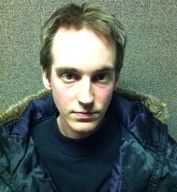
Joshua Schauert

Detectives are looking into whether the computer was stolen.

As of Sunday night, none of the cash that was stolen had been recovered. Officers are not disclosing how much was taken from the bank.

 — Lake Tahoe News staff report


Teens with ADHD more likely to get in an accident

By John O’Neil, New York Times

The first time Jillian Serpa tried to learn to drive, the family car wound up straddling a creek next to her home in Ringwood, N.J.

Serpa, then 16, had gotten flustered trying to sort out a rapid string of directions from her father while preparing to back out of their driveway. “There was a lack of communication,” she said. “I stepped on the gas instead of the brake.”

On her second attempt to learn, Serpa recalled, she “totally freaked out” at a busy intersection. It was four years before she tried driving again. She has made great progress, but so far has still fallen short of her goal: Two weeks ago she knocked over a cone while parallel parking and failed the road test for the fourth time.

Learning to drive is hard and scary for many teenagers, and driving is far and away the most dangerous thing teenagers do. But the challenges are significantly greater for young people who, like Serpa, have attention problems.

A number of cognitive conditions can affect driving, and instructors report a recent increase in the number of teenagers with Asperger syndrome seeking licenses. But the largest group of challenged teenage drivers — and the mostly closely studied — appears to be those with attention deficit hyperactivity disorder. A 2007 study, by Russell A. Barkley of the Medical University of South Carolina and Daniel J. Cox of the University of Virginia Health System, concluded that young drivers with A.D.H.D. are two to four times as likely as those without the condition to have an accident — meaning that they are at a higher risk of wrecking the car than an adult who is legally drunk.

Researchers say that many teenagers with attention or other learning problems can become good drivers, but not easily or quickly, and that some will be better off not driving till they are older — or not at all.

The most obvious difficulty they face is inattention, the single leading cause of crashes among all drivers, said Bruce Simons-Morton, senior investigator at the National Institute for Child Health and Human Development in Bethesda, Md.

“When a driver takes his eyes off the road for two seconds or more, he’s doubled the risk of a crash,” he said.

Inexperienced drivers usually are distractible drivers. Dr. Simons-Morton cited a study on a closed course in which teenagers proved much more adept than adults at using cellphones while driving — and missed more stop signs.

Read the whole story


Placer County roads to receive $8.3 mil. in state funding

The North Shore is receiving $8.3 million from the California Transportation Commission for work on Highway 89.

This is part of a statewide $271 million allocation from Proposition 1B funds. It will pay for 73 projects.

The Placer County project on Highway 89 goes from the Nevada County line to Squaw Valley Road to rehabilitate 16 lane miles of pavement to improve ride quality and extend the pavement service life.

— Lake Tahoe News staff report


Caltrans looking for people or groups to adopt highways

Caltrans is seeking local individuals, businesses and organizations to participate in its Adopt-a-Highway program.

The Caltrans Adopt-A-Highway Program provides an avenue for the community to help maintain sections of roadside within California’s state highway system. Groups have the option to participate as volunteers or to hire a maintenance service provider to perform the work on their behalf. Participants are eligible for a recognition panel placed in the adoption area.

The Adopt-A-Highway program began in 1989. More than 120,000 Californians have cleaned and enhanced more than 15,000 shoulder-miles of roadside.

Participation can include one or more of the following activities:

• Removing litter (work frequency varies with location).

• Planting and establishing trees or wildflowers.

• Removing graffiti.

• Controlling vegetation.

Areas open for adoption include:

• Camino – Highway 50 from Sawmill undercrossing to Sly Park exit

• Georgetown – Highway 193 from Ceder Drive to Bear Creek Road

• Grass Valley – Highway 49 from Combie Road to the passing lane

• Penryn – Interstate 80 from Penryn Road to the Gilardi Road overcrossing.

Groups interested in participation should contact David Boggs at (530) 741.4002, email at david_boggs@dot.ca.gov.


Commercial landlord forces tenant out with 50% spike in rent

By Kathryn Reed

A 50 percent increase in rent is forcing Wolfgang Puck Express in the Heavenly Village to close.

When the center opened about a decade ago it was the second store to open. Many have come and gone since then. Rents have always been a complaint from store operators.

“The landlord wants more money and my boss doesn’t want to pay,” restaurant manager Luis Gonzales told Lake Tahoe News.

Wolfgang Puck Express will close April 15. Photo/LTN

Today rent is $10,000 each month. The landlord wants $15,000 per month, according to Gonzales.

Gary Casteel, who owns Trans Sierra Investments, did not return phone calls. His company operates the retail operations at the South Lake Tahoe center.

While Gonzales said business has been good, it hasn’t been good enough to endure a dramatic spike in rent. It’s one of the few places in the tourist district that locals visit regularly.

With Casteel not talking, it’s not known if he has a tenant lined up.

Another restaurant is slated to open this month in the village – Base Camp Pizza Co. Contractors are working on the interior.


Raley’s to open books for outside analysis

By Dale Kasler, Sacramento Bee

Raley’s has agreed to open its books to an outside auditor in an effort to convince its labor union that it needs contract concessions.

The United Food and Commercial Workers said it insisted on the “independent review” as contract talks stretch into their eighth month. UFCW Locals 8 and 5, covering thousands of workers in Northern California, agreed early today to extend their contract with Raley’s to next Friday.

Raley’s consented to the outside financial review several hours after Save Mart made the same agreement, according to the UFCW. Both grocery chains are privately held and normally don’t share any financial information. The third chain negotiating with the UFCW in Northern California, Safeway, is a public company.

Read the whole story


California may go its own way with health care rules

By David Siders and Kevin Yamamura, Sacramento Bee

Gov. Jerry Brown’s administration vowed Thursday to continue pushing forward elements of the federal health care overhaul in California, even if the U.S. Supreme Court strikes it down.

If the court does rule the federal law unconstitutional, state Health and Human Services Secretary Diana Dooley said California should at least consider enacting its own universal health care legislation, including requiring every Californian to buy insurance.

“I think that we should be committed to making this system more rational than it is today, and improving the health of the people of California,” Dooley said in an interview. “If we ask the insurance plans to take everybody and insure everybody with no screens or pre-existing conditions, then we have to have everybody buying some level of health insurance to meet their responsibility to the system.”

She said whether the administration sponsors such legislation would depend on “where we are and what the conditions are at that particular time.”

Dooley’s remarks came a day after the Supreme Court finished three days of oral arguments over President Barack Obama’s signature health care law.

At issue is whether Congress can require people to buy insurance and, separately, whether lawmakers overstepped in pressuring states to expand Medicaid coverage.

In 2010, California, amid urging from the White House, became the first state in the nation to enact legislation establishing a public health insurance marketplace to implement the Affordable Care Act.

Read the whole story


Indian tribe allowed to kill bald eagles for religious reasons

By Tristan Ahtone, NPR

Most Americans have little difficulty practicing their religion. But for Native Americans, performing traditional religious ceremonies isn’t always so simple. Many rites often involve heavy regulation by federal authorities — especially when it comes to using sacred items like eagle feathers.

In a first for the U.S. Fish and Wildlife Service, the Northern Arapaho tribe in Wyoming has received a permit to hunt and kill bald eagles for religious purposes. The move comes in the wake of a lawsuit filed last year, alleging that the refusal of such permits violated tribal members’ religious freedom.

The agency has issued similar permits for golden eagles in the past, but the Northern Arapaho permit is the first granted for the iconic bald eagle.

Crawford White, an Arapaho ceremonial elder from the Wind River Reservation in Wyoming, says his tribe uses eagle-tail fans and eagle-bone whistles in several tribal ceremonies and settings, including sun dances, powwows and sweat lodges.

Some of these ceremonies may sound familiar to non-Native Americans; others may seem more exotic. But either way, for many Native Americans to fully participate in religious ceremonies, they need eagle parts. To get those parts, they can go to the black market, use items passed between friends and family, or put in an order to the National Eagle Repository in Denver.

Read the whole story