Global warming law may be profitable for California

By Paul Rogers, San Jose Mercury News

For the past 10 years, California has struggled with huge budget deficits and wrenching cuts. Suddenly, however, the state is poised to raise billions from an unusual new source: the proceeds from its landmark global warming law.

The windfall could come as soon as this fall, when state officials are set to begin auctioning off pollution credits to oil refineries, power plants and other major polluters as part of a new “cap-and-trade” system.

The amounts are potentially enormous: from $1 billion to $3 billion a year in 2012 and 2013, jumping to as high as $14 billion a year by 2015, according to the nonpartisan state Legislative Analyst’s Office. By comparison, the state’s current budget deficit is $9 billion.

But like thirsty castaways on an island surrounded by ocean water they can’t drink, Gov. Jerry Brown and state legislators face strict constraints on how they can spend the money. More than 30 years of court rulings and ballot measures — dating to Proposition 13 in 1978 — limit its use, probably only to projects that reduce greenhouse gas emissions.

To add another hurdle, major business groups are preparing lawsuits, arguing that the state cannot collect the money at all.

Still, Brown and others in the Capitol are cautiously making plans. On Monday, the state’s High-Speed Rail Authority slipped into a news release that the money would be used as “a backstop” that could save the struggling bullet-train project.

Advertisement

And in a follow-up interview with this newspaper, Dan Richard, chairman of the rail authority, asserted that a large portion of the money could go to fund high-speed rail.

Read the whole story


Will community colleges boot some community members?

By Spencer Michels, PBS News Hour

A hundred or so students made a ruckus recently at Santa Monica College, and — unlike many student protests — they achieved their goals. In the face of a noisy demonstration and disapproval from the state, the college administration backed down on tuition increases it had proposed, that would have boosted the cost per unit from $46 to $200 for some popular courses needed for graduation. Santa Monica, a community college, was alone in trying to implement what was called a two-tier system, which would have charged a premium for courses much in demand. That plan would have favored wealthier students, and hurt those who couldn’t afford the premium — in a system where cutbacks in funding have forced many colleges to drastically reduce course offerings. Students have been complaining more and more that they can’t get the classes they need. Santa Monica thought it had a way to address that, but the opposition was too great.

Community colleges are in the midst of a major re-make, especially in California, and the turmoil at Santa Monica was a symptom of the turmoil. The system is enormous; nationwide 13 million students are enrolled, and in California alone, 2.6 million students attend, making the state system, with 122 campuses, the largest higher educational institution in the nation. The schools serve a variety of students: those who need a boost to get up to college level; those who want to learn a vocation; those who want to just learn without regard to a degree; and those who need to beef up their English skills. Community colleges have been called the backbone of the nation’s education system, where almost anyone — regardless of income or educational level –can attend, the place where the nation can win or lose its competitive struggle with other countries, especially in technology.

Read the whole story


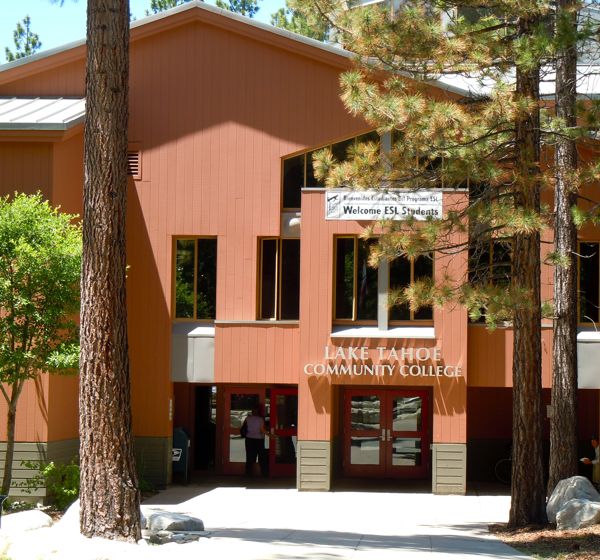
LTCC dealing with unstable financial forecast from state

By Kathryn Reed

Voters will decide if Lake Tahoe Community College must deal with “the good” or “the ugly” budget scenario.

“The model we are using now is the bad,” LTCC President Kindred Murillo told the board. It’s between “the good” which requires cutting costs by $800,000 and “the ugly” which requires cuts of $1.3 million.

“We want to be able to move either way,” she added.

If the education bill passes in November, it gives K-14 districts money that is owed them – not anything more. If it fails, it means another mid-year budget cut. LTCC took a $400,000 hit at the start of this calendar year.

If the voters say no, it will mean a workload reduction of 5.56 percent. The state pays community colleges based on the number of fulltime equivalent students. The 5.56 percent equals 105 FTES or $500,000. LTCC is now funded at 1,890 students. Just eliminating classes does not solve the problem. However, cutting some courses and putting more students into another class would help.

If that student number increases, the college gets no reimbursement from the state. In the 2009-10 school year, LTCC had 182.49 unfunded FTES. That is why administrators made a concerted effort to watch that figure and have kept it in line for two years.

The biggest problem is with the cut coming midyear; after the budget is adopted and after the school year has begun.

No matter the outcome of the November ballot measure put forth by Gov. Jerry Brown, the South Lake Tahoe college is looking at a structural deficit of $800,000. Half of that is because of increased costs of automatic salary increases via the step process and benefits.

In the last two years, LTCC has experienced a 15 percent increase in health and welfare costs. It’s expected to go up another 2 percent in fiscal year 2012-13. The college board, while well aware of the financial constraints, was presented with the grim picture in black and white during a budget workshop April 10. But the numbers presented are in a more readable format than the past 30-plus years.

Instead of a series of code numbers which most people have no idea what they mean, the line items are easier to read. For the first time restricted and unrestricted funds are separated on paper; they always had been in practice.

“We need to rethink how we serve our students and our community.” — Kindred Murillo, LTCC president

Unrestricted funds account for about 90 percent of the budget.

“That’s what funds classes for students,” Murillo explained to Lake Tahoe News.

The board was shown the new format using the current budget.

The 2012-13 budget will be the first one Murillo has prepared. Those numbers are being crunched, with the board likely to start reviewing the budget for the next school year in May.

Murillo, after Tuesday’s meeting, said she spent that morning scrubbing the budget to find anything that could bring down the deficit. She said she found several little things – like someone being budgeted twice, issues with a grant, things that can be eliminated – that adds up to close to $400,000.

While every dollar is being scrutinized, it is not possible to curtail all costs. And with revenues flat or decreasing and costs going up, the gap widens.

In the past four years, the community college system has sustained a 23 percent reduction from the state.

“We will continue to do more with less,” Murillo told the board. But she added, “We need to rethink how we serve our students and our community.”


Verizon bringing 4G network to South Lake Tahoe

By KRNV-TV

WALNUT CREEK — Verizon Wireless on Thursday announced it will expand the nation’s largest 4G Long Term Evolution (LTE) network in Reno in the coming weeks.

The expanded 4G LTE network will enable customers to use their wireless devices in more parts of Reno to access the Internet faster; listen to music or watch video on their phones; use thousands of apps; and stay in touch with family and friends, all with speeds up to 10 times faster than before.

Verizon Wireless 4G LTE service is currently available in Reno including Boomtown, and Glenbrook. With the planned network expansion, residents in areas such as Fallon, South Lake Tahoe and Caughlin Ranch will have access to the 4G network.


Nevada out of the running for federal education dollars

By Sean Whaley, Nevada News Bureau

CARSON CITY — Nevada is out of the running for next round of federal Race to the Top-Early Learning Challenge funds to improve early childhood education.

Nevada submitted its application in November 2011.

The U.S. Departments of Education and Health and Human Services announced today that $133 million from the 2012 Race to the Top fund will be available for continued investments in state-level, comprehensive early education reform.

The agencies have invited the next five applicants from the fiscal year 2011 slate – Colorado, Illinois, New Mexico, Oregon, and Wisconsin – to apply for a share of the funds.

“The Race to the Top-Early Learning Challenge has demonstrated the dedication among states and early education and child development experts to raise the bar on early learning,” said U.S. Secretary of Education Arne Duncan. “Continuing to support states with 2012 funding will help build on the momentum from the 2011 competition, and engage more states in furthering their critical work to transition effective early learning programs into systems of excellence.”

In 2011, 35 states, Washington, D.C., and Puerto Rico applied to Race to the Top-Early Learning Challenge, creating plans that increase access to high-quality programs for children from low-income families, and provide more children from birth to age 5 with a strong foundation needed to succeed in school and beyond. In December 2011, nine states were awarded grants: California, Delaware, Maryland, Massachusetts, Minnesota, North Carolina, Ohio, Rhode Island and Washington.

Eligibility for 2012 Race to the Top-Early Learning Challenge funding was based on the strength of applications among states that participated but did not receive awards in the 2011 competition. New Mexico, Colorado, Oregon, Illinois and Wisconsin each earned approximately 75 percent or more of total points possible on a 300-point scale in the 2011 competition. The five states will each be eligible to apply for up to 50 percent of last year’s potential award amount.

Following the 2011 competition, the U.S. Department of Education conducted a thorough review of applicant and reviewer feedback, as well as reviewers’ scores and comments. The review found minor scoring inconsistencies for seven states: Hawaii, Kentucky, Massachusetts, Nevada, New Mexico, New York, and Wisconsin.

These discrepancies did not have an effect on the 2011 competition. Nonetheless, the department consulted with the original peer reviewer in each case, and as a result, scores changed slightly for five states: Hawaii was 135.2 and has been revised to 125.2; Kentucky was 208.4 and has been revised to 207.2; Massachusetts was 267 and has been revised to 257; New Mexico was 236 and has been revised to 236.2; and Wisconsin was 234 and has been revised to 224. The overall score did not change for Nevada or New York.

Nevada ranked 29th among those submitting applications.

Nevada also missed out on race to the top funding for its public education system in 2010.


Lahontan hires executive director from outside Tahoe basin

By Kathryn Reed

The Lahontan Water Quality Control Board has hired an executive director from outside the agency to replace Harold Singer who is retiring.

Patty Zwarts will be leaving her position with CalRecyle where she works in the Materials Management and Local Assistance Division. She was not available for comment.

Patty Zwarts

It’s possible she will be at the Lahontan staff meeting next week.

The board made the decision Thursday morning. Board President Don Jardine did not return a phone call.

Singer told Lake Tahoe News he does not know when his last day will be. A start date for Zwarts has not been set either.

Lake Tahoe News first reported about Singer’s impending departure in December.

Asked April 12 if he had anything to say about his long tenure with the water board, Singer said he would have to think about it. He did say he plans to spend more time with family and friends, and enjoying Tahoe.

Zwarts has experience working with the state water board. And with CalRecycle and the water board being under the CalEPA, she is quite familiar with the parent organization.

Zwarts grew up in the Salinas area, then went to CSU Sacramento where in 1983 she earned a degree in government.

Before going to work for CalRecycle she was deputy secretary as well as assistant secretary for Policy and Legislation with CalEPA. Zwarts was the director of legislative and external affairs at the California Integrated Waste Management Board. Zwarts previously served as legislative manager and legislative analyst at CIWMB and the state Water Resources Control Board.


No offers on Kingsbury school site

Who will take over the old Kingsbury Middle School is still an unknown.

No written bids came in before the April 10 Douglas County school board meeting and none was verbally delivered that evening. The asking price is $4 million. State law doesn’t allow for negotiating the price. Rules also limit the type of future uses.

Superintendent Lisa Noonan told Lake Tahoe News the item will be on the July agenda, with the idea it will be before the board every three months until it’s sold.

Noonan said it would take the property in Stateline being on the market for a year for her to get discouraged. Plus, she is hoping with the weather changing, perspective buyers can see the parcel without it covered in snow, and see the potential it has.

— Kathryn Reed


USFS multimillion dollar South Shore fuels reduction project to start this summer

By Kathryn Reed

Needing to reduce the threat of another wildfire was a point easily agreed to. How to accomplish that goal – well – that was finally resolved at 10:20pm April 11. It took eight years to reach that decision.

On Wednesday the Lahontan Water Quality Control Board voted 5-0 to approve the permit that will allow the U.S. Forest Service to begin the South Shore Fuel Reduction and Healthy Forest Restoration plan. (Board member Jack Clarke was absent.)

The South Shore project is designed to treat 10,200 acres in 10 years at a total cost of $42 million. That dollar amount covers planning, implementation and monitoring.

About $30 million is in hand; coming from the Southern Nevada Public Lands Management Act. About one-third of that has been spent on planning.

                                           Photos/Kathryn Reed

“The longer the process goes, the less we have,” Scott Parsons, forester with the USFS, told Lake Tahoe News during a break in the meeting.

“With the absence of fire, you get sites like this.”        — Duncan Leao, USFS

Where the remaining $12 million needed to complete the project will come from is still a mystery. But the amount in the bank should cover the first five years, according to Forest Service officials.

Plenty of finger pointing went on during the more than two-hour discussion at Lahontan’s new South Lake Tahoe offices on Silver Dollar Avenue. Plenty of talk of moving forward was part of the dialogue, too, with the emphasis being on collaboration.

“The project is a necessity to accomplish the Forest Service’s goals and the community needs, while protecting water quality,” George Cella, engineer geologist with Lahontan, said.

One of the problems with the state water board and the federal agency working together is they overlap jurisdictions with different mandates. Lahontan’s primary concern is water quality. The Forest Service, while concerned with water quality, deals with habitat, forest health, recreation and other mandates. Lahontan only has jurisdiction in California; the Forest Service works on both sides of the state line.

“Fuels projects on the Nevada side move through the approval process much more quickly. We have completed planning, analysis, project implementation and monitoring for fuel reduction treatments on 5,000 acres in Nevada in the time it has taken us to complete planning for South Shore. Planning for another 4,000 acres near Incline Village is nearly complete,” Forest Supervisor Nancy Gibson told the Lahontan board.

Lahontan, until now, had a strict rule of not allowing mechanical equipment to be used in stream environmental zones. The thinking was the soil disturbance that would send sediment into the waterway was more of a concern than dense growth of vegetation that could spark a fire.

Looking back to the June 2007 Angora Fire that destroyed 254 houses, the burn pattern shows some of the hot spots that propelled the fire were the untreated stream areas, especially near Angora Creek.

“While SEZ treatment using mechanical equipment are new for Lahontan, the Forest Service has successfully implemented them in the Round Hill and Spooner projects on the Nevada side, and at the Heavenly Valley SEZ demonstration project on the California side,” Gibson said.

The Tahoe Regional Planning Agency permitted those Nevada projects.

A problem with moving projects forward in the Lake Tahoe Basin is the number of agencies involved. After the Angora Fire a bistate commission was formed to develop protocols. One of the mandates from the May 2008 documents was to create a streamlined approach to permitting. The purpose was to speed things along – in particular the treatment of hazardous fuels.

That has not happened.

While Lahontan and TRPA created a memorandum of understanding that called for TRPA to issue permits, that was challenged in court. Thus, the reason Lahontan is part of the process.

Fire management in Tahoe

One of the problems with fires in the Lake Tahoe Basin is that only 25 percent of them are weather related. This means the bulk are from causes like errant campfires (Angora Fire), cigarettes being discarded (Gondola Fire) or some other unpredictable cause.

Gibson, who this week is marking her one-year anniversary of being in charge of the Lake Tahoe Basin Management Unit, said the forest she came from on the North Coast had the opposite ratio. Lightning was a huge ignition source, which meant by monitoring the weather, fire suppression resources could be allocated early.

Tahoe is also unique with so much development being in the middle of a forest. With the basin’s forest abutting the urban areas, it makes fuel reduction projects all that more important.

Gibson sat down with Lake Tahoe News in an exclusive interview before the Lahontan board meeting to talk about fire, permitting and the future.

“Look at the expense, time and anxiety in dragging this project out,” Gibson said. “In 2008, we had clear direction from the bistate fire commission to act quickly. It’s the luck of the cards nothing has happened.”

She worries forests will continue to become drier as the snowpack lessens and does not stick around as long because of climate change.

“The only way we are going to get ahead of it is with fuels reduction,” Gibson said.

With all agencies facing financial constraints, wasting time – which equates to dollars – is no longer sustainable.

Gibson said Lahontan could have easily rolled the state environmental process into the federal.

She also said it is time to put aside past philosophical differences and look at the best course of action to decrease wildfires and ensure the forest’s health.

What will be treated

Even though Lahontan extended an invitation to hundreds to see sections of the South Shore project, only 20 people were on the tour Wednesday afternoon before the meeting. And that group consisted of various agency reps and the media – no members from the general public.

Three of the six Lahontan board members were on the tour – Amy Horne, Eric Sandel and Don Jardine.

First stop was an aspen project near Taylor Creek that was treated in January. Winter thinning occurred because no snow was on the ground. Other aspen restoration projects are contained in the South Shore plans.

The tour demonstrated sites that use mechanical equipment – which includes whole tree skidding and cut to length – and hand crews.

Parsons, with the Forest Service, said a prescription for each segment is designed, which in turn says how the site should look when the project is done. Prescriptions weigh several factors, including fuels, habitat, riparian needs, types of vegetation, and slope.

Using machines speeds up the work, which in turn cuts down the expense because less time is needed. Hand crews are the ones who create the burn piles. Mechanical treatment either hauls the fuels away, or redistributes some of the matter on site. The latter to mostly deal with erosion to cover bare soil.

Martin Goldberg with Lake Valley Fire Protection District said hand crews are definitely expensive.

Stop No. 2 on the tour was behind South Tahoe High School’s shop building. Walking down the forest road to the left is an area that was not touched by the Angora Fire, but will be thinned in the South Shore project. To the right is a section that for the first couple hundred feet was treated mechanically and farther up had trees felled by hand as evidenced by the teepee-shaped burn piles.

At the end of Nez Perce Street in the North Upper Truckee neighborhood is an example of the wildland urban interface being treated nearly a decade ago. But beyond the thinned area is a creek and dense vegetation that need tending to. The road will need to be worked on and the creek crossing upgraded before rigs can be brought in to do the heavy lifting.

Goldberg said the No. 1 question he gets from homeowners is asking why they have to do defensible space when they know a few hundred feet from their structure is a fire hazard in the forest. It’s the law for homeowners to have defensible space. (Goldberg used to work for Lahontan.)

“Had Angora started off Highway 50, this would have all been lost,” Goldberg said of the homes in that particular area.

The last area on the field trip was off Highway 50 near the Truckee River where there is a turn out on the right side of the road heading west just before North Upper Truckee Road.

Duncan Leao with the Forest Service said, “With the absence of fire, you get sites like this.”

Wood was everywhere.

Ideally, he said, an acre should have less than 10 tons of fuel. Sitting there, Leao estimated, was more than 60 tons of fuel.

To thin the area by hand would cost close to $9,000 an acre, while mechanically it would be about $3,500, officials said.

“Hand treating is out of the question. I’m not sure why we are discussing it,” Goldberg said has he looked over the area.

This isn’t the only area in the basin, let alone the South Shore project, with this amount of buildup.

“You see this a lot near Saxon and Trout creeks. A lot of heavy fuels,” Leao said.

While the need to thin was reiterated, so was the fact that once the South Shore project is done it really isn’t. That’s because trees and other vegetation keep growing, so the need for fuel reduction projects will never go away.

The South Shore project will begin this summer.

ngg_shortcode_0_placeholder  (Click on photos to enlarge.)


Fire destroys house in Alpine Meadows subdivision

By Martha Garcia, Colfax Record

A house in the Alpine Meadows subdivision about five miles east of Colfax was destroyed by fire Wednesday noon.

According to Cal Fire Battalion Chief Doug Rinella, a neighbor across the street from the one-story home located in the 28000 block of Manzanita Trail noticed flames shooting through the structure’s roof.

“It’s probably going to end up a total loss,” said Rinella, who estimates the loss at about $200,000.

Read the whole story


Global warming may increase lyme disease

By Lynn Peeples, Huffington Post

Darren Collins doesn’t know life without Lyme disease. He was just 11 months old when he came home from Wisconsin’s Mauthe Lake Campground pasty white, lethargic and running a fever of 105. Darren’s flu-like illness eventually subsided, but a host of other troubling Lyme-related symptoms — stomachaches, irritability and concentration problems — have since plagued the boy, now 10.

“He’s like Jekyll and Hyde,” says his mom, Kristin. One moment Darren could be “happy and smiling,” and the next in a “complete rage.”

“He scores perfect on a spelling test one week, then gets every word wrong the next week,” adds Kristin, a nurse in Waukesha, Wisc. “He wants to know why he can’t be like other kids.”

Darren Collins holds up a flag with the names

of another family afflicted by Lyme. Sisters, Sophie

and Stephanie, frequent his chat room; both were

too sick to participate in the fundraiser walk.

For now, Darren is settling for finding kids like himself, a group that has grown significantly over the decade since he contracted the disease from a tick bite. And according to experts, there may be a link between these increases and a changing climate.

A quarter of all Lyme disease cases are among children. At highest risk: kids ages 5 to 14, who are more likely to play outdoors and close to the ground, where ticks are ready to pounce. Darren recently launched an online chat room catering to this group. Every Friday night at 8 p.m. Central, he now talks online with nearly a dozen new friends who log on from as far away as Kentucky and Australia, all living with Lyme.

Overall numbers are on the rise, too. From 2005 to 2010, the number of Wisconsinites contracting Lyme each year jumped from 26 to 44 of every 100,000 people. Around 15,000 cases nationwide were reported to the U.S. Centers for Disease Control and Prevention in the mid-1990s. That number is now 30,000 to 40,000, although the CDC admits it could be as much as 12 times higher.

Lyme is just one of a lengthening list of emerging infectious diseases that are soaring in North America. Experts say that increasing temperatures and altered precipitation patterns that accompany climate change are already playing at least a partial role in the spread and intensity of zoonoses — infectious agents that begin in animals and account for an estimated 75 percent of all newly emerging diseases. Cases of West Nile virus reported to the CDC, for example, rose from 21 in 2000 — a year after its arrival in New York City — to more than 1,000 in 2010.

Read the whole story