Congressional impact on Nevada tourism laid out

By Kathryn Reed

INCLINE VILLAGE – Roadwork on Nevada highways in the Lake Tahoe Basin began before the normal May 1 start date because the weather has cooperated and Congress is likely to pass a transportation bill that will keep funding in place through Sept. 30.

The current funding expires June 30, though the House on Wednesday passed a bill to extend the program for another three months.

Ryan McGinness, principal of District Strategies, gave a rundown April 19 about how what is happening in Washington directly impacts the Silver State. McGinness led one of the workshops at the Hyatt in Incline during the annual three-day Nevada Commission on Tourism Rural Roundup conference. (It ends today.)
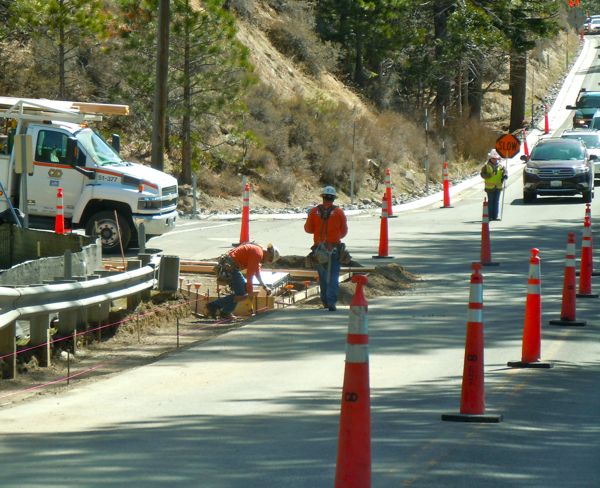
Roadwork, like this on Higway 28 on April 19, is tied to federal funding. Photo/Kathryn Reed

While the emphasis of the gathering is to bring the six sectors of rural Nevada together to talk about tourism, McGinness pointed out how what goes on 3,000 miles from Lake Tahoe has a direct impact on tourism throughout Nevada.

“Transportation is key for tourism. It gets them to our destinations and it gets them around our destinations,” McGinness told the group.

With a limited season to work on roads, Tahoe can’t have an interruption in funding and still get the work done in a timely manner. State highways also don’t get fixed without those federal dollars.

Continued transportation dollars will be critical for the basin if the Tahoe-Reno area is awarded the 2022 Winter Olympics. (Attendees learned more about the Olympic plans on April 18.) If selected, the region will move to the top of the list for federal transportation dollars.

McGinness started the talk about the uncertainty of what will go on in the nation’s capital this political season. He said there is speculation the minimum will get done until the election, after which it remains to be seen who is in the White House and Congress, and whether the remaining electeds will try to accomplish anything for the five weeks between the election and the winter holiday break.

Tax issues related to renewable energy production need to be addressed before the end of the year. What happens to the solar industry would impact Nevada more than wind.

The Secure Rural Schools legislation affects districts throughout Nevada. Funding is up for reauthorization.

When it comes to specific tourism issues and how Washington plays a role, McGinness touched on the $823,000 bill the Government Services Administration racked up at a conference in Las Vegas.

“No one can say that was responsible spending, but we don’t want it to hurt Nevada or Las Vegas,” McGinness said. “We need to define it as a behavioral issue, not a Las Vegas issue.”

When the 2008 AIG scandal made the news it had a chilling effect on conventions in Southern Nevada. That was when the company spent about $200,000 on employees to party in Vegas after receiving a federal bailout.

Conventions are big business for Vegas. They bring in about 5 million visitors a year, add $6 billion to the area’s economy and support 58,000 jobs.

While Congress has hearings on the overspending in Vegas, it is also working on substantive ways to bring more foreign travelers to the entire country.

Bringing international travelers to the United States could get easier as Congress works on the visa waiver process. Currently, people in 36 countries don’t have to get a visa for the U.S. China, Brazil and India are the three countries being talked about being added to that list.

At an afternoon discussion where leaders of the seven tourism sectors spoke, all talked about how international travelers are growing in numbers.

Sue Barton, No. 2 at Lake Tahoe Visitors Authority and the head of the Tahoe-Reno Territory for NCOT, said it’s the number of French travelers coming into the South Shore visitors centers who have most surprised her. She believes their sense of independence leads them to the centers because they have not wanted to pre-book all of their travel.

Teri Laursen with the Las Vegas Territory said 18 of 20 group bookings come from China. However, Canada, United Kingdom and Mexico account for the top three countries in terms of travelers arriving at McCarran International Airport.

While Nevada is experiencing a surge in international travelers, the country is losing market share, according to McGinness. He said in the last decade the number of international travelers coming to the U.S. dropped by 37 percent, while during those same 10 years the number of global travelers increased by 60 million.

This is also the post-9/11 era, so how the terrorist attacks and subsequent burdensome safety measures that were put in place impacted people’s decisions to come to the U.S. is not known.

But McGinness pointed out until now the United States has never had a brand, never reached out to other countries to sell itself, while other countries do it all the time.

Ads will launch in the next few weeks. Visa application fees fund the program. Private companies like Marriott, Disney and Best Western have also committed substantial sums of money to the overall pot of cash.

Another bill floating in Congress would expedite the visa process for athletes coming to the U.S. to compete in the Olympics or World Cup.


Secretary testifies on opening day of school-shooting trial

By Peter Hecht, Sacramento Bee

Joy Fausel, secretary to Placerville elementary school principal Sam LaCara and his friend of 20 years, described the scene in vivid detail: the enraged school janitor bursting into the office at the Louisiana Schnell School, clutching a cell phone to his left ear and holding a gun in his right hand.

As the trial opened Wednesday in the first-degree murder case of John Luebbers, 45, a longtime golfing buddy of the man he is accused of killing, Fausel and school clerk Dawn Cooper recounted the searing events that culminated in a beloved principal getting gunned down in his office.

It was Feb. 2, 2011, and LaCara had sent Luebbers – the school’s lead custodian – home to cool off after he lit into the principal in a profanity-laced eruption over a pending decision to hire a night janitor, according to testimony Wednesday in El Dorado Superior Court.

Cooper, the prosecution’s opening witness, said Luebbers left the premises, only to call the school office repeatedly, demanding to speak to the principal. She put some of the calls through, and the janitor was still talking to LaCara when he stormed back in. “This is for you!” Cooper said Luebbers shouted as he opened fire in the principal’s office.

Cooper said she rushed into the office after Luebbers ran out and found the principal sprawled behind his desk, struggling to rise.

Read the whole story


Fire danger likely to be high this summer because of dry winter

By Jeff Delong, Reno Gazette-Journal

Nevada’s worsening drought conditions and already kiln-dry vegetation should combine for extreme fire danger over the coming summer, a wildfire forecaster said.

More than 600,000 acres of Nevada terrain is expected to be scorched this fire season, Fred Svetz, manager of the Western Great Basin Predictive Services Center, reported last week during a 2012 climate conference at Reno’s Desert Research Institute.

For all intents and purposes, the danger is already here.

“We have conditions that are very much like fire season right now,” Svetz said. “We have some exceptionally dry and high fire potential conditions. While we are just barely into spring … we’re seeing fire potential we would normally see in the middle of the season.”

The forecast likely comes as no particular surprise to residents of the Reno area after two rare winter wildfires hit in November and January, together burning 5,000 acres and destroying more than 50 homes. Before the Jan. 19 Washoe Drive Fire, which burned 3,100-plus acres, the largest fire to burn in the Western Great Basin in January was only 32 acres in size, Svetz said

The winter was exceptionally dry, with an April 1 Sierra snowpack measured at only a little more than half of what it should be. Significant storms in March helped improve what was an even worse situation but were “too little, too late as far as drought is concerned,” Svetz said. Most of Northern Nevada and the Sierra are now in a state of severe drought, according to the U.S. Drought Monitor.

Read the whole story


Lockwood landfill uses methane to turn trash into electricity

By Jason Hildago, Reno Gazette-Journal

It isn’t quite turning garbage into gold. But it’s close.

For the past couple of weeks, Waste Management’s Lockwood landfill has literally been having a gas, generating electricity at its new renewable energy plant by using the methane it produces from decomposing garbage.

Since going online, the plant has been sending electricity to the grid as part of a power purchase agreement with NV Energy. It has produced up to 3.2 megawatts of electricity per day — enough to power 1,800 homes. The facility also can be expanded to add a third engine once capacity at Lockwood increases. The landfill itself has 100 years worth of waste capacity, said Justin Caporusso, communications manager for Waste Management’s Northern Nevada and Sacramento operations

“We’re basically capturing the methane gas and using it to run these engines and turbines that generate power,” Caporusso said. “It’s part of our goal to not only reduce the amount of material going into our landfills but also find better uses for the material we have there now.”

The project is part of a big push by the company nationwide to leverage the materials it collects into a strong renewable portfolio. In addition to more than 130 gas-to-energy plants, such as the one at Lockwood, Waste Management also has a wide range of renewable programs under its belt, including projects that generate liquid methane gas from waste to power its trucks or even produce oil from plastic.

Read the whole story


Experts: Social media important, but it’s not a money-maker

By Kathryn Reed

OLYMPIC VILLAGE – Don’t expect to make money in social media.

That was the message delivered by a panel of tourism marketing officials April 18 during the 37th annual Mountain Travel Symposium at Resort at Squaw Creek.

Before joining three peers, Davy Ratchford, marketing director with Northstar ski resort, spoke with Lake Tahoe News.

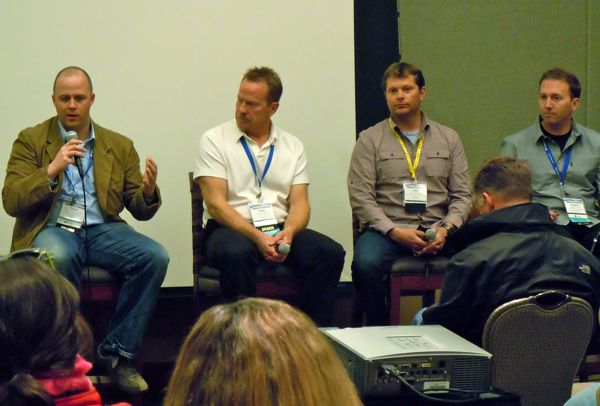
Davy Ratchford, Andy Chapman, Dan Sherman and Christian Knapp talk April 18 about social media. Photo/Kathryn Reed

“The best investment in marketing is hiring the right social media guy,” Ratchford said.

But validating what is going on in the world of social media is hard to quantify. Marketers say fans on Facebook and Twitter want to be a friend, not a customer, per se. That’s why sales pitches, even discounts, don’t work well.

“They want an online conversation. But when it comes time to pulling the trigger, they’ll think of you,” explained Christian Knapp, vice president of marketing at Aspen-Snowmass.

(Rounding out the panel were Andy Chapman, chief marketing officer for North Lake Tahoe Resort Association, and Dan Sherman, managing director of Ski.com.)

Ratchford said no matrix exists to show that someone online read X and therefore that translates to Y.

At the end of the session Tony Lyle with Aramark’s South Shore operations told Lake Tahoe News, “I’m not sure you can ever monetize social media. They are in that space to hang out.”

Keeping up with technology is key, as well as using it in ways that are appropriate for specific businesses. Ratchford mentioned how Alaska Airlines allows people to upload where their friends live, and then the airline lets the person know how much it would cost to fly to see their friends.

But all those speaking on the topic recognize the importance of having the social media presence. Good content – via all online modes of communication was stressed.

Allowing people to easily share that content with friends is important – words, pictures and videos.

“We are working on when your vacation is booked, you can share it with your buddies,” Ratchford said, and even invite them to join the fun.

Chapman said NLTRA is working on making items on the calendar of events page easier for people to share.

All pointed out that how many likes or fans a business has is not as important as having people of influence doing the chatting. A person of influence is someone who has engaged friends or Tweeter followers. It’s similar to one of the most basic forms of marketing — word of mouth.

“It’s about influencing the influencers,” Knapp said. But he also admitted it can hurt when influentials have bad experiences.

Engaging people increases awareness of a company’s product or destination.


Lake Tahoe tourism officials strive to be relevant

By Kathryn Reed

OLYMPIC VILLAGE – Is Lake Tahoe relevant? Relevant to those planning a vacation, that is.

This is a question those in the tourism business must ask themselves – especially after attending the 37th annual Mountain Travel Symposium at the Resort at Squaw Creek.

“Now every community between here and the Bay Area has an event and a website. Back in the day Tahoe had minimal competition,” Carl Ribaudo said. The president of South Lake Tahoe-based Strategic Marketing Group spoke with Lake Tahoe News in between workshops April 18. “We have to change the look, not just for tourists, but for locals.”

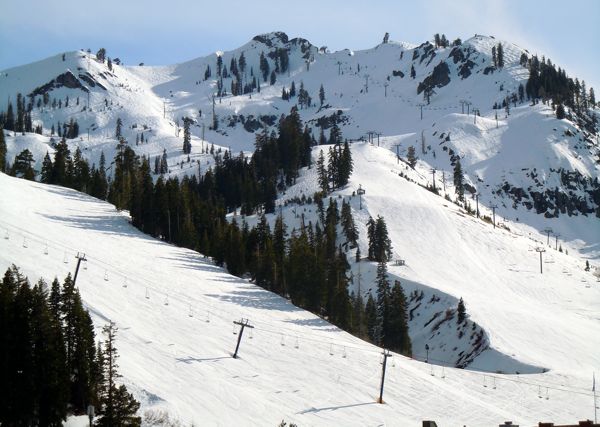
Lake Tahoe wants to be relevant to people eager to travel. Photo/Kathryn Reed

He wants the South Shore to become more relevant for locals and tourists. Two ways to do that, he believes, are by improving the infrastructure and adding special events to the calendar.

It was reiterated at the various workshops that competition is getting greater among destinations. Nearly every town touts its attributes to would-be travelers.

Tahoe has a beautiful lake, but other locations have bigger ski mountains, more robust mountain biking, extravagant casinos, five-star lodging, shopping, reliable public transit and other amenities travelers are looking for.

The difference, though, is Tahoe – all shores combined – has the whole package. While marketing gurus work together on occasion, notably last year’s Tour de California bike race, usually it’s North v. South.

As Dan McHale, general manager of Inn by the Lake in South Lake Tahoe, said, he was glad to come to Squaw so he could drive around the lake, see what is going on, because it’s easy to feel isolated.

Those involved with Tahoe’s tourism have also become complacent in some ways. Some business owners believe Tahoe sells itself. Not so. Look at the vacancy signs — even on holiday weekends. People aren’t coming to Tahoe like they used to. Part of the reason is because they have other choices, part of the reason is because the area is stale.

Carol Chaplin, executive director of Lake Tahoe Visitors Authority, believes those speaking at the multi-day conference reaffirmed her agency’s beliefs.

“Those who have the passion for recreational activities-sports are those who will continue to spend on those experiences,” Chaplin said.

She added that the conference, which is touted as the largest gathering of mountain travel professionals in North America, “Confirmed also that our products-services need to be relevant. That would mean a hard look at those – including infrastructure – to understand if we have what it takes.”

While the conference is about mountain destinations, with a focus on winter activities – skiing and snowboarding in particular, it didn’t stop Tony Lyle, marketing chief of Aramark on the South Shore, from attending. His company runs Zephyr Cove Resorts, which includes snowmobiling, the lodge, stables, and the paddle-wheelers that launch from there and Ski Run Marina.

“Tahoe is unique. It has all these different opportunities,” Lyle said. “You can get on the lake, that is my pitch.”

It’s a mantra other ski towns cannot boast about.

He has been successful in telling that story to visitors this season. The boats have been full when the lift lines were non-existent.

Tourism is Lake Tahoe’s economy. It’s also big business throughout the world. That is why this area of California and Nevada is striving to keep a hold of the market it has and then increase it.

The World Travel & Tourism Council says the global tourism industry is twice the size of the automotive manufacturing sector and about one-third larger than chemicals manufacturing.

The council says U.S. travelers contribute $2 trillion to the world economy.

Andy Chapman, marketing guru for North Lake Tahoe Resort Association, smiles when talking about having more than 1,000 tourism professionals in his back yard for nearly a week.

“The best way to sell it is for them to witness it,” Chapman said moments before he participated in a panel discussion on social media.

With Squaw Valley as a backdrop, snow glistening and finally covering all the runs, it is hard not to see Tahoe as an Olympic-caliber destination.

But driving the roads, looking at dilapidated infrastructure and knowing the Ritz-Carlton at Northstar is the only five-star lodging property in the area, proves Lake Tahoe doesn’t have it all.

As Chaplin said, the conference, “Confirmed also that our products-services need to be relevant. (It) confirmed that LTVA is getting there, but is not there.”


Tiny Nevada town faces 240%-410% rise in monthly water bills

By Frank X. Mullen, Reno Gazette-Journal

CHERRY CREEK — This mining town has welcomed booms and endured busts for 140 years, but many of the hamlet’s 31 residents said Cherry Creek might become a ghost town again if a proposed 410 percent increase in water rates is approved by state regulators this month.

“We’re about to get dried up and blown away,” said Marie Jardine, who said the mostly elderly residents of the town 60 miles north of Ely can’t afford anything close to the proposed increase.

The increase initially requested would boost flat-rate water bills from $20 to $102 per month. Using the utility’s reported annual water use for 2010, that’s a cost of about $10 per 1,000 gallons, as compared to the $3.85 per 1,000 gallons paid by Reno-Sparks customers under the Truckee Meadows Water Authority.

On Thursday, the water company filed a document stating that a $48 increase in the water rate to $68 per month would be acceptable. The Public Utility Commission is scheduled to consider the case April 25.

PUC officials were unable to cite any historical water rate requests rivaling the 410 percent initially proposed in Cherry Creek. If the full amount were granted, rate surveys indicate Cherry Creek residents would pay among the highest monthly water bills in the nation.

Read the whole story


Democrats delay California mortgage overhaul amid business opposition

By Jon Ortiz, Sacramento Bee

Amid raucous boos and hisses from a packed hearing room gallery, an Assembly committee on Monday suddenly pulled two mortgage reform bills sponsored by Attorney General Kamala Harris – just before she was supposed to testify.

The unexpected turn of events in the Democratic-controlled Banking and Finance Committee turned what Harris hoped would be a slam-dunk hearing into a signal that her “Homeowner Bill of Rights” is in trouble.

The banking and mortgage industries strongly oppose the bills, intended to clean up lending and foreclosure industry abuses. The California Chamber of Commerce has put them on its hit list of “job killer” legislation. “We’re concerned about these bills because we believe that they’ll stall economic development in the state,” said Cal Chamber lobbyist Marti Fisher.

The measures pulled by committee Chairman Mike Eng, D-Monterey Park, would apply to California lenders the terms of consumer protections recently accepted by five major banks to settle a high-profile lawsuit by Harris and other state attorneys general.

The $25 billion settlement reached several weeks ago with Ally Financial, Bank of America, Chase, Citi and Wells Fargo expires in three years. Harris’ bills would apply the stricter rules indefinitely to all mortgage companies doing business in California.

Read the whole story


Mountain travel experts hash out ways to lure consumers

By Kathryn Reed

OLYMPIC VALLEY – With skier visits down this season, lodging occupancy at 40 percent and consumers having more choices where to spend their travel-leisure dollars, what are mountain communities supposed to do to stay competitive and solvent?

Embracing that skiing is more than a sport – it’s a lifestyle – is one suggestion. Tap into the fact that people say “I am a skier” and not just “I ski” is what Ian Arthur, chief marketing officer with Intrawest, told a group of industry officials Wednesday morning.

Arthur, with Kirsten Lynch, chief marketing officer of Vail Resorts, and J. William Seccombe, chief marketing officer of Visit Florida, bantered back and forth as they delved into the business of destination mountain travel.

Ralf Garrison, director of MTRiP, speaks April 18 at the Mountain Travel Symposium. Photo/Kathryn Reed

The three were part of one of the sessions during the 37th annual Mountain Travel Symposium that is being hosted by the Resort at Squaw Creek. With several hundred in attendance for a multi-day conference, this is billed as the largest gathering of mountain travel professionals in North America.

Ralf Garrison, director of MTRiP (Mountain Travel Research Program), said, “Pure destination guests, led by international visitors held up the best while the local and regional skiers and boarders were more fickle and made fewer trips to the slopes. As a result, destinations catering to multi-night visitors who book well in advance fared better than the resorts that are more dependent on regional and short-stay guests and the disparity among the various resorts is more pronounced this year.”

Dan McHale, general manager of Inn by the Lake in South Lake Tahoe, echoed that sentiment. He told Lake Tahoe News that it was the international travelers, primarily Europeans, who were filling his rooms this winter, while the Bay Area skiers stayed away.

The MTRiP data Garrison released April 18 shows below normal snowfall and warm weather had skiers doing other things this winter. While the previous handful of years showed skier visits above the 60 million mark, when the final tally comes in at the end of April it’s likely that number won’t hit 50 million for 2011-12, he said.

Perception is everything. The drive-up market for resorts on both sides of the country stayed away as the snow was sporadic, this, despite the abundance of snowmaking in so many places.

Weather is always a factor. A year ago, the snowfall set records in Tahoe for the abundance, this year is was all about the scarcity of white stuff.

If NOAA’s Climate Prediction Center is correct with this week’s posting of warmer water in the Pacific likely to generate an El Nino weather pattern for fall 2012, it could translate into a wetter winter for California next year. However, with where Lake Tahoe is located, these El Nino and La Nina predictions for the rest of the state don’t always hold true for the Sierra.

It was the destination traveler who saved this season.

As Garrison pointed out early in his presentation, for places that consider themselves destination resorts, the season could be salvaged, but for those claiming to be just a ski area, the season was one to write off.

Occupancy during the ski season at Western mountain areas was down 3.9 percent during March compared to the same month last year, Garrison said. Throughout the winter months the occupancy is down 2.3 percent.

The bright spot for hoteliers and those receiving hotel tax, though not for the consumer, is the average daily rate was up in March by 1.7 percent compared to 2011, and is up 4.8 percent for the November-April ski season compared to last season.

To move forward, Garrison said, “You are going to need to generate your own demand.” This is because while consumer confidence is up slightly, it is basically flat.

Arthur pointed out how 25 years ago there was 40 percent more ski resorts in the country and that with the supply going down this should be good for the areas still remaining.

One way to get people into the sport is to show more people having fun. It was pointed out how Ski magazine shows shots of serious skiers. Photographs aren’t of people laughing, having a good time, socializing, or conveying emotion.

Lynch said with Gen Y being full of risk takers and wanting freedom it’s a tough balance between traditional skiing and turning a resort into a sports theme park.

Seccombe pointed out how with all the television channels there are that poker and fishing have more outlets than skiing. With the X Games and Olympics being the only times skiing, boarding or other snowsports are on TV, this gives the mountains little exposure to potentially new customers.

“With billions of dollars  spent to lure the same people, mountain travel needs to broaden its approach or it will see a drop off,” Seccombe said.

Some of the constraints the industry has are price, how long it takes to learn the sport, and accessibility to the mountains.

“We need to start telling our story to a broader consumer base,” Arthur said.

Lynch said the whole summer experience needs to be part of the discussion when it comes to traveling to the mountains.

“There are a lot of choices out there and we need to stay relevant,” Lynch said.

Thinking beyond the traditional skier was brought up. Not everyone in a family or group skis. Promote the spa, shopping and other activities.

McHale said he noticed with his guests that many come to the South Shore not to ski, but to be in the mountains. He partners with Heavenly Mountain Resort so they can go tubing.

Give people more than just a day on the slopes. Seccombe singled out NASCAR and how cameras are put in vehicles so spectators can keep watching those left turns made by their favorite driver.

Arthur said the best way to deliver more to the consumer is to know more about them.

Lynch summed it by saying the way to be successful is to concentrate on delivering service and experiences to the guests – making it all about them – and touting the destination less.


Chilling tale of Tahoe area killing unfolds on tape

By Scott Smith, Stockton Record

The first murder Loren Herzog admitted to watching his buddy Wesley Shermantine carry out came in the wee hours of Sept. 1, 1984, on a drive back from Lake Tahoe.

Herzog was behind the wheel when Shermantine spotted a man passed out drunk next to his car just off the road. He told Herzog to turn back. They were on Highway 88 in Hope Valley in the High Sierra.

Shermantine beat Henry Howell and then shot him once in the back. He took Howell’s wallet and $45, which the two buddies from Linden used to buy gas in Jackson, according to Herzog’s statements.

“He’d kill for nothing,” Herzog nervously told investigators years later. “He’s a cold-blooded killer, man. … I told my wife, he’s one person in this world I’m scared of.”

This is just one violent episode captured in 17 hours of grainy videos taken 13 years ago. A string of investigators interrogated Herzog over several days at the San Joaquin County Sheriff’s Office after his arrest in 1999.

After hours of denials and cajoling from detectives, Herzog eventually admitted that he watched Shermantine kill five people in a 15-year drug-fueled killing spree. In all, Shermantine told Herzog of killing 24 people, Herzog told them.

Shermantine also appears briefly on video. Detectives confront him with the blood they found in his truck of missing Cyndi Vanderheiden. Shermantine stoically denies everything before folding his arms and asking for an attorney.

Shermantine today blames Herzog for everything.

Read the whole story