Report: Nevada tax system good for small businesses

By Sean Whaley, Nevada News Bureau

CARSON CITY — A new business index evaluating the states on the effects of their tax systems on entrepreneurship and small business ranks Nevada third behind South Dakota and Texas.

The Small Business & Entrepreneurship Council’s “Business Tax Index 2012” pulls together 18 tax measures, and combines them into one tax score that allows the 50 states and District of Columbia to be compared and ranked.

Raymond J. Keating, chief economist for the SBE Council and author of the report, said: “All taxes matter, whether imposed at the federal, state or local level of government. They matter to consumers, entrepreneurs, investors and businesses. State and local levies matter in terms of a state’s competitiveness. And they matter when it comes to economic growth and job creation.”

Among the measures used to create the rankings are each state’s top personal income tax rate, top individual capital gains tax rate, top corporate income tax rate, property taxes, sales and excise taxes and unemployment taxes.

Nevada does not have either a personal or corporate income tax and was rated highly in these categories. The state did not do as well in the property tax ranking, coming in 33rd as a share of personal income, 47th on sales and excise taxes and 36th on unemployment taxes.


Incline condo fire blamed on discarded ashes

A fire that broke out in Incline Village on April 26 was caused by improper ash disposal, according to North Lake Tahoe firefighters.

Crews responded to 978 Glenrock Court at 2:30am Thursday. Units 52 and 53 have extensive damage.

A condo fire April 26 in Incline left five people homeless. Photo/NLTFPD

Five people are without a home. No one sustained injuries.

“Improper ash disposal is a common cause of structure as well as wildland fires. Whether fireplace or barbecue ashes, it is important to understand that embers in an insulating bed of ash can remain hot up to a week or more,” Tia Rancourt, with North Lake Tahoe Fire Protection District, said in a statement.

 — Lake Tahoe News staff report


Future of death penalty to be decided by California voters

By Maura Dolan, Los Angeles Times

California is set for a major debate on the death penalty following qualification Monday of a November ballot measure that would replace capital punishment with a life term without possibility of parole.

If passed, the measure would make California the 18th state in the nation without a death penalty. During the last five years, four states have replaced the death penalty and Connecticut is soon to follow.

Growing numbers of conservatives in California have joined the effort to repeal the state’s capital punishment law, expressing frustration with its price tag and the rarity of executions. California has executed 13 inmates in 23 years, and prisoners are far more likely to die of old age on death row than by the executioner’s needle.

November’s ballot measure would commute the sentences of more than 700 people on death row to life without possibility of parole, a term that would then become the state’s most severe form of criminal punishment.

Most death row inmates would be returned to the general prison population and be expected to work. Their earnings would go to crime victims.

Read the whole story


California lawmakers want minimum wage tied to CPI

By Jim Sanders, Sacramento Bee

Gasoline was selling for $3.33 a gallon, Jerry Brown was attorney general, and California was bracing for a budget crisis when the state’s hourly minimum wage rose to $8 in early 2008.

Fast forward to now, and much has changed: Gas is almost a dollar higher, Brown is governor, and the state is reeling from years of red ink. But the minimum wage hasn’t budged a cent.

New legislation would change that, ensuring future increases for the state’s lowest-wage workers while letting lawmakers evade political heat by taking the hot-button issue out of their hands.

Assembly Bill 1439 by Assemblyman Luis Alejo would prohibit the minimum wage from being lowered as consumer prices fall but would mandate increases as prices rise. The indexing would be expected to hike the minimum wage about 14 cents next January, but more importantly, it would set the stage for what could be annual hikes in years to come.

Alejo, D-Watsonville, bills his measure as a way to boost the economy by putting more money in the pockets of workers struggling to provide food, clothes and housing for their families.

“When minimum-wage workers have more money to spend, they spend it,” he said. “They can’t afford to save it. That is good for all businesses.”

The state Chamber of Commerce has labeled AB 1439 a “job-killer” bill. Other opponents range from the California Restaurant Association to the California Farm Bureau Federation.

“Now is not the time to increase the cost of doing business in California, when businesses are just now showing signs of recovery,” said Jennifer Barrera, a chamber lobbyist.

AB 1439 puts the minimum wage on “autopilot,” Barrera said, “which we don’t think is appropriate.” Lawmakers should not simply let statistics dictate rates without considering other factors, she said.

Read the whole story


Peer review: TRPA thresholds on right track, but plenty of room for improvement

By Kathryn Reed

INCLINE VILLAGE – Rain falling on a hillside golf course. It would have made for the perfect field trip for the Tahoe Regional Planning Agency Governing Board.

Instead, the board stayed inside to talk policy.

But had they walked outside The Chateau at the Incline Village golf course, they could have asked if this course uses a fertilizer with phosphorous on its grass, seen the impacts of stormwater runoff to the near shore, witnessed issues with stream environmental zones, viewed scenic concerns, and even investigated whether they could have used public transit to get to the meeting.
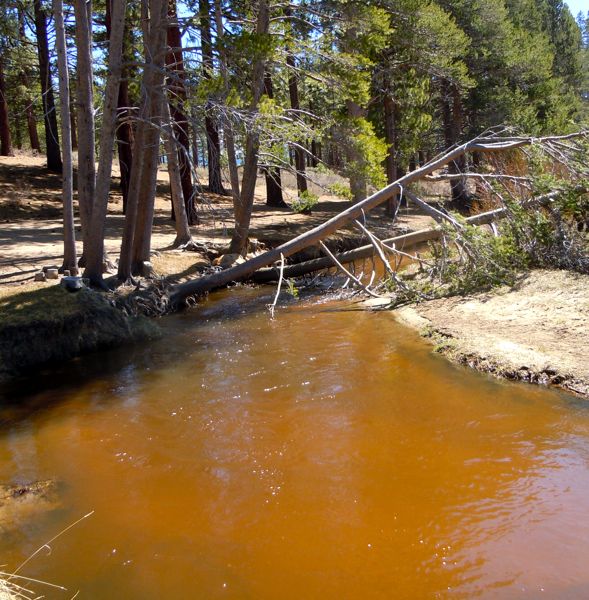
Improving Lake Tahoe clarity's includes paying attention to the tributaries. On April 22, Trout Creek in South Lake Tahoe was a brown-rust color. Photo/Kathryn Reed

After all, those were the issues they talked about all day Wednesday. Issues that amount to 2,500 pages – all of which are said to be on TRPA’s website. These are issues that everyone living or doing business in the Lake Tahoe Basin will have to follow. Many are ones that have been in effect for decades.

Under the dark skies and intermittent rain, the Governing Board endured the first of what is expected to be two full days of dialogue about the proposed update to the Regional Plan and associated documents.

By the time the April 25 meeting came to a close at 4:45pm, a couple dozen people remained – while the morning had about 75 in attendance. Much of what was discussed Wednesday was a regurgitation of what has been talked about leading up to this point.

Thursday’s session, which starts at 9:30am at TRPA’s Stateline office, will be about the environmental documents related to the Regional Plan update and Regional Transportation update. Speculators expect more public comment and a livelier session.

Only two people commented on the first segment regarding the thresholds, while no one commented on the afternoon session that delved into the Regional Plan and transportation updates. However, public comment was not expected to be taken Wednesday per Executive Director Joanne Marchetta’s opening comments, but people will have a chance to comment today on Wednesday’s items.

While Marchetta was upbeat, saying the thresholds are working and more rigor will be used going forward to analyze progress, the fact remains that since 1997 when the environmental improvement program was created more than $1.5 billion has been spent in the basin with the primary purpose being improved lake clarity.

Clarity is not declining as fast as it once did. That’s the improvement TRPA officials continually point to.

Threshold update

While the nine thresholds must be updated every four years, this is the first time the data has been peer reviewed.

Within the nine categories are 151 subcategories, so to speak. The nine are air quality, water quality, soil conservation, scientific resources, wildlife, fisheries, vegetation preservation, recreation, and noise.

Of those 151 standards, TRPA made a status determination on 92 of them. Sixty-three percent of the 92 standards were attained and 37 percent have not been attained, Shane Romsos, acting measurement department manager at TRPA, told the board.

Board members raised questions about the monitoring process and why some things cannot be measured. Money is one reason, poor standards are another.

“We are trying to move the monitoring into the 21st century; to measure things that have relevancy for policy management action,” Romsos said.

About $2 million a year is spent on monitoring TRPA threshold requirements by agencies throughout the basin. Twice that amount is needed to measure everything. Five times that amount, or $10 million a year, is what is need for “top of the line” monitoring, Romsos said.

“We have standards, but it’s unclear what we are trying to achieve,” he said.

He used wood smoke as an example. Smoke measurements are ambiguous and what they were pre-1981 are not even known. The recommendation by the peer review and from Romsos to the board is to replace wood smoke with measuring particulate matter.

TRPA outlined the concerns in the threshold measurements as:

• Long-term annual average Secchi depth and summer clarity

• Phytoplankton primary productivity and near shore attached algae

• Uncommon plant communities

• Single noise events like aircraft

• Cumulative noise events like urban outdoor recreation sites.

Jim Mahoney, who led the peer review done with six others, said, “The panel does not find any fatal flaws.” While that is the technical phrase for all is well, he went on to praise the threshold studies as one of the best he’s seen in his 30 years.

Still, there is plenty of room for improvement. Romsos said some of the suggestions are being implemented, with others to be considered.

People who don’t live or work in the basin did the review – in fact none of the seven lives in either California or Nevada.

Mahoney suggested in the next update that TRPA, “Expand the use of comprehensive land use perspectives.” He said the panel found not enough emphasis was placed on looking at how the thresholds are interrelated and how the basin is affected as a whole.

“The peer review – they really want us to link the thresholds,” Romsos said. “As we talk about policies it’s those that have multiple threshold benefits.”

Mahoney also stressed the importance of environmental and economic analysis.

The panel, Mahoney said, recommends the TRPA find out “the connection between lake clarity and near shore water quality; the important links between regional soil conservation and water clarity; the possible adoption of some of the best practices for maintaining lake ecosystems previously developed for other lake systems; the beneficial effect of riparian and wetland restoration upon the eight wildlife species chosen for monitoring in the Tahoe basin; the spatial distribution of vegetation communities throughout the basin, including management practices that support fire reduction; continued focus on air quality monitoring the basin with special attention to ozone ambient air quality standard attainment; development of percentage-of-exceedance methods to evaluate the community noise thresholds; increased use of visual illustrations in scenic value thresholds developed for community and regional design applications; and network approaches to addressing the interconnectivity of recreational venues.”

When it comes to the Regional Plan update, ways to gain threshold benefits, as presented by TRPA staff, are to:

• Transfer coverage out of sensitive lands

• Improve walkability and bike access

• Environmental redevelopment

• Phase out phosphorus fertilizers.

Muck closest to shore

What the shoreline looks like received the most dialogue by board members.

John Reuter with UC Davis, who for years has been working on lake clarity and helped create some of the thresholds, said Davis along with UNR and Desert Research Institute has received a grant to study the near shore.

“We are going to take a scientific and systematic evaluation of what the near shore indicator should be,” Reuter said. “We don’t want it just based on what the public would like. No one wants (algae). But what can be expected? What’s realistic?”

For so long lake clarity has only been defined by how far a white dinner plate-looking disc can be seen by the naked eye from aboard a boat.

With the acceleration of algae and the browning of the lake where the water hits beaches, people are becoming alarmed.

It’s a line of questioning board member Claire Fortier, who is also mayor of South Lake Tahoe, pursued.

Reuter said what’s needed is more details about stormwater.

A bit of an irony is that while TRPA embraces the total maximum daily load mandates imposed by the Lahontan Water Quality Control Board, the effects of what comes out of the stormwater pipes is not analyzed. All that has to be quantified is that less comes out each year – especially in the form of fine sediment.

But Reuter pointed out, while decreasing the sediment load reaching the lake will help the near shore, “it does not mean the entire near shore improves.”




Nevada lawmakers unite to prevent state from being black listed by feds

By Erin Kelly, Gannett

WASHINGTON — The Lake Tahoe and Reno area tourism industry shouldn’t have to suffer because of the reckless spending of some federal bureaucrats-gone-wild.

That’s the premise of legislation proposed Wednesday by Rep. Shelley Berkley, D-Las Vegas, and Sen. Dean Heller, R-Nev. The two lawmakers want to ensure that Reno and Las Vegas won’t be blacklisted by the U.S. government in the wake of the recent Las Vegas spending scandal involving federal employees.

U.S. General Services Administration officials authorized $823,000 for an October 2010 conference for 300 employees in Las Vegas that included private parties, a psychic, a talent show and a $75,000 bicycle-building exercise, according to an inspector general’s report published this month. GSA officials also spent $130,000 on eight planning trips to Las Vegas in advance of the conference, the report says.

The scandal led to the resignation of the agency’s top official, the firing of two top aides and the punishment of several others.

Congress is investigating the spending, and there has been criticism by some lawmakers, including Sen. Rand Paul, R-Ky., about federal employees meeting in Las Vegas and other cities known as gambling destinations.

Berkley fears a return to a policy by the Bush administration that effectively barred federal employees from holding meetings in casino cities such as Reno and Las Vegas even when those cities offered the cheapest rates. That policy was reversed by the Obama administration at the urging of Senate Majority Leader Harry Reid, D-Nev.

Read the whole story


Particles of meteor heard exploding in Tahoe found on West Slope

By Scott Sonner, AP

RENO — Tiny meteorites found in the Sierra foothills of northern California were part of a giant fireball that exploded over the weekend with about one-third the explosive force of the atomic bomb dropped on Hiroshima in World War II, scientists said Wednesday.

The rocks each weighed about 10 grams, or the weight of two nickels, said John T. Wasson, a longtime professor and expert in meteorites at UCLA’s Institute of Geophysics and Planetary Physics.

Experts say the flaming meteor, dating to the early formation of the solar system 4 to 5 billion years ago, was probably about the size of a minivan when it entered the Earth’s atmosphere with a loud boom early Sunday. It was seen from Sacramento, Calif., to Las Vegas and parts of Northern Nevada.

An event of that size might happen once a year around the world, said Don Yeomans of NASA’s Near-Earth Object Program Office at the Jet Propulsion Laboratory in Pasadena, Calif. But most of them occur over the ocean or an uninhabited area, he said.

“Getting to see one is something special,” he said. He added, “Most meteors you see in the night’s sky are the size of tiny stones or even grains of sand, and their trail lasts all of a second or two.”

The meteor probably weighed about 154,300 pounds, said Bill Cooke, a specialist in meteors at NASA’s Marshall Space Flight Center in Huntsville, Ala. At the time of disintegration, he said, it probably released energy equivalent to a 5-kiloton explosion. The Hiroshima bomb was 15 kilotons.

“You don’t often have kiloton rocks flying over your head,” he said.

The boom, another expert said, was caused by the speed with which the space rock entered the atmosphere. Meteorites enter Earth’s upper atmosphere at somewhere between 22,000 and 44,000 mph — faster than the speed of sound, thus creating a sonic boom.

The friction between the rock and the air is so intense that “it doesn’t even burn it up, it vaporizes,” said Tim Spahr, director of the Minor Planet Center at Harvard University.

Wasson said one meteorite was found near the town of Coloma, about 35 miles northeast of Sacramento. “I’m sure more will be found, I’m hoping, including some fairly big pieces,” he said.

“The fact that two pieces already have been found means one knows where to look,” Wasson said.

Bits of the meteor could be strewn over an area as long as 10 miles, most likely stretching west from Coloma, where James W. Marshall first discovered gold in California, at Sutter’s Mill in 1848.

Robert Ward of Prescott, Ariz., who has been hunting and collecting meteorites around the world for more than 20 years, said he found the first piece about 10am Tuesday in between a baseball field and park on the edge of the town of Lotus.

Ward said he “instantly knew” it was a rare meteorite known as “CM” — carbonaceous chondrite — based in part on the “fusion crusts from atmospheric entry” on one side of the rock. He actually has two rocks that he suspects were part of the same small meteorite that split on impact.

“It was just, needless to say, a thrilling moment,” he said.

“It is one of the oldest things known to man and one of the rarest types of meteorites there is,” he said. “It contains amino acids and organic compounds that are extremely important to science.”

Yeomens confirmed this type of meteorite is one of the more primitive types of space rocks out there, dating to the origin of the solar system 4 to 5 billion years ago. And it’s “actually kind of unusual,” he said.

Yeomens said it’s got two of the most important chemicals that scientists look for: carbon and a form of water. In fact, this type of space rock is likely full of water and would have made a good candidate for the new space company announced Tuesday that plans to mine asteroids, he said.

“And this one landed in their backyard for a lot less than they planned to spend,” he said.

The minivan sized asteroid wasn’t on NASA’s lengthy list of near Earth objects that they track coming close to the planet, so it took scientists by surprise. “There are millions of objects of that size that we don’t know about,” he said. “They’re too small to image unless they’re right up on top of you.”

Ward and others tracked the meteorites’ possible location based on estimates by, among others, scientists with the Meteor Group at the Western University of Ontario in Canada that the fireball likely had exploded in the upper atmosphere above California’s Central Valley.

Wasson suspected hundreds of dealers and collectors already have joined the search. He said it was important to recover the meteorites soon because any rain will cause them to degrade, losing their sodium and potassium.

“From my viewpoint as a meteorite researcher,” he said, “I’m hopeful some big pieces are found right away.”

AP science writer Seth Borenstein contributed to this story from Washington, D.C.


Truckee crews expect road to reopen Thursday

Cold Stream Road in Truckee, which has been closed since April 23, is expected to open Thursday.

Construction crews have completed the bulk of the backfill of the undermined roadway adjacent to the culvert. Crews on Wednesday continued repair work on either side of the roadway to prevent the roadway edges from collapsing.

Paving of the roadway is scheduled for April 27. During the paving operation the road will be open with alternating one-way traffic.


O’Rourke looking at job in Washington; Medford off the table

By Mark Morey, Yakima Herald-Republic

YAKIMA, Wash. — A last-minute withdrawal won’t disrupt Yakima’s search for a city manager.

The City Council on Tuesday quickly moved to slot in another candidate after assistant administrator Marianna Marysheva-Martinez of Mammoth Lakes withdrew late Monday.

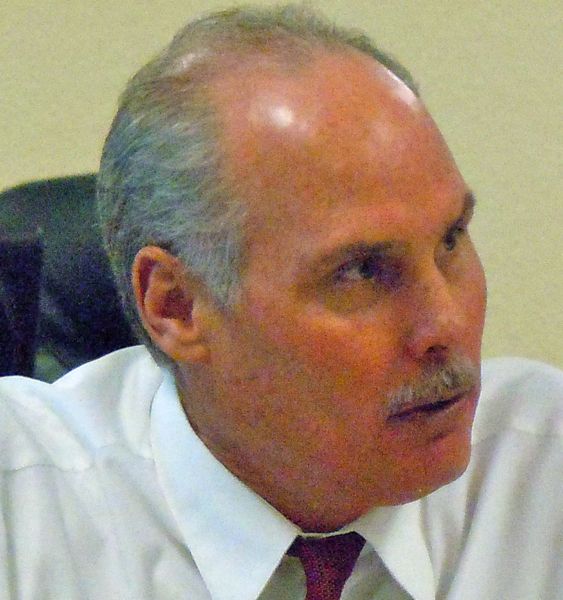
Tony O'Rourke

Replacing her as a finalist is Anthony O’Rourke, manager of South Lake Tahoe, since 2010. He started his local government career as a community development director in Isla Vista, Calif., in 1977, according to his resume.

Yakima Mayor Micah Cawley said O’Rourke had been under consideration by the council previously, but he opted not to join the final process announced earlier this month because he was already talking with another city. When that deal in Medford, Ore., did not come together, O’Rourke said he would be available to interview with Yakima, Cawley said.

Read the whole story


Guilty verdict rendered in killing of Placerville principal

By Carlos Alcalá, Sacramento Bee

Placerville residents saw a measure of swift justice Tuesday, as John Luebbers was convicted of first-degree murder in the 2011 shooting of popular school principal Sam LaCara.

Staff members and parents from Louisiana Schnell Elementary School, where LaCara, 50, was principal, shared tearful hugs after the verdict was read.

“He was a good man,” Kara Tracy, an instructional aide at Schnell, said of LaCara.

Tracy was happy for the verdict, but said, “I don’t think it does any justice. It doesn’t bring Sam back.”

The guilty verdict was the culmination of a sudden end to Luebbers’ trial.

The prosecution rested its case as soon as court was in session Tuesday and the defense attorney elected not to present any evidence or testimony, later saying it was not in his client’s best interests.

Read the whole story