Busted pipe likely sank Sierra Rose; boat still in Tahoe Keys Marina

By Jaclyn O’Malley, Reno Gazette-Journal

The $3.2 million, three-story luxury yacht that sank more than two weeks ago while chained to a dock at Tahoe Keys Marina remained in the water Wednesday, while workers continued attempts to remove it.

Sierra Rose owner, Michael Stewart, on Wednesday did not immediately return a call for comment. Officials have said a private contractor would be responsible for the yacht’s removal from the lake.

Staff at the Tahoe Keys Marina Yacht Club, where the vessel sunk July 9, said Wednesday afternoon that it still was submerged in the water. The yacht is nearly 86 feet long with its own helicopter pad. It was still touching the bottom of the lake, employees said.

California water and environmental officials have been monitoring the yacht for fuel leaks or other contaminants. They have reported no issues found so far.

The use of a crane and pumping out thousands of gallons of water from the inside has only minimally lifted the yacht out of the water. Marina officials have said its sheer size and continual leaks have delayed a quick removal.

The yacht is believed to have sunk because of a “machinery and equipment failure,” said Lt. Dave Stevenson of the South Lake Tahoe Police Department, which is investigating the incident as a vessel collision. He said a broken water pipe is likely the blame.

No damage estimate was available.

About 3am July 9, Stevenson said that the yacht owner and some guests had awakened after the boat began to shift after water began to flood the insides. He said the group had earlier believed there was a leak in a water pipe and shut it off.

But it didn’t work, Stevenson said.

A final cause will be determined after the boat is reinspected following its removal from the lake, he said.

At the time of the sinking, the yacht was chained to the dock at the marina. During the sinking, the boat lifted up parts of the dock, damaging it, Stevenson said.

No injuries were reported.

The Sierra Rose was known as the largest, noncommercial boat on Lake Tahoe.


Washoe Meadows Park may be integral to Meyers’ future

By Kathryn Reed

MEYERS – Meyers is an ideally situated spacious and walkable mountain community that values sustainability, health, wellness, and the natural environment. Uniquely concentrated with year-round outdoor sport and recreational opportunities, the Meyers mountain culture is the hallmark of our thriving local-based economy, boasting a diverse commercial and retail environment, welcoming visitors and providing residents with an extraordinary place to live, work, and play.

That is the recently adopted vision statement for Meyers. Those words lay the framework for this South Shore hamlet as it goes about putting itself on the map in a more definitive manner.

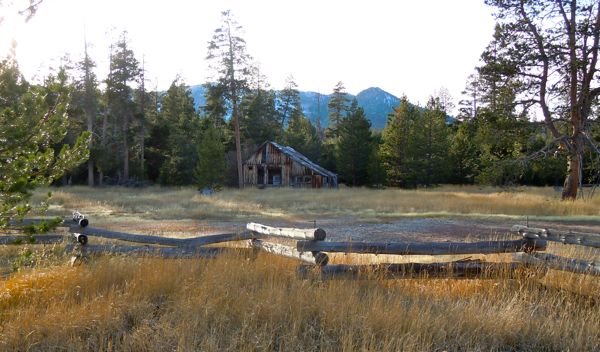
California State Parks may need to do an Historic Structure Report on the Celio barn in Washoe Meadows State Park. Photo/LTN file

Gone is the Meyers Roundtable; with Wednesday night being the last meeting. In its place will be the Meyers Advisory Council. The first meeting will be Aug. 15 at 6pm at Lake Valley firehouse on Highway 89. At that meeting the council will be appointed and work officially begins on developing the Meyers area plan. That will be an official document that will ultimately need approval by the Tahoe Regional Planning Agency.

Part of that plan will include Washoe Meadows State Park and Lake Valley Recreation Area. The latter is better known as the home of Lake Tahoe Golf Course.

“We want to help the community be a recreation hub. Our park is right in the middle of this recreation hub,” Steve Musillami, chief of the State Parks Planning Division, told the more than 30 people at the July 25 meeting.

Most of Wednesday’s meeting was about the future of the state park and golf course.

While a lawsuit regarding the reclassification of the land and CEQA irregularities is still tied up in the legal process, the State Parks people carried on as though that did not matter. When asked about it, they said they were not at liberty to talk about it.

In January, the California State Park and Recreation commissioners upheld their earlier decision to swap land between the adjoining park and recreation area in order to allow for the golf course to remain 18 holes after the Upper Truckee River is restored.

Musillami spoke about how 100 percent of the golf course is now in a stream environmental zone, that 6,200 linear feet of the course are along the river and 850 would be when reconfigured if they do what they want, and that the boundary of the course would shrink. The latter means fewer holes are likely to be on what locals still consider to be State Parks land.

The state has money to design how the Upper Truckee River would meander. (That can’t go forward until the lawsuit is resolved.) Money for the first phase of trail improvements is also in hand.

Parks officials are on a year-to-year agreement with American Golf Corporation to operate the golf course. The concessionaire contract will eventually go out to bid with the presumption whatever company is selected will foot the bill to change the golf course to accommodate the river restoration. The parks department could put all sorts of criteria into the request for proposal – like different winter activities must be offered or the clubhouse could be more than it is today.

This golf course at one time was touted as being the No. 3 money generator for the State Parks system. On Wednesday it was said to be No. 5, making about $600,000 in the last year. The agency’s website shows it at No. 50 with revenue of $503,998 in 2010-11.

“People know the golf course, but not what is behind it,” Musillami said. “We don’t want to have a park out there that no one visits.”

That is why his agency wants to be part of the Meyers plan.

But the state agency has some work to do. In the next month or two folks in Sacramento will decide what level of planning document to create for Washoe Meadows – a general plan would be the most extensive or it could be something much less. Each comes with different levels of environmental review.

No matter what the planning process, plenty of meeting attendees voiced their opinions about what they would like to see the area evolve into.

Daunelle Wulstein and others want to make sure equestrians still have trails to ride on and bridges that are safe for their horses to cross. Norma Santiago spoke for several people in asking for the future concessionaire to offer more than golf – to be a center that involves biking, kayaking and more than snowmobiling when it snows. Some talked about refurbishing the Celio barn; maybe even making it a destination for diners on cross country skis or snowshoes. Lynne Paulson wants biking and hiking trails by the river and not the golf course. Kristi Boosman wants fertilizer use to be reduced. Sue Novasel was not alone in wanting mountain bike trails to be plentiful. Rene Brejc wants the Meyers commercial corridor to link to the park.


Hunting with dogs may be banned in California

By Hannah Madans, Sacramento Bee

WILTON – When Josh Brones turned on his pickup truck, Tanner, Sequoia and Dollar began to bark.

The three are treeing walker coonhounds, and these hunting dogs were ready to hunt. As Brones let them out of their kennel one by one, each ran a lap around the truck and then jumped into a crate in back.

“They’re living animals with this overwhelming desire to get out and run and get out and hunt, and it would be tremendously selfish to deny them that opportunity,” Brones said Tuesday. He was about to take them to a Glenn County spot just west of Maxwell where he often hunts.

His canines, and others like them, are central to the controversial practice of using dogs to hunt bears and bobcats. Senate Bill 1221, by Democratic Sen. Ted Lieu of Torrance, would ban their use. The Senate narrowly passed the measure, 22-15, in May. It’s now pending in the Assembly.

“Using dogs to hunt bears and bobcats is cruel to the dogs,” Lieu said in an interview Thursday. “It is cruel to the bears. It is cruel to the surrounding wildlife, and it violates what is known as fair chase.”

It’s a hot-button issue, with Brones and the 5,200-member nonprofit called California Houndsmen for Conservation, of which he’s president, opposing the bill. Joining them are hunting and sportsmen’s groups as well as cattlemen’s associations. Opponents have packed Capitol hallways and legislative committee rooms during hearings.

Just as fervent on the other side are the Humane Society of the United States, which sponsored the measure, and other animal and environmental organizations.

Read the whole story


South Tahoe couple survives Colo. movie theater shooting

By Sam Levin, Denver Westword

Three days after Jeremiah and Lindsay Wheelersburg escaped the Century 16 shootings in Aurora unharmed, the couple got some unexpected news: They are having their first child.

For the pair from Aurora, Colo., it’s strange and wonderful news that gives them new perspective on one of their most traumatic experiences.

“The Lord brings beauty from ashes,” says Lindsay, 26. “Even in the midst of tragedy and so much lost life, the very next day, the Lord created life as well. It’s kind of been helpful for me to cope with it. I’ve been playing the scene that night over and over in mind. I’ve got this to replace all that.”

The couple, who met at Calvary Chapel Aurora and now lives in South Lake Tahoe, got one of the final tickets for the midnight showing of “The Dark Knight Rises” late Thursday night last week. They were part of a group of more than thirty church members who bought tickets to the screening and ended up in theater eight, next door to theater nine, where accused gunman James Holmes eventually fired shots that killed 12 individuals and injured dozens more.

We spoke to Jeremiah, 25, on Friday outside of Gateway High School, where he and his brother Joel, a youth pastor in Aurora, had come the following morning to offer support to some of the survivors and witnesses recovering from the tragedy. At the time, Jeremiah told us that one of the scariest parts of the whole experience was the image of his wife panicking.

Read the whole story


SLTPD changes hours to put more officers on streets

South Lake Tahoe patrol officers are switching from four 10-hour shifts to three 12-hour shifts.

Police Chief Brian Uhler said this would provide better coverage on the streets as well as save the city money when it comes to overtime.

He told the City Council last week he expects the savings to be $25,000 a year, while the police association believes the savings to be $90,000 per year.

Mayor Claire Fortier and Councilman Tom Davis expressed concerns about fatigue and insisted Uhler report back in three and six months about how the change in hours is working – in terms of fatigue and if money is being saved.

This is not the first time, though, that SLTPD has worked 12-hour shifts.

The four hours officers will get paid for but are not scheduled to be on the street will in part be used when they need to work overtime, as well as for training hours.

— Kathryn Reed


Foreclosure possible for Embassy Suites S. Lake Tahoe

By Kathryn Reed

Embassy Suites Lake Tahoe’s parent company is in financial trouble.

Ken Corporation of Japan, which has owned the hotel property since December 2000, is looking to refinance a loan in order to stay solvent. (Hilton continues to operate the hotel and the Echo restaurant.)

Max Saito, representative with Ken Corp., told Lake Tahoe News the $3 billion corporate bond the company is repaying involves multiple properties.

Embassy Suites is in financial trouble. Photo/LTN

“We are negotiating a term so we can have better terms for the loan. It’s not necessarily that we cannot pay,” Saito said.

However, the company first defaulted on its payment in February.

In April, the appraised value of Embassy Suites was $36.3 million. This is down from $79.3 million in 2006, when the loan went through. The loan represents more than 160 percent of the value of the property.

Although room nights are being generated this summer, this past winter hotels throughout Lake Tahoe were empty because snow was not falling. Plus, the entire Lake Tahoe Basin is still stuck in a recession, no matter what national pundits say. The current unemployment rate for the city of South Lake Tahoe hovers at 15 percent.

Saito kept reiterating the property is neither in foreclosure nor is it on the edge of it. But that is not what others are saying.

According to Trepp, a leading provider of information, analytics and technology to the commercial real estate and banking markets, “The servicer is dual tracking foreclosure as well as a possible modification.”

Saito said he believes a modification will be successfully negotiated.

Asked what the worse case scenario would be. Saito told LTN, “If we can’t renegotiate the loan, then it’s the normal course for a foreclosure. Someone else buys it; either the lender or different owner.”

Ironically, Ken Corp. bought the property in a bankruptcy deal.

KOAR-Tahoe Partners was unable to keep up with it payments to Mitsui Trust & Banking Co. The firm had a $53 million seven-year construction loan because it was trying to convert 188 of the rooms to time shares. KOAR went into default in summer 2000. That’s when Ken Corp. stepped in.

The hotel opened in December 1991. In December 2006, it underwent a $3 million renovation. It is the largest hotel in the city limits.


Poll: Legalize sports betting in California

By Jim Sanders, Sacramento Bee

Why go to Nevada to bet on the Super Bowl or March Madness?

Californians overwhelmingly want the right to gamble on sports events in their state, too, judging from Field Poll results released this month.

Fans love watching professional or collegiate teams, and it’s common now to bet with friends or through an office pool on big games, said Mark DiCamillo, poll director.

“If they’re going to do that anyway, you might as well legalize it and have the state reap some tax revenue from it,” DiCamillo said. “I think that’s the reason for the support.”

Legalizing sports betting has become a national issue after New Jersey lawmakers voted this year to defy a federal law limiting sports betting to Nevada, Delaware, Oregon and Montana.

In California, Senate Bill 1390 has been proposed by Inglewood Democratic state Sen. Rod Wright to legalize sports betting if Congress alters the federal ban or it is thrown out in court.

Read the whole story


Reno recognizes gaming isn’t what brings people to town

By Norimitsu Onishi, New York Times

RENO — Apple? The outdoors? Bowling?

As Reno, that other city in Nevada, seeks to move beyond an economy and a downtown dominated for decades by mammoth casinos, it is grasping at various possibilities that have little to do with the industry that defined it.

Apple announced in late June that it would build a $1 billion data center here, even as Reno was cementing its reputation as one of the country’s bowling meccas by hosting several tournaments at the 78-lane National Bowling Stadium.

Meanwhile, an advertising campaign promoting the area’s outdoor activities is aimed at a diverse array of tourists, including, for the first time, same-sex couples. “What’s your passion?” asks the campaign, which has nearly no mention of gambling.

The arrival of Indian casinos and the spread of state-sanctioned gambling across the nation have cut deeply into the revenues of former monopolies on legalized gambling like Las Vegas and Atlantic City. But none was as devastated as Reno, whose customers came mostly from the Bay Area and other corners of California. Instead of driving a couple hundred miles and crossing the Sierra Nevada, Californians just headed for slot machines at Indian casinos close to home.

In what many here considered a sign of the times, downtown Reno’s showcase gambling establishment, the Silver Legacy Resort Casino — a 35-story, 1,700-room giant whose opening in 1995 was supposed to usher in a new golden age for the city — filed for Chapter 11 bankruptcy protection in late May. Its owners have said the filing will not affect operations, a pledge seemingly reinforced by announcements of the coming acts, including Cheap Trick on Aug. 3, on a billboard next to its 120-foot replica of a mining rig.

Other fading casinos and some empty buildings loom over a small downtown that has been largely abandoned by residents. Reno, which was also hit particularly hard during the housing crisis, has struggled to reinvent itself precisely because it has been a single-industry city, experts say. Even before gambling, Reno made a name for itself by offering quick divorces, but it also lost that business in the 1960s after other states loosened restrictions on divorce.

“Reno has had it easy until recently because it had a monopoly on things that were illegal in the other states,” said Alicia Barber, a historian at the University of Nevada, Reno, and the author of “Reno’s Big Gamble.” “But now it’s facing tough questions for the first time. It’s like a child star that still wants the world’s attention.”

After peaking in 2000, when Indian casino gambling took off in California, gambling revenues in Reno have fallen by a third. What is more, gambling revenues per square foot of floor space are down nearly a quarter, according to the Center for Gaming Research at the University of Nevada, Las Vegas.

City officials and experts say that gambling will not disappear from Reno, but that its importance to the city, as well as its influence, has been waning.

Wanting to keep gamblers inside their buildings, hotel casinos did not support and sometimes opposed the development of other city attractions, businesspeople say. They had little interest in the University of Nevada, Reno, whose campus lies just a few blocks north of downtown, because students have little money to gamble.

“In the past, we had hotels turn down our business because they didn’t want bowler groups,” said Joe Kelley, the general manager of the National Bowling Stadium.

Until around 2000, Mr. Kelley said, a dozen tour buses would arrive daily at the Silver Legacy or the Eldorado next door. “As the patrons got off the bus,” he said, “somebody would hand them a roll of quarters and a coupon for the buffet. Every morning. And the buses, they don’t come here anymore. So they look to us to fill their property.”

Also completed in 1995, the bowling stadium is scheduled to undergo a $15 million renovation, including the addition of 10 lanes. Last month, the United States Bowling Congress agreed to hold championship tournaments here through 2030.

Read the whole story


Triglia to close South Lake Tahoe pot shop; DiMatteo moving into fitness business

By Kathryn Reed

South Lake Tahoe will definitely be down to one pot club by Aug. 20, with one of the owners staying in town to run a different business.

Matt Triglia on Monday withdrew his challenge to being shut down and agreed to a slew of conditions that allow him to operate Patient2Patient medical marijuana collective until Aug. 20 at the latest.

Gino DiMatteo, who was officially evicted last week from his spot on Third Street where he ran City of Angels 2, has told city officials he is buying Push Fitness.

Tim Christenson's name will have to come off the sign when the sale of the business goes through. Photo/LTN

Neither Triglia, nor his wife, Erika, returned a phone call July 23.

City Manager Nancy Kerry on July 11 revoked Patient2Patient’s permit because the dispensary was violating various city codes. Triglia initially appealed that action, but since changed his mind after things began to unravel after last week’s council meeting.

At the July 17 City Council meeting it was revealed that the Triglias had been detained in Missouri in December and had $85,000 in cash taken by authorities. Triglia at the council meeting adamantly denied it was him.

Later last week when confronted with police photos from Missouri, Triglia changed his story, according to city officials, to say he was working for Homeland Security. When that story fell apart, officials said, Triglia agreed to close shop.

Triglia has until Aug. 1 to paint the building – which means covering up the illegal mural as well removing unpermitted signs. He must also post a notice to patients stating he will be closing.

“They have removed the illegal growing operation from the Spot,” Kerry told Lake Tahoe News. The Spot is the business operating in the building closest to Highway 50. Escrow on that building never closed, so ownership will revert to Matt Johnson of Gardnerville, according to Kerry.

The Triglias own the building set back farther where patients enter.

Changing direction

The closure of Patient2Patient and City of Angels 2 means Tahoe Wellness Collective will be the only medical marijuana dispensary in South Lake Tahoe.

While the Triglias’ plans are unknown, DiMatteo is returning to his life in the world of fitness.

The phone number DiMatteo used for the medical marijuana collective has been disconnected. Tim Christenson, who has owned the fitness club for the past several years, did not return multiple phone calls.

In addition to buying the club, DiMatteo is selling his house in the Angora Highlands area – one of two he owns in the area.

But the fitness club comes with outstanding bills.

El Dorado Climbing Walls, based in Colorado, has been trying to collect what it’s owed from Christenson for nearly a year.

John McGowan, president of the climbing wall firm, said the legal expenses exceed the cost of installing the wall. He told Lake Tahoe News that last week a judge ruled that who pays legal fees is still to be negotiated. McGowan said Christenson wanted that off the table.

A settlement hearing is scheduled for next month, but McGowan believes ultimately the case will be decided by an El Dorado County Superior Court judge.

“I believe it will go to court. But will Push Fitness be solvent?” McGowan wonders. “They could do a sale of assets and close Push. Gino could buy the assets and not the liability.”

(Christenson does not own the building, just the business.)

In addition to the climbing wall firm wanting money, Christenson has regularly not paid taxes. And there is no record of a fictitious business license for Push Fitness registered with El Dorado County.


6 people want to be appointed to LTUSD board

Two applicants came in at the deadline to join the other four who have applied to fill the vacancy on the Lake Tahoe Unified School District board.

Mark Bissonnette (attorney) and Mary Kortge (homemaker) are the latecomers. The other vying for the spot are Barbara Bannar (former board member, homemaker), Kathy Haven (educator/small business owner), Cathy Giardina (business owner/bookkeeper), and Heather Clelan (property manager).

Interviews will be conducted in public at the Aug. 7 board meeting, which starts at 6pm at the district office. The person selected by the current four board members will be seated Aug. 21, with the term expiring December 2013.

The vacancy was created when Judy Cefalu resigned without a reason.