South Lake Tahoe trying to solve problems created by Lakeview Commons’ success

By Kathryn Reed

While Thursday night concerts have been a success at Lakeview Commons based on attendance, the complaints about it being something less than a family event dominated a portion of the afternoon session of Tuesday’s South Lake Tahoe City Council meeting.

Mayor Claire Fortier said the number and types of calls she has received has her constituents saying families don’t want to go back to the concerts.

Her colleague said it’s not quite that bad based on his experience of being at all but one show.
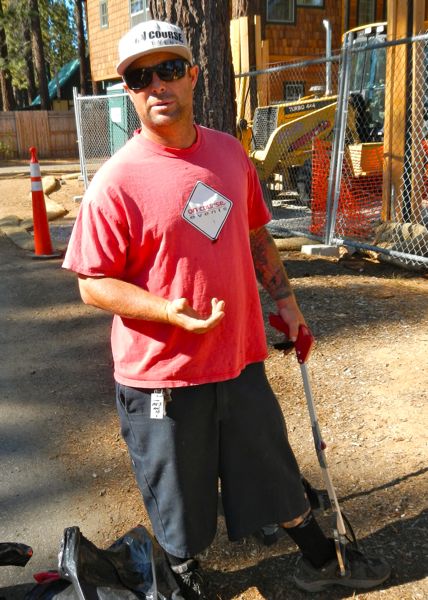
Rob Giustina of OnCourse Events talks about all the trash people leave in the neighborhoods by Lakeview Commons. Photo/Kathryn Reed

“I’m concerned it could go that way real easy if we don’t take proactive action now,” Councilman Tom Davis said in terms of the free event turning away families.

Police Chief Brian Uhler responded by saying, “We will have a heavy presence at Lakeview.”

He said people smoking marijuana would be cited and that officers also have the authority to cite anyone who throws a cigarette butt on the ground.

Pot and tobacco smoke are the predominant complaints, along with the literally thousands of cigarette butts that are picked up each week by volunteers. (Having a card for medicinal marijuana will not stop cops from telling someone to take it elsewhere.)

The council at its Aug. 21 meeting is expected to entertain an ordinance that would ban smoking of all kinds at city parks – which would include Lakeview Commons.

“There shouldn’t be any smoking at all, whether it’s cigarettes or marijuana. We need an ordinance to cover that,” Davis said.

The other thing the city needs to do is bring its special use permit and park rules into compliance. Permits can be granted for alcohol, but park rules say no alcohol ever.

Right now OnCourse Events, the promoter of Live at Lakeview, has a beer garden. (Wednesday paddleboard does as well, as do the Derby Dames at Bijou Community Park. Even the city has operated a beer booth at Bijou Bash.)

In September, the council will also be looking at refining what it wants from concessionaires in the future, what is allowed and not allowed. The businesses operating at Lakeview Commons and Regan Beach are only there for this season.

Standup Paddle, which operates the boathouse at Lakeview, is being taken to court by Beachcomber Lake Tahoe, a private resort on Lakeview Avenue. The dispute is over the paddleboard’s tent on El Dorado Beach blocking the view of Beachcomber guests.

City Manager Nancy Kerry told Lake Tahoe News the city is not named in the complaint and that staff is trying to facilitate a resolution. If that doesn’t happen, Beachcomber could be asking a judge on Friday to tell Standup Paddle to move its tent.

When the city first awarded the contract to the South Tahoe company to operate the boathouse it was not envisioned the beach would become an extension of the building for doing business. But there is nothing in Standup Paddle’s contract preventing it from using all of El Dorado Beach.

And not part of OnCourse’s contract is cleanup. Still, owners Rob and CarolAnne Giustina along with an employee and any volunteers who show up each Monday between 8-10am fill multiple large trash bags. (Meet at the fire pit to help each Monday.)

“We do the beach, but the heavy focus is the neighborhood,” Leslie Schultz with OnCourse told Lake Tahoe News.

Crews go down about three blocks on Lakeview Avenue and to Tallac Avenue along Harrison Avenue.

The reason to do this on Monday instead of Friday is so anything left from the weekend gets picked up, too.

The city takes care of the cleanup in the street level area of Lakeview Commons.

Rob Giustina’s thinking is the neighborhood is already impacted by the music; it shouldn’t be troubled by the litter left behind.

But what shocked the Giustinas and Schultz as they picked up trash this week was the abundance of cigarette butts and people leaving empty bottles on the side of the road. They also can’t believe people are bringing their dogs to such a crowded event – and to a location that doesn’t allow canines.

Giustina said they put up 12 signs saying no alcohol, no smoking, no dogs. The response by many was – no compliance. Plus, multiple announcements are made about the smoking – whether it’s tobacco or weed – that it impacts the enjoyment of others.

Giustina is a firm believer this is “everybody’s park” and wants to make sure everybody is comfortable coming to his free Thursday concerts that will go on through Sept. 6 from 4-8:30pm.


Former member appointed to LTUSD board of education

By Kathryn Reed

Barbara Bannar is returning to the Lake Tahoe Unified School District board of education.

She was selected Tuesday by the board to fill the seat that was abruptly vacated by Judy Cefalu on June 26.

Five people vied for the position that expires in December 2013.

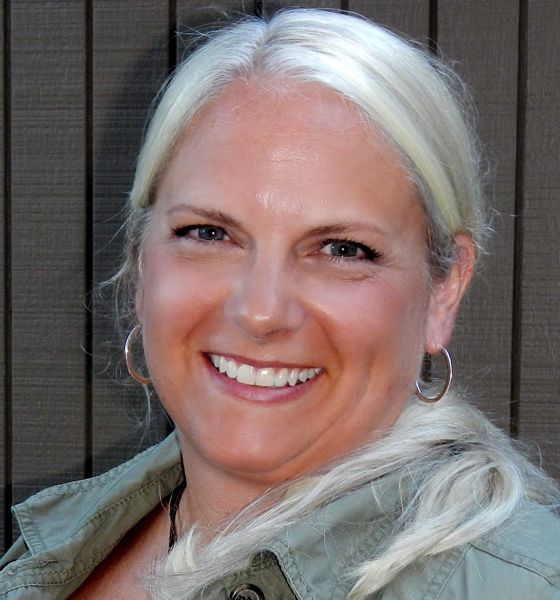
Barbara Bannar is returning to the LTUSD board staring Aug. 21. Photo/Kathryn Reed

The sitting board members praised Bannar and Kathy Haven the most for their knowledge of the district and involvement with education. But they also said it was refreshing to have such a qualified field of candidates. The other candidates were Mark Bissonnette, Cathy Giardina and Heather Clelan.

While the deliberations were in public, the voting was by secret ballot. There were three votes for Bannar and one for Haven. When it came time to vote on Bannar joining the board it was unanimous.

Each of the candidates was asked the same 10 questions and then was able to make a comment at the end.

It was pointed out how current board members Sue Novasel and Larry Green tried to be appointed as provisional board members and failed; but won when they ran for election. This was said to those who didn’t get appointed so they might be encouraged to run in the future.

Bannar was on the board from 2004-08. She ran for re-election in 2008 and lost by three votes to Larry Green. Now she will be a colleague of his.

During her 20-minute interview before the board Bannar said she would want to run for a full term in November 2013.

“I really am thrilled to be back on the board and be working with everyone at the school district,” Bannar told Lake Tahoe News after the vote.

Bannar will be sworn in at the Aug. 21 meeting. She already has one meeting under her belt because she stayed for the Aug. 7 meeting.


Caesars blames slowing economy for nasty second quarter

By Forbes

Caesars Entertainment posted second quarter results after the bell on Monday, missing top and bottom line estimates as its losses widened. The company blamed the slowing economy, along with lower trip activity and spend per trips in their properties for the disappointing results.

The casino and hotel operator posted a net loss of $241.7 million, down from a $155.56 million loss a year ago. In a per share basis, Caesars’ shareholder lost $1.93, a wider loss than the 83 cents expected by analysts. Adjusted EBITDA, a measure of cash flow, slid 2.6 percent to $512.4 million.

Caesars, which still has no properties in Macau, the world’s largest casino market, saw revenues stay pretty much flat at $2.17 billion, falling shy of the $2.32 billion estimate.

Caesars is the parent company of Harrah’s Lake Tahoe and Harveys at Stateline.

Read the whole story


Ruptured gas lines temporarily close 2 Tahoe highways

Highway 50 was closed for a few blocks in South Lake Tahoe on Monday night because of a gas leak.

All residents and guests in hotels between Fairway and Herbert avenues were requested to shelter in place.

A backhoe had severed a 2-inch high pressure natural gas line.

The highway was closed between those streets from 11pm Aug. 6 to 1:30am Aug. 7.

At approximately 12:45am Southwest Gas was able to secure the gas line.

There was a separate Southwest Gas issue on Tuesday morning on the West Shore that caused Highway 89 to be closed for a few hours. It is now open.

Diamond K out of Texas, which was doing work for Southwest, ruptured a gas line at approximately 8:20am.

— Lake Tahoe News staff report


Fire near Sly Park 90% contained

The Hazel Fire near Jenkinson Lake off Highway 50 is 90 percent contained as of Tuesday morning.

The fire, which started Aug. 5 in the Sly Park area, has burned 45 acres.

The cause remains unknown.

U.S. Forest Service officials said today they plan to begin mop up operations, and continue to construct and secure a fire line. Smoke may be visible in the area today.

— Lake Tahoe News staff report


Overdue payments cost California millions

By Jennifer Gollan, Bay Citizen

If you’ve ever paid a bill after it was due, you’re familiar with late fees.

It turns out the state of California is familiar with them, too.

The state paid more than $34.3 million in penalties for overdue bills from July 2004 through June 2011, according to new figures from California’s Department of General Services, the state’s business manager.

The state accrued a third of those late fees – more than $11.7 million – in the 2010-11 fiscal year.

Some of those fees could have been avoided if former Gov. Arnold Schwarzenegger and the Legislature had agreed to a budget by July 1, 2010, as required by the state Constitution, said Eric Lamoureux, a spokesman for the Department of General Services. Lawmakers approved the budget 100 days after the start of the 2010-11 fiscal year, preventing some departments from paying their bills on time.

“We cannot speak to all the reasons all these penalties were incurred by the previous administration, but historically, late budgets have left departments unable to pay their bills on time,” Lamoureux said.

Read the whole story


State’s top educator promotes LTCC’s Spanish institute

By Kathryn Reed

“The key to dreams is education.”

That was one of the messages Tom Torlakson, state superintendent of public instruction, delivered Monday at Lake Tahoe Community College.

Not only was Torlakson the guest speaker on the first day of the college’s Intensive Spanish Summer Institute, he was also one of the students.

He called the program a role model for the state – one he would like to see expanded to other two-year institutions.

Superintendent of Public Instruction Tom Torlakson launches ISSI Aug. 6 at Lake Tahoe Community College. Photo/Kathryn Reed

“I feel this is a great institute. It is the gold standard of language learning,” Torlakson told the group of students ready to start their week of intensive learning.

He is a firm believer that the more people who know more than one language, the better off California’s economy will be because they will be able to communicate with the state’s diverse population as well as the world beyond.

Torlakson relayed how 38 percent of Californians identify themselves as Latino, one-quarter and soon to be one-third of the state’s students are English learners, and that one-quarter of the students in California grow up in poverty without health care.

All of those stats are why he believes an educated society is important.

He shared how one way the state is emphasizing the importance of being multilingual is by putting a bi-literacy seal on high school diplomas. This was the first year for the program, with 10,000 students receiving the designation.

While the LTCC program goes through Aug. 10, the California official was in town for two days.

On Monday after the opening of the Spanish immersion program, Torlakson received some language instruction, learned how to make tapas, went to Spanish through Storytelling and dropped in on a variety of other classes.

He had to be back in Sacramento today for budget issues and what he told Lake Tahoe News would be “three more intensive weeks.”

What brought him to South Lake Tahoe was the opportunity to see what the summer Spanish program is all about, how the 400-plus students get an education, and how the college has been able to sustain it for 19 years.

Maxine Alper and Sue O’Connor who run the program (O’Connor and Diane Rosner started it) said they have had to pay attention to every penny.

“We are being very frugal,” O’Connor told Lake Tahoe News. Staff cuts and cutting back on materials have been essential in this economy.

More changes are likely next year, with the potential of LTCC’s Connect Ed being a more integral component as the state keeps taking away dollars.

A pre-institute course was offered Aug. 5 through Connect Ed that Torlakson attended. Besides two hours of learning verbs, the group went to Taylor Creek to explore the natural environment of the South Shore.

The coordinators are taking feedback to heart by offering for the first time a three-day Spanish institute Oct. 5-7, which will be through Connect Ed.

ISSI offers 12 levels of instruction, which is why nearly one-third of the students are returnees. Plus, new break out sessions are added each year.

More information about ISSI may be found online.

Information about Connect Ed is also online.


FCC chief witnesses Barton’s leap into telemedicine

By Rebecca Wass

Using a multi-disciplinary leadership group called the “Telehealth for Tahoe Task Force” to guide and advance its telehealth efforts, Barton Health hopes to export specialty services to distant medical facilities, and further expand access to additional specialties to improve healthcare for its patients.

To witness some of what the South Lake Tahoe medical facility is doing, Julius Genachowski, FCC chairman, took a tour of facility last week. Joining him was Wireline Competition Bureau Deputy Chief Carol Mattey.


Genachowski and his team observed best practices in telemedicine and how Barton has implemented and utilized funds from the Federal Communications Commission for the Rural Health Care Pilot Program through their telehealth program.

Genachowski participated in a mock consultation with a physician located at UC San Diego through a telehealth video monitor.

Barton has made significant progress in telemedicine, while providing patients access to specialties such as cardiology, endocrinology, infectious disease, dermatology, adult psychiatry and neurology at Barton Memorial Hospital, Barton Community Clinic, Barton Family Medicine, Internal Medicine, Urgent Care and Family Practice. By providing these specialties to patients via telehealth, the healthcare system has provided an average of 75 patients a month, cost and time-effective, alternatives to seeing physicians outside of the Basin.

“Through Barton’s telehealth equipment, and with its CTN connection, local patients can ‘visit specialists’ from their local doctor’s office, without the need for travel,” Greg Bergner, Barton board of directors member and Barton doctor, said. “Although not all health visits can be accomplished using telehealth, many can, and the time saved, along with the improved efficiency, and the cost savings is wonderful.”

Ann Truscott, telemedicine coordinator, said patients save them time and money by eliminating travel expenses to urban areas for care.

In August 2011, Barton was chosen as the lead agency partner for ACCEL and received three telemedicine carts, as well as a dual monitor computer to support its telehealth efforts.

The network is a separate, off-Internet, statewide broadband pipe dedicated to healthcare purposes. The CTN network is optimized to allow the upload of Blu-Ray quality video, with guaranteed transmission speeds not available on the commercial Internet. It also facilitates the back-and-forth communication and secure transfer of electronic medical records.

“I think these types of site visits are very important to better inform our Washington, D.C., polic makers how current federal funding is being utilized and provide them input on how federal resources can be improved,” Eric Brown, CEO of CTN, stated.

CTN is the product of an unprecedented statewide coalition of healthcare, technology, government, and other stakeholders which was funded by the FCC. Under the FCC’s rural pilot program – with the goal of significantly increasing access to acute-specialty-care, and even primary and preventive healthcare in rural America – the FCC provided nearly $22.1 million over three years. Additional funds for the CTN have been provided by the California Emerging Technology Fund, and UnitedHealth/PacifiCare. Barton Health is one of three ACCEL sites connected to the CTN.

“You are making a powerful contribution to harness the power of technology in providing healthcare,” Genachowski said.

Rebecca Wass is communications specialist for Barton Health.


Indian tribes leaning toward favoring Internet gaming

By Rob Hotakainen, McClatchy Newspapers

WASHINGTON — Fearing they may get left behind in the rush to expand legalized gambling to the Internet, more U.S. Indian tribes are lining up to back online poker and are angling for new ways to cash in.

Consider the Tulalip Tribes in Washington state: Eight months ago, tribal Secretary Glen Gobin told Congress the tribe opposed any kind of Internet gambling, regarding it as a threat to its two casinos. But on July 26, he told a Senate panel that tribes “must have equal footing to participate” and that Congress should consult with them before junking a 2006 ban on online gambling.

“Glen is a realist,” said W. Ron Allen, the chairman of the Washington Indian Gaming Association, which represents 27 federally recognized tribes.

John Pappas, the executive director of the Poker Players Alliance, a lobbying group that represents 1.2 million members across the country, said it was “definitely safe to say that the tribes’ position is evolving on a federal solution.”

Many tribes still oppose Internet gambling because they worry that gamblers would be less likely to go to casinos. But Allen predicted that there’ll be “less reluctant resistance” as tribes realize that there’s little hope of stopping the push for legalization in Congress.

“Inevitably, they’re going to pass something,” he said. “I think tribes as a general observation would prefer that it not happen, but tribal leaders are being realistic.”

With online gambling expected to quickly become a new cash bonanza, a feud has developed on Capitol Hill over who should regulate it. Two competing plans have emerged so far.

Read the whole story


Legislation would make Olympic medals tax-exempt for U.S. athletes

By Ed O’Keefe, Washington Post

Did you know that U.S. athletes owe taxes any time they win a medal? Republican lawmakers — clearly seizing on Olympic fever and general displeasure with the tax code — want to change that.

After winning gold in London, an Olympic athlete also stands to earn a $25,000 honorarium. Silver medalists receive $15,000 and bronze medalists are slated to leave London with a $10,000 payday. Current U.S. tax law requires athletes to add the value of medals and honorariums to their taxable income — just as any winning game show contestant would have to pay taxes on a new car or toaster oven.

But Sen. Marco Rubio, R-Fla., and Rep. Blake Farenthold, R-Texas, introduced legislation Wednesday that would exempt American medal-winning gymnasts, rhythmic gymnasts, swimmers, divers, synchronized divers, runners, cyclists or water polo players from paying taxes on their Olympic winnings.

Read the whole story