Pedestrian killed in South Lake Tahoe

A 49-year-old South Lake Tahoe man was killed Tuesday night when a van struck him as he walked along Highway 50.

The victim’s name has not been released pending notification of next of kin.

The highway was closed from Pioneer Trail to Midway Avenue for about three hours starting at 9:15pm Aug. 14.

“The pedestrian was found to be at fault in this collision. He was wearing dark clothing during hours of darkness and was illegally crossing U.S. 50 from the south curb line to the north, outside of a crosswalk,” Sgt. Brad Williams said in a press release.

Witnesses told officers they saw another vehicle narrowly miss the man before he was fatally struck.

Anyone with information regarding this accident is encouraged to call the South Lake Tahoe Police Department, at (530) 542.6100.

— Lake Tahoe News staff report


Weapons training keeps El Dorado sheriff’s deputies prepared for the worst

By Kathryn Reed

TAHOMA – Columbine changed so many things. No longer do officers wait for the SWAT team to arrive. Assault teams of three officers will go find the bad guy.

“If a gunman is killing people, it’s our responsibility to engage them,” El Dorado County sheriff’s Lt. Pete Van Arnum said. “We are constantly evolving our tactics and training.”

El Dorado County sheriff's Deputy Matt Harwood trains with his personal gun Aug. 14. Photos/Kathryn Reed

For the past two days the shooting range at D.L. Bliss State Park has been full of El Dorado County deputies getting certified on their weapons – mostly Glock semiautomatic .40-caliber handguns, plus rifles – which all patrol cars have, and some personal weapons.

“Most of our officers are encouraged to carry a handgun off duty,” Van Arnum said.

The Carson City IHOP shooting in September 2011 proved that unarmed military have little recourse.

The 1999 Colorado school shooting provided the old practice of waiting didn’t work.

Last month’s shooting in Aurora, Colo., at a movie theater proved how easy it is for mentally unstable individuals to acquire weapons.

In his years in law enforcement, Van Arnum has seen an increase in mentally ill people committing mass murder, as well as individuals seeking concealed weapons permits. More people were in his office after last month’s shooting for permits.

Sheriff John D’Agostini campaigned on wanting to uphold the Second Amendment – the right to bear arms. This includes concealed weapons. For people living in the county, they must go through Van Arnum to get a weapon. In South Lake Tahoe, the police department regulates them.

The movie theater shooting also points to the need for officers to practice shooting at a suspect’s head. Many bad guys now wear chest protection, but not even a gas mask – like the Aurora shooter had – will protect a shooter’s head.

Van Arnum isn’t one who believes limiting the size of magazines is going to matter much to the person intent on killing. If someone is skilled, they can reload in two to three seconds.

A 12-gauge shotgun is what the Aurora shooter started with. That’s the same type of gun some of the deputies were getting certified on Monday and Tuesday.

“Everyone in a rural area has them because they are a bird shooting gun,” Van Arnum said. “The are also effective at close range against people.”

Even the Olympics – Summer and Winter – have events involving guns.

While deputies in Tahoe have not been involved in recent shootings, every time they pull their gun out of the holster it’s considered using their weapon.

While this week’s training was about target shooting, that isn’t the only type of training the officers do. A court ruling has said they need to be trained in more realistic scenarios – to be able to run and shoot, reload on the move, take into account if a hostage is involved and those types of events.

Simulators have been brought in before. Those are provided by the state on a rotating basis to departments.

With ammunition costs increasing and budgets being cut, Van Arnum said time at shooting ranges in the area is dwindling.

But training will never end because the possibility of needing to use their weapon is there every hour of the day and night.

“Most police shooting are within 7 yards and are over in two or three rounds. Often it’s at night with poor visibility,” Van Arnum said. “All of these guns have night sights so they glow in the dark.”

Paul Kuhn and Sonny Piazza are the instructors at the outdoor range. As the officers are being told what to do by Piazza, Kuhn explains how it’s necessary to practice shooting from the hip without time to get into a proper stance, line everything up perfectly or even have the second hand on the weapon before firing.

“Someone can be on you from 20 feet before you can draw your firearm,” Kuhn explained. “That’s why we train for it.”

Gradually the guys keep moving back until they are shooting from 20 yards. Two stances on their knees test their ability from those positions.

“Low kneeling is very stable and very uncomfortable. Your foot will fall asleep,” Piazza tells the deputies. But he explains the position will provide them a good base.

Targets are shaped like a soda bottle. They are told to rapidly fire two shots to the body and one to the head. If the suspect doesn’t go down after being shot twice, likely they have body armor on.

Then it’s time to knock the bowling pin over with a bullet as well as obliterate the orange clay target that is dangling.

Finally, the holes in the “bottle” are counted to ensure they have passed this quarterly test.

ngg_shortcode_0_placeholder (Click on photos to enlarge.)


Nevada lawmakers battle for position on renewable energy

By Karoun Demirjian, Las Vegas Sun

In the five years since Las Vegas’ summertime summits on renewable energy started, their featured subject has become one of the country’s most politically divisive policy matters.

When these things started in 2008, both presidential candidates supported cap-and-trade. Nary a soul knew about Solyndra. And, “Drill, baby drill” — well, it would take Republicans another two weeks after the conference closed before they started that chant.

The energy debate’s discordant evolution hasn’t been all bad for Sen. Harry Reid’s annual assemblies: He’s increasingly been able to use the gatherings to showcase his party’s platform, which has its perks in an election year. This year, he even went so far as to call the whole conference “The Power of Choice.”

But while 2012 has seen renewable energy become entrenched as a wedge issue between Democrats and Republicans nationally, closer to home, Nevada Republicans are doing all they can to close that choice gap.

In between taking swipes at failed energy projects such as Solyndra (which received stimulus money) and Amonix (which was slated for stimulus tax credits) and scoffing that carbon credits are a “cap-and-tax,” Nevada Republicans Sen. Dean Heller and Rep. Joe Heck have been trying to carve out their own pro-renewable position and sell it to Nevadans as just as good, if not better, for the economy.

For instance, President Obama has been saying all year that one of his chief energy goals is to get more renewable projects — up to 10,000 megawatts worth — running on public lands.

This summer, Heller and Heck released legislation to revamp the approval process for renewable energy projects sited on public lands so the country can meet that goal and improve its pace of clearing new projects.

“By streamlining the development of renewable energy on these lands, Nevada will have the chance to lead the nation in the development of viable renewable energy sources,” Heck said at the time.

Read the whole story


El Dorado County Marine dies in Afghanistan

By David Ruiz, Sacramento Bee

The Department of Defense announced Monday the death of a 27-year-old Marine from El Dorado in Afghanistan.

Staff Sgt. Sky R. Mote died Friday while conducting combat operations in Helmand province, the department’s release said. Mote was assigned to the 1st Marine Special Operations Battalion at Camp Pendleton.

Also killed in the incident were Capt. Matthew P. Manoukian, 29, of Los Altos Hills and Gunnery Sgt. Ryan Jeschke, 31, of Herndon, Va.

The incident is still under investigation, the release said.


USFS sacrificing conifers for aspens draws ire of residents near Truckee

By Tom Knudson, Sacramento Bee

Like a steeple, the Jeffrey pine towers over other conifers and quaking aspen in the Tahoe National Forest north of Truckee.

Nearly 13 feet around at its base and believed to be about 250 to 300 years old, it has weathered every threat to come its way, including wildfire, drought, storms and logging.

Now it is slated to fall to a modern force: environmental restoration.

As part of a Forest Service effort to return Sierra forests to their pre-settlement glory, this tree is one of many conifers – large and small – the agency has designated for logging to help aspen, which its research shows is in danger.

“We need to be doing everything we can to help promote and foster these aspen stands,” said Quentin Youngblood, the Sierraville district ranger for the Tahoe National Forest. “And quite frankly, there are some tough choices.”

But as trees crash to the ground this summer, anger is growing among environmentalists and area residents who say the effort is heavy-handed and environmentally risky.

“I think they are going to destroy more than they are going to restore,” said Tom Leavell, a rancher whose cattle graze on Forest Service land in the logging zone. “Nature put everything together for a reason. As soon as we go in messing with it, something else happens.”

The project is part of a wider pattern. No longer is agency logging just about timber production. Now, it’s often aimed at healing past mistakes and restoring nature’s bounty.

Playing God with nature is often fraught with risk, of course. But what also makes some scientists uneasy about the Tahoe project is that the Forest Service is logging one cherished Sierra icon to help another.

Read the whole story


California cities not prepared for growing retiree health care costs

By Corey G. Johnson, California Watch

Most major California cities are failing to address the growing health care costs of government retirees, which have ballooned to more than $1 billion in some areas and soon could threaten municipalities’ ability to pay other expenses, according to a recent financial analysis by a nonprofit research group.

Eleven of 20 California cities with the biggest budgets do not set aside funds for future health care costs, the study by California Common Sense found.

Those cities – San Francisco, Oakland, Sacramento, Redding, Santa Ana, Long Beach, Glendale, Fresno, Riverside, Pasadena and Santa Monica – work under pay-as-you-go systems, meaning they pay benefits from their current operating budgets and do not accumulate funds for future payments.

Combined, all 20 cities have promised $16 billion in future non-pension benefits, and $12 billion of that remains unfunded. The 11 pay-as-you-go cities are losing $2.2 billion in savings by not setting aside money, the analysis found. The $2.2 billion figure is derived from an estimate of each city’s potential investment earnings at the 7.61 percent return rate set by the California Public Employees’ Retirement System.

San Francisco, which is obligated to pay $4.4 billion for its current and future retired public workers’ health care costs, is the state’s biggest city that doesn’t set aside money to help finance benefit payments.

Los Angeles, on the other hand, puts close to 59 percent of its future costs in a trust to begin drawing interest. Other cities that pay toward future costs include San Jose, San Diego, Anaheim, Roseville, Palo Alto, Bakersfield, Burbank and Santa Clara.

The analysis also concluded that retiree health care costs are consuming more of municipalities’ operating budgets and aren’t likely to decrease because retirees are living longer and fees for medical services are rising. Since 2008, retiree benefit costs have increased by 36 percent.

Such costs are beginning to have an impact. San Jose, for example, spent close to 8 percent of its operating budget on retiree benefits last year – a dramatic 43 percent jump from what it spent three years ago.

The city of Stockton didn’t put funds aside, so it didn’t earn additional funds to help pay its retiree health benefit debts. Two years ago, Stockton faced a $410 million tab for current and future health care costs for its retired public workers. This came as the city was struggling to pay down a long-term pension debt of $1.3 billion.

Eventually, the financial strain became too much for Stockton, which has been hit hard by the state’s housing crisis and economic downturn. After filing for bankruptcy last month, Stockton officials announced that they will end all retiree health care benefits after 2013.

Study author Adam Tatum said more cities could be forced to make similar choices if they fail to make policy changes now.

“Most people agree with us that this is a serious issue,” Tatum said. “These benefits have already been promised to employees. To take them away will go back on that promise.”

William Statler, former city treasurer and finance director for the city of San Luis Obispo, said the factors related to setting aside money for future retiree benefits are complex. When examined over 30 years, retiree set-asides will typically be much less expensive than paying when benefits are due. However, in the short term, paying for current and future health costs is far more costly than just paying cash as you go –which is why so many governments aren’t prepaying, Statler said.

“In fact, those that do usually have pretty modest obligations to begin with,” Statler said. “That’s why they can afford to prefund, while those agencies with the largest obligations – and thus the even bigger wake-up call in the not-so-distant future – can least afford to prefund in the early years.”

In addition to set-asides, the study urges government officials to consider alternative approaches to reduce costs, including increasing the amount of employee contributions and restricting eligibility for full benefits. The city of Beverly Hills has shaved $13 million from a $58 million retiree health care tab by giving employees a sizable cash payment in exchange for giving up their city-financed health care benefits upon retirement, Tatum said.

“Fifty percent of the employees agreed,” Tatum said. “That’s actually a pretty significant reduction.”

California Common Sense’s study, based on data from the state comptroller and reams of annual financial reports from each city, is the latest of several to warn about out-of-control retiree health benefits.

Senate President pro Tem Darrell Steinberg, D-Sacramento, said last week that legislators are examining employee benefits this month. According to the Sacramento Bee, Steinberg expects major legislation to be completed by month’s end that would change how state and local governments handle retiree payouts.




5 candidates qualify for S. Tahoe council race

Three people are challenging the two incumbents on the South Lake Tahoe City Council.

Clinton Schue and Austin Sass, who have run before, are in the race, as is JoAnn Conner.

Incumbents are Hal Cole and Bruce Grego.

Stacey Wheeler had pulled papers to run, but came up short in the number of required signatures to qualify for the Nov. 6 ballot.

“Though it’s frustrating to come so close and just miss the mark, it’s been a great experience and I think we have a good field of candidates to choose from,” Wheeler told Lake Tahoe News.

— Lake Tahoe News staff report


Politicians harp on private partnerships at Lake Tahoe without providing a vision

By Kathryn Reed

STATELINE – Based on the title of the 16th annual Lake Tahoe Environment Summit – Public-Private Partnerships-Investing in the Future of Lake Tahoe – a huge component was missing. That component is the private entities that are going to do the work and pony up the money.

No one who has tried (successfully or unsuccessfully) to bring the economic and environmental change that was touted by politician after politician as being so critical to the survival of the Lake Tahoe Basin spoke at the Aug. 13 event.

Real life stories of why people and/or corporations are or are not coming to Tahoe were not delivered. And yet, the politicians went on ad nauseam about the private component being the key.

Sens. Dean Heller, R-Nev., and Dianne Feinstein, D-Calif., talk at the Aug. 13 Lake Tahoe Environmental Summit. Photos/Kathryn Reed

Without knowing what is or isn’t working for the private sector, encouraging the positives and fixing the negatives are not possible.

Summit host Sen. Dean Heller, R-Nev., and Rep. Tom McClintock, R-Granite Bay, touched on how the process for how projects get off the ground needs to change.

Heller said he has heard from the private sector that it needs the approval process to be streamlined in order for capital to come in.

“Last year we talked about collaboration and needing to do more with less,” Heller said. “We have made progress and we have more to do.”

McClintock pointed to how a constituent wanted to fix a dock and the permits cost more than the project. He talked about how Homewood has been a ski resort for 40 years, but a long-term use permit has been stalled by environmental litigation. He spoke of an economic report just released to the El Dorado County Board of Supervisors that talked about people leaving Lake Tahoe in droves. (A county official later told Lake Tahoe News she didn’t know what report McClintock was talking about.)

“Decisions are being made by regulatory boards they can’t even elect,” McClintock said of his constituents. The Tahoe Regional Planning Agency and Lahontan Regional Water Quality Board are the entities he was referring to.

California Gov. Jerry Brown in talking about collaborating said, “It’s time to rise out of our comfort zones.

“We need to transcend our small parochial views.”

Three non-elected persons did speak:

• Sudeep Chandra, an associate professor at UNR in the Natural Resources and Environmental Science Department, touched on aquatic invasive species, just as the politicians had. He said in the last year no new species have been discovered in Lake Tahoe, but that for every native species there two non-natives.

• Allen Biaggi, former director of Nevada’s Department of Conservation and Natural Resources and a former TRPA board member, spoke as vice chairman of the Tahoe Fund. He talked about the nonprofit coming out with an app for phones in the next couple weeks for beaches at Lake Tahoe. This was after Sen. Dianne Feinstein, D-Calif., had earlier touted how the preceding night $150,000 was raised in one dinner for this group. (She has attended every summit.)

• Mike Brown, chief of the North Lake Tahoe Fire Protection District, talked about the need for continued awareness of the threat of wildfires. From Edgewood Tahoe, where the summit was, it is possible to see the scar of the 2002 Gondola Fire and 2007 Angora Fire.

Money is a large reason the private sector is now needed to be a major player in restoring Lake Tahoe – which includes the lake, the infrastructure and the economy. Gone is the Lake Tahoe Restoration Act, even though Feinstein said she and Heller are reintroducing it.

This is the second year in a row Govs. Brian Sandoval (Nevada) and Jerry Brown (California) have attended the summit.

Gone is the cash from the Southern Nevada Public Lands Management Act. This brought in $300 million of the $521 million the federal government has spent on environmental improvement at Lake Tahoe since the inaugural summit of 1997.

Of the $1.62 billion spent at Lake Tahoe on environment upgrades in the last 16 years, $299 million has come from the private sector.

Nevada Gov. Brian Sandoval summed up the current state of Lake Tahoe: “While the basin’s economy is largely dependent on the environmental health, the environmental health is dependent on the economy.”

Other than needing cooperation and money from the private sector, the public officials provided no path to truly improve the environment or stimulate the economy.


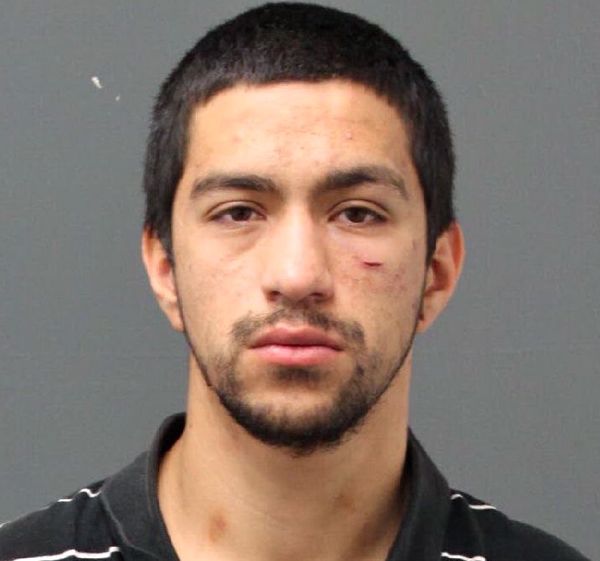
Kings Beach man arrested on attempted murder charges

A Kings Beach man was arrested on attempted murder charges following a stabbing last week.

On Aug. 9 at about 5:30ppm, two local males got into a fight in the 200 block of Fox Street in Kings Beach. During the fight, Carlos Rocha Lara, 24, pulled a knife and stabbed a 19-year-old male in the abdomen and forehead.

Carlos Rocha Lara

The victim drove himself to Incline Village Community Hospital where he was stabilized and flown by a medical helicopter to Renown Medical Center in Reno. The victim was released the next day.

Lara was arrested at the scene on charges of attempted murder and possession of a dangerous, concealed weapon. He was being held without bail in the Placer County Jail.

— Lake Tahoe News staff report


Farmers skeptical of Delta tunnel plan

By Norimitsu Onishi, New York Times

COURTLAND — On the last Sunday of July, this small town in the Sacramento River’s Delta takes a pause from the peak of the pear harvest season by holding its annual pear fair. A pear run, a pear parade, a pear pie eating contest and a pear fair queen are as much a part of life’s rhythm here as the pruning, picking and packing of pears.

More than 1,000 miles of rivers and sloughs lace the 500,000-acre Delta, where reclaimed islands are ringed by aging levees. More Photos »

But not far from the booths offering baskets of the fruit, and pear drinks and pear sausage, there were hints this summer that something was ruffling Courtland. At the same booth where a handwritten sign advertised “Pear oatmeal cookies, 2 for $3,” there were pointed political messages like this one: “Build the tunnel. Kill the Delta.”

Just a few days earlier, state and federal officials announced plans to build twin 35-mile tunnels that would tap water from the Sacramento River at intake stations here. Like highways with no exits, the $14 billion giant pipelines would run under the Delta in a straight line and deliver the water to aqueducts that feed water to large corporate farms and densely populated regions in Central and Southern California.

Supporters say the pipelines will improve the environment of an increasingly fragile Delta by replacing the pumps that now suck water directly from the southern Delta. More than anything else, backers — led by Gov. Jerry Brown, who failed in his bid to build a similar project in his first term as governor three decades ago — say the tunnels will secure a supply of water to California’s most economically vital areas.

But opponents, including elected officials and farmers from this area, say the tunnels will reduce the amount of fresh water in the Delta and cause irreparable damage to fish and farmland by raising the level of salt water. Much of the Delta is classified as prime farmland and produced about $800 million in agricultural products in 2009, but the output is dwarfed by counties to the south, whose agricultural production totaled about $25 billion.

More than 1,000 miles of rivers and sloughs lace the 500,000-acre Delta, where 57 major reclaimed islands are ringed by more than 1,100 miles of aging levees. Here in the upper Delta, the least urbanized area of the region, small towns invariably described as sleepy dot winding levee roads. There are family-owned general stores and no chain stores. Old Victorian houses belonging to farm owners can be seen from the levees, as well as encampments for the migrant workers during harvest. Vestiges of ethnic groups that built the levees or farmed the Delta can be found in this area’s fading Chinatowns and Japantowns, reinforcing the impression of an earlier time.

Read the whole story