USFS: Cigarette cause of Tahoe grass fire

A discarded cigarette is being blamed on the Aug. 26 fire near West Way on the South Shore.

“We’d like to remind everyone that, while fall is approaching, the Lake Tahoe Basin remains in high fire danger, and the Forest Service has issued fire restrictions for the lands we manage. In particular, smoking is prohibited in most places on the national forest,” U.S. Forest Service spokeswoman Cheva Heck said.

The fire burned about one-quarter acre. But the dry, grassy area that was charred backs to houses.

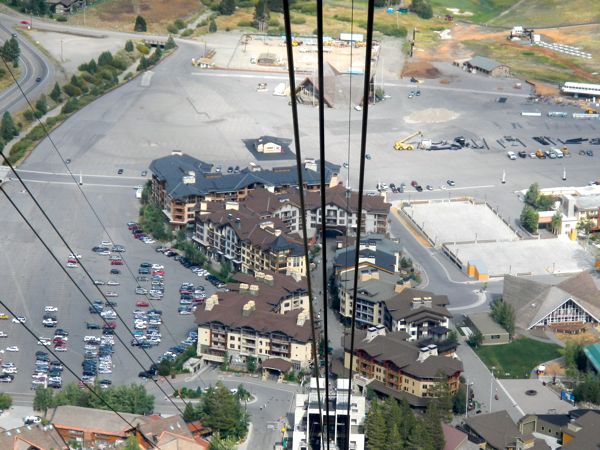
The Gondola Fire of July 2002 proves how one cigarette can cause a major forest fire.

— Lake Tahoe News staff report


Squaw Valley’s proposed development upsets residents

By Kathryn Reed

TAHOE CITY – If the owners of Squaw Valley have their way, the last two buildings from the 1960 Winter Olympics will be demolished and in their place will be infrastructure to make the resort one of the top 10 ski destinations in the world.

This is how Chevis Hosea, vice president of development for Squaw Valley, described the mega-undertaking to the Placer County Planning Commission on Aug. 30 at the Granlibakken conference center.

“We’re not proposing to go up the mountain. We are just asking to develop the base. We will tuck parking under the buildings,” Hosea said. “What is void in this valley is the bed base to support this mountain.”

Resort owners want to completely transform Squaw Valley's village area. Photo/Kathryn Reed

Hosea said the hotel-condos and fractional ownerships are estimated to bring in $8 million to $10 million a year to county coffers.

However, build-out, assuming the project is permitted, is years away. The first phase is expected to take five years to complete.

While developers know they want the first phase to include several buildings that would encompass 1.3 million-square-feet on 26 acres, a 150,000-square-foot mountain adventure aquatic center, 84,758-square-feet of ski services and 34,187-square-feet for retail and restaurants, the scrutiny has just begun.

The Squaw Valley General Plan and Land Use Ordinance would need to be amended, a program environmental impact report would be done that includes all proposed phases, with project EIRs for each phase that would provide deeper analysis.

During the scoping and environmental analysis phases the public will be asked to comment. The first phase of project review is estimated to take between 18 and 24 months.

About 40 people attended Thursday’s meeting, with 15 people speaking. Most of those who made comments live in the Squaw Valley and are not happy with what the new owners want to do.

KSL Capital Partners bought the resort in November 2010 from Nancy Cushing, who took over sole operation of the resort after her husband died in 2006. Squaw Valley Ski Holdings Inc. was formed last September to operate Squaw and Alpine Meadows.

Much of what is being proposed would surround the existing village that was built by Intrawest nearly 10 years ago.

Carolyn Chambers, who is a homeowner in the valley, said people are forgetting this is a residential neighborhood.

“Let’s stop calling it a village,” she said. “What is proposed here is a commercial development.” She went on to describe a village as something more than shops for tourists and more like what can be found in Europe.

Traffic, parking, potable water and 10- to 12-story buildings are concerns of those who spoke.

The potential maximum height being proposed for buildings in phase one is 163 feet and 189 feet in phase four. As a comparison, the tallest casino in Stateline is 197 feet. And the current Squaw village is four stories on top of a two-level parking garage.

Hosea said there are no height restrictions at Squaw, but his employer would like to put some on the books.

(The Tahoe Regional Planning Agency does not have a say in this project because it is outside the Lake Tahoe Basin.)

Paul Archer in his 50-plus years as a resident at Squaw has seen the “environmental degradation” and worries more is on the horizon.

Mark Simpson said people come to Squaw to ski no matter how hard people try to make it a year-round destination. He doesn’t want Squaw to turn into another Northstar.

“One of the big failures of Northstar is you can’t get to the resort. Then when you get to the village there is not enough capacity to get up on the mountain,” Simpson said of the horrendous parking at Northstar and the ancient gondola.

Hosea told the group an extensive scientific study of the water system will be done which could cost $1 million. He said rebuilding the supply system could cost between $5 million and $10 million.

“There is no value to provide a faux water supply,” Hosea said. He added that is would not be a good business decision to have people staying in one of the two high-end hotels and have a dry spigot.

Parking for the day skiers will be partly on one level of the lodging establishments as well as at a proposed lot that would be built down the road and serviced by a shuttle.

“There is a real opportunity to reposition this asset globally,” Hosea said. That, and making a place to travel to every season is what the owners want to do.

Alex Fisch with the Planning Services Division of Placer County is the lead public official on the project. He may be contacted at Afisch@placer.ca.gov.


Reclusive South Lake Tahoe sisters died of natural causes

By Cathy Locke, Sacramento Bee

Reclusive twin sisters who were found dead in their South Lake Tahoe home in February died of natural causes, according to El Dorado County investigators.

The sheriff’s office announced Aug. 30 that the determination regarding the deaths of Patricia and Joan Miller, 73, was made after a review of pathology reports and evidence from the Miller residence. A pathology report concluded that Patricia Miller died of coronary artery disease. Joan Miller, who relied heavily on her sister for care, died of probable environmental hypothermia, according to a sheriff’s office news release.

The women were found dead in their home Feb. 26, and sheriff’s officials sought the public’s help in locating relatives.

The sisters were entertainers in the Bay Area, where they regularly appeared on a weekly television show, “The Hoffman Hayride,” in the 1950s. They also entertained troops at several military bases.

Originally from Portland, neither woman married, and the two were largely dependent on one another throughout their lives, officials said.

With the public’s help, authorities were able to locate two second cousins.


Nevada lawmakers want to revamp education funding

By Sean Whaley, Nevada News Bureau

CARSON CITY – A panel of lawmakers this week recommended Nevada’s public education funding formula be revised to take into account the higher cost of educating specific groups of students, including English-language learners and children in poverty.

But lawmakers also acknowledged that updating the formula won’t mean any significant changes in funding for the state’s 17 school districts until the state’s economy improves and tax revenues increase.

There is no proposal to shift current funding from one district to another to fund a new weighted formula.

The New Method for Funding Public Schools interim study was authorized by the 2011 Legislature to look at the “Nevada Plan” the current funding formula adopted in 1967. The Clark County School District sought the review to look at whether the state’s education funding plan needs to include additional funding for educating specific groups of students.

The six lawmakers serving on the panel supported the recommendation to revise the formula, which will be presented to the Legislature when the 2013 session gets under way.

But lawmakers deferred to the Department of Education the technical details of which groups should be included and how the different categories of students should be weighted in any new funding formula. Other groups that could be included in a weighted formula are gifted and talented and career and technical education, among others.

“The committee, I think, could find quick and unanimous support for the recommendation that we as a state consider changing our K-12 funding formula to one that considers a variety of different weights, including but not limited to; and then a comprehensive list,” said Sen. Greg Brower, R-Reno. “That tees up the issue then for the next session. It tells the Legislature as a whole that this committee did its job, it studied the issue and it decided it was worthy of legislative consideration.”

The recommendation came after the Clark County School District provided $125,000 to the legislative panel to hire a consultant to study the issue. The consultant, American Institutes for Research, issued a final report which found in part: “As low‐income students and English learners are widely accepted in the mainstream education finance literature to be associated with higher educational costs, it is our strong recommendation that funding adjustments be incorporated into the current funding system to account for these student need cost factors.”

The report found that Nevada is not in line with most other states on funding, being one of 14 states that does not adjust funding for low-income students and one of eight that does not account for the cost of English learners.

“I think what we’ve learned is that the 1967 formula is no longer adequate,” said Assemblyman Ira Hansen, R-Sparks. “I think everybody on this committee agrees with that. It doesn’t meet the needs that it was originally intended to do.”


World may be forced to stop eating meat

By Dylan Stableford, Yahoo News

By the year 2050, you may be forced to become a vegetarian. That is, if Sweden’s water scientists are to be believed.

According to the Stockholm International Water Institute, “There will not be enough water available on current croplands to produce food for the expected 9 billion population in 2050 if we follow current trends and changes towards diets common in Western nations.”

Humans now derive about 20 percent of their daily protein intake from animal-based products, reports London’s Guardian. But a new report published by the institute says the world’s population will have to cut that figure to 5 percent by 2050 to accommodate the planet’s “considerable regional water deficits.”

Why not just produce more food?

“Nine hundred million people already go hungry and 2 billion people are malnourished in spite of the fact that per capita food production continues to increase,” the report said. “With 70 percent of all available water being in agriculture, growing more food to feed an additional 2 billion people by 2050 will place greater pressure on available water and land.”

So vegetarianism, the scientists say, is one option to combat the water shortage.

“A move towards vegetarian diets could help free up large portions of arable land to human food production,” Orion Jones wrote on BigThink.com. “A third of current farmland is used to grow crops that feed animals. Additionally ‘animal protein-rich food consumes five to 10 times more water than a vegetarian diet.'”

The report was released for the start of “Water Week” and the annual world water conference in Stockholm. And while the forecast may sound dire, the world’s water situation is already grave.

According to the World Water Council, 1.1 billion people now live without clean drinking water.

And the United States is experiencing its worst drought in a generation, punishing farmers and burning up the nation’s corn crop. On July 31, nearly 65 percent of the nation was experiencing drought conditions, according to the U.S. Drought Monitor.

The drought’s been so severe and water levels so low, Midwestern towns that were intentionally submerged decades ago are starting to surface.


Tahoe Keys homeowners’ board in disarray

By Kathryn Reed

Some time Sunday morning the Tahoe Keys Property Owners Association will be governed by a whole new group of people.

Five of the seven board members were recalled earlier this month.

Homeowners in this South Lake Tahoe enclave have until 5pm Aug. 31 to vote for a new board. Six people are on the ballot, with two write-ins qualifying. Jay Bushrow is the only current board member on the ballot.

Tahoe Keys homeowners are fighting among themselves. Photo/LTN

However, Sam Pavone and Jim Siegfried, who were recalled, are also on the ballot.

Much of the lack of harmony among residents is tied to what people can do with docks. Between lawsuits, memorandums of understanding and accusatory letters the bottom line is Keys residents have to follow the rules of the Tahoe Regional Planning Agency when it comes to docks. For now, that means no new ones will be built.

The people advocating for the recall believed too many property rights were being given up as rules were being created. The recall, according to information given to Lake Tahoe News, has cost the TKPOA approximately $6,000.

TKPOA General Manager Greg Feet did not return multiple phone calls.

Ballots will be counted at the annual homeowners’ meeting on Sept. 1 at 9am, with the announcement and appointment of directors the following morning at 9am.


Nevada lawmaker pushes for ‘buy American’ legislation

By Sean Whaley, Nevada News Bureau

CARSON CITY – A state lawmaker has requested a bill be drafted to implement a “Buy American Act” in Nevada for public works projects.

Assemblywoman Maggie Carlton, D-Las Vegas, said details will have to be worked out in the 2013 legislative session, but the idea is to create some level of preference for bidders on state government construction projects who use American made products and materials.

“There is some model legislation out there and it’s worth having the conversation,” she said. “There are two or three different ways of doing it and our legal staff is looking at the best option.”

Carlton said she heard a brief presentation on the concept at a recent National Conference of State Legislatures meeting in Chicago.

If creating a Buy American law in Nevada helps grow jobs around the country, then the state’s tourism-dependent economy will benefit, she said.

Any such proposal will have to be evaluated in light of other laws relating to bidder preferences already on the books in Nevada, including Assembly Bill 144 of the 2011 session providing a preference for companies hiring Nevadans and purchasing materials in Nevada, among other provisions. The “Nevada Jobs First,” bill was sought by Assemblywoman Marilyn Kirkpatrick, D-North Las Vegas, and took effect in April last year.

At least two other states have considered but rejected Buy American measures.

The Colorado Legislature earlier this year considered a measure which would have provided a 1 percent bidding preference to state contractors that bought materials for their projects domestically.

The Denver Business Journal reported in April that the measure was opposed by business groups and the Colorado Office of Economic Development and International Trade out of concerns it would add to the cost of state projects and could hurt relations with foreign countries that might consider laws that would hurt Colorado’s exports.

The Nebraska Legislature also considered but did not pass a Buy American measure. The proposal included exceptions if the materials were not produced in the U.S. in sufficient quantities or quality; if the use of American products increased the cost of a contract by more than 10 percent; or if application of the requirement was found not to be in the public interest.

The Alliance for American Manufacturing (AAM), a partnership formed in 2007 by some of America’s leading manufacturers and the United Steelworkers, testified in support of the Nebraska proposal.

“AAM supports the passage of a strong Buy America provision into state law to ensure that Nebraska tax dollars create jobs in the United States and are not needlessly directed to support production in China and other foreign factories,” said AAM Deputy Director Scott Boos in testimony in October 2011.

At the federal level, the Buy American Act dates to 1933. The provisions were expanded in the 1940s to apply to defense spending. In 1982, President Ronald Reagan signed into law an expansion of Buy America provisions for highway and transit projects that are funded by federal grants.


Sandoval doesn’t fit stereotypical Republican

By Karoun Demirjian, Las Vegas Sun

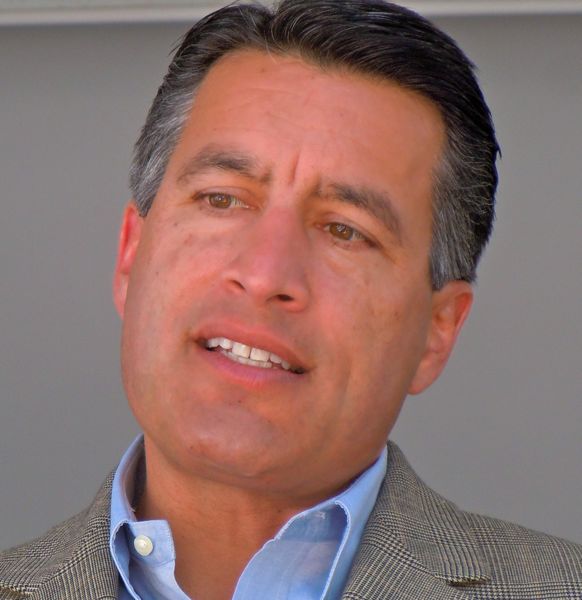
TAMPA — When Brian Sandoval spoke to the Republican National Convention, he used his personal American story to make a pitch for the country to vote for Mitt Romney.

But it’s what he didn’t say about himself that may have been his loudest message at the convention.

Brian Sandoval

Sandoval is in many ways the Republicans’ best answer to the two voting blocs where the Democrats feel they have the upper hand on the issues: women and Hispanics.

Democrats have long been charging that Republicans aren’t sympathetic to Hispanic voters because of the party’s opposition to immigration reforms like the Dream Act, a measure that would put undocumented immigrants with long tenure in this country on a pathway to citizenship.

They’ve also charged Republicans with waging a “war on women” over reproductive rights, a claim that was punctuated 10 days ago when Republican Rep. Todd Akin, who is running for the Senate in Missouri, questioned the necessity of abortion because he believed women were hard-wired to “shut that whole thing down” and avoid pregnancy in the case of rape.

Republican leaders cut off Akin’s campaign funding and publicly called for him to drop out of the race after his statements but still have sustained hits from Democrats who accuse the GOP of sharing the bulk of Akin’s views, even if they condemn his comment.

Enter Sandoval, the pro-choice Republican.

Read the whole story


5 people speak out about SnowGlobe at college meeting

Lake Tahoe Community College’s board of trustees gathered information Tuesday night from the public about SnowGlobe. The five are expected to vote Sept. 11 on if and how they want to be involved with the three-day music festival.

A representative from the city of South Lake Tahoe gave an overview of plans that were agreed to by the City Council last week, two people were in favor of the event, one against and one didn’t take a true stance.

Jennifer Buckley, who has lived in town 25 years, said, “I had an amazing time.” She also agreed more trash cans and turning down the bass are needed.

John Mark said, “I thought it represented our community really well.”

Pete Jorgensen said he didn’t want to endure another three days of having the pictures on his walls rattle.

While the city can proceed without the college’s approval, the logistics would be problematic without LTCC’s involvement.

— Lake Tahoe News staff report


Bankruptcy trustee questions STATA’s financial dealings

By Kathryn Reed

Another deadline looms next week in the multi-million dollar South Shore transportation lawsuit, with a decision possible in November to dismiss or have the case litigated.

Fairfield-based MV Transportation, which once ran the BlueGo bus system, sued the nonprofit South Tahoe Area Transit Authority in 2010 for a number of reasons; most having to do with not being paid the nearly $3 million it claims it was owed. STATA then filed for bankruptcy and has since disbanded and essentially merged with Tahoe Transportation District.

MV Transportation has until Sept. 7 to revise its complaint, with the defendants then being able to respond before the judge acts in mid-November.

Transit on the South Shore continues along a bumpy legal road. Photo/LTN

David Thompson, who was appointed by U.S. Bankruptcy Court Judge Gregg Zive to review all the documents (12 drawers of paper files and more than 16,000 emails) pertaining to the case, does not understand how the STATA board continued operations when the expense to do so was more than the revenue being generated.

In the participation agreement paragraph 5.11 states: “… that if revenues fall short, the directors shall reduce the levels of service unless the parties (participating members) mutually agree to make additional contributions.”

Service was not cut and additional contributions were not made.

Thompson, who was appointed in August 2011, has prepared three reports for the court, with the latest coming out this summer.

In part he writes, “From the start, the operating revenues generated from cash fares, members contributions and operating grants were insufficient to cover operating costs. This resulted in STATA being constantly short of cash and having to issue a note payable to MV Transportation for $825,000 covering the initial start up months of operation. Operating shortfalls continued for several years reaching over $2 million. MV was terminated on June 20, 2010. … None of the participating members paid the operating shortfall as required in the bylaws. TTD confiscated the assets, grants and contracts of STATA, gutting the organization and leaving no means to pay the creditors.”

South Lake Tahoe City Attorney Patrick Enright disagrees with Thompson’s assessment. He said the city only had to contribute what it received from the state and federal government for transportation, nothing more.

It has cost South Lake Tahoe more than $75,000 to pay attorney Lou Bubala of Reno to represent the city at the Reno bankruptcy hearings. That amount does not take into account Enright’s time. The city’s portion of the nearly $3 million is about $600,000.

Each defendant is represented by separate legal counsel, so the cost of the case continues to escalate at a greater rate than if they had the same attorney. If they lose, the parties are also likely to incur MV’s legal costs, the fees of the trustee, as well as penalties beyond the $3 million MV is claiming it is owed.

The defendants in the case are:

• STATA

• Tahoe Regional Planning Agency

• Douglas County

• South Lake Tahoe

• Heavenly Mountain Resort

• Tropicana Entertainment

• Harrah’s Operating Company

• Harvey’s Tahoe Management Company

• Lakeside Inn

• Horizon Casino

• Lake Tahoe Casino Realty

• Columbia Properties Tahoe

• Ridge Tahoe Property Owners Association

• Tahoe Transportation District.

Early on El Dorado County worked out a deal with MV.

“In October 2010, El Dorado County settled with MV Transportation for $160,000 because MV has a rock solid case against STATA’s member agencies. As the bankruptcy trustee points out, member agencies have a clear obligation of make additional contributions to STATA if STATA operates at a deficit,” county Auditor Joe Harn told Lake Tahoe News. “Because the TRPA staff gave the STATA board horrible advice, STATA operated at a huge deficit. The TRPA staff also wasted a lot of El Dorado County staff time. On at least three occasions, the TRPA staff recommended unlawful allocation instructions to the TRPA board. We spent a lot of time on conference calls explaining the fundamentals of the California Transportation Development Act to the TRPA staff.”

The Tahoe Regional Planning Agency is an integral part of this because the Tahoe Transportation District was created by TRPA. Beyond that, TRPA first hired John Andoh to handle the transit system. And while the STATA bylaws require an executive director to run the operation, it never had one. Andoh was a transit administrator.

STATA was the name given to the group in 2008. Originally it was called Tahoe Coordinated Area Transit when it was formed in 1998 as a coordinated transit system on the South Shore.

Mike Bradford, president of Lakeside Inn Casino in Stateline, acknowledged it was a tough sell at the time to get the casinos to give up their individual bus routes, but the thinking was that to be a destination resort, the South Shore needed to be able to move people around.

It has never worked the way people envisioned. Part of it has to do with inconsistent and constantly changing routes and fares, the inability to balance the needs of locals and visitors, and that marketing for the bus system has failed miserably. After all, bus signs don’t even have a bus symbol and most are not sheltered.

Bradford is frustrated MV has alleged the STATA members conspired against the transit agency.

“They are so off the mark,” Bradford told Lake Tahoe News. “MV knew service levels exceeded the entities’ ability to pay. When all the accumulated fees came to light, the STATA board said we can’t pay now. We said we would pay over time.”

Lakeside Inn officials said they tried to settle with MV using the same formula El Dorado County used, but said MV denied that request.

Jessica Woelfel, attorney for MV, said she had no comment at this time.