Signs of recovery in South Tahoe real estate market

By Dan Spano

In Lake Tahoe real estate, each month brings better news than the month before. When comparing September to the month and year before there were more closed sales, fewer homes on the market, fewer new listings, and a new category – increasing median sales price.

Even when the real estate market was showing recovery in the number of homes sold and number of homes for sale, median sales prices weren’t recovering. That may have just turned the bend in September. In 2011, the median price of homes sold in September was $230,000. Last month that figure was $262,500 — a 14.1 percent increase.

September was the third month in a row that had median sales prices on the rise in South Lake Tahoe.

August’s median price was $236,250 and July’s was $227,500. The lowest median sales price in the last five years in the area was in February when the price was $197,500.

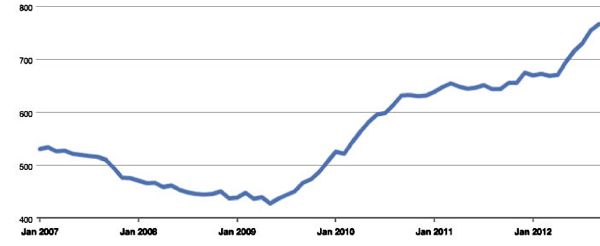
Homes sold at the highest rate in more than five years in September. The 84 homes that closed escrow brought the total for the last 12 months to 766. Comparing that to 643 during the previous 12 months it shows a 19.1 percent increase.

This graph shows closed sales of homes in Lake Tahoe from January 2007 to September 2012.

We’ve been seeing fewer homes enter the market for months now. There was a high of 203 new listings in May 2007. The low this last month was 43 new listings. To put that low figure into perspective, there were 90 new listings in August 2012 and 115 in May 2012.

In September, seven homes sold that were priced at $650,000 and above. This is a 133 percent increase over September of 2011 when there were three homes sold in that price range. There are currently 79 homes for sale in Lake Tahoe in this range, the highest asking price being $5.25 million.

We continue to see more people interested in owning a home in Lake Tahoe. Their perception is that this may be the last time they can afford to own a home in one of the most beautiful areas in the world. Interest rates may be increasing, so combine this with fewer homes for sale and increasing sales, we could see a seller’s market soon. Homes over $400,000 will still be in a buyer’s market, but those homes under this are starting to sell for at, or above, their asking price, thus creating a seller’s market.

Dan Spano is with Paradise Real Estate in Lake Tahoe.


Felon vanishes after judge said OK to be free 3 hours before going to prison

Updated: Oct. 4 3:40pm

South Shore law enforcement is looking for a man who left Barton Memorial Hospital late Thursday morning when he was supposed to be headed to prison.

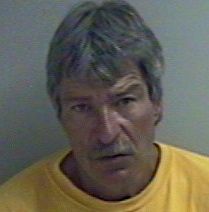
Anthony James Katello is 51, 5-feet-11, 180 pounds, and has brown hair. He was last seen wearing green shorts and no shirt.

El Dorado County sheriff’s Lt. Pete Van Arnum said a judge let Katello out for three hours so he could get his affairs in order before being sent to prison on spousal abuse charges. A church member was driving Katello around on errands. One of the stops was the hospital. Van Arnum did not why they went there.

Anthony James Katello

Lake Tahoe News has been told Katello went back inside saying he forgot something. That is the last time the volunteer saw the man.

An airplane, K9 units and officers from multiple agencies have been scouring the area. As of 3:40pm Oct. 4 the suspect was still on the loose. A warrant has been issued for his arrest.

“We have contacted the spouse. We are taking action to ensure her safety at this time,” Van Arnum told Lake Tahoe News. The woman does not live in South Lake Tahoe.

The individual is not considered dangerous, however, if anyone sees a person matching this description they should call dispatch at (530) 542.6100 or 911.


 — Lake Tahoe News staff report


Nevada contemplating tighter campaign disclosure regulations

By Sean Whaley, Nevada News Bureau

CARSON CITY – Increased financial disclosure, greater restrictions on contributions and gifts, and tougher penalties for campaign violations are the goals of new legislation for the 2013 Legislature detailed this week by Secretary of State Ross Miller.

The Aurora Act, named for the new campaign contribution and expense search function now available at the Secretary of State’s website, includes language that would mandate near real time reporting of large dollar campaign contributions and expenses, further define the prohibition on personal use of campaign funds and significantly restrict the ability of candidates and public officials to receive “gifts” from donors who may pose a conflict of interest.

The proposed legislation also includes provisions to allow the Secretary of State’s office to seek injunctive relief to order individuals or groups to file campaign finance reports, and substantially increased penalties for violations.

Miller said the campaign reform measures passed in the 2011 legislative session were the most comprehensive in Nevada history.

“We’ve made progress in increasing transparency and accountability in recent sessions, but we can clearly do more and do better,” he said. “I believe that we will have an initial coalition of lawmakers that can make this happen. If we want meaningful reform to occur, we need to call on all candidates and elected officials to support the ‘Aurora Act.’ We’ve all heard the lip service to this issue, but I believe that with the public’s help, we can get enough support from both sides of the aisle to bring much needed sunshine to this state.”

Initial support for Miller’s Aurora Act has been expressed by Assemblymen Marcus Conklin, D-Las Vegas, and Pat Hickey, R-Reno, and by former state Sen. Sheila Leslie who is the Democratic candidate for Senate District 15 in Reno.

Hickey earlier this year called for his own set of reforms.

Hickey said: “While there may be more or less added to Secretary Miller’s proposals, there should be widespread bi-partisan support for cleaning up campaigns and the conduct of candidates at all levels.”

Leslie said: “This is an opportunity for lawmakers to step up and give our constituents the information they need to make informed decisions, and to develop a greater level of trust between the people and their public servants.”

Leslie in 2011 proposed legislation that would have required lobbyists to report spending on lawmakers year round, and not just during legislative sessions. The bill died in an Assembly Committee. She requested the same bill for the 2013 session.

Conklin said the proposal could set an important tone for the legislature.

“We want to come away with an increased transparency, and in doing so demonstrate to Nevadans that their lawmakers can work in a bipartisan manner to effect meaningful change,” he said.

Miller’s legislation would require:

• Increased disclosure and transparency into the money being spent in Nevada’s elections by defining “electioneering communication” and “independent expenditure” to clarify who is required to disclose and when they are required to disclose money spent on Nevada candidates by third-party groups.

• Clarifying the term “personal use” to prevent campaign contributions from being used by a candidate for personal use.

• Clarifying that any expenditures made from a candidate or public official’s campaign account must always be reported.

• Requiring public officials and candidates to report their contributions on hand at the beginning of each year so the public will know how much money public officials and candidates are carrying over from year to year. Currently, only the contribution totals received within a calendar year are reported.

• Reporting within 72 hours contributions received or expenses paid in excess of $1,000 to provide the public with more “real time” reporting through an election cycle.

• Clarifying that the Secretary of State may seek injunctive relief for campaign finance violations to ensure that individuals and groups must not only pay a financial penalty but also actually disclose their activity.

• Allowing the Secretary of State to seek in penalties up to three times the amount of money at issue in a reporting violation. This change will give the office more flexibility in seeking penalties that are more in line with the amount of money involved reporting violations.

• Restricting and clarifying laws related to the acceptance of gifts by public officials by better defining “gift” and “restricted donor.” Changes will set forth from whom it is legal to accept gifts, and provide a clear list of examples of gifts that may or may not be accepted and must be disclosed on public reports.


Educators crusade for youths to be safe at school, in life

By Kathryn Reed

A 13-year-old walks into his principal’s office and says he wants to write a letter to the judge. The judge lets him take the stand. His parents are in the courtroom.

“I told him, all you can do is tell your truth,” Beth Delacour said.

In the end, the judge last year said the boy no longer had to visit his dad. This meant no longer being regularly exposed to guns and drugs.

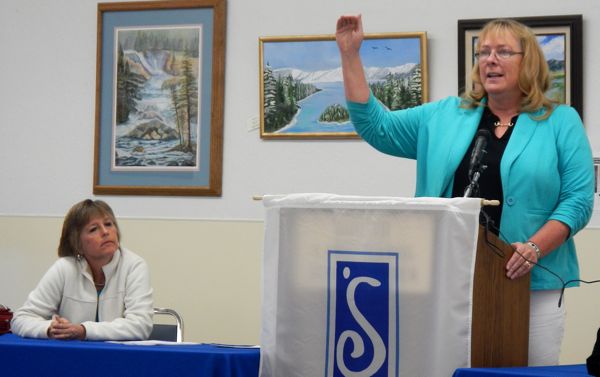
Teacher Cindy Cowen, left, and South Tahoe Middle School Principal Beth Delacour talk about anti-bullying programs. Photo/Kathryn Reed

While Delacour, who is principal of South Tahoe Middle School, is not a proponent of single-family households, she knows sometimes it beats the alternative. What she most advocates for is helping her sixth-, seventh- and eighth-graders find their voice so they can stick up for themselves.

That same youngster stopped by her office this school year. He said he wants to be a judge someday and asked his principal what he needs to do to make that dream come true.

Delacour and Cindy Cowen, a teacher at the South Lake Tahoe school, spoke before Soroptimist International Tahoe Sierra on Sept. 27 about how the service club’s financial support is helping bring programs to the school that deal with bullying – this includes working with the aggressor and the victim.

The overall goal is to change the climate and culture of the school.

“We needed to get these kids to feel like they are people,” Cowen said.

Through Teen Truth Live the message is if you aren’t making a difference, you are doing nothing. This program has been part of the school for a few years. This year a summit of between 30 and 50 students will be convened with the goal being for them to identify what other improvements can be made to the school.

As Delacour said, the kids are the ones in the trenches – they are seeing, hearing, feeling what is going on more so than any adult on campus.

One of the Soroptimists asked what the difference between bullying and teasing is.

The educators said bullying is chronic, it doesn’t stop, it’s harassment, it’s repeated and it’s unwanted.

Because bullying can be a learned behavior, another member of the service group asked if parents are part of the anti-bullying lessons.

They have been. But those who “needed” to show up to events the school sponsored didn’t and therefore it was more like preaching to the choir based on who attended.

Between Horses and Humans is another component of helping youth stop being a bully and for others to stand up to the bullies. It’s also a program where parents must be involved.

Oct. 1 was World Stand Up to Bullying Day.


Cops: 2 men cooking drugs cause explosion in S. Tahoe

Updated Oct. 3, 6:55pm

By Kathryn Reed

A suspected drug lab exploded in the middle of South Lake Tahoe on Wednesday afternoon.

Barrek Madden, 23, of South Lake Tahoe was flown to UC Davis Medical Center in Sacramento with third-degree burns to his face and upper torso.  Schuyler VanFleet, 22, of South Lake Tahoe had his hair, eyebrows and beard singed. He was arrested on felony charges of unlawfully causing a fire and operating a drug lab.

At about 3:15pm Oct. 3 an explosion could be heard coming from a bottom floor unit of the Forest Manor Apartments at the corner of Forest and Wildwood avenues.

Firefighters enter the apartment just before 4pm Oct. 3. Photos/Kathryn Reed

“They had butane as part of the process and it caught fire,” Police-Fire Chief Brian Uhler said.

He said the suspects were cooking or refining the hashish.

Because fire crews did not know what all was inside the apartment they took their time before entering. At first they let the fire smolder a bit.

“We withdrew personnel because of a possible drug lab and materials,” Uhler said.

A family who lives above the suspected drug lab fled down the street after hearing the explosion, which they described as loud.

“I see smoke and one guy on fire. I don’t know him. I just got my family out,” the resident, who did not want to give his name, told Lake Tahoe News.

All the units were evacuated.

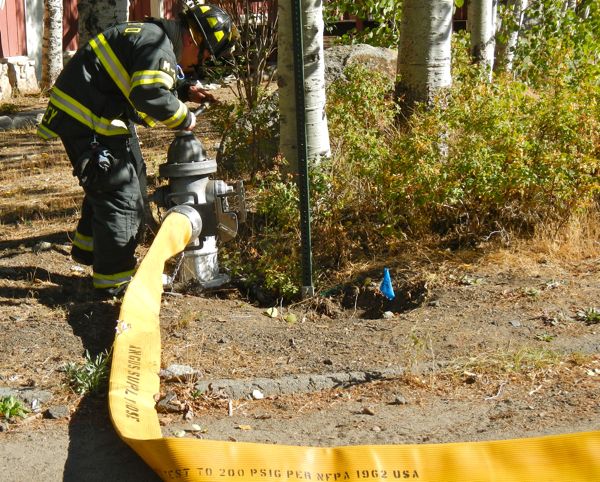
South Tahoe firefighter Doug Bailey hooks the hose to the hydrant.

The extent of the damage to the one unit is not known, nor is is known if other units experienced smoke damage. However, the entire complex at 3754 Forest has been deemed unsafe at this point. The fire department has requested the American Red Cross provide temporary shelter for the displaced residents.


Head of El Dorado County probation put on leave

By Kathryn Reed

El Dorado County Chief Probation Officer Greg Sly has been place on indefinite leave.

Superior Court Judge Suzanne Kingsbury, who has oversight of the Probation Department, made the decision effective Sept. 28. She deferred comment to County Administrative Officer Terri Daly.

Daly was not available for comment.

County officials speaking off the record told Lake Tahoe News the CAO has been having issues with Sly for some time. What those issues are remain unknown.

Mike Applegarth, who works in the CAO office, said because it’s a personnel matter, he is not at liberty to provide any details. He did not know if Sly is on paid or unpaid leave.

Gary Hudgeons, assistant chief probation officer, has been named acting chief by Kingsbury. He did not return phone calls.

In an email that LTN obtained Hudgeons says, “I have spent the weekend mostly in shock of this news and I suspect many of you will be as well. There is a very difficult road ahead of us over the next days and weeks.”


Military absentee ballot requests below expectations

By Sean Whaley, Nevada News Bureau

CARSON CITY – A national organization is reporting an alarmingly low number of absentee ballots being requested by members of the military in battleground states around the country – including a 55 percent decline in Nevada – ahead of the Nov. 6 general election.

“The number of absentee ballots being requested is shockingly low,” said Eric Eversole, founder and executive director of the Military Voter Protection Project. “While we knew the number of absentee ballots requests would increase as we got closer to the election – and they have – the number being requested is still way too low and indicates that many military members will have their voices silenced on Election Day.”

The group reports a 46 percent decline in absentee ballot requests in Florida this year compared to the 2008 presidential election, a 59 percent decline in North Carolina, and 70 percent declines in Virginia and Ohio.

The Nevada Secretary of State’s Office reports the number of ballots requested by military personnel within the U.S. and overseas totals 2,210 so far in this election year, a 55 percent reduction over the 4,919 requested in 2008. The number is up from the 1,533 absentee ballots requested in the 2010 mid-term election in Nevada.

The 2,210 requests is also an increase from the 1,750 absentee ballots cited as being requested in Nevada in a report issued by the MVPP on Aug. 27.

UOCAVA numbers in Nevada for 2008, 2010, and 2012 through the MOVE Act deadline:

2008 2010 2012
Military (Domestic/Overseas) 4,919 1,533 2,210
Overseas Citizens 2,562 578 1,510
Other 2 0
Total 7,483 2,140 3,720

The 2012 requests reported by the Secretary of State’s Office are through the 45-day window when ballots had to be mailed. More requests can and should be received by counties.

Nevada Secretary of State Ross Miller said he has been told that it takes a maximum of seven days for an absentee ballot to be delivered to the most remote forward operating base in Afghanistan. And in the case of Nevada, military personnel can vote via email, he said.

“It is the highest priority of the Department of Defense and their military system to get those ballots to the troops,” Miller said. “They process those ballots very quickly.

“I’m confident that we’re going to see a relatively high number of requests coming from our military,” he said. “The outreach seems to be working. We still have a lot of time for them to request their ballots. And I think that’s the critical point here; is that although the numbers are a little bit low right now, there’s still several weeks for the military to request their ballots and I’m confident that they are going to do so.”

One reason for the drop in the number of requests is that the troops serving in Iraq have returned home, and the number of troops serving in Afghanistan have been on the decline, Miller said.

“I’m confident at the end of the day that we’re going to see a high turnout of our military men and women overseas casting ballots,” he said. “The fact remains we simply have fewer military overseas because in 2008 we were fighting active wars in Iraq and Afghanistan and we don’t have that high of numbers of personnel overseas right now.”

Miller’s office reported on Sept. 24 that all Nevada military ballots and ballots to Nevadans covered by the federal Uniformed and Overseas Citizens Absentee Voting Act were in the mail 45 days in advance of the election as required by the law.

All 17 county clerks and registrars of voters confirmed that all valid requests were transmitted pursuant to applicable state and federal laws. Reports based on rumors that the ballots would not be delivered on time were inaccurate, according to the Nevada Secretary of State’s office.

“The timely mailing of these ballots is critical,” Miller said in announcing last month that the counties met the deadline. “Just more than a week ago I was honored to visit our troops in the Middle East, including the officers and enlisted personnel who manage and oversee the elections process among the troops. We assured them that they’d have the ballots on time so that their votes would count. As the people who are on the front lines of protecting democracy, we owe them that.”

In July, Nevada was named one of 15 “all-star states” by the MVPP. The MVPP cited Miller’s proactive approach to military and absentee voting issues including his leadership in Nevada’s passage of the Uniform Military and Overseas Voting Act, and the use of internet technology to allow members of the military to determine whether their ballot has been received and counted.”

Nevada had an issue complying with the MOVE Act in 2010 in Elko County due to the failure of a private vendor to deliver printed ballots on time. But the U.S. Department of Justice praised Nevada elections officials for working “quickly and cooperatively” to address the delay.

In an Oct. 1 news release, Eversole said the Pentagon and its Federal Voting Assistance Program failed to comply with a key provision of the MOVE Act to provide greater voter assistance on military installations. In particular, FVAP failed to create voter registration offices that would provide voting assistance to every military member when they checked into a new duty station.

“Notwithstanding the data, we have not given up and will keep fighting for our military voters,” Eversole said. “The registration deadlines are quickly approaching, but there is still time to fix this mess. We are asking every active duty military member or spouse to visit hereosvote.org where they can quickly register and request an absentee ballot. They can quickly fill out the form and get their absentee ballots in 7 to 10 days.”

Census: Doctor visits on the decline

By Sabrina Tavernise, New York Times

WASHINGTON — Americans of working age are going to the doctor less frequently than they were 10 years ago, according to a report by the Census Bureau.

In 2010, people age 18 to 64 made an average of 3.9 visits to doctors, nurses and other medical professionals, down from 4.8 visits in 2001, said the report, which was released on Monday.

The precise reasons for the decline were unclear, said Brett O’Hara, an official at the Census Bureau and a co-author of the report. But the changing demographics of the American population most likely had something to do with it.

As baby boomers retire, for example, they leave a working-age population that is on average younger and that tends to use less health care. Still, that is likely to be only a small part of the explanation, as the baby boomers began to move into retirement only at the end of the report’s period, about two years ago.

Another possible reason for the decline in doctor visits, Mr. O’Hara said, is that the share of uninsured working-age people has expanded over the past decade. People without insurance are less likely to visit a doctor, said the report, which was based on the Survey of Income and Program Participation, a long-running survey of more than 80,000 households. The share of working-age Americans without health insurance was 21.8 percent in 2010, according to the Census Bureau, up from 17 percent in 2001.

The report measures the years before 2010, when a provision in the Affordable Care Act began allowing young adults to stay on their parents insurance policies until age 26. That change has helped stem the rise in the uninsured.

People lacking insurance were far less likely to go to doctors. Just 24 percent of the uninsured went to a doctor at least once in 2010, compared with 72 percent of the general population of working age adults, the report found.

The share of doctors visits by uninsured adults was low, O’Hara said, despite the safety net that is supposed to help them get medical care, like as federally financed community health centers and hospitals with charity care.

But even for those with insurance, costs have increased, with deductibles and premiums rising far faster than inflation, and many have cut back on doctor visits, said Kathleen Stoll, director of health policy at Families USA, a nonprofit health care research and advocacy group.

“Many are thinking twice before going to a physician,” she said.

Still, about two-thirds of Americans reported being in good or excellent health, the report said, compared with about one-third that reported being in fair or poor health. The report also showed the sharp difference in medical usage by income. Nearly 40 percent of people in poverty did not visit a doctor in 2010, compared with 19 percent of people from higher income levels.

Hispanics were the least likely to seek medical care, with 42 percent reporting not having visited a doctor at all in 2010. Among whites, the share was 23 percent and among blacks it was 30 percent.


S. Tahoe staff, council differ on need for commissions

By Kathryn Reed

Even though staff told the South Lake Tahoe City Council there is no money, time or staff to deal with the non-mandatory city commissions, the elects aren’t ready to disband them.

Instead, the council wants to have every member of the Parks and Recreation, Latino Affairs, Sustainability, and Airport commissions make a case for why their particular commission should stay the way it is. Even if everyone weighs-in, there is no guarantee later this fall the council won’t take staff’s recommendation and do things differently.

And if the commissions stay in place, the council will have to figure out how best to allocate the minimal resources left in the city to handle this non-essential work. Staff reductions in the last few years mean 65 fewer positions – or one-third the employees are gone.

Prior to the Oct. 2 meeting the city manager had contacted the chair of the Sustainability and Recreation commissions to apprise them of the agenda item. Neither attended Tuesday’s meeting.

The Latino Affairs Commission only has a couple members and therefore is not able to meet because it does not have a quorum. This has been an issue for that commission for some time.

Councilman Tom Davis, who chairs the Airport Commission, said he is fine with disbanding that group. However, David Kelly, who is on that commission, said the opposite.

City Clerk Suzie Alessi and City Manager Nancy Kerry tag-teamed the presentation to the council that outlined what the commissions do and why change is needed.

Kerry explained that each commission is subject to the Brown Act – the California open meeting law, how staff helps oversee the commissions and that city offices are used for the meetings.

What was proposed was to make many of these commissions committees. This would eliminate the open meeting requirements, allow for less structure and potentially the ability to get more things done.

However, the council likes having control over the commissions, including who is on them. Council members also questioned whether there would be their desired transparency if the groups become committees. And then there was the question of whether committees would have the same voice as a commission.

By state law or city code South Lake Tahoe must have the Building Board of Appeals, Delinquent Refuse Fees Hearing Board, Planning Commission, and Airport Land Use Commission.

The city has technically not had the latter commission. It got away with it under old state requirements by having the Planning Commission plus two airport commissioners convene. They haven’t met since 2007. But current law necessitates the new commission be formed.

That commission will be comprised of two county reps, two city, two aviation experts and one person from the general public. The purpose is to work on land use issues involving the airport. With the city soliciting requests for proposals for someone to come up with a master plan for the airport, the commission would be on the ground floor with that process.

The current Airport Commission is more involved with operations of the airport. The new commission would have none of those responsibilities.

Council recommended blending the Delinquent Refuse Fees Hearing Board’s responsibilities into one of the established commissions. The Planning Commission or Building Appeals are contenders.

Davis wondered why the city deals with collections for South Tahoe Refuse when it doesn’t for other utilities. Because that stipulation is part of the franchise agreement is the answer. That, though, could be changed.

Changes the council agreed to are:

• establish the Airport Land Use Commission

• appoint two physically handicapped people, per the Health and Safety Code, to the Building Board of Appeals.


Defensible space credited for no structures lost in West Slope fire

By Cathy Locke, Sacramento Bee

Twenty-five homes in the Somerset area of El Dorado County were threatened Tuesday afternoon by a fire that burned 15 acres of heavy brush.

The Sand Fire started at 11:35am Oct. 2 on Sand Ridge Road near Bucks Bar Road southeast of Placerville. As of this evening, the fire’s progress had been stopped and it was 50 percent contained, according to a CalFire news release.

No injuries or structural damage has been reported.

“Some of the homeowners had done an excellent job creating defensible space around their homes and it clearly made the difference between them returning to their home or a pile of ashes, since the fire literally burned right up to their homes,” Robert Little, a spokesman for CalFire’s Amador-El Dorado Unit, said in a written statement.

Officials said the fire spotted across Mount Aukum Road. The El Dorado County Sheriff’s Department oversaw voluntary evacuations of the Meyers and Moody roads area until the spot fires were contained.

Mount Aukum/E-16 was closed to traffic for a few hours. One lane then was opened with the California Highway Patrol escorting vehicles between Grizzly Flat and Paradise Ranch roads.

CalFire was assisted by the El Dorado County, Diamond Springs, El Dorado Hills, Georgetown, Rescue and Pioneer fire departments, and the U.S.Forest Service.

The cause of the fire is under investigation.