73% of Americans have financial regrets

By Matthew Frankel, Motley Fool

Only one-fifth of American adults say they have no financial regrets whatsoever, and 73 percent say that they regret making one of six specific financial mistakes, according to a new survey. Here’s what money mistakes Americans regret, and how to prevent the regrets of other Americans from becoming your own.

Just 20 percent of American adults said they have no financial regrets at all, in a recent survey by Bankrate, and 73 percent say that they’ve made a specific mistake that they wish they hadn’t.

Read the whole story


Too much sun can be a bad thing

By Janet Goodall

Your skin has many important jobs, such as protecting your body, helping to maintain your temperature, and generating vitamin D. Yet sometimes your skin doesn’t get the care and protection it needs.  

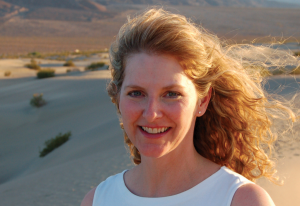
Janet Goodall

While some sun exposure helps the body make vitamin D and improve your mood, more than a small amount can damage skin cells and lead to skin cancer. Consider these lesser known facts about skin cancer:

  • It can happen at any age. Skin cancer rates have increased by 250 percent among American children and young adults in the last 40 years. Young adults, particularly young women, are more likely to get skin cancer than any other cancer.
  • You may notice symptoms. Monitor your skin for large, uneven, discolored sores that grow rapidly or do not heal. Watch for swelling, spreading color, and a change in the surface texture.
  • Your health history matters. Research shows a history of skin cancer, a weak immune system, radiation therapy, and HPV can increase your risk. Precancerous lesions, sunburns, and delicate skin are also risk factors.
  • Any tanning is dangerous. Both artificial tanning and recreational suntanning deliver UVA and UVB radiation, which can damage cell DNA and lead to cancer. Living at high elevation and spending a lot of time outside also increase your risk.
  • You can still enjoy the sun. Go outside early in the morning or in the evening, when the sun’s ray are less intensive. Any time of day, wear protective clothing, a hat, sunglasses, and a “broad spectrum” sunscreen, SPF 30 or higher, that protect against both UVA and UVB rays.

Janet Goodall is a family nurse practitioner who sees patients at Barton Health.


Show based on light coming to MontBleu

LUMA: Art in Darkness will be at MontBleu from July 13-Aug. 13.

This is a three-dimensional illuminated illusions telling the story of people’s fixation with light and fear of the dark.

LUMA was the first show of its kind; taking place in a darkened theater and using cutting edge technologies to create kinetic tapestries of light by unseen performers.

The production tells a story of the Lumen Being who fears the darkness and travels through the night in search of an escape, encountering the light of the moon, the stars, a night highway, a midnight carnival and finally arriving to the brightest place on the planet, the big city, where he learns about the darker side of light.

For more info, go online.


Barton Auxiliary gives out $76,500 in aid

At the annual Barton Auxiliary lunch this month 13 students from South Tahoe and Carson Valley were awarded $19,000 in scholarships and Barton Family Birthing Center received $57,500.

Scholarship recipients were selected based on their academic excellence and interest in pursuing a career in medicine or science.

The following students received scholarships: Wesley Alexander (Douglas High School), Kendra Conrad (South Tahoe High School), Samantha Forvilly (Whittell High School), Caitlin Hannah (STHS), Aspen Kidd (WHS), Farrah Kuenzi (Lake Tahoe Community College), Hunter Langford (DHS), Jocelyn Lopez (STHS), America Mata (Mt. Tallac High School), Kelsey McGillivray (DHS), Lars Ponsness (DHS), Jorge Reyes (Mt. Tallac), and Lek Wei Seow (STHS).


Art-wine festival coming to Squaw Valley

The annual Art, Wine and Music Festival returns to Squaw Valley on July 8-9.

The festival shows of the talents of artists, crafts makers, performers and musicians, and features wine tasting from California wineries, live musical performances across three stages and walkways lined with more than 30 local and regional fine artisans.

All proceeds from the Art, Wine and Music Festival benefit Achieve Tahoe, whose mission is to provide affordable inclusive physical and recreational activities that build health and confidence. Last year the festival raised $10,700 for the nonprofit.

The festival will take place from 11am to 5pm, with wine tastings beginning at 2pm. The tasting costs $25.


Review: ‘The Mummy’ is a waste of time

By Howie Nave

When you’re watching a movie has that feel to it that it wants to be the next franchise and comes across as trying too hard, you kind of get the feeling already that it’s not going to be a great flick (or even a good one).

In fact, watching the trailers before the main event I noticed almost every trailer showed a movie that was either part of a franchise based on a comic book hero, a sequel, prequel or a re-boot. C’mon Hollywood, can you get any lazier?

So it makes perfect sense that Tom Cruise’s production company (that already has two franchises in the way of the “Mission: Impossible” and “Jack Reacher” series) would try to launch another with the very tried and franchise proven, “The Mummy.” The concept is interesting enough having a female mummy (Boris Karloff is probably rolling in his grave) played by Algerian actress Sofia Boutella (“Kingsman: The Secret Service” “Start Trek Beyond”).

Howie Nave: ‘The Mummy’ is worthy of 2 out of 5 bagels.

If you don’t follow the beginning voiceover on her background, you’ll become easily confused. And rest assured, it’s pretty lengthy. Boutella plays a scorned Egyptian princess named Ahmanet who kills her father because she had plans being ruler of all mortals until she had a brother thwarting her dreams.

Never piss off an Egyptian princess who was going to be the first female Pharaoh in the family and then in typical male dominance fashion turns her into a second-class citizen. Things get worse for Ahmanet who is punished for killing off family members and gets buried alive wrapped in full blown mummy attire for several centuries in a far-away land called Mesopotamia (now known as Iraq). The movie should’ve ended there.

Cruise makes a grand entrance in the role of Nick Morton, an Indiana Jones light who hustles in antiquities which seems confusing because you wonder is he working for himself or is someone paying him to unearth rare artifacts? I kind of felt sorry for director Alex Kurtzman who had to direct a script that was written by several writers who each had their own storyline at times and Kurtzman had to somehow make it all sound like one cohesive story.   

Even the supporting cast lacks in the chemistry department. I guess Nick’s female archaeologist love interest Jenny Halsey has some history with him (I thought it was just a one-night stand) so again not fully defined. And Nick’s best friend and “No, we’re not going to go in there are we?” ride-along sidekick Chris Vail (Jake Johnson) reminded me of Griffin Dunne’s character in director Jon Landis’ 1981 classic “An American Werewolf in London” who, as a dead guy gives advice to his living buddy on what course he should take.

I perked up some when Russell Crowe popped up playing Dr. Henry Jekyll who heads a secret organization that tries to corral and contain evil. Bu like his name suggests has an alter ego as a Mr. Hyde who himself is evil. It’s kind of hacky and you can almost guess what the next scenes are going to be. Crowe’s character has some connection with Nick’s archaeologist love squeeze, Jenny, but by then I lost interest.  

But wait, what about the special effects? Yes, there are plenty of CGI effects designed more as segues between the written scenes to keep the moviegoer in their seats but by then it was too late. Some of the effects are impressive sure and one of the reasons I even gave this movie any bagels at all.

Like its title, “The Mummy” should’ve remained entombed forever from public viewing. 

Howie Nave is host/emcee/manager of The Improv at Harveys. You can hear him Monday-Friday 6 to 10am on KRLT FM-93.9. He has been reviewing movies for years. They may be heard on four other stations each week where he does “A Jew Doing a Movie Review,” and he occasionally writes reviews for Lake Tahoe News.


Valerie Smith — 1965-2017

Val Smith

There will be a memorial service on June 24, 2017, for Valerie Ann Naples Smith. She died March 21, 2017, at the age of 51.

She had battled cancer for 18 years.

Val was born Nov. 26, 1965, in Burlingame. She grew up in the Bay Area in the hills of Belmont. Val graduated with honors from Carlmont High School, and UC Davis; earning a degree in international relations.

Val met her husband, Doug, in college. They moved to South Lake Tahoe in 1989 and married in 1990. Val worked as an accountant for more than 27 years, 25 for David, Johnson & Larsen Ltd. in Zephyr Cove and most recently at McCabe & Totah LLP in San Jose.

Val loved spending time with her family, running on the trails, growing vegetables, scrapbooking, and enjoying good wine, conversation, and food with friends. Val inspired everyone in how she smiled and laughed while fighting ovarian cancer, even carrying the torch for the 2002 Salt Lake City Winter Olympics.

Val is survived by her husband Doug, daughters Kelsey and Kira, all of Lake Tahoe; father Paul Naples of Fresno; mother Patricia Cook Schaible of Sacramento; brother Tom Naples of Fresno; and numerous cousins.

Services will be June 24 at 11am, Sierra Community Church, 1165 Sierra Blvd., South Lake Tahoe.

Val wanted a scholarship to support local high school students who pursue distance running to enrich lives. The family has created a fund for this purpose. In lieu of flowers or gifts, please make a tax-deductible contribution payable to the Douglas County Community Foundation, or DCCF, a tax-exempt 501(c)3 organization, and note “Valerie N. Smith Scholarship” in the memo. Contributions will be accepted at the memorial service or can be sent to: Douglas County Community Foundation c/o David, Johnson & Larsen Ltd. P.O. Box 1968, Zephyr Cove, NV 89448.


Tahoe Tails — Adoptable Pets in South Lake Tahoe

Billy

Billy is a 1-year-old happy boy. He has been DNA tested as a Boxer and American Bulldog mix. He loves car rides, cuddles, children and other dogs of all sizes. He also loves to chase cats, so he needs a home with no small animals or cats.

Billy is neutered, microchipped, tested for heart worm, and vaccinated. He is at the El Dorado County Animal Services shelter in Meyers, along with many other dogs and cats who are waiting for their new homes. Go to the Tahoe animal shelter’s Facebook page to see photos and descriptions of all pets at the shelter.

Call 530.573.7925 for directions, hours, and other information on adopting a pet, and for spay-neuter assistance for South Tahoe residents.

— Karen Kuentz


Manage garden pests and mosquitoes in the landscape

By Melinda Myers

A garden filled with flowers, birds, bees and butterflies is a sight to behold. These winged beauties add color, sound and motion to our gardens. Plus, they help maximize a garden’s productivity by pollinating plants and managing plant-damaging pests.

But what about those unwanted visitors to the garden? The aphids, mites and cabbage worms that feed upon our plants or the mosquitoes that feed upon us.  There are ways to have a beautiful garden and at the same time enjoy the outdoors when we work with nature to manage our landscape.

Add a birdbath, a few birdhouses and plants for the birds. They’ll repay you by eating many of the insects that feed upon your plants. Include seed-bearing plants like coneflowers, Rudbeckias and cosmos as well as berry plants like Juneberry, dogwood and firethorn. Add an evergreen and a few trees for shelter and nesting, if space allows.

A bee pollinating a coneflower. Photo/Melinda Myers

Include a hummingbird feeder and a few of their favorite flowers like columbine, salvia, penstemon, and phlox.  Then watch as these fast flyers feed upon aphids, mites and mosquitoes in between sips of nectar.

While watching the birds, bees and butterflies, examine your plants for garden pests. Catching insects early may mean the difference between a successful harvest and disappointment. Before reaching for the pesticides and destroying their food source, attract the good guys and manage unwanted pests with a few of these eco-friendly strategies.

Tolerate a bit of damage and wait for the birds, lady beetles, praying mantis and other beneficial insects to move in and eat the bad bugs in the garden. Use barriers like row covers to keep cabbage worms off your cabbage, cauliflower, broccoli and Brussels Sprouts. Sink shallow containers filled with beer into the soil around hostas and some of the other favorite plants of slugs and snails. These pests are attracted to the fermenting yeast, crawl inside and die.

If the bad guys persist, step up your eco-friendly control. Knock small populations of aphids and mites off plants with a strong blast of water. Apply insecticidal soap or Summit Year-Round Spray Oil if nature needs a helping hand. These organic insecticides are effective at managing pests, while gentle on the good guys when used properly.  

Keep mosquito populations to a minimum. Drain water from toys, buckets or any object that can hold water and serve as a breeding ground for mosquitoes. Change the water in birdbaths several times a week. Toss a Mosquito Dunk in rain barrels and water features. This organic insecticide only kills the larvae of mosquitoes, black flies and fungus gnats. It won’t harm bees, butterflies, birds, pets and people.

Evaluate your success and make needed adjustments. Write a note in next year’s calendar to watch for the return of these pests. You’ll be ready to step in and lend nature a hand if needed.

As you begin to work in harmony with nature you will find more birds, bees and butterflies visiting your garden. Together you can grow a beautiful and productive garden for all to enjoy.

Gardening expert Melinda Myers has written more than 20 gardening books, including “Small Space Gardening” and the “Midwest Gardener’s Handbook.” Myers is also a columnist and contributing editor for Birds & Blooms magazine.


Angora memories: Living with the forest

Publisher’s note: Lake Tahoe News this month will be running several stories leading up to the 10th anniversary of the Angora Fire on June 24, 2007.

A scorched tree in Joanne Marchetta’s back yard is a constant reminder of the Angora Fire. Photo/Tom Lotshaw

By Joanne Marchetta

Ten years later, I recall it like yesterday. “Hey Joanne, come look at this.” I stood on our deck and squinted. I could see a wisp of smoke, maybe five miles distant. It was Sunday, hot and hazy with strong winds. It reminded me of the weather when I was living in the San Francisco Bay Area on the afternoon of the Oakland Hills Fire.

Even though it was a thin wisp, I had an uneasy feeling. Ten minutes later, a more urgent, “come look at this.” I climbed on the boulders across the street and could now see a plume of smoke. My uneasiness grew. I went back inside, feeling distracted. Five minutes later, back up to a vantage point for a look. All the neighbors were congregated, shifting and restless. We could see flames now. Someone said, “This is bad.” Someone else said, “I’ve lived here 30 years, never seen anything like this.” Another scrambled down and headed to the fire station down the road to see what they could find out.

In 20 minutes, the situation went from concerning to dire, thin wisp to billowing plume, and now a menacing crown fire in trees just two blocks from where we stood. We all gave each other one last silent look and one spoke for the rest, “It’s time to get out of here.” 

I sprinted off the rocks and into the house. Without any conversation, we agreed quickly on what we needed—the dog and the fire safe box with crucial documents. With no time to spare, it was grab and go. From the closet, I grabbed blindly without thought only what I could collect on hangers with one hand. With the other hand, I grabbed one pass of clothes from the dresser drawer. That was it. As I walked through the kitchen to our garage door, I saw the roof of the house behind us on fire. I yelled, “We have to leave now, the house behind is on fire.” We each threw our one load in the car with the dog. We didn’t have an evacuation pack or emergency grab bag then. We do now.

The neighbors had said, “Let’s meet at Raley’s parking lot.” But when we arrived, we realized it was no safe haven. We exchanged phone numbers and kept driving. We were relatively new to Tahoe and the moment was disorienting. Where should we head? We drove to the Tahoe Regional Planning Agency parking lot near Stateline. As I got out of the car, the first thing I noticed were the burning embers and ash floating erratically in the wind. The haze was now smoky air, making it uncomfortable to breathe. We regrouped, gathered our wits, what little we had in the midst of emotional shock, and said this time, “we need to get out of the basin.”

Only two years new to Tahoe, we didn’t yet have a deep network of friends to call on. We headed to the only friends we knew in Carson Valley. We didn’t know at the time that they were returning from a visit to Placerville and could see the smoke plume from a different vantage coming into the basin. No answer when we called, but we went anyway. That night as we gathered in front of the TV, on the screen was an image I recognized: “I think that’s our backyard on fire.” I could barely sort my feelings: Fear, grief, loss, sadness, shock, and more.

The Angora Fire ignition point, above, on June 26, 2007. The fire started from an illegal, abandoned campfire near Seneca Pond on June 24, 2007. Illegal and abandoned campfires continue to be the leading cause of wildfires in the Lake Tahoe Basin. Photo/U.S. Forest Service

Lying in bed, sleepless but exhausted, my phone rang. Norma Santiago, a TRPA Governing Board member and a lead El Dorado County official who monitored the fire response from its start and through the night, had called earlier to ask for my street address. She knew I lived in the county. The call in the middle of the night was beyond kind: “We are inventorying houses still standing. Your house number is on the list.” I was incredulous, but relieved. I wondered what condition I would find it in.

It was 10 days before we returned to the house. We stayed two nights with friends in Gardnerville and then checked in at MontBleu, one of the businesses offering help to those displaced and homeless. It became our home away from home, with only the dog and the clothes we carried out. It was laughable what had made its way with us. Sports bras, but no underwear. Mismatched everything. Shorts and one pair of jeans. Dress clothes of little use. The dog was bewildered but goofy, greeting people in the elevator as her new pals. 

We were among the lucky ones. Our house was still standing. Insurance covered the smoke damage and the $32,000 dry cleaning bill. We had to have every piece of cloth and clothing in the house laundered to remove the smoke smell. But that was nothing compared to friends, colleagues, and strangers who now felt like friends who were left with nothing. People who lost lifetimes and had to start over. For me, it was miraculous, really. I thought I would return to nothing. There were clues when I did return home what luck means. My and my neighbor’s garden hoses were strung together, still extended out across the length of the backyard. Someone, a good Samaritan or firefighter—I’ll never know—fought the fire at the back end of our lot and prevented it from reaching the home and the deck. Thank you. I will pay it forward. Where once I could only see a dense thicket out the back windows, now the view is open so we see through clear to the nearby road and a trail behind the house. The whole landscape morphed. It was almost unrecognizable. 

There was no pattern to who was lucky. Two houses across the street burned to the ground. On another, the siding melted. At the house behind us, the roof burned. The fire had moved so fast, stoked by high winds and tinder dry conditions. It is almost unfathomable how an ember did not ignite our house. There was a house with an old cedar shake roof across the main road, still standing like ours, defying all odds. How could that be, when just next door there was nothing but a pile of ash left of a new home built the year before. Fire is humbling, capricious, mean. Terrifying in its strength. 

Joanne Marchetta on the boulder pile where she and neighbors watched the Angora Fire. Photo/Tom Lotshaw

The outfall from the fire also consumed TRPA and its employees. We concentrated on nothing else for well over a year. It brought all other work to a stop while our employees, just like the rest of the town, picked up their lives, recovered from the terror, and brought life back to some semblance of ordinary. We had been working toward forest policies that would help prevent and protect against wildfires like Angora. But it was slow. The Angora Fire kicked everyone into high gear. TRPA and other agencies improved regulations and practices. And TRPA organized with nearly two dozen other agencies to better collaborate as the Tahoe Fire and Fuels Team to improve forest health and reduce wildfire risk. Now it’s easier for property owners to remove trees and brush for defensible space, and fire preparedness and forest health are top priorities for the agency.

We saw and experienced all sides of humanity after the fire. Mostly we saw a community come together to help those most in need, to make sure all were cared for and had something to fall back on. Care and concern from all corners emerged. There was the other end of the emotional spectrum, too. Anger and hatred as people searched for someone to blame for the fire. TRPA and its staff absorbed a lot, publicly and privately. The agency received death threats by phone, causing us to take special security precautions for the safety of employees and our building.

During those early days after the brave first responders brought the runaway blaze under control, the aftermath set in. I went to public meetings. And it was my first feel of the decades of pent up hatred against TRPA. We didn’t know then that an illegal and abandoned campfire started the wildfire that perfect storm winds fanned into an unstoppable conflagration. It was this early experience that caused me to question why some people in Tahoe are so angry. It also led me later to champion remaking the agency’s reputation into a partner rather than an adversary. We have changed ourselves over the last decade for the better, becoming part of and a supporter of our community, not it’s foil. 

The Angora Fire changed everyone it touched. I can still recall the feelings like they were yesterday, smell the smells, hear the sounds, see the sights that are pressed into my memory, imprinted like a reverse image on the insides of my eyelids. My beloved dog Zin died last year. But I still recall the years after Angora when we’d return from a long walk to Angora Creek through Washoe Meadow when I’d have to wash the finely ingrained soot off her paws and fur. It rose like fine dust, permeated everything, even years later. The fire burned so hot it left inches of nothing but ash, with no organic matter to bind the earth together. 

The lessons I have taken from Angora are deep and enduring. We live in the forest. We came to make this home after the trees had grown up. It is our responsibility to live fire safe, to create defensible space, to prepare our evacuation pack, to live responsibly on a sensitive and fragile landscape that we all call home. I learned that we at TRPA are part of this community. I committed myself to make an agency that serves the community and protects the special environment we call home. I committed to dedicate myself to make it better for all of us. And Angora showed us all that fire is part of Tahoe’s life. It will remain long after we are gone. All we can do to live in harmony with what will inevitably be the next fire is to change ourselves and adapt.

Joanne Marchetta is executive director of the Tahoe Regional Planning Agency.