Tahoe Tails — Adoptable Pets in South Lake Tahoe

Apollo

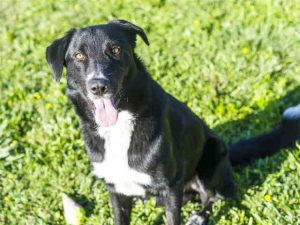
Apollo is an 18-month-old, bigger German shepherd-Labrador mix. He is a very sweet, mellow boy (especially for being only 18 months old) who is quite tall. He needs to put on maybe 10 pounds to fill out his big body. He is house trained and likes children.

Apollo is neutered, microchipped, and vaccinated. He is at the El Dorado County Animal Services shelter in Meyers, along with many other dogs and cats who are waiting for their new homes. Go to the Tahoe animal shelter’s Facebook page to see photos and descriptions of all pets at the shelter.

Call 530.573.7925 for directions, hours, and other information on adopting a pet.

For spay-neuter assistance for South Tahoe residents, go online or call the animal shelter. Vouchers are available there while funds last: bring $25 and a copy of a photo ID and a local utility bill.

— Karen Kuentz


Road Beat: The case against electric vehicles

By Larry Weitzman

It appears that the demise of the gasoline and diesel-powered car is near, perhaps in less than 20 years. Will that demise be caused by a lack of fuel, competition and market forces or will it result from some other reason besides market forces? That poses a very important question.

History tells us the best products are developed by market forces and innovation, not by government decree or intervention. When market forces ruled, electric cars were 38 percent of the car market in 1900, but by 1905 EVs’ share of the marketplace dropped to 7 percent and by 1912 after the invention of the electric starter by Charles Kettering (first offered on the Cadillac), electric cars were sold next to the buggy whips. Cars powered by the internal combustion (I/C) engine had taken over the market place, not by government decree but because they were simply a better motive force and the fuel system offered significantly greater flexibility and utility. And the marketplace decided that, not some government bozo(s).

Larry Weitzman

If EVs were so great and were a better source of personal transportation, then without question, EVs would rule the market place. But they don’t. Even with EVs like the Tesla, Volt, Leaf and more, EVs sales are less than one percent of the marketplace and that’s with significant government incentives and subsidies. First, is that EVs are very expensive. The main component, the battery, is extremely expensive still allegedly costing about $270 a kilowatt hour (kWh) of energy storage. The rule of thumb for EV range is from 3-4 miles per kWh, meaning for an EV with a 200-mile range (about a 60-kWh battery), the cost for the battery alone will be $16,200. And that is just for the part, with no installation and markup.

In today’s market, there are several compact cars that achieve 40 mpg that sell for a transaction price below that number and there many subcompact cars that can be had for 10-20 percent less than that number. And the car types that are mentioned also have a fuel operating expense less than an EV. In other words, in many parts of California, for the same $5 of energy, the compact (I/C) car will be able to travel farther than the EV.

If you don’t think government subsidies have anything to do currently with the meager sales of EVs we have an actual example, Hong Kong. Tesla was doing a brisk sales business in Hong Kong with its EV. Recently Hong Kong stopped all subsidies and Tesla sales have all but dried up. What do you think would happen here if all subsidies were terminated?

The powertrain for the compact car costs about $3,500, for an EV with a 60-kWh battery it’s about $20,000. And the average compact car has a range of 400 miles and a highway range of 500 or more miles, not the miniscule 200-mile range of a 60 kWh EV. The refueling time for the compact car will be about two minutes and for the EV on a 220 Volt charger it will take a minimum of four hours (eight hours or more on a 110 Volt outlet). Even a supercharger (called CHAdeMO) it will take nearly an hour and potentially shorten battery life. And then there is an issue no one talks about, cold weather. Batteries do not perform well in cold and hot weather and in winter time EVs will not have the promised range. When temps approach 32 degrees, it will significantly degrade EV range, depending on how cold; published reports show a 57 percent range loss at minus 20f. East Coasters beware. At temperatures above 95 degrees, range can drop by about 35 percent. Batteries work best in moderate climes.

Even in today’s market of saving the world mantras (a fallacy), EVs have only one percent of the market, even with huge government subsidies. Chevy’s remarkable Volt EV with a solid 200-mile range and a fictitious base price of about $35,000 (less than $30,000 with tax credits, with high income earners getting the most benefit here) is not selling all that well, with Chevy intentionally slowing production because of slow sales. A benefit for GM as they lose money on every Volt, anyway. And then there is Tesla, which without government subsidies has lost significant money in every quarter since its inception. Even with government subsidies of about $1 billion, Tesla has lost significant money in 18 of the last 20 quarters, (now totaling $2.4 billion).

So how are electric cars going to take over the market and push conventional I/C cars out of existence? By government decree and mandates, that’s how. Not by consumer demand, not by making a better mousetrap, not by fuel becoming expensive (oil reserves are growing, not shrinking), not by price, but by government fiat (not by the Fiat 500 EV). That’s how it will happen.

China, which is about 30 percent of global auto sales recently announced in one fashion or another that the government will end conventional I/C car sales within about 20 years. The governments of the Netherlands and Norway said it would end I/C car sales by 2025, India said it would end I/C car sales by 2030.

The governments of France and Britain said I/C sales would end by 2040 and Germany has hinted it will follow suit.

Hybrids might be allowed under these new fiats and mandates which will mean 90 percent of the motive power will come from an I/C, so then the mandate is just hot air, but the bottom line is that EVs cannot compete in any fashion with conventional I/C vehicles. The only way they can is by a government mandate which bans I/C engines. The marketplace does not want EVs but governments do and it has nothing to do with the environment and everything to do with controlling and limiting the freedom of its governed. The global warming argument is a red herring as most electrical power will still be made by CO2 emitting plants, anyway. And of course, the empirical data continues to point that human induced global warming (AGW), climate change or whatever the nom de jour may be is nothing more than a political movement and has nothing to do with the environment. The data is clear that AGW is an insignificant issue.

EVs might become practical, affordable transportation, possibly when the element known as “Unobtainium” is discovered, but it will never happen by government fiat and its discovery appears highly unlikely.

Larry Weitzman has been into cars since he was 5 years old. At 8 he could recite from memory the hp of every car made in the U.S. He has put in thousands of laps on racetracks all over the Western United States.


15 projects singled out as Best in Basin

The Tahoe Regional Planning Agency recognized 15 projects completed in 2016 with Best in Basin awards.

Now in its 27th year, the program each year showcases projects around the lake that demonstrate exceptional planning, implementation, and compatibility with Tahoe’s natural environment and communities.

This year’s winners are:

  • Kingsbury Stinger Trail: The U.S. Forest Service and nonprofit Tahoe Area Mountain Biking Association partnered to build this multi-use trail that runs from the Andria Drive trailhead in upper Kingsbury to the Tahoe Rim Trail and ends at Terrace View Street in Lower Kingsbury, connecting with a class 1 bike path there. The project restored a steep and heavily-eroding old trail alignment. More than 100 people contributed to the project with 1,500 hours of volunteer work. Project partners: American Conservation Experience, Nevada Recreational Trails Program.
  • Burke Creek Highway 50 Crossing and Realignment, Phase 1: Nevada Tahoe Conservation District daylighted a portion of Burke Creek in Stateline that was previously in an underground culvert, creating 200 feet of new stream channel, functioning floodplains, and installing a new, more appropriately sized stream crossing under Highway 50. Project partners: Balance Hydrologics, Wood Rodgers, Burdick Excavating, Nevada Department of Transportation, Nevada Division of State Lands, Douglas County, U.S. Forest Service.
  • Edgewood Lodge and Golf Course improvement project: Edgewood Companies made major improvements to its golf course water features, which receive stormwater from surrounding areas and function as the final treatment area before they discharge into Edgewood Creek and Lake Tahoe. The project renewed storage capacity of ponds, created new wetlands and 32,766 square feet of new stream environment zone, and significantly reduces fine sediment, nitrogen, and phosphorus pollution into Lake Tahoe. Project partners: Nichols Consulting Engineers, Sierra Nevada Construction, Soil Tech, SMC Construction.
  • Tahoe Mountain Lab: Cristi and Bernard Creegan and Jamie and David Orr overhauled the former Tahoe Daily Tribune building in South Lake Tahoe, turning it into a unique co-working space for startup businesses and entrepreneurs and a gathering place for the community. The project improved the building’s energy efficiency by 34 percent; built upon the success of the recent Harrison Avenue upgrades; and breathed new life and vitality into an aging and under-utilized building. Project partners: Creegan Builders, Joe Ward, Gabbart and Woods, Tahoe Daily Tribune.
  • Sierra Tract Erosion Control Project Phases 3-4: The city of South Lake Tahoe upgraded several hundred acres of the Sierra Tract neighborhood to reduce nuisance flooding and stormwater pollution into the Upper Truckee River. The project installed curb and gutter on neighborhood roads, above- and below-ground infiltration basins and treatment facilities, and protection for road shoulders. Project partners: CDM Smith Inc.; Western Botanical Services, Burdick Excavating.
  • Lake Tahoe Unified School District energy upgrades: The district secured a $763,000 grant through the California Clean Energy Jobs Act Proposition 39 K-12 Program to update aging and energy inefficient facilities. The project installed building automation systems, upgraded 7,287 interior and exterior lights to more efficient LED lighting, installed a high-efficiency HVAC system at the district office, installed smart irrigation systems district-wide, and installed high-efficiency windows at the middle school. Investment totaled $2.7 million, with potential lifecycle savings of more than $6 million. Project partners: Climatec, Lake Tahoe Sustainability Collaborative.
  • Silliman slope stabilization: Property owners stabilized 145 feet of heavily eroding slope between Fallen Leaf Lake Road and Fallen Leaf Lake with rip-rap, boulders, and vegetation to protect the lake from erosion and improve public safety on the narrow road. Project partners: John and Rich Silliman, John Larsen, Randy M. Klitsch/TECS, Tahoe Outdoor Living.
  • Camp Richardson BMP retrofit: The U.S. Forest Service and Camp Richardson Resort Inc. partnered to upgrade the popular Camp Richardson tent and RV campgrounds with paved roadways and parking areas to reduce dust, best management practices and infiltration basins to reduce stormwater pollution, new restrooms and a check-in kiosk, and bear-proof food lockers at campsites. The project reduced impervious coverage in stream environment zones and reduced overall coverage by 20 percent.
  • Lake Valley wood roof replacement program: Shortly after the Angora Fire, Lake Valley Fire Protection District secured a federal grant that has helped nearly 400 homeowners replace hazardous wood-shake roofs with non-combustible roofing materials and create defensible space on their properties, improving community resilience to wildfires and helping create fire-adapted communities at Lake Tahoe. Project partners: California Office of Emergency Services, Federal Emergency Management Agency, local roofing contractors, and city of South Lake Tahoe and El Dorado County building officials.
  • Cave Rock tunnel extension: Nevada Department of Transportation built a 60-foot-long, 27-foot-tall tunnel extension carefully blended into the surrounding landscape to protect the traveling public from falling rocks at Cave Rock. The project included measures to improve scenery, lighting upgrades, road repaving, and improved signage to alert motorists of icy conditions and bicyclists in the tunnel. The project also included water quality improvements along nearly four miles of Highway 50 to reduce stormwater pollution into Lake Tahoe. Project partners: Washoe Tribe of Nevada and California, Q&D Construction, CA Group Inc., TRPA, South Shore Transportation Management Association, Tahoe Transportation District, Lake Tahoe South Shore Chamber of Commerce, Lake Tahoe Visitors Authority, Hi-Tech Rockfall Construction, Nevada Highway Patrol, Titan Electrical, Drill Tech Drilling & Shoring, CMC Steel.
  • Northwood Boulevard fuel reduction: Property owner James Hite, North Lake Tahoe Fire Protection District, and Healthy Trees, Inc. partnered to thin 15 acres of dangerously overgrown forest in Incline Village, reducing wildfire risk and improving forest health and resilience. Project partner: Nevada Division of Forestry.
  • Somers Loop water quality improvement: Nevada Pacific Development Corporation, David and Cheryl Duffield, and a team of partners restored the former Stack Estate, a 6.4-acre lakefront site in Crystal Bay. Working in steep and rugged terrain with near-surgical precision, the project removed seven dilapidated structures, removed five abandoned septic systems and 20 drums of hazardous household waste, restored 12,769 square feet of native vegetation, and removed 540 cubic yards of soil and rock contaminated with diesel fuel, motor oil, kerosene, or lead to achieve a clean close for the site from Nevada Division of Environmental Protection. Project partners: Midkiff & Associates, Inc.; Marlette Environmental Consulting, LLC; Resource Concepts, Inc.; Tri-State Surveying, Ltd.; Walden West Design; Olsen Engineering; Wise Consulting & Training; Cruz Construction Company, Inc.; Clean Harbors Environmental Services; Kelley Erosion Control, Inc.; Alpha Analytical, Inc.; Advance Installations, Inc.; Nelson Electric Company; High Sierra Blasting; Luke Landscape Contractors, LLC.
  • Tahoe Beachfront Residences: Todd Davidson and partners razed an old, lakefront hotel on Highway 28 in Kings Beach to build this new residential project, marking the first significant private investment after the Kings Beach Commercial Core Improvement Project. The project reduced the number of units on site and vehicle miles traveled, reduced impervious coverage at the site by 11 percent, installed best management practices to improve water quality, improved scenic qualities from the lake and highway, and established a new node of vibrancy in a Kings Beach community ripe for investment and revitalization. Project partners: GLAMorris, Dale Cox Architecture, Bill Johnson, Arnett & Associates, PR Design and Engineering, Inc.
  • Homewood Bike and Pedestrian Trail: Tahoe City Public Utility District and partners completed this 1-mile “missing link” in the West Shore Bike Trail, which runs from Tahoe City to Sugar Pine State Park. The trail runs between Cherry Street and Fern Street in Homewood, improving on a popular community and recreation amenity, increasing safety and recreation opportunities, and helping people travel the West Shore without a motor vehicle. Project partners: Auerbach Engineering, Dokken Engineering, Vinciguerra Construction, Caltrans, Homewood Mountain Resort, Placer County, North Lake Tahoe Resort Association, California Tahoe Conservancy, California Natural Resources Agency, Tahoe Fund, Placer County Parks.
  • Lake Tahoe info website: This website launched by TRPA and other partners in the Lake Tahoe Environmental Improvement Program (EIP) is a clearinghouse for information on all EIP projects, which entities funded them, when and where they were completed, and what they accomplished. The website puts the full story of the EIP at the fingertips of anyone with a computer, no small feat for a program with more than 50 public and private partners that have invested more than $2 billion over two decades in projects to conserve and restore Lake Tahoe’s environment. Project partners: U.S. EPA, TRPA, Sitka Technology Group, Environmental Incentives.


Computer-guru Wozniak shares his story in Tahoe

By Linda Fine Conaboy

INCLINE VILLAGE – At least a thousand people sat shivering inside a huge tent under a brilliant icy blue Lake Tahoe sky, all captivated by Steve Wozniak as he talked about the beginnings of his company Apple Computer, Steve Jobs, his life as a teen in Silicon Valley, life at Hewlett-Packard, where he worked as an engineer although he had no college degree, and an assortment of topics in between.

A natural entertainer, The Woz, as many know him, never lacked for words during the interview-style discussion last week at Sierra Nevada College, where he headlined the Siebens-Binz SNC Tahoe Forum and was introduced by Nancy Siebens-Binz, a long-time benefactor of the college.
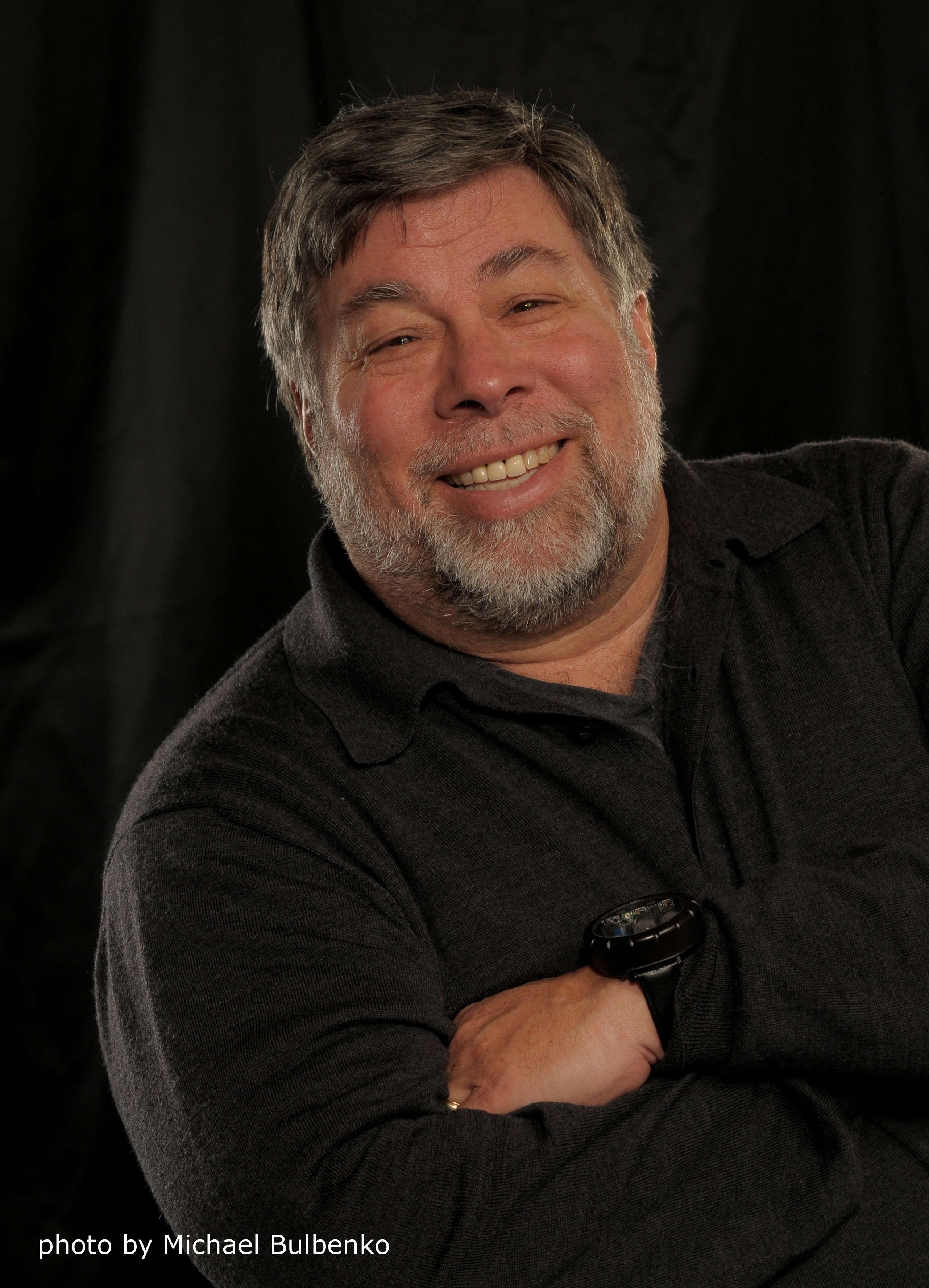
Steve Wozniak speaks to a sold-out group at Sierra Nevada College in September. Photo/Provided

Siebens-Binz, in her 80s, thawed the audience with her witty introduction of Wozniak, making her a perfect warm-up act, but she also let it be known that the Harold Walter Siebens Chair in Entrepreneurship at SNC, named for her father, is extremely important to her.

Wozniak, 67, the son of an electrical engineer at Lockheed and a homemaker, described himself as a fantastic inventor, a fact which he has proven many times. He was into electronics even as a kid, making things from kits or from his own designs. He said he loved being a ham radio operator as a youngster.

His science fair projects won top prizes. He built a system to show movies in hotels and sold it for 5 cents a pop. He designed and built his own computer, way before computers became a way of life.

Although he was extremely bright, school bored him. He attended the University of Colorado and flunked out. When he decided to enroll at UC Berkeley in 1971, he failed to graduate, but he did then return to Hewlett-Packard, a company to which he was extremely loyal.

As a teen he met Steve Jobs, whom he describes as an exceptionally effective marketer. Jobs, who worked for Atari, and Wozniak designed a spin-off of Pong, the popular Atari electronic game, which earned them $750, although Wozniak later learned that their game garnered much more than the paltry $750. He only saw half of that figure, he said. 

Working at night after returning home from his day job at H-P, The Woz built a viable computer. In fact, he said, he gave out the design for free. “I wanted to start a computer revolution,” he said, even though HP wasn’t interested in getting into the market and was even less interested in his design. The company was betting heavily on handheld calculators.

Jobs, however, saw the possibilities of this new machine and envisioned a computer company selling Woz-designed computers, one that he and Wozniak would start. Jobs wasn’t able to convince him to leave H-P. But it didn’t take long for them to form a partnership and to dive into the world of business, even though neither one of them had any money. What they did have was a computer and plenty of youthful enthusiasm.

“Steve Jobs saw what Apple could do. I just wanted to be an engineer.”

With a $50,000 order in hand and a loan to carry them through production, Apple was in business—Jobs and Wozniak each owning 45 percent of the company. The other 10 percent was held by an investor who eventually sold out.

By the end of 1978, Apple sales increased tenfold, making Apple one of the fastest growing companies in the United States. Around this time, Wozniak crashed his airplane, nearly killing himself as well as the others, including his future wife. He developed amnesia, from which he took several years to recover—it seems that this was the time he started to re-evaluate his life.

He returned to Cal Berkeley for the second time and again, failed to graduate, but received a degree later in the 1980s. He said he is very interested in the psychology of education and he taught school for several years after leaving Apple. He said he sees the big divide that computers close when it comes to kids and learning. “Computers help kids excel in school,” he told his audience.

He said he likes to surround himself with independent thinkers. “I run into entrepreneurs everywhere. They spin off new products from the various companies they work for then they start their own companies.”

And of course, the Apple story is the epitome of the entrepreneurial spirit. “Apple cared about making products easier. We made easy computers because human needs are important. I decided I wanted to do things the human way.”

The Woz said he’s in love with Siri, the built-in “intelligent assistant” that enables users of Apple iPhone 4S and later and newer iPad and iPod Touch devices to speak natural language voice commands in order to operate the mobile device and its apps.

“Siri was the greatest app ever done,” he said. “Apple bought Siri, but it’s not intelligence, it’s all algorithms.”

A discussion of Siri led to computer intelligence and the worry that maybe computers will one day replace humans in most jobs. “There is no computer that thinks. They don’t say, ‘What shall I do today?’ They have to be programmed by humans. Computers don’t have a personality. They aren’t human yet. But computers are faster than humans.”

As an example, he talked about the business of buying and selling stocks and said a computer program can consummate stock trades in nano seconds, compared to the time it takes a human.

Computers, he said, are all about assisting humans, not causing them problems. “But I don’t think self-driving cars will be viable for another 10-20 years.There are too many unusual situations for self-driving cars to control.”

He’s devoted to two concepts—honesty and happiness, saying he felt it imperative that he remain loyal to H-P even though he spent his nights working on the Apple computer and operating on very little sleep. “Engineering represents the greatest honesty in the world.”

About happiness, he said he wants to be the person who laughs at jokes. Ever the computer techie, he said the emotions of happiness are smiles and frowns.

“Pursue the stuff that makes you happy. You don’t have to win an argument. Be glad for who you are. If my car gets scratched, I don’t worry about it.

“I put on music festivals. Happiness equals food, fun and friends. Oh, and there might be a fourth F,” he laughed.

Video contest open to Gaines’ constituents

High school and college undergraduates reside in California’s 1st Senate District may enter a video contest. The theme  is The Bill of Rights and You.

State Sen.Ted Gaines, R-El Dorado, is hosting the contest.

Participants must choose a constitutional amendment within the Bill of Rights and create a two-to five-minute video illustrating how it has benefited them. The videos may feature live people, stills, animation – whatever best conveys the message.

Videos can be submitted now through Nov. 20. Two winners – one high school and one college – living in or attending school within the 1st Senate District will be selected by Gaines and will each receive a $300 cash prize and be invited to the Capitol in Sacramento for a meeting with Gaines and a VIP tour of the building. The winning videos will also be posted to Gaines’ website.

All details about the contest, including the rules and entry form are available online.


Early Truckee entrepreneur protected Chinese to no avail

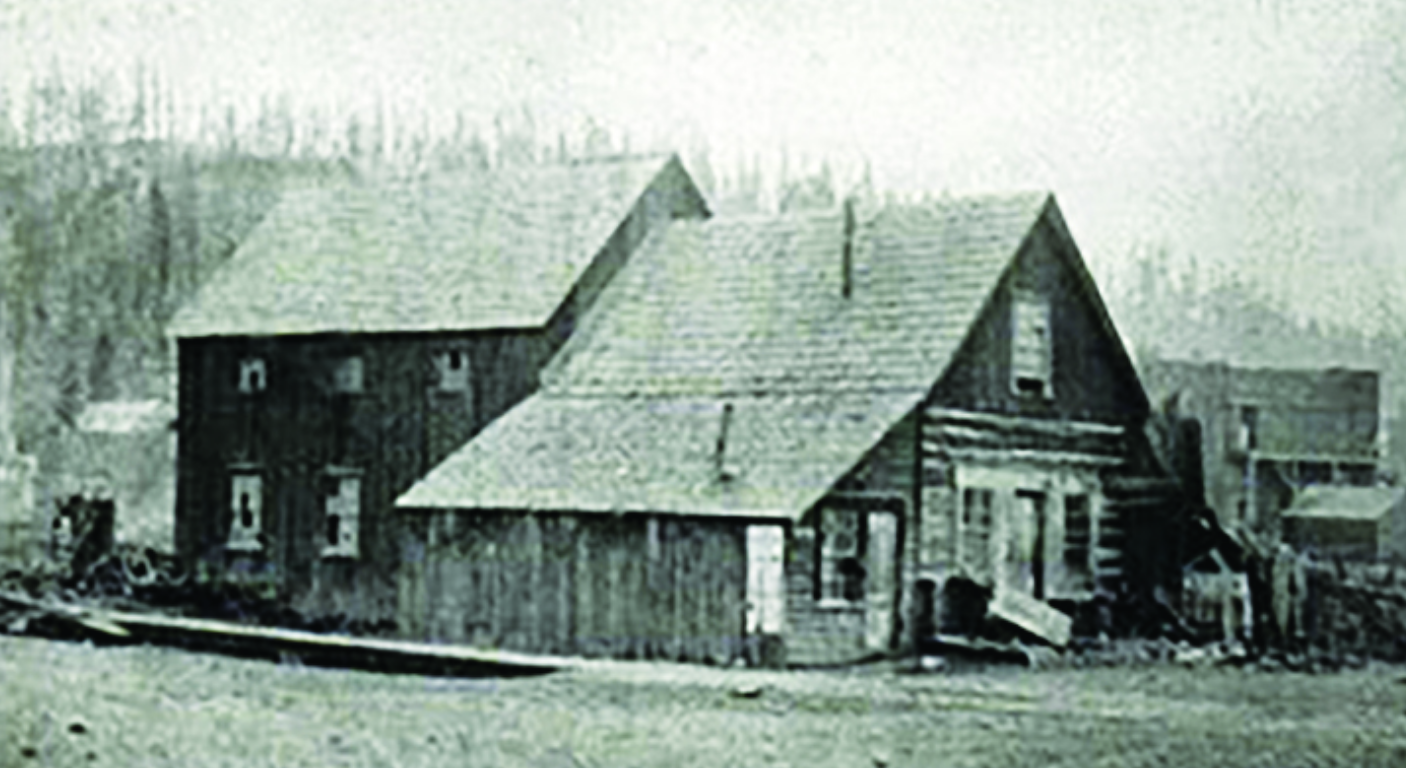
Joseph Gray and his family built their cabin on land that would become downtown Truckee. Photo/Truckee-Donner Historical Society

By Abby Stevens, Moonshine Ink

The fact that Joseph Gray grew restless with his life in Pennsylvania and decided to head west is something all Truckee residents can be glad about, as he is arguably the town’s founder. Gray, who ended up in the Sierra Nevada in the 1850s, established a firm foundation for Truckee that was rooted in his own savvy, empathy, and generosity.

The story of Gray is well documented through articles and snip-its written in the early pages of the local newspaper the Truckee Republican. More recently, pieces of his life have been re-told in articles written by Guy Coates and books including Chinese in the Woods; Logging and Lumbering in the American West written by Sue Fawn Chung and published in 2015, and Driven Out: The Forgotten War against Chinese Americans, written by Jean Pfaelzer and published in 2008.

Time and time again, Gray proved himself to be a fiercely smart entrepreneur and businessman, and a compassionate citizen. Some of his quandaries, including the debate about illegal immigrants, are still in dispute today.

Read the whole story


Push Physical Theater coming to Stateline

Push Physical Theater will be at Harrah’s South Shore Room on Oct. 6 at 7pm.

The performers use athleticism, gravity-defying acrobatics, and artistry. The strength of the human soul is expressed by the power of the human body.

Admission will be at the door beginning at 6:15pm. Adults tickets are $15 and children (through high school) accompanied by an adult are free.

Two members of Push Physical Theater will be performing in the South Shore schools the week of Oct. 3.

For more information, call Tahoe Arts Project at 530.542.3632.


‘Secret Artists’ exhibit coming to Truckee

The Truckee Public Arts Commission will host “Hidden in Plain Sight, Uncovering the Work of Truckee’s Secret Artists” with an opening reception on Oct. 13 from 5 to 7pm

The event will be at the Truckee Community Recreation Center.

It kicks off an exhibit that features artists who haven’t otherwise shown their work – whether they consider themselves hobbyists or are working in a new medium, including two local student artists.

Music from select members of the Truckee High Jazz Ensemble and refreshments will be part of the evening’s festivities.

A variety of artists and styles will be on display including Bob Hicks, who works with colored pencil and paper, Mary Kenny, a multi-media artist using graphite and gouache, and Matthew Osgood who paints with acrylic on canvas.

The event is free.


One-act play contestants to bring works to life

WordWave’s one-act play competition is the culmination of a three-month playwriting competition where the top three plays are selected to be showcased as a performance reading on stage in the Boathouse Theatre.

The winning writers are invited to attend the performance and provide a short question and answer period at the end of the evening to allow audience members a glimpse into the creative process.

The plays will be performed Oct. 21 at 7:30pm.

Tickets are $20, and $15 for those 12 and younger. They are available online.


Taking time to recover after a concussion

By Jeremy Vandehurst

During the past decade, it’s become clear that many young athletes take much longer than 10 days to clinically recover after a concussion. The majority of athletes recover within the first month of injury.

Jeremy Vandehurst

A concussion can occur when there is a significant blow to the head. Some signs of a more severe concussion are the presence and increased severity of nausea, dizziness, balance problems, sensitivity to light and noise, feeling “slowed down,” pressure in the head, confusion, concentration problems, and difficulty falling asleep.

Many factors can affect recovery time, such as the development of headaches, dizziness, or depression. The strongest and most consistent predictor of slower recovery from a sports- related concussion is the severity of symptoms in the first day, or initial few days, after injury. Conversely, having fewer symptoms the first day after injury usually means recovery will be faster.

To date, there isn’t enough evidence that prescribing complete rest helps achieve recovery. After a brief rest period for 24–48 hours after injury, patients can become gradually and progressively more active, as long as their activity level doesn’t bring on or worsen their symptoms. It is reasonable for athletes to avoid vigorous exertion while they are recovering.

Once concussion-related symptoms have resolved, most athletes can continue to proceed to the next stage if it doesn’t cause symptoms to return. Each step general takes 24 hours. That means many athletes will take a minimum of one week to proceed through the full rehabilitation program. However, the time frame for returning to sports varies with player age, history, and level of sport, so the program must be individualized.

Jeremy Vandehurst works at Barton Health’s Tahoe Center for Orthopedics.