Tolerance resonates with students after museum visit

By Kathryn Reed

Life-changing. That is how students describe their visit to the Museum of Tolerance in Southern California.

For the second year, Tisha Seims took her seventh-grade language arts students from South Tahoe Middle School to the museum.

It wasn’t just the students who came away changed. Seims said she got more out of the museum this year.

Maria Nvarro, l-r, Jazmine Aragon, Armando Reyes and Cristian Reyes

Maria Nvarro, l-r, Jazmine Aragon, Armando Reyes and Cristian Reyes

“The whole responsibility piece really stood out for me this time,” Seims said. “The thing I took from it was owning up to your own choices – not having mom or teachers make your choices.”

Before the 21 students headed south earlier this month Seims taught them about Anne Frank, the Holocaust, the Civil Rights movement and tolerance in general.

After the trip, there was a bit of decompression to go over everything they had seen, read and heard.

“Before (we went) I was not the nicest person,” student Cristian Reyes said. “Now I’m not judging people by how they look.”

One of the lasting impressions for Reyes was a picture of what looked like snow covering the ground. He learned it was really ashes from the gas chambers in Nazi Germany.

Jazmine Aragon said it was hard to learn about the Germans tossing newborns they didn’t want from hospital windows.

Armando Reyes remembers learning about Jews having to dig their own graves at the concentration camps.

Much of the Museum of Tolerance centers on the Holocaust, but it also touches on bullying, homosexuality and tolerating all people.

Reyes reflected on the segment in the museum about what happens if you drink and drive – the impact it has on others, not just the person behind the wheel.

Seeing the word “responsibility” in an array of language stuck with Aragon and Maria Navarro. It was that sense of no matter who you are, where you live or the language you speak, you are responsible for your actions, your choices.

Aragon said the lesson she took from the museum was to be “positive and not make fun of people.”

Another lesson from the museum was how homosexuals are discriminated against and how individuals have been killed solely for their sexual orientation.

Although the students all learned about tolerance and need to be more compassionate, they said hatred and racism are not issues at STMS.


Musicians, restaurants throw weight behind SLT Relay for Life

relayThe American Cancer Society is hosting its kickoff extravaganza April 3 at MontBleu in Stateline with an all-ages show with hip hop artist Mike E and local/regional artists Lavish Green and Outta-Control.

At 3:30pm is a meet and greet the artists, a chance to learn more about Relay for Life and the American Cancer Society, register a team and celebrate those who’ve beaten the fight against cancer.

Live music starts at 6pm.

If teams register prior to the show, they will receive five free tickets. Tickets are $15 for adults, $5 for children 12 and younger, and free for cancer survivors. All ticket sales benefit South Lake Tahoe’s Relay for Life.

This year marks the fifth South Lake Tahoe Relay for Life event. The all-night walking event symbolizing cancer never sleeps will be at Kahle Community Park Aug. 7 beginning at 4pm, concluding about 8am Aug. 8. The committee’s goal is to have 30 teams registered after kickoff and 50 teams before August. The committee is encouraging teams and the community to raise more than $100,000 to help fight cancer prior to the event.

In celebration of Tahoe’s fifth anniversary, the committee has created Relay for Life Taste of Tahoe. Taste of Tahoe will feature one restaurant from the South Shore each week leading up to Relay for Life, with a final highlight of all the restaurant booths at Taste of Tahoe Restaurant Row during the Relay for Life.

The focus is to raise money for the fight against cancer while having great food, drinks, entertainment and fun with family, friends, coworkers and neighbors at local restaurants. Each restaurant sponsor makes a donation toward the American Cancer Society’s Relay for Life fund-raising efforts for the week it is spotlighted.

Participating restaurants include: Blue Angel Cage, Bistro Danielle, Brooks Bar & Deck at Edgewood Tahoe, Chevys Fresh Mex, Fox and Hound, Mott Canyon, Murphy’s Irish Pub and Rockwater Restaurant, and Sushi Pier; Corporate Nevada and Erik Watada State Farm Agency are business sponsors. Lake Tahoe News is one of the media sponsors. For details, click here.

The Relay for Life committee is seeking more teams, volunteers and sponsors to help organize the event. The next committee meeting is April 13 at 6pm in the loft at Blue Angle Cafe.

For more information about the South Lake Tahoe Relay for Life event, to register a team, ways to get involved or make a donation, click here.


REELcomp adds skateboarder ambassador

REELcomp.com of Incline Villages hopes for a major uplift to its one-of-a-kind Skate Community with the addition of its newest ambassador, skateboarder Aaron “AA” Astorga.

REELcomp.com is committed to providing a rich experience to its membership in the snow, skate, surf and ski communities and is established as the premier site to upload original footage, participate in online competitions and watch popular live event webcasts. REELcomp.com’s ambassador program adds to the sites rich community experience providing exclusive content and access to members and providing all involved added exposure in the industry.

“Aaron brings years of professional skateboarding, sponsors, endorsements and contacts in the skateboarding industry,” said Bob Witty, REELcomp CEO, said in a press release. “We want to create the ultimate user experience for the skateboarding community and we believe Aaron is the best athlete to take on the responsibility.”

Astorga said in a statement, “The REELcomp team has given me complete creative freedom in the skateboard community to create something world class. I will create incredible contests, feature new riders, photographers, lifestyles and artists in the skateboard community. REELcomp is an amazing platform that will be connecting the world with their favorite riders and the world’s best action sports athletes and personalities.”

Further information on REELcomp click here.


Students leave books behind to learn about Tahoe history

By Kathryn Reed

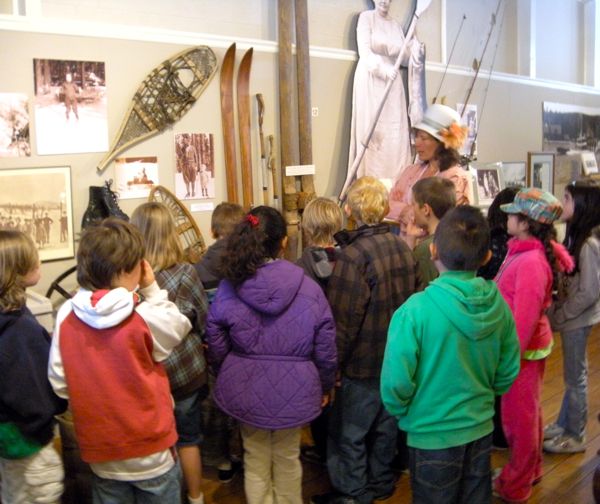
A place with super old items was a completely new experience to a group of third-graders.

“Everything in this museum was used by someone in South Lake Tahoe,” Bonnie Turnbull told the students. Turnbull looked like she was home at the museum, dressed in an outfit that would have been popular more than a century ago.

Bonnie Turnbull tell Tahoe Valley students about Snowshoe Thompson. Photos/Kathryn Reed

Bonnie Turnbull tells Tahoe Valley students about Snowshoe Thompson. Photos/Kathryn Reed

Remodeled a year ago, the Lake Tahoe Museum is the place to learn about local history. Because third-graders in California must be taught local history, the museum in now part of that process.

Turnbull explained how back in the days of Snowshoe Thompson skis were used as a mode of transportation and not for fun.

She touches on how the Washoe Indians first called Lake Tahoe home, talks about ranching, the Pony Express, water travel, old hotels, railroads and so much more.

Educating half the class outside was Jackie Dumin, who is assistant manager of the Tallac Site for the U.S. Forest Service.

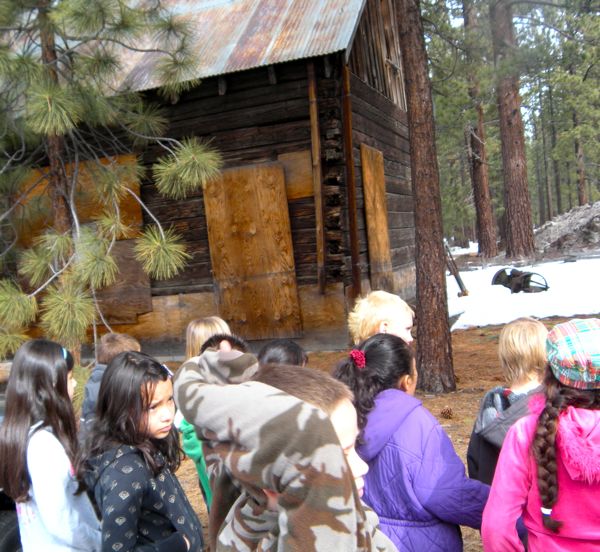
Prior to the museum visit Dumin goes into classrooms to educate students. Outside the museum she was telling them about the 150-year-old Osgood Tollhouse, how money was collected to travel on roads in the Lake Tahoe Basin and what it was like to travel by horse and wagon.

Students learn about the Osgood Tollhouse at Lake Tahoe Museum.

Students learn about the Osgood Tollhouse at Lake Tahoe Museum.

A bathtub that was recently donated sits on the porch of the old cabin. Students learned about when indoor plumbing was not available and that bathing would be done outback. A couple students wrinkled their noses when Dumin said every family member used the same bath water.

Inside, one of the largest displays is from the Celio Ranch. This was Colby Glaze’s favorite part. He really liked learning about making ice cream.

“I enjoyed looking at the saws and learning how they cut ice with them,”Glaze also said. Later the group learned about refrigeration and how those blocks of ice would be put in iceboxes, with the upper compartment for the ice and below where the perishables are stored.

He and his classmates in Kelly Martin’s class at Tahoe Valley Elementary School were at the museum Wednesday.

All third-graders in Lake Tahoe Unified School District will visit the museum by mid-April, with St. Theresa School going as well. The Tahoe Heritage Foundation paid to bus the students.

“I had never been to the museum and I don’t think any of the kids had,” Martin said.

For more information about the museum, call (530) 541.5458.


V&T Railroad chugging toward another season

The 2010 season for the Virginia & Truckee Railroad is rolling down the tracks toward its May 27 opening, with tickets available here. Round-trip and one-way rides between Carson City and Virginia City will run Thursday–Sunday through Oct. 31. With last summer’s inaugural season a complete sell-out, getting all aboard now preserves a window to Old West history.

The V&T Railroad’s 16 miles of track re-opened last August after 70 years. The 75-minute ride includes vistas of the Carson River and Sierra Nevada, two tunnels, abandoned mine shafts, old cemeteries and offers occasional sightings of wild mustangs.

V&T Railroad. Photo/Jim Grant

V&T Railroad. Photo/Jim Grant

The V&T travels the same silver path paved by the Virginia City mines of the infamous 1860s Comstock silver boom.

A variety of ticket options and packages with lodging and dining are also available for riders.


South Shore students map course to state Geography Bees

By Kathryn Reed

ZEPHYR COVE — If you need to know where in the world something is, Hilton Atherton and Goody Walowit are the ones to ask.

Atherton, a Zephyr Cove Elementary School sixth-grader, is headed for the Nevada state Geography Bee in Las Vegas next month. Walowit, a seventh-grader at South Tahoe Middle School, is headed to Sacramento for the California bee.

“The best way to study states is with a blank map and fill it out,” Atherton said. “The most important thing is you get an atlas.”

Hilton Atherton

Hilton Atherton

Atlases are used for learning where rivers, mountain ranges and islands are. Some geography books have questions in them that he uses to test himself. He spends 15 to 30 minutes a day preparing for the state competition.

“I’ve been giving him resources to study,” Principal Nancy Cauley said. “He is a very bright boy.”

Atherton said he’s not nervous. He said he thinks it will be fun. Plus, this will be the first time he’s been to Las Vegas.

“It’s fun to know where places are; where famous landmarks are,” Atherton said.

He reached the state level by winning the school competition. Atherton had to know things like how many countries the Himalayas cross. Then in February he had to take a written test. His success on that was his ticket into the Vegas competition.

Walowit also had to take a written test after winning his school competition. This is his second time to make it to the state level, where he will compete against 99 other students in grades four through eighth.

“His family is helping him prepare. He has some books and materials,” teacher Kathy Brown said.

Members of the school PTA helped prep the STMS students through games and other enrichment programs before the local geography bee.

Whoever wins each state competition in the first week of April will qualify for May’s national Geography Bee in Washington.


USFS Angora Fire environmental document up for review

USFSThe U.S. Forest Service Lake Tahoe Basin Management Unit is seeking public comment on the environmental assessment for its proposed action to restore the Angora Fire area, including fuels reduction, wildlife habitat improvement, aquatic habitat and watershed restoration, road and trail system improvements and invasive weed control.

The EA marks the third round of public comment on post-fire restoration. During the last round of public input, concerns centered around providing sufficient wildlife habitat and the loss of a neighborhood recreational opportunity at Seneca Pond. Because of the benefits to water quality and wildlife habitat, the Forest Service is proposing to proceed with restoration of Seneca Pond, phased in over three years.

“We understand that some in the neighborhood will not agree with this proposal, even though recreational access to the area would remain the same,” Terri Marceron, forest supervisor, said in a press release. “During our analysis for this project, we learned that Seneca Pond is having a negative effect on water quality. Restoring it to a wetland will benefit Angora Creek, which drains to Lake Tahoe.”

The Angora restoration proposal calls for removing standing dead and downed wood on up to 1,398 acres, thinning of unhealthy live trees to improve the health of remaining overstory trees and construction of new roads and landings to facilitate fuel removal and forest management.

The Forest Service would use mechanical equipment on up to 951 acres on slopes less than 30 percent and aerial logging on up to 447 acres. Hand treatment could occur within any of these areas as a primary or follow-up treatment. The agency would reforest with a mix of native seedlings on a total of 1,100 acres and is currently seeking comment on a proposal that would allow expedited planting of seedlings scheduled for delivery this spring which is separate from this project.

Public comment emphasized the importance of burned forest as wildlife habitat, and the Forest Service would leave about 42 percent of the area (1,300 acres) untreated to fulfill this need. The agency also has incorporated areas with higher amounts of snags and downed wood into the untreated areas and adjusted fuels reduction prescriptions to maintain these components in areas where tree removal would occur. Aspen restoration and reforestation would also help to restore wildlife habitat.

In addition to restoring the wetland around Seneca Pond, the Forest Service would reconstruct 1,200 feet of Angora Creek channel through the meadow above Lake Tahoe Boulevard, and strategically place large woody debris within a two-mile segment of the creek and its tributaries to improve aquatic habitat.

The agency would also remove live conifers that are encroaching on Gardner Mountain meadow, fill in the incised channel and install structures to maintain the new channel elevation and plant riparian shrubs and sod to stabilize exposed soil.

The proposal also includes construction of new roads and trails, decommissioning and restoration of roads and trails, and improved access and wayfinding, as well as upgrades to stream crossings and other erosion control measures. The roads and trails work would provide for continued high-quality recreational access, as well as forest management access, while bringing roads and trails up to standards that would reduce erosion and improve water quality.

The Forest Service encourage the public to review the EA and provide comment. The agency is particularly interested on comment on how well the proposed action meets the purpose and need for the project, whether there are other restoration activities not included in the proposal which the agency has not analyzed, whether there are issues regarding project operations not addressed in the EA and which areas the Forest Service should prioritize for fuels treatment if full funding for the project is not available.

For a copy of the EA, click here or call (530) 543.2694. Comments will be accepted until April 12.


First LEED home in Incline open for tours during construction

renderingThe builder of Incline Village ’s first LEED registered home construction project, located at 1085 Mill Creek Road below Highway 28, will host an informative tour March 20 from noon-4pm.

Refreshments will be provided at this free event which showcases green technologies being implemented in the house.

Professionals will be available to talk with interested attendees about the home’s products.

Representing the following green vendors:

  • Andersen A Series Energy Star rated windows–this is the first house in Western Nev. to have these windows installed.
  • Optimum Framing Techniques
  • On-demand hot water heaters
  • Energy Star Rated Solaris roofing system
  • LED lighting
  • Green sheetrock and low/no VOC paints and stains
  • Owens Corning Energy Complete Insulation System (This is the first house in Nevada or California to have this insulation system installed.)
  • High Efficiency furnaces/heat exchangers
  • Jeff Miller, president of Advance Design and Construction Inc. and building contractor for the LEED registered home.

The house has just completed the rough framing stage. It is scheduled to be finished mid-summer.

For more information, call (775) 833.1337.


Experts lecture about economics of energy efficiency

By Kathryn Reed

Lights. That was the one thing the three panelists keep repeating — how paying attention to lighting can translate into thousands of dollars. Change the bulbs, turn them off, and start saving money.

David Mattocks, president of Green Pro Systems in Truckee, told the group gathered at Embassy Suites in South Lake Tahoe on Tuesday, to find out what they pay a year to energy companies, then multiply that by 0.3 and that is the savings, on average, that can come from tweaking energy consumption.

David Mattocks talks Tuesday about energy efficiency. Photo/Kathryn Reed

David Mattocks talks Tuesday about energy efficiency. Photo/Kathryn Reed

Much of the discussion was targeted to business owners. But it was pointed out the second largest bill for a homeowner is often utilities, so the message was for individuals as well.

Peter Millar, energy project leader in the Business Environmental Program at UNR; and Scott Terrell, with the Truckee Donner Public Utility District, joined Mattocks on the panel sponsored by the South Shore Green Business Cooperative.

One of the points was that even if someone does not buy into the environmental reasons to reduce energy consumption and carbon output, economics speak to nearly everyone.

Millar said every building has opportunities for cost-savings.

“You need to step back and evaluate the system and how you use the building. We look at each opportunity as a little business plan,” Millar said. “Look at the energy bills. It’s like taking the pulse of a patient.”

Because lighting can account for 40 percent of an energy bill the speakers spoke to this area being the first to tackle for any business.

Millar referenced a middle school in Carson City that put in sky lights and is using natural light when possible, and therefore can flip switches off.

He said the main post office in Reno put in new lights and productivity increased 13 percent. Studies have shown different types of lights affect how workers perform.

Half of a small retail outlet’s electric bill can be lighting. That is why putting in energy efficient bulbs makes a difference, as does reducing their use, using natural light or having sensors in bathrooms.

Terrell said it’s important to start with education and awareness before moving into the implementation stage. He recommends using professionals to assess a building’s energy efficiency because they’ll be looking at things the average person wouldn’t consider.

Mattocks showed a series of slides from infrared audits that highlighted blasts of cold air seeping in under doors and electronics using juice when no one is working. The latter is phantom energy use — leaving something plugged into an outlet can use energy even when the machine isn’t on. Fifteen percent of a home’s energy use is phantom energy.

Energy Star appliances were also talked about. The three urged businesses that lease equipment to make sure the supplier provides Energy Star rated products.

Another thing Mattocks urged was getting employees on board to understand the importance of being efficient with energy use.

“The return on investment on solar and wind is decades. Don’t go solar. Spend the money on an audit,” Mattocks said. “Energy efficiency will get us so much more, so much faster.”


Young scientists’ creativity shines through at school fair

By Kathryn Reed

ZEPHYR COVE — Buy the cheap hamburger. The lean stuff produces about as much grease as the fatty kind.

That’s what Aubrey Felton discovered in his science experiment. The Zephyr Cove Elementary School sixth-grader took first place Tuesday night for his grade level.

Aubrey Felton's hamburger experiment was a winner. Photos/Kathryn Reed

Aubrey Felton's hamburger experiment was a winner. Photos/Kathryn Reed

He used raw and frozen meat of different grades to see which produced the most grease and if the cost difference was worth it.

Felton concluded, “I would buy the cheapest because all the different kinds of meats contain about the same amount of grease.”

The annual science fair is geared toward fourth-, fifth- and sixth-graders, though some in the lower grades entered the contest. Samantha Fonvilly and Gigi Stetler took top honors for fifth-graders for their “Bacteria Among Us” project. Jonathan Duffy won at the fourth-grade level for his “Yeast” experiment.

The top four finishers in grades four to six go on to the next level of competition in Reno on March 26-27.

Judges were three Lake Tahoe Community College instructors and a parent. Millie Oleson, who

Carbon dioxide and yeast was one experiment.

Carbon dioxide and yeast was one experiment.

teaches chemistry at LTCC and is a parent of a ZCES student, organized and helped judge the event.

“There were some really good original ideas. There are some really bright minds out there,” Oleson said. “They learned how to scientifically test something.”

Jordyn and Hannah Switzer, sixth-graders, created a mini solar vehicle.

“We would put another motor in the back next time,” Jordyn Switzer said. They tried it with both motors in back, but found with the two motors they had that one in front and one in back gave it the most power.

Solar panels on the wood body of the vehicle powered the engines. Alligator clips and Christmas lights are some of the tools they used to rig their hot rod. Next time they may need to add four-wheel drive because as Switzer said, “It doesn’t work on gravel.”

Kristen Oleson, a third-grader, spent her time indoors trying to find out what happens when you don’t follow a recipe. She made several cakes. One was missing the water, another had extra oil and one had five egg whites instead of three.

Kristen Oleson explains what to do and not do with a cake recipe.

Kristen Oleson explains what to do and not do with a cake recipe.

Oleson said they all tasted good except for the one with the extra oil. Even though the waterless one was hard and crumbly, she said it had great flavor.

The experiments covered the spectrum of scientific intrigue. One student examined which types of oranges produce the most juice. The effectiveness of magnets at different temperatures was researched. A team studied what plays the biggest role in the speed of a skier or snowboarder. The conclusion was weight helped and pink wax is a bad thing.