Chamber awards shine light on South Shore businesses

Lake Tahoe South Shore Chamber of Commerce’s third annual Blue Ribbon Award winners were announced Nov. 18. The awards recognize and honor the achievements and impact of businesses on the South Shore.

Winners for 2010:

Geotourism Award honors a business providing authentic Tahoe experiences with a commitment to the local culture — Camp Richardson Historic Resort & Marina. Tahoe Rim Trail Association received honorable mention.

The Tourism category acknowledges an innovative program, promotion or product demonstrating a new way of engaging our visitors — Soaring NV earned the award and Lake Tahoe Marathon received honorable mention.

The Experience Award features a business with a unique ambiance and exemplary customer service, resulting in word of mouth and repeat customers — this award went to South Tahoe Crossfit, with Après Wine Company receiving honorable mention.

The Entrepreneur Award, for an owner who created a unique business, service or product, went to Joe Pettit of Sierra Athletic Club. Deb Howard of Deb Howard & Co. received honorable mention.

The Small Green Business Award (under 100 employees), for a business that has made a significant effort to improve and protect our environment by implementing a green service or program — Tahoe Solar Designs, honorable mention went to Winters Electric.

The Large Green Business Award (over 100 employees), for a business that has made significant strides to enhance and protect the environmental sustainability of our community — Marriott Grand Residence & Timber Lodge, honorable mention went to South Tahoe Express/Amador Stage Lines.

The Customer Service Award, for an individual who consistently goes above and beyond to provide exceptional service — Karl Moe of the Tile Outlet. Honorable mention went to Ted Johanson of MontBleu.

The Public Agency Service Award, for an individual who consistently goes above and beyond to provide exceptional service in the not so usual places — Edward Gardner of California DMV, honorable mention to Lydia Zuniga of South Lake Tahoe.


Choral concerts to touch on holiday favorites

By Penny Fairfield

As winter approaches do you find yourself humming the old favorites “Jingle Bells”, “White Christmas”, “Silver Bells, “Sleigh Ride”, and that song about chestnuts roasting on the open fire? You are not alone. We all love these joyful songs.

The more than 50 voices of the combined Tahoe Choir and the Lake Tahoe Community College choir have been singing these familiar songs, too, practicing for their holiday concert in early December. They will perform on Dec. 3 at 7:30pm at the Duke Theater on the Lake Tahoe Community College campus. The second concert is a matinee at St. Theresa Catholic Church on Dec. 5 at 3pm.

Accompanied by the professional Reno quartet, The String Beings, the singers will present the magnificent “Gloria” by Antonio Vivaldi. This soaring masterpiece is one of his most popular pieces for chorus and orchestra. A short piece by Mozart and a selection by Morten Lauridsen, “O Magnum Mysterium”, open the classical portion of the program.

Following intermission a select ensemble of chorus members will perform a few songs for your enjoyment from the Renaissance to the 20th century. The combined chorus will then sing some favorite seasonal melodies guaranteed to put you in the mood for winter and the holidays ahead.

The Tahoe Choir has presented 39 years of concerts to the community. It is our great pleasure to bring you this lovely seasonal music again in early December in anticipation of the upcoming holidays.

Please join us as we sing “A Song of Joy”. Tickets are being sold by choir members and will be available at the door. General admission is $10, student and senior ticket price is $8, and children under 5 years of age are admitted without charge.

Penny Fairfield is a member of the choir.


Rapper Dre gives away $10,000 in apparel to STHS kids

By Kathryn Reed

Rap music is coming from the classroom and teacher Bob Grant is smiling.

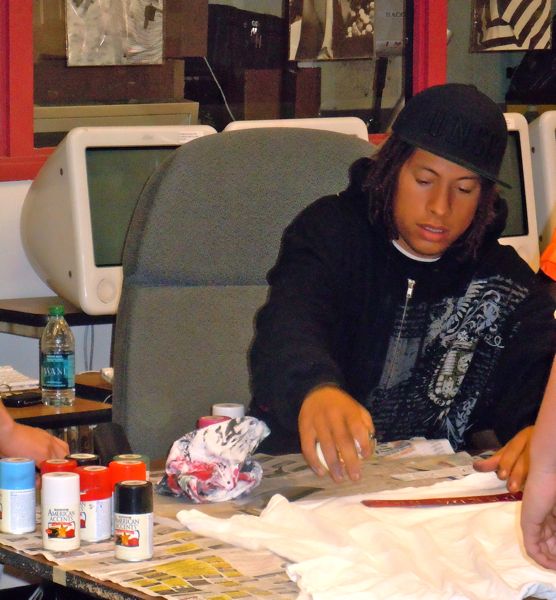
After all, these are the sounds one of his former students has created. Andre Tyson, better known as rapper Dreda Dre, was at South Tahoe High School on Nov. 17 giving away more than $10,000 in clothes.

Dreda Dre tags an article of clothing Nov. 17 for a STHS student. Photo/Kathryn Reed

Dreda Dre tags an article of clothing Nov. 17 for a STHS student. Photos/Kathryn Reed

Dressed in a black hoodie and baggie pants, he looks every bit the rapper he is.

He brought in boxes of clothes and shoes to Grant’s room to give away – mostly to students who don’t have much. Some of the garb he wore a time or two in video shoots. All of it looked new.

Dre just decided it was time to give back. He asked others in the business for donations, too, that’s how so much was available to the nearly 600 students who came through the doors.

The room smelled like spray paint because Dre was tagging shirts for his fans. Using a stencil with his stage name he imprinted Dreda Dre onto shirts – the 2010 version of an autograph.

Sandra Tyson, his mom who lives on the West Shore, was surprised her son came up with the idea. Giving hasn’t been big on Dre’s to-do list, she said.

“He finally got it,” Tyson said of her son. “He isn’t doing this to promote himself. The tagging is for the kids.”

Dre attended STHS between 2000-03. The 25-year-old keeps revisiting his roots, even though the bulk of his time is spent in the Bay Area where the music scene is much larger.

His message to students is, “The world is bigger than Tahoe. Get out there. There are a lot of opportunities in cities for colleges and careers.”

ngg_shortcode_0_placeholder (Click on photos to enlarge.)


SNC gears up for holiday season

Sierra Nevada College’s gala is Dec. 3 at 5:30pm m at the Hyatt Regency Incline Village. The Lakeside Ballroom will transformed for the seated dinner.

The spotlight will shine on acclaimed violinist Daniel Heifetz, founder of the Heifetz International Music Institute, as he presents an exclusive opportunity for attendees to hear him and two virtuoso students perform. A luxury live auction and dance after party round out the event. Tickets are $250 per person. All donations to the college are tax deductible.

The night before the gala, Dec. 2 from 4-6pm, SNC will host its annual Community Tree Lighting. Designers of this year’s event have worked their magic to create an illuminated LED forest of twinkle lights on the patio of Patterson Hall.

Families can enjoy festive activities such as holiday crafts, cookie decorating, carols and music, refreshments and a photo opportunity with Santa Claus. Bring your camera.

All activities on this night are free and open to the public.

SNC will also be collecting new unwrapped gifts for Toys for Tots through the end of December in Patterson Hall. For more information about any of these holiday events, contact Debi Noonan at (775) 881.7420 or dnoonan@sierranevada.edu.


El Dorado County’s top official to retire in December

By Kathryn Reed

After a long day of budget battles, it was time for Gayle Erbe-Hamlin to strike one more name off the payroll – hers.

Erbe-Hamlin, chief administrative officer for El Dorado County, is resigning. Her last day will be Dec. 3.

“I’m 61. At some point you think about these things. When I originally accepted the CAO job, I said I would stay between two and three years,” Erbe-Hamlin told Lake Tahoe News.

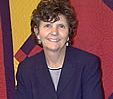
Gayle Erbe-Hamlin

Gayle Erbe-Hamlin

That was in July 2008. She kept her promise.

The Board of Supervisors’ next meeting is Dec. 6. In closed session they will decide how to go forward – interim director, acting director, hire a search firm? Terri Daly, the assistant CAO, has worked for the county since the summer. However, she was the CAO of Amador County before coming to El Dorado.

Although Erbe-Hamlin has had a short tenure as leader of this government system, she has worked for El Dorado County since 1985. She was director of the Public Health Department before being interim CAO, and eventually hired on as CAO.

Despite the nasty budget quagmires she has negotiated the county through in the past few years, it’s keeping the county solvent that she is most proud of.

“There is never an end to what needs to be done. Part of me wishes I had the job when I was younger, but I’m not sure I would have had the maturity to manage it,” Erbe-Hamlin said.

She describes the job of CAO a bit like being a shepherd – herding everyone in the same direction.

She believes the decisions the Board of Supervisors made Monday will bode well for the county as it goes forward. Still, she knows the state’s $29 billion hole will impact the county.

Erbe-Hamlin doesn’t exactly get to retire. Yes, she’ll turn in her keys to office in Placerville, but her husband has plenty of work for her. They own a bed and breakfast in Coloma.

“I go home and spend the night with 10 strangers,” Erbe-Hamlin said. Soon she’ll get to spend the days getting to know her guests.


Friedman to be temp leader of NCOT

Larry Friedman, who has long ties to Lake Tahoe, will become the interim director of the Nevada Commission on Tourism when Director Dann Lewis steps down Dec. 17.

Friedman is NCOT’s deputy director of Sales and Industry Partners.

Lewis was appointed to the agency in early 2009 and helped steer its operations through a period of adjusting to severe state budget constraints, during which NCOT’s operating budget was reduced by 41 percent.

Larry Friedman

Larry Friedman

Under Lewis’ direction, the “Let Nevada Capture Your Heart” ad campaign for winter 2009 and summer 2010 was aimed specifically at lucrative markets with active adults likely to travel to Nevada. The $3.6 million campaign attracted visitors whose spending generated $110 million in tax revenue, a record $31 return for every $1 invested in the campaign, outside research by the company TNS Global showed.

“Having accomplished some outstanding achievements together with this great team, I feel the time is right for my departure and a move to other endeavors,” Lewis said in a prepared statement.

Friedman currently oversees the rural programs and domestic and international sales, which include the work of NCOT’s international offices in Mexico, Canada, the United Kingdom and continental Europe. During his more than 20 years with NCOT, Friedman has created the Rural Roundup conference, chaired the development of Nevada’s Scenic Byways Program and produced the guidelines for the Projects Relating to Tourism Rural Infrastructure Grant Program.


North Shore creating lodging component of tourism agency

The North Lake Tahoe Resort Association is accepting applicants for its new Lodging Committee.

The Lodging Committee will be made up of properties from all segments of the lodging community, and will work directly with the NLTRA board of directors. The duties of the Lodging Committee will include the consolidation of lodging community needs, the development of specific action plans targeted at the various lodging segments and the review of marketing efforts and related input to the NLTRA Marketing Committee and board of directors.

The Lodging Committee will consist of a Large Lodging Board Member, Small Lodging Board Member, Large Lodging Representative, Small Lodging Representative – Lakeshore, Small Lodging Representative – Non-Lakeshore, two Vacation Home Property Management Representatives, Bed & Breakfast Representative, NLTRA Tourism Director and NLTRA Conference Sales Director.

The deadline to apply for the Lodging Committee is Nov. 23 by 5pm. Letters of interest and a short resume should be emailed to NLTRA Tourism Director Andy Chapman at andy@puretahoenorth.com.

Applicants will be reviewed at the Dec. 1 NLTRA board meeting, with the Lodging Committee’s first meeting taking place in January 2011.

The North Lake Tahoe Resort Association is the umbrella organization for the North Lake Tahoe Chamber of Commerce and the Tahoe North Convention and Visitors Bureau, which is a partner with the Incline Village Crystal Bay Visitors Bureau in the North Lake Tahoe Marketing Cooperative. The NLTRA also serves as a partner with Placer County and other public agencies in the development and funding of infrastructure, transit and community mobility projects designed to enhance tourism and community quality of life for the benefit of all in the North Lake Tahoe region.


Rotary brings relief to disaster locations worldwide

By Kathryn Reed

No home. No running water. Nowhere to sleep. Nothing to cook with. No clothes.

That’s often the end result for people in disasters. They are left with nothing. ShelterBox has been providing interim help around the world since 2000. It’s a stopgap program.

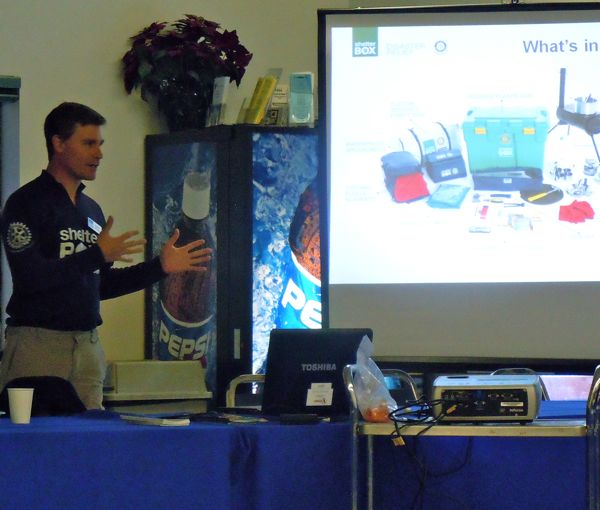
Ryder Evans talks about what is in a ShelterBox. Photo/Kathryn Reed

Ryder Evans talks about what is in a ShelterBox. Photo/Kathryn Reed

Boxes weighing about 100 pounds are flown into whatever area needs it. Today volunteers are in five countries, though only limited in Pakistan because of safety issues.

“Part of our mission statement is to bring dignity to people,” explained Ryder Evans. As a member of the Tahoe-Douglas Rotary, he has become a volunteer for ShelterBox.

ShelterBox was launched by Rotary in England and has since spread to its chapters around the world.

“ShelterBox is the only international aid organization that provides shelter and life-saving equipment for survival in an easily transportable box,” according to literature provided by Evans when he spoke to Soroptimist International Tahoe Sierra last week.

In August, Evans was deployed to Brazil to help with the flooding that displaced more than 100,000 people. Logistics of getting the aid to the people is often the most cumbersome part of the process. Customs can be an issue.

The mud and water in Brazil were in such abundance that tents would not have been able to be erected. This meant coordinating heavy equipment to bring in graders and then loads of gravel to provide a stable surface.

Evans explained that response teams have a tremendous amount of latitude to do what is necessary to bring help to the people on the ground. With resources being different in each country and the nature of each disaster unique to itself, flexibility is the key.

With much of the work being done in Third World countries, the tents can be an improvement over what the refugees had before the disaster.

The tents aren’t your ordinary family camping tents. They can sleep six to 10 people, are spacious, and allow people to standup and move around.

Most of the boxes contain the same basic items – the tent, blankets, ground sheets, stove, cooking utensils, tools, water purification equipment, ponchos, mosquito nets and children’s activity pack. Depending on the location, items can be substituted – for instance, some places may need more blankets, others might not be able to use propane to cook with.

Boxes cost about $1,000.

Although ShelterBox is a Rotary project, others may volunteer to be on a response team. Usually two to four people comprise a team.

More information is on the website or call (941) 907.6036.


Carson Valley couple joyful to be off doomed cruise ship

By Kathryn Reed

This may have been the first cruise where passengers lost weight instead of gained a few pounds.

That’s what happens while living off salads and odd sandwiches (think beet, cucumber and tomato – but just one of those with bread) for three meals a day.

Karen and Bob Smith who live in Gardnerville and work at Lake Tahoe were two of the 3,299 passengers aboard the Splendor – the Carnival cruise ship that was pulled to shore by two tug boats Thursday after a Nov. 8 engine fire crippled the vessel.

Bob and Karen Smith

Bob and Karen Smith

“We never want to eat another sandwich or salad for a long time,” Karen Smith told Lake Tahoe News from Disneyland.

The couple decided to salvage their vacation by staying in Southern California to enjoy a few days at the Magic Kingdom before returning home today and having to go back to work. Karen works at Heavenly and Bob at MontBleu.

Everything started well Nov. 7 as the 952-foot ship departed Long Beach for the Mexican Riviera. The couple had gone to one of the shows, which was highly entertaining.

Then came the announcement across the public address system at 6am Monday, “Alpha team to the engine room.”

Smith said, “They said they would never come over the PA in the room unless it was an emergency.”

The next announcement was for all passengers to report to the ninth floor, which is outside, because there was a fire below. Despite being told there was no reason to bring lifejackets from the room, some passengers did.

“We could see all this smoke as soon as we opened the door,” Smith said.

But before any announcement was made to the masses, the Smiths knew something was wrong.

Their outside cabin near the stern of the boat was on level one.

“It happened right underneath us. We had just woken up. We were sitting there and it almost felt like an earthquake with the rumbling and shaking,” Smith said. “I looked at my husband and said we better get dressed.”

For hours the passengers sat on the deck not knowing what was going on. Finally, that afternoon they were told the cruise was terminated. The “fun ship” cruise line was becoming just the opposite.

Carnival Splendor

Carnival Splendor

“It was a little scary at first. Out of the smokestack pitch black smoke was coming out all day. It was still coming out very lightly the day we got off the ship,” Smith said.

She praised the cruise director for his calm, reassuring voice. About 80 percent of the people went with the flow, while some thought it a good idea to yell at crewmembers for things beyond their control.

Smith said the 1,167 crewmembers were phenomenal. One criticism, though, was the delay in trying to salvage any sort of fun. Activities didn’t return until Tuesday afternoon. Passing out free beers helped ease tensions.

Without electricity and everything computerized, not much could happen. Camp Carnival for the kids was started Tuesday, plus games in one of the show rooms.

Having a window in their room allowed them the convenience of being able to be in their room during the day.

The Smiths through their son heard what was supposedly in the food packages airlifted in by the military.

“We didn’t see any Pop Tarts. That would have been nice. We didn’t see Spam either,” Smith said.

She said some people complained of smelling rotting food, but they never smelled it. Their big stink issue was the bathrooms. Their toilet wasn’t usable until Wednesday. It was cold showers every day.

As cruise veterans, this little adventure is not going to deter them from going back on the water. In fact, with their free voucher from Carnival they are planning a spring cruise to the Caribbean.

By the time they hit terra firma their credit card for the ill-fated cruise had been refunded as had all charges made on the ship until the power went out.


History: Cascade Lake’s owners interesting past

Publisher’s note: This is from the May 1973 Lake Tahoe Historical Society newsletter.

By Marie Walsh

“In 1897, my grandfather’s tax bill on 1,300 acres of land, from the middle of Emerald Bay to Baldwin Beach and including Cascade Lake, was $155. By 1938, it had grown to $399. And by 1968, it had jumped to $36,000 – for only half of the original property!
history“That pretty well explains what’s happened up here at Tahoe, and why it’s become prohibitive for me to keep my 730 acres at Cascade in private ownership.”

So remarked Harold “Shrimp” Ebright during his talk to an overflow audience at the April 30 meeting of the Lake Tahoe Historical Society.

Ebright, a man who’s become somewhat of a living legend at Tahoe, is the familiar owner of Cascade Lake, nature’s snow-water basin at Tahoe’s southwest end.

Cascade Lake has been privately owned by the Ebright family ever since the 1880s when Shrimp’s grandfather, Dr. Charles Brigham, internationally famous San Francisco surgeon, purchased the glacial amphitheater for the fishing it afforded, as well as for its adjacency to his Lake Tahoe frontage.

Originally a Franco-Prussian war doctor, Brigham had migrated to San Francisco from his native Boston. Soon thereafter, he was acclaimed as the first doctor to perform successfully a complete stomach removal, although the operation itself wasn’t perfected until after World War II.

In the spring of 1882, Brigham came to Lake Tahoe and purchased his first property here – a small acreage to the east of Cascade lake. On the bluff where Cascade Stables stands today, he built a large summer home, complete with a steamer landing that was frequented by such celebrities as Mark Twain, John Muir, and the Governor of Nevada.

Over the years Brigham added to his holdings, and by 1892 his property not only included Cascade Lake, but continued over the ridge (present-day Highway 89) to the southeast shore of Emerald Bay, and then south along Tahoe’s shoreline to Tallac Meadow where it met with Lucky Baldwin’s property.

“You’d be amazed at how much property my grandfather bought for the little amount of money that was spent,” Shrimp said.

At the time, of Brigham’s death in 1903, his 1,300 acres were inherited by his wife, Alice Babcock. Upon her death in 1934, the estate was acquire by Brigham’s two daughters, Alice Wyer and Kate Brigham Ebright, and then subsequently by Kate’s two sons Shrimp and the late Charles Ebright.

Shrimp himself was born in San Francisco. As a youngster, he came to Cascade every summer with his family.

“We always stayed a couple of months past the opening date of school, so my mother would always arrange for a tutor to compensate for the missed school days.

“Charles and I never did have the same one twice, though – they couldn’t stand us! But, one of our tutors was John Steinbeck. My mother had hired him in 1926 as a caretaker for the winter, as my grandmother’s chauffeur for the summer, and as our tutor during the fall.

“Steinbeck wrote his first book, ‘A Cup of Gold,’ while he was at Cascade, but we never saw much of him after that. And he certainly wasn’t much of a worker. When one of our buildings caved in from the snow, all he did was salvage a couple of books out of it.

“My grandfather was kind of a stubborn fella,” continued Shrimp. “I particularly remember the time when the telephone line was supposed to go in atop Cascade Falls. The phone company had come out and informed him of their plans, and he had said ‘fine, but wait ’til I get back from Europe.’ Upon his return, he’d learned from the caretaker that the phone people had already started to put up the lines. He was livid, and he immediately called his lawyer who told him that as long as the lines weren’t in yet, he could take down the poles. Today, those 6×6 redwood poles are still lying there.

“We always had Indians working for us,” Shrimp said. “They also seemed to just always be around, I guess because they usually gravitated to where they were fed. We had a working deal with Celio’s slaughterhouse to buy cuts of meat for those that were around, and one day when my mother asked for ’30 pounds of Indian meat’ the reply was ‘Madam, we stopped killing Indians 100 years ago.’”

Shrimp mentioned that during the 1930s and ’40s, Cascade Lake was a much-sought-after motion picture locale, particularly because at that time Hollywood’s interest lay in producing wilderness pictures.

He said that Will Rogers made his first movie, “Lightnin,” at Cascade. “To my brother and me, Will was the greatest thing that ever walked – he always had time to ride with us, and take walks with us.”

In 1936, “Rose Marie,” starring Jeannette MacDonald and Nelson Eddy, was filmed at Cascade. And in 1956, the 170-foot-deep glacial lake was the backdrop for “A Place in the Sun” starring Elizabeth Taylor, Shelley Winters and Montgomery Clift.

Additional aspects of life at Cascade included:

• Fishing at Cascade – “To tell the truth, I’ve never thought of it as a great fishing lake. I know in the old days the guests from Baldwin’s Tallac House used to fish it, and it was quite good. But in my lifetime it’s been spotty as all get out. Some folks have caught 24-inchers, not even 100 feet off shore, but that really doesn’t happen very often. For the most part, the trout that are in there are a rare strain known as Lahontan trout, or local native Tahoe trout, and they tend to be long and skinny. They’re a good fighting fish, but they’re just consistently skinny, even with age.”

• Emerald Bay Road – “When it first went in, it was a real narrow two-lane road. If you ever met another car, there were some real hellish argument over who would go forward, and who would go backwards!”

• His father – “My dad was the sort of man who could get his point across without using any profanity – something I’ve just never been able to do! He was the one who would build the road going into present-day Emerald Bay State Park.”

• The old steamers – “Prior to 1915 everything, including the mail, was delivered by water. Grandfather had built a steamer landing directly in front of his house, and the steamers were always docking at his doorstep The ‘Tahoe’ had to stay out in relatively deep water, but the others pulled in right alongside the dock with hay, supplies and everything else we needed.”

• Baldwin Meadow Dairy – “At the northernmost end of what’s today the Baldwin Beach parking area, there was once a dairy. It was quite a going concern, and it continued in operation up until 1925, having to employ an old Chinese cowboy and local Indians of the James family.”

• Horse and cattle drives – “In 1955, only 18 years ago, we quit driving horses down the middle of Highway 50. We ended our cattle drive down the highway two years before that.”

Shrimp and his wife continue to spend nine months out of the year at their rustic, lake view home in Cascade Properties. The remaining months are spent at their ranch in Novato, in Marin County.