Love affair started in Tahoe reignited through the years

By Carlos Alcalá, Sacramento Bee

Pat Brown’s heart is getting a second chance.

Twice.

Brown, 76, suffered a cardiac arrest while having dinner at the Elephant Bar in Citrus Heights on Dec. 2.

“I was gone,” he said. “When your lights get turned off, your lights get turned off.”

A quick application of CPR turned them back on – the first of his second chances.

He returned to the Elephant Bar on Monday, ostensibly for the crême brulée he didn’t get to eat the last time.

Really, it was so the woman who revived him could say this:

“With all my heart, I love you,” she said. “I would like to ask, would you marry me?”

That was his second second chance. The woman is his ex-wife Lucy Brown, a nurse he married 40 years ago and later divorced.

“In all honesty,” Pat Brown answered, sitting in a booth in the back of the restaurant, “in my heart I never divorced you. You divorced me, remember?”

There’s bittersweetness to this love story, because of one missing piece – a different second chance that will never come.

Their son Ryan, born in 1971, had an auto accident when he was 18 and was incapacitated – doctors said brain dead – for 17 years until he died in 2007.

The Browns’ story goes back to a spring day in 1970 at Lake Tahoe, where Pat Brown worked as a general contractor.

Lucy Brown, now 68, was a cocktail waitress while waiting for her first nursing job to start at Barton Memorial Hospital in South Lake Tahoe.
Read the whole story


Genoa Cowboy Poetry fest planning for 2011

Organizers of the Genoa Cowboy Poetry & Music Festival are putting the final touches on the lineup for the event’s second year — May 5-8.

Following up a highly successful inaugural event in 2010, the Town of Genoa and the Carson Valley Arts Council have been busy securing poets, storytellers, singers and a lot more for the second go around.

Headliners committed to appear include award-winning poet Paul Zarzyski and multiple entertainer of the year winner Dave Stamey, along with Belinda Gail, Wylie & the Wild West, David John & the Comstock Cowboys, Doris Daley, Sourdough Slim and more favorites.

Alongside the entertainers, attendees will find a packed schedule of workshops and several galleries of fine western art, a Native American Center, cowboy dinners and dances and opportunities to shop for Western clothing, collectibles, jewelry and tack. There’s even a Trail Ride, with its own barbecue dinner and concert on Saturday and a special Mother’s Day Brunch and Concert offering on Sunday.

The Genoa Cowboy Poetry & Music Festival is a blend of setting, heritage and Western culture and entertainment.

Nestled at the base of the Sierra Nevada in Northern Nevada’s Carson Valley, historic Genoa, Nevada’s oldest settlement, is the site of the first ranch in Nevada and still has working cattle ranches literally steps from the town. From its 19th century beginnings, cowboys and ranching have shared work, words and music here.

Find all the festival information online.


Quiet lawmaker prompts national environmental law changes

By Susan Ferriss, Sacramento Bee

Her face clouded, just a bit, as she talked about failing to ban the chemical BPA in all baby bottles sold in California.

But Fran Pavley, an unassuming state senator from the hills north of Los Angeles, has many victories to savor. Her impact on American environmentalism shows how a state legislator can leverage California’s power to force national change.

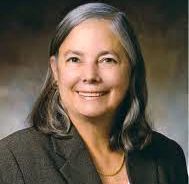
Fran Pavley

Fran Pavley

This year, Pavley’s bill limiting levels of the hazardous metal cadmium in children’s jewelry became state law. California’s sheer market size is likely to force manufacturers to change all kids’ jewelry, which is often imported, for the national market.

Pavley won again in November when California voters rejected a proposal to block the state’s ambitious greenhouse gas-capping law, which Pavley had championed in 2006.

Read the whole story


Tahoe Tails – Adoptable Pets in South Lake Tahoe

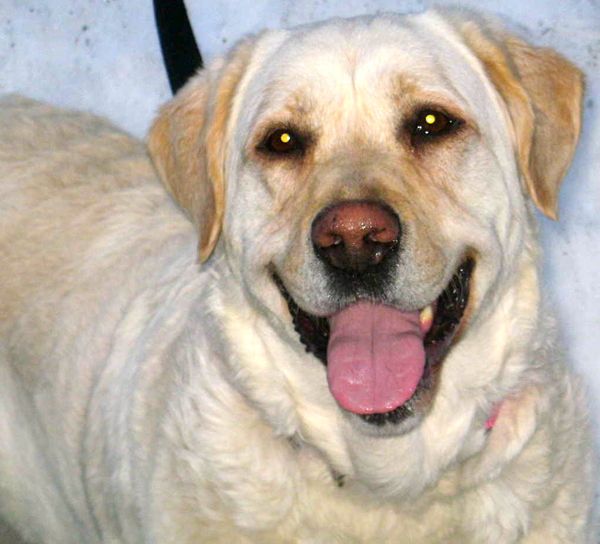
Molly is a very pretty, lively English Labrador with an abundance of energy. She is 3 years old and very friendly with people and other dogs, and even seems to get along with cats.

dogShe is a big, strong girl who needs lots of exercise and a well fenced yard to keep her happy and at home.

Molly is spayed, microchipped, and vaccinated.

She is at the El Dorado County Animal Services shelter in Meyers, along with many other dogs, cats, and kittens who are waiting for their new homes.

Call (530) 573.7925 for directions, hours, and other information on adopting a pet. The shelter will be closed Dec. 31 and Jan 1.

For spay-neuter assistance for South Tahoe residents, go to online.

— Karen Kuentz


Christmas trees will be turned into compost in Carson Valley

By Kathryn Reed

Fertile Mulch. That’s what recycled Christmas trees are turned into at Full Circle Compost in Minden.

Craig Witt, who runs the compost operation in the Carson Valley, hasn’t promoted this product much in the past because he hasn’t been able to make enough of it to keep up with demand. He’s hoping that is about to change.

treesOne thing that could make Fertile Mulch even more popular is a study from UNR that is supposed to come out in January that rates various mulches for their fire resistance. According to Witt, his is the top product.

The mulch’s ability to retain water is a key factor to why it is fire resistant, Witt said.

It is recycled trees from South Tahoe Refuse, ones Wal-Mart could not sell and other sources that Witt uses to create the various mulches.

“When we get the trees from South Tahoe Refuse we will process them, put them through a tub grinder, then size sort the material to create Fertile Mulch,” Witt said. “We expose it to 150-degree intense heat cycle.”

His recipe for this material takes a matter of weeks, whereas Mother Nature would take years to breakdown the pines.

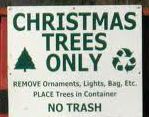
STR starts its tree recycling today and continues through Jan. 7. Customers need to remove all decorations, have trees no longer than 6-feet, and set them at the end of the driveway next to the rest of the trash.

“A lot used to be chipped and used locally. Now most go to composting,” Jeanne Lear of STR said of the nearly 3,000 trees the company recycles each holiday season.

Along most routes, the trees are picked up in the regular cycle and then separated at the refuse company. However, when drivers see a slew of trees in a neighborhood a special truck may be sent to handle them. Trees are picked up on normal garbage days.

Witt’s retail operation is not open this time of year, but the mulch will be ready in the spring.

“There is nothing wrong with raw mulch, but it’s like feeding raw food to an infant. It needs to be more refined,” Witt said.

When raw wood is put into the ground it throws off the nitrogen-carbon ratio, which slows down plant growth.

Witt says his composting process creates a mulch that when  mixed with soil has the end result of more robust plants.

For more information about South Tahoe Refuse tree recycling, call (530) 541.5105 and for more information about Full Circle Compost go online.


Windshield cameras spur privacy, safety debate

By Jim Sanders, Sacramento Bee

Smile at the windshield – and say cheese?

California is giving the green light to allowing video cameras to be mounted onto vehicle windshields in an attempt to improve road safety.

The goal is to make participants aware of bad habits by recording their behavior seconds before and after a crash or erratic driving maneuver.

“It seemed like a common-sense approach,” Assemblyman Nathan Fletcher said of permitting but not requiring the use of video recorders.

Parents could buy such cameras to place in their teenager’s car, but the prime market is expected to be truck, bus or other transportation companies with large fleets.

Critics question whether expanding workplace recording intrudes upon privacy in a society where cameras already are used for purposes ranging from monitoring department store aisles to detecting red-light violations.

Read the whole story


What fat animals say about human obesity

By Sharon Begley, Newsweek

If it were just kids, we could blame obesity on the cutbacks in phys-ed classes, school vending machines that sell high-calorie junk, and the substitution of videogames for kickball. If it were just adults, we could blame obesity on supersizing, fast-food meals, and pedestrian-unfriendly towns that force everyone into a car. But while 68 percent of American adults qualify as overweight or obese, and 17 percent of children do (compared with 5 percent in 1971), there are other increasingly pudgy populations. Meet some overweight pets, lab animals, and even urban rats.

David Allison, an obesity researcher at the University of Alabama at Birmingham, has long criticized the Big Two explanation for America’s thundering thighs: dwindling physical activity as a result of social changes like fewer sidewalks, and increasing calorie intake as a result of nefarious food-industry marketing. By chance, he came upon a record of marmosets in a Wisconsin research colony: the little primates’ weight had soared over the previous 15 or so years, even though they had not been bred for larger size, switched chow supplier, or undergone any other change that would obviously explain their extra heft. That set Allison looking for weight records of other animals.

With colleagues, he scrutinized the weight histories of 24 populations, from alley rats in Baltimore to lab macaques in California and even control groups of mice in federal toxicology studies. In a paper to be published in Proceedings of the Royal Society B (for biology), they report that in 23 of the 24—eight species, 20,000-plus animals—the percentage of obese individuals has risen since the 1940s (or since the oldest records they found). The odds of that happening by chance are 8 million to 1. And since neither feral rats nor lab chimps nor any of the others have cut back on phys ed or patronized vending machines more, says Allison, we need to look for explanations beyond the Big Two.

Read the whole story


Dogs susceptible to illness during holidays

By Mark Robison, Reno Gazette-Journal

You’re throwing a Christmas party and, unbeknownst to you, everyone slips the dog a few tasty morsels from their plate.

The scenario may sound familiar, but it could also cause your dog to end up at the veterinarian with pancreatitis.

Fatty, greasy people food is especially to blame. Already chubby dogs seem most susceptible.

Dennis Wilson, manager at the Animal Emergency Center in Reno, said the hospital will see about a dozen cases between Thanksgiving and Christmas.

Read the whole story


Grandparents give more than trendy gifts

By Anita Creamer, Sacramento Bee

Mary Hopp has firm beliefs about her role as a gift-giver to her seven grandchildren.

Money deposited into their 529 savings plans for college? Absolutely, on every birthday. Money frittered away buying them trinkets, gadgets or (heaven forbid) cars? Not on your life. Every Christmas, the grandchildren – ranging in age from 5 to 16 – receive books.

“I don’t think I should be looked at as a bank,” said Hopp, 68, who lives in El Dorado Hills.

Her contributions to the so-called “grandparent economy” are carefully considered yet generous – a prime example of how America’s 70 million grandparents divvied up the $52 billion they spent on their grandkids in 2009, according to a study that was commissioned by www.grandparents.com.

With that kind of spending power, even in the depths of the recession, grandparents are clearly a key force driving the economy.

For them, the giving season neither begins nor ends with the holidays.

Read the whole story


Maverick educator wants to put students first

By Michelle Rhee, Newsweek

After my boss, Washington, D.C., mayor Adrian Fenty, lost his primary in September, I was stunned. I had never imagined he wouldn’t win the contest, given the progress that was visible throughout the city—the new recreation centers, the turnaround of once struggling neighborhoods, and, yes, the improvements in the schools. Three and a half years ago, when I first met with Fenty about becoming chancellor of the D.C. public-school system, I had warned him that he wouldn’t want to hire me. If we did the job right for the city’s children, I told him, it would upset the status quo—I was sure I would be a political problem. But Fenty was adamant. He said he would back me—and my changes—100 percent. He never wavered, and I convinced myself the public would see the progress and want it to continue. But now I have no doubt this cost him the election.

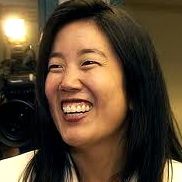
Michelle Rhee

Michelle Rhee

The timing couldn’t have been more ironic. The new movie “Waiting for Superman” — which aimed to generate public passion for school reform the way “An Inconvenient Truth” had for climate change — premiered in Washington the night after the election. The film championed the progress Fenty and I had been making in the District, and lamented the roadblocks we’d faced from the teachers’ union. In the pro-reform crowd, you could feel the shock that voters had just rejected this mayor and, to some extent, the reforms in their schools.

When I started as chancellor in 2007, I never had any illusions about how tough it would be to turn around a failing system like D.C.’s; the city had gone through seven chancellors in the 10 years before me. While I had to make many structural changes—overhauling the system for evaluating teachers and principals, adopting new reading and math programs, making sure textbooks got delivered on time—I believed the hardest thing would be changing the culture. We had to raise the expectations that people had about what was possible for our kids.

Read the whole story