Subtle sign changes designed to help drivers in S. Tahoe

By Kathryn Reed

What people may begin to notice as they drive around South Lake Tahoe is something is missing.

But what?

Clutter. Clutter in the form of signs.
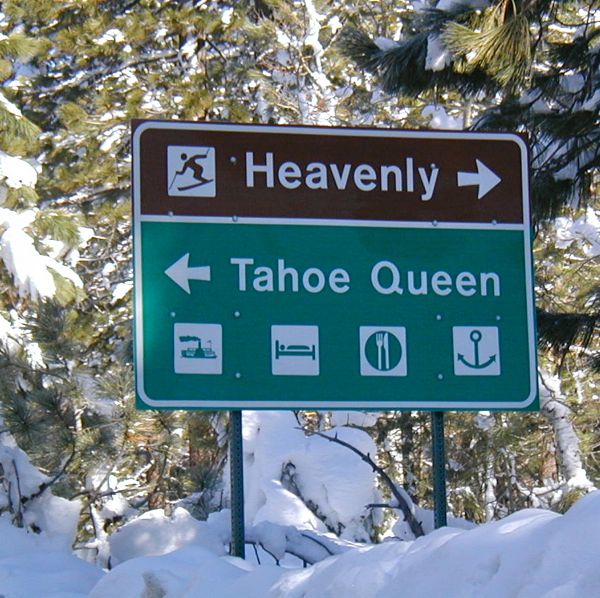
Signs are changing in South Tahoe to help motorists find things easier. Photo/Provided

Signs are changing in South Tahoe to help motorists find things easier. Photo/Provided

“Wayfinding is intended to be an intuitive way to find your way around the community. It is not intended to be glaring or offensive,” explained B Gorman, executive director of the Lake Tahoe South Shore Chamber of Commerce.

This collage of signs shows what led to the desire to make changes. Gorman said it’s the absence of visual clutter people will notice most.

Her group helped spearhead the challenge to bring uniformity to signs throughout the South Shore, with the El Dorado side the first to implement the program. The chamber took Carl Ribaudo, a marketing specialist on the South Shore, up on is idea this was something the community needed.

South Lake Tahoe put $66,000 toward the project and El Dorado County $42,500.

It is just now that signs are popping up in town even though the project started being discussed in spring 2007. A major cog in the wheel of progression is a state highway runs through the middle of town. Caltrans and NDOT have particular rules about signage on state highways.

NDOT, according to Gorman, would not proceed until its California counterpart took action. When NDOT may consider wayfinding again is not known.

“We tried to explain to Caltrans we are different,” Nancy Kerry said. Kerry worked on the program while employed by the chamber and then when she was hired by South Lake Tahoe.

That difference is that in addition to regular signage on a state highway, the small towns that dot these roads also need to let people know where things like the library, marina and beaches are.

“It was exciting when Caltrans said we can make this work,” Kerry said. “They are separating the town destinations from the highway destination needs.”

What won’t be seen on the highway signs are lots of color and fun symbols like what San Francisco has with an icon of Italy pointing to North Beach and a crab for Fisherman’s Wharf.

The city may be able to get more creative with signs that are not on the highway, and to possibly incorporate an alpine motif.

But the ski resort and marina symbols people are accustomed to will remain, but incorporated into that uniform look.

“It’s important to bring some consistency in sign style because when you are traveling down the road, if there are a lot of different signs, whatever the message is gets lost because you have to read so many things,” Kerry said. “If there is consistency in size, color, font and style, then you only notice what has changed, which is content. You can get to where you are going faster and easier.”

The new signs are cleaner, more uniform. The 22 signs Caltrans approved are slated to be in place before the Amgen Tour de California bike race in mid-May that starts in South Lake Tahoe.

“It makes the community look more appealing for the visitor and residents,” Gorman said of wayfinding.



Truckee Humane Society sets record in 2010 for adoptions

Despite a record number of animal relinquishments, the Humane Society of Truckee-Tahoe adopted out more animals in 2010 than ever before.

In 2010, HSTT adopted out 311 dogs and cats – 36 more adoptions than the previous record of 275 set in 2008 and almost 100 more than in 2009.

“The economy has directly affected every aspect of the animal world,” said Nanette Cronk, animal programs director for the Humane Society of Truckee-Tahoe, said in a press release. “The majority of turn-ins was due to people losing their jobs and homes. Fortunately, we were able to rely on our very dedicated foster volunteers.”

As people’s situations change due to the economy, they often have no place for their pets and turn them in to HSTT or Truckee Animal Services. The HSTT has no permanent shelter for these animals, but through a partnership with the town of Truckee has been able to house a limited number of animals at the town’s kennel.

The Humane Society of Truckee-Tahoe hopes to build on last year’s success and is launching the final push in its capital campaign to raise money to build a permanent animal shelter in Truckee, which will be open daily to the public and include real-life dog rooms, large colony-style cat rooms, and an education and training center. A new shelter would make it possible for HSTT to save more pets, but private donations are still needed to make this vision a reality. Supporters are encouraged to visit www.hstt.org for more information or to contribute to the shelter building campaign.

To meet adoptable dogs and cats, go to HSTT’s Adoption Day, every Saturday from noon to 2pm at the Town of Truckee Animal Kennel, or call (530) 581.3199 to schedule an appointment.


Founder of Jimboy’s Tacos dies; sold sauce out of trailer in Tahoe

By Bob Shallit, Sacramento Bee

James Knudson, known to many as “Jimboy” because of the famous taco chain he founded, died Wednesday at the age of 95.

He remained active until being diagnosed with cancer a week ago and had “a mercifully quick end to what was quite a life,” said Tom Boalt, general manager of Jimboy’s Tacos and a longtime friend.

Mr. Knudson was born in Alberta, Canada, and grew up amid hardship in Minnesota. His father died when he was 2, leaving behind a wife and six children.

“They were literally the poorest people in their town,” living in a barn, said Karen Freeman, Mr. Knudson’s daughter and president of Jimboy’s Tacos.

A tough childhood infused her father with a powerful will to succeed, she said.

Read the whole story


‘Shanghai Girls’ captures life of sisters coping in China, U.S.

By Kathryn Reed

Do we ever evolve? Will discrimination ever go away? Will equality for all ever be more than words on paper?

bookThose are some of the questions I was left with after reading “Shanghai Girls” by Lisa See. Although this 319-page book is a novel, the global concerns are real even if the specific people are not.

It follows two sisters from Shanghai from 1937-57. It’s two decades full of tumultuous times in China and the United States.

Coming from a life of privilege, these young girls find themselves sold as brides to cover their father’s gambling debt. Much of the story unfolds from there. How they get to Angel Island and the hatred that is thrown upon them is gut wrenching.

Parts of the book are graphic – that’s what happens when men behave like barbarians.

Chinese were the lowest of the immigrants. The Chinese Exclusion Act did not allow them to become citizens of the U.S. until its repeal in 1943.

Issues surrounding immigration 70 years ago seem to have only changed in regards to who the hatred is focused on today. The lack of understanding of cultures is still so prevalent today.

This puts a whole new perspective on illegal immigration. I’m not condoning this practice. The book merely points out on a personal level how immigration affects people – that’s its so much more than laws.

Interwoven in their personal stories is the impact of the time period they were living. Their country was attacked by Japan. Their adopted country was attacked by Japan.

“Shanghai Girls” is also so very much about the bond of sisters. Perhaps that strikes a cord in me because I have three sisters.

“For every awful thing that’s been said and done, she is my sister. Parents die, daughters grow up and marry out, but sisters are for life,” See writes.

It is a story about their struggles of being married to men they did not know, the expectations of their in-laws, children, work, and society.

It’s a book that made me think and cry.


Making a living out of being Mark Twain

By Malia Wollan, New York Times

INCLINE VILLAGE — McAvoy Layne climbed the stage chomping on an unlighted cigar, his shock of spray-painted white hair bright in the spotlights. “You can’t beat an audience that’s been waiting 100 years,” he said to the crowd.

Mr. Layne, 67, is a Mark Twain impersonator, and for men in his business this is something of a golden age. Long consigned to the dustbin of historical-society meetings and elementary school classrooms, Twain impersonators are now selling out shows, entertaining at fancy parties, presenting at conferences, making real money and adding new members to their ranks.

They attribute much of this to spinoff attention that came with 2010’s surprise best seller, the 736-page “Autobiography of Mark Twain,” edited by Harriet Elinor Smith and published by the University of California Press on the centennial of Twain’s death. While some of the reviews have been withering, so far some 500,000 copies are in print.

Most in the audience at this tiny storefront theater in a snowy shopping center on the shore of Lake Tahoe had not ventured to buy, let alone read, the hefty hardback. But many had nonetheless been inspired by the book’s promotion to come out to hear Mr. Layne tell Twain’s stories, which they said left them nostalgic for simpler, more adventurous times.

“Mark Twain just makes you feel good,” said Jim Giancola, 62, a retired banker.

Read the whole story


Knee specialists give advice how to avoid visiting them

By Kathryn Reed

People were wincing and audibly uncomfortable. And it wasn’t even their knee being tweaked.

Knees are a big issue – not just with skiers. Two people who have seen their share of knee injuries in South Lake Tahoe spoke to nearly 100 people Wednesday night at Lake Tahoe Community College. Terry Orr, orthopedic surgeon with Barton Health and a doctor for the U.S. Ski Team, along with Chris Proctor, physical therapist with Barton, dispensed a slew of information.

kneeEven though their paychecks are predicated on people injuring themselves, they spoke a bit about how to avoid seeing them beyond the lecture circuit.

Orr said the best ways to avoid injuries are to get in shape, check your equipment, know the weather conditions, avoid collisions, and wear protection.

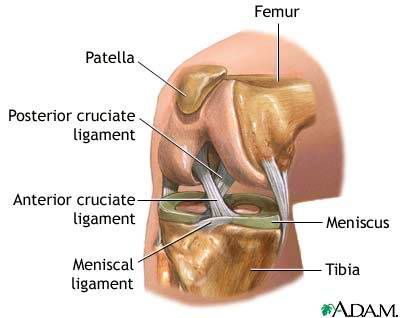
Much of the Jan. 26 two-hour presentation focused on the anterior cruciate ligament, better known as ACL, because of the four ligaments in the knee it is the one most commonly injured.

Growing in numbers are non-contact ACL injuries. Video of a soccer player going down as he is striking the ball brought forth a chorus of “ohhhs” from the assembled group. External forces, like the turf, contribute to these injuries.

Non-contact ACL injuries used to mostly be seen in females, now guys are catching up.

“You get the right forces at the right spot and you get an injury. It doesn’t take a ton of force,” Proctor said. Much of it depends how a person lands.

Proctor used a sample of 15 females and 15 males, all local, from the last two years to demonstrate how the sexes get injured.

Females: 4 from soccer, 3 basketball, 3 volleyball, 4 skiing, 1 gymnastics.

Males: 4 football, 11 skiing/snowboarding.

“It fits with what the industry is saying. A lot of injuries are attitude related,” Proctor said.

As a physical therapist, he often is seeing patients the day after Orr has performed whatever knee surgery was needed. The goal is to get the person back doing his or her sport six months after surgery. But it could be another year before the person is not thinking about their knee.

Credit was given to Drs. Robert Johnson and Jasper Shealy, and engineer Carol Ettlinger for spending years analyzing 10,000 videos to narrow what happens during ski injuries. The research was whittled down to six elements that lead to ACL injuries:

• Uphill arm is back

• Skier is off-balance to the rear

• Hips are below the knees

• Uphill ski unweighted

• Weight on the inside edge of downhill ski tail

• Upper body generally facing downhill ski.

These factors can be applied to snowboarders, too.

Flexibility in critical, Proctor said, in helping to prevent injuries.

“A lot of people come in with knee pain and we work on hip flexibility,” he said.

Strength, agility and attitude are also important to keeping knees away from the operating table.

Proctor admitted a bit of luck helps too, as a video of Olympian Daron Rahlves flying into the crowd with one ski still on played on the screen. The Tahoe skier walked away from that particular wipeout without needing surgery.

This was one of eight free lectures Barton has scheduled through Oct. 26. The next is Feb. 22. It’s about bone health in the maturing athlete.


Nevada state fair in jeopardy

By Jason Kellner, Reno Gazette-Journal

After a rebranding of the 136-year-old Nevada State Fair in 2010 as the Nevada Territory Wild West Fair, officials of the event say its finances may prevent the fair’s return this year. It would be the first year without a state fair since it began in 1874, according to the fair’s director.

Executive director of the nonprofit state fair, Rich Crombie, said that the organization already was on shaky ground before it went into the 2010 event and had been losing money. Crombie said that some situations with last year’s fair hit hard, including a weak economy, and especially bad weather on the fair’s peak days, which saw small crowds braving rain, overcast skies and temperatures in the low 50s — in the middle of August.

“I hate to point to it,” Crombie said, “but (the weather) led to a lot of it. I’ve got pictures of where people were standing in line bundled up, and we rely on the weekends.”

Crombie reported 2010 attendance figures at about 30,000. They had hoped to see closer to 50,000 visitors. But it wasn’t the weather and economy alone that put the fair in danger, rather a combination of those things, including lackluster attendance and a lack of cash reserves that built up over the years, Crombie said. Vendors from 2010 still are owned money.

Read the whole story


Dog kisses might not be a healthy indulgence

By Cynthia Hubert, Sacramento Bee

They give you joy. They give you loyalty. They give you sloppy kisses.

But before you allow Fido or Fluffy to climb into bed with you at night, as an increasing number of Americans are doing, know that they can also give you something else: zoonoses.

A UC Davis veterinary professor has penned an article for a scientific journal showing that people who allow their pets to lick them, give them “kisses” or sleep with them are at risk for a variety of diseases known as zoonoses. The conditions can range from the mundane to the life threatening.

Bruno Chomel and his co-author, Ben Sun, emphasize that pets provide many health benefits, including stress relief, and they stop short of recommending that people abstain from smooching their pooches. But in reviewing reports from several countries, they argue that such interactions carry some risk, particularly among infants and people whose immune systems have been weakened by disease, chemotherapy or other medicines.

Read the whole story


French film festival coming to Sierra Nevada College

Sierra Nevada College’s Department of Humanities and Social Sciences has received a grant for the Tournées Festival, a program which brings contemporary French cinema to American college and university campuses, to be staged April 6-9.

This inaugural festival spearheaded by SNC’s language program and made possible with the support of the Cultural Services of the French Embassy and the French Ministry of Culture, will be free and open to the public.

Now in its 15th year, the Tournées Festival has partnered with more than 300 American colleges and universities making it possible for more than 450,000 students to discover French-language films.

The film festival will coincide with the Incline Village college’s 2011 Multicultural Collaborative, a series of events and performances designed to highlight the cultural diversity of Sierra Nevada College.

For more information, call (775) 831.1314, sbankston@sierranevada.edu, or Robert King, at (775) 831.1314, rking@sierranevada.edu.a Coll


Opera performance in South Tahoe

Tahoe Arts Project is hosting international opera singers Annalisa Winberg & Roy Stevens on Feb. 4 at 7pm at Lake Tahoe Community College Duke Theatre.

Joining them on stage will be the South Lake Tahoe Children’s Choral Society; Blue Ribbon Choir and Tahoe Belles.

This is not your traditional “Opera” performance, but an evening of voice and song.

Since their debuts in 1987, Winberg and Stevens have had professional engagements with opera companies, in recitals and in concerts with symphony orchestras in 23 countries and on five continents. Though they have performed with many of the leading performing organizations in the world (Metropolitan Opera, Teatro alla Scala, Dallas Opera, San Francisco Symphony, New York Opera Orchestra), they have taken particular pleasure in performing with many unusual and off the beaten track organizations.

Tickets are $10 for adults and $5 for children and seniors and can be purchased in advance at the Visitors Centers. To charge tickets by phone for information, call (530) 542.3632. If available, tickets will be sold at the door beginning at 6pm.