Marijuana college gives students a higher education

By Jason Motlagh, Time

On the second floor of the downtown campus, a motley group of students listens to a lecture titled “Palliative and Curative Relief Through a Safe and Effective Herbal Medicine.” Not the sexiest of topics on the face of it, but there’s a catch: this is Oaksterdam University, and the medicine being discussed is marijuana. At “America’s first cannabis college,” in Oakland, Calif., the sallow-faced hippy-skater types that one expects to find sit beside middle-aged professionals in business attire, united in their zeal for the pungent green leaf. No one dares speak out of turn, until instructor Paul Armentano, a marijuana-policy expert, cites a news report that U.S. antidrug authorities plan to legalize pot’s active ingredient exclusively for drug companies’ use. “More stinking profits for Big Business,” mumbles a young man wearing a baseball cap. His classmates groan in agreement.

More than 17,000 students have enrolled since Oaksterdam opened in late 2007. The original student body numbered fewer than two dozen people. Most are from the U.S., but others have arrived from as far as Iran and Colombia to get training for the lucrative medical-marijuana industry. The concept itself originated in Amsterdam, where school founder Richard Lee visited a community-focused cannabis college and figured he could do the same in the Bay Area. A professional and transparent approach, he reasoned, could help erode the drug’s stigmas and eventually move the state closer to full legalization. Some alums have taken up his activist mantle, campaigning aggressively last year in favor of a statewide proposition to legalize and tax recreational cannabis. (It failed by an 8-point margin.) (See pictures of the marijuana-growing industry.)

Still, faculty members concede the vast majority of new students are aspiring entrepreneurs with money on their mind. Oakland has some of the country’s laxest drug laws, making it ground zero for the medical-marijuana boom. Small pot clubs abound. In 2009, four legal commercial-scale dispensaries approved by the city council sold some $28 million worth of the drug. The question most frequently asked of instructors? “How much will this plant yield,” says “Big” Mike Parker, a technician in the horticulture lab with a long white beard and fading skull tattoos on his wrists. “This is hard work — you see me sweating,” he adds, tending to his plants under the bluish glow of a metal-halide light. “And if you think you’re gonna get rich, you’re here for the wrong reason.”

True to one of its sundry nicknames, cannabis is a weed that grows like one in the right climate. But given the gray area that now exists between state law — which allows regulated production for medical purposes — and federal laws that still prohibit the drug, discretion dictates that plants must be grown indoors. That’s no easy task. During a recent class, instructor Chris McCatheran broke down the risks of overfertilization, offering tips on what combination of nutrients is best and how to maintain the right parts-per-million ratio. Growing cannabis plants indoors is clearly a delicate affair, even if the feds don’t storm in and shut you down. (See photos of the hazy world of cannabis culture.)

Illegal pot farming has run rampant across Oakland. And although busts are still pretty rare, advocates fear that could change if public health and safety concerns mount as cultivation-related crime continues to rise. According to the Oakland police, in 2008 and 2009 there were eight reported robberies, seven burglaries and two homicides connected to the business. (Last year’s statistics are likely to be worse but are not yet available.) Meanwhile, the amount of fires doubled in 2010, largely the result of shoddy electrical wiring in illicit grow houses. On March 2, a warehouse believed to contain between 300 and 500 pot plants — many times the legal limit, if it had a permit — went ablaze in the western part of the city. It required 18 firefighters to put it out.

This is just the kind of Wild West behavior that Oaksterdam faculty and students insist they are trying to eliminate. “There’s still a chance that the police might kick down your door, but you’re taught to be responsible here and you get the best instruction,” says Lisa, 40, a food caterer by day who grows for a cooperative on the side. She drove three and a half hours from Lake Tahoe on a Saturday morning to attend an advanced class and says she can make up to $3,000 extra a month from her plants, a substantial sum but hardly windfall profits.
Read the whole story


History: Flumes not just for logs

Publisher’s note: This is reprinted from the February 1974 Lake Tahoe Historical Society newsletter.

By Sheryl Morris

The Great Flume Ride, a tale of five men who supposedly traveled down a logging flume north of Incline Village during the Comstock era, was told January 29th to members of the Lake Tahoe Historical Society.

historyTelling the story and showing slides of old photographs and drawings from the same period was Fred MacKenzie, training and safety administrator for the Reno office of Sierra Pacific Power Company.

An unusually large crowd of nearly 100 society members and guests heard MacKenzie describe the ride, which was the result of a challenge to the five participants.

The daredevils weren’t young men, MacKenzie noted. They were in the late 50’s and three of them were established businessmen. He said that one was a reporter from New York and another one was a carpenter.

The men first had to construct a V-shaped boat to fit the flume. Two boats were actually made. The second vessel was launched after the first boat took off down the flume in a fast wall of water sans passengers.

When the second boat was launched with the men aboard, no one had taken into consideration the fact that the second boat would be traveling faster than the first craft, MacKenzie explained.

“Their lives were in the hand of fate,” the speaker continued, “because the flume had no element of control or safety. They just had to hold on.”

The story says that at one point the carpenter fell out but was luckily grabbed and pulled back in the boat.

By this time the distance between the two boats was narrowing, MacKenzie said. The second boat finally crashed into the first craft and “the men concluded they must have been temporarily insane.”

MacKenzie noted that the area of the flume ride was thought to have been in the Sierra, west of the Verdi-Reno area.

In addition to telling the story of the flume ride, MacKenzie backgrounded his presentation with other slides pertaining to the Comstock era of the late 1800’s and the use of Tahoe lumber in Virginia City and surrounding area at that time.

He explained that prior to 1870 when the V-flume was invented, lumber was transported to the Comstock from the Sierra by animals. After the invention of the channel, flumes were set up all around the eastern side of Tahoe. One giant flume floated logs from Spooner Summit down 15 miles to the Carson Valley floor. From there the logs went to Virginia City and Gold Hill via the V & T Railroad.

MacKenzie added that Sierra Pacific Power has used flumes for years to provide electrical and water service.


Boomers transform the business world

By Cathie Gandel, AARP Bulletin

From age-defying beauty serums to tummy tucks and a penchant for sushi, boomers have made billion-dollar industries out of countless products and services that barely existed when the first of the 78 million-strong generation was born in 1946.

Just as they transformed society in the 1960s, creative boomer entrepreneurs and big-spending boomer consumers have dramatically overhauled the marketplace. In 2009 alone, Americans ages 50 to 65 laid out an average $42,600 per person on products and services, half of all consumer spending, according to the financial services website Bundle.

That spending cut into savings, and now the generation turning 65 is wondering if all those dollars should have been salted away for retirement, especially since many boomers can expect to live into their 90s. Their fallback nest eggs — home equity, 401(k)s, investments, personal savings — were hammered by the long recession.

In fact, there is a $6.6 trillion shortfall between what Americans need to retire and what they will have, according to a 2010 study by the Center for Retirement Research at Boston College for Retirement USA, a coalition of labor and pension rights advocates.

“Many boomers have not saved enough,” says Olivia S. Mitchell, director of the Boettner Center for Pensions and Retirement Research at the University of Pennsylvania’s Wharton School, “particularly if they intend to retire before 70.”

But maybe boomers will do what they’re good at and reinvent retirement — just as they reinvented much of the marketplace.

Read the whole story


‘Tahoe Beneath the Surface’ lecture in Incline

Author Scott Lankford will present a public lecture from 6-7pm June 1 at the Tahoe Center for Environmental Sciences about what lurks beneath the surface of Lake Tahoe.

The event will be in the assembly room 139, 291 Country Club Drive, Incline Village.

Tickets are $10 for the general public and no charge for students with valid student identification.

“Tahoe Beneath the Surface” brings the hidden history of America’s largest mountain lake to life through the stories of its most celebrated residents and visitors over the last ten thousand years. It mixes local Washoe Indian legends with tales of murderous Mafia dons, and Rat Pack tunes with Steinbeck novels. It establishes Tahoe as one of America s literary hot spots by tracing the steps of more than a dozen authors including Bertrand Russell, Maxine Hong Kingston, and Michael Ondaatje.

“Tahoe beneath the Surface” reveals how the lake transformed the lives of conservationists like John Muir, humorists like Mark Twain, and Hollywood icons like Frank Sinatra. It even touches upon some of the darker aspects of American history, including anti-Chinese racism and the Kennedy assassination.

Despite the impact Lake Tahoe has had on America, environmental threats loom large, and Tahoe Blue a term that Lankford uses to encompass the whole range of life, beauty, and meaning the lake represents grows increasingly vulnerable. In “Tahoe beneath the Surface,” human history and natural history combine in a most engaging way, one that will both inform and inspire all who would keep Tahoe blue.


Tahoe Tails — Adoptable Pets in South Lake Tahoe

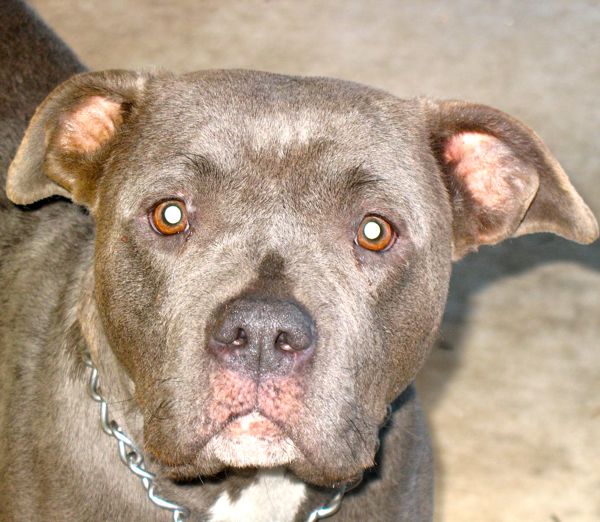
Belle is a 2-years-old pure bred dog who was used to breed puppies until her owner couldn’t have her anymore.

Now she is looking to be a loved family pet. Belle has lived with other male dogs and small children. She is house, crate and leash trained.

dogBelle is microchipped and vaccinated. She is at the El Dorado County Animal Services shelter in Meyers, along with many other dogs and cats who are waiting for their new homes.

Call (530) 573.7925 for directions, hours, and other information on adopting a pet.

For spay-neuter assistance for South Tahoe residents, go online.

– Susan Baumflek


History: Snowshoe Thompson did more than deliver mail

Publisher’s note: This is from the March 1974 Lake Tahoe Historical Society newsletter.

By Sheryl Morris

Tales of Snowshoe Thompson, logging days and the pre-logging era at Lake Tahoe and stories of heavy winters were recalled Wednesday night by Arnold Trimmer of Genoa, Nevada.

historyTrimmer was addressing members of the Lake Tahoe Historical Society and telling them of some of his recollections from the early 1900’s and relating some of the stories passed on from other family members.

“My great-grandfather used to tell us of an incident involving himself, a number of other men from Carson Valley, and Snowshoe Thompson,” Trimmer said.

It was in the 1850’s when Snowshoe was carrying the mail from Placerville to Carson Valley. While traveling around the south end of Lake Tahoe during the winter of 1857, Thompson came upon James Sessions, who had been caught by the snowy weather. He was suffering form frozen feet, Trimmer said.

Since Snowshoe couldn’t help him alone, he left Sessions in a cabin and went to the Carson Valley for help. His call was answered by Trimmers’ great-grandfather and some other men from the area.

The group, traveling on skis, hauled Sessions out in a hand sleigh. It took them four days. Sessions’ frozen feet had to be amputated but before the surgery could begin, Thompson set out in search of some anesthetic, Trimmer explained.

Snowshoe went first to Placerville. When there was no anesthetic there, he traveled on to Sacramento and then returned with the medical supplies to the Carson Valley. He made this entire trip without sleep, the speaker added.

“He traveled in shirtsleeves,” the speaker explained. “He always said he moved fast enough to keep warm.”

Thompson was also a farmer and cultivated acreage in Diamond Valley east of Woodfords for some 20 years. In 1876, while sowing a wheat field with the aid of Trimmer’ grandfather, Snowshoe took sick and died.

The Genoa man also spoke of the days before the logging industry invaded Lake Tahoe Basin.

“I can remember my great-uncle telling of trees 100 feet tall. The forests were so thick the trees were like a blanket keeping the sun out,” Trimmer commented. He said he also remembers of his uncle telling of going down to the lake in the Stateline area and seeing a trout that must of weighed 32 pounds. Trimmer had numerous humorous stories of the logging days at Tahoe. He explained that July 4th was always the date of a big celebration with the big event being held at Meyers Station.

“There were horse races in the afternoon. The loggers spent the morning drinking and betting on the horses. By the afternoon they were all so drunk they couldn’t remember which horse they had bet on, but they were all sure it was the winner. You never saw so many fist fights in your life,” he added.

In recalling some of the stories of hard winters in the Tahoe area, Trimmer singled out 1889-90. A logger and his wife from Genoa stayed that winter at Edgewood House. They had to crawl out the third story window to go out and milk the cow. After a couple of weeks, when the snow had been packed down, they crawled out the second story window.

Trimmer concluded by telling of High Meadows. This Tahoe area property has been in the Trimmer family since the early 1920’s.

“We bought it for grazing range cattle,” Trimmer said. He noted that at one time they grazed 250-300 head of cattle in the area, driving the herd up Kingsbury, down Pioneer Trail and then up to the meadows via the Sierra House turnoff.


Children’s book designed to provoke laughter

By Kathryn Reed

Laughter and silliness are often cures for sadness.

bookAuthor Jennifer Kelman proves this with her book “Mrs. Pinkelmeyer and Moopus McGlinden Burn the Rrrrump Rrrroast”.

It’s billed as a book for children for them to feel safe and loved, especially when separated from their parents. After reading it, I think it would be ideal for any child no matter their state of mind. If anything, I think labeling it something other than a straight children’s book may hurt the sales of it.

Self-help books for little ones doesn’t seem like it would be a big category.

Although Kelman got the idea for the book while babysitting her nephew, I think she could sell this without an angle other than fun.

Yes, it may help children laugh – but so many books do this. Maybe it’s a sales ploy. Whatever the reason to market the book this way, it’s worth picking up for the little ones in your life.

They are bound to laugh – if only because you’ll want to use your best British accent as you read it to them.

The illustrations by Michael Swaim are every bit as entertaining as the words on the pages. They certainly capture what is going and are silly in their own right.


Family entertainment costs continue to rise

By Steve Rushin, Via

As a father of four, I may as well stuff all my cash in a confetti cannon and fire it into the air on arrival at the next ballpark, theme park, or movie theater my family visits, simply to expedite the inevitable process by which my wallet is drained of every last dollar for the sake of entertainment. When did family fun become so expensive? VIA’s analysis of ticket prices at major theme parks between 1965 and 2011 shows an increase of more than 2,200 percent—and that even figures in the AAA discount, which has become a saving grace for card-carrying families. By comparison, since 1965 the price of gasoline has gone up 658 percent and milk is up 371 percent. Even before setting foot in most theme parks, the modern parent can feel taken for a ride.

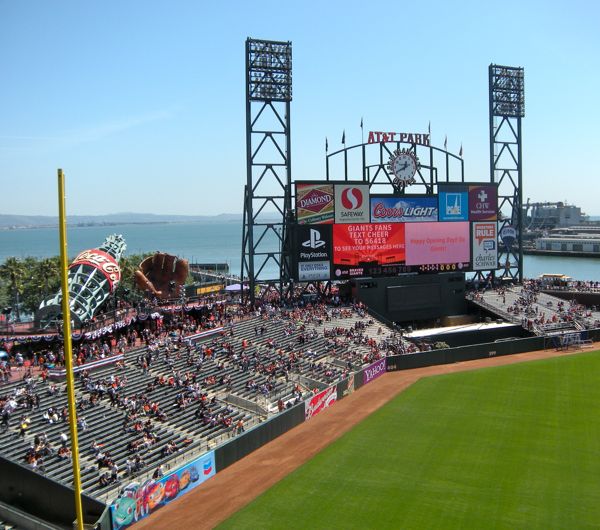
Families still attend San Francisco Giants games despite the cost. Photo/LTN file

Families still attend San Francisco Giants games despite the cost. Photo/LTN file

And theme parks seem a bargain next to ballparks. Watching a game played by the Boston Red Sox, the Major League Baseball team nearest to my home in New England, cost a family of four an average of $335 for tickets, parking, food, drinks, and merchandise in 2010. This is not entirely a lament. Increases in insurance, property taxes, and consumer appetites for new attractions keep costs escalating for family entertainment providers everywhere. SeaWorld’s Shamu—and her human equivalent, Red Sox slugger David Ortiz—have to eat (if perhaps not quite so well). There may be other reasons for such precipitous increases, but the theme parks aren’t telling.

High prices haven’t deterred consumers so far. Historically, people will pay a premium to see their major Mickeys, be they Mouse or Mantle. The Red Sox have been sold out for years. Though the global economy has melted down like a $5 waffle cone in the trembling hand of my 5-year-old, the three theme parks we visited last year were bursting at the seams. In fact, according to the International Association of Amusement Parks and Attractions, attendance has increased nearly every year for almost two decades.

Read the whole story


Minorities soon to be majority among nation’s kids

By Carol Morello, Washington Post

A majority of the nation’s children will be minorities before the decade is out, crossing a demographic milestone more quickly than previously predicted, according to a new analysis of census statistics by a demographer with the Brookings Institution.

Demographer William H. Frey said unexpectedly rapid growth among Hispanics and Asians is creating a demographic age gap that already is visible in classrooms and playgrounds. The Census Bureau has estimated that most children will be minorities by 2023, but Frey said that landmark will be reached years earlier.

Frey said it also is likely that the nation’s population overall will become predominantly minority before the census estimate of 2042.

Read the whole story


History: Formation of LTUSD, what fire protection used to be

Publisher’s note: This is reprinted from the April 1974 Lake Tahoe Historical Society newsletter.

Some 60 years of Lake Tahoe memories were nostalgically reflected upon at the March meeting of the Lake Tahoe Historical Society by longtime local resident, Stanton Meyer.

historyMeyer first saw Lake Tahoe in 1915 when his parents purchased the Porterfield cottage as a second home. This cottage is still standing today on the corner of Tallac and Oakland Avenues in the Al Tahoe area.

His first trip to Tahoe was via the Southern Pacific to Truckee, then via narrow-gauge railway to Tahoe Tavern, and then aboard the Steamer ‘Tahoe’.

Arriving a the Al Tahoe area, the steamer debarked at the end of the long pier which extended from the lake front, between Pasadena and Riverside Avenues, straight out into Lake Tahoe approximately one-quarter mile.

Meyer noted that the long Al Tahoe pier had been built by Al Sprague who not only had conceived the community name ‘Al Tahoe’ by tacking his nickname of ‘Al’ onto Tahoe, but also pioneered Al Tahoe’s lakefront property, and built the original Al Tahoe Hotel in 1910 (in 1925, the hotel became Globin’s Al Tahoe Inn).

“During my younger years at Tahoe, we held an annual bonfire in the backyard behind our log cabin, and invited all the folks in Al Tahoe.”

“There were many chipmunks in those days; also red-headed ground squirrels. I made a few dimes and quarters by trapping and selling them. One fall, I took a dozen red-heads to Sacramento and gave them to McKinley Park.”

Meyer recalled that in 1916, and for many years thereafter, the road running form the Tahoe Valley ‘Y’ to Bijou was on a considerably different alignment than our present day Highway 50. He noted that in those days the road came due north, past the one-room Lake Valley Schoolhouse (then located where the Safeway store stands today), past Dunlap and Anderson’s Dairy, and then over Trout Creek Meadow where there were several gates to open; from there, the road entered the Al Tahoe tract, near where Phil Greuner’s home stands today. He said that children would frequently be at the gates to open and close them, thereby earning a little extra pocket money.

After leaving the meadow area, the road extended on down to the lakefront (along the line of present day Bellevue Avenue), and from there is turned east and followed the shore (via present day Lakeview Avenue) to Bijou.

After buying the Al Tahoe property in 1933, it was suggested to Meyer that he become a candidate for Justice of the Peace in Lake Valley Township. “I planned to do so, but I was called to active duty with the Civilian Conservation Corps. I was assigned to Camp Riverton, about two miles up the old Ice House Road from the Riverton Bridge. In the Spring of 1934, a tend camp was established at Rubicon Point, and the initial work in developing what is now Bliss State Park was begun.”

The summer of 1937 found Meyer once again a civilian, and instrumental in the formation of the Al Tahoe Property Owners Association. He said that during that year, at a tax sale in Placerville, he bought two 50 x 100 lots in Al Tahoe for $15.00. “Would that I could have looking into the future …”

“Fire protection in those years was provided by a Forest Service pumper stationed at Camp Richardson. The Property Owners Association purchased a device which enabled the pumper to pump directly from the lake, or a stream. One winter, the association arranged to pay rent to Lakeland Garage so the Forest Service pumper could be garaged there, and thus provide fire protection during the winter.”

Along with others, Meyer said that he went to Placerville to argue for high school facilities at South Lake Tahoe. Eventually, the Trustees of the El Dorado Union High School District established a branch high school which was housed in the auditorium of the American Legion Building. The auditorium was divided into four classrooms. The first year, a freshman class was enrolled; the second year, both freshmen and sophomores were in attendance.

He noted that on Dec. 7, 1951 voters at South Tahoe approved the formation of a Unified School District, and elected five trustees – Lou Rogers, who owned the Tahoe Cottage Court near the ‘Y’; Lou Fitzgerald, owner of the Blue Crystal Chalets on Ski Run Blvd.; Francis Hodgkins, owner of Phillips Resort along Echo Summit; Don Clarke, and himself.

“I felt that formation of the Unified School District would keep our school taxes at home, and that we would have more local control over how the tax money was spent.”

“However, when I learned that three of the trustees had selected as Superintendent of the District the principal of the Lake Valley Schoolhouse (who had not applied for the job, so far as I knew), and had agreed to pay him $1000 more per year than the four applicants who had come before the board for interview, I felt it useless to stay on the board, an therefore resigned. Previously, however, the new District had, on my motion, been named the Lake Tahoe Unified School District.”

In 1955, Meyer became a year-round resident of South Lake Tahoe. In July of that year, he was sworn in as acting postmaster of Al Tahoe.

Meyer recalled that immediately after he became postmaster, he was told to move the Al Tahoe Post Office from the Globin property to the Tahotel Building.

“The evening after my clerk and I moved the post office, Golda and I were in attendance at the Rowan and Martin show at Harrah’s. We had a small table to ourselves. Under the table, I placed my briefcase with my stamp stock and postal funds because there was no safe in the new postal quarters!”

Meyer served as postmaster until 1963, when the Al Tahoe Post Office became a branch of the Bijou Post Office. At that time, he became Superintendant of the branch, serving in that position until 1971.

In June of 1972, Stan and Golda moved ‘off the hill’ and over to Carson City. “I decided I had all I wanted of snow shoveling!”