USFS supe brings experience, forward-thinking to basin

Publisher’s note: Lake Tahoe News sent Nancy Gibson, who came on board in April as supervisor of Lake Tahoe Basin Management Unit, a series of questions. She obliged us with the following responses in between countless meetings and unpacking boxes.

Name?: Nancy Gibson
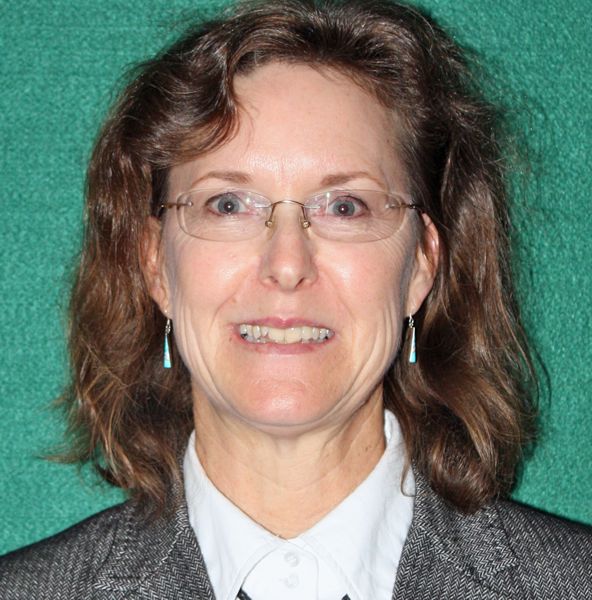
Nancy Gibson

Nancy Gibson

Age?: Umm. How about, I have 33 years of Forest Service experience in three regions (Region 1, Montana; Region 6 Oregon; and Region 5, California) working with multiple administrative and natural resources staffs in both National Forests and a Regional Office. I’ve lived primarily in rural communities in Missoula and Stevensville, Montana; Dufur, Oregon; Yreka, Eureka and, now, South Lake Tahoe, California. I was born and raised in Tucson, Arizona.

Why did you apply for the supervisor position of Lake Tahoe Basin Management Unit?: Being a line officer somewhere in the Western United States has been a long-held career goal of mine. When I took a 120-day temporary assignment to the Lake Tahoe Basin in the winter of 2007, this place went to the top of my list for a unique place to live and work. My tenure on the Six Rivers National Forest was a particularly valuable springboard because of the concerted restoration activities and key emphasis on hydrologic systems in the coastal range. I believe my administrative schooling and natural resources-based experiences mesh very well for the leadership tasks of this position.

What do you anticipate will be the most significant differences between being a deputy supervisor and now being supervisor?: Any differences will be subtle given my emphasis on teamwork between these two positions. Typically, there isn’t a legal distinction in delegated authorities between the deputy forest supervisor and forest supervisor. I will provide leadership direction in determining program priorities while working closely with the deputy to ensure we are speaking with one voice. From an organizational standpoint, the deputy will tend to focus on operational functions and the supervisor will focus on external relationships. Again, these functions will, at times, be interchangeable. This is a successful model I’ve witnessed in my past two assignments and will likely adopt here.

In the Six Rivers National Forest where you last worked the archaeological dig programs at the Chinese mining camps were popular for the public to participate in. Do you think doing something like that in cooperation with the Washoe Tribe might be instituted in the Lake Tahoe Basin? Why or why not?: The Passport in Time program is a valuable avenue for engaging the public in understanding past experiences for better cultural awareness. Whether or not we would look at local participation depends on a number of factors, including the desire of local partners, such as the Washoe Tribe, current staffing availability, and funding via appropriated dollars or partnership contributions. I’m somewhat familiar with the very successful Conservation Education program of the basin and will delve deeper into these and other opportunities as I progress in my tenure.

The U.S. Forest Service was responsible for safety on rivers like the Smith in your former jurisdiction. Might the USFS look into doing something like that on the Upper Truckee River? Why or why not?: Public safety is a shared responsibility of a variety of public entities. Again, I will become more familiar with such local cooperative agreements in the months ahead. Generally speaking, the Forest Service takes a lead role in natural resources management and protection within its boundaries while other agencies take the lead, and we assist, with regard to public safety. Oftentimes, due to our remote administrative sites, Forest Service personnel are “first responders.” However, this doesn’t preempt the responsibilities of other public resources such as city/county fire departments, search and rescue, and the like for whom we play a supporting role.

Fire lookouts generated cash at your last job as overnight venues for backpackers. Could you see implementing some sort of backcountry hut system in Desolation Wilderness or in cooperation with an entity like the Tahoe Rim Trail Association? Why or why not?: My familiarity with the Lookout Rental Program stems from experiences on the Bitterroot and Mt. Hood National Forests (Montana and Oregon, respectively) with respect to existing decommissioned administrative sites (lookouts). Again, the management of such sites presents a future commitment of staffing and funds and, if penciled out, could very well be self-sustaining and worth looking into. With respect to the Desolation Wilderness, much depends on what infrastructure already exists and whether or not any proposals are in keeping with the spirit of the Wilderness Act. Of course, pursuing these opportunities is best done with an eye toward partnerships, which, through local commitment, is one of the best ways to ensure a good idea sticks.

What are your thoughts about engaging the public in being volunteers on National Forest lands? Most of the Desolation Wilderness volunteers are from outside the basin and some inside the basin who have tried to participate have had negative experiences.: The Volunteers in the National Forests Act of 1972 was designed especially for the purpose of engaging local volunteers in the recreational and conservation education activities of the National Forest. I’m a true believer in the benefits of this act and have used this authority many, many times. I’m curious to hear any specifics regarding the negative experiences because I believe volunteer programs of the Forest Service are of real benefit to both the Forest Service and our rural communities in terms of gaining experience and understanding of our public service role.

Money is always an issue. The federal government – of which your agency is part of – almost shutdown this spring. Funding for projects in the basin is evaporating as cash from the Southern Nevada Public Lands Management Act dry up, plus the Lake Tahoe Restoration Act reauthorization is languishing in Congress. How do you cope with a stagnant or declining cash flow?: In general, we operate on annual appropriations and it is always a challenge if the pendulum of federal funding swings too quickly in either direction. The best we can do is spend a bit of concerted effort in workforce planning to forecast anticipated resources needs and obligations while developing a skilled workforce to match those needs. Target accomplishment is not only specific to meeting the current needs as designed through these appropriated or other funds (such as SNPLMA) but also to insure we are well positioned for resources challenges five- to 10-years out.

Each person who occupies the White House seems to change the rules about roads on Forest Service property. What is your philosophy on roads?: A common adage for roads is nobody likes them, but everybody uses them. My philosophy is best depicted as the wise management of roads that can be maintained, both environmentally and financially, over time. That being said, what we can’t necessarily afford today may also be the best level of access needed in a fire suppression activity, as well as a resources restoration and monitoring activities, today and into the future. Like many things driven by the uncertain nature of the natural world, it is sometimes best to take heed on a case-by-case basis without unnecessarily jeopardizing future opportunities.

The Tahoe National Forest has two people who work on avalanche forecasting. LTBMU has zero. Any thoughts about increasing the basin’s number?: We’re fortunate that the Sierra Avalanche Center, a partnership with the Tahoe National Forest, actually forecasts for the entire Central Sierra, including the Lake Tahoe Basin. The Lake Tahoe Basin Management Unit features a link to the center’s advisories on our main webpage, to assist those planning backcountry excursions.

Fuels reduction has been a hot topic in the basin following the destruction of 254 houses in the June 2007 Angora Fire. Most of the 3,000-plus acres that burned on the South Shore belong to the USFS. What is your philosophy when it comes to preventing a catastrophic fire?: Prevention, on the part of public and private landowners, is key and I will continue with the basin’s focus on an aggressive hazardous fuels reduction program. Prevention carries with it a dual responsibility. I am very familiar with the idea of defensible space, but, for my own benefit as a prior landowner, prefer the term “survivable” space. I would hate to see a firefighter or any emergency responder die or become seriously injured in the course of protecting property that has, by the nature of its location, created an extreme vulnerability. For my own property, I did brush work that didn’t require anyone to “defend” it. Rather, I created fire protection zones that, should a fire come through, the structure would likely survive or, if it didn’t, I would know I did what I could and no lives would be lost. We can only operate within the scope of public lands (and public land interface) within the funding established for this purpose. Other property owners must heed the risks they’re willing to take in managing what fuels exist in their immediate vicinity along with the building and landscaping materials they use in their structures.

What type of outdoor recreation activities do you like to partake in?: I do, and have done, many things on a seasonal basis. Typically, I take day hikes, camp, and generally like to explore the surrounding areas, both indoors (museums, lighthouses, historical sights) and outdoors (mountain peaks, lakes, rivers and streams). I also mountain bike, though am an admitted novice. In Montana, I regularly ice fished and cross country skied throughout the winter months and backpacked during the summer. Now, on many of my free weekends, my husband and I like to arrange visits with our children; son, Brady, in Klamath Falls, Ore., and daughter, Brenna, in San Francisco.

Ben Kunibe — 1917-2011

Ben Kunibe, longtime South Lake Tahoe resident, died April 30, 2011.

Mr. Kunibe was 93.

Ben Kunibe

Ben Kunibe

Mr. Kunibe was an active member of the Optimist Club. Last weekend he participated in the club’s annual Easter egg hunt.

He died of heart failure at Renown Medical Center in Reno.

In November he was profiled on Lake Tahoe News.

Services are pending.


Kennedy initiated recognition of seniors in U.S.

A meeting with the National Council of Senior Citizens resulted in President John F. Kennedy designating May 1963 as Senior Citizens Month, encouraging the nation to pay tribute in some way to older people across the country.

In 1980, President Jimmy Carter’s proclamation changed the name to Older Americans Month, a time to celebrate those 65 and older through ceremonies, events and public recognition.

As of July 1, 2009, there were 39.6 million people 65 and older in the United States.

This age group accounted for 13 percent of the total population. Between 2008 and 2009, this age group increased by 770,699 people, according to the U.S. Census.

Projections are for the population of people 65 and older in 2050 to be at 88.5 million. . People in this age group would comprise 20 percent of the total population at that time.

In 2009, 6.5 million people 65 and older who were in the labor force. Projections indicate that by 2018, the number will reach 11.1 million.


Tahoe writers to read at ‘Permanent Vacation’ book launch

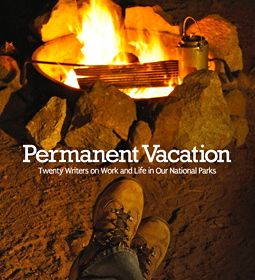
On May 4, Bona Fide Books of Meyers will launch its first publication, “Permanent Vacation: Twenty Writers on Work and Life in Our National Parks, Volume 1: The West,” with a reading at Lake Tahoe Community College.

bookThe 7pm event in the Aspen Room at the South Lake Tahoe college will feature local essayists Joseph Flannery and Janet Smith, whose work appears in the collection. Tahoe City’s Flannery wrote of his encounters with grizzly bears while working in Yellowstone, while South Lake Tahoe’s Smith detailed leaving home after high school for life in Yosemite Valley.

“The stories in this collection are incredible,” Kim Wyatt, owner and publisher of Bona Fide Books, said in a press release. “We received over 200 submissions, and it was tough to keep it to 20. Something about living in nature makes great storytellers, and these writers should be widely read.”

“Permanent Vacation” is available at Bona Fide Books, Amazon and some bookstores. Starting May 4 it will also be available online at www.pvstories.net, where park workers can share their stories. Readers can also go there to find out more about their favorite “Permanent Vacation” contributors, who will be updating the site this summer with video and photos of hikes, climbs, and river trips.

Bona Fide’s next two books will come out later this year. “Mud Cakes,” the winner of the Melissa Lanitis Gregory Poetry Prize, will be released in October, and “Tahoe Blues,” a collection of flash fiction and micro essays about life at the lake, will debut before Christmas.

The reading is free and open to the public.

For more information, contact Kim Wyatt at editor@bonafidebooks.com or go online.


New Donner Museum to be constructed

By Cathy Locke, Sacramento Bee

Preliminary work for construction of a new High Sierra Crossing Museum at Donner Memorial State Park will get under way this week.

The new visitor center has been in the works for several years, according to Scott Elliott, acting superintendent for the State Parks sector that includes Donner Memorial. The project is intended to better exhibit the history of Donner Pass and the entire region.

The preliminary work will include removing about 100 trees in the area of the parking lot. This work will result in a noticeable, though temporary, change to the character of the area but is necessary to expand the existing parking lot to accommodate increased visitor demand and provide appropriate bus and RV parking, according to a State Parks news release.

When the work is completed, forest trees are to be planted to surround the monument and screen the view of passing cars and neighboring commercial development.

Read the whole story


8th-grader wins LTCC poetry slam

By Kathryn Reed

“That’s so gay” isn’t a phrase that sits well with Joemae Santos.

The eighth-grader at South Tahoe Middle School wrote a poem about how hurtful those three words are. How derogatory they are. How teachers say just let it go. How she isn’t letting them go.

Her words, her passion, her delivery and her conviction earned her bragging rights as the winner of the inaugural Lake Tahoe Community College Poetry Slam, which is part of the college’s Writers’ Series.

Joemae Santos wows the poetry slam crowd April 26. Photo/Suzanne Roberts

Joemae Santos wows the poetry slam crowd April 26. Photo/Suzanne Roberts

The April 26 event was open to anyone who had $5 to spend and two poems to read. On the other end of the age spectrum was Vern Lee. A cowboy hat covering a head of white hair, Lee took second place. His first poem was called “The Frog that Rocked.”

It was a night hosted by Matt Blesse and Denise Jolly, poetry grand slam champions. They’ll be at Sierra Nevada College tonight. Blesse is a word poet, activist and educator from Truckee. Jolly lives in Washington where she co-hosts and facilitates the Seattle Poetry Slam.

They got the crowd going with riveting poems delivered with such passion that the audience was whopping it up as they spoke.

Poetry slams are a bit like rap without the music. But it’s better – if only because much of what is said is personal, not full of hate like so many rap lyrics.

Had some of the eight contestants at LTCC put a little more oomph into their delivery, their scores from the five judges would have undoubtedly been higher.

It was such a raucous event that the class next door had to be moved.

Santos’ second poem was about being Filipino in the United States.

“Asia-America, can you tell me where you are?” she said.

Her provocative topic had the crowd thinking just like the first time she took the mic.

“Never take a microphone for granted. You, miss, did not take the microphone for granted,” Jolly told Santos after her first stint.

As the winner, Santos was asked to share some words of wisdom with the more than 50 people in attendance.

“Always have confidence in yourself. Never doubt yourself. You never know when you’ll do something great,” Santos said.


Reno woman tired of expensive face cream creates her own

By Siobhan McAndrew, Reno Gazette-Journal

For years, Wendy Avansino of Reno paid $75 for her favorite face cream at her beauty salon.

“I’d look for other products with the same ingredient — alpha hydroxy — at the grocery store or Wal-Mart but none of them ever compared,” Avansino said. “The amount of alpha hydroxy was so small, and I wouldn’t see the same results.”

After watching popular TV personality and doctor Mehmet Oz on “The Oprah Winfrey Show” talk about alpha hydroxy acids, an ingredient made of sugar cane that evens skin tone, Avansino decided to create her own face cream.

“I remember him saying alpha hydroxy wasn’t that expensive of an ingredient, so I couldn’t figure out why I was paying so much for it,” she said.

The 42-year-old stay-at-home mom also said she was inspired to start her own business to help her family make ends meet. Her husband is a police officer.

She found a cosmetic chemist in the United States in September 2009 and developed her own product, Alpha-Maximum. The face cream is made of all natural ingredients, including glycolic acid, aloe vera, rice bran oil, glycerin and lavender essential oil.

Read the whole story


Movie about bullied gay student to be shown at LTCC

Generation HOPE and Friends of Ally clubs at Lake Tahoe Community College are bringing “Bullied, A Student, a School, and a Case that Made History” to the South Lake Tahoe campus.

The documentary narrates the story of a student who, because of his sexual orientation, was the subject of unrelenting bullying by his classmates. This film will be presented with Spanish subtitles.

It will be shown April 29 at 6:30pm in the Duke Theatre. Tickets are $5 and will be sold at the door.

All proceeds from this movie will go toward scholarships for college students.

For more information,contact Arturo Rangel or Lisa Shafer at (530) 541-4660, ext. 231.


Barton in search of civic minded individuals for award

Barton Foundation is seeking nominations for the third annual Spirit of Philanthropy Award. This award recognizes an outstanding individual, family, couple or foundation who has demonstrated extraordinary dedication to the health of the South Lake Tahoe community and to Barton Health in particular, through their good works and/or financial generosity.

The honoree also must have:

1) Demonstrated exceptional civic and charitable responsibility.

2) Inspired others to act philanthropically.

3) Be alive. If a foundation is proposed, there should be at least one living founder.

4) Reside in, have a second home in or have previously lived in South Lake Tahoe and continue to have a connection to the community.

The Spirit of Philanthropy Award selection committee is comprised of an active and past Barton Memorial Hospital Auxiliary member, active and past Barton Health Foundation Board member and the Executive Director of Barton Foundation. The nominations are presented to the Barton Board of Directors and the Foundation Board of Trustees for final approval.

The nomination deadline is June 30. Go online or call (530) 543.5614 for a nomination form.

This year’s award will be presented at the 20th annual Barton Gala on  Dec. 3.


LTCC’s budding scientists to test theory at NASA site

By Stephen Ward

Fittingly, the idea that granted five Lake Tahoe Community College students the opportunity to conduct an experiment aboard a zero-gravity plane was created out of thin air.

“We came back from winter break and only had a little time,” Andrew Burton, one of the students, said about drafting a proposal to send to National Aeronautics and Space Administration. “It was incredibly stringent what we had to provide.”

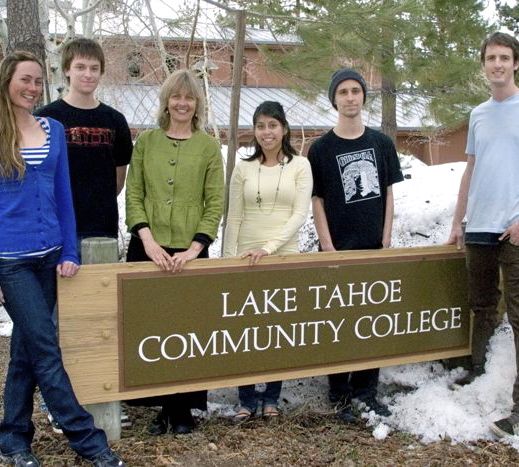
LTCC science students flank instructor Cathleen Cox before heading to Houston with their science experiment. Photo/Provided

LTCC science students flank instructor Cathleen Cox before heading to Houston with their science experiment. Photo/Provided

The group, former students of LTCC physics Professor Cathleen Cox, submitted a 15-page proposal detailing their study of gravity’s effect on soap bubbles to NASA in January for its Reduced Gravity Education Flight Program.

Two months later, the students received their acceptance letter. But with medical examinations, stress analysis and NASA inspections, the group has little time to celebrate.

In June, Cox and the four students –- with one being unable to attend — will travel to NASA’s Johnson Space Center in Houston to perform their experiment on an aircraft flying 30 parabolic maneuvers in 25-second intervals over the Gulf of Mexico.

The study, titled the “Structural Integrity and Mathematical Modeling of Singular Soap Bubbles in Microgravity and Hypergravity,” researches specific aspects of a bubble, such as its color pattern and longevity at different gravity levels.

The soap bubbles will be blown in a tube drilled through a polycarbonate box, which is located within a bigger box made of the same material with rubber attached to the corners. Overall, the entire experiment will fit within the glove box NASA provided the group with.

“(The experiment) is definitely tougher than what we thought, however it’s still a really simple project compared to other projects, which is a good thing,” Burton said.

Despite providing the students with research experience, Cox said being accepted into the program benefits the community as well.

“One thing that’s good about (the program) is it promotes science in the Tahoe basin,” Cox said.

Promoting science after the experiment is something the LTCC students have already started planning. Burton, a 24-year-old South Shore resident, said the group will work on curricula for schools throughout the Tahoe region to help students learn more about soap bubbles and gravity.

“First, we are required to develop a website, as well as publish our paper and present our results at a conference,” Cox said.

The members of the group have recently created a science club at LTCC. This year was the first time community college proposals were accepted into the program.

In addition to Andrew Burton, the students attending the trip to Houston include Melissa Thaw, Jeff Guarino and Jared Szi. Eva Gonzales also helped with the project.