Brandi Carlile coming to MontBleu

Brandi Carlile plays MontBleu at Stateline on Aug. 2.

Hailed in 2006 by Rolling Stone magazine as its “Artist to Watch,” Carlile’s emotionally powerful songwriting and acoustic guitar work has crossed all boundaries between small venues and large stadiums, opening for such acts as Dave Matthews, Shawn Colvin, and India Arie.

Tickets are $25 in advance, $30 the day of the show. Doors open at 8pm; show begins at 9pm.


Bud Klein — 1927-2011

Bud Klein, founder of Kirkwood Mountain Resort, died May 5, 2011.

A story about Mr. Klein was published in the November 2007 edition of the Tahoe Mountain News and is republished here with permission.

Bud Klein

Bud Klein

A public celebration of Mr. Klein’s life is planned for the summer.


Tahoe Tails — Adoptable Pets in South Lake Tahoe

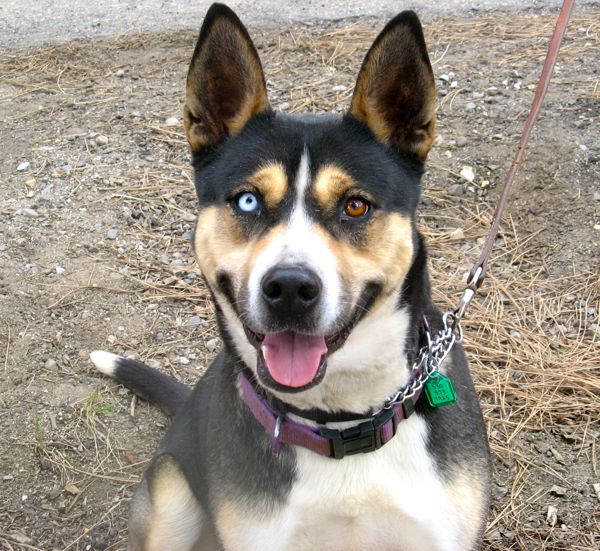
Gypsy is a sweet 4 year old shepherd-husky mix.

She came to the shelter from a home where she lived with lots of other dogs. She is very affectionate with people. She is sometimes a little unsure about other female dogs, so she’d need to meet yours before going home.

dogGypsy is about 60 pounds, and has lots of energy. She would do best in a home where she would get exercise every day. As with most huskies, she can jump many fences and so must have a well fenced yard.

And look at those beautiful eyes.

Call (530) 573.7925 for directions, hours, and other information on adopting a pet.

For spay-neuter assistance for South Tahoe residents, go online.

— Karen Kuentz


Argo keeps proving he’s one of the guys on police force

By Kathryn Reed

Pacing back and forth, head out the window trying to sniff out trouble.

Argo is ready to respond.

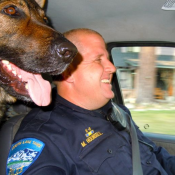
He is one of the newest officers in the South Lake Tahoe Police Department. In March, this German shepherd marked his first year working to patrol the streets with Officer Mark Hounsell.

In some ways it would be hard to know Argo is a police dog if it weren’t for him being in the back of a vehicle that says K9 unit. Like most dogs this time of year, he’s shedding his winter coat. His tail wags as he’s petted, looking up at the person with soft brown eyes asking why they took their hand away. Swimming in Lake Tahoe is one of his favorite things to do. Same with chasing the ball and playing tug-o-war with dad. And he’ll bark at other dogs.

Argo and Officer Mark Hounsell drive around looking to diffuse trouble. Photos/Kathryn Reed

Argo and Officer Mark Hounsell drive around looking to defuse trouble. Photos/Kathryn Reed

But Argo, like all police dogs, is not ordinary based on having a job outside being a family pet – though that’s also a big component of his life. (Hounsell and his wife have four children – newborn to 10 years.)

“He knows his place in the family. He listens to my wife,” Hounsell says. “When it’s time to work, he only listens to me.”

Riding around with Argo and Hounsell, they get a lot of smiles. Hounsell admits Argo can defuse situations in many ways. In some instances having a dog around makes the officer with a gun seem less threatening. Other times, people are more fearful of the dog than a man with a badge and bullets.

From March-December 2010 Argo has responded to:

• Alarms: 49

• Perimeter security: 7

• Public and school demonstrations: 12

• Building, area and article Searches: 4

• Major crimes (robberies/burglaries/fleeing felons/wanted suspects/ high-risk car stops): 13

• Other offenses: 5.

“He can clear a building more quickly than three or four officers,” Hounsell explained. “He’s a tool and he’s my partner.”

Argo has followed a scent for 2 miles, has been clocked running 17 mph, and sniffed out a rifle buried in a couple feet of snow. The latter was on his first day on the job.

“Dogs aren’t trained to tear apart a person. They are trained to hold,” Hounsell. Puncture wounds is all a suspect should sustain if a dog catches them. Now, if they try to free themselves from the canine, a different outcome is likely to ensue.

Hounsell calls Argo the people’s dog – after all it was $8,000 in donations and drug forfeiture money that paid for him. The city and South Lake Tahoe Police Canine Association own Argo. And it’s the city that pays for his food and vet bills.

Argo has a vest that will deflect a bullet and at least slow the blade of a knife. But he only has to wear the heavy armor when they are facing a known threat.

It’s Hounsell who brushes, bathes and feeds Argo.

Don’t worry about Argo getting too hot on a warm Tahoe day. The back of the vehicle is temperature controlled just in case it gets hot back there. All that seems to be missing is a comfy pillow for him to lie on. Instead, he wears a path on the rubber flooring as he goes from window to window.

Like Duke, who is partners with Officer Tony Broadfoot, Argo will be a narcotics dog one day. He’s in training for it now.

Training is a big part of Hounsell and Argo’s lives. Argo is POST certified for patrol through Adlerhorst International K9 Academy in Riverside. On a weekly basis he works with Jim Barnes, a retired El Dorado County deputy K9 handler. Barnes’ expertise has a large part to do with why Argo passed the three-day POST course.

Having come from the Czech Republic, Argo is multilingual. Hounsell is now, too. Argo responds to hand and verbal commands.

Bad guys shouldn’t feel safe with Hounsell out of the vehicle and Argo in the back. Argo knows how and when to provide backup.

The K9 trials are returning to South Lake Tahoe for the fourth year, Sept. 23-24. This is an opportunity for the public to see police dogs from multiple agencies compete. More information is online.

ngg_shortcode_0_placeholder (Click on photos to enlarge.)


El Dorado County fair incorporates varied events into 4 days

“A little bit country and a little bit rock n’ roll” — that’s the idea behind the theme for the 2011 El Dorado County Fair coming to the fairgrounds in Placerville for four days over Fathers Day weekend, June 16-19.

El Dorado County marks its 152nd year of celebrating the people, agriculture, art, music, natural resources and industries that make the county unique and special. From the rockin’ sounds of Ricky & the Redstreaks to a Hollywood Stunt Show, from homemade jams to hand-crafted quilts, from pigs in pens to wild monkeys, the El Dorado County Fair brings livestock, live music, arts and crafts, family fun, and more to center stage.

fairFairgoers can expect all their favorite and traditional activities, such as cooking demonstrations, Clifton & Warren’s Kids Corral games and shows, wine tasting, wheel-barrel racing, and team penning, plus a full schedule of music ranging from classic rock to blues, country to soul, and ’70s rock to the music of the 1950s Rat Pack. Featured on Friday evening are The Train and Ricky & the Redstreaks. The Train got its start at the El Dorado County Fair in the late 1960s and is reuniting to play the fair this summer.

Plus, on Saturday evening, fairgoers can enjoy a full 5 1/2 hours of music featuring the Eagles, Lynyrd Skynyrd and Led Zeppelin tribute bands—all included with the price of admission.

Featured special events at the Grandstands this year include the Sacramento Wrestling Federation’s Hangtown Showdown and the Monster Truck Pull and Moto X Spectacular. These events carry an additional charge, which includes admission to the fair. Fairgoers who plan to attend the 2pm Monster Truck Pull on Saturday are invited to arrive early for free rides on the Monster Truck from 1-2pm. Truck rides are also available after the 2pm show and before and after the 7pm show for $5.

Of course, no fair would be complete without animals. Traditional livestock competitions and exhibits, including the Mother Lode Fair Circuit Ranch Horse Show and the Junior Livestock Auction, take place throughout the fair’s four-day run. Or, if you have something more exotic in mind, check out Wild About Monkeys—the only traveling animal exhibition featuring trained baboons.

Humpz and Hornz Bull Riding, Mutton Bustin’, train rides on the Rawhide Express and Susan Rosen Mistress of Mesmerism, plus contests galore from photography to wine making and the Battle of the Bands to a Father-Child Look Alike contest, all help to round out a full schedule of  family fun.

Go online for guidelines on how to enter the many contests and other events at the fair, as well as to view a full schedule of activities.


Congress first recognized Mother’s Day in 1914

The driving force behind Mother’s Day was Anna Jarvis, who organized observances in Grafton, W.Va., and Philadelphia on May 10, 1908. As the annual celebration became popular around the country, Jarvis asked members of Congress to set aside a day to honor mothers. She finally succeeded in 1914, when Congress designated the second Sunday in May as Mother’s Day.

In 2008, figures showed an estimated 85.4 million mothers in the United States.

In 2004, 94 percent of the 37.8 million mothers living with children younger than 18 were living with their biological children only. In addition, 3 percent lived with stepchildren, 2 percent with any adopted children and less than 1 percent with foster children.

There were 4.13 million births registered in the United States in 2009. Of this number, 409,840 were to teens 15 to 19 and 7,934 to mothers 45 to 54.

The average age of women in 2008 when they gave birth for the first time was 25.1, up from 25 years in 2006 and 2007.

Number of births in 2008 that were the mother’s eighth or more was 18,986.

July is the month with the highest number of births, with 375,384 in 2008.

Jacob and Isabella were the most popular baby names in 2009.


UNR research paving the way for state highway department

By Kara LaPoint, Reno Gazette-Journal

When the Washoe Regional Transportation Commission and Nevada Department of Transportation have questions about efficiencies for roadway maintenance, they don’t have far to go for advice.

A top-notch resource is right at their fingertips: the University of Nevada, Reno’s Pavements/Materials Engineering program.

While Pavements/Materials Engineering at UNR is a nationally recognized teaching, research and training program, the program — as a partner of NDOT and RTC — has had a hand in local, regional and statewide projects that affect Northern Nevada drivers every day.

RTC and NDOT representatives say their collaboration with the program has brought about changes, advancements and solutions that may not have otherwise been implemented.

Read the whole story


AmeriCorps members gaining real life experience in Tahoe

By Jessie Marchesseau

Each year more than a dozen AmeriCorps members help educate residents and preserve the environment in the Lake Tahoe Basin. They come from all over the country and work for little pay in exchange for valuable work experience.

“I’ve gotten an incredible amount of experience, more than I ever expected to,” said Reyna Yagi, who is serving her second year as an AmeriCorps member. “I’ve probably learned more things than I could ever learn in an entry level position with some other agency.”

Yagi, 24, is a Sierra sustainable communities assistant for the Sierra Nevada Alliance in South Lake Tahoe. She has spent both years of her AmeriCorps service working on the Truckee River Friendly Landscaping Program helping homeowners deal with stormwater and erosion control on their properties. A 2009 graduate of UC Davis, Yagi applied to be an AmeriCorps member after realizing how well some of the available positions tied in with her degree in environmental policy analysis and planning.
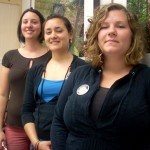
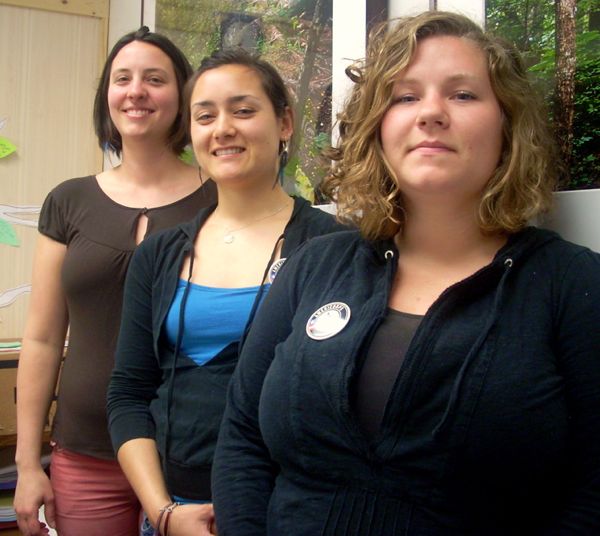
SNAP Regional Coordinator Allison Peeler, from left, and AmeriCorps members Reyna Yagi and Kelly Miller. Photos/Jessie Marchesseau

SNAP Regional Coordinator Allison Peeler, from left, and AmeriCorps members Reyna Yagi and Kelly Miller. Photos/Jessie Marchesseau

“I’ve seen it as such a substantial and huge move for me to make after college,” she said, “and I probably couldn’t have made a better decision, to be honest.”

Working alongside Yagi at the Sierra Nevada Alliance is Kelly Miller. Miller, who is originally from South Carolina, began her first year of AmeriCorps service in January. She holds a bachelor’s degree in landscape architecture from Clemson University. However, after working in the industry for a while, Miller realized she was not interested in doing conventional residential landscape design.

Excited about now working for a nonprofit, she says her work with AmeriCorps has given her the opportunity to explore the possibilities of using her degree for projects that are not traditional forms of landscape architecture.

Yagi and Miller are just two of 27 AmeriCorps members who take part in the Sierra Nevada Alliance’s Sierra Nevada AmeriCorps Partnership (SNAP) each year. SNAP places these members with myriad conservation agencies and organizations in the Sierra from Redding to Kernville.

“Without their work, much needed restoration and environmental education wouldn’t be taking place in the basin,” Allison Peeler, SNAP regional coordinator said.

However, SNAP is not the only organization assigning AmeriCorps members to service positions in Lake Tahoe. The Great Basin Institute also sends members to the area, mostly to fill resource management positions.

But the AmeriCorps members here are only a few of the more than 70,000 people who serve in AmeriCorps each year. Much like a state-side version of the Peace Corps, AmeriCorps was formally launched in 1993 as a means of meeting the country’s needs in education, public safety, health and environment. Since then, more than half a million Americans have participated.

Members receive a modest living stipend in place of traditional wages or salaries along with an educational award at the end of their service. While it is a welcome reward, most members choose to participate more for the experience than the compensation.

AmeriCorps member Megan Dee says she believes the best part of AmeriCorps and the Great Basin Institute is they give people like her who are unsure about their future career paths the opportunity to explore a variety of options and find their true passion.

Dee works in the Interpretive Services Department at the Lake Tahoe Basin Management Unit and has recently discovered an affinity for conservation education. As a Lake Tahoe native, she says the conservation the region’s natural environment has always been close to her heart.

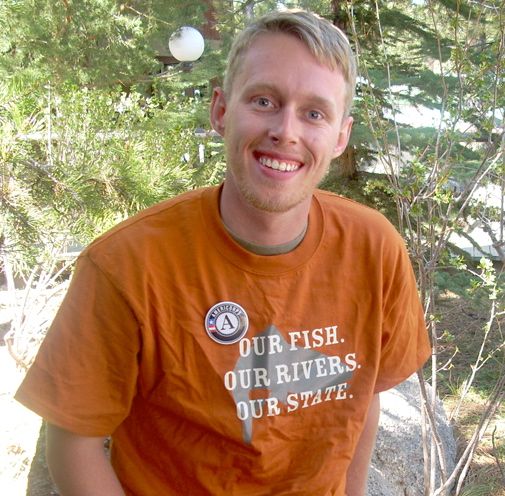
But one does not need to be raised here to appreciate the beauty and environmental concerns of the Lake Tahoe Basin. Taylor Currier, 24, hails from San Antonio, Texas. Currier is a second year AmeriCorps member and the first one to work in California Trout’s South Lake Tahoe office.

Taylor Currier, 24, is the first AmeriCorps member to work at CalTrout's South Lake Tahoe office.

Taylor Currier, 24, is the first AmeriCorps member to work at CalTrout's South Lake office.

“One thing that I love about AmeriCorps is that it’s given me the opportunity to just travel to a place that I’ve always wanted to go and live there for a year,” said Currier, who spent his first year of AmeriCorps working in Bellingham, Wash., and chose Tahoe for his second year of service. “These are destinations that I dreamed about in the flat lands of Texas.”

Currier credits AmeriCorps for providing him a type of professional experience that a person cannot get in school.

“Every day of the job brings something new that I have to tackle,” he said.

While AmeriCorps has experienced budget cuts like so many other federal programs, it has not lost funding entirely.

AmeriCorps Week is coming up — May 14-21 — and Currier and the other Lake Tahoe members will be joining AmeriCorps workers nationwide in an effort to bring more recognition to the program and its benefits to communities.

Death of photojournalists puts a lense cap on the truth

By Joshua Hammer, Newsweek

We depend on them for truth, for glimpses into human vileness, even as we cut their jobs and cut their space and treat their work as if it’s the most disposable part of the ever-shrinking media. When photojournalists Tim Hetherington and Chris Hondros were killed last week in Libya, it made you furious. First, furious at the madmen who took their lives. Then furious at a world so bloody fatigued by war that Tim and Chris were two of the last on the scene to see it to its horrible conclusion. War correspondents—in particular, combat photographers—have always worked with their lives on the line. But in the last few decades the body count has risen dramatically. Since 1992, 861 journalists have been killed in the field, according to the Committee to Protect Journalists. The worst years were 2006 and 2007, when more than 200 journalists died, most of them in Iraq. But this year is shaping up to be morbidly historic in its own right. Of the 21 media deaths so far this year, almost half were photographers or cameramen, many of them freelancers.

New York Times photographer João Silva lost both legs to a land mine while embedded with U.S. troops in Afghanistan. Speaking from Walter Reed Army Medical Center in Washington, D.C., where he is recovering, Silva recalled his first firefight—the exhilaration, the terror, and the clarity that kept drawing him back to the front lines. “My motivation was always to be on the edge of history, to get the message out,” he said, even as he admitted that this reason was an attempt at self-justification. “If I could go back and do it all again, would I do it? Yeah, most certainly, because this is what I do…I’m fortunate enough to get to see people’s lives in some of the most intimate moments, and record history.”

The deaths of two vital young photographers serve as reminders of mortality—and reminders, too, that in the chaos of war, not even the most experienced combat journalists are safe. On the murky front lines of contemporary conflicts, they are no longer considered untouchable observers but rather legitimate targets for kidnappings and killings. “When something like this happens, of course I pause and think, is it worth it?” says Lynsey Addario, a friend of Hondros and a longtime war photographer who was captured with three New York Times journalists in Libya last month and held under often brutal conditions for days. “Do people really care? Is it worth one of our lives? Is it worth anyone’s life?”

Both Hetherington and Hondros would undoubtedly have answered yes. They were surely motivated by many things: wanderlust, the thrill of seeing history through the shutter, a curious feeling of comfort in conflict zones. But above all, say colleagues, they were driven by a sense of mission, dedicated to the principle of truth-through-proximity.

Read the whole story


LTCC accepting entries for student art show

Lake Tahoe Community College Art Department is opening entries for the 2011 annual student exhibition in May. Submissions will be taken May 18 from 8am to 6pm and May 19 from 8am to 8pm at the Fine Arts Building loading dock.

Every LTCC college student registered in art classes during the quarters of spring 2010 through spring 2011 is eligible to submit one to five pieces with an entry fee of $10 per artist (not per work) and $15 per artist for six to 10 pieces. All two-dimensional work must be properly framed, ready to hang with wire (no string) and under glass or acrylic, clip-frames no larger than 18 by 24 (uni-frames) are acceptable.

This year there will be 18 categories juried within the exhibit, including: painting, drawing, watercolor/water media, 2-dimensional figure (as subject), 2-D portraiture, printmaking, film photography for black and white and color, digital photography, digital art, 2-D mixed media, sculpture, figure sculpture, metal sculpture, cast metal sculpture, ceramic sculpture, functional ceramics, and color and design.

First, second, third, and honorable mentions will be awarded in each category. A ribbon for “Best of Show” will also be awarded to an individual piece for most outstanding work. A special award is the “People’s Choice Award,” voted by the viewing audience within the first week of the exhibit.

A separate team of jurors will select artworks to be awarded the cash prize of the Patricia Amundson Purchase Award, which will also place these works into the college’s permanent art collection. In recent years, local businesses have contributed to the awards by giving gift certificates and cash awards to award-winning students. The award winners for all categories will also be exhibiting in a group show, on display in the student gallery during the fall 2011 school year.

The 2011 Annual Student Art Exhibit will have an opening reception May 22 from 2 to 5pm with the award ceremony starting at 3:30pm. The exhibit will be open to the public and on display through June 16.

For more information, call the LTCC Art Department at (530) 541.4660, ext. 335, 251, 228 or 360.