Lecture about the importance of play

The KidZone Museum, a nonprofit organization nationally recognized for its exemplary children museum efforts, partners with Squaw Valley Institute to offer a lively, fun and informative presentation by Stuart Brown on the importance of play in an individual’s life.

The presentation, which includes a Q&A, is June 5 at 4:30pm at the Resort at Squaw Creek. The cost is $10. Tickets may be purchased online.

Brown will discuss topics such as what triggers an adult or child’s emotional engagement with the world, holds our attention and helps to craft each person’s unique human brain. He’ll also explore the growing data on the relationship of play to an individual’s performance, emotional regulation and overall well-being. Attendees will learn what highlights the evolution, neurobiology and characteristics of play behaviors and their embedment in the survival circuitry of the brain. The consequences of play deprivation will also be discussed.

Brown is director of the National Institute for Play and author of “PLAY: How It Shapes the Brain, Opens the Imagination, and Invigorates the Soul”.

For additional information about Brown’s presentation, contact Carol Meagher at director@kidzonemuseum.org or (530) 320.5613.


History: From snowstorms, to city incorporation, to original casinos

Publisher’s note: This is reprinted from the July 1975 Lake Tahoe Historical Society Newsletter.

Among the best loved couples in South Lake Tahoe are Don and Ethel Clarke. We missed Ethel at our June 26th meeting, but Don was there to share his recollection of the South Shore over 25 years. Don has probably more “firsts” to his credit than anyone else in the community. He was elected to the first Unified School Board, to the first board of directors for South Tahoe Public Utility District, to the first City Council, and was the first City representative on the Tahoe Regional Planning Agency Governing Board. In addition, Ethel opened the first insurance agency to be established here in 1951.

museum logoDon spoke of all the change that had occurred since he and Ethel first arrived here in May 1, 1950 in a blizzard. At that time, the trip took six hours, at the very least, from San Francisco, and many times involved an overnight stop in Placerville. The Clarkes first took over Lawson’s Coffee Shop at the “Y”, generally in the location where the Chevron station is now located at 1053 Emerald Bay Road. He also worked for Harvey West at the Placerville Lumber sawmill as a chain operator and tallier. In 1950, there were somewhere between 500 and 1000 residents and everyone knew each other. The three markets were Fenn Barkley’s Tahoe Valley Store located on a portion of what is now the South Y Center, Young’s Bijou, and, the only one presently existing, Cecil’s Market at Park Avenue.

In 1951 Ethel Clarke became a reporter for the weekly Auburn Journal, her biggest scoop having been an interview with Rita Hayworth who was staying at Glenbrook awaiting her divorce from Ali Khan. She also enjoyed interviews over the years with Lena Horne, Gildersleeve, and the Ink Spots.

In 1951, in May, the M.S. Dixie came into being having been brought in piece by piece and reconstructed at the Lake. The stage a Sahadi’s, now Harrah’s was a teepee. Harvey’s Wagon Wheel was a one story structure with the cowskull and wagon wheel insignia woven into the red carpet.

One of the Clarke insurance agency’s first customers was Clyde Beecher, owner of the Nevada Club where the “real” gambling took place. Clyde, after advising the many thousands he had “in the drawer and I don’t know how much in the safe” had no trouble getting the bond he requested. The Clarke agency enjoyed a tidy business inasmuch as outside insurance agencies seemed to have the opinion the local casinos were operated by those who were only a half-step from outlaws and were patronized only by killers carrying guns. We did have Indians. Hank Pete, last of the Washo chiefs, and his wife Judy picked up extra change by posing for tourist pictures at Helen Perry’s Trading Post across from the Crescent V until the Nevada Welfare Agency forced them to stop or lose their welfare subsistence. Flip Brandi, published Lake Tahoe News, leased Vikingsholm in July 1951 these plans went awry when the estate was transferred by Park System. Don recalled playing Santa Claus at Vikingsholm that year of the “Big Snow”. They left the car at Camp Richardson and boated over to Emerald Bay. On the return trip, he found only the very tip end of the car aerial poking above the snow – and no shovels! Emerald Bay was frozen solid eighteen to twenty inches deep, and 152 house collapsed from the snow that winter. Skiing over the rooftops was not unusual.

The following year, 1952, the Lake Tahoe Unified School District was voted in. The high school classes were held at the American Legion Hall, with basketball being played on stage. The team had only basket for practice but the South Tahoe team was well known throughout the area. Don recalled the Clarke adventures in driving the first school bus back from the factory in Lima, Ohio, the first day at 35 mph, the second at 40 mph, then the governor held at 45 mph all the way across the country. This was the old Bus No. 1 which, after many years faithful service, was sold recently and is on it ways to South America.

Don’s other recollection over the years included his serving as MC at home talent shows held in the amphitheater when the El Dorado Campground was opened the summer of 1953. In 1954 the South Tahoe Public Utility District was formed. Around 1958 the Lake Valley Planning Organization was formed among business men and residents, later developing into the Community Forums with active citizen participation in the early days after incorporation of the city. In 1960 came first discussions of a freeway question. August 1965 saw formation of the Recreation Advisory Board which preceded the Joint City-School Recreation Commission.

In November 1965 the city incorporation was voted in by a 2011-614 vote. In 1968 the ill-fated Tahoe College was formed, later closing it doors after the death of its founder Jim Wilson. In June 1968 the Olympic High Altitude Training site was established at Echo Summit to train track stars for the games in Mexico City. The Tartan Track at the Intermediate School was moved from the Echo Summit. In 1970 came the Bi-State Compact establishing Tahoe Regional Planning Agency.

After serving as Executive Director of the Chamber of Commerce Don “retired” to travel and enjoy life but neither Don nor Ethel have ceased their active participation in community affairs.


ZCES students collect toys for CASA kids

By Kathryn Reed

It was hard for the four Zephyr Cove Elementary School students to contain their smiles. Giving back feels pretty darn good.

For the second year in a row fourth-grader Alexandra Palant collected toys and stuffed animals to give to youth who are part of the Court Appointed Special Advocates program.

Last year just her class collected items. This year she engaged the student council, which was able to get the entire  school involved.

Ellie Krolicki, Trent Dingman, Caroline Krolicki and Alexandra Palant with the toys the collected for CASA. Photo/Kathryn Reed

Ellie Krolicki, Trent Dingman, Caroline Krolicki and Alexandra Palant with the toys the collected for CASA. Photo/Kathryn Reed

Alexandra said her parents have been encouraging her to give to others since she was much younger than she is now.

“There are a lot of kids who aren’t as fortunate as all of us,” Alexandra said.

The council – made up of Ellie Krolicki, Trent Dingman, and Caroline Krolicki – echoed Alexandra’s sentiments. The four brought the toys to the courtroom the afternoon of May 26.

In about a month’s time they were able to collect enough items to fill a large portion of the wall in the family courtroom in the El Dorado County Superior Courthouse in South Lake Tahoe.

Educational games, board games, dollhouses and an array of stuffed animals are ready for someone else to enjoy. Most of the toys are new, with a few slightly used.

The Nevada students are hoping to keep up the collection each year, even when they move on to Whittell High School.

The CASA kids will get to pick out what toys they want when they come to the office. Oftentimes the presiding judge lets a child peruse the display for a toy as well.


FBI vault contains Sinatra items, including Cal-Neva documents

By George Knapp, 8 NewsNow

LAS VEGAS — Las Vegas icon Frank Sinatra had an FBI file that was one-foot thick. So, why did agents follow the singer for more than 40 years? And why were they interested in Marilyn Monroe’s lovers?

The FBI has created an online vault packed with millions of pages of once confidential information including reports on everything from Las Vegas casino moguls and gangsters to UFO’s and animal mutilations.

The vault was created in the interest of public information but it was also done so the FBI could cut itself some slack in responding to huge numbers of public records requests filed under the Freedom of Information Act. Most of the documents inside the vault have been made public to one degree or another but they never before been so accessible.

To Las Vegas casinos, Frank Sinatra was a god, a moody magnet for high rollers. To the FBI, Ol’ Blue Eyes was a wannabe mobster. FBI agents compiled more than 1,200 pages in their Sinatra dossier, from his 1940’s friendship with supreme Mafioso Lucky Luciano to his 1960’s secret partnership with Chicago boss Sam Giancana, a hidden co-owner of Sinatra’s Cal Neva Lodge at Lake Tahoe.

Included in the file are news clippings about Sinatra’s drunken Las Vegas rampages. A 1963 memo shows the FBI planned to pressure members of the Rat Pack to rat out their chairman. It never happened though. And in 1964, heat from the FBI prompted Sinatra to announce he was selling his interest in Cal Neva.

Read the whole story


Exhibit highlights women’s journey across Overland Trail

By Susan Skorupa, Reno Gazette-Journal

Voices of the women who traveled across the continent in the 1800s come alive in a program Thursday at the Nevada State Museum in Carson City.

Historian Doris Dwyer will present “Women’s Voices from the Overland Trail,” blending stories from diaries and journals of women who traveled west on the pioneer trails during the mid-19th century.

The program is part of Archaeological Awareness & History Preservation Month.

Much of the program “is based on stories I’ve gotten from women’s journals, diaries, reminiscences, mostly from the Overland Trail, but not exclusively,” said Dwyer, who has taught history at Western Nevada College since 1980. The talk is mostly from “the 1840s, ’50s and ’60s, the high points of emigration.”

There’s enough literature from that time to explore how women recorded their journeys differently than men, she said.

Read the whole story


Truckee company wins 7 awards at film festival

Truckee video production company Eureka Productions won seven awards this month at the 44th annual Worldfest-Houston International Film festival.

“We are delighted to say that your awards assume a very special significance this year, as more than 4,200 category entries were competing from 32 countries,” Hunter Todd, director of WorldFest Houston, said in a press release.

Eureka Productions’ awards include “how-to” instructional videos, a screen play and a documentary about the world’s largest religious gathering. The complete award list is below, and samples of Eureka Productions videos may be viewed on Youtube.

1. Remi Award: “Fight to Breath Right” DVD, which examines Russian breathing and movement techniques for health and exercise (and sorry, fighting)

2. Remi Award: “Kumbh Mela” DVD, a documentary of the world’s largest religious gathering every 12 years in India at Haridwar.

3. Remi Award: “I Will Fight No More Forever” DVD, about a Dutch-Indonesian martial arts master featured in Eureka productions award winning “Magus of Denver’

4. Gold Remi Award: “Heart to Heart” DVD, about healing practices for animals (see “Tapping into the Collective Unconscious” Eureka Productions award, winning in 2010).

5. Gold Remi Award: “Cayuga Park” DVD, a short news story about a small park in San Francisco with its unusual artistic achievement of sculptures by Demi, the man who maintained the park for more than 30 years. The Park is now threatened by BART, to be destroyed.

6. Silver Remi Award: “The American Lightwar,” an original screenplay by Sam Edwards

7. Silver Remi Award: “Best of Masters on the Mountain Healings Seminars” volume II

Eureka Productions has offices in Truckee and Mendcino. It specializes in martial arts and healings seminars, social issues and documentary videos.


History: Hwy. 50 has been closed on and off through the years

Publisher’s note: This is reprinted from the July 1975 Lake Tahoe Historical Society newsletter.

Fred (Fritz) Perry shared his experiences and pictures collected over more than 30 years as “Bug Inspector” at Lake Tahoe at the March LTHS meeting.

museum logoHis first job as a Plant Quarantine Inspector was a seasonal job at Smith River in 1931, in connection with the opening of a bridge which shut down the last ferry on Highway 101 between San Francisco and Portland.

He came to the Tahoe area at the Truckee station in 1937 and after a session or two of desert living came to the South Shore in May, 1944 when the Agricultural Inspection Station was located generally at the site of the present Union Oil Station at 4102 Lake Tahoe Blvd. (corer of Poplar). The original California-Nevada stateline – the Von Schmidt line as it became known – was in this area. A later survey placed the line at its present location.

The Inspection Station, at the end of a 20 year lease period in Stateline was moved to it Meyers location in May, 1952, when the State purchased five acres for $3,600 from the Celio family.

Mr. Perry recalled the light traffic of the Forties. (His log for Saturday, April 20, 1945 showed clear weather, first car by at 8:30 a.m., second arrive at 10:20 a.m.). Gas rationing severely restricted summer travel and Highway 50 was closed over Echo Summit at the first big snow storm. Two men were assigned to road work, picking up rocks falling down, etc., as long as the road was open. One year, the two, particularly anxious to spend Christmas with their families, were elated when the first foot of snow fell about December 20th. One of them, “Dutch”, was instructed to plow the highway from Stateline down to the “Y” where the plow was stored; then they could go home. When Dutch passed Globin’s, Frank Globin asked him to make a run around the resort and then invited him in for a bit of pre-Christmas cheer. As a result, Dutch forgot to stop at the “Y” and plowed the road all the way up to Twin Bridges. Consequently the men had to stay on duty until after the next snow sometime after January 1st.

1943-33 was the first winter Highway 50 was kept open over the Summit. However, the following year the Army ordered that the State keep Highway 50 open 24 hours a day, or they would keep it open, taking it over as a Military Highway. All snow equipment was then moved to the Truckee area and Highway 50 was closed in the winter until after World War II. Although construction started before the war, the “new” or present route of Highway 50 over Echo was not completed until the close of hostilities.

The Inspection Station endeavored to cooperate with the government agencies during the war years, but had some difficulty with the OPA who were concerned with restricting recreational travel. The log books of the station were always open to the OPA people, but the personnel were not able to testify to the accuracy of their entries. The OPA attempted also to stop cars along the road; however, in a spirit of helpful friendliness the men at the station managed to get the word around that drivers were not obligated to stop for them.

Inspectors were also requested, unless they were too busy, to report to the Board of Equalization occasions when their inspection disclosed more than two bottles of whiskey or more than three packs of cigarettes in a car. Although, ever anxious to cooperate, the inspectors always seemed to be too busy, as can readily be noted from the April 20, 1945 log entry quoted earlier.

Further entries in Fritz’s log book showed the first scheduled Greyhound bus of the year went through the station on June 5, 1945; however, there was no regular bus service until many years later. An entry for August 16, 1945 noted the end of gas rationing.

He recalled the personalized service of the crank-style telephone system of the day. The telephone office located between Camp Richardson and Taylor Creek, was operated by Chick and Doris Ernst who rigged up a signal for the fisherman at Taylor Creek whenever they saw the game warden pass.

Fritz also told of early days at the Stateline casinos including the night he thought the inspection station was on fire when he first saw the red reflection from the Neva Club’s new sign – the first neon sign on the South Shore. Anecdotes of his meeting with baseball’s famed Ty Cobb and millionaire Max Fleischman were related. One of Mr. Perry’s summer assistants was Gene Farmer, now a well known television writer and associate producer of “That’s My Mama”. Farmer ran away from an orphanage at 15, lied about his age to join the Marines. After the Korean war he worked at the bug station to help pay his way through college, eventually receiving his Ph.D. from Stanford. During that time he also worked for the Perry septic tank service, known as “GERANIUM”. Mr. Perry boasts of having the only septic tank truck operator with a Ph.D.

One year the inspectors cared for a doe struck by a car. When she recovered it was too late in the season for her to migrate and she stayed at the station, becoming completely tame. She developed a passion for tobacco and was constantly stealing the inspector’s cigarettes. She was given to the Richardsons the following year and remained with their private herd until they could no longer support the herd. She eventually was hit by a car and killed in front of the lodge.

Although regulation governing plants brought into California have not changed, the inspection of cars been curtailed for economic reasons. Just before he retired, Mr. Perry said he was required to operate seven stations on a 3-day a month basis.


NLTRA gives $12,300 in marketing grants

The North Lake Tahoe Resort Association in collaboration with the North Lake Tahoe Chamber of Commerce recently awarded $12,300 in grants as part of the second cycle of its 2010-11 Community Marketing Grant Program.

The NLTRA awarded nearly $50,000 in grants last fall as part of cycle one.

Those receiving grants in the second cycle are:

Lake Tahoe Trail 100K – Northstar-at-Tahoe ($4,600)

2011 Tahoe Expo – Sustainable Tahoe ($4,600)

Tahoe Trail Running Series – Big Blue Adventure ($2,000)

Living History Day – California State Parks ($1,100).

The Community Marketing Grant Program provides marketing and promotional support to special events or projects and programs that bring visitors to the region, generate local and regional business revenue, provide local and regional media exposure, and opportunities for public relations. Grants cannot be used for capital investments, salaries, operational overhead, food and beverage, entertainment and supplies.


Tahoe Tails — Adoptable Pets in South Lake Tahoe

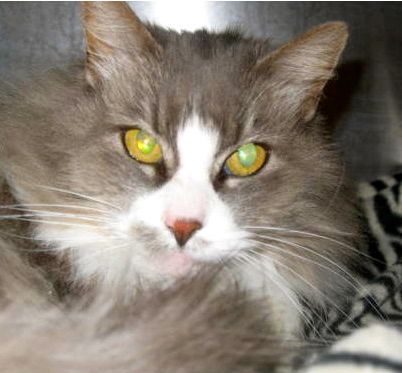
James is a very nice gray long-haired cat who almost likes dogs better than other cats. He is about 7 years old and recently spent some time in foster care.

catHe is very affectionate and has a big purr. James would like to sleep at the foot of your bed.

He has been at the shelter for over 6 months and he would very much like to go home.

James is neutered, microchipped, and vaccinated. He is at the El Dorado County Animal Services shelter in Meyers, along with many other dogs and cats who are waiting for their new homes.

Call (530) 573.7925 for directions, hours, and other information on adopting a pet. For spay-neuter assistance for South Tahoe residents, go online.

— Karen Kuentz


Outdoor lights add ambiance to yards

By Susan Skorupa, Reno Gazette-Journal

Outdoor lighting has come a long way from the 60-watt incandescent lightbulb strung up over the back door.

Landscape lighting has become more efficient and effective, helping people make better use of their yards and patios.

LED low-voltage and solar lights stand out as popular options for outdoor use on decks and patios, around pools and other water features, and to highlight landscape attractions.

There are several attractive factors in outdoor lighting, said Tom Stille, local landscape architect.

People like to light up pathways for better visibility on sidewalks and stairways to their doors or around their yards.

“Path lights … can add a lot of ambiance,” Stille said. “They don’t light the whole landscape.”

Read the whole story