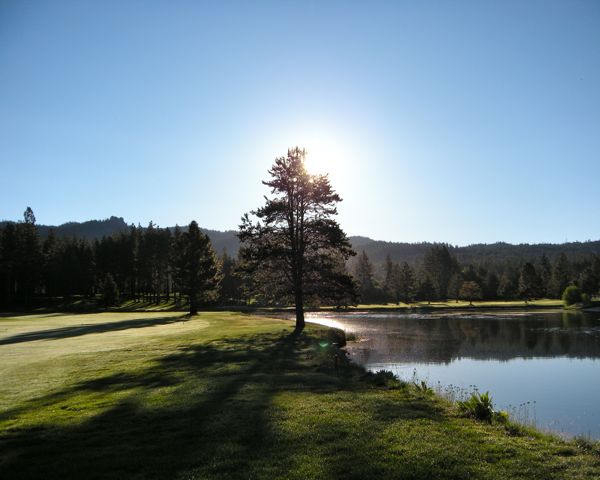
Lakefront golf course lodging in works for Edgewood Tahoe

Publisher’s note: This is the last of three stories about Edgewood Companies.

By Kathryn Reed

STATELINE – Brooks Park, the mastermind behind so much of what Edgewood Companies developed at Lake Tahoe under the business’ former name of Park Cattle, envisioned lodging on the golf course.

Eleven years after his death, the environmental document for Edgewood Lodge is expected to be released this fall in draft form. It’s possible construction on the $150 million-plus project that is slated to have 126 standard rooms, 24 regular suites, four deluxe suites and 40 interval ownership units could break ground in 2013.

It’s all about providing the complete Edgewood experience, is how company officials tout the high-end hotel.
edgewood-3

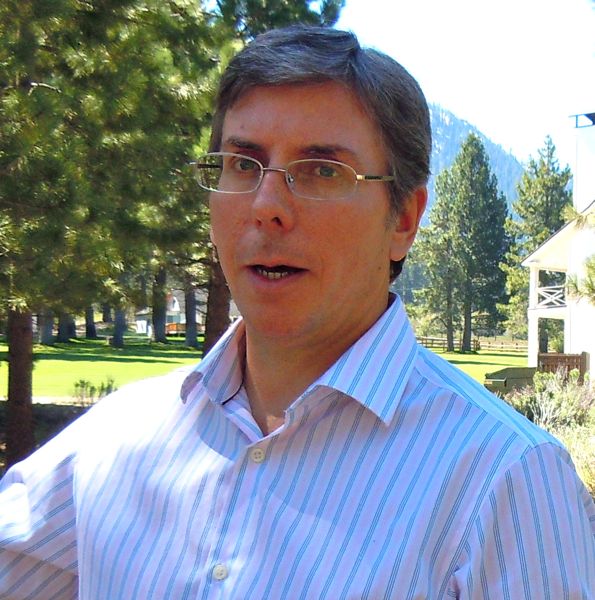
Patrick Rhamey of Edgewood Companies talks water quality. Photos/Kathryn Reed

Besides adding lodging to the Stateline golf course that sits on the edge of Lake Tahoe and is home to the annual celebrity golf tournament each July, the company expects to put a rough estimate of about $2.5 million into water quality projects that go beyond what is necessary to complete the lodge.

Patrick Rhamey, vice president of real estate for Edgewood Companies, said in part the extra effort is to prevent the League to Save Lake Tahoe from filing a lawsuit. While the League has been invited to take the same tour of the site Lake Tahoe News went on this month, Rhamey said no one at the League has taken him up on his offer.

Calling the various improvements “threshold projects” is good verbiage to show the League it’s paying attention to what’s in the Tahoe Regional Planning Agency’s Regional Plan.

What the public will notice

Holes 7, 8 and 9 will be altered to accommodate the lodge, with No. 9 having the most substantial changes.

With the last three holes of the 18-hole course being known for their scenic qualities, 9 will share that distinction in the future.

Edgewood Creek will be restored.

Edgewood Creek will be restored.

Brandon Hill, project manager, said, “They’ll finish 9 on the beach. It will be a dramatic, compelling improvement.”

It has to change because the lodge is expected to go where the current fairway for No. 9 is.

Hole 13 will be raised a bit so it’s not so swampy like it has been this year with all the moisuture the basin has received.

Construction schedules will not interfere with the celebrity golf tournament, officials said.

Non-golfers will have access to a stretch of beach that is currently private.

The road leading into the area will be rerouted a bit so it heads more to the left, ending at the lodge. Parking will be in a structure at the lodge.

The current lot will be removed. The beach will be brought up farther from the lake.

The current restaurant/clubhouse will be extended toward what is now the parking lot so larger banquets and weddings may be accommodated.

A path along the entry road will be designed for cyclists, pedestrians and golf carts. It will tie into the Stateline-to-Stateline bike path, which passed its last hurdle last week with the U.S. Forest Service signing off on the South Shore demonstration project.

Protecting Lake Tahoe

While Edgewood Companies owns about 500 acres on the South Shore, the 4,000-acre Edgewood Creek watershed almost entirely ends at the golf course. This is water that is not being treated at today’s standards before reaching the lake.

Highway 50 and Kingsbury Grade carry the nastiest pollutants through the golf course’s network of pond filtration systems. Ultimately it comes out in a culvert off the 18th hole.

How all of that works will change – including reconfiguring Edgewood Creek through the course so it looks and acts like a stream instead of resembling a man-made concoction.

The company has expanded its original water quality improvement vision to include Friday’s Station on the other side of Highway 50. This is where the big white house sits.

On the east side of that property is a large pond, with the water being held back by an earthen dam that is at least 60 years old. An ancient wheel controls water flow, with the outflow being at the bottom – thus sending more sediment downstream.

The pond at Friday's Station will be drained and revamped.

The pond at Friday's Station will be drained and revamped.

This land was once pasture for the cattle that were here June to October. The pond was used for irrigation and fishing.

Making sure the dam is stable is another component.

The sediment from the pond will be excavated to allow for more storage, to reconstruct the dam, change the outflow and reroute the overflow area.

Water from the Stateline Stormwater Association, which encompasses the casinos, first hits pond No. 6 on the golf course. (Pond numbers correspond to the hole its on.) Dredging this and other ponds is part of the plan.

Pond 14 will be removed to make for a more natural flow of Edgewood Creek. Fish will be reintroduced to the creek.

Other ponds will be improved as well. Vegetation will be planted to better stabilize the soil and provide habitat for animals. The idea is the wetlands will be restored, too, as well as doubled in size.

“We are going to increase the amount of time water is in contact with vegetation,” explained Jason Drew with Nichols Consulting Engineers.

Revamping the courses fertilizer management plan is part of the bigger project. Rhamey said the course does not use much fertilizer now.

The lodge

To build the lodge, Edgewood Companies had to procure tourist accommodation units from South Lake Tahoe. That was achieved earlier this month.

The original plan was to take ones from the Horizon hotel, which it owns. But the thinking now is for that site to be viable after Columbia Sussex’s lease expires July 31, 2014, the TAUs need to be in place.

Edgewood Companies wants to build lodging on the golf course.

Edgewood Companies wants to build high-end lodging on the golf course.

Rhamey does not foresee extending the lease again, but instead having Edgewood Companies take control of the property.

“We are looking at a full range of options,” he said without being specific about the Horizon. “It’s future we think a lot about, but we don’t know yet.”

In its various iterations, the project now calls for 194 TAUs – down from 230; 274,000 square feet, a reduction of 172,000 square feet from the original plan; and three stories instead of four.

“The changes in the design program come from being responsive as we’ve been listening to public sentiment over the past two years,” Hill said. “We’ve been specifically monitoring other projects in the region and have seen that time and time again, the public has requested that projects reduce in size, scale and massing in order to better fit in with the Lake Tahoe environment.”

The lodging will be built in stages, with the main hotel in the first. The casitas, which will be detached and sold in yet to be determined intervals, will have four to six units in each structure.

Edgewood is weighing options when it comes to bringing in a flagship hotelier to run the operation or doing it in house.

LEED certification will be sought, but the level has not been decided. A living roof is part of the design.

A bistro-style restaurant will offer meals three times a day. A high-end spa will be open to guests and the public.

Turning the golf course into a destination for cross country skiers and snowshoers is being discussed.

More information about the project is online.

This is an Edgewood Lodge rendering, the lodge site plan and the full site plan.


Randy Schachtili — 1926-2011

Randy Schachtili passed away June 19, 2011, doing what he loved, spending time with Jane, his wife of more than 63 years.

At 84, he lived a long and interesting life and touched the lives of all who knew and loved him.

Born in Asheville, N.C., on Nov. 7, 1926, and raised in Sacramento, he graduated from McClatchy High School, then enlisted in the Army Air Corps to train as a fighter pilot just as World War II ended. He attended UC Davis for a short time, but was drawn by a love of the outdoors to Lake Tahoe with his wife and young daughter, Jenni, in 1955.

He taught himself to ski as a teenager in the Sierra and parlayed that love into a long, enduring career in the ski industry as the first ski school director at Heavenly Valley in the 1950s; then operating a small ski area, The Edelweiss, which produced several Olympic ski racers and hopefuls during the early 1960s; and later going to Vail in the early 1970s, where he taught skiing for several years. He has been a member of a National Ski Instructors Association for nearly 60 years.

Winter sports were not his only passion. He mastered tennis in his 40s. Fly fishing and backpacking consumed every summer for decades. He was “The Vail Backpacker,” and family, friends and clients learned the skills of living in the outdoors and gained special appreciation of the Colorado Rockies and the Sierra Nevadas.

At the age of 55, he and Jane moved out of the Colorado snow to the Scottsdale sunshine, where they have lived for nearly 30 years. It was at that time that he developed a love of running and up until he was 75, he ran more than 19 marathons, including three in Boston.

Sports took their toll and his greatest disappointments of his long life were the decisions to hang up his skis, pack away his rods, put away his Nikes, and settle for games of skill like pinochle and Sudoku. An avid reader, he always had a book at his side, and he never lost his love of a good read.

His family gave him his greatest joys.

He is survived by his wife, Jane; his daughter Jenni Marquez (Walt) of Eagle; his grandchildren, born and raised in Vail, Jeff Marquez (Debbie), of Boise; and Molly Marquez, of Durango. Randy was excitedly waiting to meet his first great-grandson this fall.

He had an entrepreneurial spirit and his business careers ran from retail to insurance, recreation, real estate sales and property management. In retirement, when asked what he did, he replied with a smile, “Whatever I want,” a comment on how he lived. He will be missed.


Chautauqua performers shed selves, become historical figures

By Forrest Hartman, Reno Gazette-Journal

Marvin Jefferson knows what it means to walk in the footsteps of Dr. Martin Luther King Jr. because he’s done it.

Jefferson, a professional actor, has portrayed the beloved civil rights leader numerous times, and he’s preparing to do it again for Nevada Humanities Chautauqua. The event, which is celebrating its 20th anniversary this year, asks performers to transform themselves into historical figures, offering entertaining and educational monologues and then answering audience questions, both in and out of the historical figure’s persona.

“It’s not like just doing a monologue,” Jefferson said. “You have to know enough about the figure to answer competently.”

That means Chautauquans do a lot more than study lines. Jefferson, who also portrays singer, actor and activist Paul Robeson, said it can take between six and 12 months for a Chautauquan to properly prepare a role.

Read the whole story


History: Retracing the Oregon-California Trail

Publisher’s note: This is republished with permission from the September 1975 Lake Tahoe Historical Society newsletter.

A picture story of the Oregon-California Trail was presented by Chuck Lucas on August 28th. Ninety-eight per cent of the 225 photographic slides were taken on site as he recently followed the route of the Oregon Trail from Independence, Missouri into Idaho; the California Trail from Fort Hall, Idaho to the Humboldt and Carson Sinks; and on over Carson Pass to the Sacramento Valley. The pictures were taken generally at the same time of year the pioneers would have reached each location in their trek across plains, desert and mountains to reach their “promised land” – CALIFORNIA.

history logoCommencing with the Louisiana Purchase in 1803 and exploration parties sent out by the U.S. Government, the narrative moved on to the 1810-1824 age of the mountain men, who both trapped for the fur trade and scouted such places as Coulter’s Hell (Yellowstone Park). The discovery of the South Pass (Wyoming) in October 1812 blazed the way for further exploration as well as the great wagon migration to come.

From the early 1840’s to the late 1860’s, the Oregon Trail saw the greatest mass movement of humans, animals, and equipment in civilized history. As many as 13,000 travelers moved over the road in a single season. In spite of dust storms, tornadoes, quicksand, flood waters, Indian raids, accidents, sickness and death (graves still remain along the way) – on those portions of the trail not now covered by highways or development are clearly discernible since not one blade of grass is growing where the wagon wheels compacted the earth.

The usual method of forming a westbound wagon party was to advertise in eastern newspapers a year in advance that, for instance, a wagon train would be leaving Sapling Grove, Missouri the following May 15th. Everyone interested would gather at that location with household goods, animals, supplies and other equipment. No one really knew where they were going – just “west” – and many came ill equipped. One of the early day prevailing rumors had the Great Salt Lake draining into the Sacramento River. As a result, some of the adventurers planned to float west down the river, packing oars, sails, even collapsible boats into their wagons.

Moving out from Independence, the wagons followed the Santa Fe Trail for 40 miles into Kansas where a crude sign reading “Oregon Road” pointed to the west. At Ash Hollow they met the Platte River which followed the Nebraska sand hills to Chimney Rock and Scotts Bluff. Thirty-five miles west of Scotts Bluff, at the eastern edge of Wyoming, was the Cold Spring Campground where the travelers rested before pushing on 12 miles to Ft. Laramie where they could get wagons repaired and reprovisioned. They had traveled 642 miles, but they were still 1442 miles from Sutter’s Fort.

Reaching Ledger Cliff the first night out for Fr. Laramie, the travelers carved names and camping dates into the soft sandstone. In this area are ruts cut into the trail by the ironed-tired wagon wheels. The Platte River was forded again and again and finally the wagons reached the Sweetwater where Independence Rock, rising 150 feet into the air and 600 yards long, served as a trail marker for a campsite with plenty of grass and water. The name of the rock came from its discovery on July 4, 1821, and the travelers’ timetable predicted their arrival at that point on the 4th of July. Here, too, they carved their names before moving on to Split Rock which could be seen for 15 miles in either direction.

After clearing the steep slope of the 7550 ft. summit of South Pass, the road branches. To the right was the more direct route to Fort Hall on the Snake River. From there, the trail followed the north bank for Oregon; the south bank for California. Register Rock, which also still bears the inscription of the weary travelers, was the last campground on the Snake before the trail turned southward into Nevada to follow the Humboldt River for 200 miles across the Nevada wastes before reaching the Humboldt Sink. Water was rationed, animals fell by the wayside, various items of furniture, pianos, anything not necessary, even wagons, were abandoned in the desert flats. The emigrants regrouped at the Lower Carson. Some moved on via Truckee Meadows over Donner Pass and an equal number followed the Carson River, passing near Ft. Churchill and present Dayton, Nevada. They were less than 125 miles from Sutter’s Fort, but ahead loomed the sheer granite eastern face of the Sierra Nevada.

The trail went southwest into the Canyon near present day Woodfords. The steep rocky terrain of Carson Canyon accounted for the heaviest stock losses of the entire trip. Through Faith, Hope and Charity Valleys they plodded, up the slope near Red Lake, and on to the gap behind Caples Lake which must be reached no later than October 1st to escape the perils of early winter. And, on the other side – after six months of all but scratching their way by their fingernails – were the oak covered foothills of the western Sierra slope and just ahead, their destination – the Sacramento Valley.


Twain’s first paid appearance benefited Carson City church

By Guy Rocha

Carson City’s First Presbyterian Church celebrated 150 years as a congregation on June 2.

Legend has it that Mark Twain once performed in the church in 1864 to raise money to replace a roof on the building. The fundraiser was a favor to his brother, Orion Clemens, who was a church member and Nevada’s secretary of state at the time, so one version of the story goes.

According to Webster’s Dictionary, a legend is “a story coming down from the past, especially one popularly regarded as historical although not verifiable.” The Twain story may have come down from the past, or maybe someone just assumed it to be true and told a newspaper reporter. However, it is verifiable.

Relying on “Twain’s Letters, Vol. 1, 1853-1866,” we know that while there was a church fundraiser, it was not held in the church because it was unfinished and there was no roof to replace. At the same time, the request to speak came from two church trustees and not brother Orion, who was secretary of Nevada Territory and not secretary of state.

Guy Rocha is the former Nevada state archivist.

Read the whole story


Parks turn Tahoe cattle land into casino, golf course

Publisher’s note: This is the second of three stories about the Park family and Edgewood Companies’ evolution at Lake Tahoe.

By Linda Fine Conaboy

The Park family began to rent what Brooks Park called “parking lot land” to the likes of Harvey Gross and Bill Harrah in the 1950s. His parents still lived at Friday’s Station then, where his dad handled these transactions.

He recalls Gross as a down-to-earth man with a good sense of humor and Harrah as a man of his word. “I admired him for his ability and for his integrity.”

The 1960s

“When we built the golf course in 1965, we stopped herding, but we didn’t stop completely. Up until a couple of years ago (prior to 1992), we still took cows there for sentimental reasons,” Brooks said.

Brooks was proud of the golf course, but interestingly enough, it may not have been built without gentle prodding from a man who knew about such things.

“Del Webb was a friend and he said what we need is a golf course. We built it in 1966 and it opened in 1968. We spend lots of money on that golf course; we like it,” Brooks said.

As an aside, Brooks said he and Webb decided if they ever wanted to build something else, the golf course could always be torn up. He added, “Now we wouldn’t change it; we wouldn’t want to change it.”

Edgewood Tahoe Golf Course hosts the popular celebrity tournament. Photo/LTN file

Edgewood Tahoe Golf Course has created an international following. Photo/LTN file

In 1965, Brooks said no permits were required, but “the area was brushy and unclean. We thought the least we could do was clean it up!”

In the late 1960s when the George Fazio-designed golf course opened it was among the top 100 courses in the world, according to Golf Digest. Today, it still ranks as one of America’s top courses.

Moving forward

In the 1970s, the Brooks Park family was again on the move, this time with the opening of the trouble-fraught Park Tahoe Hotel Casino, now MontBleu Resort Casino & Spa.

“We thought the higher and better use of the land would be a casino and restaurant. It took a long time to be built because of the injunctions by the League to Save Lake Tahoe,” Brooks said.

That delay turned out to be three or four years, Brooks said.

“The steel was sitting there, it was very costly. If we didn’t have the perseverance, it wouldn’t be there now,” he added.

A check of the records shows the Park Tahoe was dogged by complaints and charges and didn’t open its doors until 1978. Flash forward to 1992, when it appears that it was becoming even more difficult to jump through the various hoops required to get a construction project off the ground.

Park Tahoe Hotel was run by the family. Now Tropicana runs what is called MontBleu.

Park Tahoe Hotel was run by the family. Now Tropicana runs what is called MontBleu.

“We’ve applied for permits to build a new development on the lake shore,” Brooks said. “We’re still interested in improving and developing the property south of Edgewood. We’re not interested in destroying property. It’s hard to get approval. I like to get things done, but you have to have a lot of patience up here today (1992).

“I don’t know how many different people I have to ask to get something done. In the ’50s and ’60s, Gross and Harrah said yes or no.”

When I asked Brooks in 1992 what he does now, his answer was as simple as his home in Gardnerville. “I take care of business,” he said, referring to Park Cattle Company holdings, now Edgewood Companies.

Back then he handled Edgewood Water Company, which did and still does supply water to the casinos at Stateline and Edgewood Golf Course.

He also managed the acreage upon which the Stateline casinos sit, land still owned by Edgewood Companies. Besides that there were cows to be tended at Topaz in California and in the Carson Valley, although it’s a safe bet Brooks had some hired help to assist him with these chores.

Today, much of the land Brooks purchased at Topaz Lake is in the hands of his son, Bruce, and grandson, David. Land holdings have grown and total at least 10,000 acres, according to David and Bruce.

Edgewood Companies owns the land MontBleu and Horizon casinos sit on as well as the structures, but they don’t operate them. The company owns the land Harvey’s parking garage is on as well as Edgewood Water Company.

Additionally, land holdings include 500 acres in the Tahoe basin (Nevada and California) and more than 4,000 acres in the Carson Valley.

Brooks’ grandson, David, said the business model has definitely changed. Now, the family is no longer involved in day-to-day operations, but three family members including David, sit on the board of Edgewood Companies.

In a recent telephone interview, David said times are changing and the economy is suffering.

“Hopefully, the TRPA and other environmental groups will loosen up a bit and give us a break. Look at the downtown core; it’s pathetic,” he said. “Not just for us, but for everybody. We all have to turn over a new leaf. I don’t speak for the company; I speak for myself.

“My grandfather was a mastermind to put all that together at Lake Tahoe. If he were still here, it would probably still be a family-run business,” David Park said.


Free outdoor concerts at Squaw Valley

The Village at Squaw Valley’s inaugural KT Concert Series begins in July.

The KT Concert Series features Stung, a tribute to The Police; Hollywood Stones, a tribute to The Rolling Stones; and Zoo Station, a tribute to U2.

The KT Sundeck is nestled at the mountain’s base just feet from the chairlifts.

The schedule:

July 1: Stung – A Tribute to The Police, 6-8:30pm

Aug. 5: Hollywood Stones – A Tribute to The Rolling Stones, 6-8:30pm

Sept. 2: Zoo Station – A Tribute to U2, 6-8:30pm.

The outdoor concerts are free.


Book details adventurers explorations of Yosemite

By Lauren Gustus, Reno Gazette-Journal

In his recently released paperback, Matt Johanson compiles 23 little-known stories from one of America’s best-known parks in “Yosemite Epics: Tales of Adventure from American’s Greatest Playground.”

Pictures of the Sierra Nevada’s most challenging climbs and hikes dot the first-person accounts from Yosemite, each of which is introduced by the Castro Valley high school teacher.

Steve Schneider gives a harrowing account of a paraglide in Lee Vining Canyon gone wrong.

Jim Zellers shares the tale of his snowboard descent down the north face of Half Dome. Zeller worked for years on the science of descent and to find the right snow and wind conditions — finally making his five-minute run in 2000.

There are plenty of stories about the climbers who made Yosemite their playground, including Lynn Hill’s free climb of the west face of Leaning Tower and Errett Allen’s New Dawn line on El Capitan in November that included falling ice, hail and a cold waterfall.

Read the whole story


Park family — 115 years of history at Lake Tahoe

By Linda Fine Conaboy

Lake Tahoe News resurrected an interview conducted with Brooks Park in 1992 when he was 79. He quietly filled the role of family patriarch and owned Park Cattle Company, now known as Edgewood Companies. Brooks died in 2000. At the request of family members, this interview was not published until now. Members of the family were recently called, with most declining an interview.

Some may be familiar with Edgewood Tahoe Golf Course and others may be aware Edgewood Companies has plans to begin construction a five-star hotel, Edgewood Lodge, near the clubhouse at the golf course.

Now, with what will be a major move by the family and Edgewood Companies, we believe the time is right to present a three-part series on the Park family and the role they play and have played at Lake Tahoe. Our series takes a look at the past, the present and what the future holds in store for not only the family, but also Edgewood Companies.

A little history — as told to Linda Fine Conaboy in 1992 by Brooks Park

In 1992, when Brooks Park was 79, he lived life pretty much as he always had —up at 6am, on the range by 8 and home close to dark. His home in 1992 was across the road (Highway 395, south of Gardnerville) from the house in which he was raised. But he was technically a native Californian.

“All the ladies went to San Francisco and had their babies and then brought them home,” he said, eschewing the thought he was not a native of Nevada.

Brooks Park, right, with his golfing buddies at Edgewood Tahoe. Photo/Edgewood Companies

Brooks Park, right, with his golfing buddies at Edgewood Tahoe. Photo/Edgewood Companies

An offspring of a pioneering Nevada family (David Brooks Park and Unity McCue Park were his grandparents), Brooks attended Douglas County High School, St. Ignatius High School in San Francisco and graduated in 1935 from UNR where he was a member of ATO fraternity. His son was an ATO at UNR, as was his grandson. The tradition continues today.

He married Jeanne Cardinal, a Gardnerville native and a descendant of the Dangberg family, in 1936; together they had three children — Bruce, Kay and Jeanne.

Although he said his grandfather, David, died before he was born, David evidently had the entrepreneurial spirit reflected in his descendents. With the purchase of 571 acres of pastureland at Lake Tahoe in 1896, the Parks became Tahoe property owners.

“My grandfather wanted to graze cattle,” Brooks said simply. Except for a small parcel sold to Harrah’s and a few acres described by Brooks as “a little piece of beach frontage sticking out there” given to the 4-H Club, the land remains intact today.

After David’s death, Brooks’ father, Wallace Brooks Park, continued the ranching and cattle business.

“As for me, I haven’t ventured too far from home,” he said, launching into stories of Tahoe, Friday’s Station and Edgewood.

He said the property in the old days was always called Friday’s Station, but he was unable to recall when and why it was changed to Edgewood. He clearly remembered the early days and his time at Friday’s Station when he was a boy.

Friday's Station -- family members use it on occasion. Photo/Kathryn Reed

Friday's Station -- family members use it on occasion. Photo/Kathryn Reed

“My grandfather and grandmother operated Friday’s as a kind of a way station and they kept a butcher shop for wagon travelers (1918-20). They operated it in the summer and closed it in the winter,” Brooks said.

He said the house, sitting today where it’s always been, in the shade of huge pines on a grassy knoll on the corner of Highway 50 and Lake Parkway at Stateline, across the street from Edgewood Tahoe Golf Course was constructed sometime prior to 1864.

“Just prior to the Pony Express era,” he said.

His first recollection of Friday’s was when he was 6-years-old.

“I remember a large house with a big kitchen, milk rooms and a great big iron stove. There was a wood shed and on the side of the house were water troughs. There were lots of vines and big cottonwoods; everything was big,” he said.

An ice house was located where Harvey’s Casino garage is now and most of the land now home to the Stateline casinos was pastureland.

“My grandfather didn’t see what it could become. He ran a butcher shop and peddled the meat out of a wagon, but primarily, the land he bought in 1896 was for pasture,” Brooks said.

Even though his mother loved Tahoe, his dad hated it. “I can recall dad complaining that he had to work on the ranch all year long to pay the taxes at Friday’s.”

Although it looks like a grand plantation home, according to Brooks, it’s a log house with log rafters. He said the family refurbished the home in the early 1980s and he predicted it would last for years.

The original blacksmith shop is still on the Stateline property. Photo/Kathryn Reed

The original blacksmith shop is still on the Stateline property. Photo/Kathryn Reed

As history tells us, Friday’s Station, which is comprised of the main house as well as outbuildings including the old blacksmith shop, on nearly 23 acres, played an important part in the short-lived Pony Express, a mail service crossing the Great Plains, the Rocky Mountains and the High Sierra from St. Joseph, Mo., to Sacramento from April 1860 to October 1861.

Maybe Friday’s role in Nevada history was significant and duly noted, but history was lost on young Brooks.

“When I was 12- to 14-years-old, I stayed up there and irrigated for my dad — we had cattle up there. I didn’t like it. There were no paved roads and no kids to play with. Life was hell. Lake Tahoe was so cold,” he recalled.

“The cattle grazed where the golf course is; about 200 head. We raised our own feed in Carson Valley. We herded the cows over Kingsbury Grade.”

In 1925, there was a box, Brooks remembered, where people and animals had to wade through to disinfect their feet for fear of hoof and mouth disease.


Manual typewriters survive with collectors

By Sam McManis, Sacramento Bee

My, what is that clacking cacophony piercing the pleasant murmur and hum and halogen glow of the workplace?

Staccato bursts, startling as gunfire, ring out through the cubicle partitions. Now here comes a single bell chime, followed by a dissonant rrrpppttt noise, like an angry boss clearing his throat. Someone, anyone, please, make it stop.

In an office dotted with Hewlett-Packard flat screens, a lone typewriter holdover at the state’s Employment Development Department hunts and pecks with impunity on a hulking, cast-iron Underwood No. 5 model, built in 1903.

“I know, I know,” said Linda Shakespeare, hands hovering over the keys, “it’s so loud. Imagine a whole room of these being used. Loud, but I love the sound.”

Wait, you mean to say that, once upon a time in a technologically tamer world, this aural assault was routinely heard in all workplaces? Yeah, right. Maybe a construction site. How clunky and unidimensional, how very Flintstonian in this age of iPads and smartphones.

“Actually, I’d love to see more people go back to using a typewriter – maybe not all the time, just to have the experience,” she said. “This machine here launched our information technology.”

Read the whole story