‘Twelfth Night’ delights audience on shore of Tahoe

By Kathryn Reed

INCLINE VILLAGE – Twins have a penchant for playing trickery on unsuspecting soles.

In “Twelfth Night” the confusion is not the intentional making of Sebastian and Viola. They don’t even know the other is alive. And to confuse things, Viola is passing herself off as a man.

Such are the mischievous musings of William Shakespeare in one of his more renowned comedic plays.

In its 39th season, the Lake Tahoe Shakespeare Festival is bringing “Twelfth Night” to the stage at Sand Harbor Tuesday-Sunday through Aug. 21.

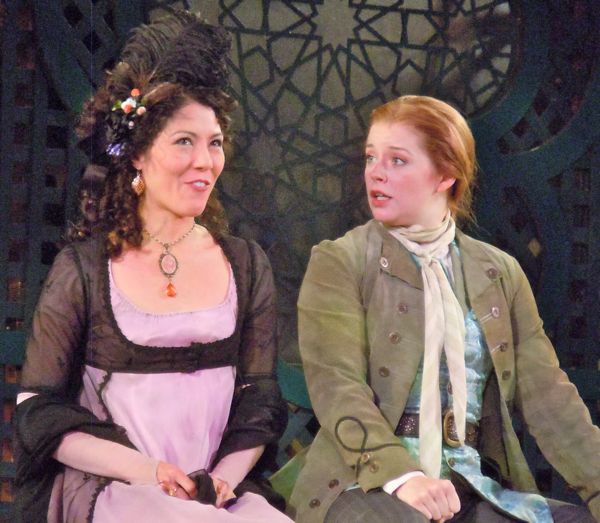
Olivia, left, does not realize Cesario is really Viola in men's clothing. Photos/Kathryn Reed

Olivia, left, does not realize Cesario is really Viola in men's clothing. Photos/Kathryn Reed

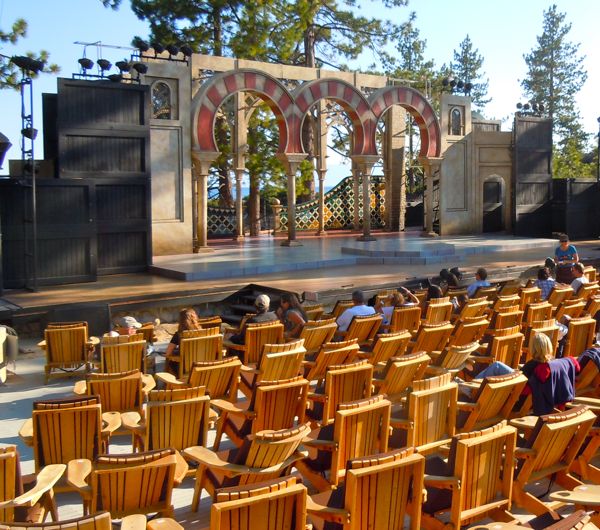
After a year without Shakespeare, the Barb is back at this outdoor stage on the shore of Lake Tahoe.

This is probably the best outdoor theater in the basin. The rocky ridge above is majestic, though no mountain bikers can be seen on the Flume Trail from this vantage point. Plenty of people are still on the beach when the doors open and before the 7:30pm performance begins.

It’s a particularly warm night for Tahoe, though many are prepared with blankets on the back of chairs.

This production was particularly good because of the strong projection of voices by the entire cast. Shakespeare can be difficult enough at times to follow that when actors’ voices are meek or muffled, the audience can be left wishing for Cliffs Notes. This definitely was not the case two nights ago.

The cast is delightful, the story captivating and the setting exquisite.

Laura Welsh Berg is engaging in her role as Viola/Cesario, as is Carie Kawa as Olivia.

While love is an overriding theme is so many of Shakespeare’s plays, there always has to be a twist. “Twelfth Night” does not disappoint in this realm.

Some of the humor is adult in nature, but would likely go over the head of the younger ones in attendance.

The only disappointment Saturday night was the attendance. In years past there was not a speck of sand to be found to put a chair on. Not so now. But those who filled the seats were appreciative of the superb acting.

"Twelfth Night" is at the stage in Sand Harbor through Aug. 21.

"Twelfth Night" runs through Aug. 21.

No longer do people have to bring their chairs. Beach chairs are set up – something that has been going on for a few years to maximize the space.

Gone this year are the added fees on tickets. The price ranges from $15 to $85. The most expensive – the ones closest to the stage – have more comfortable chairs and come with wait service for dinner.

Many people bring coolers full of food and libations, though an array of food choices is available.

One woman from Pasadena, at the festival for the first time, bought the cookbook “Shakespeare’s Kitchen” to take home.

On Mondays the stage is not dark, but instead the theater has various offerings from the Sierra Nevada Ballet tonight to Chautauqua to musical groups.

More information about Lake Tahoe Shakespeare Festival is online.


Tickets going fast for Gatsby Tea and Fashion Show

The 26th annual Great Gatsby Tea and Fashion Show is Aug. 14 from 2-4pm on the lawn behind Valhalla Grand Hall. There are still a few tickets available for $35 per person. For tickets and information, contact Leslie De Tarr at (530) 541.0332 or email Leslieslt@aol.com.

The menu includes English tea, fresh fruits, finger sandwiches, small cakes, canapés and an assortment of desserts, and of course “bootleg” Champagne. There will also be gluten-free options.

The Fashion Show is presented by Deborah Rush of Fashions of Yesteryear — The Fashion Faces the Music. Twenty-four authentic vintage outfits related to music of the times.

Profits are used by Tahoe Heritage Foundation, a nonprofit organization established to help protect and preserve the cultural heritage and natural history resources in the Lake Tahoe Basin through restoration, education and interpretation.


California hotels embracing LEED standards

By Janet Fullwood, Sacramento Bee

Does anybody really know how green their hotel is? Does anybody really care?

The acronym “LEED” has flashed across the public radar screen often enough to make an impression as … well, something or other to do with energy efficiency.

But even if you know that LEED is shorthand for Leadership in Energy and Environmental Design, and that LEED certification is sparingly bestowed by the U.S. Green Building Council for sustainable building performance and business practices, should it matter?

You may or may not rest easier on your next weekend getaway knowing that your hotel bathroom is equipped with low-flow plumbing, that your garbage is being recycled and composted, or that a switch in light bulb technology has cut the hotel’s energy bill in half. You might even be irritated by that little sign on the counter guilt-tripping you into using your towels and sheets for a second day. (Then again, you might be impressed to know they’re being laundered locally with nontoxic cleaning products rather than being trucked to a regional processing facility 100 miles away.)

The point is, there’s something to be said for being made aware of your choices.

With California at the forefront of investment in green energy, hotels are changing their wasteful ways – and most want their patrons to know about it.

Read the whole story


Angel Island in the middle of SF Bay lives up to its name

By Kathryn Reed

ANGEL ISLAND – “Not a bad view.”

It was the mantra for the day and the reason we barely made the 5-mile loop in our allotted one-hour bike rental time period.

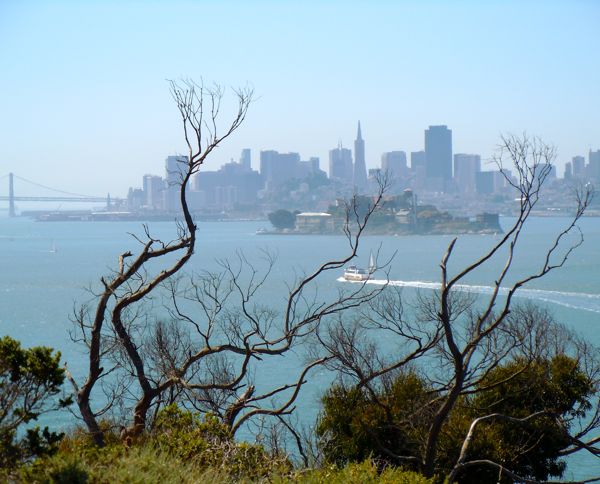
Views of San Francisco, the Golden Gate Bridge, Bay Bridge, Alcatraz – it’s all so breathtaking from the perimeter trail around Angel Island.

San Francisco from Angel Island. Photos/Kathryn Reed

San Francisco from Angel Island. Photos/Kathryn Reed

I think I was a kid with my parents and a group of friends the last time I was on this island in the middle of San Francisco Bay. It was Sue’s first trip.

If I learned about the history of the island those many years ago, it was forgotten. Reading “Shanghai Girls” earlier this year gave me a glimpse into life of people trying to immigrate to the United States in the last century who were stopped at Angel Island before being allowed on the mainland.

On the ferry from The City a group of women said they were going to the island to retrace their family heritage.

Along the perimeter trail is the immigration station. (We had to walk back to it because we ran out of time on the bikes.)

Walking through the compound, reading about the conditions, seeing pictures — it’s one of those times when I don’t like being white. It’s one of those times when I wonder why our history books don’t teach us more. It’s one of those times when I wonder if we’ll ever embrace our similarities instead of continuing to point out our differences.

Asians were separated from Europeans – and treated much worse. Men and women – even if married – were separated.

Barbed wire surrounded the dormitories – and still does – even though these were not criminals and even though this is an island.

The island has a rich history. It was used during the Civil War in 1863 as an Army outpost in case the Confederate ships sailed into the bay.

In 1954, it was one of 19 Nike Missile sites in the Bay Area.

Today it is a state park.

Old buildings are scattered about. Some you can go into. Park workers also live on the island.

Ferries leave from a couple terminals in San Francisco, as well as Tiburon and Alameda. Our roundtrip ticket cost $16 each. The hour bike rental was $10 each. We could have paid $35 each for a half-day rental.

Although it’s bound to be cold, camping is allowed on the island. With the views so incredible during the day, they must be even more breathtaking at night.

We chose not to bag a peak on this trip. Mount Livermore is the highest point on the island at 781 feet.

Back in The City

It’s Fourth of July weekend in San Francisco and it’s hopping. The Marriott on Fourth Street is a central location for all things we have planned. Walking and easy to use public transit mean not having to drive for three days.

Chinatown provides a shopping opportunity for ingredients I can’t get in Tahoe.

North Beach provides outdoor seating at a fun Italian restaurant.

The Giants don’t win – but there’s never a bad day at the ballpark.

Before the game we catch some rays and relaxation on the lawn at Yerba Buena Gardens.

The only disappointment is the fireworks that night. It’s hard to beat the ones on the South Shore.

Near the Ferry Building is an outdoor art fair as well as a zip line. It’s set up across the asphalt and above the tourists who hope the cables hold.

Everything I love about cities – the energy, the constant choices of things to do, the abundance of delicious food, reliable public transit, how easy it is to find things – sometimes I miss all of that.

ngg_shortcode_0_placeholder (Click on photos to enlarge.)


Brew festival benefits Truckee-Tahoe Humane Society

The Village at Squaw Valley will pair cold beers with hot music at the 10th Annual Brews, Jazz and Funk Fest to support the Humane Society of Truckee-Tahoe.

Some of the most recognized jazz and funk legends will perform under the peaks of Squaw Valley Aug. 13-14 from 2-8pm in The Village at Squaw Valley.

Festival-goers can listen to continuous live music on two stages while sampling beers from more than 20 breweries including Big Sky, Deschutes, Eel River, Feather Falls, Fossil Fuels, Franziskaner, Full Sail, Gordon Biersch, Great Basin, Lagunitas, Lockdown, Mad River, Mammoth, Sam Adams, Sierra Nevada, Spaten, Stone, Sudwerks, and Trumer. Beers are $4 each. A $5 entry donation to the festival is requested. All proceeds benefit the Humane Society of Truckee-Tahoe.

The festival is open to all ages with well behaved dogs welcome on leashes.

Kids can enjoy activities such as an 18-hole miniature golf course, sky jump bungee trampoline or ride the scenic aerial Cable Car to play paintball, swim, roller skate and hike at High Camp. For activity pricing, check out Squaw’s website.

For more information, go online or call (530) 452.4000.


David Walley’s — not the first hot springs in Nevada

By Guy Rocha

“David Walley built the place as a health resort, the first in Nevada and one of the first in the West,” wrote Basil Woon in the Aug. 30, 1953, edition of Reno’s Nevada State Journal.

A long-standing belief is that Walley’s Hot Springs was Nevada’s first geothermal health resort. According to Walley’s obituary published in the Carson Valley News on March 13, 1875, the spa opened a couple of miles south of Genoa in 1862. A survey was made on Nov. 20 and filed with the Douglas County Recorder on Dec. 1.

With just a tent for shelter, baths sold for 50 cents each. Walley erected the first bathhouse the following year, and in 1864, Walley’s wife, Harriet, arrived from the East to help run Genoa Hot Springs resort.

“From a mere rock pile has risen a magnificent hotel, bath-houses, stabling and ball room,” the weekly News proclaimed after Walley’s unexpected death at age 56.

A massive geothermal belt interspersed with hot springs, runs north and south along the eastern slope of the Carson Range.

The truth is that Abe Curry’s Warm Springs and Steamboat Hot Springs operated as health resorts before David Walley purchased the hot springs in Carson Valley.

Guy Rocha is the former Nevada state archivist.

Read the whole story


Open mic night at Valhalla Boathouse

Join Tahoe Writers Works on July 26 for Bare Bones Open Mic at 7pm at the Valhalla Boathouse Theatre.

Bring your guitar, poem, or bag of tricks, or just enjoy performances by local and visiting writers, comedians and performing artists at the Tallac Historic Site on the South Shore.

Bare Bones is free and open to the public.

Drinks are available for purchase to benefit the Tahoe Tallac Association.


Learning how to cope with arthritis

By Jay Chung

Arthritis is a common term used to describe a group of conditions that cause joint damage, inflammation, stiffness and pain. There are more than 100 types of arthritis, but the most common types are osteoarthritis, rheumatoid arthritis and gouty arthritis.

What is osteoarthritis?

Osteoarthritis (OA) is commonly known as “wear and tear” arthritis, but osteoarthritis has multiple factors contributing to its development. OA can develop in areas of previous injury and commonly occurs in the big toe, ankles, knees, hips and low back with age. OA slowly develops and symptoms are stiffness when starting an activity, especially after a period of rest, and soreness during and after movement or activity.
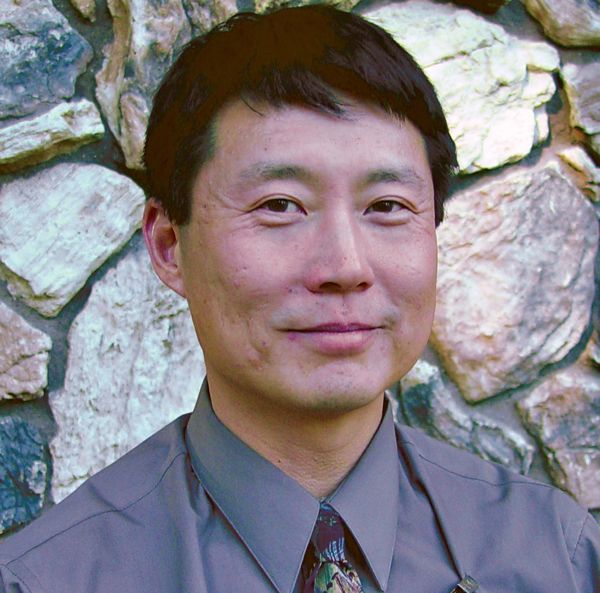
Jay Chung

Jay Chung

There are many diet and lifestyle changes you can make to help decrease your risk of developing OA or slow the progression of existing OA. Studies have found that individuals who consume more fruits and vegetables, particularly non-citrus fruit and garlic, have a lower risk of developing osteoarthritis. Maintaining a healthy weight is important in reducing your risk of developing OA. For those who have OA, both reduction in body fat and gain in muscle mass may relieve pain and assist with body function. Even modest weight loss in combination with moderate exercise improves body function, increases mobility and decreases pain – more than weight loss alone. Low impact activities, such as swimming, cycling, water aerobics, tai chi and yoga are excellent choices for those with osteoarthritis.

Food choices and OA

There are a variety of fad diets claiming to cure arthritis. Unfortunately, most arthritis specific diets have not been scientifically proven, but there are important changes you can make to your diet. Limit saturated fats, found commonly in meat and dairy products. Choose low-fat products and lean meats, such as chicken or choose fish, instead of beef. Avoid trans-fats commonly found in packaged, processed foods and show up in ingredient lists as partially hydrogenated oils. Although most people think of soy products as a healthy food choice, partially hydrogenated soybean oil is a trans fat. Minimize your intake of the “white stuff” including white rice, white bread and white pasta. Choose whole grain breads, cereals and pastas and add beans, legumes and lentils to your meals. Avoid added sugar, including organic sugars, fruit juice sweeteners, honey and high fructose corn syrup. Lastly and most importantly, eat a wide variety of fresh fruits and vegetables daily. A vitamin supplement will not replace the nutrients found in foods.

What is rheumatoid arthritis?

Rheumatoid arthritis (RA) is an autoimmune disease and typically develops in women in their 50s. RA commonly affects the joints in the hands and feet and characteristics of RA are morning stiffness, swelling and joint pain in both hands or both feet. It’s uncommon to see a single joint affected in RA and there is rarely a sudden onset of RA after injury. Low impact activities, such as water aerobics, swimming, cycling, tai chi and yoga can decrease pain and improve function in those with RA. In addition to general diet guidelines described above, individuals with RA should increase their intake of omega-3 fatty acids. Omega-3 fatty acids are found in fish, specifically herring, salmon, trout and tuna, flaxseed meal, flaxseed oil, walnuts, tofu and canola oil. Fish oil supplementation has been found to decrease the number of painful and tender joints and decrease the duration and intensity of morning stiffness. Before starting fish oil supplementation, talk with your physician. Side effects of fish oil supplementation include increased menstrual time and individuals taking blood thinners may need to be monitored.

Living with gout

Gout is a painful condition caused by high uric acid levels in the blood. A gout attack occurs when excess uric acid forms needle-like crystals which deposit in joints, most commonly the great toe joint, resulting in pain, redness and swelling. Gout attacks usually occur at night, causing the affected individual to wake with excruciating pain and a red, swollen joint. Repeated gout attacks cause damage to the cartilage in the joints resulting in gouty arthritis.

Diet and exercise is extremely important for individuals with gout. Diets which include foods high in purines can increase uric acid levels. A purine is a chemical compound found in certain foods which break down into uric acid in the body. Foods and beverages high in purines include alcoholic beverages, such as beer, wine and spirits and foods such as anchovies, sardines, herring, mussels, codfish, scallops, trout, roe, haddock, bacon, turkey, veal and venison. Foods moderately high in purines include beef, chicken, duck, pork, ham, crab, lobster, oysters and shrimp. People who suffer from gout now have a way to prevent recurrence. Exercise can increase mobility and blood circulation, as well as strengthen joints and regulate the amount of uric acid in the body. Since uric acid is the underlying cause of gout, exercising for the prevention of the buildup can alleviate pain and suffering.

Most purines are made by the body, but some purines come from diet. Avoiding high purine foods can help to reduce the incidence of gout attacks. If you have gout, important steps you can take include losing weight, drinking plenty of fluids (except alcohol), eating a variety of fresh fruits and vegetables, adding low-fat dairy, such as milk or yogurt, to your diet and minimizing the intake of foods high or moderately high in purines.

Jay Chung is a physician for Barton Internal Medicine and the area’s only rheumatologist. He specializes in rheumatoid arthritis, osteoarthritis, fibromyalgia, osteoporosis, vasculitis, gout and systemic lupus erthematosis. For more information, call (775) 589.8900 or (530) 543.5685.
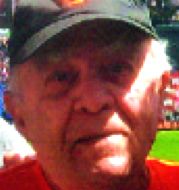
Frank Genaro Benevento — 1923-2011

Frankie (Frank) Genaro Benevento, a first generation American born of Italian immigrant parents on April 29, 1923, died July 9, 2011.

He was 88.

Mr. Benevento was born in San Francisco and was raised in San Mateo. He attended San Mateo High School and completed two years at the College of San Mateo.

Frank Benevento

Frank Benevento

Mr. Benevento served as a Merchant Marine during WWII and survived the sinking of three ships.

Mr. Benevento was married to his beloved Mary Jane Joly Benevento for 65 years. Much of their married life took place on the San Francisco Peninsula.

Frank and Mary Jane resided in South Lake Tahoe from 1970‐88. where Mr. Benevento was a Realtor, business owner, instructor at Lake Tahoe Community College, on the City Council and served as mayor.

Later they returned to the Bay Area. While back in San Mateo he tended a wonderful Italian garden with flowers, vegetables and fruit trees. He was an avid reader and a passionate San Francisco Giants fan, thrilled at last year’s World Series.

Mr. Benevento moved to Visalia in 2008 to be near family.

He was preceded in death by son Brian Benevento (1954‐1992).

He is survived by his wife Mary Jane; his children Larry Benevento of Visalia, Danny Benevento of Puerto Morales, Mexico, Melody Heard of Fair Oaks; grandchildren Todd Churchill, Felicia Geller, Antonino (Tony) Benevento, Seth Benevento, Briana Heard, and Shane Benevento; great-grandchildren Zachary Churchill, Trent Churchill, Dillon Churchill, Ryan Geller, James Geller, Griffin Geller, Holden Benevento, Sophia Benevento, Reed Benevento, Seth Hall, and Jayden Hall; daughter‐in‐law Erlene Benevento; granddaughters in law Jessica Benevento, Brooke Benevento, Denise Churchill; and grandson-in-law Scott Geller.

A memorial service will be July 27 at 7pm at Christ Lutheran Church, 3830 W. Tulare Ave., Visalia.


Hotels using technology to better serve guests’ needs

By Roger Yu, Reno Gazette-Journal

For a night of clubbing in Manhattan on a recent weekend, Seunghee Thomson turned to the iPad in her room at the Mondrian SoHo to ask the hotel’s concierge for a recommendation.

The concierge desk, which received her iPad message, soon called with a name and directions.

“While I was waiting, I was thinking maybe I should call back to see if they got my message, but they called me back right away,” said the fashion stylist from McLean, Va. “It’s the first time I’ve had that experience in a hotel.”

Mondrian is one of several hotels — and airlines, too — that are distributing iPads and similar devices to customers in an effort to tap the buzz surrounding tablet computers.

The effort is the latest by the travel industry to digitize a range of services that once required picking up the phone.

Using third-party software developers, hotels are introducing apps to order food, browse hotel amenities and local attractions, request wake-up calls, schedule housekeeping, message other guests and arrange car service. The apps are available for iPhone, iPad, BlackBerry and phones and tablets using Android and other operating systems.

“It’s a self-service vehicle,” said David Adelson of Intelity, which developed Mondrian’s app and has about 380 hotels using the software. “Most travelers are used to self-service solutions in their daily lives and would rather prefer it.”

Read the whole story