Chautauqua performance in Genoa

Nevada State Parks invites the public to attend a free Chautauqua-style presentation at Mormon Station State Historic Park on Aug. 20 at 10 am.

Doris Dwyer, professor of history at Western Nevada College, will give a portrayal of Sara Royce, one of the few female 49ers on the California Trail, who followed her husband and his dream of riches in California. Learn how Sara’s commitment to a “traditional world” influenced her to open a school and educate the children of Grass Valley.

The outdoor presentation lasts about 45 minutes with time for questions afterward. Visitors are asked to bring lawn chairs and a beverage. Dogs will not be allowed at the presentation.

Mormon Station State Historic Park in Genoa is 20 minutes from South Lake Tahoe, via state Kingsbury Grade and Foothill Road.

For more information, contact the park at (775) 782.2590.


Squaw devotes a weekend to dogs

The Village at Squaw Valley is paying tribute to man – and woman’s – best friend with the 2nd Annual Peaks and Paws Festival on Aug. 27-28.

Dogs and their owners can enjoy bluegrass music, wine and an array of events and demonstrations specifically designed for furry friends. A line-up of some of the region’s most popular bluegrass acts will play in the village each day from 2-8pm, with outdoor events kicking off earlier in the day. All of the proceeds from the festival will benefit the Humane Society of Truckee-Tahoe.

The Dead Winter Carpenters will headline the festival along with a lineup of hit bluegrass acts including Montana Slim String Band and Brothers Comatose. The music compliments the perfect setting for sipping wine, sampling craft beers and enjoying the mountain views.

The Peaks and Paws Festival hosts an evening wine tasting in The Village at Squaw Valley from 5-8pm both days. The wine tasting costs $25 per day, with all proceeds benefiting the Humane Society. Lagunitas beer is also available for $4 from 2-8pm.

The festival’s pet-partner events will kick off on Saturday with the Mutt Strut – a 3K run for dog owners and pets. The run will start and finish in front of Squaw Dogs in The Village. The Mutt Strut costs $5 to enter, with all proceeds benefiting the Humane Society. People without pets are also welcome.

Peaks and Paws welcomes two pet-friendly hikes this year. On Aug. 27, people and pets can join a guided hike around High Camp, exploring the wildflowers and wildlife that live at 8.200 feet. On Aug. 28, there will be a guided hike through the cascading waterfalls of Shirley Canyon. Both hikes start at 1pm and are free of charge, though a Cable Car ticket is needed to access Saturday’s hike.

For more information and details about all the events for that weekend, go online.


History: Student enrollment goes from 30 to 4,000

Publisher’s note: This is reprinted with permission from the March 1976 Lake Tahoe Historical Society newsletter.

February 24 was “Back to School” night for Historical Society members who heard Thelma Bernhardt and Dorothy Lockett recall their school teaching experiences of twenty and thirty years ago on the South Shore and were hosted to a tour of the new modern Sierra House School facilities by Principal Stan Rose. A highlight of the tour was the historic Sierra House Wall constructed of wide planking obtained from outbuildings remaining from the original Sierra House waystation which was located directly across Pioneer Trail from the present school. Bob Doudell of the School District was introduced and applauded for his efforts in designing and constructing the attractive memorial wall.

history logoThelma Bernhardt, a Berkeley graduate and resident of Lake Tahoe since 1947, was a substitute until starting as full-time 2nd grade teacher in 1952. Later she retired to take care of her family, but returned to teaching when Bijou School opened in 1961. She taught fourth grade at Bijou until her retirement last year. She recalled the first school building at the “Y” (later moved to the area generally behind the American Legion Hall and presently used as the Carpenters’ Union Hall). School started immediately after Labor Day with an enrollment of about 30, which gradually decreased to about 12 as residents left in October or November, or as soon as the snow fell, not to return until the April or May spring weather. Sometimes there were not enough students to put on the Christmas program.

School at one time was held in the American Legion Hall, which was divided into four little rooms. Later the “fireside” room became the kindergarten room. Outside concrete basketball courts were built to inaugurate a sports program – but the students had to clean off the snow before they could be used.

There was no library in the early days. It was very much of a highlight when the bookmobile came form Placerville. Great care went into choosing the book or books you could keep until the bookmobile came back again in two weeks – that is, if it could get back over the Summit in two weeks. The upstairs loft of Pat Amundson’s house at 961 Cave Rock once held the library. Then it was moved to Bob Wakeman’s on Highway 89, before the Friends of the Library finally were able to build the present library. The “new” school (now the Intermediate School) had a wall in one room devoted to books once it was built.

Everyone brought his lunch as there was no cafeteria. Once the PTA became active, that group provided a hot lunch once a week. On one occasion the PTA members barricaded the highway to call attention to the necessity for a safer crossing for the children at the Lyons Avenue corner.

The one school bus was a carryall driven by one of the teachers who once had the dubious thrill of having a wheel come off the loaded bus while she was traversing the old Meyers Grade, but proved equal to the occasion. The bus also was fitted with special blackboards which could be attached to the seatbacks so it might serve as an auxiliary classroom for the reading groups. The superintendent would warm it up for 30 minutes, then out would come the students bundled up in their winter wear for their reading class.

Heat was provided in the schoolrooms by big oil space heaters. On one occasion, someone smelled fire, the Fire Department was called and it appeared that the smell was coming from the ceiling. The children were all evacuated while the firemen searched out the cause – a wad of bubble gum shot into one of the ceiling vents.

Carolyn Reed, a traveling music teacher, taught voice and some instrumental music. Catherine McBride, school nurse for many years until her recent retirement, was nurse and medical advisor to everyone in the community – even gave allergy shots.

For many years classes were offered only through the 8th grade with some secondary students going to the Douglas County High School, later to Placerville.

Dorothy Lockett, another Berkeley graduate, arrived here on July 4, 1948, with new credential, fresh ideas, and no place to stay. In looking for a room, she met Mrs. Stella Johnson who welcomed her as a guest in the Johnson home. On hearing there were enough children in town to start a kindergarten, she telephoned the Superintendent, Glenn Smith, and “never got a job so fast in all my life.” Besides the kindergarten, Mrs. Lockett was engaged to teach art to all classes and kept the trunk of her car liberally stocked with powdered poster paint, brushes, crayons, etc. Having become stuck in the snow on one occasion, she poured four cans of red powdered paint out by the tires in an attempt to gain traction. Apparently this did not work, but a Globin’s Laundry truck driver coming along a bit later was horrified at the carnage caused by the terrible accident.

The kindergarten tots, besides having the advantage of the stone fireplace, also cooked in the kitchen and kept tabs on the resident cat, Mother 6-Toes whom they had rescued from under the building. Mrs. 6-Toes later had six kittens who were regally outfitted and wheeled about in the doll buggies. The fish at the Trout Farm across the street were fed every morning by the children.

She agreed with Mrs. Bernhardt that 1954 was the year the enrollment — and the population — began to grow. Classes were on triple sessions and railroad lanterns were used by the superintendent and teacher to take the children out to cross the highway after the last session of the day. A Stanford University Committee did a survey predicting a 10-year enrolment pattern, which was exceeded in two years.

She recalled Judge Lawson visiting her classroom once a week to “sit back and restore myself.” Father Lyon, dearly loved by the children, was a daily visitor. Once a year Mrs. Rabe, dressed in an alpaca skirt and lovely white blouse with leg-of-mutton sleeves, came to inspect the school to see if it was keeping up to standards. Mrs. Rabe, a former school teacher, was conducted on tour by Mr. Smith with great ceremony.

There was little road equipment in those days – one rotary snow plow and one push plow. It was possible to drive in the dark from Meyers to Stateline and not see a single light of any kind. When she moved to a residence on Lodi Avenue, she got lost going home every evening, as there was no landmark to tell where to turn. The present “planning days” for teachers were then known as “Teachers’ Institute.” In 1953-54, Mr. Smith invited all the teachers of the County district to come to Tahoe for Institute and raised quite and uproar – “Who would want to go up to that wilderness?” In 1948 when she first arrived, there were perhaps 700 people in the entire Basin with less than 200 student enrollment. The January 1976 enrollment in the Lake Tahoe Unified District was over 4000.

Mrs. Lockett, who retired in 1972, gave tribute to the foresight of Superintendent Glenn Smith who arranged for the acquisition of sites for the present school facilities when property could be obtained at a reasonable cost, and whose foresight in long range planning has served to make the Lake Tahoe Unified School District one of the foremost districts in the United States.


Vail Resorts looking for nonprofits wanting some money

Vail Resorts’ corporate stewardship program Echo has money to give to South Lake Tahoe nonprofits.

Echo encompasses environmental stewardship, charitable giving and community engagement and is aimed at protecting the natural resources that surround the resorts and helping to build stronger communities. This is the third year the Vail Resorts Echo program has awarded grant money in the South Lake Tahoe community.

For its grants – cash and in-kind, Vail Resorts Echo focuses on two main areas that enhance the quality of life in South Lake Tahoe:

• Education and youth programs.

• Innovation for and implementation of environmental stewardship practices.

The Vail Resorts Echo Heavenly Giving Council, comprised of Heavenly leadership, reviews the grant applications and award cash grants and in-kind donations once a year. Local nonprofits based in the South Lake Tahoe area and that have a focus on youth programs and environmental initiatives are encouraged to apply. Applications for potential grantees are due Aug. 24.

New this year, the application process is completely online to streamline operations. The Vail Resorts Echo website outlines the program criteria, provides examples of programs supported and outlines how to apply.


Rail festival in Carson City and Virginia City

The 6th Annual Virginia City/Carson City Railfest – a celebration of trains and the Virginia & Truckee Railroad is Aug. 13-14.

Events take place all day both days in Virginia City and Carson City.

Ride the historic rails on a steam train from Carson City to Virginia City and back. Train departs at 10am and returns at 4:20pm. It’s a diesel train on Friday and Steam on Saturday and Sunday.

For tickets and reservations call (775) 687.7410.


South Tahoe giving people a reason to visit New Year’s Eve

By Kathryn Reed

This New Year’s Eve there will be more to do on the South Shore than standing around in the cold getting drunk at Stateline.

Lake Tahoe Community College board of trustees on Tuesday unanimously agreed to partner with South Lake Tahoe to bring Snowball Music Fest to the campus as well as the neighboring joint use ball field.

Nancy Kerry from the city gave an overview to the board Aug. 9 about a similar event put on by Chad Donnelly at Avon, near Vail. She was in Colorado to witness three stages filled with bands, a sea of people in their 20s not minding the cold or the fact it was snowing, and a town appreciative of the revenue it brought it. (Avon is at the base of Beaver Creek ski resort.)

South Lake Tahoe is importing a Colorado concert concept for New Year's Eve. Photo/LTN file

South Lake Tahoe is importing a Colorado concert concept for New Year's Eve. Photo/LTN file

Trustees Molly Blann and Kerry David voiced the most concern about having such an event Dec. 31 when the area is already bustling and hotel rooms are scarce.

Kerry said that capturing a fraction of the crowd that assembles at Stateline with nothing to do would help ensure a successful event. When events are not good the first year, they seldom see a return engagement.

“It has to come out of the shoot great,” she told the board.

While all the negotiations are not complete, another thing the city and LTCC like about the event is the promoter provides security and volunteers. Locals may be hired, but he takes care of that aspect.

A previous concern of the college’s was the sale of alcohol because that is not allowed on campus except under certain circumstances, which this does not apply. However, boozes can be sold and consumed at the ball field.

What LTCC President Kindred Murillo is concerned about is people wandering on campus.

It will be fenced off in some manner, Kerry said.

It is likely the phys ed building will be used as a green room for the bands. In Avon, the recreation center was used in that manner.

In Avon in its first year – which was 2011 – 8,600 tickets were sold. It’s estimated more than $2.6 million in sales were generated, with the average person spending abut $300.

Kerry said alcohol sales weren’t that much, with just one beer booth. How much hot cocoa was consumed was not revealed the other night.

She conveyed that businesses made out by staying open later to accommodate the hungry crowd.

The city is working on ski deals with Heavenly Mountain Resort, using the California lodge for parking, and working with the casinos. The city has also committed to providing shuttles for Snowball-goers.

Social media was the driving force for advertising and ticket sales in Avon, with the same expected for the South Lake Tahoe event.


Tahoe-Douglas fire chief calling it quits after 33 years

By Kathryn Reed

“Dramatic changes” is how Guy LeFever describes what he has experienced in the 33 years he has worked for the Tahoe-Douglas Fire Protection District.

The fire chief’s last day is Sept. 2.

His career started in 1975 on a hand crew for Los Angeles County – a crew much like the ones his department uses today for fuel reduction projects.
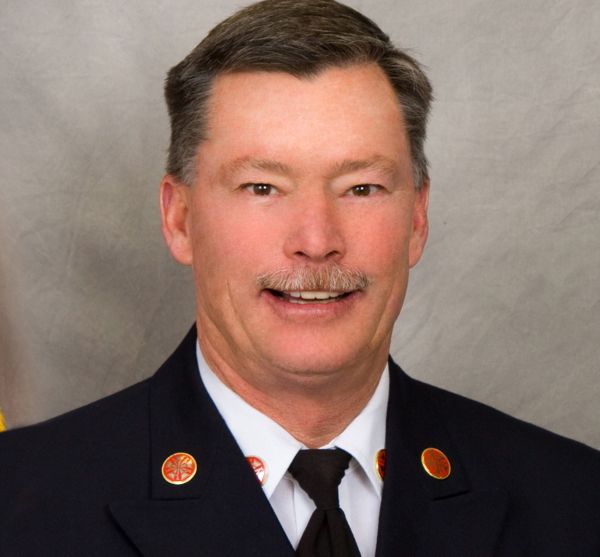
Guy LeFever

Guy LeFever

In 1979 he moved to Lake Tahoe, starting at Tahoe-Douglas as a firefighter. Shortly thereafter Nevada mandated ambulances be staffed with paramedics, so he and five others became certified. He worked as a paramedic for a few years before starting up the promotional ladder.

“Working on the ambulance, I think that was probably the most satisfying time in my career … helping people. Every day was new, every call was different,” LeFever said. “At the time I was pretty young, an impressionable young man.”

Now, at 55, he is the third chief in a six-week span to leave the Lake Tahoe Basin – a basin with seven chiefs. The others who left are Jeff Michael at Lake Valley and Lorenzo Gigliotti at South Lake Tahoe.

LeFever said it’s probably unheard of for three chiefs to depart at the same time. He and Michael are retiring. LeFever didn’t even want to broach the issue of South Lake Tahoe’s departmental struggles and issues.

One thing that has impressed LeFever are the changes regarding fuel reduction in the past handful of years.

“We’ve been fortunate we’ve been able to get defensible space. To get these halos around the community so we don’t get a second Angora,” LeFever told Lake Tahoe News. “The amount of work being done in fuel reduction really is going to have long-term impacts I believe on reducing the fire hazard in the basin.”

But he can see the awareness and priority level drop as Angora fades from people’s memories.

His constituents after the devastating 2007 Angora Fire voted in a tax just for defensible space/fuel reduction work by his department. Despite the fire being across the state line and no homes in Tahoe-Douglas threatened that June, residents know about fire.

LeFever was a battalion chief when the 2002 Gondola Fire erupted in his jurisdiction. He credits Mother Nature for changing wind direction on the second day so it was blowing down Edgewood Canyon. Otherwise, he’s not sure how many houses in the Kingsbury Grade area might have been lost.

About two weeks before Angora his guys were back in Edgewood Canyon because of an electrical fire.

“It just started getting into the trees about 11am,” LeFever said. “If you put that same fire at 2, 3 in the afternoon, Angora probably doesn’t happen because everyone would have been on their toes because we would have lost Edgewood Canyon.”

During Angora, he was chief of the department. But he was out of town – receiving updates every couple hours.

“We sent our entire department over there — five engines, a water tender. We emptied our entire department over there,” LeFever said.

The evolution of mutual aid between agencies in the basin and those in the Carson Valley is something LeFever is proud he’s  been part of.

With Tahoe-Douglas being responsible for the Stateline casino corridor, it has proven to be interesting at times.

In 1980 during the bombing at Harveys, LeFever was a firefighter and emergency medical technician on an ambulance.

“It was an eye-opener to see military here and operating with the FBI. And our bomb squad was an integral part of that,” he said.

As he rose through the ranks, his responsibilities have changed.

LeFever is credited with being good with numbers, saving jobs whenever possible, being frugal, but keeping the level of service people want and need.

“Probably his real strength is he has a talent when it comes to finances,” Mark Novak, Tahoe-Douglas fire marshal, said. “He’s more proactive than reactive.”

In his time as chief, LeFever was instrumental in helping create the fire academy at Lake Tahoe Community College.

“He is a true gentleman. He’s always been there when we needed him. I couldn’t ask for a better community partner,” Virginia Boyar, who helps runs the program at the college, said of LeFever.

LeFever only has good things to say about the academy and the collaborative effort to make it work – including having several of his guys be instructors.

Another accomplishment of LeFever’s is creating the business inspection program at the lake. It gives firefighters an opportunity to see inside a structure before they might be fighting a fire there, and it thwarted Douglas County’s attempts to tax businesses at the lake.

LeFever said it’s time to go – to let those behind him take over.

“I’m comfortable where the management team is and where the organization is going is positive. If I didn’t think so, I would probably stick around longer,” LeFever said.

Who will take over for LeFever remains to be determined by the fire district’s board. That decision is likely to be announced in October.


3 Gatsby-related events at Tahoe Tallac Site

The Tahoe Tallac Site is hosting three Gatsby-era events Aug. 12-14.

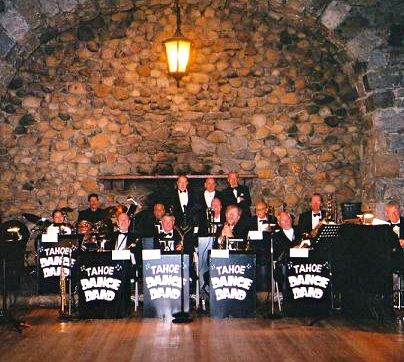
bandKick off the weekend with the 17-piece Tahoe Dance Band and a swinging night of big band tunes. The dance is Friday at the Grand Hall, 7pm, $20.

Murder Mystery Radio Play returns this year with “Lights! Camera! Murder!” — where you’re more than an audience member, you’re a detective. This performance celebrating the Roaring ’20s South Shore lifestyle begins at 6:30pm Saturday in the Grand Hall. Tickets are $20 and $45. Wine and hors d’oeuvres are included in the ticket price.

Enjoy tea, sweets and vintage fashion at the Gatsby Tea on Valhalla’s Grand Lawn and Hall Sunday afternoon. Tickets are $35 each or $350 for a table of up to 10 guests and are sold through the Tahoe Heritage Foundation. Call Leslie DeTarr at (530) 541.0332 for information and/or reservations.

The Tahoe Tallac Site is off Highway 89 on the South Shore, north of Camp Richardson.

For information about upcoming events or the Tahoe Tallac Assocation, go online.


Car once belonging to George Whittell up for auction

By Katya Kazakina, Bloomberg

A tiger-hunting Rolls-Royce, a Ferrari estimated at $13 million and a Steve McQueen motorcycle are among the highlights of automotive auctions in California next week.

The sales coincide with the Aug. 15-21 Monterey Car Week, the annual extravaganza that gathers rare vehicles and wealthy owners. Auction houses Gooding & Co. and Bonhams will offer more than 500 lots of cars, motorcycles and memorabilia.

Bragging rights may go to a Ferrari 250 Testa Rossa prototype that’s coming on the block Aug. 20 at Gooding in Pebble Beach. Its forecast price of more than $13 million would set an auction record for an automobile.

Assembled in 1957, it competed in the Le Mans 24-hour race as well as in endurance races in Argentina and Venezuela. Its curvaceous red body and a 12-cylinder engine made the Testa Rossa the most popular Ferrari racing model in the 1950s and 1960s.

“This model won almost all races between 1957 and 1963,” said Marcel Massini, a Swiss-based Ferrari historian, in a telephone interview. “It’s an iconic car and an iconic design.”

A star lot at Bonhams’s annual two-day sale in Carmel is a red 1925 Rolls-Royce New Phantom. Custom-designed for the Bengal tiger hunting expeditions of India’s Maharajah of Kotah, the four-door convertible is powered by an 7.7-liter, 6-cylinder engine and is expected to bring $750,000 to $1 million.

You could blow away the whole village along with the poor tiger. The car was outfitted with a mounted double-barreled shotgun, a rifle stand in the rear passenger compartment and a machine gun on a trailer hitch. A cannon could be mounted on the rear bumper.

“I highly doubt that anyone would go hunting with it,” said David Swig, a motorcars specialist at Bonhams. “It’s more of a museum piece.”

Another highlight is a 1931 Duesenberg, which is expected to fetch as much as $7 million at Gooding, exceeding the current $4.5 million auction record for a “Duesy.” One of the grandest and most elegant cars of its type, it was commissioned by Captain George Whittell Jr., who had a pet lion and a 40,000- acre Lake Tahoe estate.

Read the whole story


Kings Beach man recognized for his naval career

Placer County Supervisor Jennifer Montgomery recently presented a commendation from the Board of Supervisors to a Kings Beach resident who has risen from his local roots to a stellar career in the U.S. Navy.

Benjamin Heineike grew up in Kings Beach and is a graduate of North Tahoe High School. He graduated from the U.S. Naval Academy at the top of his class in 2002.

He attended Cambridge and Oxford universities, the latter of which was with a Marshall Scholarship, one of 40 given nationwide that year.

He served as an active duty commissioned officer in the Navy from 2002-10 and currently serves as liaison officer in the Navy Reserve.

“He’s done all these incredible things and traveled throughout the world,” Montgomery, who represents Kings Beach, said in a statement. “Yet his commitment to his community, to Kings Beach, remains so strong and his commitment to education and young people and after school education programs like the Boys and Girls Club.”

Heineike’s parents, Marilyn and Ben, still live in the Lake Tahoe Basin.