Brain’s real super-food may be learning new languages

By Casey Schwartz, Newsweek

On a sweltering August morning, in a classroom overlooking New York’s Hudson River, a group of 3-year-olds are rolling sticky rice balls in chocolate sprinkles, as a teacher guides them completely in Mandarin.

This is just one toddler learning game at the total–immersion language summer camp run by the primary school Bilingual Buds, which offers a year-round curriculum in Mandarin as well as Spanish (at a New Jersey campus) for kids as young as 2.

Bilingualism, of course, can be a leg up for college admission and a résumé burnisher. But a growing body of research now offers a further rationale: the regular, high-level use of more than one language may actually improve early brain development.

According to several different studies, command of two or more languages bolsters the ability to focus in the face of distraction, decide between competing alternatives, and disregard irrelevant information. These essential skills are grouped together, known in brain terms as “executive function.” The research suggests they develop ahead of time in bilingual children, and are already evident in kids as young as 3 or 4.

While no one has yet identified the exact mechanism by which bilingualism boosts brain development, the advantage likely stems from the bilingual’s need to continually select the right language for a given situation. According to Ellen Bialystok, a professor at York University in Toronto and a leading researcher in the field, this constant selecting process is strenuous exercise for the brain and involves processes beyond those required for monolingual speech, resulting in an extra stash of mental acuity, or, in Bialy-stok’s terms, a “cognitive reserve.”

Bilingual education, commonplace in many countries, is a growing trend across the United States, with 440 elementary schools (up from virtually none in 1970) offering immersion study in Spanish, Mandarin, and French, in that order of popularity.

For parents whose toddlers can’t read Tolstoy in the original Russian, the research does offer some comfort: Tamar Gollan, a professor at University of California, San Diego, has found a vocabulary gap between children who speak only one language and those who grow up with more. On average, the more languages spoken, the smaller the vocabulary in each one. Gollan’s research suggests that while that gap narrows as children grow, it does not close completely.

Read the whole story


Fallen Leaf Lake and its people come to life in book

By Linda Fine Conaboy

With each book I read about Lake Tahoe and its early settlers, I am reminded that this lovely region isn’t made up of just a few parts: Lake Tahoe, Fallen Leaf Lake, Desolation Wilderness and all the bodies of water there, Glen Alpine Springs, Mt. Tallac, Homewood, Freel Peak, Emerald Bay and so many more intriguing places. It’s all intertwined and the early tales let us know that the sum of these parts made, and even now if you look at the whole scheme of things, still makes a perfect whole.

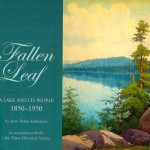
Janet Beales Kaidantzis, in her just-published book “Fallen Leaf: A Lake and its People 1850-1950,” presents this beautifully. And she was wise enough to enlist the memories of Bill and Barbara Craven, among others, who, after many years at Fallen Leaf Lake still reside there.

In his forward, Bill Craven says: “Fallen Leaf Lake’s happiest years occurred during the one-hundred-year period of this book. For most of that time, the Lake was unknown and sparsely populated. It took great effort to get here; those who made the trip were hardy types who appreciated nature and simple living.”

Amen.
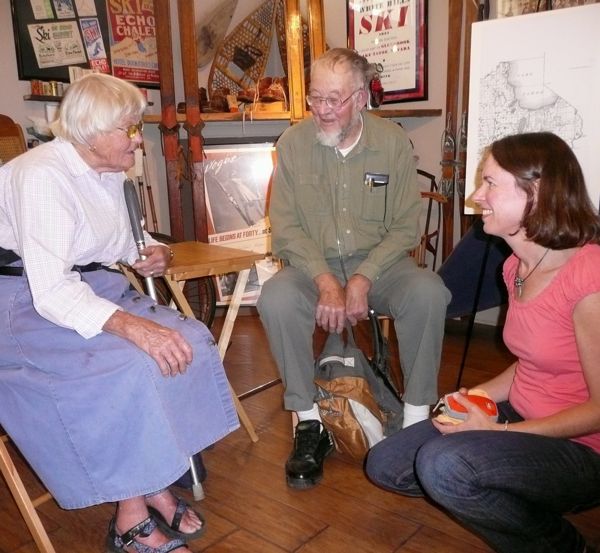
Barbara and Bill Craven with Janet Kaidantzis at the Lake Tahoe Historical Society book signing. Photo/Tom Beales

Barbara and Bill Craven with Janet Kaidantzis at the Lake Tahoe Historical Society book signing. Photo/Tom Beales

As I read this book, I wondered, how did they do that, those early settlers? And where did they get the pluck, the resolve to make a life there? And best yet, from Kaidantzis’ viewpoint, it seems they actually had a good time mucking out a life in some incredibly harsh conditions.

During a recent book signing at Lake Tahoe Museum, I had the good fortune to interview Kaidantzis and the Cravens. Kaidantzis’ family goes back five generations to her great-grandpa Arthur Steadman, who helped subdivide a tract of land on the east side of Fallen Leaf Lake in 1925.

“He built a cabin and that cabin has been cherished and passed down from year-to-year,” Kaidantzis said. “We go every summer and winter. In the old days we cross-country skied; I was brought up there as a baby.”

Kaidantzis said her grandparents met at Fallen Leaf, as did her parents, Tom and Marcia Steadman Beales. Additionally, her father’s parents honeymooned at the lake; in the mid-40s, Bill Craven met his future wife, Barbara Granger, at Fallen Leaf.

A book’s beginnings

“This book started as a family project,” Kaidantzis said. “It started when I wrote an essay for my mom’s birthday about our experiences at Fallen Leaf, starting in 1925, and the history of our cabin.”

That’s all it took. Kaidantzis was hooked; there was more to be said. When she finished the essay and realized all that remained to explore, her enthusiasm and motivation for the project spurred her to write more expansively.

“I wanted to share with a wider audience so I spoke to everyone I knew at Fallen Leaf — the old-timers.” She said the support she received from the Lake Tahoe Historical Society was invaluable as was the information she gleaned from Tahoe Heritage Foundation.

Bill Craven, who was a good knowledge source for the book and the grandson of Bertha and William W. Price, founders of Fallen Leaf Lodge, is an authority on all things Fallen Leaf. It doesn’t hurt that he isn’t stingy with his knowledge. Bill and Barbara managed the lodge from 1972 to 1985.book
The book begins with Fallen Leaf Lake’s earliest inhabitants — the Washoe people, who also maintained summer camps at Taylor Creek, Camp Richardson and Glen Alpine Springs. In fact, history shows the Washoe inhabited these areas as many as 10,000 years ago.

Their seasonally adjusted lives continued until just beyond living memory, Kaidantzis reports, which is a good way of saying some of the old-timers at the lake still recall “a small group of Washoe women, children and elderly men camped for the summer in the 1930s between Glen Alpine Creek and the shoreline.”

Fallen Leaf’s vibrant settlers

Bill Craven recalls in the book that his grandparents, William and Bertha Price, employed Washoe women and men at Fallen Leaf Lodge.

From the discovery of Fallen Leaf Lake by Col. John Calhoun Johnson and his Delaware Indian guide, Capt. Falleaf sometime between 1850 and 1858, to the discovery of Glen Alpine Springs by Nathan Gilmore the history is nicely detailed and obviously carefully researched.

Kaidantzis reports in depth on the often-heated rivalry between Lucky Baldwin and Gilmore, a feud lasting until Gilmore’s death. She details not only Gilmore’s vast influence on the area as well as those of the colorful, if not always honorable, Baldwin and his legacy of wild exploits.

She includes Lucky’s daughter, Anita, and her impact on Fallen Leaf, including the rise and fall of her estate on the lake’s west shore. Under the provisions of the property’s transfer to the U.S. Forest Service, Anita’s home and most of the outbuildings comprising the estate were demolished in 1953.

Craven, during my interview, said the Anita Baldwin house, which she named Nid Ji Eh Wa Ri (a Hopi Indian word meaning “House on the Lake”), would have made a memorable museum. If you’re up for an easy hike along Fallen Leaf’s west side, not far from the lake’s damn at Taylor Creek, you’ll come across the foundation of Anita’s home and one or two of the outbuildings. It’s worth the walk, and if you sit for awhile on the old foundation, you may find yourself imagining what life was like for a woman of privilege at Fallen Leaf Lake.

There are chapters on John Steinbeck’s sojourn at Fallen Leaf; a nice overview of Glen Alpine Springs; Angora Lakes Resort and the fire lookout at Angora Ridge; Camp Richardson and its founder Alonzo Richardson, as well as several of the other early inhabitants, all of whom made their mark on this area.

Read the book as you would a novel, but watch out, tomorrow you’ll find yourself hiking to Glen Alpine Springs (a tough trek), or at least making the trip on the once oiled, now paved, but always breathtaking road into the lake and its environs.

Oh, and don’t forget to visit the little chapel constructed by William Price and described by Kaidantzis in Chapter 10. He named it for the patron saint of wild birds and animals, Saint Francis of the Mountains. It’s a fitting place to contemplate Fallen Leaf Lake and the folks who left their marks here.

The book

“Fallen Leaf: A Lake and its People 1850-1950” sells for $18.50 plus tax and is available at Lake Tahoe Historical Society and Museum. It can also be purchased at the Fallen Leaf store, Angora Lakes Resort store, the Baldwin Museum store at Tallac Estates, the USFS Visitor’s Center at Taylor Creek and the LTBMU office in South Lake Tahoe, and online.

Politicians recognize artwork from Tahoe youngsters

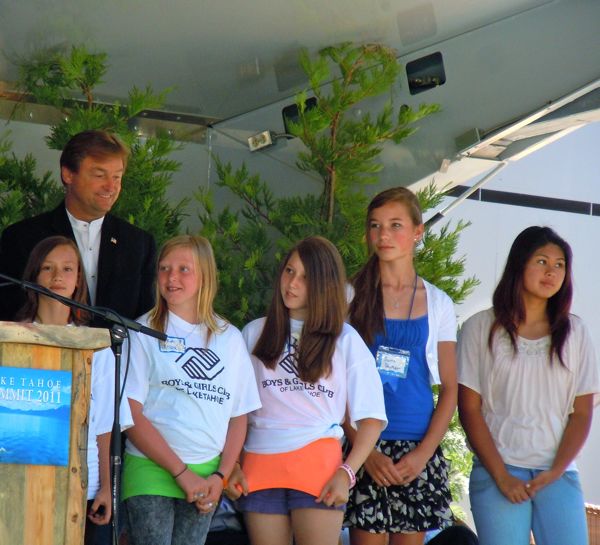
Members and junior volunteers from Lake Tahoe Boys & Girls Club were among those honored at last week’s Lake Tahoe Environmental Summit.

Joining legislative dignitaries on the podium were teen members Serina Pichinono, Aria D’Aintree, and Rebekah Miller. The girls were honored for their collaborative art collage depicting what they like about living at Lake Tahoe.

Also joining the ranks of being honored for her art piece was Boys & Girls Club junior volunteer and South Lake Tahoe Youth Commissioner Krisha Penolar.

Lake Tahoe youth are honored at the environmental summit by politicians like Sen. Dean Heller, R-Nev. Photo/LTN

Lake Tahoe youth are honored at the environmental summit by politicians like Sen. Dean Heller, R-Nev. Photo/LTN

Fourth-grade member Paisley D’Aintree also attended the event.

The Boys & Girls Club submitted more than 30 art pieces created by members ages 5-18. All of the pieces were displayed for the attendees of the summit at Homewood.

The girls all received recognition and a certificate from Sen. Dianne Feinstein, D-Calif., and Govs. Jerry Brown and Brian Sandoval.

The Boys & Girls Club of Lake Tahoe has numerous programs and activities that empower young people to get involved in their community, leadership and stewardship of Lake Tahoe. Being honored at the summit is one example of the experiences that they might not otherwise have had.

To learn more about the Boys & Girls Club, go online.


S. Tahoe air show to introduce budding pilots to the sky

By Kathryn Reed

Soaring through the air at eye level with the mountains. Lake Tahoe seems so much bigger from the sky, the boats so much smaller. All those trees. The Lake Tahoe Basin really is a forest and not a concrete jungle.

For youths ages 8 to 17 they get to experience this for free on Sunday as part of the annual Young Eagles program. The catch is they must attend Saturday’s air show at Lake Tahoe Airport to sign up.

“This is to expose the younger generation to all facets of aviation,” explained Michael Golden, who runs Mountain West Aviation at the South Shore airport.

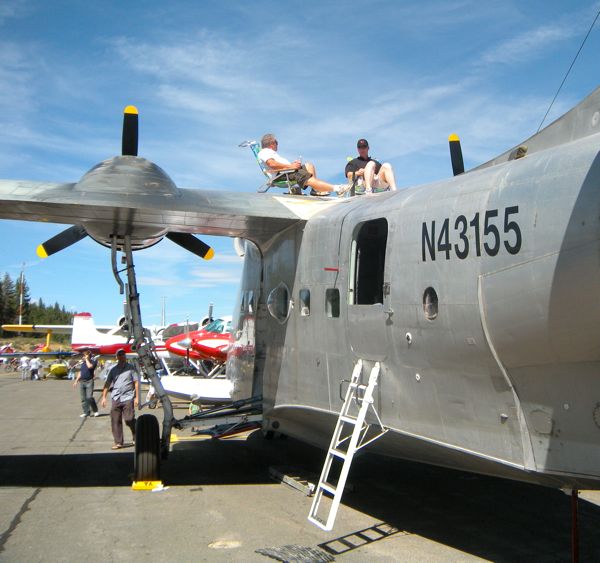
Expect all sorts of planes flying on Aug. 27 and even more on the tarmac at Lake Tahoe Aiport. Photo/LTN file

Expect all sorts of planes flying on Aug. 27 and even more on the tarmac at Lake Tahoe Aiport. Photo/LTN file

He is also one of the pilots who donates his time and plane to take kids in the air. Most flights are about 20 minutes – going from the airport, over the casino corridor, to Cave Rock, before turning around and following the shoreline back to the airport.

“Some have never been in a plane before, so it’s really an experience for them,” Golden said.

Many of the planes are single engine, with some pilots having a twin engine.

Sometimes a youngster even gets to take over the controls to get the feel for what it’s like to be a pilot and not just a passenger.

Young Eagles started in 1992 as a way to introduce young people to aviation. Each year it seems more critical because the number of people wanting to become pilots is dwindling. And this comes at a time when the demand is increasing.

In June, USA Today reported, “After nearly a four-year drought of job openings, the airline industry is on the brink of what’s predicted to be the biggest surge in pilot hiring in history. Aircraft maker Boeing has forecast a need for 466,650 more commercial pilots by 2029 — an average of 23,300 new pilots a year. Nearly 40 percent of the openings will be to meet the soaring travel market in the Asia-Pacific region, Boeing predicts, but more than 97,000 will be in North America.”

The Aircraft Owners and Pilots Association reported a high of 827,000 pilots in the United States in 1980, while in 2009 there were 594,285.

Besides the lack of desire to get in the cockpit, the number of flight schools in the U.S. and Canada went from about 2,400 to 1,700 after Sept. 11, 2001. Though, the FAA reports the number of student pilots was dropping before then, with 129,000 in the system in 1990 and 72,000 students in 2009.

Air show

This marks the 22nd year for the Lake in the Sky air show at the South Lake Tahoe airport. Each year it’s a little different depending on what planes are available and who is in the sky doing acrobatic maneuvers.

“You are going to see a lot of newer general aviation aircraft and lot of military transport aircraft,” Golden said of the Aug. 27 event. “An Air Force C5 Galaxy will be doing an aerial fly-by over the airport. This thing is gigantic.”

Part of the opening ceremonies is having the plane fly close to the ground more than once.

Golden said another change is more demonstrations this year.

It costs $5 per person or $15 per car to attend the air show.

More information about Young Eagles is online.

The schedule for Saturday’s air show is also online.


Truckee-Tahoe Humane Society in serious fund-raising mode

Despite the challenge of fundraising during the economic downturn of the past three years, the Humane Society of Truckee-Tahoe is only $1 million away from raising the $5 million needed to build a new animal shelter.

To date, the animal rescue group has raised $4.2 million, which includes $2.5 million from the Town of Truckee, and HSTT has launched the “Heroes Now & Forever” campaign for the final stage of fundraising.

The goal of the “Heroes Now & Forever” campaign is to get 1,000 people to donate $1,000. The donation can be made in one full payment, two $500 payments, or four $250 payments. To honor the 1,000 Heroes donors, a recognition piece will be installed in the main lobby of the new shelter, and donors will be invited to a private VIP facility tour and party prior to the grand opening.

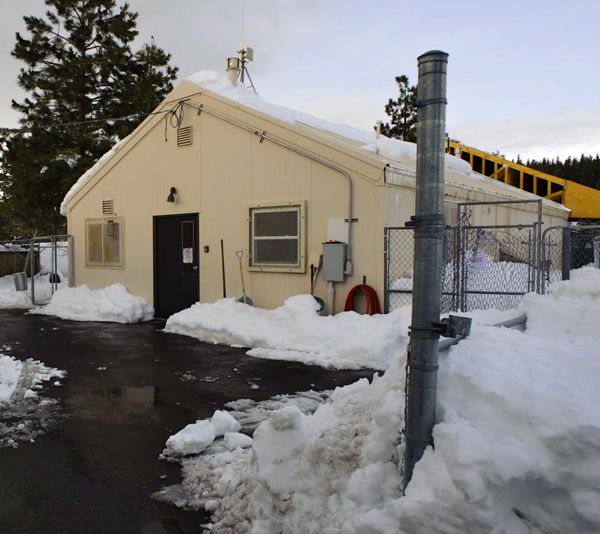
The current kennel in Truckee. Photo/Provided

The current kennel in Truckee. Photo/Provided

HSTT is in desperate need of a new shelter. The current 1,000-square-foot facility was built in 1998 as a temporary holding kennel for abandoned, seized, and rescued dogs and cats. Through a partnership with the Town of Truckee, HSTT houses a limited number of animals at the shelter, and many more dogs and cats are in volunteer foster homes.

The current kennel accommodates eight dogs and 30 cats, although at times, there are upwards of 30 dogs and 80 cats in need of shelter. Such limited space can terrify animals, often causing aggression and fights among dogs and stress-induced illness in cats, Jensen said. The kennel also lacks adequate space to quarantine sick or injured animals, and because of its location in the Town Corporation Yard, it is only open to the public two hours per week for adoptions.

The new shelter was designed to accommodate current and future needs by an architect who specializes in shelters and veterinary hospitals. The facility will include real-life rooms for dogs and large, colony-style cat rooms, with perches, windows to the outside, and natural sunlight.

The building will include an education and training center, allowing HSTT to expand its humane education, dog training and pet assisted therapy programs. Open daily to the public, the new shelter will provide a convenient location for people to meet and adopt their future pets.

HSTT has partnered with Truckee to share the cost of construction and operation of a new shelter. Approximately 1.5 acres of land have been secured at no cost to HSTT. However, in order to maintain the agreement with the town, HSTT must raise its portion of the funds before starting construction.

The HSTT directors believe the Heroes campaign will reach their $1 million goal by the November 2012 deadline.

Anyone interested in joining the Heroes campaign is encouraged to call (530) 587.5948.


History: How land on the South Shore changes hands

Publisher’s note: This is from the August 1976 Lake Tahoe Historical Society newsletter.

When Matthew C. Gardner (whose name has been given to Gardnerville, Nevada and to Gardner Mountain and Gardner Street in South Lake Tahoe) was forced into bankruptcy, his railroad and lumbering operations ceased. His land holdings of approximately 600 acres were purchased by Lucky Baldwin for $400. Some years later, Gardner’s daughter, Clara Belle, bought back a small acreage near her family’s former pier in the Camp Richardson area for $3000.

history logoThis was then sold in 1899 to William S. Tevis of San Francisco for $6000. Here, he built a lavish summer home with elaborate gardens which kept twelve gardeners working full time all summer long. Included were rock gardens, pools, fountains, a waterfall, rolling lawns, an arboretum with imported trees and shrubs from all over the world, and a gazebo built of wood from the site.

When the Tevis family fortune declined during World War I, the estate came into the hands of George Pope whose heirs later sold it to the U.S. Forest Service. Although its former elegance is sadly dilapidated, the “Pope Mansion” today is one of the three once lavish summer homes still standing on the southwest shore of Lake Tahoe.

Some of the gardens will remain, though considerably reduced in size. There’s a pool filled with lily pads, a few water bugs, and a resident frog family. The rolling lawns are gone, the gravel paths are not too well defined, and most of the rockwork has either been carried away or has become overgrown over the years.

The young imported trees, the Sequoia, the Asiatic cedar, and the Norwegian Spruce, are now tall and imposing with neighboring shrubs almost obscuring the view of the lake.

The rustic bridge itself is gone, but the little arched stone bridge still leads into the lake side of the gazebo. Occasionally, a stray bit of wind flaps a loose piece of wood on the roof of the little old summerhouse. Step into the gazebo, sit at the weathered splintery table, and if you let your imagination wander, you can almost hear the murmur of voices, the rustle of crisp summer dresses, and the tinkle of fine china and sterling silver as the Tevis family and their guests enjoy their tea while the late afternoon calm descends over that big magnificently blue lake. And, even though you were never there at that time, somehow it seems you can look back and remember – the way it used to be ….


Memorial service set for Norma Schwartz

A memorial and celebration of life or former North Tahoe Public Utility District board member and North Tahoe resident Norma Schwartz will be Sept. 17 at 11am at the North Tahoe Event Center in Kings Beach.

All are welcome to come and celebrate the life of Norma Schwartz, who contributed so much of her time to the North Tahoe community.

Norma passed away peacefully on Feb. 4, 2011, in San Jose, just 12 days short of her 78 birthday.

Norma was appointed to the board on Dec. 22, 1981, after the resignation of newly elected board member Ken Oerlich. Norma was the first female to serve on the board and served for 25 years, the longest serving member.

Upon her decision not to run for re-election in December 2006 she said, “I am proud of the accomplishments of the NTPUD during my time on the board. We helped guide the development of the North Tahoe Regional Park from old sewer ponds to the park that it is now, the effort to bring in money for the construction of the Boys and Girls Club, and the grant money for park improvements that have been brought in over the years.”

In 1973, Norma and her family moved to Agate Bay. Norma and her husband, Al, were the owners of the Old Post Office Restaurant in Carnelian Bay and Al, the manager of Agate Bay Water Company. She was extremely active in North Tahoe politics and was instrumental in the development of the North Tahoe Business Association.

In lieu of flowers, donations in Norma’s memory can be made to one of the following local organizations that she supported: Tahoe Forest Hospice, North Tahoe Fire Fighter’s Association, the Boys and Girls Club of North Lake Tahoe, or the Tahoe Nordic Search and Rescue Team. If you need contact information for donations or would like to contribute a dish to share at the memorial, contact Pam Lefrancois at plefrancois@ntpud.org or (530) 546.4212.


Tahoe Tails — Adoptable Pets in South Lake Tahoe

Dennis is one of several adorable kittens looking for a new family. He is as sweet and playful as you can imagine.

kittyThe shelter is continuing its kitten and adult cat special adoption program – adoption fees through August are half price, so only $40.

Dennis is neutered, microchipped, and vaccinated. He is at the El Dorado County Animal Services shelter in Meyers, along with many other dogs and cats who are waiting for their new homes.

Call (530) 573.7925 for directions, hours, and other information on adopting a pet.

For spay-neuter assistance for South Tahoe residents, go online.

— Karen Kuentz


Beach, mountain, concert — and no need for a car

By Susan Wood

Summer in South Tahoe transforms this small town to a major tourist destination. The traffic has visibly picked up in August, reminiscent of the days when the population would swell to more than 100,000 – more than three times its standard rate.

For that, it was good to see a “No Vacancy” sign flash outside The Station House Inn on Park Avenue, an ideal launching pad to the outdoor concert series in the Harveys parking lot. It was perfect to be able to walk to the Miranda Lambert concert on Friday.

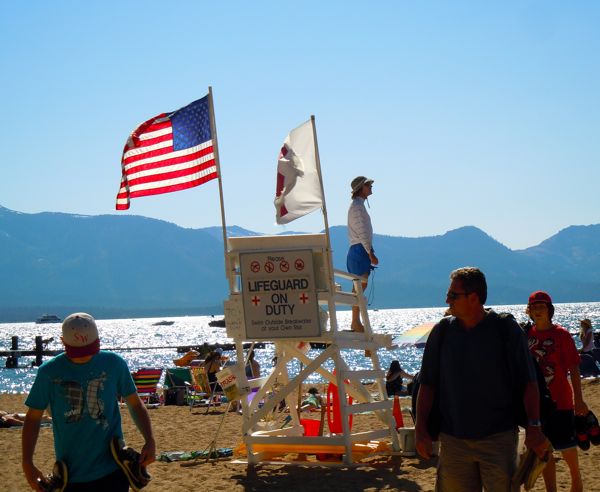
Lakeside Beach is one of the few in Tahoe with a lifeguard. Photos/Kathryn Reed

Lakeside Beach is one of the few in Tahoe with a lifeguard. Photos/Kathryn Reed

To make a weekend out of it, a seven-minute walk provides access to the Heavenly Mountain Resort gondola and the Lakeside Beach going the other direction.

Heavenly just expanded its summer activities at the adventure park, including tubing. From there, the hiking trails have extended to the highest point of the ski resort at the top of Sky Express. The views off the California Trail ridge are nothing less than Heavenly. Read more about this on Aug. 28 on Lake Tahoe News.

With the Best Western Station House Inn stay, R&R has also been expanded to recreation, relaxation and rejuvenation. Moreover, the location brings a quiet reprieve to the hustle and bustle of Highway 50. The 99 rooms – which start at $109 on weekdays and $169 on weekends — are common with tired décor by most standards.

Nonetheless, the motel provides a good bang-for-the-buck bargain with a complimentary full breakfast staged at the dinner house named after a combination of the Willorford family’s original owners who owned LewMarNel’s and the Station House Inn. (Recommended: the blueberry pancakes are worth ordering with a generous helping of fruit cooked in the batter. The eggs with potatoes hit the spot when you’re hungry.) The wait staff is professional, courteous, responsive and friendly.

“It’s good for my golf game,” waiter Brad said of the job. He’s worked there 15 of the 35 years he’s resided in Tahoe. Even though only two of the 97 parties the restaurant served that morning were not staying at the motel, the restaurant stays busy. After breakfast, the ever-hungry may order lunch and drinks like a $6 mojito by the pool just below the restaurant. The smoker sends the smell of charcoal hovering over the patio. Pure summer.

For evening starters, the tiny bar inside LewMarNel’s opens at 4:30pm – where Terry and Susan Canale of Ione awaited their night out to see Miranda Lambert with their daughter Marcie, a Tahoe local. The Canales said they always stay at the Station House Inn because of the value – meaning the breakfast and proximity to the beach.

“We come here every year to see a concert,” Terry Canale said.

“And it’s a really nice get away in the winter,” his wife added. She likes to thaw out with the cheese fondue at LewMarNel’s for dinner.

To some, the warmth in winter may be more of the draw to the American and cheddar cheese fondue than the taste. This opener to a dinner meal at LewMarNel’s set the stage for an overpriced, oversalted trip into the 1980s as shown by old reviews on the wall. Kae and I can easily pass on a second visit. We both received a month’s worth of sodium on my broccoli and her oily $17 pasta primavera, the only vegetarian option on the menu. Sadly, my petite filet mignon was OK, but worth maybe half of its $34 price tag.

Restaurant aside, the grounds and location of the Station House Inn property make up for dinner inadequacies. Serenity beckons a guest from the room just steps away from the pool and hot tub patio.

Plus, the motel offers sun bathers easy access to a restricted beach next to the Lakeside Marina. If you’re not into power boating, the beach is filled with activities including kayaks to rent. A children’s play area and swing set flank both sides of the beach, and a volleyball court welcomes the big kids.

Others just wanting to kick back may rent umbrellas to hang out at the beach, which is monitored by lifeguards until 5pm. They announce their departure and welcome beachgoers to stay, albeit safely at the shore.

If you go:

Lakeside Marina, beach and restaurant are located at the end of Park Avenue in South Lake Tahoe next to Stateline. It’s free for hotel guests, with a fee for others.

The Best Western Station House Inn sits halfway between the marina and Heavenly Village on Highway 50.

The Heavenly Gondola runs from 10am-5pm, seven days a week.

ngg_shortcode_0_placeholder (Click on photos to enlarge.)


NLTRA has money to give away

The North Lake Tahoe Resort Association, in collaboration with the North Lake Tahoe Chamber of Commerce, is accepting applications for the 2011-12 Special Event Development Grant Program. The deadline to apply is Sept. 9 at 5pm.

The NLTRA has $50,000 available to award recipients to be used this fiscal year that ends June 2012, or next fiscal year, July 2012 to June 2013. The available funds are open to those with events planned for the Placer County/North Lake Tahoe region. The majority of grants awarded will be in the $500 to $2,500 range.

The Special Event Development Grant Program provides marketing and promotional support to special events or projects and programs that bring visitors to the region; generate local and regional business revenue; provide local and regional media exposure; and opportunities for public relations. Grants cannot be used for capital investments, salaries, operational overhead, food and beverage, entertainment and supplies. Since the funding for this grant program comes from Placer County Transient Occupancy Tax, through the North Lake Tahoe Resort Association, the public revenue and other benefits generated must accrue principally to areas within Placer County.

The North Lake Tahoe Chamber of Commerce staff will review all Special Event Development applications followed by a meeting with a specially appointed Task Force Sept. 14. If approved, the North Lake Tahoe Resort Association Board of Directors will then consider the grant applications, typically as a Consent Calendar item on its regular Board of Directors meeting agenda Oct. 5.

For more information about the Special Event Development Grant Program and/or a Grant Funding Criteria and Application Form, call Kym Fabel at (530) 581.8764 or kym@puretahoenorth.com.