Red Cross to offer training on South Shore

South Lake Tahoe has three trained Red Cross volunteers ready to help out in a disaster, whereas the North Shore has 40 and Markleeville 20.

That is why Red Cross has scheduled a Shelter Operations class on the South Shore for Oct. 8 from 9am-4pm.

Location is still being finalized.

Call (949) 291.9699 to reserve a spot or for more information.


Sheriff’s volunteers add manpower to streets of El Dorado County

By Kathryn Reed

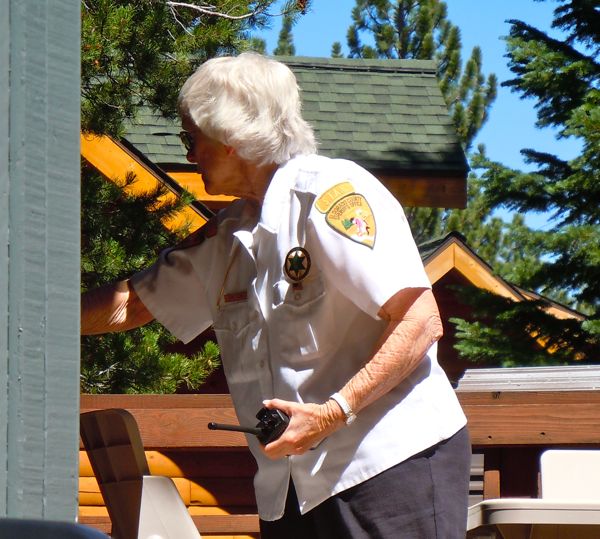
Walking around the house they look to see if the doors and windows are secure – that no one, not even a bear – has broken in.

It’s all part of the job – these checks on homes where people are on vacation or the house is for sale. (It’s free for the homeowner.)

Dick and Joan Young are two of the 20-member Sheriff’s Team of Active Retirees. They don’t carry guns. A radio is their biggest weapon, so to speak. Had there been something amiss at this house off North Upper Truckee they would have radioed it into dispatch so a deputy could take over.

“STARs are our eyes and ears. They are not our hands and feet,” is how El Dorado County sheriff’s Lt. Les Lovell puts it. “It’s a volunteer program to assist the sheriff’s office with providing services to the community.”

Joan Young checks to on a house to make sure it is secure. Photos/Kathryn Reed

Joan Young checks on a house to make sure it is secure. Photos/Kathryn Reed

Although the program started in 1994, the Youngs have been doing it for a handful of years, with Dick starting first.

Two people always are in the vehicle at the same time – acting as partners for each other like sworn officers do.

They put in about 16 hours a month. This particular Thursday the South Lake Tahoe couple is on a four-hour patrol shift. Another team had taken a morning shift.

No two days are alike – just like with sworn personnel. They might be asked to take a vehicle to Placerville or a local shop for repairs. Perhaps it’s another sort of delivery between the offices.

Lovell says the STAR volunteers allow deputies to be patrolling the streets – doing more critical law enforcement work.

While some might say STAR volunteers do the more mundane things in terms of all the duties involved in operating a sheriff’s department, there is excitement.

A few years ago when a man put a gun to his head in the middle of Riverside Avenue it was STAR volunteers who put their vehicle in the middle of traffic to stop people from getting closer.

Traffic patrol is a big thing for these volunteers. They helped out during the Angora Fire of 2007, too.

No one tells them where they have to go unless there is an emergency. The Youngs have been called up to the parking lot at Vikingsholm to clear the lot so a helicopter on a search and rescue mission could land there.

Most people, though, have probably seen these men and women at special events. They had a booth at the air show Aug. 27 at Lake Tahoe Airport in addition to being responsible for parking cars.

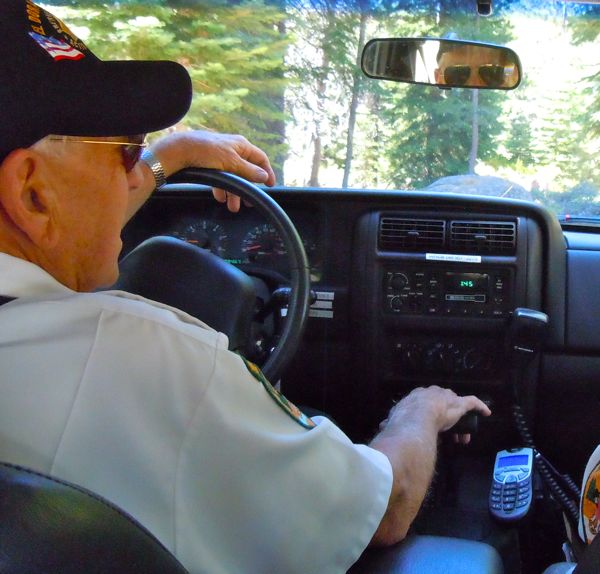
Dick Young drives through El Dorado County looking for possible trouble.

Dick Young drives through El Dorado County looking for possible trouble.

Before the air show this year the hours STAR volunteers in the basin have put in are:

• Administration-reception – 135

• Patrolling – 1,060.5

• Station meetings – 294.5

• Cape Program – 56

• Special Events – 254

Total hours – 1,800.

Special events they help with run the gamut from providing overnight security for the Fine Arts Festival to working on the Drug Store Project to being at veterans events to providing security on Election Day.

Dick Young said it’s never boring; just some days are slower than others.

His wife likes being able to drive around to parts of the county she wouldn’t otherwise see.

On this day they drive through the North Upper Truckee area to Tahoe Mountain Road, around Angora Highlands, down to Fallen Leaf Road and into two U.S. Forest Service operated beaches.

They notice traffic has slowed and the beaches are less crowded. So many schools are back in session.

But with Lake Tahoe Unified students returning to school this week it will mean being visible around bus routes. STAR volunteers take down the license plate numbers of drivers not obeying the flashing red lights or speed limits in school zones.

While no law enforcement background is needed to be a STAR, they take on the traits of seasoned officers.

“The one thing I’ve learned is you do a lot of looking,” Dick Young said. “You pick up on things that are not in order, like a window that is broken out.”

To be a STAR volunteer you must be at least 50 years old and not be a felon. Then you must go to a two-week STAR academy that is about four hours a day, five days week. For more information, call Sgt. Pete Van Arnum at (530) 573.3002.


Annual classic car show in Kings Beach

The 4th annual John Reichert Memorial Classic Car Show will be Sept. 10 from 1-3:30pm at the Kings Beach State Recreation Area.

This event is free and open to the public; both spectators and those who wish to show their cars. This event is organized and presented by the Kiwanis Club of North Lake Tahoe and sponsored by Taneva Auto Parts.

John Reichert was a member of the North Tahoe Public Utility District Recreation and Parks Commission who passed away in 2008 and was involved in the development of the Friends of the Park Fund. This fund goes to support capital projects in the North Tahoe Regional Park. A BBQ benefiting the North Tahoe Public Utility District Friends of the Park Fund will also take place during the show.

Anyone wishing to show their car should contact Dave Shelton at (530) 583.3787 or tahoed@gmail.com.


Lecture on history of atomic testing in Nevada

Saturday Mornings, the award-winning morning discussion and lecture series collaboration of Sierra Nevada College and Incline Village Parks & Recreation Senior Programs, continue this fall.

College faculty and other knowledgeable locals present bite-size offerings of intellectually stimulating material to pique people’s interest and challenge their sensibilities.

An optional continental breakfast will be provided for $3.

Ann Ronald is an emerita professor at UNR. She has published nine books and countless articles about sense of place in fiction and literary nonfiction and was inducted into the Nevada Writers Hall of Fame in 2006. As part of Nevada Reads she will be presenting her latest work Friendly Fallout 1953 exploring the history of atomic testing in Nevada’s desert and the impact on the people who participated and the civilian “downwinders.”

She speaks Sept. 16 from 10am-noon at Sierra Nevada College, Prim Library, Room 213, 999 Tahoe Blvd., Incline Village.

The event is free.

For details, contact Debi Noonan at (775) 831.1314, ext. 7420, dnoonan@sierranevada.edu.


Tahoe Tails — Adoptable Pets in South Lake Tahoe

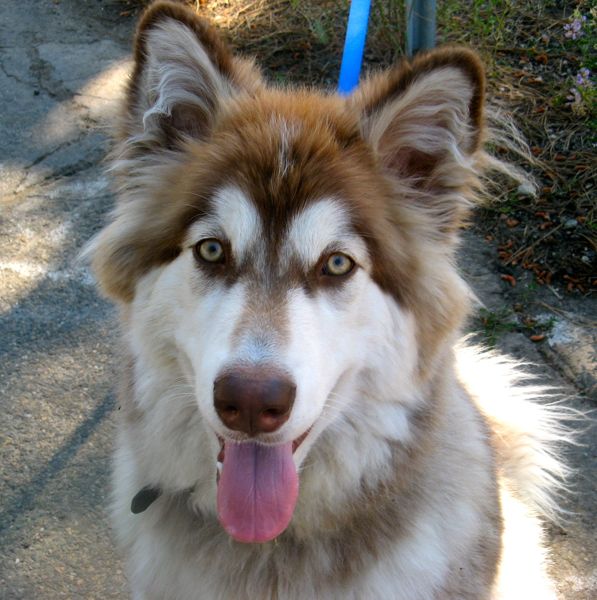
Lise is a young, pretty Alaskan Malamute who is going to be a fairly large adult. She is very affectionate with people and loves to play with other dogs. She has lots of energy and needs lots of exercise.

dogShe’s a big, goofy girl who needs to learn more manners, but she’s smart and will learn quickly.

Lise is spayed, microchipped, and vaccinated. She is at the El Dorado County Animal Services shelter in Meyers, along with many other dogs and cats who are waiting for their new homes.

Call (530) 573.7925 for directions, hours, and other information on adopting a pet.

For spay-neuter assistance for South Tahoe residents, go online.

— Karen Kuentz


Free energy audit provides tips for saving money

By Kathryn Reed

I need to use less energy. Well, I don’t, but our house should be using less.

That was the conclusion by Sten Seemann after he performed an energy audit last week.

“You do pretty good in the summer, but in the winter you almost use twice as much energy. We are going to see why,” he said.

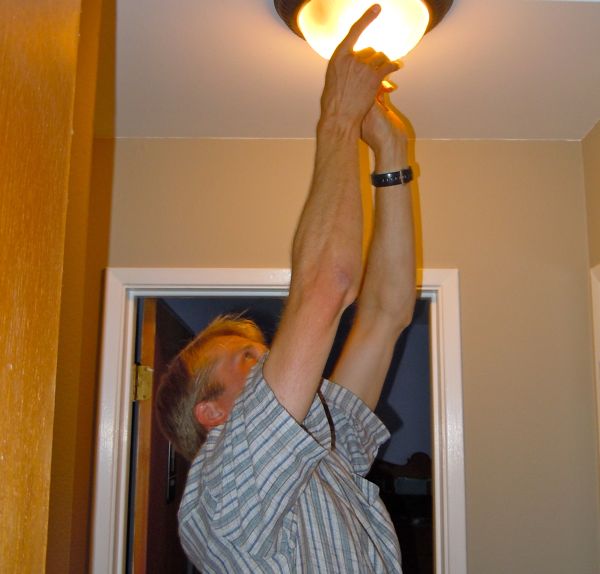
Sten Seemann checks to see the type of bulbs in this fixture. Photos/Kathryn Reed

Sten Seemann checks to see the type of bulbs in this fixture. Photos/Kathryn Reed

Seemann through his company Sierra Energy and Water Conservation is a subcontractor for Liberty Energy. The utility, which took over Nevada Energy’s California customers this year, does the energy audits for free.

Armed with our past bills supplied by Liberty Energy he was able to see how our electricity usage changed from month to month over a few years.

February was higher this year than last. I’m thinking we had company and the outside temps dropped. I don’t really know.

Part of the summer-winter difference is lifestyle – more lights on for longer in the winter, the furnace hums, increase in TV watching, more people visiting, more cooking (oven especially).

But the big energy culprit, according to Seemann, is the hot tub being set at 102 degrees all the time – or hotter in winter. He suggested putting in a timer to reduce the temp overnight when no one is in it. I have a call into Hot Springs Spas who we got it from to see if this is possible and what the cost would be.

When it comes to hot tubs in the winter it takes more energy to heat them because the outside air is so dang cold in South Lake Tahoe.

Another biggie is to get more insulation. Looking in the attic – Seemann did this, I’ve never done it – was not good. We have about R-12 insulation. Code is R-38. Such are the hazards of a house built in 1965 and knowing we’ve added zero insulation in the eight years we’ve lived in it.

Seemann recommended getting quotes from Gale Insulation and Meeks for insulation. In an email he sent the night of the audit he said to do so before November.

That’s one of the nice things about the audit, Seemann follows it up with an email with the suggestions he said verbally and then some additional comments.

Even though the audit is painless and takes an hour or so, the problem is remembering all the information that is dispensed. That is why the follow-up email is nice to receive.

Window and door insulation inspections are part of energy audit by Sten Seemann.

Window and door insulation inspections are part of the energy audit by Sten Seemann.

Education is a big component of what Seemann does. Nothing he suggests has to be done. No “energy police” are going to come see if you took him up on his recommendations.

“Liberty Energy is obligated by the regulator, California Public Utility Commission, to offer energy efficiency programs so that customers can choose to exercise options to lower the commodity costs on their electric utility bills,” Bob Dodds, president of Liberty Energy, told Lake Tahoe News. “This does result in less money in the company’s pocket but that is offset by the lower amounts of electricity the company needs to purchase for distribution. In the long term, lower electricity use by customers reduces the need for continuing investment in facilities for the generation, transmission and distribution of electricity which ultimately lowers impacts on rates and the environment.”

Most of our light bulbs were CFLs, so we were ahead of the curve on that. I hesitated when Seemann wanted to put a CFL in the fixture over the kitchen table. We had done so a couple times with each one burning out rapidly. The older CFLs burned out faster if turned off and on a lot. I relented, but I kept the energy-hog old one just in case.

Seemann’s philosophy is that it’s better to throw out an old working bulb than to throw away money. In other words, don’t wait until the energy-inefficient bulbs die before replacing them.

Seemann also put in a low-flow showerhead. I had the most consternation about this change. I have a thing for hot showers with good pressure. I’ll write in the dark on my laptop battery without using electricity before I give up my daily hot, hot, hot shower.

So far, so good with the showerhead.

And on top of that, the bulbs and showerhead were free.

While Liberty Energy doesn’t supply our water, the energy audit touches on water and gas usage, too.

To schedule a free energy audit through Liberty Energy, call 800.782.2506. They are running a bit behind on appointments. It was in June at the North Lake Tahoe Chamber of Commerce Business Expo that I learned about the audits. It took two months to get a call — so be patient.


Gloria Steinem: Now is not the time to settle

By Nancy Hass, Newsweek

Mention the name Gloria Steinem to many women under 30, and if there is a flash of recognition at all, they put her in Florence Nightingale’s league—an admirable figure from the history books. To them, feminism was a war won before they were born, the miniskirted 1970s revolution that freed their mothers and grandmothers from drudgery and discrimination, paving the way for their own generation’s unfettered freedom.

But in the living room of the funky Upper East Side duplex where she has lived for more than 35 years, Steinem, 77, is still on the front lines of a fight she considers barely half finished. Every day, the news pours in—from the Middle East, Africa, India, and Washington, D.C.—jamming her inbox and filling up her speaking schedule. The media haven’t paid her much attention in the past 15 years (so many Kardashians, so little time), but the woman who has been the enduring face of feminism for nearly half a century insists her hands are as full as ever.

“Obviously we’ve come a long way on many fronts, at least for some women in this country,” says the activist and founder of Ms. magazine as she curls her bare feet beneath her on a green velvet sofa she’s had for decades, sipping a lukewarm cup of coffee and leaning against a needlepoint pillow that reads “Being on the Bestseller List Is the Best Revenge.” “But then you have Anders Breivik,” the Norwegian man who massacred 77 people in late July. “He was clearly motivated by woman-hating and the cult of masculinity. His own manifesto made super-clear that he hated his mother and stepmother for being feminists and ‘feminizing’ him, that feminists made ‘men not men anymore.’ How far have we come if that part of it barely got any coverage?”

Don’t get her started on Dominique Strauss-Kahn, the former IMF chief who has been accused of sexual abuse by an African-born chambermaid assigned to clean his New York hotel suite. Even though the case may never be prosecuted because it is muddled by inconsistencies in the woman’s story and background, Steinem considers the skirmish a victory. “Anyone can see this is a pattern of behavior,” she says in her measured Midwestern tones, pointing to other women who have claimed Strauss-Kahn harassed them. “And now that has been exposed. He’s gone from the job, disgraced. No matter what happens, it’s a net win for us.”

As for Michele Bachmann and Sarah Palin, women who wouldn’t be riling up the Tea Party faithful had Steinem not paved their way out of the kitchen, she sees them as inevitable, as was (ERA opponent) Phyllis Schlafly at an earlier time. “You know what you’re saying is important when the power structure brings in people who look like you and think like them.”

Read the whole story


Weaving — a shared love among various cultures

By Virginia Matus-Glenn

CUZCO, Peru — I first learned how to weave way back in the early-70s when I was living in the Los Angeles area. I took several classes and began a lifelong involvement with the world of textiles.

When I moved up to Lake Tahoe in 1982 to take a position as a school principal in Lake Tahoe Unified School District, I soon realized that I wouldn’t have much time for weaving. In spite of that reality, when we bought our home here I carefully set up my floor loom and discovered that it was a great place to hang clothes that I didn’t have time to put away.

I wasn’t weaving, but we did make time for traveling whenever we could, and I collected textiles and weaving related books from all over the world. I had traveled to Peru with an anthropologist friend in 1980 so I was particularly taken with Latin American weaving and read everything I could about it. I have taught a cultural break out session on Latin American Textiles at the Intensive Summer Spanish Institute at Lake Tahoe Community College for several summers.

Peruvians share their culture and love for textiles. Photos/Virginia Matus-Glenn

Peruvians share their culture and love for textiles. Photos/Virginia Matus-Glenn

Once I retired in 2002, I was able to begin weaving again and I have taken lots of classes and done lots of weaving in the last nine years.

But I have always longed to return to Peru to learn firsthand more about their textile traditions. So last June, when I saw the ad for the Tinkuy de Tejedores (Gathering of Weavers) that was going to be held in Cuzco, Peru, in November, I really wanted to go. Luckily I’m blessed with a wonderful husband who encouraged me to go. He read the info on the tour and decided he didn’t want to go with me – especially after he read the part that said that “most of the tour would be at altitudes over 11,000 feet in remote villages far from medical care”. I didn’t care – I was willing to risk it in order to see all the places and things that the tour had to offer.

So on Oct. 31, I flew off to Lima, Peru – almost tingling with excitement and expectation. I spent three days on my own having a wonderful time exploring Lima. Lima is a bit dreary. It is notorious for being cloudy and gray most of the day and it definitely was while I was there. They call it a garúa. The Lonely Planet book says “… a mist that turns the sky an alabaster white and leaves the city draped in a melancholy pall.” Herman Melville, who visited there in the 1800s called it the “strangest, saddest city thou can’st see. For Lima has taken the white veil; and there is a higher horror in this whiteness of her woe.”

I didn’t really experience melancholy or sadness, but it was indeed gray – all day long. Maybe they get used to it like people in LA get used to the smog.

When we finally boarded the plane for the flight from Lima to Cuzco at the official start of the tour, I was quite ready to leave the garúa behind.

The Tinkuy de Tejedores was in the Urubamba valley – about an hour from Cusco and slightly lower – only 9,000 feet as opposed to Cusco’s 11,000 feet. The first two days were an amazing conference – really a gathering – of weavers from all over the world. There were about 400 in attendance – two thirds were indigenous weavers, mostly from Peruvian communities, which are affiliated with the Center for Traditional Textiles in Cuzco, the hosts of the Tinkuy. But there were also indigenous weavers from Bolivia, Mexico and Guatemala along with our group of a North American weavers and aficionados from Canada and the U.S.

Weaving transcends languages.

Weaving transcends languages.

For two days we listened to an array of interesting presentations from internationally renowned experts on many aspects of weaving. In addition to these experts, we also heard from representatives from each of the communities affiliated with the CTTC. They told us of their experiences working with the Center to revive the weaving traditions in their communities. They spoke of the classes they’d taken, the changes brought about in their lives because of the Center and their plans for the future. One of the amazing aspects of the Tinkuy was that every presentation was done in 3 languages – English, Spanish and Quechua. The presenter would speak his or her native language and have a PowerPoint in a second language and a translator would give the third. Remember that most of the Peruvian weavers lived in remote areas with few modern conveniences – like electricity or computers on which to learn PowerPoint. Nor have they ever been asked to speak from a stage before 400 people. The center made a tremendous effort to make everything accessible to everyone and they definitely succeeded.

We learned and experienced way too many things during those two days than I could ever cover in this article. It would take a book. However, I’d like to share one particularly touching ceremony that took place on the second day. The center encourages young weavers and they brought in young student weavers along with their mentors or elders from many of the communities and after telling us of their accomplishments, they gave each one of them the pieces necessary for their very own back strap looms. There wasn’t a dry eye in the place.

The next two days the center offered us a choice of four possible classes – Back strap weaving, knitting with 5 needles, natural dying, and Peruvian tubular edging. I had already taken a class in back strap weaving and I didn’t want to learn to knit with 5 itsy bitsy needles so I chose the dying for the first day and tubular edging for the second and loved them both.

The classes were at the center’s main location in the town of Chinchero, which is at 12,500 feet. In order to dye the wool they had to start boiling the huge pots of water very, very early in the morning.

We learned about all the various twigs, leaves, berries and bugs that are used to get the wonderful colors of wool that are used in their textiles. We helped with the dying and each got to take home skeins of each of the seven different colors that we dyed.

After dying the yarn we rinsed and hung it up to dry – and almost immediately it began to rain. So it stayed up there for two days and then hung in our hotel rooms for several days. Some skeins are just lying on the lawn. They are quite casual about handling the yarn and when I got mine home it took three washes and three rinses to clean out the flora (and maybe some fauna) that came home with it.

I’ll be making a presentation to the Reno Fiber Guild on Sept. 8 at 6:30pm at the community room at the Wolf Run Golf Club, at 1400 Wolf Run Road, Reno. The room has limited seating so if you would like to attend, notify the guild president, Suzanne Woodhead, at woodcats@sbcglobal.net.

Students show appreciative audience what STHS theater is all about

By Kathryn Reed

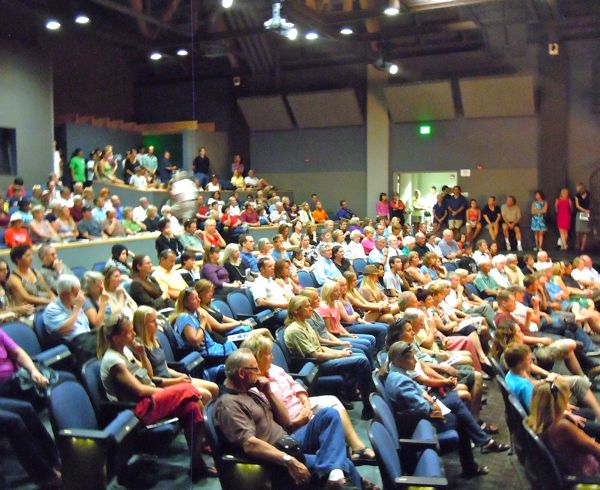
Nearly 300 people were treated to a sneak preview to what the theater at South Tahoe High School is all about.

Almost everyone on stage commented on the lights – how many more there are and the brightness making it impossible to see the crowd – some of whom had to stand.

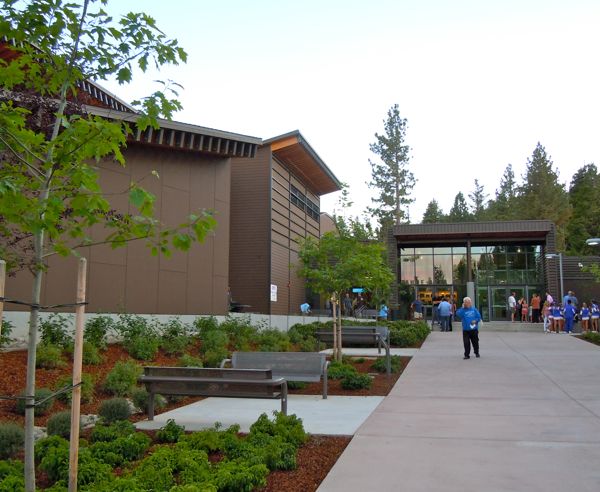
The TADA building is at the entrance of STHS. Photos/Kathryn Reed

The TADA building is at the entrance of STHS. Photos/Kathryn Reed

Acoustics are more powerful – as evidenced by students Joe Letosky, Dillon Daggs, Chloe Davis, Ashley Wallick, Rachael Altman and Shelby Osborn sing “Electricity” from the Broadway play “Billy Elliot”. Their voices penetrated the warm air Friday night.

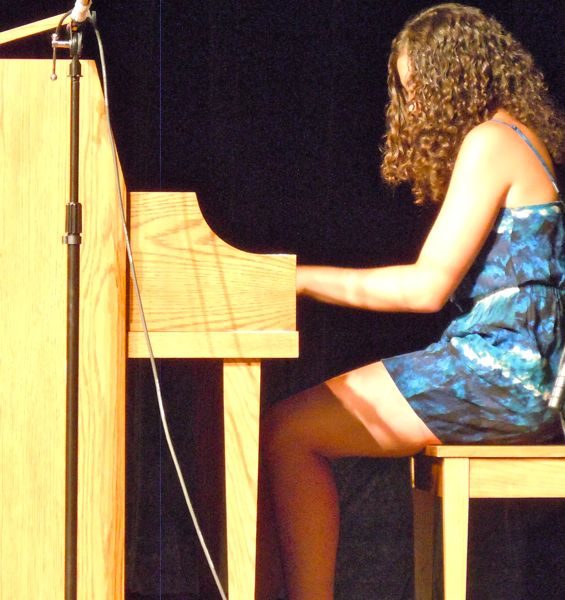
Sophomore Rose Campion has won award for her music talents.

Sophomore Rose Campion has won awards for her music talents.

Rose Campion on piano (without the aid of sheet music) dazzled the audience as her hands flew across the ivory keys.

Courtney Reece performed a solo from “The Sound Music” – last year’s play.

It was Anna Ripoli and Jack Percival doing a scene from a play.

The first full production will be “42nd Street” in December.

Friday night was an opportunity for the public to tour the $9 million Theater Arts & Design Academy as well as experience the theater and see how technology works in the screening room, recording studio, TV studio and other venues.

A few hundred people attend the TADA's grand opening Aug. 26.

A few hundred people attend TADA's grand opening Aug. 26.

Principal Ivone Larson called South Tahoe High a triple-A school because of its focus on academics, arts and athletics.

Money for the makeover at the school comes from voter-approved Measure G funds ($64.5 million) and more than $30 million in matching dollars from state grants. While those dollars are dispersed throughout the district, the bulk are being spent at the high school.

A few people from the state Department of Education were in the audience Aug. 26 to witness what is going on at South Tahoe High.


STHS theater department going big with first production

By Kathryn Reed

Easing into her new environment isn’t exactly Liz Niven’s style. Instead of a small production, maybe even one that wouldn’t be well attended, Niven is going all out when it comes to breaking in South Tahoe High School’s new theater.

“42nd Street” with all of its music and dancing will be the first performance in the theater that is still having finishing touches done to it even with school starting Monday.

“I was looking for a well-known play – something that is a big, exciting blockbuster that would involve a large school population,” theater arts instructor Niven told Lake Tahoe News. “Most musicals can be as big as you want.”

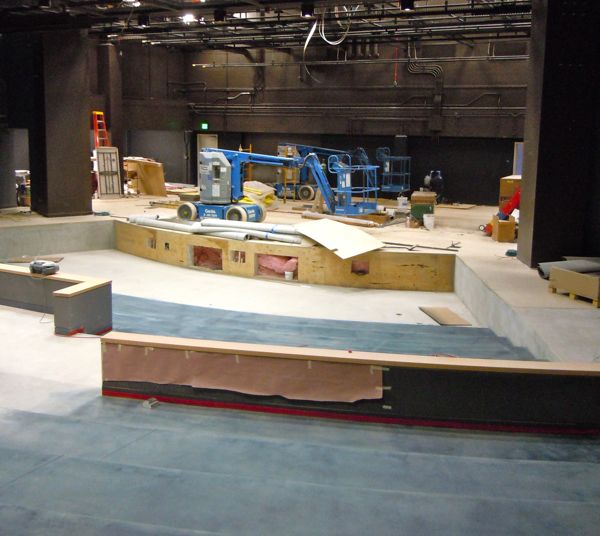
In June the theater at South Tahoe High didn't even have seats. Photo/LTN

In June the theater at South Tahoe High didn't even have seats. Photo/LTN

When the school put on “Crazy for You” it had a cast of 60. She will begin casting for “42nd Street” the third week of school.

“It’s an educational program. Part of the education is you have to give people a chance to discover what they love or don’t love,” Niven said of allowing so many to participate. “The only problem with a big cast is finding costumes for everyone. The more people you have, the more shoes you have to find.”

Right now it’s all about finding where everything is and how it works.

While those who attend tonight’s Celebration of Education put on by the Lake Tahoe Educational Foundation from 5-7 may think the Theater Arts & Design Academy is complete, work will practically continue until the first bell rings. (Tonight’s event is free and open to the public.)

The TADA building, as it is better known, looks like a cutting-edge theater production facility – some have called it leading edge.

While this stage outshines others on the South Shore, it is smaller than what was there. This is because by the time all the agencies weighed-in compromises needed to be made. There are even fewer seats.

Still, the enthusiasm in Niven’s voice is unmistakable.

“It has cool side stages. I’m looking forward to trying and playing with those as well,” Niven said.

Niven usually does three plays a year. With teachers and students figuring out how everything works, she will do two this year, with the musical being the first. “42nd Street” will be staged the first two weekends in December.