S. Tahoe native training with Army in Alaska

By Jason Epperson

JOINT BASE ELMENDORF-RICHARDSON, Alaska — If soldiers with the 3rd Maneuver Enhancement Brigade are sent to Afghanistan, they’ll have to move equipment over mountains, damaged roads and rough terrain. They have a way to do it: “sling-load” it under helicopters.

Arctic Sappers from the 6th Engineer Battalion (Combat) (Airborne) gave instructions on sling-load operations to soldiers of the 3rd Maneuver Enhancement Brigade, Sept. 13 on Bryant Army Airfield, Joint Base Elmendorf-Richardson.

“We’re getting real world training for new soldiers in the unit and battalion to get familiarization of how sling-load operations are conducted and the purpose behind them,” explains Sgt. 1st Class Mark L. Gatto, Forward Support Company, 6th Engineer Battalion (Combat) (Airborne). “Today we are starting off in an intermediate phase. We’re trying to train the soldiers that have been trained before and integrate them with soldiers who have never done it before.”

Sgt. Jason Williams, a squad leader with the FSC, 6th Engineer Battalion (Combat) (Airborne), gave instructions to the soldiers about the importance of taping the vehicles and using 550 cord to secure items.

“The taping of the vehicles is to shatterproof items like the turn signals, parking lights, all the reflectors, the windshield and mirrors,” Williams said. “You tape it to stop it from breaking hopefully, so once it hits the ground, you can put the vehicle back in operation. The tying of some of the equipment is to secure it from falling out and causing injuries to someone on the ground.”

Once the soldiers rigged the vehicles and equipment, the Black Hawk UH-60 was ready to conduct the pick-up. Sgt. Bryan Allen, a crew chief with A Company, 1-52 Aviation emphasized the safety measures the flight and ground crew must take.

“It’s extremely important for individuals to know the safety aspects of moving equipment underneath the aircraft, learning to maneuver the aircraft to situate us above the load, the calls required between individuals not being able to talk to us and using hand and arm signals and movements,” Allen, a native of South Lake Tahoe, said.

Allen who has more than 1,000 hours of recorded flight time, has conducted combat sling-load operations in Afghanistan.

“We did some movement over there, but personnel equipment mainly,” Allen said. “Getting MREs, water and other stuff up to different points were it would take a long time to truck and it’s more hazardous. It’s easier for us to move in by aircraft.”

After the 3rd MEB sling-load operations were conducted successfully, the aviation crew gave a helicopter ride to several of the young soldiers, up to the mud flats north of post.

“It was great training and a great learning experience,” Williams said. “Especially for the different types of equipment you can sling load. Everyone liked it and it was a big thing to get the soldiers up in the helicopter also after doing the sling load. It was a big morale booster. I’d like to continue this training and do it more often.”

“The training was different,” Spc. Ashley Lopez, a paralegal specialist with 3rd Maneuver Enhancement Brigade said. “It was good to get out of the office and into a different kind of environment for training. It’s not what we are used to being in legal, but it was nice to get out there with other soldiers to do these soldiering tasks with the 6th Engineers. It helps give a bigger perspective to what the big Army has to offer besides working in an office environment.”

Jason Epperson is a staff sergeant in the Army.
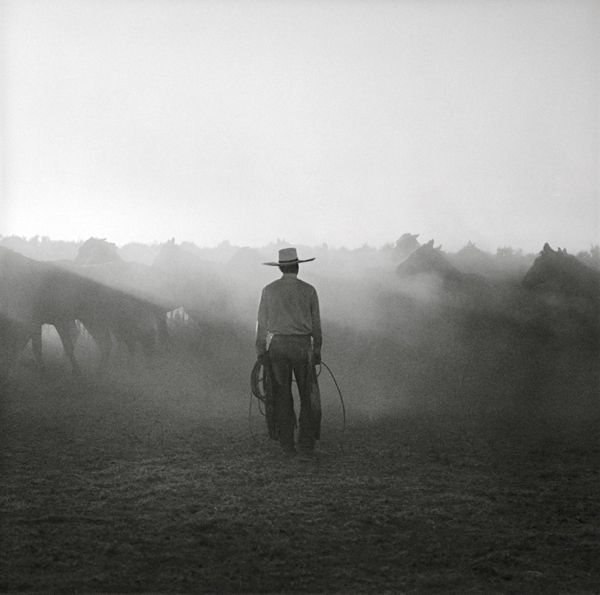


Photo exhibit at SNC captures the ruggedness of the West

Sierra Nevada College presents Great Basin Exteriors: A Photographic Survey, a free public exhibition of 30 photographs by three regional artists – Adam Jahiel, Daniel Cheek and Nolan Preece – which examines loss, change and abandonment in the American West.

In this exhibit, the Great Basin is roughly defined as the area between the Wasatch Mountains along the Idaho and Utah borders and the Sierra Nevada Mountains along the Nevada and California borders. The three photographers featured in the exhibit have independently concentrated on the documentation of subjects that are changing in or rapidly disappearing from the Western landscape.

photoGreat Basin Exteriors: A Photographic Survey is on display through Nov. 15 in the Lake Gallery of Prim Library, seven days a week.

Geologically, the Great Basin is part of the Basin and Range Province that covers most of Nevada and more than half of Utah, as well as parts of California, Idaho, Oregon and Wyoming. Jahiel’s photograph of cowboys in Northern Nevada illustrates this rugged way of life and its marginalization in contemporary society. Cheek’s work celebrates the spaciousness of the Great Basin, which is then juxtaposed with small intrusions in the landscapes that are indicative of a changing West. Preece examines the rustic patina that is diminishing with restoration and development across the Great Basin.

The work of each photographer reflects a distinct style and technique, perfected during careers as highly regarded professional artists.

For group tours or more information, contact Library Director Betts Markle at emarkle@sierranevada.edu or (775) 881.7511.


History: Remembering summers at the Tallac House

Publisher’s note: This is reprinted with permission from the August 1976 Lake Tahoe Historical Society newsletter.

Several months ago, our newsletter carried a report of Linda Mendizabal’s interview with Mrs. Meliba Vallet Meier, whose father was chef at Tallac House some 65 years ago and whose playmate at the time was Gladys Comstock. Since that time we have had correspondence from Velma C. Eden further commenting on the time of which Mrs. Meier spoke. From her letters, we quote:

history logoJanuary 30, 1976

I was interested in reading your article about Mrs. Meier in the current issue of your publication. I was Velma Comstock, and my sister was Gladys. We were both born at Tallac, and lived there until the year 1913. Gladys was married to Maillard Bennett, had two daughters, and helped her husband manage Brockway both before and after our father died, and also, in the winter, they lived in Arizona and managed the Arizona Inn in Tucson. Gladys died very early in 1961 of a brain tumor.

I belong to your Society and, in fact, made a talk on the old Tallac about a year or so ago. I am interested in Mrs. Meier’s recollections and find them very interesting. However, we have some variations.

My mother was called ‘Dell’ or ‘Delly’, not Virginia. Also, she was a remarkably healthy woman who never seemed to have a cold, an upset stomach, or a headache. However, she was a very private person in the mornings and never appeared in public until the lunch hour when she would be all put away in whatever the fashion of the day was. A breakfast tray would be sent over to her from the hotel. No doubt a young girl would have assumed her to be an invalid. My mother loved the social life and could play poker like a pro. She could bowl and, on occasion on the fourth of July, could take off her silly high heeled shoes and do a sprint in the women’s races. No, she was not a sickly woman. However, she was no athlete and did not ride well.

I remember Alice Vallett very well indeed. Alice had studied classical Parisian-type French and this is one of the main reasons that she cared for us. Earlier my father and mother had engaged French women from France who spoke no English and we just had to learn to talk French willy-nilly. (Eventually), as we got older, this was increasingly hard to accomplish, and also we were less inclined to speak a steady diet of French and nothing else. One of our constant companions at this period was the house doctor’s young son, Stewart Manson. Also, my cousin Clarisse O’Brien came often to visit. We all rode horseback a great deal, sometimes went to play on the beach, although I do not remember that we were able to swim. I do not remember Alice’s sister by the name of Meliba; it seems to me we had some other name for her. I can also remember Alice warning me not to copy the kind of French she spoke to her parents, as it was a patois which I was not supposed to learn.

I can remember my sister and I conceiving the idea of trading muffins and cookies which we snitched from our table to the Indians for pine nuts. My parents did not believe in an allowance so we were figuring out a way to provide ourselves with forbidden luxuries. My mother thought everything to do with the Indians apt to (be) rather dirty, although she was very good to them.

I think there were more roads than Mrs. Meier remembers. Besides the saddle horses, there were several carriages and horses who took people on trips to Cascade Lake, Fallen Leaf Lake, and around to Bijou and Al Tahoe. I often made the same trip that Mrs. Meier remembers with my family from the Pasadena area, by train to Truckee, then by the narrow gauge railroad to Tahoe Tavern, then by boat to Tallac. Usually we came very early in April and the roads (were) not open to Tahoe. However, in the fall of the year, from 1908 on, we would return by car. My father would have someone drive it up from (the) Los Angeles area when the snow was off.

I do not know about the tea being served every day at 4:00 p.m., probably because we would not have been allowed to go to it. The side dining room she refers to was known by the quaint old name of “The Ordinary”, which is a kind of New England word for an every day eating room.

Yes, I remember being able to imitate bird calls when young, but I lost the ability when I was older to a great extent. Stewart Manson and I were very fond of hunting birds in the Tallac marshes, a sport which Gladys never cared very much for.

I do not remember a Mr. Brockway at all. We had many visitors to Tallac and no doubt it was one of these she remembers.

I remember the power plant which supplied Tallac with water power electricity. It was located on the outlet of Fallen Leaf Lake, which gave the water quite a drop. There was a huge pipe on a scaffolding which carried it down to the power house. Gladys and I loved to walk on this, which, of course, my mother did not know abut. The soda pop was made here by the men who tended the power plant. It was mostly automatic and they had much time on their hands. Also, at this point the water was very find and pure. Often we would stop there to have a soda as the men were happy to provide us with one each and talk to someone.

I remember when the Valletts left for Castle Hot Springs and we continued to correspond for a time. They sometimes sent us boxes of cactus candy, a luxury which we had never heard of before that time.

When my sister was still very young, somebody gave her a Brownie camera and she loved to take pictures. At an early age she began to keep an album and put in her pictures and any that were given her. I am enclosing two of these pictures from her old album which I still possess. Gladys never lost her interest in photography. One of her very fine pictures adorns E.B. Scott’s Saga of Lake Tahoe, No. 1, with a picture by Ansel Adams on the rear dust cover, her on the front. The first time Ansel ever took a back seat to anyone.

Send me back the pictures sometime. I dug them out from Gladys’ old album. It was interesting to red Mrs. Meier’s recollections. I am a widow and live in Sacramento year round.


Truckee embraces its haunted past with walking tour

It is time to get spooked during the third annual Historical Haunted Walking Tour in downtown Truckee on Oct. 20 and Oct. 21.

Old-timers will tell historic tales of the Wild West, ladies of nocturnal delight will sing a tune and entertaining characters will share titillating folklore along the nearly two-hour walk. Covering Truckee’s most historic sites, the tour will entertain guests from near and far with spooky legends and unsolved mysteries. Find out what loggers loved most about Jibboom Street, the first road built in Truckee.

Learn how the Truckee Regulators administered justice years ago. Discover the never-told-before story of the world’s most famous Lilliputian in this old railroad town.

The Richardson House was a favorite site on the 2010 tour. Built by a lumber baron for his wife in the late 1880s, the house featured a performance by Maggie Richardson’s “ghost.”

Maggie, the first wife of the house, was tormented by her son’s death, and her story, like each memorable performance along the guided tour, was captivating.

The tour benefits the Truckee Donner Historical Society and Trails & Vistas, two well-respected, Truckee-based nonprofit organizations.

For more information, go online or  call (530) 305.4231.


‘Women’s Journey Through History’ on stage at STHS

Soroptimist International of South Lake Tahoe and the South Lake Tahoe branch of the American Association for University Women are partnering with Aston Lakeland Village to bring an original play about women’s contribution to U.S. history to the South Tahoe High School theater on Oct. 12 at 7pm.

“We Did It For You! – Women’s Journey Through History” written by Thea Iberall, poet, playwright and neuroscientist, is a musical tour through the journey that women have taken to get rights in the United States, starting with the struggle women had in the 17th century Puritan Revolution through to 21st century empowered women politicians.

The play focuses on the stories of a few bold women throughout history who believe they deserve more than being treated as minors and extensions of men. It features characters who not only struggled to obtain their rights, but made contributions that were overlooked in many history books.

Iberall brings a Southern California-based performing troupe of nine women to South Lake Tahoe for three performances; two assembly performances for South Tahoe High School students during the day Oct. 11 and one public performance the night of Oct. 12. Fifty tickets to the evening performance have been offered to Whittell High School students.

In addition, Iberall will speak to a joint meeting of SISLT and AAUW members and their guests about her experiences writing and producing the work at a lunch presentation at noon on Oct. 12 at Harrah’s.

Tickets for the public performance $10 and are available online or through Soroptimist and AAUW group members. Proceeds from the performance will benefit S Club, a student community service club sponsored by SISLT.


Poet to launch book, read his works at LTCC

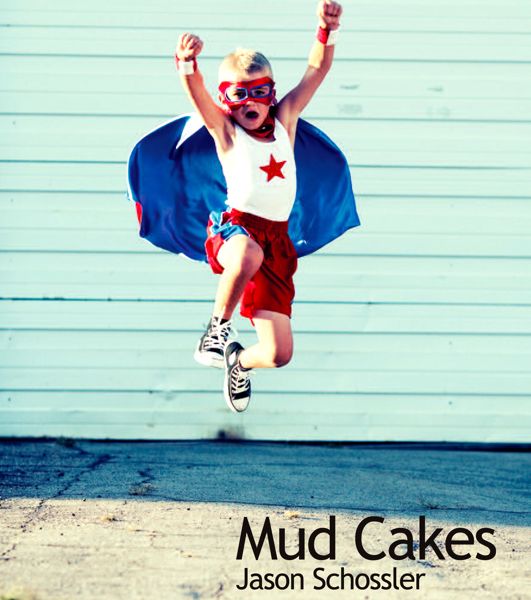
On Oct. 7 at 7 pm Lake Tahoe Community College will host a reading by Jason Schossler, winner of the 2010 Melissa Lanitis Gregory Poetry Prize. The reading will launch the release of “Mud Cakes,” Schossler’s first poetry collection.

The event, part of the LTCC Writers’ Series, will take place in the library of the South Lake Tahoe college. It is free and open to the public.

book“Mud Cakes” is an examination of growing up in Middle America at a time when spiritual guidance comes from Luke Skywalker and KISS. Schossler’s collection shows how one boy uses modern mythology to navigate the deterioration of his family.

“We received fabulous submissions,” Kim Wyatt, owner and publisher of Bona Fide Books, said in a press release, “but I found myself returning to the little boy in these poems.”

Bona Fide received more than 100 submissions.

Local artist Melissa Gregory, who died in 2009, inspired Wyatt to start a small press, and the prize is given in her honor. The annual award includes publication, $500, and a reading at Lake Tahoe.

While in the area, Schossler will also conduct workshops for students at South Tahoe High School and Wooster High School in Reno.

Schossler is the recipient of the Edwin Markham Poetry Prize and the 2010 Emerging Writer award from Grist. His poetry has been nominated for a Pushcart Prize, and he has fellowships from the Ragdale Foundation, the Virginia Center for the Creative Arts, and Oberpfälzer Künstlerhaus. He lives in Philadelphia, where he teaches writing at Temple University.

“Mud Cakes” will be available online through Bona Fide Books and Amazon starting Oct. 7.


Miss Chinese competition comes to Tahoe and Reno

Nevada will host 18 contestants from all over the world who are competing in the Miss Chinese Cosmos Semi-Finals.

The Sept. 23-30 event will take place in Lake Tahoe and Reno.

The contest moves around the world each year, last year taking place in Australia. This is the first time the pageant has been in the United States.

The eight-day tour and competition will include a visit to the Street Vibrations event in Reno, a tour of the National Automobile Museum, tours of the state Capitol and the Nevada State Museum, a cruise aboard the M.S. Dixie II, a Wild West shoot-out in Virginia City, and photo shoot under the iconic Reno Arch.


Exercise a healthier option than voodoo dolls to control stress

By James S. Fell, Los Angeles Times

Do you ever feel like making a voodoo doll in the image of your boss, stabbing it full of pins, twisting its head off, then setting it on fire?

I remember those days.

Speaking of the old days, here’s to the good old mammoth-slaying Stone Age, when we knew how to deal with stress. I’m talking about the fight-or-flight response, an inherited advantage coded into our genes via natural selection. Say you were chillin’ about the cave one day and in sauntered a grizzly bear. The resulting stress elicited a massive surge of adrenal hormones and you’d jump to your feet and go all caveman on the intruder with valiant stabbing or cowardly fleeing.

Either way, the hormone surge was short-lived. Soon you’d be roasting up grizzly steaks or muttering that you didn’t like that cave anyway and go off searching for a new abode to drag Daryl Hannah back to.

Fast forward a few millenniums, and it’s goodbye grizzly and hello to performance reviews conducted by supervisors with double-digit IQs. And as good as it might be for stress relief, you can’t kidney-punch a domineering boss and declare yourself alpha drone o’er the cube farm. Hooray for progress.

Instead, you send a snotty email to some unsuspecting IT guy about how your stupid keyboard isn’t Diet Coke-resistant or yell at a slow driver from the safety of your minivan during the drive home. And when you get back home you pour yourself a stiff drink and crab at the kids to stop doing those things that kids do before collapsing in front of the TV to watch your favorite team lose or see “The Bachelor” give the boot to the one woman you thought deserved to win his heart.

But it doesn’t have to be this way.

Read the whole story


‘Murder’ event to raise money for STHS football field

The Kiwanis Club of Lake Tahoe is hosting “Murder in an English Manor” on Oct. 1 at 6:30pm at the South Tahoe High School theater.

The event is to raise money for Friday Night Lights — aka renovations to the football field.

The dinner, auction and “murder” tickets are $30.

Call (530) 541.6487 for information or tickets.


History: Chef’s daughter recalls life at Tallac Hotel

Publisher’s note: This is reprinted with permission from the January 1976 Lake Tahoe Historical Society newsletter.

One day, late in September, 1975, Mrs. Meier phoned to inquire as to the whereabouts of Gladys and Velma Comstock. Mrs. Meier explained they were her playmates during several summers she spent here 65 years ago. I seized the opportunity of Mrs. Meier’s brief vacation to corner her into an interview. Pat Amundson and I spent a delightful October morning coaxing memories of her early childhood summers at Tallac House from Mrs. Meier. Mrs. Meier was here celebrating her 75th birthday with her husband, and daughter and son-in-law, Joan and Mike Leeches. So in addition to our visit, we enjoyed coffee and birthday cake.

history logoMrs. Meier was born Meliba Lorraine Vallet, one of three daughters of French Swiss Mother and Bordeaux Father, who immigrated here in the late 1800’s. Louis Vallett was a chef with a grand reputation stretching from Phoenix, Arizona to Florida. His profession took him to the playgrounds of the wealthy, each by season, and necessitated long separations from his family. His wife’s objections to these separations finally prompted him to ask Harry Comstock if he might bring his family to stay the summer at Tallac. Meliba’s sister, Alice, stayed with Harry and Virginia Comstock and the remainder of the family were housed in an apartment near the kitchen at Tallac House.

Alice did a lot of sewing for Virginia Comstock, who Meliba remembers as a very pleasant woman, but quite sickly and in bed frequently. Harry Comstock is remembered as tall, with curly black and graying hair and quite distinguished looking. He was very earthy and insisted upon being called “Harry” by everyone around him. Meliba and Gladys Comstock shared the same interests and were inseparable through the three summers she spent here. They specially enjoyed horseback riding and with the absence of trails and roads, enjoyed the young son of one of the nearby-camped Washo families as a guide.

Gladys and Meliba began “snitching” foodstuffs from the Hotel sideboard and trading for pinenuts with the Washoes. They were put on restriction when Mr. Vallett caught them. Meliba remembers an older woman named “Mary” who seemed in charge of the Waho encampment. Mary greeted the girls enthusiastically when they came to trade Meliba can best recall the Indians camped in two huge tens, probably a half-mile from the Tallac House. With the absence of roads, there was no landmark to better pinpoint their locations. The Washoes would come with huge baskets, filled with assorted smaller baskets, to sell at Tallac. Mr. Vallett was usually obliged to ask them to leave, which they did with no hint of offense.

Mrs. Meier remembers the trip from the family home in Los Angeles to Tahoe as beginning with the train ride to Truckee, then by stagecoach to Tahoe Tavern, finally by steam to the Hotel. The steamer brought passenger, mail and supplies every day. She also remembers the motor boat Harry Comstock bought to accommodate twelve to fifteen guests who cared to make side trips back to the Tavern. Although she recalled seeing stagecoaches in front of the Hotel frequently, Mrs. Meier said there were no road, hence no cars and she was too busy being a ten-year-old to take note of what other mode of travel the guests used and by what route they arrived. She did recall frequent guest came form the East Coast, but did not remember any visitor form foreign countries. The summer was passed in leisurely fashion, with fishing expeditions, boating, swimming and card games such as Bridge. Professional entertainment was brought into the huge ballroom for the guest who were seated about theatre style.

Queried about the fabled tents along the beach, Meliba had no recollection of them, though picnics were apparently frequent as her Father made up sumptuous lunch baskets for many of the guests. Teas was always served at 4;00 P.M. in what was known as the “side dining room”, with finger sandwiches, cookies and pots of tea set out. Certain waitresses were honored with the tea-serving duty and wore all white, rather than meal-time uniforms of black and white. There was no organized child care provided, although the waitresses occasionally doubled as sitters when called upon, sand were paid separately for this duty.

Mrs. Meier remembers Velma Comstock as a nature lover. Velma didn’t join Gladys and Meliba in their wanderings, but preferred going into the forest, and with a wide range of whistle styles, calling the native birds near her.

Mr. Brockway was a frequent visitor to Tallac. Mrs. Meier remembers him as short and stocky with light colored hair. But he is best remembered as only a child could associate him, with offerings of candy with friendship.

Meliba’s other sister, now Louise Maillot, was a waitress at Tallac, and now resides at Half Moon Bay on the California Coast, South of San Francisco.

Another found memory was of all flavors of soda pop made on the Tallac premises. Outstanding in Meliba’s mind was her favorite, strawberry.

Mrs. Meier also remembers a power plant near a waterfall at Tallac. Although it probably supplied electricity to the Hotel, at ten she had no particular interest in its function. She recalls no heat in the Hotel rooms, but plenty of warm bedding. The lobby of the hotel had a large cozy fireplace.

After three memorable summers at Tallac, Chef Vallett accepted a position with Castle Hot Springs in Arizona. Meliba graduated from elementary school in Phoenix during the period, before moving to San Diego.

Mrs. Meier believes she may have disposed of menus or any other memorabilia form Tallac during her last move from Los Angeles to Redondo Beach. However, she offered to check with her sister, Louise, for any items which might be of interest to the Society. She regretted that Alice is no longer living, as she was the oldest sister and had more intimate memories of Harry and Virginia Comstock.

— Linda Mendizabal