History: Rise and fall of Tahoe through geological lens

Publisher’s note: This is reprinted from the Fall Quarterly 1977 Lake Tahoe Historical Society newsletter.

Temperamental weather failed to discourage 75 friends of the Lake Tahoe Historical Society who turned out to enjoy the 1977 opening of the Log Cabin Museum, Star Lake Road off Highway 50, on May 22.
history logoMuseum Director Henry Newburgh greeted visitors and discussed museum displays.

Board members Pat Amundson, Ron Porter, Carolyn Nagy, Martha Reinholdt, Brooke Laine, and Linda Mendizabal served refreshments and assisted with brisk sales of memberships, books, and posters. This year’s poster, printings of two of the Society’s most popular photos, were well received.

Visitors adjourned to the school district board room for a slide presentation by Dr. Jonathan Davis of the University of Nevada. Davis recently completed his doctoral thesis in geology and archeology at the University of Idaho.

An enlightening question and answer session followed the presentation. Some of the group ignored the spring rain and accompanied Davis to archeological sites at Kiva Beach and Fallen Leaf campground.

Davis highlighted the prehistoric activity of the area. He noted volcanic evidence predates formation of the lake. Millions of years ago, the Sierra Nevada Mountains were uplifted in a single block with “slivers” breaking off at the northern end. One such sliver is the Carson Range. The Tahoe Basin is a result of faulting, Davis explained.

Either the area never uplifted with the batholith or it fell back again. More than 100 year ago, an icecap covered Glen Alpine and Desolation Valley. Glen Alpine is a classic glacial valley with Emerald Bay and Fallen Leaf Lake glacial imprints, the geologist said.

The present Tahoe landscape is about 6,000 years old and a few radio-carbon dates go back 8,000 years, Davis said.

The Washoe Indians summered at Lake Tahoe, establishing fishing camps at the lake’s edge. Those sites older than 6,000 years presumably drowned with the natural rise in the lake level.

The South Shore is a drowned coast, evidence by the muddy shoreline waters and meadows bounded by Taylor and Tallac Creeks, the geologist said. The weather was hotter and dried up to 4,000 years ago.

The Washoes rarely wintered in Tahoe, dispersing after the fish runs, from Honey Lake to Topaz Lake. Some groups lived near the hot springs in Carson Valley, hunting and gathering plants in early fall, he said.

They gathered pine nuts from the Virginia Mountains for winter food stores in late fall.

Tahoe is symbolic because it was the only place the entire Washo nation gathered during their annual cycle, Davis said.

— Linda Mendizabal
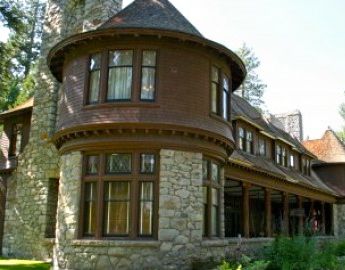


Sugar Pine Point park receives donation from Hellman family

The Hellman Family of San Francisco has presented California State Parks with a $100,000 donation to support the restoration efforts of the Hellman-Ehrman Estate at Lake Tahoe. The mansion is located within Ed Z’berg Sugar Pine Point State Park on the west shore of Lake Tahoe.

ehrman mansion“The leadership and vision of the Hellman family is a prime example of Californians taking an active role in the future of our State Parks,” Ruth Coleman, director of California State Parks said in a press release. “We thank them for their generous donation which will significantly help with our restoration efforts.”

In the late 1800s, internationally known West Coast banker Isaias W. Hellman visited the promontory location on the West Shore known as Sugar Pine Point. In 1903, he constructed his majestic estate, the mansion known as Pine Lodge, as a summer retreat for his family. After his death, his daughter Florence Ehrman enjoyed the property for many more years. In 1965, Pine Lodge and its surrounding estate were sold to the California to become Sugar Pine Point State Park. Today, about 108 years after the mansion was built, Hellman’s descendants have become an instrumental factor in ensuring the legacy of the historic property continues for the people of the California.

In recent years, due to severe funding cutbacks, California State Parks has not been able to finance the critical repairs and restoration needs for the Pine Lodge Estate. These repairs include electrical system upgrades, installation of a fire alarm system, repair and plastering of deteriorating ceilings and walls, window replacements, and foundation repairs. This critical grant will allow the much needed restoration efforts to proceed and assure that the Hellman-Ehrman Estate will continue to be an important part of our California landscape for generations to come.

The Sierra State Parks Foundation, the nonprofit established to promote the interpretive, educational and restoration efforts of the California State Parks in the Tahoe/Truckee region, will be managing the grant and is looking for other private partners to join with the Hellman family in fully funding the restoration efforts.

For more information of the restoration efforts of the Hellman-Ehrman Estate and other historic properties in stewardship with California State Parks in the Lake Tahoe region, contact Heidi Doyle at (530) 583.3074 or hdoyle@parks,ca.gov or the Sierra State Parks Foundation at (530) 583.1017 or info@sierraspf.org.

Tours of the home are offered daily from Memorial Day weekend through September.


Buying art is nowhere near as complicated as rocket science

By Robert Schimmel

How many times have I heard the question — “It has to go with my couch, right?” — directly or subliminally during my gallery and private sales experience. In return I’ve wanted desperately to ask, “Is that like a dating priority or matchmaking game?”

On the more humorous side is the truth that, yes, it is. Sadly, most do not take it with any seriousness akin to entering a relationship with someone and are glib or uninvolved in what amounts to an investment that will influence their lives daily for potentially long time.

Robert Schimmel

Robert Schimmel

So, what’s a rookie to do when all that’s needed is an innocuous space filler? I’m so glad you asked.

Initially we must make a few assumptions and set out some premises because one artwork does not fit all. If you literally only need or want something to fill a given space for a few months and know you’ll seldom have to look at it, then go to Walmart or borrow something from mom and be happy (this equates to “throw away art” and is just fine).

However, I truly believe such to be a rare circumstance for a lot of reasons. Thus, on the flip side of this canvas is our first premise: you want to enhance your surroundings and understand how art can enrich an attitude, recall a joy, encourage opinions and reflection, etc. Our second premise is that you want good quality, a fair price and practical guidelines, including realistic access to art. Be aware, this is not about investment art, which gets into a tricky, nefarious realm that generally requires more money, knowledge and a different attitude, not unlike what is requisite for the stock market. And, finally, you want this to be a fun, life long journey of loving and gathering art if not collecting it.

Setting the table for a process of finding and purchasing art you want to live with is fairly logical and straightforward. You have the option of making it more or less detailed and enlightening. Simply put, you need to know: A) what you like, which will come from a “seek and discover” mission that may be the most important part of the process; B) how to “select and find” the art and artists you prefer from part A; C) doing your “homework” on these semi-finalists; and D) the actual “purchase” of art – starting with your budget to negotiation to credit card – from the finalists chosen in part C.

So let’s jump into part A and look at some aspects of the “seek and discover” mission. First, you must put aside previous opinions, assume and eliminate nothing, and experience as much art as possible. Take your time; look intently and for gut responses to the old, new, small, large, as well as myriad styles (abstract, photo realist, impressionistic, surreal, etc), media (watercolor, oil, photography, bronze sculpture, etching, fabric/fiber, etc), and subject matter (landscape, portrait, still life, seascape, and on) quietly bludgeoning and caressing our senses daily.

Next, open your eyes and enjoy investigating new avenues for your feet as you take in bank lobbies, restaurants, offices, outdoor shows, museums, malls (really!), homes, galleries, sports arenas, bars (surprise!) – art is omnipresent, be aware.

Third, get close and personal with the artwork so as to notice details and elements, like texture, brush strokes, nuances of color, line work vs. mass areas, light vs. dark, bright vs. neutral, cold vs. warm feeling, storytelling or reporting, and so forth. Be willing to experience and hear what the art is saying. If nothing grabs or intrigues you, then move on.

Fourth, if possible, create a budget (per art piece, year, whatever) you are willing to consider in order to establish some practical value boundaries, but only buy for art reasons, not because of price or urgency.

Don’t forget to make notes on all your preferences (time periods, artists, media, style, themes, etc) including the emotional and analytical so not to forget important facts.

Bottom line when all is said and done, make your choices based on and for you alone. Only you will be enjoying and living with your decision. If someone else is involved, then each of you do this; only have art that is desired and loved by one or both of you. The blank wall or table top won’t care, and you know for sure what I’d say about the couch.

Robert Schimmel is a professional artist and teacher in South Lake Tahoe as well as host of “Lake Tahoe Art Scene” on KTHO radio on Thursdays at 5:15pm.


South Lake Tahoe to light holiday tree, menorah

Lake Tahoe Visitors Authority winter tree lighting is Dec. 2 from 5-7pm at the South Lake Tahoe Senior Center (3050 Lake Tahoe Blvd.).

Instead of standing outside the cold like years past, people will be able to take refuge inside the senior center and Tahoe Art League Gallery.

Free sleigh rides will be offered by Borges Sleigh Rides.

Disc jockey Derek Tarpey will spin holiday tunes, while the South Lake Tahoe Children’s Choral Society provides live music.

Tours of the Lake Tahoe Historical Society Museum and 1930s Log Cabin will be available.

The community menorah will also be lighted.

Bring a camera to take photos with Santa inside the South Lake Tahoe Senior Citizens Center or in front of the Lake Tahoe Historical Society Museum’s Victorian Tree.

Food and toy donations will be collected for Christmas Cheer and Caps For Kids.

For more information, call (530) 541.5255 or email info@LTVA.org.


Annual Smokeout encourages people to not light up again

The American Cancer Society is marking the 36th annual Great American Smokeout on Nov. 17.

smoking“Smokers who participate in the Great American Smokeout by not smoking on Nov. 17 take an important step toward a healthier life and the possibility of quitting for good,” Christy White, supervising health education coordinator for the El Dorado County Tobacco Use Prevention Program, said in a statement.

According to White, Californians have seen dramatic changes in tobacco use and related policies over the past twenty years.

An estimated 11.9 percent of California adults and 16.8 percent of El Dorado County adults smoke.

White admits that quitting smoking can be difficult, but emphasizes that it can be done. “To be successful in quitting, you need to know what you’re up against, what your options are, and where to go for help,” she said.

Many resources are available to help smokers quit, including the California Smoker’s Helpline.

For additional resources, including locations of local stop smoking classes, call (530) 621.6142.


Nonprofits benefit when volunteers fit the job they’re assigned

By Phyllis Korkki, New York Times

The recession dealt a double blow to many nonprofits. Just as it ratcheted up demand for their services, it also forced them to cut their budgets. So in times like these, volunteers are more valuable than ever.

But volunteer work can be plagued by inefficiency. Suppose a nonprofit manages to recruit a large group of people to help with a project. It’s not a given that they will have the right skills for the effort, or that the nonprofit will know how to mobilize them, said Michelle Nunn, chief executive of the Points of Light Institute, which helps organize volunteer efforts.

Sometimes, the nonprofits with the most need are those that don’t have the money to hire people to supervise volunteers, said Gary Bagley, executive director of New York Cares, which mobilizes volunteer projects citywide.

To avoid squandering a volunteer’s good will, more organizations, including Points of Light and New York Cares, are working to match supply and demand with more precision. For example, they are enlisting volunteers to serve as managers of other volunteers. And, in the process, these people are broadening their experience and adding ballast to their résumés.

Technological advances are aiding this push to properly match volunteers. A Web site called Sparked, which started a year ago, allows people to use their computers to help others in a variety of ways. “It’s desktop volunteering,” said Ben Rigby, the company’s chief executive. People can spend as little as a few hours or even just a few minutes helping out.

Read the whole story


Tahoe Tails — Adoptable Pets in South Lake Tahoe

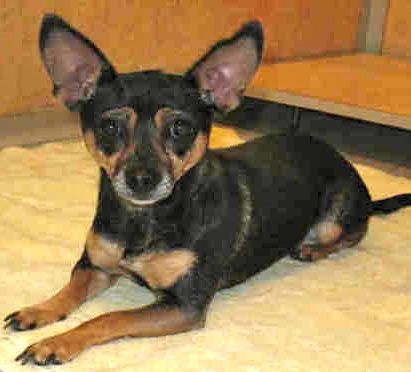
Candy is a young Chihuahua who would love to find her new home.

dogShe likes to go for walks and is constantly wagging her tail. Candy is very affectionate and would make a great addition to any household.

Candy is spayed, microchipped, and vaccinated. She is at the El Dorado County Animal Services shelter in Meyers, along with many other dogs and cats who are waiting for their new homes.

Call (530) 573.7925 for directions, hours, and other information on adopting a pet.

For spay-neuter assistance for South Tahoe residents, go online.

— Karen Kuentz


Tahoe family copes with pancreatic cancer diagnosis

By Denise Rury

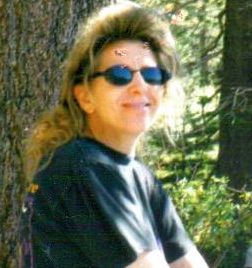
It’s November, which for my family means its Pancreatic Cancer Awareness Month, a time of remembrance, not just awareness. It was 2½ years ago that my mother, Jeanette Criner, was diagnosed with pancreatic cancer. The gravity of this announcement was even more devastating because her father was also diagnosed with pancreatic cancer and died within three weeks.

Despite what little she knew, really what most of us know about pancreatic cancer, she knew enough to know what a formidable enemy she was up against. The statistics are pretty dismal. Pancreatic cancer has the lowest survival rate of all cancers tracked by the American Cancer Society and the National Cancer Institute: 94 percent of pancreatic cancer patients die within five years of diagnosis and only 6 percent will survive five more years. Seventy-four percent of patients die within the first year of diagnosis.

Jeanette Criner

Jeanette Criner

Jeanette was diagnosed with stage one pancreatic cancer, which gave her the option of having one of the few tools available in treating this cancer — surgery. The surgery, known as the Whipple operation, where the head of the pancreas, a portion of the bile duct, the gallbladder and the duodenum is removed. It is a complicated and long surgery, but at this point it was the best option available. Tough Jeanette was understandably fearful, she was determined to do whatever it took to fight this.

The surgery seemed to have gone well, but unfortunately a few cancer cells were found outside of the pancreas and perhaps when she recovered from the surgery, gained some weight and was ready, chemotherapy was on option. This was late August 2008 and despite all the efforts of Jeanette with physical therapy, the care and attention of her medical staff, the love and support from her family, she continued a downhill battle that lasted seven months.

I watched my mother having gone from an active woman that at the age of 72 still worked, baked, tended to her garden and enjoyed hikes in and around her beloved Lake Tahoe to becoming a frail, depressed patient who lost hope when it became obvious that her best efforts just weren’t working. Jeanette spent her last couple months surrounded by family, at various times from all across the country, even the world, which was of great comfort. She had the love and support at all times of her family here in Tahoe and would still get out and about to enjoy another favorite activity — coffee with her children or grandchildren to chat about the funny or mundane, anything but pancreatic cancer.

As her health continued to deteriorate, she made the decision to stop cancer treatments and start hospice care. I remember the last time she was outside, taking in the beauty of the lake and knowing it was the last time she would ever see Lake Tahoe. I remember how hard, even in the face of the obvious, trying to encourage her to keep fighting, have a reason, some reason to still be here but that day, with her staring out the window, looking at the lake, it was apparent that this was it. It was only a week or so later that she left for good.

Denise Rury is a resident of South Lake Tahoe.


History: Roots of skiing run deep in Echo Summit area

Publisher’s note: The following is from the January 1976 Lake Tahoe Historical Society newsletter.

At the Society meeting of November 25, 1975, Haven Jorgenson, one-time manager of the Sierra Club Lodge on old Highway 40, shared his experiences as owner of Echo Chalet and one of the first ski areas in the Sierra Nevada.

Having seen Echo Chalet once on a casual summer trip, Haven purchased the place when he saw it for the second time, half-buried in the snows of January 1946. He started operations on February 1 with one 200 ft. rope tow, with a 75 ft. vertical rise from the foot to the top of the road. The tow was operated electrically with the help of an old Dodge transmission. There were no power lines into the area at the time, but Haven’s own hydroplant produced the electricity required for his needs, including the heating of the Chalet. However, whenever the ski tow was operated, it was necessary to disconnect the heater.

history logoAmong the services provided was transportation from the highway parking lot up to the Chalet. Purchasing several old crank-type phones from the telephone company for $2.00, he set these up in the parking lot, with a wire which lay in the snow and was connected to another instrument up at the Chalet. When a guest arrived at the parking lot, he cranked up the phone and someone would come down to take him up to the lodge on a sled pulled by a tractor.

He recalled the early day ski areas in the Echo Summit vicinity, which were several. Nebelhorn, built in 1947 by Gordon Stang and Vic West who pioneered junior skiing with the Nebelhornets and the location of the first Far West Junior Championships on the West Coast. Audrain Lodge just below Echo Lake road. A dormitory was operated with a little tow in back at Vade. Tamarack Pines built about that same time by Vern Sprock who provided lodging and meals sometime before he took over Sierra Ski Ranch from the Barnett brothers. One of the first lifts in the area was built by Otto Schaeffer on the north side of the highway at Camp Sacramento. This was eventually taken over by Edelweiss which expanded and put the lifts on the opposite side of the highway. There was also a tow in the area of Strawberry Lodge, which was a very popular place, especially for evening entertainment.

After a successful first winter and learning the ropes of running a boat service during the summer, Haven built a 1000 ft. long tow to the top of the hill the following autumn and detailed his experiences in an era of doing everything for one’s self.

His operation was primarily dormitory style at $4.50 per day with three meals, but “bring your own sleeping bag.” Six rooms in the main building were rented as hotel accommodations at $13.50 for two including three meals. He later built several little cabins with kitchen facilities which rented for $7.00 per day, $45.00 per week for two but no meals. $1.50 bought an all day ticket for ski tow and learn-to-ski lessons were free.

Haven described the early days when snow seldom came by Thanksgiving, but sometimes waited until February. Grooming of the hills was unknown. The manner and style of skiing was different than today an the well-dressed skier of those early days wore considerably less sophisticated attire than seen on the slopes in 1975.

He also recalled adventures of 1950’s “big rains” which came down on 22 inches of snow in November. Water ran over the road at Camp Sacramento cutting a 20 ft. trench that closed the highway for several weeks. Also, he remembered the heavy winter of 1952 as well as avalanches where occurred with loss of life at Echo Lake during 1948.

He closed his presentation with a showing of photographs and slides of snow and skiing in the Echo area and displayed a collection of ski posters, a menu from Strawberry Lodge, his old skis with bear trap bindings, and other memorabilia.


SnowGlobe announces slew of musicians for Tahoe event

Dozens of bands have been confirmed for the inaugural SnowGlobe Festival in South Lake Tahoe.

snowglobeBesides three days of music Dec. 29-31 on the campus of Lake Tahoe Community College –  all outside — discounted lift tickets for festival patrons, a rail jam and a midnight fireworks display on New Year’s Eve are all part of the party.

Tickets and further details about the event are online.

To make sure no one gets a DUI or slips on black ice or runs into a snowbank, SnowGlobe is providing free shuttles to and from designated parking locations throughout the South Shore.

The festival will also offer a refill water program as a part of its greening efforts.

Bands are:

Bassnectar, Pretty Lights, Thievery Corporation, Glitch Mob, Childish, Gambino, Doctor P, Theophilus London, Big Gigantic, SBTRKT, Porter, Robinson, Figure, Paper Diamond, Dillon Francis, Emancipator, Tipper, Star, Slinger, Fishbone, Blockhead, Kraddy, Antiserum, Two Fresh, RUN DMT, The M Machine, Mansions on the Moon, Eliot Lipp, Heyoka, HOTTUB, ill-esha, PhuturePrimitive, SAMPLES, B. Bravo, American Royalty, Govinda, R-D,, Robotic Pirate Monkey, Sorry For Partying, Dr. Israel, NastyNasty, and Mux Mool.