Truths about Twain and Tahoe unfold in painful prose

By Kathryn Reed

Mark Twain and Lake Tahoe; I never thought those two subjects put into one book could bore me.

I like Twain, Tahoe and history, but “Fairest Picture: Mark Twain at Lake Tahoe” by David Antonucci was painful to get through. Part of the problem is I don’t think it was edited well. And the writing falls flat. I almost felt like I was in a boring lecture hall.
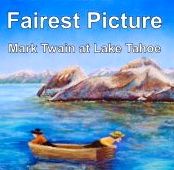
If it weren’t for the author being from the Lake Tahoe Basin, history guru Dave Borges singing the praises of the book, and Antonucci’s book “Snowball’s Chance” getting a favorable review on Lake Tahoe News nearly two years ago, I would have put the book down without completing it.

Delving into what part is true, what is embellished and what are falsehoods when it came to what Twain wrote about Tahoe and what others have subsequently said are worthy endeavors. For that, Antonucci should be applauded. His research skills are not in question.

Maybe it was my mistake in assuming I was about to read something different. It read much like research paper – all 294 pages. Maybe I was just hoping for a little Twain to come out on the pages.

One problem is the book is disjointed. Thus, the need for a better editor.

Another is it took too long to get into the parts about Twain. While the history at the beginning is interesting, if that’s what you are looking for, it’s not what I expected to read from the get-go.

On pages 240-41 are charts giving “yes” and “no” answers to where things actually are compared to what Twain or others wrote. Had this been at the beginning and then the supporting material for the answers outlined, it would have read better and been more interesting.

The diagrams, old photos – those are what makes this book worth picking up.

Chapter 7 “In the footsteps of Mark Twain” is also a highlight. It tells readers how to retrace the steps of the famous author. That would have made for a perfect final chapter. That goes back to the editing process.

The one thing I learned is Twain did not call the lake the “Jewel of the Sierra”. Antonucci says credit for that phrase should be given to David Starr Jordan, who was a naturalist, president of Stanford University and director of the Sierra Club.

Some of the references to lake clarity were also interesting, especially in light of all that is going with that subject.

Antonucci writes, “According to the 1985 scientific study, existing beaches at Lake Tahoe formed in one of two ways. The sediment discharges of nearby streams nourished the formation of beaches under natural pre-Tahoe Dam conditions. Other beaches formed more recently, when the Tahoe Dam raised the lake to an unnatural level that initiated erosion of the otherwise stable waterfront cliffs and backshore.”


Squaw, Alpine challenge riders to raise the most money to fight hunger

To the community,

As we dance for snow, there are people in our community who can’t get enough food to eat. So Squaw Valley and Alpine Meadows are engaging in a friendly little competition to raise money for Project MANA, Truckee/North Lake Tahoe’s hunger relief organization.

To kick things off I will donate $1,000 – $500 on behalf of each resort and now we are going to see who can raise more money – Squaw or Alpine. Through New Year’s Day employees and guests can make online donations on behalf of either Squaw or Alpine. One hundred percent of all donations go to Project MANA. While each resort hopes to be the one to raise the most money, the winners will be the hungry people that Project MANA feeds.

We’ve heard from many of you about the rituals you have to make it snow. From not washing the car to leaving your summer stuff on the lawn. Some of you have gone so far as to leave your powder boards at the shop so they won’t be accessible when it dumps snow. That’s dedication. We hope you’ll join us in our new snow dance effort and make a donation today to Project MANA. Hunger happens every day to people in all walks of life. Organizations like Project MANA help them through the hard times so they can land solidly on their feet.

Several years ago Project MANA helped a husband and wife who moved here from Colorado for his job. They quickly realized they could not survive on his salary alone and came to Project MANA for food while she looked for work. Eventually she got a good job and between the two salaries they no longer needed Project MANA’s services. A couple of years later she became the president of a community charity that provides grants to local nonprofits and Project MANA is one of the recipients. True story.

We hope you’ll join us in helping those in the Truckee/Tahoe community who are not getting enough to eat. Make your donation today.

Kindest regards and snow filled thoughts,

Andy Wirth, president and CEO Squaw


Study: Millennials find Internet a basic necessity in life

By Mike TeSelle, KCRA-TV

The importance of online social media is as important as the basic necessities of life for the millennial generation, according to a new survey by Cisco.

“One in three said the Internet was as important as air, water, food and shelter,” Cisco Senior Vice President Carlos Dominguez said.

Dominguez also said a majority of Internet users ignore company security policies or engage in other risky personal behaviors online.

Seven out of 10 employees worldwide admitted to breaking company policy with varying regularity, said the annual Cisco Connected World Technology Report.

Read the whole story


Warren Hellman — 1934-2011

By Peter Lattman, New York Times

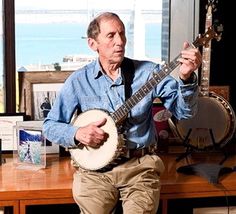
Warren Hellman, a Wall Street investor who was president of Lehman Brothers and whose passion for bluegrass inspired him to create a San Francisco music festival that draws hundreds of thousands of people a year, died on Sunday in San Francisco. He was 77.

The cause was complications of leukemia, according to a spokeswoman for Hellman & Freidman, the investment firm he co-founded.

Mr. Hellman, whose parents came from two prominent San Francisco families, had a finance career on both coasts. After nearly 20 years at Lehman in New York, he started several money management businesses, including Hellman & Friedman in San Francisco, one of the country’s most successful private equity funds.

Warren Hellman

More recently Mr. Hellman focused on philanthropy, bestowing millions of dollars on cultural, educational and medical charities in the Bay Area.

He was also a lead investor and member of Sugar Bowl Resort’s board of directors.

The three-day concert he founded, Hardly Strictly Bluegrass, held each year in Golden Gate Park, has been financed entirely by him.

Wiry, impish and informal — he favored frayed khakis and cowboy shirts — Mr. Hellman was something of a free spirit. He traveled around the country with his bluegrass band, the Wronglers, performing with them as recently as October. An accomplished endurance athlete, he twice completed a 100-mile running race through the Sierra Nevada mountains.

“Warren was an individualist,” said James D. Wolfensohn, the former president of the World Bank and a business-school classmate of Mr. Hellman’s. “He had the confidence and access that comes along with being from a prominent family, but never rested on his laurels and lived the life he wanted.”

Frederick Warren Hellman was born on July 25, 1934, in Manhattan. He was not, as many assumed, an heir to the Hellmann’s mayonnaise fortune; his pedigree was in the finance and rag trades. His father was Marco F. Hellman, an investment banker. His mother was the former Ruth Koshland, whose relatives were prosperous wool merchants in California.

His great-grandfather, Isaias W. Hellman, was a Jewish immigrant from Bavaria who became one of California’s leading financiers and served as president of Wells Fargo Nevada National Bank, which later became Wells Fargo.

Mr. Hellman grew up in San Francisco and graduated from the University of California, Berkeley, where he played varsity water polo. After graduating from Harvard Business School in 1959, he joined Lehman Brothers, where his uncle, Frederick L. Ehrman, was a senior executive and later chairman.

Read the whole story


Glenn Gibb — 1947-2011

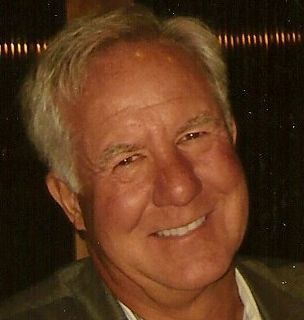
Glenn Gibb passed away on Dec. 14, 2011, after a six-month illness.

Glenn was born May 30, 1947, in Boise, Idaho. The first 12 years of his life were spent in Idaho where he learned to fish, hunt and golf. During his high school and college years, Glenn resided in the Bay Area where he attended UC Berkeley, graduating in 1969 with a bachelor’s degree. In 1973 Glenn earned a doctorate in dental surgery from UCLA and continued his education at UC San Francisco, earning a specialty degree in orthodontics in 1975.

Glenn Gibb

Spurred by his love for outdoor activities and adventures, Glenn moved to South Lake Tahoe in 1975 where he established his orthodontic practice and continued to fish, hunt, golf, as well as ski, sail, and enjoy the lake from any and all types of watercraft. Glenn loved to create beautiful smiles; he was South Lake Tahoe’s only fulltime orthodontist for 30 years. Glenn was a member of the Barton Hospital medical staff, on call to handle orthodontic emergencies throughout the tenure of his practice.

Glenn is survived by his wife Cathy DiCamillo; daughter Rebecca; sons Scott and Garrett; granddaughters Teagan and Jane; and brothers Bob and Greg.

In lieu of flowers, Glenn would be honored by a contribution to the National Marrow Donor Program, or a cancer-related organization.

A remembrance of Glenn’s life will be Jan. 7, 2012, at 2pm at Edgewood Tahoe Golf Course in Stateline.


Patricia Whitely — 1926-2011

Patricia Noble Whitely died peacefully on Dec. 12, 2011, at the age of 85.

She was born in Oakland on Aug. 15, 1926, to Lois and Kendall Noble. She attended San Francisco State University during World War II and completed her education at Lake Tahoe Community College.

In 1953, Pat married a medical student, Jim Whitely. They moved to South Lake Tahoe in 1956, where he would become the areas first year-round physician.

Pat had a deep commitment to the community, serving in many roles. She was a charter member of the Barton Memorial Hospital Auxiliary, was a charter member and co-founder of the Tahoe Parents Nursery School, performed with The Lake Tahoe Children’s Theater and the Lake Tahoe Theater Company, was a member of Soroptimist International of South Lake Tahoe which presented her its Woman of Distinction award for her work with equal opportunity employment issues, was elected to two terms on the Lake Tahoe Unified School District board serving as president twice, was a charter member of the Lake Tahoe Historical Society, served as an elder of the Lake Tahoe Presbyterian Church and was a scholarship supporter through the Lake Tahoe Educational Foundation.

Pat was a wonderfully bright, witty and charming woman who loved and was devoted to her family, her friends and her community.

She was preceded in death by her husband James Whitely, and her brother, William Noble. She is survived by her daughters, Diane Stepnitz (Stan), Linda Litton (Gary), Karen Pavlakis (Mike) and Jane Griffin-Callahan (Tom) and her grandchildren, Abby Stepnitz, Eli Alston-Stepnitz (Kimberly), Rachel Litton-Mueller (Fabian), Allison and Hannah Litton, Jack Maloney and Colin, Jake and Hunter Griffin.

A memorial service will be announced at a later date.

Memorial donations in Pat’s memory may be made to the Patricia Whitely Scholarship Fund, c/o Lake Tahoe Educational Foundation, P.O. Box 14387, South Lake Tahoe, CA 96151.


Placerville divided over hanging onto its past

By Carlos Alcalá, Sacramento Bee

Placerville lives on its Gold Rush history and can’t escape the past, including a famous public hanging in the 1840s.

As a result, Main Street today is dotted with businesses bearing names with historic allusions such as Prospector’s Cafe and Hangtown Hot Dogs.

Residents are once again struggling with that legacy, debating the fate of an effigy strung from a Main Street building that has been unoccupied for three years.

Residents argue over whether the building is an eyesore to be torn down or a historical treasure.

“I think something needs to be done to improve the landscape of that corner, and soon,” said Shari Fulton, who owns a cafe directly across from where the dummy hangs.

Is the dummy a valuable tourist magnet, an ugly image of frontier justice, or worse: a reminder of bigotry against people of color?

The argument has been carried out on Facebook pages where a love-it-or-leave mentality is strong.

“If someone can’t take our history, then don’t come here,” wrote one poster, Julie Brian.

Read the whole story


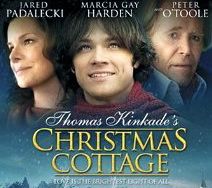
‘The Christmas Cottage’ — a movie the whole family can watch

By Kathryn Reed

The list of Christmas movies I regularly enjoy runs the gamut from “Frosty the Snowman” to “It’s a Wonderful Life”. It decided it might be time to branch out a bit so into my Netflix’s queue went two films I had not seen before that came recommended from friends.

The first was “Bad Santa”. Wow. I’m going to be thinking twice about the next time that friend recommends a movie. It was just bad. Really bad.

The next was “The Christmas Cottage”. This is one I would definitely recommend.

It is based on one holiday season in the life of Thomas Kinkade while he was in college.

Kinkade grew up in Placerville, which adds a fun, regional twist to the movie. (An aside in the film is how in the late 1970s the chamber president was trying to turn the area into the Christmas tree capital as a way to lure tourists.)

It’s one of those feel good movies that makes you have hope in humanity – especially this time of year when it can be so consumed with commercialism.

It also gives insight into a famous painter’s humble beginnings, the inspiration for his work and why light is central to his artistry.

This film that came out in 2008 would be good for all ages.

While the movie clearly indicates it is based on true events, a more complete bio about the artist maybe fund on the Original Thomas Kinkade Gallery website. That gallery is in Placerville.


Group wants decisions centered on kids’ interests

By Kathryn Reed

Putting children first. Ensuring their needs are met. Taking a pledge to do so. Helping shape policy.

Those are the goals of Small World, an organization launched Dec. 1 in South Lake Tahoe. But it’s not just about Tahoe – it’s about children throughout the country, throughout the world. And it’s not just parents uniting to have a voice. It’s other relatives and concerned people.

“I’m looking at what decisions we are making as people or collectively through government. What is the impact of those decisions on our children or on children across the globe,” John Friedrich said.

Friedrich was thinking about this Small World concept before his daughter was born more than five years ago. Having recently moved back to Tahoe with his family, he believes now is the time to put his idea into action.

The first meeting of like-minded individuals is Dec. 21. More information about it may be obtained by emailing smallworldaction@gmail.com

“The idea is putting the good of all children, the best interest of children at the center of decision-making,” Friedrich said.

While there is no hard and fast agenda for the first meeting, there is also no preconceived action plan. Friedrich doesn’t see any concern not being able to be tackled.

He wants people to think about their actions – whether it’s dropping bombs and knowing whom those deadly devices will hit, to environmental and natural resources policies and their impacts on kids, to access to health care, to the food available to them.

Reinventing what’s being done is not the goal. Instead, Small World will bring like-minded people together. From there they may partner with other organizations already working on behalf of children.

What makes this a unifying vision is parents throughout most of the world want the best for their children. Small World intends to give them a voice beyond their home.

In the short time Small World has been active, more than 100 people in 18 states and three countries have signed the online pledge to: “… help create a peaceful, livable, just planet for all children on earth.”

As Small World spreads, the idea is community networks will evolve to be a voice in their town, then as a whole to be a louder voice for children on a broader scale.

“The vision would be people speaking out for the interest of all children would collectively have a stronger voice and definitely influence policy decisions,” Friedrich said.


Embracing the family aspects of the season during Hanukkah

By Brian Nordli, Reno Gazette-Journal

For each day of Hanukkah, Judy Schumer of southwest Reno gathers with her family and passes out a gift to each of her grandchildren.

The family will feast on traditional latkes (fried potato pancakes); light a candle on the Chanukiah, which many call a menorah; and play Dreidel. Many other Jewish families will do the same for the eight-night holiday that begins at sundown on Tuesday.

“Many people call Hanukkah the Jewish Christmas, but it has nothing to do with Christmas,” Schumer said. “It actually means dedication. “» Sometimes, it comes at the same time as Christmas. Sometimes, it does not.”

Yet, Hanukkah wasn’t always a big family gathering that involved exchanging gifts.

Schumer, 66, recalled a time when her father gave her a dollar each day, but it wasn’t a major celebration. But the holiday, which falls on the 25th day of the Jewish month Kislev, often lands within weeks of Christmas. That proximity has caused the holiday’s reputation to grow during the years.

“As Christmas has gotten bigger and bigger, Jews have responded,” North Tahoe Hebrew Congregation Rabbi Meredith Cahn said of the growth of Hanukkah. “I think it’s a particularly American thing.”

Hanukkah is considered a minor holiday in Judaism, a remembrance of how Judah Maccabee and the Jews successfully rebelled against King Antiochus IV and the Syrian oppression. When the Jews retook their temple, they always had to have a lamp lit. There was only enough oil for one day, but thanks to a miracle, the oil lasted eight days.

Read the whole story