By Howie Nave
It’s that time of year again where family and loved ones gather together to be thankful for what we have and what the bank doesn’t. I love this time of year. And even though we haven’t had much in the way of a white Christmas, there are plenty of holiday movies out there to remind us what it looks like.
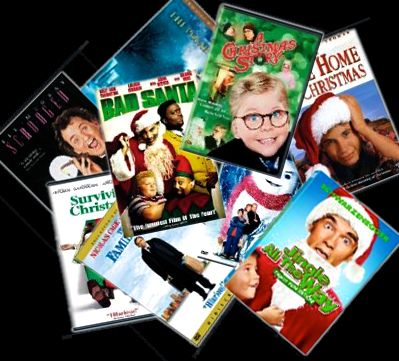
 That’s right — it’s time to dust off the annual favorite Christmas movies and share them with family members and rekindle that magic of what it was to see the world through the eyes of a child (“A Christmas Story”), to have relatives come visit from all over the country while you decorate the house to be the best one on the block (“Christmas Vacation”), to see what Christmas was like back when our country was in black and white (“It’s A Wonderful Life,” “Miracle of 34th Street,” “A Christmas Carol”), see what Christmas looks like in an animated format (“A Charlie Brown Christmas,” ”How The Grinch Stole Christmas,” “The Nightmare Before Christmas”) and of course, the anti-Christmas movie with heart (“Bad Santa”).
There are also those Christmas movies that really aren’t about Christmas but use the holiday as a backdrop (“Die Hard” 1 and 2 and “Lethal Weapon” 1 and 2, “Nobody’s Fool”).
And there are those that are great as an ensemble piece counting down the weeks until Christmas (“Love Actually”).
Whatever your favorite, these 20 for me represent some of the best Christmas movies that will stand the test of time for generations to come.
1. “LOVE ACTUALLY,” R (2003)
You know a movie is destined to become a classic when the moment you pop it in you are instantly transported to that place in time where you almost become part of the movie and it’s an ensemble cast as well. An ensemble cast that works marvelous, too. I love this type of movie especially when the stories intersect with one another and the characters as well. “Love Actually” counts down Christmas from five weeks out showing us the lives of eight couples each going through a different crisis and how they come out on the other end. I think it has one of the best messages about family, friends and co-workers with a message about forgiveness and hope. England is the backdrop for the movie that includes a stellar cast consisting of Bill Nighy, Hugh Grant, Emma Thompson, Alan Richman, Keira Knightly, Liam Neeson and Colin Firth. Writer/director Richard Curtis (“Four Weddings and a Funeral,” “Bridget Jones Diary” and “Notting Hill”) has an excellent track record when it comes to ensemble pieces and this one is no exception. From its opening narration by Hugh Grant at Heathrow Airport to its conclusion “Love Actually” will stay with you long after the holidays and you’ll find yourself watching it again and again as it only gets better with each passing Christmas.
2. “IT’S A WONDERFUL LIFE,” G (1946)
The quintessential Christmas movie that was almost forgotten after it was first released in 1946. The movie received a second chance when television came along, making it easily one of the best holiday movies ever. And just like its main character George Baily (played by Jimmy Stewart) he too gets a second shot at life being able to see what the world would have been like had he never been born. In a way Bedford Falls could be any small community here in Lake Tahoe because everyone knows who you are and you realize friends and neighbors really do matter when you think the world doesn’t care about you. With the guardian angel Clarence (Henry Travers) trying to earn his wings to show George that he has affected others around him “It’s a Wonderful Life” will reignite the hope and optimism that was once lost back into your life and make you feel that yes, your life does in fact matter. A nice, feel-good movie with a terrific cast that also includes Donna Reed, Lionel Barrymore and a host of other supporting characters like Thomas Mitchell.
3. “MIRACLE ON 34TH STREET,” G (1947)
Not to be confused with the 1994 color version starring Richard Attenborough and Elizabeth Perkins, the original black and white version still shines as one of the most heart-warming holiday classics of all time. With a cast that includes Maureen O’Hara, Edmund Gwenn and a very young Natalie Wood, it’s up to young lawyer Fred Gailey (John Payne) to convince Susan (Wood) that there indeed is a Santa Claus (Gwenn) and also prove the spirit of Christmas can even change non-believers such as Susan’s mom, Doris (O’Hara) in believing in Kris Kringle. It’s got something for everyone from working parents to skeptical kids and supporting characters like Thelma Ritter and Gene Lockhart who really fill out the cast nicely.
4. “BAD SANTA,” R (2003)
I can’t wait until Christmas rolls around just to watch this. Oh sure I can screen it during the other months of the year, but it doesn’t have the same impact when it’s not Christmas-time. This R- rated comedy is hilarious and I don’t think I have ever laughed louder than any Christmas comedy ever made. Maybe because it flies in the face of anything one would expect over the holidays or that it is so rude and in-your-face. “Bad Santa” believe it or not has a soulful ending and makes even the most cynical, non-believer (Billy Bob Thornton) into a warm character, although it just about costs him his life. Let me warn you in advance if you haven’t seem “Bad Santa,” this movie is not for children or the faint of heart. It is without a doubt the most non-traditional, anti-Christmas movie (but with a heart) I have ever seen, but also the funniest. It was also the last movie for veteran comedic actor John Ritter and sadder too because comedian/actor Bernie Mac passed away just a couple years ago. Thornton plays Willie, an alcoholic, bad-mouthing department store Santa Clause who, along with his foul-mouthed partner in crime dressed as elf Marcus (Tony Cox) robs department stores every Christmas season with great success. Director Terry Zwigoff (“Crumb,” “Ghost World”) really hits the mark with this sarcastic flick and will leave you howling with laughter throughout if you just give it a chance. The movie also stars first-timer to the screen Brett Kelly as the snot-nosed, 8-year-old boy who everyone picks on and really believes that Willie is Santa. Cloris Leachman plays the “spry” grandma. She has few lines, but is so funny visually when she does appear on-screen that you just find yourself bursting out loud with laughter. Laura Graham is also hysterical as the bartender Sue who has a thing for guys dressed in Santa suits.
5. “NATIONAL LAMPOON’S CHRISTMAS VACATION,” PG-13 (1989)
Chevy Chase, star of the “National Lampoon Vacation” movies, will probably be best remembered for this holiday spoof because it continues to be one of the most popular rentals year after year. As head of the Griswold family Clark (Chase) personifies everything that inevitably goes wrong as the Christmas holiday counts down to the big day. Beverly D’Angelo is the patient wife to Clark who loves him regardless of his stressed-out antics when the unexpected in-laws show up. By the way, Randy Quaid will forever be typecast as Cousin Eddie, right? “Christmas Vacation” has all of the holiday family traditions from finding that elusive perfect Christmas tree, how to spend the Christmas bonus from work and the always hilarious, time-consuming task of creating the perfect Christmas decorated house with enough Christmas lights to light up the entire neighborhood. Speaking of the Christmas bonus check the movie also stars Brian Doyle-Murray as Clark’s Scrooge-like boss. Directed by Jeremiah S. Chechik “Christmas Vacation” is still a family favorite and seems to only gain in popularity with each passing year as it becomes introduced to a whole new generation.
6. “A CHRISTMAS STORY,” G (1983)
One of my all time favorite Christmas movies based on the recollections of humorist Jean Shepherd, “A Christmas Story” epitomizes your basic urban family from the 1940s with Peter Billingsley in the leading role as Ralphie. He pretty much has only one quest in this movie. That is to convince his parents, teachers and Santa that all he wants for Christmas is a Red Ryder air rifle BB gun. Melinda Dillon plays Ralphie’s mom and after watching this timeless classic a bunch of times actually plays every mom I have encountered — she is that good. It’s a great family movie to watch; told in a narrative format (voiced by Jean shepherd himself). I remember the first time I saw this movie I wanted to see if your tongue really would get stuck on a frozen flagpole. Don’t try it kids, it does. “A Christmas Story” is a must-see. And who can forget that immortal line from the movie when Ralphie says he must have that BB gun? “You’ll shoot your eye out with that thing kid!”
7. “A CHARLIE BROWN CHRISTMAS,” G (1965)
This holiday classic almost never made it to the small screen, but lucky for us it did and remains an animated classic to this day. “A Charlie Brown Christmas” became an instant classic when it first aired back in 1965 and introduced us all not just to Charles Schultz’s famous cartoon strip, but also turned me on to jazz via the great Vince Guaraldi who gave us the soundtrack and the “sound” that would forever be immortalized via his music through Lucy and Linus. I always wanted to be Schroeder after hearing him bang out those cool piano pieces. When Charlie Brown complains about the overwhelming materialism that he sees amongst everyone during the Christmas season, Lucy suggests he become director of the school Christmas pageant. Charlie Brown accepts, but it proves to be a frustrating struggle. When an attempt to restore the proper spirit with a forlorn little fir Christmas tree fails, he needs Linus’ help to learn what the real meaning of Christmas is. Any sad looking Christmas tree to this day is referred to as a “Charlie Brown Christmas tree.”
8. “HOW THE GRINCH STOLE CHRISTMAS,” G (1965)
Based on the Dr. Seuss classic, this tale is still a delight to watch. Forget the fancy CGI graphics of today. “Grinch” still has that charm as if the book were speaking (and singing) to me. It still evokes fond memories from the first time I saw it on TV. Directed by the legendary Chuck Jones from Warner Bros. fame and narrated by Boris Karloff, this 26-minute animated TV classic about a Christmas-hating Grinch who wants to make everyone as miserable on Christmas as he is still is one of the most original Christmas stories ever. The poor, small-hearted Scrooge learns the true meaning of Christmas through the loving Whos in Whoville. And who can forget that poor dog of his that has to haul that enormous sleigh too wearing those antlers?
9. “HOME ALONE” PG (1990)
Before the less than adequate sequels and Macaulay Culkin’s growing pains, “Home Alone” was one of the late director John Hughe’s best holiday efforts. Nobody at the time thought that this would become such a hit, but apparently Hughes knew otherwise. Culkin plays the resourceful 8-year-old Kevin who wishes his family would just go away and leave him alone right before Christmas. Accidentally, they do, and he’s left to defend for himself against two dopey criminal types (Joe Pesci and Daniel Stern). Billed as “A Family Comedy Without The Family” this family film is both funny and entertaining with a stand out performance by Catherine O’Hara as Kevin’s mother. Hughes may be gone, but his movies will always remain and this one is one of his best to be played again and again every Christmas and also to remind you that if you’re from a large family you can still have a voice.
10. “EVELYN,” PG (2002)
Starring (and produced by) actor Pierce Brosnan, this little holiday movie was like finding a pearl in a sea of muddy water. I only first heard about this movie while living in the Bay Area and the studio had a private screening hoping to get the word out. I became a believer immediately and put the word out whenever I can, especially at this time of year. “Evelyn” centers on a young Irish girl, Evelyn (Sophie Vavasseur) and is set in 1953 Dublin. Based on a true story, the film stars Pierce Brosnan as Desmond Doyle, a poor painter and interior decorator whose wife walks out on him during the holidays leaving him to fend for their three children Maurice, Dermot, and Evelyn. Back then the government mandated children must be placed in the custody of the state and not the father even when their mother abandons them. That law would soon change when lawyers Stephen Rea and Aidan Quinn (with Alan Bates in tow) takes on the establishment. Director Bruce Beresford utilizes the emotional side of the former 007 star and shows us his fatherly side with great results. Also impressive is that of American actress Julianna Margulies as Doyle’s love interest who pulls off a good Irish accent too. It’s a fantastic holiday flick and one to definitely watch with the entire family.
11. “WHITE CHRISTMAS,” G (1954)
One of the most time honored classic Christmas musicals, “White Christmas” features such stars as Bing Crosby, Danny Kaye, Vera-Ellen and Rosemary Clooney. Bing croons such Irving Berlin classics as “I’m Dreaming of a White Christmas,” Vera-Ellen taps up a storm, Kaye entertains with his usual goofy antics, and this movie is overall a lot of fun. “White Christmas” offers up a lot of comedy, a little bit of romance, and just enough holiday sentiment to go around.
12. “A CHRISTMAS CAROL,” G (1951)
Also known as the “Scrooge” movie, Alastair Sim plays the quintessential Ebenezer Scrooge. It almost appears that all other incarnations were based on Sim’s definition of the character after seeing his performance here. So good in fact that he was almost typecast. Other Scrooges were based on his adaptation, that much is certain. Based on the Dickens’ classic, this adaptation about a miser who doesn’t believe in Christmas until three ghosts come to take him on three voyages still sends chills through me. Vivid with what life was like in 19th-century London, the terrific performances of the cast, including Kathleen Harrison as Mrs. Dilber, make the story come to life. This version of “A Christmas Carol” is the one to see.
13. “JOYEUX NOEL,” PG-13 (2005)
Written and directed by Christian Carion (“The Girl From Paris”), this French movie was nominated for an Oscar under Best Foreign Film and recreates an incredible incident that took place on western front during the first World War. It was Christmas Eve 1914 the first year of the war. German, British, French and Belgian troops who had been slaughtering each other for months initiated a spontaneous and unsanctioned truce, if you will. They put down their guns, sang songs with each other, played soccer, shared rations and posed for photos. They had joint religious services and helped each other bury their dead. Mixing fictional characters with historical fact, “Joyeux Noel” becomes an extraordinary film and shows what can happen instantaneously during the madness of war.
14. “MEET ME IN ST. LOUIS” G (1944)
This is a delightful musical film that tells the story of a turn-of-the-century family in suburban St. Louis in 1903, who live in a stylish Edwardian home at 5135 Kensington Ave. The city, and the well-to-do Smith family (with four beautiful daughters), is on the verge of hosting (and celebrating) the arrival of the spectacular 1904 World’s Fair. The movie first paired director Vincente Minnelli with Judy Garland and was the most popular and financially successful film produced by the legendary Arthur Freed and directed by its star’s future husband, newcomer Minnelli (who married 23-year-old Judy Garland a year later on June 15, 1945 — it was Garland’s second marriage). This classic was Minnelli’s third film (after the all-black musical “Cabin in the Sky” (1943) and the musi-comedy, “I Dood It” (1943) with Red Skelton) and it was Minnelli’s first full-length film in color. After their marriage, Garland and Minnelli also worked together on “The Clock” (1945) and “The Pirate” (1948).
15. “THE HOLIDAY,” PG-13 (2006)
It can be a fine line between an emotional holiday movie and your classic chick flick. Sometimes men even get to use that as an excuse to get choked up and say it’s because of the holidays. Writer/director Nancy Meyers assembled a good-looking cast that includes Cameron Diaz and Kate Winslet as two women (Amanda and Iris, respectively) who find themselves at the end of failed relationships. The fact that it takes place just before Christmas amplifies the loneliness factor to the point where they both swap living locations after meeting online. Amanda lives in Los Angeles and Iris lives in Surrey, England, with things heating up after Iris’ brother, Graham (Jude Law) drops by Iris’ house and meets Amanda. At the other side of the pond Iris meets Miles (Jack Black) a film composer. Kudos to Black for being a very sensitive and calm guy this time around and he steals the picture.
16. “THE BISHOP”S WIFE,” G (1947)
When a movie moves you to tears because of the incredible casting and excellent storyline you can’t help but ask yourself, “Why don’t they make movies like this nowadays?” Exactly. In what I believe to be one of his best roles ever, Cary Grant plays Dudley, the unexpected hero who is more than just angelic. His assignment is to make us as a species be more well, human. He is the answer to the prayers coming from Episcopal Bishop, Henry Brougham (played by a young David Niven) whose plans for an elaborate new cathedral has run into a stumbling block of sorts as is his own personal life. Loretta Young gives a moving performance as she is also touched by an angel. Directed by Emil Newman “The Bishop’s Wife” will warm the hearts of even the toughest cynics out there especially with Christmas fast approaching.
17. “ELF,” PG (2003)
I remember when “Elf” first came out. I thought, “OK, Will Ferrell seems to click in this character as Buddy, an over grown human elf.” I like that the movie is one kids and adults can enjoy without being sappy and yet uplifting at the end; proving Christmas can still bring out the optimistic kid in all of us. Buddy, through a mishap, was raised at the North Pole in Santa’s toy factory. Director Jon Favreau (along with screenwriter David Berenbaum) balances the movie with just the right amount of fun and sentimentality. Buddy leaves the North Pole to seek out his biological father (played by James Caan) in New York. As a fish out of water, Buddy can’t believe that there are actually people as tall as he is. He also discovers plenty of Santa Clause imposters everywhere in NYC. When Buddy finds out that the Santa is coming to Gimbels, he assumes it will be the real Santa (Edward Asner) and not just one of his helpers this time. “Elf” gets better watch time I see it and having Bob Newhart in a brief cameo makes it that much more enjoyable.
18. “HOLIDAY INN,” G (1942)
Talk about your incredible chemistry. With music by Irving Berlin sung by (and starring) Bing Crosby and dancing by Fred Astaire, all I can say is “Whoa!” The movie is actually based on an idea by Irving Berlin about a retired song-and-dance man, Jim Hardy (Bing Crosby), who retires from showbiz to become a gentleman farmer in New England only to get back into the business combining both worlds for special holidays. The film’s highlight is Fred Astaire’s bang-up performance of July 4th “Let’s Say It with Firecrackers.” “Holiday Inn” however will probably best be known for introducing the world to the first public performance of the song “White Christmas.” Crosby first sang that song on his NBC radio show “The Kraft Music Hall” on Christmas Day 1941. Moviegoers then saw Bing sing the holiday classic seven months later when the movie came out. The song went on to become one of the biggest selling songs in the history of music. This was the first of three films to feature Crosby singing “White Christmas.”
19. “THE NIGHTMARE BEFORE CHRISTMAS,” PG (1993)
Classic Tim Burton all the way even though he didn’t direct this one (Henry Selick did). Burton co-wrote and produced this time out. I liked this one the first time I saw it in part because it combined two of my favorite holidays and seasons: Halloween and Christmas. Jack Skellington (voiced by Chris Sarandon and sung by Danny Elfman) is the pumpkin king of Halloween Town. One day he stumbles across Christmas Town and so loves their holiday that he tries to incorporate his world using resident ghouls, bats and goblins with the hope of getting Halloween Town to get on board with Christmas with disastrous results. The stop-action animation is incredible not to mention the voices of Catherine O’Hara, Paul Reubens and Greg Proops.
20. “RUDOLPH, THE RED-NOSED REINDEER,” G (1964)
Another animated television special this was one of the very first shot using the stop-motion animation technique and gave singer Burl Ives his best year ever when it came to producing the now Christmas classics, “A Holly Jolly Christmas” and “Silver and Gold,” two songs he sang as the character Sam the Snowman in this holiday special. He narrates this holiday classic telling us the story about Rudolph who was in effect ousted from playing any reindeers games because of his bright red honker. Rudolph teams up with Hermey, an elf (voiced by Paul Soles) who wants to be a dentist, and Yukon Cornelius (voiced by Larry D. Mann) a prospector. The animated special became an overnight success launching the Burl Ives’ Christmas songs into regular rotation history after this aired.
Howie Nave is host/emcee/manager of The Improv at Harveys. You can hear him Monday-Friday 6 to 10am on KRLT FM-93.9.
 This hotel came to be known as Lake House as changes in ownership were frequent in the early days. The property was used for farming, cattle, lumbering, shops and other businesses as well as hotel operations in the ensuing years. In 1866 it was bought by Tom Rowland who expanded it, rebuilt the hotel and turned the saloon into a dance hall and casino. This over-the-water Pavilion was opened in August of 1870 with a ‘thoroughly wet and highly successful ball’ as reported in the Carson City Appeal.