History: Wagons had many uses in Tahoe

Publisher’s note: This is reprinted from the August 1988 Lake Tahoe Historical Society newsletter.

It is a relic, a commemoration of life lived in an earlier time. It sits today, unused, too old to fulfill its original purpose yet admired by all. It is weathered and broken but it has survived, a descendant of centuries of carriage technology. And, if we observe it carefully, it can tell us many things about life in the Sierras (sic) in the 19th century.

Wagons mounted on axels or platforms that connected the wheels, have been a part of western culture since 1500 B.C. Freight or farm wagons, many built on designs brought to this country by immigrants, were essential to the American economy in the 18th and 19th century. Open or covered, drawn by teams of horses or oxen, they could carry tons of produce, building materials or equipment. Early in the 19th century brake levers and elliptical springs for the seats were introduced. Both aided transportation on rugged western roads.

There were many types and refinements of wheeled vehicles in the 19th century; freight, farm, platform and spring wagons, buckboards, surreys, stagecoaches, conestogas and many styles of buggies. The wagon that sits today outside our Museum was a part of the summer dairy operations at the Celio Ranch in Meyers. It carried butter, hay, milk, feed, lumber, fence posts and more. As a working vehicle it was not built for comfort, though it does have a brake and springs for its seat. It has standard steel-banded wheels, 12-spoked, 44 inches in diameter in the front, 14-spoked and 54 inches in the rear. When its usefulness was over, it was purchased by Marjorie Springmeyer and loaned to the museum for preservation and display. We are fortunate to have such a reminder of the early days at Tahoe.

Though built neither for beauty nor for speed, our wagon has become an object of our admiration and wonder. It has its own patina of artless distinction, simple and basic, and beauty that has grown out of its history and utility.



Tahoe authors to speak at LTCC

Lake Tahoe authors Jeremy Evans and Scott Lankford are next up in Lake Tahoe Community College’s Writers Series.

The two will talk about their recent books on Jan. 25 at 8pm in the LTCC library. This event is free and open to the public. Books will be available for purchase.

Evans will talk about “In Search of Powder”, while Lankford will speak about his book “Tahoe Beneath the Surface”.


History: Photographers capture Lake Tahoe

Publisher’s note: This is reprinted from the July 1988 Lake Tahoe Historical Society newsletter.

No one has recorded the first appearance of a camera at Lake Tahoe but human beings have been attempting to capture its spectacular beauty for almost a century and a half. By the time tourists arrived at the lake to experience its beauty, the camera had already been around for several centuries The camera obscura, a box with a hole in it that let reflected light onto a glass plate or translucent paper had been known since the 17th century. Silver compounds had been found to be photosensitive and were used to make silhouettes of leaves, flowers and other objects. It was unfortunate, and often treated as magic, that the images soon faded in the light.

In 1851, a new wet-glass process was devised. It still used light sensitive compounds suspended in liquid and, while the equipment was more cumbersome, it produced clearer, sharper pictures. This is the process used in the Civil War photographs of pioneer photographer Matthew Brady in his mobile, horse-draw darkroom.

In the 1880s, George Eastman produced film on a long paper strip and photography became popular. In 1881, R.E. Wood, who advertised himself as “the well-known photographer”, set up shop a few steps north of the Grand Central Hotel in Tahoe City. He had a “great variety of views about the lake for sale”, and was prepared to “do all classes of work in his line.” He took pictures of patrons of the hotel, individual or groups. He was also the testy and inventive printer and editor of the Tahoe Tattler.

There are many photographs existing of the lake and its environs from the 1890s and early 1900s. All manner of visitors to the lake were taking home memories of the scenery, the boats and the people from the lake of the sky.

The 35 millimeter camera was introduced in 1925, as well as color film, though a three camera process was still needed for the latter. There are portraits, for which the subjects had to remain very still, and a few pictures of interiors at the lake. But candid and scenic photos had to await the advances in film, the invention of flashbulbs in the 1930s and slide film, or positive color transparencies in 1935.

The new technology of the camera helped to make photography an art early in its history. Beginning with portrait studies, the art expanded to reportage, then to interpretation of life and landscapes. Edward Muybridge and Thomas Eakins experimented with these forms and American’s Alfred Steiglitz (sic) became the first photo-artist.

At Tahoe, C.O. Valentine set up shop in his own resort in the 1930s and took hundreds of views of the lake, the trees, the mountains and people enjoying them.

The advent of color film, Polaroid processes and TV recordings have, however, not made it any easier to capture on film the essence of the Tahoe Basin.

We know that technological progress helps, but the photographer’s eye can only try to duplicate the glorious scenes that surround us. Casual visitor or longtime resident, we still attempt to keep the images alive through the lens of the camera.


Tahoe, Reno celebrate Elvis Presley’s birthday

By Mel Shields, Sacramento Bee

A celebration next weekend of Elvis Presley’s birthday allows a few lucky and select people to recall when the King performed in northern Nevada.

His live appearances at the Las Vegas International (now the Las Vegas Hilton) are the most famous, but his concerts at Del Webb’s Sahara Tahoe (now the Horizon) between 1971 and 1976 were equally as noteworthy, selling out at fantastic speeds for the time.

Long lines awaited what few seats may have become available after the show’s start, featuring an Elvis not in the best physical shape – but few cared. Depending on the concert, he could be extremely dynamic or strangely detached.

The showroom where he performed is no longer – replaced by a movie multiplex. The suite where he stayed is still available but little remains of the ephemera of the concerts. Menus can be found on auction sites and a book has been published with some photos, but the Horizon itself lacks practically any vestiges of the High Sierra Theater where not only Elvis but also the likes of Liberace, Ann-Margret, Shirley MacLaine performed, as well as hundreds of the formidable entertainers of the era.

Read the whole story


South Lake Tahoe’s newest resident born New Year’s Day

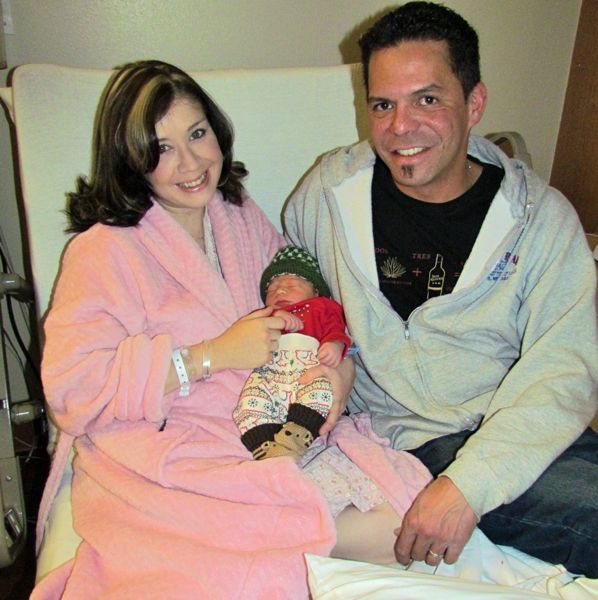
Apparently Laird Lopaka McDaniel doesn’t like to wait and likes to do things his own way.

The newest South Lake Tahoe resident was born New Year’s Day at 8:02pm – two weeks sooner than doctors had expected.

The little one weighs in at 6.9 ounces and is 18.5-inches long.

Andie and Sean McDaniel with newborn son Laird. Photo/Rebecca Wass

Andie McDaniel went into labor about noon New Year’s Eve, but didn’t go to Barton Memorial Hospital until 4am the next day. When a few complications arose, the doctors opted for a Cesarean section. Mom and son are dong fine.

Laird is named after his dad’s brother, who died when Sean McDaniel was a boy.

With their passion for the sun, the ocean and the snow, Laird’s parents look forward to teaching him to surf and ski.

“I knew that as soon as I had a boy he would be named Laird,” Sean McDaniel said. “He will be athletic and a well-rounded individual.”

Barton Health gathered more than $1,300 in gifts from local businesses for Andie, Sean and baby Laird to begin their new journey together.

“It was such a surprise and very nice of all of the businesses to help celebrate the birth of our child,” Andie McDaniel said.

There were more than 400 Barton babies in 2011, with 45 born in December.

 — Rebecca Wass, Barton Health


Book proves why eating locally makes a difference

By Kathryn Reed

“Voting with your fork” is a phrase author Jasia Steinmetz uses that resonated with me over and over again as I read “Eat Local: Simple Steps to Enjoy Real, Healthy & Affordable Food”.

How we spend money on food does make a difference in what stores carry and restaurants serve. We have a right to ask store managers and restaurant owners to stock and use local products. Not only do we have that right, some would argue it’s an obligation.

In many ways this paperback is a resource guide to eating locally and healthfully. It’s not necessarily something to read night after night – but instead in bits and pieces. The chapters are short. After all, there are 45 of them in 186 pages.

Those chapters are then divided into six sections: Introduction, Eat Local: Finding Local Food, Saving Money with Local Food, Eat Well, Join the Local Food Movement, and Appendices.

It’s a great starting point for anyone looking to make a change in how they buy food or who wants to know reasons why they should. It also has good reminders for those already on the path to healthy eating.

It’s about knowing where food comes from before it reaches the grocery store.

This book is all about why eating locally is important. And local comes with different definitions. It could be within 100 miles of where you live or your own state or country.

One of the main points is just getting people to be aware of where food is from. Then it explains how eating what is in season is how our ancestors did it for centuries, and how farmers’ markets are an ideal place to learn about the seasons of food.

“Rather than consume food, we eat food products that may have come from a plant or animal at one time, but are barely recognizable as anything from nature,” Steinmetz writes.

Even though Steinmetz is a professor of food and nutrition at the University of Wisconsin, I did not feel lectured to. I liked the common sense approach to the book.

But some alarming facts were brought forward:

• “U.S. agriculture production is dominated by large farms, i.e., farms with gross sales of $250,000 or more. These farms contribute 80% of the value of production although smaller farms own 63% of the farmland.”

• “One-third of the children born in 2000 are expected to develop diabetes in their lifetime.”

• “Current food production accounts for 35% of the greenhouse gas emissions contributing to climate change.”

• “We have lost 6,000 varieties of apples in the last century, largely because of narrow commercial production and retailing.”


Tahoe Tails — Adoptable Pets in South Lake Tahoe

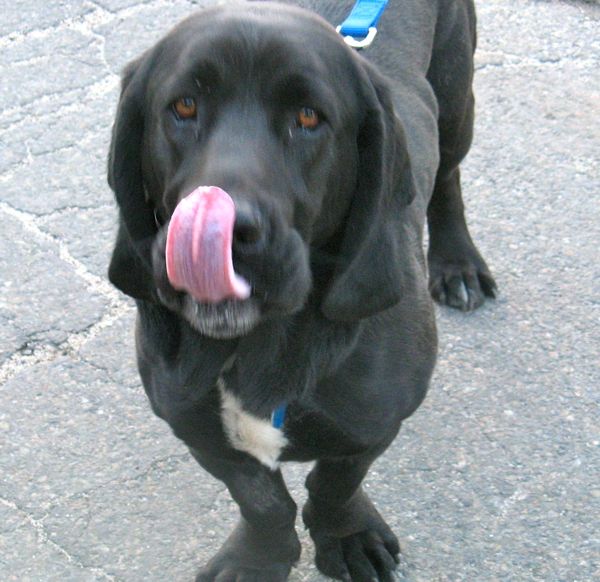
Beau is a one-of-a-kind pup. We call him a Bassador because he’s a Basset hound/Labrador mix.

Beau is 1 year old, his birthday was Nov. 11, 2010, and he is a sweetheart. He loves to play with toys and other dogs, and he hasn’t chased the cats that he has met at the shelter.

He lived with children and spent most of his time outside, except when he was taken for a car ride, and he does love car rides.

His family moved and couldn’t take him with them. He is a very happy boy who is very gentle and sweet.

Plus, he has a very long tongue.

Beau is neutered, microchipped, and vaccinated. He is at the El Dorado County Animal Services shelter in Meyers, along with many other dogs and cats who are waiting for their new homes.

Call (530) 573.7925 for directions, hours, and other information on adopting a pet.

For spay-neuter assistance for South Tahoe residents, go online.

— Karen Kuentz


Singing therapy helps stroke patients

By Richard Knox, GPB News

Debra Meyerson was hiking near Lake Tahoe 15 months ago when a stroke destroyed part of the left side of her brain, leaving her literally speechless. It happens to more than 150,000 Americans a year.

But now Meyerson is learning to talk again through an approach that trains the undamaged right side of her brain to “speak.” Specifically, it’s a region that controls singing.

For more than 100 years, it’s been known that people who can’t speak after injury to the speech centers on the left side of the brain can sing.

In the 1970s, Boston researchers started to use a sort of “singing therapy” to help stroke survivors speak again.

However, it never caught on much perhaps because a lot of therapists, not to mention patients, weren’t comfortable singing what they wanted to say. And back then, the science wasn’t advanced enough to show the actual changes in the brain that result from the therapy.

That’s changing fast.

Congresswoman Gabrielle Giffords, who has had a version of “singing therapy,” astounded everyone by her ability to speak again albeit so far in single words and short phrases. Nearly a year ago, a would-be assassin’s bullet tore through the speech center in Giffords’ left brain.

Read the whole story


Learn about geology in the Lake Tahoe Basin

Scott Valentine, Earth science instructor at Lake Tahoe Community College, will talk about “Geology of the Tahoe Basin” a story of earthquakes, glaciers, volcanism and how Lake Tahoe was created on Feb. 29 from 6-7pm.

This is part of the Explore Tahoe Winter Lecture Series.

The event is at Explore Tahoe: An Urban Trailhead, 4114 Lake Tahoe Blvd., South Lake Tahoe.

A $5 donation is requested. A $5 flat rate is offered in the Heavenly Village parking garage after 4pm.

For more information, all (530) 542.4637.


Learn about Mark Twain and Lake Tahoe

Join author David Antonucci on Jan 12 from 5-7:30pm for a talk on exactly which parts of the Lake Tahoe Basin Mark Twain saw and walked.

Antonucci’s talk will focus on the results of his research for his book “Fairest Picture: Mark Twain at Lake Tahoe”.

After the talk, there will be a meet-and-great session where people may have Antonucci sign their copies of his book.

The cost is $2 per person in advance; $3 that night. The event is at Lake Tahoe Books and Art in the Village Center, 4000 Lake Tahoe Blvd., Ste. 10 in South Lake Tahoe.

There is plenty of free parking, but seating is limited. Call (530) 600.2020 to buy a ticket or for more information.