Rock climber Libecki to talk about world adventures

Join world-renown big wall rock climber Mike Libecki for a journey to some of the most remote corners of the climbing world. Libecki’s search for massive, unclimbed rock formations has taken him to Afghanistan, Antarctica, Yemen, Venezuela, China, and Baffin Island.

Libecki will tell climbing tales at Alpenglow Sports’ fourth and final installment of the annual Lake Tahoe Winter Film Series on Feb. 16.

The event is free and is designed to motivate, inspire, and educate. It is at Sawtooth Ridge Café in Tahoe City at 7pm.

Call Alpenglow Sports at (530) 583.6917 with questions.


Tahoe Tails — Adoptable Pets in South Lake Tahoe

Hillary is a 6-year-old Labrador mix who has very nice manners.

As an adult, she is house trained, calm and sweet.

Hillary likes other dogs and cats. She enjoys car rides and would be a great hiking and camping companion.

She was found as a stray in Carson City and came to the South Lake Tahoe shelter to find her new home.

Hillary is spayed, microchipped, and vaccinated. She is at the El Dorado County Animal Services shelter in Meyers, along with many other dogs and cats who are waiting for their new homes.

Call (530) 573.7925 for directions, hours, and other information on adopting a pet.

For spay-neuter assistance for South Tahoe residents, go online.

— Karen Kuentz


Artist brings life to inanimate objects

MEYERS — A reception with empty glasses. Some on the walls. Some on the table. Some in people’s hands.

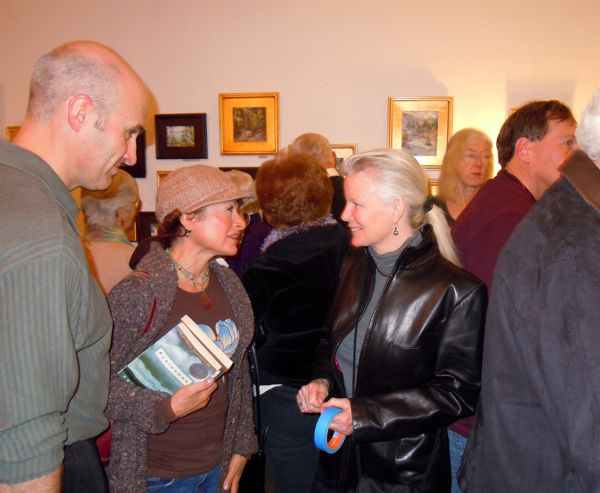
The gathering Saturday night at Bona Fide HQ was to show off the artwork of Kit Night.

Glassware is a common theme throughout her paintings.

Artist Kit Night, right, talks to people Feb. 4 about her artwork. Photo/Kathryn Reed

Night’s website says, “It’s a great vehicle for me to explore the dynamics of space: flattened abstraction, reeling distortion through refraction, a line or a plane rushing backward in space. I like the combination of hard surface and liquid movement. It’s like a dance of light.”

That dance of light is evident in many of her pieces.

Dozens of people attended the Feb. 4 reception for this South Lake Tahoe painter who works almost exclusively in oils.

The images will remain at Bona Fide (1069 Magua St., No. 4, Meyers) throughout February. Everything on display is for sale.

 — Kathryn Reed


Applicants sought for state internship program

College graduates with an interest in California government can take part in an internship opportunity that will allow them to help develop and implement public policy in California while they prepare for a new career.

The Capital Fellows Program provides graduates the chance to work for 10 to 11 months as a full–time staff member in a state legislative, executive, or judicial office. Fellows are typically given assignments with a significant amount of challenge and responsibility, such as analyzing legislation or regulations, communicating with groups and individuals interested in public policy, or monitoring committee or agency activity.

Anyone 20–years–old or older by Sept. 1, 2012, who has a bachelor’s degree and has an interest in state government, is eligible to apply. There are no preferred majors or political affiliations. Graduate, postgraduate, and mid–career applicants are welcome. Non–U.S. citizens must provide proof of appropriate immigration status.

Fellows learn firsthand how the highest levels of state government operate and how public policy affects all Californians as well as businesses and industries that operate in the state.

For those disillusioned with government, the fellowship provides an education in what currently happens and perspectives on what needs changing.

Application materials and specific information about the Capital Fellows Program can be found by clicking here. The postmark deadline for all 2012–13 fellowship applications is Feb. 22.


Reasons to skip the Super Bowl

By Michelle Higgins, New York Times

While throngs of tailgaters chug Bud Light and devour Buffalo wings near the Lucas Oil Stadium in Indianapolis, and millions of other football fans gather in front of their TVs to watch the Super Bowl this year, in-the-know travelers will be sitting down to meals at some of the hardest-to-get-into restaurants in the country, skiing down empty slopes and zipping through Disney World without the usual lines.

If you’re willing to skip the game, set for Sunday, here are areas where you aren’t likely to run into much competition.

Restaurants

Opentable.com, the restaurant reservation site, typically seats half the number of reservations on Super Bowl Sunday that it does on the Sundays before or after. That’s a bigger drop than on Oscars night.

“Super Bowl is without a doubt the single least-busy night of the year,” Mario Batali, whose restaurants include Del Posto in New York and Osteria Mozza in Los Angeles, said in an e-mail. With few exceptions, he added, “you can get into any of my restos with probably less than a week’s notice.” (It helps that the Super Bowl is scheduled to begin at 6:30pm Eastern time, just in time for dinner.)

Read the whole story


Ways to ensure a good night’s sleep

By Mandy Kendall

A friend and I were talking about the most unusual weather we’ve been having recently and how nature seems to be getting a tad confused about it, too. Squirrels out and about, trees are budding, birds are chirping. We also wondered if the “supposed to be hibernating” bears were also being stirred from their slumber too.

Sleep can be blissful, when it happens, but can also be elusive, frustrating and damaging to our health if we don’t get enough.
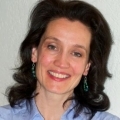
Mandy Kendall

Sleep is essential for our physical and mental wellbeing and many studies have shown there is a strong link between poor sleep and many chronic diseases such as diabetes, heart disease, depression and obesity. Adults need at least seven hours a night to allow the body to rest and repair itself. Children and adolescents need up to 10 hours sleep to help them develop mentally and physically.

So this week’s Qwik-e (Quick and Easy) tips are about how to get the best night’s sleep possible.

Avoid too much overload before you go to bed. Limit exercise in the last few hours before you go to bed. Five minutes of gentle stretching will help to release tension but anything more is likely to get your system kicked into high gear. Try and avoid large heavy fatty meals or sugary foods at the end of the day, light protein based meals are best. Limit light interference in the room; our brains respond to light as a signal to wake up, so even the light from an electric clock can stimulate our brains to wake up. Sometimes a good old-fashioned eye mask is easier than trying to block out lights from outside. Earplugs or white noise machines help cut out background noise that we might not be able to reduce too.

Set the scene. Our bodies like routine so try to set a pattern to follow each night. Go to bed about the same time each night. Take a shower or bath (not too hot), try a warm drink (no caffeine), read, keep the bedroom at a cool temperature or perhaps try some meditation (with a CD or by yourself). All these will help prepare the body for sleep.

If you can’t sleep – do something. If you’ve been awake for 20 minutes or more, try something that’s not too energetic. Reading or doing a crossword for example will help occupy your mind preventing you thinking about stressful or emotive things.

Write it down. If you can’t stop thinking about something try writing it down, and maybe how you plan to deal with it during the day. Then distract your brain from that topic with something neutral like re-running a favorite movie in your mind, going through the times tables in your head or maybe even the proverbial counting sheep.

Need a nap? If you can’t make it through the day and you need to take a nap, try to keep it to no more than 20 minutes and as early in the afternoon as possible, just after lunch is best.

Until next time, sweet dreams!

Mandy Kendall operates Health Connective in South Lake Tahoe. If you have any questions, feel free to drop me an email at healthconnective@gmail.com, visit us on Facebook, or keep an eye out on Lake Tahoe News for regular Qwik-e tips on how to make healthy changes one Quick and Easy step at a time.



Wild & Scenic Film Fest coming to Stateline

The 7th annual Wild & Scenic Film Festival returns to MontBleu in Stateline on March 9 at 7pm.

With a growing public awareness for the environment, the Wild & Scenic Environmental Film Festival producers say the aim is to increase awareness through inspiring and educational films, which hopefully will motivate people to go out and make a difference in their community and around the world.

Hosted by the Sierra Nevada Alliance, Patagonia, and the South Lake Tahoe Earth Day Committee, the Wild & Scenic Environmental Film Festival combines award winning environmental and adventure films with the energy of local activism.

For tickets, call (530) 542.4546, ext. 305.


Amanda Lee Matthews — 1986-2012

Amanda Lee Matthews died Jan. 26 after a long fight with juvenile diabetes. She was 25.

Ms. Matthews was born Dec. 22, 1986, in South Lake Tahoe. She graduated from South Tahoe High School in 2005.

Ms. Matthews cared deeply for her family and friends. She loved her cats and dogs very much.

She was studying to be a wedding planner. She had a passion for ’50s nostalgia such as “I love Lucy”, Marilyn Monroe, James Dean and Elvis Presley. Amanda enjoyed many Hot August Nights.

She is preceded in death by her father, Rick.

Ms. Matthews is survived by her mother, Jennifer Matthews; sisters, Molly and Andrea; niece Emma; and many aunts, uncles, cousins and friends.

A celebration of life will be Feb. 3 at 6pm at Hope Lutheran Church of the Sierra, 930 Julie Lane, South Lake Tahoe.

Donations can be made in her name to the Juvenile Diabetes Foundation.


Transportation sustainability lecture in Incline

Volatile oil prices. Looming climate change. Worldwide economic and political unrest. Worsening traffic congestion. Crisis in transportation financing.

All of that will be discussed Feb. 23 at the Two Billion Cars: Driving Toward Sustainability lecture.

The 6pm event is at the Tahoe Center for Environmental Sciences, 291 Country Club Drive, Incline Village.

Facing the consequences brought about by uncontrolled growth and neglected carbon awareness, America’s ongoing love affair with the car will continue to cause widespread environmental impacts and global conflicts over oil supply, according to the college. These challenges and their solutions are the ongoing focus of research by the Institute of Transportation Studies at UC Davis. For over two decades, understanding the challenges and solutions have been the nexus of institute’s work.

Dan Sperling and Tom Turrentine will present their insight of current strategies and research, and promulgate their views of the rapidly evolving transportation and energy solutions of the future. The duo will unveil how new technologies will allow consumers to access a suite of transportation and energy applications, ranging from dynamic real-time ride sharing applications, to programs that help consumers conserve energy in their cars and homes. As tomorrow’s advanced transportation technologies rapidly unfolds, will Lake Tahoe’s environmentally sensitive communities be ready to drive to a sustainable future?

A No-host bar begins at 5:30pm. A $10 donation is suggested.

For additional information, call (775) 881.7566 or email tercinfo@ucdavis.edu.


Origins of Black History Month

To commemorate and celebrate the contributions to the United States made by people of African descent, American historian Carter G. Woodson established Black History Week. The first celebration occurred on Feb. 12, 1926.

For many years, the second week of February was set aside for this celebration to coincide with the birthdays of abolitionist/editor Frederick Douglass and Abraham Lincoln. In 1976, as part of the nation’s bicentennial, the week was expanded into Black History Month. Each year, U.S. presidents proclaim February as National African-American History Month.

The number of people who identified as black, either alone or in combination with one or more other races, in the 2010 Census was 42 million. They made up 13.6 percent of the total U.S. population. The black population grew by 15.4 percent from 2000 to 2010.

The projected black population of the United States (including those of more than one race) for July 1, 2050, is 65.7 million. On that date, according to the projection, blacks would constitute 15 percent of the nation’s total population.

The black population in New York, which led all states in 2010, is 3.3 million. The other nine states in the top 10 were Florida, Texas, Georgia, California, North Carolina, Illinois, Maryland, Virginia and Ohio.