Shakespeare Festival looking for 4-legged performer

If you ever thought your dog had a future on the stage, look no further. The Lake Tahoe Shakespeare Festival is having auditions for “Crab” – the dog who plays an important and loving role in William Shakespeare’s “The Two Gentlemen of Verona” which will be performed from July 13-Aug. 26 at Sand Harbor State Park.

The ideal candidates should be extremely mellow in nature, must be able to perform outdoors in any weather and resist the temptation to run, act upon or be interested in outside distractions such as bugs, animals, people, sound and lights. The dog must also be agile, able to negotiate a flight of stairs (up and down), be well behaved and respond to simple commands like “sit”, “stay” and “down” or similar behavioral commands.

The first round of auditions is set for March 21 from 4:30-7:30pm at the Donald W. Reynolds Nonprofit Community Center, 948 Incline Way, Incline Village. To qualify for an audition, interested parties must send a headshot of the dog, owner/handler information and any additional details that they’d like to share to info@tahoebard.com. Once the information is reviewed, all applicants will receive a call to confirm a time for the first interview. If the dog is selected to continue with the audition process, the final audition will be April 24 from 4:30-7:30pm.

As the 2012 LTSF production runs six nights a week throughout a six-week period, two dogs may be selected to play the part of Crab.

Rehearsals start July 9 and the dogs must be available every night as scheduled, from 7-10:30pm, Tuesdays through Sundays to perform in approximately four scenes. Owners must also be on site during the entire duration of the scheduled shows.

For more information about the dog auditions, email info@tahoebard.com or call (775) 298.0147.


Tahoe Tails — Adoptable Pets in South Lake Tahoe

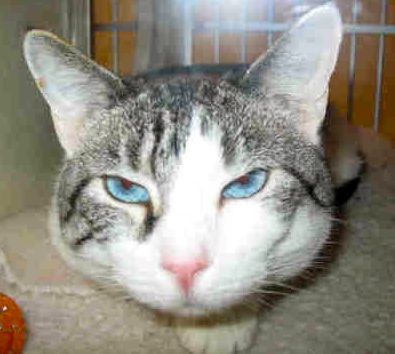
Sophie is a nice 2-year-old cat with beautiful blue eyes. She gets along well with other cats, and has lived with small children and dogs.

She is an indoor cat, and would make a great addition to just about any household.

Sophie is spayed, microchipped, and vaccinated. She is at the El Dorado County Animal Services shelter in Meyers, along with many other dogs and cats who are waiting for their new homes.

Call (530) 573.7925 for directions, hours, and other information on adopting a pet.

For spay-neuter assistance for South Tahoe residents, go online.

— Karen Kuentz


Cellist to highlight Tahoe symphony’s spring program

Tahoe Symphony Orchestra & Chorus presents “Brrroque Masters” on March 8, 11, 14 and 16.

The program features guest cellist Jeffrey Lastrapes in a program that includes works by Bach, Couperin, Vivaldi, Scarlatti, and Handel.

The series kickoff March 8 at West Shore Café in Homewood. Appetizers and wine start at 4:30pm, the concert at 5pm, and a four-course dinner with three gourmet wines starts at 7pm. Tickets for concert and dinner are $110 and are limited to 60 people. Concert without dinner is $45.

Other performances are March 11 at 3pm in St. Theresa Catholic Church in South Lake Tahoe; March 14 at 7pm in Trinity Church, Reno; and March 16 at 7pm in St. Patrick’s Church, Incline Village.

Tickets for these concerts are $25 adults, $20 seniors, and $5 students age 19-25. Tickets can be purchased at the door with cash or check or online with credit card. Preferred seating is available for $35. For more information or preferred seating, call (775) 313.9697 or go online.


Burning Man plagued by ticket drama

By Ed Fletcher, Sacramento Bee

Organizers of the iconic counterculture event Burning Man are scrambling to solve a crisis that some fear threatens the very fabric of the event.

The problem has left perhaps 75 percent of the longtime participants who traditionally provide the creative spark for displays and activities without a ticket. The event is held annually at a remote site in the Black Rock Desert of northern Nevada.

The crisis resulted from attempts to solve issues from last year, when, in addition to the normal problem of computer servers crashing as thousands of people rush to buy tickets online, the event sold out for the first time.

With the event increasingly becoming a bucket-list activity, organizer Black Rock City LLC set out to create a more egalitarian method for distributing tickets and thwarting scalpers.

Black Rock’s solution was to distribute 40,000 of the 58,000 tickets through a lottery. Applicants had two weeks to apply for up to two tickets. Demand far outpaced supply.

The result: “A full-on fiasco,” said Steve Jones, author of “The Tribes of Burning Man.”

The new system made it easier for folks not willing or able to sit at a computer for hours. But many say that same convenience also made it easy pickings for scalpers.

Read the whole story


Nevada updating historical markers before centennial celebration

The Nevada Historical Marker Program is taking on a new look with the adoption of updated texts for the roughly 260 signs that interpret the history of the state. Amended texts have been placed online and the actual markers in the field will be changed as funding allows.

The Nevada Historical Marker Program began as part of the celebration of the Nevada Centennial in 1964. The Nevada State Historic Preservation Office manages the markers, but most funding for the program was eliminated during the recent economic downturn.

In anticipation of the celebration for Nevada’s 150th birthday in 2014, the Historic Preservation Office has completed a review of all marker texts.

Most markers date to the 1960s and 1970s.

The Historic Preservation Office said that nearly 80 markers are in need of replacement. Each plate costs approximately $1,000, meaning that about $80,000 will be needed to replace the markers that need updated language. The Nevada Department of Transportation provides support to maintain existing markers, but there is no means to change marker texts or to install new markers.

In order to present the best possible information to Nevada’s residents and tourists, the Nevada Foundation for Cultural Affairs is accepting donations from individuals and businesses wishing to donate money for the updated markers.

Contact Ron James at (775) 684.3440 or email rjames@shpo.nv.gov for more information.


Planning the day makes the to-do list go away

By Mandy Kendall

Is failing to plan just planning to fail?

When I was growing up my mother was always writing lists. Lists for shopping, lists for things to do today, even lists of lists. I used to think she was a little obsessed with lists, but now I realize she was just a very good planner.

Mandy Kendall

It always amazed me how much she could accomplish in a day. I’ve come to realize her lists were a big part of that success.

I’m getting better at lists, and now realize that if I don’t plan out the day, then all of a sudden the day is over and I really haven’t accomplished much.

There’s a law that explains this. It’s called Parkinson’s Law and it says that, “Work expands to fill the time available for its completion.” So, if you have all day to do a load of laundry and go to the post office then that’s probably how long it will take to do those tasks. Conversely, think how much you can get done when there is a deadline at work or if it’s the day before you go on vacation.

Planning can focus your mind and prioritize things to make the best use of your time. Planning helps you assign time to a particular activity and highlights where you might need help in advance. Planning can stop you from waking up in the middle of the night worrying about all you have to do the next day and whether you can get it all done or not.

But how well do we plan? When planning a wedding, some people spend a year organizing that one day. But would you spend even one day organizing a whole year? Everyone seems to be talking about setting goals these days, but why should we?

You could think about not setting goals as like getting in boat, pulling up the sails but not putting the rudder in the water, or getting on a train without looking at its destination, and just hoping that the wind, or the train, will end up taking you where you want to go. Not the most effective way to guide your life, perhaps?

So here are a few Qwik-e (quick and easy) tips to help you plan:

• Plan your day on paper: spend 5 minutes, before you go to sleep, writing down the things you need to achieve the next day. Assign each task a time in which to complete it. (Also the list will be handy should you wake during the night having remembered something else you need to do.) Then during the day have a bit of fun and compete with the clock to see if you can do it more quickly than you thought.

• Eat the frog: Do your least preferred task first. There’s an old saying, “If the first thing you do when you wake up in the morning is eat a live frog, then nothing worse can happen for the rest of the day.” Brian Tracy, world renowned life coach, says that your “frog” should be the most difficult item on your things to do list, the one you’re most likely to procrastinate on; because, if you eat that first, it’ll give you energy and momentum for the rest of the day. But, if you don’t, and let him sit there on the plate and stare at you while you do a hundred unimportant things, it can drain your energy and you won’t even know it.

• Avoid time wasting activities: We all know there are certain activities that should only take a few minutes but end up pulling us into a time wasting vortex. For example, if you must check email first thing in the morning give yourself an allotted time to answer the important ones and leave the rest until all your to do list is completed. Focus on the tasks that are going to help you have the most successful day first and leave those not so important tasks until the end of the day.

• Plan for contingencies: Add a little buffer time in your day for those unexpected things, like a delayed appointment. If your day goes smoothly, you will have a little spare time as an extra bonus.

• Plan to play: All work and no play makes us all dull and, frankly, not very happy people. Build in some time just for you, even if it’s to walk the dog, chat with a friend or have a soak in the bath. If it’s on your schedule, chances are there will be time for it.

• Refocus during the day: Review your list regularly throughout the day and see if you are on track. If not, then reprioritize and carry on. Manage the day, don’t let it manage you.

• Recap at the end of the day: Before you write tomorrow’s plan, see where you might improve your time management. If there are any tasks left undone decide if they need to be top priority tomorrow or if they didn’t get done because they really weren’t that important or didn’t serve your best interests in the first place.

Until next time!

Mandy Kendall operates Health Connective in South Lake Tahoe. If you have any questions, feel free to drop me an email at healthconnective@gmail.com, visit us on Facebook, or keep an eye out on Lake Tahoe News for regular Qwik-e tips on how to make healthy changes one Quick and Easy step at a time.


Good and bad of Dangberg family history put into words

By Kathryn Reed

STATELINE – Say the name Dangberg in the Carson Valley to an old-timer and the reaction is not likely to be favorable.

Even though the family is responsible for creating and naming Minden, putting in much of the irrigation system associated with the Carson River that is used today, and having employed hundreds in the area, their legacy is not all good.

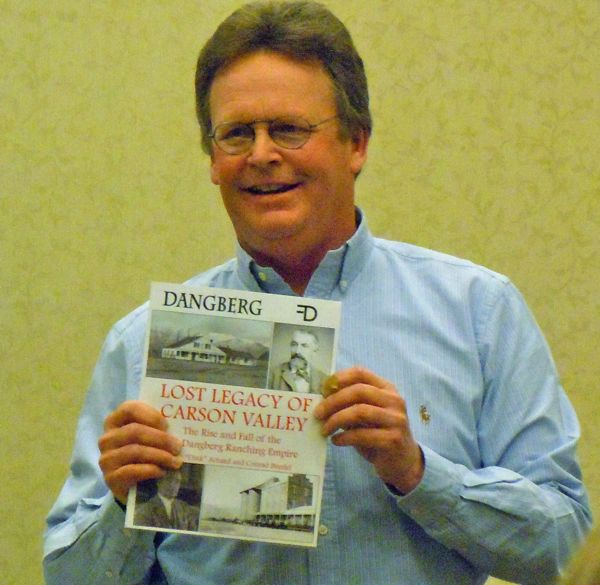
Conrad Buedel spoke about the family and the book he co-authored with Steve “Dink” Achard, one of the last of the Dangberg descendants, during a Soroptimist International South Lake Tahoe lunch at Harrah’s Lake Tahoe on Feb. 8.

Conrad Buedel

Achard, who is in his 80s, didn’t open the pile of memories that led to the book until 2004. It took the two men seven years to sort through everything before publishing “Lost Legacy of Carson Valley: The Rise and Fall of the H.F. Dangberg Ranching Empire” in 2011.

The elder Dangberg came to the valley in 1853 via New Orleans, where he had landed by ship from Germany. He grew 160 acres into 33,473 by the time he died in 1904.

Much of what he built stands today as a state park whose operation has been turned over to a nonprofit because of Nevada’s budget woes.

The barn built in the 1870s remains. Buedel says the wood dowels connecting the beams have helped preserve the structure.

“The stone cellar is still there. They bought the stones from the prison,” Buedel said.

Dangberg became one of the first in Nevada to grow alfalfa and to later raise sheep. The diversification of business interests helped the family accrue a good deal of wealth – in cash and land.

Dangberg and his wife, Maggie (whose brother created the Ferris wheel), had six children.

It was Fred Jr. who wanted to change the focus of the company, selling off some of the land for development purposes. He also wanted to create a town even though Gardnerville already existed.

First the name Halle was proposed. This is the town Dangberg Sr. had been born in. With the V&T Railway agreeing to have a terminal in the new town, officials were afraid people would think they would pronounce Halle, hell. So, Minden became the name – after the county seat of Halle.

Fred Jr. was able to get the railway to have a depot because he was in the Nevada state Senate and worked out a deal.

Buedel said such shenanigans today would likely land a lawmaker in jail.

By the 1920s the Dangberg company needed to borrow money and sell bonds. The issuance of $750,00 bonds was secured by all of the family’s land holdings. The stock market crashed. More money was borrowed.

Fred Jr., as relayed by Buedel, is making bad decisions. During a poker game with a $50 pot he offers up the family’s 160 acres at Marla Bay. There goes that lakefront property.

By now Fred Jr. is stealing money from the company. He’s feuding with his brothers who eventually sue him for the money.

Members of the family who had never had to work have to find employment. Eventually, the ranch and business change hands several times.

The state takes possession in 2004 with $2 million from the Question 1 Conservation and Resource Protection dollars.

On April 1, 2007, tours of the Dangberg Home Ranch Historic Park began.

Copies of the book are $29.95 plus tax and are available by calling (775) 267.6676 or emailing tahoeconrad@charter.net.


‘Happy’ to be screened in South Lake Tahoe

Tahoe Project and Mo’s Place are partnering to host the inaugural World Happy Day, when thousands of people will join together in communities around the globe to watch the award-winning film “Happy”.

The event is Feb. 11, 9pm at the South Lake Tahoe restaurant. Tickets are $12. Doors open at 8:30pm.

The show is for everyone. The after party is for anyone older than 21.

Local musician and entrepreneur Tyler Lewis will play live music after the screening.

“Happy” is a journey from the swamps of Louisiana to the slums of Kolkata in search of what makes people happy. Combining real-life stories of people from around the world and powerful interviews with the leading scientists in happiness research, “Happy” explores the secrets behind the most valued emotion.


Angora Fire at root of youth’s volunteer award

Ashlee Smith, 13, of Sparks and Angela Foremaster, 18, of North Las Vegas have been named Nevada’s youth volunteers for 2012 by the Prudential Spirit of Community Awards.

The nationwide program honors young people for outstanding acts of volunteerism.

Ashlee, a seventh-grader at Lou Mendive Middle School, founded a nonprofit organization that has collected and distributed more than 175,000 toys over the past five years for child victims of house fires and natural disasters. When Ashlee was 5, her family’s home burned down. Everything they owned was destroyed, including Ashlee’s special toy — a stuffed horse.

A few years later, her father, a firefighter, was battling the Angora Fire.

“He sent us pictures of destroyed houses and all included burned toys in the yards,” Ashlee said in a statement. “I knew right away how the kids were feeling, and I knew I had to help.”

That same day, Ashlee began calling television and radio stations, newspapers and local businesses to ask for help. Toy donations came flooding in. She spent her entire summer vacation organizing toys, posting flyers and appealing for more donations. With additional support from toy companies, Ashlee was able to fill a whole semi-truck trailer with toys, which she delivered to the children affected by the South Lake Tahoe fire. Since that initial fire, Ashlee’s organization, Ashlee’s Toy Closet, has continued its quest to make sure that no child is left without the comfort of a toy.

Last year, she provided toys for children devastated by the tornado in Joplin, Mo. Ashlee has also begun supplying Christmas and birthday presents for local needy children who otherwise would go without.

Angela, a senior at Legacy High School, collected small gifts to fill 250 Christmas stockings for foster children and homeless teens in the greater Las Vegas area.

As state honorees, Ashlee and Angela each will receive $1,000, an engraved silver medallion, and an all-expense-paid trip in early May to Washington, D.C., where they will join the top two honorees from each of the other states and the District of Columbia for several days of national recognition events. Ten of them will be named America’s top youth volunteers for 2012 at that time.


Printmakers put unique spin on Nevada’s visual culture

Sierra Nevada College presents Geographical Divides: Finding Common Ground featuring 16 artists who were asked to explore the geographical and cultural differences in Nevada, if such differences truly exist.

The assembly of printmakers — eight from the north, eight from the south — produced two prints from each collaboration. Visually exploring connections and disconnections between Southern Nevada and Northern Nevada cultural attitudes, aesthetics and geographical distinctions—these sixteen artists communicated and visually responded to each others unique economic, environmental, political and social settings—further dissecting this notion of a splitting geography and/or communion of Nevada’s polarities.

Geographical Divides: Finding Common Ground examines Nevada unique visual culture.

Collaborating artists include: Maria Arango, Las Vegas/Lynn Schmidt, Reno; Erik Beehn, Las Vegas/Nolan Preece, Reno; Bobbie Ann Howell, Las Vegas/Galen Brown, Carson City; Daryl DePry, Las Vegas/Sharon Tetly, Carson City; Keith Conley, LasVegas/Sidne Teske, Tuscarora; Anne M. Hoff, Las Vegas/Vicki LoSasso, Reno; Jeanne Voltura, Las Vegas/Candace Nicol, Reno; and Juan D.Varela, Las Vegas/Ashlea Clark, Reno.

This exhibit was organized by the Nevada Arts Council, is part of the Nevada Touring Initiative – Traveling Exhibition Program and is funded by the National Endowment for the Arts and the Nevada Legislature.

Geographical Divides: Finding Common Ground is on display from Feb. 16 through April 6 in the Lake Gallery of Prim Library on the Sierra Nevada College campus in Incline Village.

For group tours,contact Library Director Betts Markle at emarkle@sierranevada.edu or (775) 881.7511.