Tourism conference to focus on bolstering rural Nevada

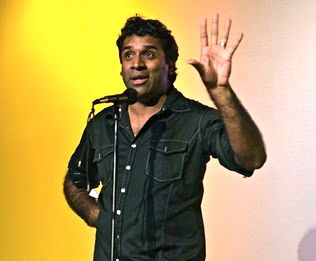
Jim Gilmore, acclaimed author of “The Experience Economy and Authenticity: What Consumers Really Want”, will headline the Rural Roundup April 18-20 at the Hyatt Regency in Incline Village.

Gilmore, whose book was recognized by Time magazine as one of the “Ten Ideas That Are Changing the World,” asserts that consumers want authentic products and experiences — something rural Nevada is singularly positioned to offer with its historic destinations and attractions.

Rural Roundup, now in its 22nd year and sponsored by Nevada Commission on Tourism, is tailored to address the needs of Nevada’s rural tourism partners. Designed to help Nevada’s rural communities grow their economies through developing and promoting vibrant tourism offerings, Rural Roundup brings together tourism industry professionals from across the state to gain insights into consumer trends, best practices and innovative approaches.

This year’s conference will include sessions on the Canadian travel market, special events and social media, among other topics. The annual VolunTourism awards dinner, which honors Nevadans whose tourism-related volunteer work has made a difference in rural communities around the state, will also be during this conference.

Registration for Rural Roundup is $65 through April 2 and $85 afterward. For Rural Roundup news and updates, go to Facebook.


Generations of Japanese Americans were scarred by WWII internments

By Anita Creamer, Sacramento Bee

In the spring of 1942, Donna Nakashima’s father came home to Florin on leave from the U.S. Army to help his widowed mother gather the family’s belongings – one suitcase per person – as they prepared for wartime incarceration.

Renowned photographer Dorothea Lange captured the moment. A uniformed Ted Miyata stood alongside his mother in the strawberry field she rushed to harvest before segregation orders aimed at Japanese Americans forced the family from their home.

Seventy years later, consider the stark generational changes forged by wartime trauma.

Nakashima’s late parents – the children of immigrants who were forbidden by law to become American citizens – were part of a generation that came of age during the war, many of them imprisoned behind the barbed wire of internment camps because of their Japanese heritage.

But her own two children think of themselves as American, not Japanese American. And so does she.

“I don’t know my culture,” said Nakashima, 50, a state analyst who lives in Sacramento. “But that’s how my parents raised us. They didn’t speak Japanese at home. They only spoke English.”

On Feb. 19, 1942, with a frightened nation still reeling from the Pearl Harbor attacks two months earlier, Franklin Delano Roosevelt issued Executive Order 9066, which led to the internment of almost 120,000 Japanese Americans during World War II. Two-thirds of them were native-born American citizens like Nakashima’s parents.

More than four decades would pass before a congressional commission found that the imprisonment accomplished no national security purpose and was, instead, based on what the commission called “race prejudice, war hysteria and a failure of political leadership.” By 1990, former internees began receiving presidential letters of apology and reparation checks.

Today Japanese American educators and researchers say that the community’s third generation – the Sansei, most of them born after the war to parents who had been imprisoned – has inherited a complicated generational legacy that has played out in the Japanese American culture ever since the days of camp.

“A lot of what people experience in adulthood can be traced back to the trauma their parents passed on intergenerationally,” said Satsuki Ina, 67, a psychotherapist and retired Sacramento State professor who was born to Nisei (or second) generation parents at the Tule Lake camp in Northern California.

Through her research, which culminated in an Emmy-winning PBS documentary, “Children of the Camps,” she discovered that post-traumatic stress scarred the lives of Nisei and their Sansei children in the years after they were released from camp.

Read the whole story


Fire — a reason to visit a bar or restaurant

By Susan Wood

In terms of warmth and ambiance, Lake Tahoe’s best fireplace, aka woodstove, sits in my house. There’s something about plunking down on a cushy sofa with clinking glasses of wine in dim light and watching the dancing wood fire through the glass while the house stays at a toasty temperature. After all, fireplace is Latin for hotbed.

When I’m out, nothing annoys me more about paying for a meal or overinflated drink (see hot drinks in Lake Tahoe News) than feeling as though I need to wear my jacket inside.

From Stateline to the Y, I found many South Shore restaurant and bar fireplaces (most use gas) emit limited heat – adding fuel to the debate whether they’re more of a mood enhancer than heat source. The same debate could be made for the more than 32 million fireplaces in U.S. households, according to the Census Bureau.
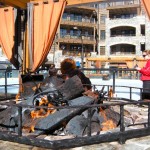
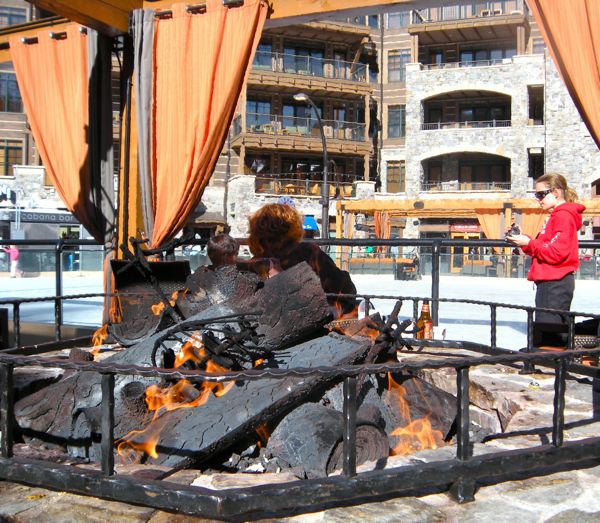
Fire pits at the Village at Northstar overlook the ice rink. Photo/Kathryn Reed

But back to business — I would say the fire pits in the Northstar Village in Truckee rate high on my list as the most desired experience in front of a fire. Kae and I had just finished skiing on a glorious sunny day, ordered a few hot drinks and collapsed on the comfy sofas about a foot away from the ornate fire pit. The fire radiated enough heat that I took off a layer and my boots to curl my feet under me. We weren’t alone. A yard sale of sorts could be found on the other sofas. A few bars flanked the village area surrounding the ice rink, where we enjoyed entertainment for our R&R.

All the right elements for a good time – yes, the North Shore has it down. And on another Northstar note, check out the Ritz Carlton bar at mid-mountain. They have a few fireplaces with cushy chairs I could easily spend the night on.

On the South Shore, the Blue Angel Café on Ski Run Boulevard does a lot of things right, including food, service and atmosphere. The fireplace is an extra amenity. If you’re lucky enough to get a front row seat on the sofa at the fireplace, you’ll definitely know why it’s busy in a bad economy.

A block down from the restaurant, the Black Bear Inn has the kind of fireplace to sit in front of for hours. If you’re ordering dinner there, you’ll be treated to a grand-scale fireplace that is the closest to resembling my all-time favorite – the one in the main lobby of the luxurious, historic Ahwahnee Hotel in Yosemite National Park. If you think the Black Bear’s lobby fireplace makes you warm and fuzzy inside, try staying at the Snowshoe Thompson cabin where the dual-sided fireplace provides the utmost in heat and ambiance.

As bars go, one table in front of the fireplace at the Riva Grill at the Ski Run Marina offers an ideal backdrop two ways. Out the window you get a view of Lake Tahoe. Inside, a large hearth measuring at least 4-feet across sets a relaxing mood. I backed my chair next to the fire for full-scale warmth. Otherwise, other tables would seem to provide a basic experience.

For view, ambiance and a little extra warmth, Edgewood Tahoe’s Brook’s Bar in Stateline has the best-kept secret for those who usually believe the golf course is for summer use only. The bar is now open in winter, and this means staff may light at least one of the outdoor fire pits on the deck and put chairs around them. I recently went there for lunch and witnessed a few women enjoying standing in the sun next to the pits with glasses of Champagne in hand. That’s decadence.

On the North Shore, nothing comes close to the fire pits – yes, on the beach – at the Hyatt’s Lone Eagle Bar and Grill in Incline Village. When there’s a nip in the air, nothing beats sitting in the large Adirondack chairs with a beverage in hand watching boats soar by on Lake Tahoe.

The fire pits at the Fire and Ice restaurant and bar in Heavenly Village get a crowd surrounding them, but the chairs are not comfortable.

It’s true — location, location, location is key. Another example where picking the table will make an experience can be found at the Fresh Ketch at the Tahoe Keys Marina. The Fresh Ketch bar often lures me to the high tables to play Backgammon. However, I sometimes fantasize about grabbing the table in front of the fireplace. It’s a nice touch situated within inches from the hearth.

The proximity from table to small fireplace is what I liked once about the Brewery on Highway 50, but getting that table may demonstrate it’s easier to win the lottery.

Lake Tahoe Pizza’s bar west of the Y could get the table-to-fireplace location hint. We actually moved the high table two feet over to the gas unit. This fireplace left me baffled because it was chilly one minute and warmed up another. It gets points though for a touch of decor. With the two large fireplace tools to the side, it became obvious that the insert was placed in a very large wood fireplace space.

It’s also an added plus Zephyr Cove Resort’s restaurant has a built-in fireplace unit, but the open-air environment and bar forcing patrons to face the other way misses the mark on the experience.

Kae and I agree bar patrons over the restaurant crowd are more apt to enjoy a fireplace based on the level of comfort. Let’s face it. You’re not going to take your shoes off, slouch in your chair and turn your body slightly away from your dinner companion. Nonetheless, the fireplace gets a few marks for having a mantel much like you would at home.

The National Association of Home Builders rates a fireplace as one of 12 factors that significantly raise the value of a home.

The homey feature started with the cave dwellers and has been used by some form of culture for cooking and heat in the last million years. Cave men and women dug holes in the ground until fireplaces evolved into wall units in the 1100s. They rose to second floors of homes in the 1500s and became more of a design feature 100 years later in England. In 1678, designers raised the grate to improve airflow, thus fueling the fire.

One notable inventor, Benjamin Franklin, came up with his namesake stove that sat in the middle of the room in Philadelphia in the 1740s. The idea caught on and woodstoves joined fireplaces as household words.


TAP — 25 years of bringing performing arts to students

By Kathryn Reed

Performing arts is more like a disappearing act for many small communities – especially for the schools in those towns.

Not so on the South Shore.

With an annual budget of $100,000, Tahoe Arts Project is able to bring three to four shows a year to more than 5,000 children from Alpine County to Lake Tahoe Unified to Douglas County.

Peggy Thompson, executive director of the nonprofit, has been with the organization for nearly 20 of the 25 years it has been around.

Asked how TAP has been successful for a quarter century, she told Lake Tahoe News, “I think a lot of it is people realize the importance of providing these programs to children who otherwise would not be able to experience any type of live performing arts.”

Usually it’s new groups that come to the schools, but in honor of this being the silver anniversary, Thompson and her board decided to bring back three favorites. The Standards – an a capella of five brothers – were in town in September; the comedic-juggling Gizmo Guys played in January; and Manding Jata – music and dance of West Africa – will be here next week.

Besides the performance these professionals put on, they all come with an educational component. For example, The Standards for the younger grade levels talked about nutrition, exercise and health, while the middle and high school students heard an anti-bullying message.

In addition to the week of school assemblies, each act puts on a show for the public. This year MontBleu in Stateline has donated its show room for those performances.

Each year the Missoula Children’s Theater comes in the fall and summer. This allows youngsters who have never acted a chance to try the craft.

Thompson says the most difficult part is negotiating a contract because TAP has such a limited budget.

Revenue for the nonprofit comes from various fundraisers including the July fine arts festival, service clubs and donations from the public. Grants used to be a larger component of the budget, but those are drying up.

It was Harriet Goldman who founded TAP in 1987. She had moved to Tahoe from the Bay Area with her two kids and was appalled to find the schools had no performing arts, Thompson said. With volunteers and the support of Lake Tahoe Unified, the program started in a couple schools and grew from there.

In some ways things have not changed. The schools could not bring this caliber of performing arts on their own.

“Through the programming committee and the board we work hard in the selection process. We bring in a variety,” Thompson said. Talks are under way now with performers who will come in the 2012-13 school year.

“In the next 25 years or before I leave I would like to see a performing arts center. I think we could do more if we had a space,” Thompson said.

——–

Info to know:

• TAP is online, with a new website coming soon.

• Manding Jata public show is March 23, 7pm at MontBleu. Tickets are $12 for adults, youth and seniors $8. Call (530) 542.3632 or buy them at the door.


Vitamin D linked to stronger bones in girls

By Shari Roan, Los Angeles Times

Vitamin D may be helpful in protecting highly active pre-teen and teen girls, such as those who play sports, from stress fractures, researchers reported this month.

The study was surprising because calcium has long been considered the nutrient most vital to bone health in children. But, in developing children, vitamin D intake may matter more.

Researchers analyzed data from 6,721 girls ages 9 to 15 at the start of the study. The girls’ intake of calcium, vitamin D and dairy products was recorded along with stress fractures, which are common sports-related injuries. The girls were followed for seven years.

During that time, almost 4 percent of the girls developed a stress fracture. Dairy and calcium intake seemed to bear no relationship to the risk of a stress fracture. However, girls with the highest vitamin D intake had a 50 percent lower risk of stress fracture compared with the girls who had the lowest intake. This was especially evident among girls who participated in at least one hour a day of high-impact physical activity. They had a 52 percent decreased risk.


‘Moneyball’ is not an ordinary book about sports

By Kathryn Reed

Baseball is a pretty simple sport – throw, catch, hit.

The business of baseball is a bit more complex as spelled out in “Moneyball”, the book by Michael Lewis. But it was also clearly pointed out if baseball were run more like a business than an old boys’ club, some teams would likely be more successful.

While the movie by the same name was up for six Academy Awards this year, including best picture, the book is so much better. (The other nominations were for best actor, best supporting actor, best-adapted screenplay, best sound mixing and best film editing. It did not win one statue.)

As with most books compared to the movie rendition, there is depth in those 304 pages. This isn’t one of those books that you just plow through. It’s really more of a book about business and strategy than it is sports. But it would be hard to imagine a non-baseball fan finding anything interesting about this book.

While the Oakland A’s are the focus of the book in how they transformed the business of recruiting ball players and the importance of factors heretofore overlooked by other teams, the book is more than the A’s and Billy Beane. It is all about an institution set in its ways that is challenged by one of the little guys.

I’m not one of those fans who know all the stats about players or can remember my team’s history all that well. I’m more of an in-the-moment kind of fan.

Still, I found “Moneyball” absolutely fascinating.

It also has personal intrigue with the various personalities involved. It made me wonder how a psychologist would dissect all of the human elements involved.

And with spring training under way, well, “Moneyball” just whets the appetite for the 2012 season that is just weeks away.


Learn about the world’s changing seas

The study of climate change through Earth history has produced a wealth of information on the operation of the ocean-atmosphere system during climate transitions as well as the feedbacks that impact the magnitude and rate of climate change on the planet.

Although the understanding of the science of climate is built on a firm foundation, much confusion exists regarding the potential and rate of change in the modern world.

Howard Spero will explore the basic science of the Earth’s climate system and examine the natural cycles of climate change in Earth history that have been discovered through the study of flacial ice sheets and deep ocean cores during a lecture March 22 at Sierra Nevada College.

Spero will attempt to demystify the realities of phenomena such as ocean (and Lake Tahoe) acidification and the potential for a warmer Earth in the not too distant future.

Spero is a professor and current chairman in the Department of Geology at UC Davis.

A no-host bars opens at 5:30pm, with lecture at 6pm. A $5 donation is requested.

For more info, call (775)881.7560.

Tahoe Center for Environmental Sciences, Room 139/141 is at 291 Country Club Drive, Incline Village.


Home schooling continues to evolve

By Linda Perlstein, Newsweek

In the beginning, your kids need you—a lot. They’re attached to your hip, all the time. It might be a month. It might be five years. Then suddenly you are expected to send them off to school for seven hours a day, where they’ll have to cope with life in ways they never had to before. You no longer control what they learn, or how, or with whom.

Unless you decide, like an emerging population of parents in cities across the country, to forgo that age-old rite of passage entirely.

When Tera and Eric Schreiber’s oldest child was about to start kindergarten, the couple toured the high-achieving public elementary school a block away from their home in an affluent Seattle neighborhood near the University of Washington. It was “a great neighborhood school,” Tera says. They also applied to a private school, and Daisy was accepted. But in the end they chose a third path: no school at all.

Eric, 38, is a manager at Microsoft. Tera, 39, had already traded a career as a lawyer for one as a nonprofit executive, which allowed her more time with her kids. But “more” turned into “all” when she decided that instead of working, she would homeschool her daughters: Daisy, now 9; Ginger, 7; and Violet, 4.

We think of homeschoolers as evangelicals or off-the-gridders who spend a lot of time at kitchen tables in the countryside. And it’s true that most homeschooling parents do so for moral or religious reasons. But education observers believe that is changing. You only have to go to a downtown Starbucks or art museum in the middle of a weekday to see that a once-unconventional choice “has become newly fashionable,” says Mitchell Stevens, a Stanford professor who wrote Kingdom of Children, a history of homeschooling. There are an estimated 300,000 homeschooled children in America’s cities, many of them children of secular, highly educated professionals who always figured they’d send their kids to school—until they came to think, Hey, maybe we could do better.

When Laurie Block Spigel, a homeschooling consultant, pulled her kids out of school in New York in the mid-1990s, “I had some of my closest friends and relatives telling me I was ruining my children’s lives.” Now, she says, “the parents that I meet aren’t afraid to talk about it. They’re doing this proudly.”

Read the whole story


Poetry workshop to be taught by award-winning writer

Award-winning poet and editor Ravi Shankar will be in Meyers on March 31 to give a poetry workshop from 3-6pm at Bona Fide HQ.

The cost is $25. Interested participants should bring 10 copies of a poem to the workshop.

Advance reservation is necessary, as space is limited. To sign up, call or email Suzanne Roberts at (530) 541.4660, ext. 708 or robertss@ltcc.edu.

Ravi Shankar

All abilities and aesthetic stances are welcome.

In this workshop, “From Flarf to Cento: Using Multiple Sources to Find Your Voice”, participants will learn what is current in the field of contemporary poetry, taking on everything from the collage-form of the cento to the ancient Japanese form of the zuihitsu and the nonsense permutations of Flarf.

Shankar is the founding editor and executive director of Drunken Boat, one of the world’s oldest electronic journals of the arts. He has published or edited seven books and chapbooks of poetry, including the 2010 National Poetry Review Prize winner, “Deepening Groove”.

Bona Fide HQ is located at 1069 Magua St., No. 4, behind the Getaway Café in Meyers.


Documentary about Aldo Leopold at LTCC

“Green Fire: Aldo Leopold and a Land Ethic for Our Time” will be shown at the Duke Theatre at Lake Tahoe Community College in South Lake Tahoe on March 28 at 7pm.

Admission is free.

Doors open at 6:30pm.

A question and answer session will follow the documentary about this legendary conservationist.