Retired journalist turns to Basque roots, sheep farming and cheese making

By Ella Lawrence, KQED

On a steep hill above Marshall, a gorgeous rolling sheep ranch sits on 800 acres of land. Its owner Marcia Barinaga, a third-generation American Basque, bought it with her husband when she decided to “take a break” from her career as a science journalist and retire on the land they had grown to love since purchasing a shore house in Marshall in 1993.

While Barinaga’s original intention was to retire, she is not a woman who sits still easily. The compact, well-spoken cheesemaker with a doctorate in molecular biology was not sure what she wanted to do with the land. But her Basque roots run deep and slowly the idea of making sheep’s milk cheese took hold of her. “When we bought the ranch I had never even touched a sheep and there were no buildings here,” she laughs. But Barinaga is a quick learner and within a few years she had traveled to Basque country to learn shepherding and cheesemaking from her distant relatives; built a milking parlor and a small creamery; and by 2008 began producing two types of distinctly Basque cheeses.

On a recent tour of Barinaga Ranch and creamery, Marcia was asked by a visitor, “What kind of cheese did they have in your father’s Idaho sheep camp?”

She laughed and responded, “Big blocks of orange American cheese. They never thought to make cheese with their sheep’s milk!”


Learn about Tahoe weather while raising money for TC X Country Ski Area

Lake Tahoe weather historian Mark McLaughlin will talk about this winter’s wild and wacky weather and where it stands historically at a fundraiser for Tahoe City Cross Country Ski Area.

McLaughlin will also be selling and autographing his two ski books, the double award-winning “Longboards to Olympics: A Century of Tahoe Winter Sports” and his newly released “Skiing at Lake Tahoe”. Both books will be discounted to $20 each, payable by cash or check. After the presentation chef Douglas Dale will cook up a three-course meal.

The event is March 31 from 6-8:30pm.

Limited tickets are available at $85 per person. This is an evening out for adults.

All money raised benefits. Reservations can be made at Tahoe Cross Country Ski Area or can be purchased by calling (530) 583.5475. The event is at the yurt at the ski center.


Tahoe Tails — Adoptable Pets in South Lake Tahoe

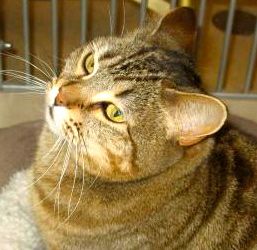
Shortbread is a friendly, young tiger-striped tabby cat who was abandoned at the shelter.

She is a sweet girl who seems to get along with everyone.

Shortbread is spayed, microchipped, and vaccinated. She is at the El Dorado County Animal Services shelter in Meyers, along with many other dogs and cats who are waiting for their new homes.

Go online to see photos and description of all pets at the shelter.

Call (530) 573.7925 for directions, hours, and other information on adopting a pet.

For spay-neuter assistance for South Tahoe residents, go online.

— Karen Kuentz


The new science of feelings

By Richard J. Davidson and Sharon Begley, Newsweek

If you believe most pop psychology, you probably assume that most of us react to life events in just about the same way—there is a grieving process, a sequence of events when we fall in love, a standard response to being jilted.

But these one-size-fits-all assumptions are not true. In decades of research into the neurobiology of emotion, I’ve seen thousands of people who share similar backgrounds respond in dramatically different ways to the same experience. Why does one person recover quickly from divorce while another remains mired in self-recrimination or despair? Why does one sibling bounce back from a job loss while another feels worthless for years? And why can one father shrug off the botched call of a Little League umpire who called his daughter out while another leaps out of his seat and screams at the ump until his face turns purple? The answer that has emerged from my research is that these differences reflect what I call Emotional Style—a constellation of reactions and coping responses that differ in kind, intensity, and duration. Just as each person has a unique fingerprint and a unique face, each of us has a unique emotional profile.

That may seem as obvious as stating that everyone has a unique personality. But personality is not grounded in identifiable neurological mechanisms; it has not been traced to specific patterns of neural activity in the brain. This is where the theory of Emotional Style breaks new ground: through neuroimaging and other methodologies, I have traced Emotional Style—and, specifically, the six components that make it up—to patterns of activity throughout the brain.

In making those discoveries, I have found that, in contrast to the longstanding scientific orthodoxy, Emotional Style arises partly from activity in regions involved in cognition, reason, and logic—functions that textbooks tell us are as unrelated to emotions as apples are to squid. That has come as a shock to defenders of the view that cognition—which many psychologists and neuroscientists consider the most exalted human capacity—and emotion (viewed as a lesser, almost animalistic trait) run on separate, mutually independent brain circuitry: the former in the “highly evolved” frontal cortex and the latter in the limbic system, which in humans is not much different from that of other animals. In showing that cognition and emotion are not so separate after all, these discoveries have rehabilitated emotion. From a behavior that was, as recently as the 1970s, studied for the most part only in rats and other lab animals, human emotion has now assumed as important a place in neuroscience as thinking.

Read the whole story


‘The Royal Family’ on stage at STHS

“The Royal Family”, a comedy by George S. Kaufman & Edna Ferber, opens March 23 in the Viking Theatre in the Tahoe Arts & Design Academy at South Tahoe High School. Show dates are March 23, 24, 30, 31 at 7pm and March 25 and April 1 at 2pm.

Tickets are $5 for students and $10 for everyone else. This three-act play is suitable for children age 6 and older.

Information regarding advanced ticket sales will be posted online. Arrive early to purchase tickets at the door.


El Dorado County Fair looking for entries

El Dorado County Fair officials are looking for people whose talents lie in art, baking, sewing, computers, dancing, floriculture, horticulture, literary arts, minerals and mining, needle art, photography, preserved food, quilts or wine making.

This year’s fair in Placerville is June 14-17.

Details about entering are in the guide.

The following materials must be submitted, in most cases, by May 11:

Entry forms completed with Divisions and Classes.

Entry fee, which varies with the Division of interest.

Entries are due in June.

In 2011, the competition received more 5,100 entries.


34.7 million Americans claim Irish ancestory

Originally a religious holiday to honor St. Patrick, who introduced Christianity to Ireland in the fifth century, St. Patrick’s Day has evolved into a celebration for all things Irish.

The world’s first St. Patrick’s Day parade occurred on March 17, 1762, in New York City, featuring Irish soldiers serving in the English military. This parade became an annual event, with President Harry S Truman attending in 1948. Congress proclaimed March as Irish-American Heritage Month in 1995, and the president issues a proclamation commemorating the occasion each year.

The number of U.S. residents who claimed Irish ancestry in 2010 was 34.7 million. This number was more than seven times the population of Ireland (4.58 million). Irish was the nation’s second most frequently reported ancestry, trailing German.

Thirteen percent of New York state residents said they were of Irish ancestry in 2010. This compares with a rate of 11.2 percent for the nation as a whole.

Seven places in the United States are named Shamrock, the floral emblem of Ireland; Mount Gay-Shamrock, W.Va., Shamrock, Texas, Shamrock Lakes, Ind., Shamrock, Okla., and Shamrock Township in Minnesota, Nebraska and Missouri.

Sixteen cities in the United States share the name of Ireland’s capital, Dublin. The most populous of these is in California with a population of 46,036.


Definitive cure for hot flashes remains elusive

By Kim Painter, USA Today

When Kathryn DiPasqua, 51, started having bothersome menopausal hot flashes, she had a chat with her gynecologist: “I told her ‘I do not want to go on hormone replacement therapy. I’m a healthy person. I don’t want to put anything unnecessary inside my body.'”

So DiPasqua, like many women, tried other things, for four years: “I tried black cohosh, I tried soybeans; I would eat edamame by the handful,” says the Richmond, Va., college marketing specialist. She limited caffeine and alcohol and jogged daily.

The result: She kept on overheating, about a dozen times a day and two or three times a night. She says her makeup melted, her clothes were ruined, her sheets soaked — and she got just plain tired.

A few months ago, she went back to her doctor and got a prescription for a hormone patch. She doesn’t love it, she says, but it works.

DiPasqua’s experiences are right in line with the latest research: Despite high hopes and years of study, most alternative treatments for hot flashes just don’t work. Hormones do, but many women still see them as a last resort. A few other prescription drugs show mild promise.

So the great, universally accepted hot flash cure remains elusive.

Read the whole story


Changing bad habits for good

By Mandy Kendall

We are all creatures of habit. It helps us to do myriad things everyday without having to actually think about it too much. Can you imagine if you still had to think about the act of driving to the same extent as you did when you first got behind the wheel of a car? It would be pretty exhausting.

Our brains set up patterns so that the things we do frequently become much more automatic, almost like a reflex.

However, while some habits are very useful, we can also form habits, or patterns, that don’t serve us so well.

Mandy Kendall

More and more studies are showing the impact our thoughts and behaviors have on everything we do. Judith S. Beck discusses one particular MIT study that showed that lots of behaviors or patterns are triggered by a cue that automatically leads to an action that ends up with a reward. This habitual loop can happen over and over again without us having to think about it much at all.

For example, food cravings or compulsive eating can often be strongly entwined with a cue (for example stress or boredom), which is then followed by a routine (eating food) and ends up with a reward (relief and distraction from the stress or boredom). This may eventually lead to a habit or pattern that is hard to break.

We can unconsciously train ourselves to the point that whenever a particular cue (stress or boredom) is experienced the brain will go into autopilot. So even if a person were trying to lose weight, they might not realize what they were doing until they had finished eating.

This concept can be applied to pretty much any unwanted habit. Once we recognize what the cue is we can normally follow the process through to the reward and see what the pattern is. However sometimes the reward is not necessarily very good for us.

So, how do we break these habits or patterns if we are not aware of doing them at the time?

Here are some Qwik-e tips to help break those unwanted bad habits:

Break the pattern – Once we’ve recognized a pattern and discovered the cue that starts it, the pattern can then become a much more conscious process. Look at where habits have caused you to do things you’d rather not do, and see where the pattern can be broken.

Avoid the cues – Minimize the chances of being confronted with a cue or trigger that affects you. For example find a positive release for, avoid, or minimize stress where possible. Keep yourself occupied to stave off boredom. Avoid the actual situations where your cues might exist (places and particular people will often be very strong cues).

Change the routine – Sometime cues can’t be avoided so try to come up with some alternative routines to follow when you experience a cue. Taking deep breaths or going for a short walk can often distract you from a stressful situation long enough to break the bad habit or pattern that usually follows.

Reward yourself positively – Congratulate yourself when you successful avoid an unwanted pattern or habit. Positive feedback from friends and family will also help re-enforce the effort you are making. Beck discusses how rewards help establish and maintain habits – so we can use this to our advantage to form the habits that we want to form.

Help from friends and family – Sometimes a habit is so ingrained that it helps to ask someone to gently remind us when we are doing something we are not even aware of until it’s too late. Also some support and company, when you are changing your routine, to help avoid specific cues to bad behavior, is often very helpful.

Until next time.

Mandy Kendall operates Health Connective in South Lake Tahoe. If you have any questions, feel free to drop me an email at healthconnective@gmail.com, visit us on Facebook, or keep an eye out on Lake Tahoe News for regular Qwik-e tips on how to make healthy changes one Quick and Easy step at a time.



Documentary about mountain bikers to be shown in Reno

The Tahoe Area Mountain Biking Association and the Poedunks are presenting “Pedal-Driven: a bike-umentary”, a documentary film from Howell at the Moon Productions. The screening will take place at Centric inside CommRow in Reno on March 22 at 7pm. It will be preceded by a social hour starting at 6pm.

Tickets are $10 and the proceeds will go to both organizations to promote sustainable trail building efforts in the area.

The one-hour documentary examines the long-standing confrontation between mountain bikers and federal land management agencies such as the U.S. Forest Service over bikers’ access to public lands.

The central story line takes place in the small town of Leavenworth, Wash., but shooting for the documentary occurred during an 18-month period in every Western state and in Canada.

TAMBA is the largest mountain biking organization in the Tahoe region with more than 350 members and focuses its efforts on volunteer trail work, cooperation with land managers, and education of trail users.

The Podunk’s mission is to maintain and enhance Peavine’s non-motorized trail network by volunteering to do trail maintenance, trail construction, and mountain clean-ups and working with the U.S. Forest Service, Washoe County Parks, Reno, and other Peavine user groups.