John A. Giannotta — 1923-2012

Longtime Carson City resident John A. Giannotta passed away on March 22, 2012.

He was born Sept. 13, 1923, in San Jose.

John was preceded in death by Helen, his beloved wife of 64 years, and granddaughter Debbie Baskin.
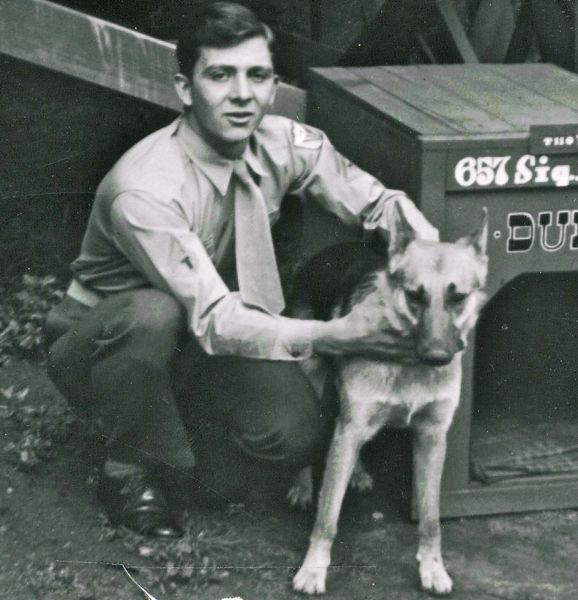
John A. Giannotta

He is survived by his daughters Sharon Howard (Rick), Sandy Jacopetti, Susan Davis (Phil), and Shelley Giannotta, sisters Dorothy Kosowski and Michele Jade Harvey, nine grandchildren and 18 great-grandchildren.

“Fast Talking” John, as he was affectionately known by friends and business associates, was one of America’s “Greatest Generation” serving with the 99th Infantry Division during the Battle of the Bulge and in Germany and Belgium. Returning from the war, John worked as a carpenter during the day and by night pursued his associate’s degree in the carpentry trade. He became a successful building contractor in Santa Clara County until 1968 when he relocated to the Lake Tahoe Basin. In Tahoe he built custom homes, as well as a dream home for his family in Lake Tahoe, Nevada.

He was a member of the Carson Valley Contractor’s Association for more than 30 years and had the position of president for four of those years.

John was an active member of the Elk’s Lodge for 40 years, leading and participating in numerous fundraisers and benevolent activities in support of the Lake Tahoe and Carson Valley communities. He valued the camaraderie, enduring friendships, and the brotherhood of his fellow Elks.

Over a span of 17 years, John and “his Helen” took pride in volunteering their time and energy making 500 trips from Carson City to the Reno veteran’s hospital to distribute donated books, magazines, flags, and toiletries to hospitalized veterans. In addition to his volunteer work, John’s favorite hobbies included golfing, gardening, collecting stamps and family photos, reading, and playing Yahtzee.

John had a lifelong passion and love for all animals. As a youth, he raised rabbits, chicken, and homing pigeons. Over the course of his life, John had a variety of dogs including his beloved German shepherd, Thor, numerous cats, Ricky the skunk, and assorted other animals.

John, larger than life, and having lived his life to the fullest, leaves behind a legacy of enduring love and friendship, honesty, hard work, and loyalty. With his huge heart, he saw the good in everyone and never met a stranger.

John was a wonderful and loving husband, father, and grandfather, beloved and cherished by all and will be greatly missed.

Internment ceremony with full military honors will be at the Veterans Cemetery, 14 Veterans Way, Fernley on March 30 at 2pm.

Those who wish to make a contribution in John’s name may do so to the Wounded Warrior Project, 4899 Belfort Road, Ste. 300,Jacksonville, FL 32256 or Wylie Animal Rescue Foundation, P.O. Box 5364, Incline Village, NV 89450.



Boys & Girls Club initiating drum corps for youths

Liz Broscoe, Eric Hellburg and John Shafer are teaming up to bring more drumming to Lake Tahoe Boys & Girls Club. These are three long-time professional drummers with a desire to make a difference by exposing kids to music rather than more technology.

Broscoe will direct South Lake Tahoe’s only marching drum corps — Boys and Girls Club Marching Beat Brigade. Beginning April 18, students in grades 8-12 will have the opportunity to be involved with this project. No experience is needed, just a strong desire to learn and participate. The drum corps will meet every Wednesday from 4-5pm at the Boys & Girls Club for an initial eight-week program.

Starting in April, Hellburg will be offering a drum set class on Friday afternoons. Shafer will be assisting in both new rhythmic endeavors.

Additionally, South Tahoe High School student Rose Campion, an accomplished musician in her own right, will be working with this team, engaging her fellow high school musicians to join the drum corps.

The project is being launched with seed money through the El Dorado Community Foundation/Joan Rochelle Tahoe fund to purchase four drums and essential accessories. To date, six additional marching band drums have been donated. All three professional musicians are volunteering their time to launch these projects.

To learn more about the Drum Corps, how to join, or donate to the project, go online or contact Karen Houser at khouser@bgclt.org. You can also support Broscoe in the woman’s drumming contest Hit Like a Girl 2012. Go online to vote for Liz Broscoe. If she wins, Broscoe will donate music equipment to programs at the Boys & Girls Club and LTCC from the $10,000 worth of prizes. Last day to vote is April 15.


Young travelers changing hospitality industry

By Janet Morrissey, New York Times

The hotel industry, struggling to recover from the depths of the recession, has begun to contemplate a group of travelers it sees as crucial to its economic growth — those in their 20s to mid-30s who are obsessed with technology, social media and design.

Many hotel owners and operators are remodeling existing hotels or introducing new ones that offer free hotelwide Wi-Fi connections; large, welcoming lobbies with plush, comfortable furnishings; state-of-the-art fitness areas; in-room power consoles to plug in iPads, laptops and other devices; and stylish bars that spill into the lobby.

Some are also scheduling nightly social events, like happy hours and free wine tastings, aimed at luring the iPhone-toting generation to their hotels.

“All of the major brands — Hilton, Starwood, Marriott, InterContinental — have developed hip products that are targeted at the younger traveler,” said Chris Klauda, a vice president at D.K. Shifflet & Associates, a travel and hospitality market research company.

Travel spending by these younger travelers rose 20 percent in 2010, making them the fastest-growing age segment, according to American Express Business Insights, though they still lag the baby boom generation in overall spending.

Read the whole story


Allergy season coming into bloom

By Mandy Kendall

The Vernal Equinox at the beginning of this week announced the official end of winter and heralded the beginning of spring. Great news for the sun worshipers, but not so great for the more than 40 million Americans who suffer from seasonal allergies.

The unseasonably warm weather so far this year has also meant that the allergy season has been afflicting many people much earlier than usual.

Mandy Kendall

Allergens (a substance that causes an allergic reaction) come in all shapes and sizes and from different sources including animals, insects, pollens, materials and foods. All allergy sufferers will have their own tactics to deal with the often-daily onslaught of itchy running eyes, stuffy blocked noses and lack of sleep. Often remedies will include medications, and lots of them, however there are plenty of things that can be done to limit your exposure and boost your immunity too.

So, here are this week’s Qwik-e tips on how to help protect you against those pesky, fun spoiling, sleep depriving allergens:

Get tested — If we know exactly what it is that irritates us, we can be much more focused, and effective, in eliminating it from our lives. (This can be said for most things I think.)

Pets — If you have a pet with fur, short of shaving your beloved friend, there are others ways to minimize the affect their fur and dander (dead skin) can have on you. Keep them clean and brushed, especially when they’ve been outside and are trying to bring half of the forest back into the house. Try rubbing them vigorously with a towel outside before letting them indoors. (Wear a protective mask if you’re the one with the allergy!)Also your hair can trap plenty of pollen and dust while you’re outside, so try wearing a hat or washing your hair before you go to bed (or at least brushing it out well). Keeping pets out of our bedrooms and off our sofas can also make a huge difference to the amount of allergens present in the areas where we spend a lot of our time.

Allergens in the home — I hate cleaning, but it has to be said that regular vacuuming and dusting (with a slightly damp cloth to capture the dust rather than just moving it around!) will do a lot to reduce the amount of allergens around your living space.

Nasal rinsing — A simple saline solution will help rinse out the majority of irritating allergens and a layer of Vaseline just inside the entrance to your nostrils can help trap larger allergen particles, preventing them from going farther up your nose and causing more irritation. (Maybe that’s where the phrase “getting right up my nose” came from?)

Anti-histamines — Allergens can cause us to produce histamines, which can in turn cause the symptoms of an allergic reaction. Anti-histamines counteract these, calm things down and help the immune system. However, histamines get to work long before you start to experience the symptoms of an allergic reaction. So to be most effective, it is important to take any anti-histamine well before you come into contact with the allergen (two to five hours if possible) or just take them on a regular basis to be constantly covered. Some great natural anti-histamines include green or chamomile tea, and honey made by bees in your local area.

Foods that aggravate allergies — According to traditional Chinese medicine, there are certain foods that can exacerbate allergies. These include dairy (for their tendency to increase mucus production, so not good for any kind of asthma sufferer either) and sugar (which has a hugely negative impact on the immune system). Other specific foods that can weaken resistance to allergies include corn, peanuts, shellfish, wheat and the nightshade vegetables such as tomatoes, peppers and eggplants. I’m not saying these are bad for you; just maybe keep an eye on how much of these you eat when you’re experiencing an allergic reaction. However, too much Omega-6 fatty acid rich food can be very inflammatory. Foods high in Omega-6 include corn, sunflower oils, processed foods such as salad dressings and fast food. Saturated and trans fats and partially hydrogenated oil can also trigger the release of inflammatory chemicals. A monosaturated olive oil would be a much less inflammatory choice of oil as your primary source of fat.

Foods that fight allergies – Spices such as turmeric and ginger have anti-inflammatory properties. Omega-3 fatty acid rich food such as salmon, cod and haddock (flax seed or a good supplement if you’re vegetarian) also provide natural anti-inflammatory protection.

Holistic treatments — There are a plethora of holistic therapies that can help with allergies and it’s well worth calling some of your local therapists and asking them if their form of therapy is effective for helping with your kind of allergy.

(You nose it makes sense!)

Until next time.

Mandy Kendall operates Health Connective in South Lake Tahoe. If you have any questions, feel free to drop me an email at healthconnective@gmail.com, visit us on Facebook, or keep an eye out on Lake Tahoe News for regular Qwik-e tips on how to make healthy changes one Quick and Easy step at a time.


Film captures life and legacy of conservationist Leopold

By Kathryn Reed

Condensing any man’s life and his legacy to 72 minutes would be difficult. Doing that for Aldo Leopold was even more challenging because of the significant contributions he made to conservation efforts in the United States.

In his lifetime that spanned from 1887 to 1948 Leopold became known as the father of wildlife ecology. He started working for the U.S. Forest Service in 1909, four years after the agency was formed.

Ann and Steve Dunsky were tasked with creating a film that captures who Leopold was and the mark he left on society. “Green Fire” will be shown at Lake Tahoe Community College on March 28.

“We initially started with community, which is the central theme to Leopold. Where we ended up was on his most important idea which is the land ethic,” Steve Dunsky told Lake Tahoe News.

Leopold wrote, “That land is a community is the basic concept of ecology, but that land is to be loved and respected is an extension of ethics. A land ethic, then, reflects the existence of an ecological conscience, and this in turn reflects a conviction of individual responsibility for the health of land.”

Despite Leopold’s impact, the Dunskys note that the majority of people have never heard of him. This fact required delicate editing by Ann Dunsky to combine enough biography about the man and the essence of why his work is relevant today so movie-goers will know who the film is about and the importance of his work.

Steve Dunsky is the producer/director of the film, while Ann Dunsky is the editor. The husband-wife duo has been working for the Forest Service in this capacity for more than 20 years. Some of their films are their ideas; some are ideas that get handed down through the agency.

“Green Fire” is like a sequel to their earlier film “Greatest Good”. That film, which was a history of the USFS, was completed in 2005.

“Green Fire” is a partnership between the USFS and the Aldo Leopold Foundation. The latter funded the project and wanted the emphasis to be on the legacy of their namesake. The Forest Service provided the Dunskys and equipment for the making of the film.

The film debuted in February 2011, with it coming to PBS stations later this year or early 2013. It has been shown in 17 countries, with more than 600 screenings in that time.

The name of the film has multiple meanings. For one, Leopold wrote about how his beliefs toward wildlife and the environment changed after he watched the green fire in a wolf’s eye extinguish after he had killed it.

Another tie to the name is the worldwide green movement. The third is how fire itself can be green.

“We need fire, especially in the Western U.S., to have properly functioning ecosystems,” Steve Dunsky said. “The Lake Tahoe Basin is very much aware of fire and ecosystems.”

The Dunskys will be in Tahoe for the local screening for a Q&A/discussion after the movie. (They work out of the regional USFS office in Vallejo.)

They said they’ve been pleasantly surprised by the reaction to the film and the number of entities which want to show it.

“Ultimately the science will only get us so far and politicians will get us only so far. It gets down to discussions about what we value,” Steve Dunsky said. “We need to find common ground and move forward. For too long we have been stuck in a morass of lawsuits and bickering. That doesn’t help the land any.”

—–

Movie info: Lake Tahoe premiere of “Green Fire” will take place at the Duke Theatre at Lake Tahoe Community College, One College Drive, South Lake Tahoe on March 28. Doors open at 6:30pm, and the film begins at 7pm. Admission is free. Filmmakers Ann and Steve Dunsky will be available to answer questions after the screening.


More entreprenuers are older

By Lynn Hicks, Des Moines Register

Quick, picture a startup sensation.

Did you see 27-year-old Facebook founder Mark Zuckerberg? Or maybe Ben Milne, who created two successful companies in his 20s, including the mobile payment darling Dwolla? Or Ben Silbermann, who 10 years after graduating from Des Moines’ Roosevelt High School helped launch one of the fastest growing websites ever with Pinterest?

But if you look beyond those headline-grabbing names, you’re more likely to find a baby boomer launching a new business.

Over the past decade, the highest rate of entrepreneurial activity belongs to the 55 to 64 age group, according to a study by the Kauffman Foundation, a Kansas City, Mo.-based entrepreneurship institute. The 20 to 34 age bracket has the lowest rate.

Kauffman’s latest study shows that about 23% of new entrepreneurs in 2010 were in the 55 to 64 age group, compared with 15% in 1996.

“When people think startups, they think kids,” said Christian Gurney of Torsion Mobile, a year-old Des Moines tech firm. He and co-founder Richard Kirsner’s combined ages are 114, and they say it’s no liability.

“We tell clients, ‘We’ve made lot of mistakes and we’re not likely to repeat them.’ That gets chuckles, but also wry smiles,” Gurney said. “They’ve worked with the new startup sensation, a 20-something, and 50% of the time it flamed out.”

Read the whole story


‘Bombing Harvey’ — a son’s role in Stateline incident

By Kathryn Reed

When I first saw the title of the book I thought there should be an S at the end Harvey. After reading “Bombing Harvey” I understood more fully how the man responsible for the explosive device going off at the Stateline casino in 1980 had a vendetta against casino owner Harvey Gross, so the title was appropriate.

While I had already read much that is included in the book by John Birges Jr. and Nina J. Arnold, I chose to read it because of the author. Birges was part of the bombing. It was his father John Birges Sr. – or Big John – who came up with the plan.

I was in high school in the Bay Area when the bombing took place. Honestly, I don’t have any memory of the news coverage from then. I can only imagine it was extensive.

However, I have read plenty about it in the years since then, especially at various significant anniversary dates.

“Bombing Harvey” is an easy to read 205-page paperback that came out in 2010. For anyone who lived through the incident, it’s doubtful anything new would be gleaned from reading the book. But for those who weren’t here or aren’t old enough to remember the event, it would probably be worth reading.

It delves into the family life of the Birges. Big John had his two sons and girlfriend working on various aspects of the plot.

Some of the names of people in the book will be familiar to locals. For instance, Ron Pierini who is now sheriff of Douglas County was the captain of the Lake Tahoe substation at the time.

While Harvey Gross is no longer alive, plenty of his descendants reside on the South Shore. A bit of the book talks about his anxiety in knowing a 1,000-pound bomb was sitting inside his hotel-casino. One can only wonder with a corporation now owning the casino, if the same concerns for human life would be exhibited.


Losing track when reading e-books

By Maia Szalavitz, Time

I received a Kindle for my birthday, and enjoying “light reading,” in addition to the dense science I read for work, I immediately loaded it with mysteries by my favorite authors. But I soon found that I had difficulty recalling the names of characters from chapter to chapter. At first, I attributed the lapses to a scary reality of getting older — but then I discovered that I didn’t have this problem when I read paperbacks.

When I discussed my quirky recall with friends and colleagues, I found out I wasn’t the only one who suffered from “e-book moments.” Online, I discovered that Google’s Larry Page himself had concerns about research showing that on-screen reading is measurably slower than reading on paper.

This seems like a particularly troubling trend for academia, where digital books are slowly overtaking the heavy tomes I used to lug around. On many levels, e-books seem like better alternatives to textbooks — they can be easily updated and many formats allow readers to interact with the material more, with quizzes, video, audio and other multimedia to reinforce lessons. But some studies suggest that there may be significant advantages in printed books if your goal is to remember what you read long-term.


Matchmaking service targets real estate buyers

By Yun Long, Reno Gazette-Journal

Matching the perfect home with the right buyer can take time — in many showings — as well as a major investment in money and emotion. Specific criteria must be addressed: Is the style right? Are the home’s features attractive?

Producers Forum, an online real estate database service, is working to help Northern Nevadans in the industry make better connections. The company, which is based in Palo Alto, helps real estate agents match interested buyers with homes that aren’t always available in the public marketplace.

The website allows serious buyers into the market and for members to share and organize information about homes that are for sale but aren’t openly listed.

“The buyer pool for the (Reno and Tahoe) regions tend to be outside those regions,” said Eric Trailer, CEO and founder of the Producers Forum. “Therefore, for agents to connect with agents where the buyers pools are is certainly a benefit to Reno agents.”

Trailer will host two sessions to introduce the service to Reno, Sparks and Lake Tahoe real estate agents and brokers Thursday at Ticor Title. The service allows agents to better share information with their counterparts in the local market, as well as outside markets with interested buyers.

Arjun Dhingra, who works sales and business development at Mortgage Capital Associates and serves the Northern Nevada and Northern California markets, said that recently his company has handled many loans for Californians relocating or buying a second home in Nevada.

Read the whole story


The other Adams who photographed the West

By Claire O’Neill, NPR

I don’t know if I can directly answer the latter question. But certain curators like Joshua Chuang at the Yale University Art Gallery are determined to answer the former: Who is Robert Adams?

Chuang, now probably the leading Adams expert, started asking that himself, back when he was a student of photography. He picked up one of Adams’ books — with characteristically dense writing and arguably unapproachable photos. “It took me a couple years to really get it,” he says over the phone.

But now, it seems, he gets it. In 2004, Yale inherited a huge trove of Adams’ work, and Chuang has been processing it since then. “There was not a single bad image in the group,” Chuang says with a genuine deference. “His standards were so high and his editing of his own work was so rigorous.” The fruits of their joint labor are in a traveling exhibition, The Place We Live, now at the Los Angeles County Museum of Art (LACMA).

The basics: Adams can most succinctly be described as a photographer of the American West. He was born in New Jersey, but his family moved westward to mitigate his issues with asthma, and he has remained there. Only after getting a Ph.D. in English did he really begin photographing, and he has been at is since, but quietly. He doesn’t email, he rarely takes interviews, and he lets Chuang come to him.

Maybe it helps to set the stage. When Adams picked up his camera, the most recognizable images from the American West were those sublime landscapes of Ansel Adams. To a large degree, that’s still the case.

But where Ansel had a moral mission (to conserve nature by presenting it to the public in its pristine form), Robert’s approach has been more clinical: He observes the interaction of man with land as objectively as possible. Where Ansel’s photos say, “Look at what we should cherish!” Robert’s say: “Here is what we are doing, and make what you will of it.”

Read the whole story