Home tour focuses on Al Tahoe neighborhood

The American Association of University Women South Lake Tahoe Branch is hostings its home tour — At Home in Al Tahoe: Historic Retreats at The Lake — on June 23 from noon-4pm.

The historic South Lake Tahoe neighborhood was the site of the first pioneer settlement on the Lake Tahoe shoreline.

Attendees will drive, walk or bike along a self-guided route to visit eight restored cabins, cottages and homes.

Volunteers will be on hand at each home to answer questions and highlight points of interest. Refreshments will be available at the nearby Pichetti Winery on Highway 50.

Tickets are $20 in advance or $25 the day of the event. Proceeds will provide educational scholarships to local women and girls. For more information and to purchase tickets, go online, call (775) 309.3911 or email to sparrow208@gmail.com.


Robert Vido Ghilotti — 1922-2012

Robert Vido Ghilotti, a longtime resident of the Bay Area and Lake Tahoe, passed away April 29 at Scripps Green Hospital in La Jolla with his family and friends at his side.

Throughout life his positive attitude and enthusiasm were hallmarks of his character and professional football coaching career.

Robert Ghilotti left behind a legacy in football – being a part of some of the most innovative passing games of the time. While most teams were still dedicated to running the football, and only throwing the ball when absolutely necessary, the teams Ghilotti was a part of always featured a dangerous and cutting edge passing game that led to the development of All-American and record setting quarterbacks and receivers. Joe Marvin a football historian, former football coach, and long-time friend of Ghilotti’s said “Bob Ghilotti was way ahead of his time with the passing game, no doubt about it. He was a pioneer in the passing game and he was an outstanding man.”

Robert Ghilotti was born Aug. 6, 1922, in Clovis to Giovanni and Maria Ghilotti from Grosio, Italy. He was the youngest of three brothers. He grew up in Modesto and eventually went on to attend Modesto High School where he was described early on as a “mighty popular fellow and a scholar too.” He was an excellent tight-end and the student body president. He later attended Modesto Junior College where he was an athletic stand-out, lettering in three sports; football, basketball and track. Ghilotti had a deep allegiance and love for our constitution and the United States of America. A veteran of the Second World War, Ghilotti served in the Army (1942-1946) as a medic and sharpshooter; he was honorably discharged in February 1946.

Following the war, he played wide receiver and defensive end for the Stanford Cardinal.He continued to follow his passion: the game of football and became a freshman football coach at Stanford University in 1950. During Ghilotti’s tenure at Stanford as a coach he helped lead Stanford to the 1952 Rose Bowl against the University of Illinois.

After Ghilotti’s successful coaching career at Stanford University, he accepted a coaching position at the University of Colorado at Boulder where he continued to work with the wide receivers from 1959-1961. Ghilotti was highly regarded by the Colorado football staff and faculty for his ability as a coach, as well as his tremendous representation of the school at speaking engagements.

Following the 1961 season Ghilotti made the jump to the professional coaching ranks where he accepted a position with the Dallas Texans of the American Football League. Ghilotti spent the 1963 season with the new Kansas City Chiefs before departing back to the Bay Area and taking a coaching position with the University of California, Berkeley.

Moving to the other sideline of the big game rivalry between Stanford and Cal, Ghilotti spent five seasons coaching the Golden Bears of Cal under head coach Ray Willsey.

He retired from coaching football so that he could focus on spending time with his wife and three daughters while developing a real estate career and managing the Ghilotti family ranch in the Central Valley.

He is preceded in death by his loving wife Viola B. Ghilotti, and his two brothers; Attico E. Ghilotti, and Levio G. Ghilotti. He is survived by his three daughters Mary Lynn G. Toney, Lee Ann Toney, and Joan Ghilotti; as well as four grandsons Robert, Jason, Nicholas, and Patrick; four granddaughters, Elizabeth, Megan, Ariana, and Jessica and one great grandson, Padraig. With many fond memories of friends and family at Lake Tahoe, a memorial will be held on June 2, at St. Francis of Assisi Catholic Church at 11:00. The address is as follows: 701 Mount Rose Highway, Incline Village.

In lieu of flowers the family requests donations be sent to St. Francis of Assisi Catholic Church at the address above. Notes of sympathy can be sent to The Ghilotti Sisters, c/o Robert Toney, 13867 Otis Place, Poway, CA 92064.


Cinco de Mayo a celebration of Mexican heritage, culture

Cinco de Mayo celebrates the legendary Battle of Puebla on May 5, 1862, in which a Mexican force of 4,500 men faced 6,000 well-trained French soldiers. The battle lasted four hours and ended in a victory for the Mexican army under Gen. Ignacio Zaragoza. Along with Mexican Independence Day on Sept. 16, Cinco de Mayo has become a time to celebrate Mexican heritage and culture.

The number of U.S. residents of Mexican origin, according to the 2010 Census, is 31.8 million. These residents accounted for about three-quarters (63 percent) of the 50.5 million Hispanics and increased 54 percent, growing from 20.6 million in 2000 to 31.8 million in 2010.

Sixty-one percentage of the Mexican-origin population in the United States reside in California (11.4 million) and Texas (8 million) in 2010.


Revamped Basecamp Hotel going after outdoor traveler

By Kathryn Reed

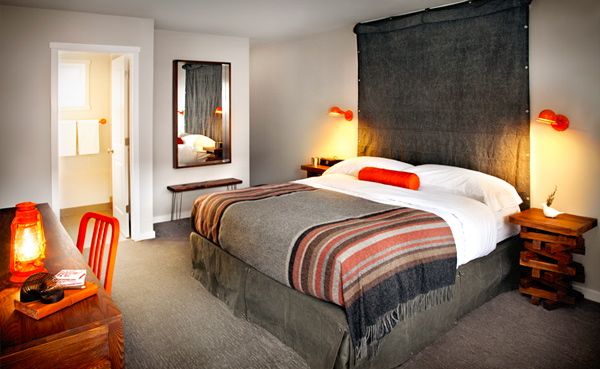
Basecamp Hotel wants to be just what its name says – a base camp. Only instead of tents to sleep in, completely refurbished rooms are provided. Instead of scaling massive peaks, it will be a day or week of playing outside at Lake Tahoe.

“We are trying to create a communal type of atmosphere like a ski house, but with the amenities of a hotel,” explained Robbie Graves, who will manage the hotel.

Basecamp replaces the old Block hotel on Cedar Avenue in South Lake Tahoe behind the would-be convention center. If all the permitting issues can be cleared up, the hotel expects to open to the public June 20.

Basecamp Hotel in South Lake Tahoe expects to open in six weeks. Photo/Provided

It took more than $1.5 million to gut the place. The foundation and framing are about all that are left from the original building.

“Every door had been kicked in, every toilet had been used without water, gangs were living here, graffiti was everywhere,” owner Christian Strobel told Lake Tahoe News. “We had to physically evict people who were smoking some sort of drugs.”

Dry wall, siding, windows, doors – all new.

Recycled wood has been installed as well as environmentally friendly fixtures.

In addition to a continental breakfast that will be served to overnight guests, a communal dinner will be offered three nights a week.

Deals are being worked out with tour operators in the area. Discounted lift tickets, bike rentals and snowboard rentals are likely to be part of lodging packages.

One room is called the Explorer Room. While it has a hostel-like quality in that it has a series of bunk beds to be shared by people who probably don’t know each other, single room nights won’t be available. It will have more of a shared ski house feel in that people must pay for 10 room nights up front. Various payment plans are still being developed. The philosophy is along the lines of season passes at a ski resort with possible discounts during midweek and blackout periods. It’s a co-ed room.

People will be able to use Instagram technology in the lobby area to print photos taken that day. A large TV will allow a GoPro video shot earlier in the day to be shared with other guests.

“We want to build a strong community,” Graves said.

A small bar for hotel guests and locals is being worked on. Strobel spent Thursday in Sacramento talking to Alcohol and Beverage Control officials about permits.

Strobel has a background in the hospitality industry, having worked for the Joie de Vivre hotel chain. Basecamp, though, is the first hotel he has owned.

“What we want to do is have a hotel for people who love the outdoors; for people who don’t want to stay in the casinos and inhale secondhand smoke,” Strobel said.

Fire pits in the patio area and hot tubs on the roof are designed to keep the outdoor fun going on the property long after guests are done exerting themselves playing at Lake Tahoe.


Plein air event in Markleeville

Markleeville Plein Air is June 19-23.

A group of artists will be painting Alpine County. Areas to artists at work will include Hope Valley, Grover Hot Springs area and the base of mountains, at lakes and river vistas.

That Saturday morning all the artists will be in Markleeville painting the town.

At noon June 23 all the artwork will be at the Markleeville Art Gallery ready for viewing and purchase. The show will be up until July 31.


Bartering has become a way of life for some people

By Eric Spitznagel, Bloomberg

When Toronto financial planner Shannon Simmons offered her expertise to a professional clown, it wasn’t exactly business as usual.

Simmons advised her new client to switch from a “couch fund” to a high-interest-bearing account with limited market risk. In exchange for her advice, Simmons received trapeze lessons.

Surprisingly, it isn’t the weirdest way that Simmons has been paid in the last year. Since leaving a full-time job at investment management firm Phillips, Hager & North in 2010 and embarking on a yearlong experiment as a barter-only financial consultant, she’s been compensated with a tutorial in butter churning, a large bag of toiletries and a chance to perform with the University of Toronto cheerleaders.

“I had a guy come up to me once and say, ‘I’m a fire-breather and I’d like to barter with you,’ ” Simmons says. “I was like, ‘I don’t think I can say no to that.'”

She ended her experiment in November, and not a moment too soon. She’s broke, she says, and not sure if she could survive much longer with a barter-only business model.

“It’s a great idea in theory,” she says. “But there are things you don’t think about. … You can’t barter with your landlord. Trust me, I tried.”

Bartering may sound like a style of commerce more fitting to a backwater marketplace than a modern capitalist environment. According to the International Reciprocal Trade Association – an organization created to promote “just and equitable standards” in modern bartering – the U.S. barter market is a staggering $12 billion annually. In other words, $12 billion worth of goods and services are traded every year without any currency changing hands.

Scott Whitmer, founder of trade exchange company Florida Barter, says that while 2011 saw positive signs of an economic recovery, many small and medium-size companies are still struggling.

“Bartering has continued to help many companies grow and conserve cash,” he says.

Read the whole story


Face time with doctor often a matter of minutes

By Shannon Browniee, Newsweek

Four years ago a 38-year-old adjunct professor at American University named Fred Holliday began suffering from a variety of ailments: he was losing weight, his blood pressure went up. Then he cracked a rib. And he started suffering from debilitating back pain. Each time a new problem arose, the Washington, D.C., resident visited his doctor, who dealt with his symptoms piecemeal. First she prescribed blood-pressure medication. At another visit, she chalked up his fractured rib to violent coughing from a cold he had. Then she prescribed narcotics for his back. When his pain grew worse, she simply increased the dose of painkillers.

After months of this, Fred’s wife, Regina, looked up his symptoms on the Web. Together, they pointed to kidney cancer. When the worried couple went back to the doctor, Regina recalls, she walked into the exam room, reading Fred’s chart, and without looking up, asked, “Mr. Holliday, do you think you’re depressed?” It was a routine question, based on the number of his complaints. Regina started laughing in disbelief. “Of course he was depressed,” she says. “She wasn’t taking care of him.” At Regina’s insistence, the doctor ordered an MRI, which showed that Fred had kidney cancer. He died about three months later.

These days, stories like the Hollidays’ are cropping up all over, and while most don’t have such tragic endings, they are signs that something in the world of medicine is seriously amiss. Unhappy patients gripe about their doctors’ brusque manner and give them bad marks on surveys and consumer websites like HealthGrades and Angie’s List. They tell tales of being rushed out of the office by harried doctors who miss crucial diagnoses, never look up from their computers during an exam, make errors in prescriptions, and just plain don’t listen to their patients. Studies show a steep decline over the last three decades in patients’ sense of satisfaction and the feeling their doctors are providing high-quality care. And things don’t seem much better from the other side of the stethoscope. In a recent survey by Consumer Reports, 70 percent of doctors reported that since they began practicing medicine, the bond with their patients has eroded.

At the heart of the problem, say many doctors and policy experts, is the fraying of the doctor-patient relationship. And this is not just a question of touchy-feely good vibes: a growing body of research now points to the critical importance of having a connection to a trusted physician. “There is something in the human body that says we are hardwired to get better when we have a certain relationship,” explains Howard Brody, a primary-care physician and director of the Institute for the Medical Humanities at the University of Texas Medical Branch, in Galveston. The good news is that doctoring may have hit rock bottom—and policymakers and physicians who have begun efforts to rebuild it realize that the only way out is up.

Read the whole story


More Asians live in California than any other state

In 1978, a joint congressional resolution established Asian/Pacific American Heritage Week. The first 10 days of May were chosen to coincide with two important milestones in Asian/Pacific American history: the arrival in the United States of the first Japanese immigrants (May 7, 1843) and contributions of Chinese workers to the building of the transcontinental railroad, completed May 10, 1869.

In 1992, Congress expanded the observance to a monthlong celebration.

Per a 1997 Office of Management and Budget directive, the Asian or Pacific Islander racial category was separated into two categories: one being Asian and the other Native Hawaiian and Other Pacific Islander.

The estimated number of U.S. residents of Asian descent, according to the 2010 Census, is 17.3 million. This group comprised 5.6 percent of the total population. This count includes those who said they were both Asian alone (14.7 million) and Asian in combination with one or more additional races (2.6 million).

California, with 5.6 million, is the state with the largest Asian population in the 2010 Census, followed by New York (1.6 million). Hawaii had the highest proportion of Asians (57 percent).

Chinese-Americans (3.8 million) were the largest Asian group, followed by Filipinos (3.4 million), Asian Indians (3.2 million), Vietnamese (1.7 million), Koreans (1.7 million) and Japanese (1.3 million). These estimates represent the number of people who reported a specific Asian group alone, and people who reported that Asian group in combination with one or more other Asian groups or races.


Truckee residents say yes to organ donation

By Bill Lindelof, Sacramento Bee

Truckee leads the way in drivers agreeing to donate organs for transplant.

A ceremony last week at the Truckee Department of Motor Vehicles field office marked the town ranking first in the state when it comes to the percentage of drivers checking “yes” to organ and tissue donation.

Only about 26 percent of licenses statewide check yes. The Truckee field office has 53 percent answering in the affirmative.

“Truckee is proud to be leading California for the rate of people saying yes to donation,” said Mayor Joan DeRyk Jones. “It’s about giving life.”

Read the whole story


Ren fair celebrates 20 years at Camp Rich

When Renaissance Productions transforms Camp Richardson into a giant stage in early June, it will mark the 20th year of the South Shore ren fair.

Queens of England, ambassadors from foreign lands and juggling jesters, winsome wenches, lords and ladies, knight of horseback, squires and simpletons will gather June 2-3 and June 9-10 for the 20th annual Valhalla Renaissance Faire.

This unique festival includes a real jousting tournament and full armored combat between knights, along with culinary delicacies, craft demonstrations, ancient music, magic, storytelling, dance and comedy. Patrons can participate in a range of activities such as archery and fencing.

Activities for children include educational areas, games, crafts, a petting zoo, puppet shows and storytelling.

The annual Valhalla Renaissance Faire recreates a renaissance village over two festival weekends and includes a merchant marketplace with nearly 100 unique merchants, and artisans.

The fair is open from 10am-6pm each day.

Cost is adults $17, $12 for seniors, military, ages 13-17, $7 for children 6-12, and under 6 no charge.

For more information, go online.