Authors to argue their point-of-view about Twain’s fire at Lake Tahoe

The question of where Mark Twain camped on Lake Tahoe has inspired the Gatekeeper’s Museum in Tahoe City to host the Mark Twain Tahoe Mystery Public Festivity featuring two authors with competing theories.

The event, which kicks off a summer-long public opinion poll about the two possible sites, will be June 21 at 6:30pm at the Gatekeeper’s Museum.

When Twain and a partner came to Lake Tahoe to stake a timber claim and get rich, he fell in love with the lake. Twain built a campfire that accidentally spread, starting a low-burning forest fire. The exact location of Twain’s camp has never been officially determined.

Two authors recently offered competing theories of Twain’s Lake Tahoe campsite location. Robert Stewart, in his book “Finding Sam Clemens’ Cove at Lake Tahoe, Nevada”, pegs a site near Sand Harbor State Park in Nevada. David Antonucci, in his book “Fairest Picture”, pinpoints a site near Speedboat Beach on the North Shore on the California side.

The event is free for North Lake Tahoe Historical Society members. A $10 donation is suggested for non-members.

The Gatekeeper’s Museum is located in the log cabin next to Fanny Bridge in Tahoe City.


Family Resource Center of Truckee to benefit from wine walk

The ninth annual Downtown Truckee Wine, Walk & Shop steering committee has chosen Family Resource Center of Truckee as this year’s nonprofit beneficiary.

A portion of the revenue from this event will go directly back into the Truckee community through this nonprofit. The Family Resource Center of Truckee is committed to empower families and individuals to be self-sufficient, valued and contributing members of the community. The Family Resource Center is designed to respond to the changing community needs.

The Downtown Truckee Wine, Walk & Shop has gained momentum in each successive year, donating proceeds to local nonprofit organizations such as InnerRhythms Dance Theatre, Lake Tahoe Music Festival, Humane Society of Truckee/Tahoe, Truckee High School band program, Glenshire Elementary, Girls on the Run Sierra, Sierra Senior Services and Truckee Elementary Special Friends programs and Tahoe Women’s Services.

The Downtown Truckee Wine, Walk & Shop set for Oct. 6 from noon–4pm.

Tickets for the event are $35 in advance ($40 day of) and are available online. A $3 service fee applies for online sales. The ticket includes wine tastings with more than 30 wineries, five food tickets, commemorative glass, program/passport and goodie bag.

For more information, call (530) 550.2252.


Healthy bones topic of lecture in Carson City

William Cottrell will discuss focusing on the makeup of healthy bones versus bones with osteoporosis, causes of osteoporosis and the diagnoses of osteoporosis at a free lecture June 27.

“Fractures after 50 years of age are a warning that your skeleton may be weak,” Cottrell said in a statement. “Weaker bones that are prone to break is the general definition of osteoporosis. Osteoporosis is a silent medical condition, meaning that you have no warning until a bone breaks.”

Medical organizations, including the American Academy of Orthopaedic Surgeons, say 50 percent of second fractures can be prevented with appropriate evaluation and treatment.

The doctor will address the nutritional requirements and treatment options for fracture prevention.

The talk is at the Carson City Community Center, 851 E. William St., Carson City from 6-7pm.


Melinda Gates using her money and influence to help women

By Michelle Goldberg, Newsweek

In the 12 years since Melinda Gates and her husband, Bill, created the Gates Foundation, the world’s largest philanthropic organization, she has done a lot of traveling. A reserved woman who has long been wary of the public glare attached to the Gates name, she comes alive, her associates say, when she’s visiting the foundation’s projects in remote corners of the world. “You get her out in the field with a group of women, sitting on a mat or under a tree or in a hut, she is totally in her element, totally comfortable,” says Gary Darmstadt, director of family health at the foundation’s global health program.

Visiting vaccine programs in sub-Saharan Africa, Gates would often ask women at remote clinics what else they needed. Very often, she says, they would speak urgently about birth control. “Women sitting on a bench, 20 of them, immediately they’ll start speaking out and saying, ‘I wish I had that injection I used to get,’” says Gates. “‘I came to this clinic three months ago, and I got my injection. I came last week, and I couldn’t get it, and I’m here again.’”

They were talking about Depo-Provera, which is popular in many poor countries because women need to take it only four times a year, and because they can hide it, if necessary, from unsupportive husbands. As Gates discovered, injectable contraceptives, like many other forms of birth control, are frequently out of stock in clinics in the developing world, a result of both funding shortages and supply-chain problems.

Women would tell her that they’d left their farms and walked for hours, sometimes with children in tow, often without the knowledge of their husbands, in their fruitless search for the shot. “I was just stunned by how vociferous women were about what they wanted,” she says.

Because of those women, Gates made a decision that’s likely to change lives all over the world. As she revealed in an exclusive interview with Newsweek, she has decided to make family planning her signature issue and primary public health a priority. “My goal is to get this back on the global agenda,” she says. She is sitting in an office in the Gates Foundation’s 900,000-square-foot headquarters in downtown Seattle, a pair of airy boomerang-shaped buildings flooded with natural light. It was here at headquarters late last year that she announced her new emphasis on contraception at an all-staff meeting, to thrilled applause.

Now the foundation, which is worth almost $34 billion, is putting her agenda into practice. In July it’s teaming up with the British government to cosponsor a summit of world leaders in London, to start raising the $4 billion the foundation says it will cost to get 120 million more women access to contraceptives by 2020. And in a move that could be hugely significant for American women, it is pouring money into the long-neglected field of contraceptive research, seeking entirely new methods of birth control. Ultimately Gates hopes to galvanize a global movement. “When I started to realize that that needed to get done in family planning, I finally said, OK, I’m the person that’s going to do that,” she says.

Despite Gates’s passion, stepping forward wasn’t an easy decision. For one thing, the former Microsoft manager has always shunned the spotlight. The first time she agreed to a magazine profile was in 2008, 14 years after her marriage, when she spoke to Fortune about the foundation’s work. “I was reluctant to speak out on behalf of any foundation issues early on, because I had little kids, and I wanted some privacy in my family life,” she says.

Read the whole story


Barton docs using state-of-the-art device during surgery

By Rebecca Wass

Same outcome, but without being so invasive. That is one of the overriding benefits of the da Vinci Si Surgical System.

Scott Welker this month performed his first single-incision cholecystectomy (surgical removal of the gallbladder) with the da Vinci at Barton Memorial Hospital.

“With all of the added benefits of less pain, less blood loss, shorter hospital stays and a reduced risk of infections, the single-incision allows us to do cholecystectomies via one incision in the umbilicus [navel], which is nearly invisible after it heals,” Welker said.
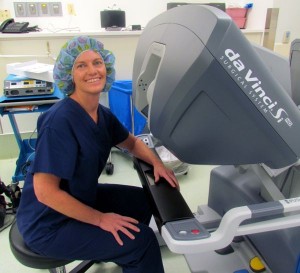
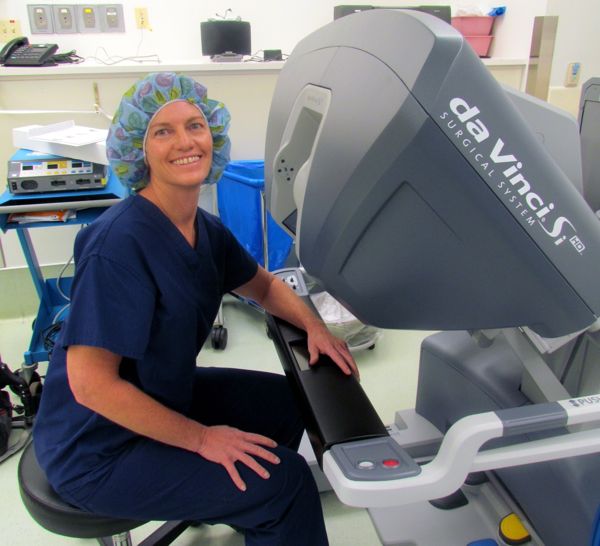
Kelly Shanahan is the next doctor who will be using the da Vinci on patients. Photo/Rebecca Wass

The hospital joined 114 medical facilities in California and more than 1,500 healthcare facilities in the United States by purchasing the da Vinci Si Surgical System to meet the surgical needs of its region. Barton Memorial is the third hospital in California to offer single-incision da Vinci gallbladder surgery. The others are UC Davis Medical Center and UC San Diego Medical Center.

The da Vinci Si Surgical System has become widely known as an effective alternative to traditional open surgery and conventional minimally invasive laparoscopy. Approximately

360,000 da Vinci procedures were performed in 2011 around the world.

“The da Vinci is the most advanced form of minimally invasive surgery available,” said Gary Willen, Tahoe Women’s Care gynecologist.

Willen has practiced at Barton Memorial Hospital for nearly 30 years and is a pioneer of minimally invasive surgery, including laparoscopic hysterectomies. With the da Vinci system, Willen is able to perform complex hysterectomies and other urologic and gynecologic procedures.

“At Barton, we’ve been doing laparoscopic surgeries for a long time,” Willen said. “The da Vinci allows us to perform surgery on some of the most difficult cases. This is not only an innovative option for gynecological and general surgical procedures, but an opportunity for Barton to offer the best technologically advanced care for patients, which is not typical for a small community.”

During a da Vinci surgical procedure, the surgeon sits at a control console near the patient, and an assisting physician is at the patient’s bedside. The surgeon sees the operative field through a video monitor and is able to manually control several robotic arms that replicate every movement of the surgeon’s hands.

In addition to single-incision gallbladder surgery, Welker also specializes in da Vinci surgical procedures made through multiple small incisions, such as hernia repair, anti-reflux, colon and stomach surgery, and other advanced procedures.

Recently added to the da Vinci surgical team was gynecologist Kelly Shanahan from Emerald Bay Center for Women’s Health. Shanahan will be performing hysterectomies and other complex gynecologic procedures. Drs. Michael Enrico, Gregory Eyre, Kris Kobalter and Caroline Habaradas are the next physicians to be trained on this latest piece of innovative technology.

“These technological advancements provide Barton with unparalleled precision, dexterity and control that enables a minimally invasive approach for complex surgical procedures,”

Willen said. “Da Vinci’s been around for a while, and this is the third generation robot, so the advantage is, we have the latest and greatest.”

The precision of the technology makes it ideal for certain delicate or complex surgeries because it makes it easier for surgeons to avoid surrounding nerves and organs.

“All of the current procedures have been improved through the ability to use the wristed instruments and 3-D vision,” Welker said. “Our operations are much more precise than before. We’ve also noticed less postoperative pain with the da Vinci versus traditional laparoscopic surgery.”

Praise from a patient

When Welker began operating with the da Vinci Si Surgical System in March, his eighth patient, Doug Witt, received three small incisions during his gallbladder surgery and said it was not as painful as he thought it would be.

“I just felt like I had done 80 sit-ups, just like in high school,” Witt said. “I felt like I could have been up and running that night. I wanted to make sure there was someone there to care for me, and the entire medical team was just great.”

——-

Note: Meet the da Vinci Si Surgical System and team at Barton Memorial Hospital’s open house May 31 from 4:30 to 6:30pm in the Snowflake Lobby.

Rebecca Wass is communications specialist for Barton Healthcare.


Sugar is a natural enemy that is hidden in many foods

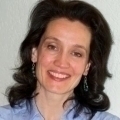
By Mandy Kendall

Sugarcaine. I have not spelled it wrong. Scientists are now starting to call sugar “legal cocaine” as studies are revealing that sugar can potentially be as dangerous as the class A drug.

According to the Centers for Disease Control and Prevention, 1 in 3 children born in 2000 will become diabetic.

Mandy Kendall

The New York Times recently reported that childhood obesity and the incidence of type 2 diabetes in children are rising at an alarming rate, adding an additional concern that “the disease progresses more rapidly in children than in adults and is harder to treat.”

There are many factors that influence whether someone will contract diabetes, but it is accepted that sugar is one of the biggest culprits.

We need sugar to survive, but not in the form and the amounts we are exposed to everyday. Our bodies are designed to digest natural food and turn that into glucose that circulates in the blood and is then used as our energy source. A very fine balance is required as too much, or too little, glucose in the blood can have dire consequences.

Insulin is the hormone that is used to soak up excess sugar in the blood to prevent high levels harming us. However, the barrage of sugar that our bodies get from modern diets can be too much for insulin to handle and things go wrong.

Think of Lucille Ball, in that famous scene in the chocolate factory. Lucille (insulin) is standing and watching the chocolates (sugar) go by her on the conveyor belt (blood stream) and she is not allowed to let too many go through at once. All is well while there aren’t too many chocolates on the belt (normal blood sugar levels), then all of a sudden there are more and more chocolates and she has to do something. So she starts picking them up, stuffing them under her hat, shoving them in her mouth, but all too soon she can’t take anymore and great piles of chocolates go past her and there is nothing she can do about it. That, in essence, is exactly what happens in our bodies.

CNN reported that children get more than 20 percent of their daily calories from sugar, equating to about 2 pounds of refined sugar a week. Would we let our dogs drink soda and eat sugar-laden foods every day? So why do we let the kids?

Sugar is highly addictive and hidden in so many foods so here are some Qwik-e tips to help avoid the sugar traps.

If you are really craving sugar — Eat a piece of fruit. The fiber in the fruit stops the blood sugar levels from spiking too high and the sugar is in a natural form that is far better for your body.

Keep blood sugar levels balanced — This can be done by making sure you eat small amounts of food regularly so that you never get those energy slumps, caused by low blood sugar, that have you craving a quick fix. Kids are especially prone to this as they use up so much energy so quickly, so have them keep healthy snacks to hand (especially in school where the snack options might not be so healthy). Trail mix provides a good balance of protein and carbohydrates to keep blood sugar levels steady. Just make sure you get the unsweetened stuff without candy in it.

Watch out for sneaky sugar — Condiments and dressings are often loaded with sugar (there is a about a teaspoon of sugar in every tablespoon of ketchup). And let’s face it, it is very easy to have more than just one tablespoon of ketchup. Sports drinks and most processed foods have sugar. Just look out for any ingredients with -ose at the end. Cereals can often be the biggest culprits and tend to set the kids up for a blood sugar spike early in the morning that plummets around mid morning, causing them to crave something sweet to bring their blood sugar levels back up again. Oatmeal sweetened with fresh or canned fruit is a very good alternative.

Slowly reduce sugar — It’s an addiction after all and no one likes going cold turkey. Gradually swap out sodas for fruit juices diluted with fizzy water. However, be aware that fruit juice is also quite high in sugar so don’t rely on this for too long. Mix a higher sugar content cereal with a low (or no sugar) cereal and slowly reduce the high sugar cereal while taste buds adapt.

Fat free — Often just means more sugar. They have to replace the fat with something. Check labels of low fat or fat free products and compare it to the full fat version. You might save a small amount of fat but gain much more sugar.

Diet sodas and artificial sweeteners — These will often have the same effect on your body that ordinary sugar does, as well as introducing chemicals into your system.

Protein and fiber — Adding protein and fiber to foods that convert to sugar quickly, like fruits and carbohydrates, will help slow down how quickly the sugar enters the bloodstream. Try, for example, Greek yogurt with fresh fruit or peanut butter (unsweetened) on whole wheat toast.

Visit sites like this for more information.

If you really want to know what sugar can do to you, check out this site with 146 reasons for reducing your sugar intake.

The Mayo Clinic also has a great list of tips for reducing sugar and also how to recognize the different names for sugar on food packaging too.

Until next time.

Mandy Kendall operates Health Connective in South Lake Tahoe. If you have any questions, would like some advice, or would like to request some Qwik-e tips on any health and wellbeing topic, please feel free to drop me an email at healthconnective@gmail.com, visit us on Facebook, or keep an eye out on Lake Tahoe News for regular Qwik-e tips on how to make healthy changes one Quick and Easy step at a time.


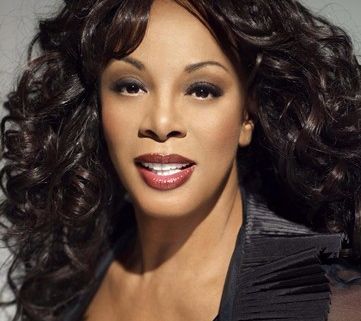
Donna Summer — 1948-2012

Donna Summer, the disco queen of the 1970s and 1980, died May 17 from complications with cancer. She was 63.

Ms. Summer recorded five live videos at the Sahara hotel-casino in Stateline in the last 1970s. (It is now the Horizon.)

She also performed in the South Shore Room at Harrah’s Lake Tahoe and the old Caesars Tahoe (now MontBleu). In 2006, Howie Nave, the emcee at Harveys Improv in Stateline, opened for Ms. Summer at Cache Creek casino. In 2008, she was at the Peppermill in Reno.

Donna Summer

When she played Harrah’s at the lake it would be for two-week stints, a dinner and cocktail show – so 14 shows per week. This was between 1984 and 1987.

“She packed the place,” John Packer of Harrah’s Lake Tahoe told Lake Tahoe News. “She would fill both shows. She was very high energy — a great performer.”

Ms. Summer also owned a home on Kingsbury Grade during the 1980s.

Some of her most popular songs were “Last Dance,” “She Works Hard for the Money” and “Bad Girls.”

Ms. Summer won five Grammy Awards and six American Music Awards, and charted three multi-platinum albums.

She was born LaDonna Adrian Gaines on Dec. 31, 1948.

Ms. Summer is survived by her husband, three daughters, and four grandchildren.

— Kathryn Reed


History: Osgood’s Toll House has a rich legacy

Publisher’s note: This is reprinted from the May 1989 Lake Tahoe Historical Society newsletter.

The oldest building still standing in the Tahoe basin is now boarded up and waiting for disposition. It is a sturdy, hand-hewn blockhouse which served as a toll station and landmark on the road into Lake Valley. It was built in the summer of 1859 by Nehemiah Osgood and established at the foot of the Meyers Grade where Echo Lake Creek flows into the Upper Truckee River. Osgood’s shortcut was one thousand feet long from the summit to the toll house and reduced the distance form the summit to the floor of Lake Valley. It stood on the left side of the road as one travelled toward the lake. Osgood established his family’s home just across the road from the toll station.

Toll houses dotted the valley in the 1860 and 1870s, especially at the south end of the lake. The operators charged for passage and took the responsibility of keeping their section of the road in good condition as the state had failed to provide adequate funds for building or maintaining the roads. During the Comstock Lode’s highest activity, traffic was heavy as these roads carried all of the supplies and material from California that were needed for mines and miners around Virginia City, Nevada.

Osgood expanded his holdings around the station in 1871 and employed at least three toll keepers to handle the traffic. The 1867 capture of outlaws by a posse from Placerville was only another part of the passing parade for Osgood’s. No longer in use after the 1880s, it stood empty for three decades. In 1911, the spring thaw broke the dam on Echo Lake Creek and sent tons of water down upon the station washing it form its foundation. It was rescued by the Celio family and placed on a foundation in Meyers near the old golf course.

Local citizens and the Historical Society helped to move the building in 1974 to the site of a proposed museum adjacent to the new county library. Funds for the new museums were never raised and Osgood’s stands today at the corner of Highway 50 and Rufus Allen, a vision and a relic of the past. It is in good condition for its age and the Historical Society is investigating the feasibility of moving that venerable building closer to the museum. Discussions and investigations are under way on its ultimate fate.


S. Tahoe library sets summer reading dates

The South Lake Tahoe branch library is beginning the Summer Reading Club with a kick-off party on June 22 at 2pm that will featuring game, crafts and book give-aways.

Summer events at he library include”

Gboze — June 29 at 2pm, traditional West African dancing and drumming.

Bohart Museum of Entymology — July 6 at 2pm, Bugs! Bugs! Bugs!

Puppet Art — July 13 at 2pm, dragon tales.

Brian Scott — July 20 at 2pm, magic, comedy and pure fun.

Python Ron — July 27 at 2pm, snakes and reptiles from around the world.

Call the library at (530) 573.3185 for more information


Tahoe Tails — Adoptable Pets in South Lake Tahoe

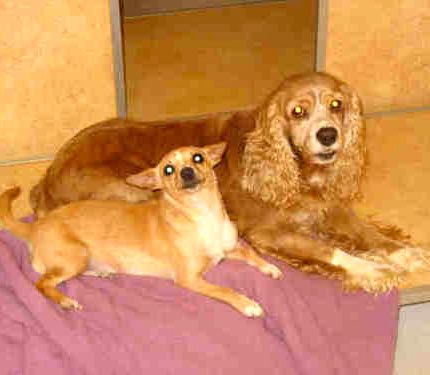
Josie and Sophie came into the shelter together and would like to go home together if possible. Josie is a 3-year-old Chihuahua, and Sophie is an 8-yea- old cocker spaniel. They are best friends, and are very affectionate with people, too.

Josie and Sophie are spayed, microchipped and vaccinated. They are at the El Dorado County Animal Services shelter in Meyers, along with many other dogs and cats who are waiting for their new homes. Go online to see photos and description of all pets at the shelter.

Call (530) 573.7925 for directions, hours, and other information on adopting a pet. For spay-neuter assistance for South Tahoe residents, go online.

— Karen Kuentz