TOCCATA summer season includes dinner concert

Tahoe Symphony Orchestra and Chorus will begin its 21-concert summer series with A Taste of TOCCATA SummerFest Kickoff on June 21.

This dinner concert will take place at the West Shore Café in Homewood with wine and cheese at 5pm, the concert beginning at 5:15pm, and a four-course gourmet dinner with Champagne and wine will be served following the concert. Seating at the dinner concert is limited to 60. Tickets are $130 per person.

Tickets may be purchased by calling (787) 602.2121.

The program features flutist Josue Casillas. Works by Vivaldi, Bach, and Handel will be performed.

The regular concerts in the series are June 20 at 7pm at St. Theresa in South Lake, June 23 at 7pm at St. Patrick’s in Incline Village, and June 24 at 4pm at Trinity Episcopal Church in Reno. Tickets are $25 adults, $20 seniors, and $5 students, with 18 and under free. Preferred seating is $35.

For more information, call (775) 313.9697, or email jamesrawietoccata@gmail.com.


World Series of Poker bracelet most expensive sports prize ever

By Ron Sylvester, Las Vegas Sun

The cards may decide winner, but they can’t beat the bling.

The World Series of Poker unveiled its championship bracelet for the main event winner Friday night with what the jeweler called the most expensive championship adornment to be offered in any professional sport.

“Every jeweler gets to design earrings and necklaces and bracelets, but this is the chance to do a piece that really means something,” said Jason Arasheben, president of Jason of Beverly Hills. “I wanted to pay tribute to Las Vegas, because I have a store here. They don’t have a professional basketball or football team, but what says Vegas more than the World Series of Poker?”

The bracelet was presented at the Jason of Beverly Hills store in the Cosmopolitan in a coming out party trimmed with cocktail dresses and flashing cameras.

With 35 carats of diamonds and 170 grams of 14 karat gold, it sparkles brighter than the 2009 and 2010 NBA rings Arasheben designed for the Los Angeles Lakers. He said it contains more diamonds and gold than any World Series ring for Major League Baseball, or Super Bowl ring for the NFL.

“The epitome of Vegas says ‘over the top,’ and that’s what I did here,” he said.

Read the whole story


Art is best appreciated in person

By Robert Schimmel

We boys escaped from the mountaintop to the flatland recently and it was a huge reminder of how much more one can gain from periodically, if not regularly, taking in an artist’s original work and actually looking behind the veil of the usual presentations in a book or on a website.

Case in point, my dear friend David and I made the trek to the Crocker Museum in Sacramento to view, in particular, the Edgar Payne exhibit. So, why spend the time, gas, etc., to go “face to image” when there are so many alternative and easier ways? Glad you asked.
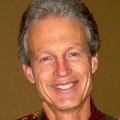
Robert Schimmel

Without going too deeply into the after effects of such a simple journey and effort, I find two predominant reasons surfacing. First, the very act of looking and searching the real — not virtual — painting, sculpture, etc., puts me in the artist’s frame of reference or shoes, so to speak, to the degree that I can feel the size and form of the piece as it relates to the actual subject matter, actually see and sense the individual imprints or brushstrokes that may pound or caress the canvas or clay, and absorb the elements of design (color, texture, line, space, etc.) as well as the principals that govern their use (like scale, unity, rhythm, contrast, balance, and so forth.)

Second, and perhaps most important, are the relationship and exchange of ideas that occur during such a journey to and confrontation with the chosen artwork. This is the all too infrequent alone and focused time spent with another artist (David, in my case) or non-artist that isn’t under the guise of art reception etiquette or gatherings that are either limited by time or harried by constant social interruptions.

Good quality museum exhibits, such as this one, generally offer quite a variety of ways to experience the artist and his/her art that transcend the simple one dimensional viewing experience of a book, poster, or web site. Instead of flipping or clicking pages, one is walking to and fro around and up close to literal history and real handmade objects and surfaces. Texture, line and color speak loudest while the artist’s intent and emotional purpose slowly coalesce for the viewer into an ever-clarifying voice that may or may not be a chorus of personal meaning. You can even get a recorded tour in such exhibits to follow and learn some of the more obscure facts re the artist and certain pieces that bring an earthy and intimate connection not possible otherwise. Similarly, seeing two men beat each other silly on TV or, God forbid, shoot one another on a newscast, is a far cry from being within sweat or blood spattering distance and having the anger or fear literally permeate your being. Same thing here, only hopefully more peaceful and edifying in an art exhibit setting or live art demonstration.

Witnessing the progression and evolution of a serious, dedicated artist’s work over many years is truly an honor, and the lessons learned or paradigms changed that come to light under such an auspicious setting are often quite profound for artist and voyeur alike. Take Edgar Payne – one of California’s most gifted early plein air painters – his work was large, bold and tight prior to visiting Europe in the early 1920s, but there he became influenced by the Impressionists and their broader, less detailed approach. This changed his work and style forever, and we witnessed as well as felt the impact on his life and the tensions in his work. The power of his images and the forces of transition would just not be apparent or tenable from any other kind of venue or presentation.

My personal belief, especially as an artist, is that such an all encompassing, firsthand view of a body of original work will take me inside myself and make me question and quantify aspects of my own life and work unlike any other experience. Add to that the ear and feedback from another artist, or respected opinion without inhibitions, and the ingredients for a fabulous eye opening and uplifting exchange are in place.

May your gallery-hopping and art appreciation take on new excitement or meaning and become more frequent.

Robert Schimmel is a professional artist and teacher in South Lake Tahoe as well as host of “Lake Tahoe Art Scene” on KTHO radio on Thursdays at 5:15pm.



Burning Man knock-offs gaining in popularity

By Ed Fletcher, Sacramento Bee

For years, the organization behind the counterculture festival Burning Man has been urging participants to live year-round by the ideals espoused during its weeklong occupation of the Nevada Black Rock Desert.

A sudden ticket shortage just might be kicking that effort into high gear.

Two weekends ago, as many as 800 people descended on a private makeshift campground in this Modoc County town for Lunar Burn – a first-year event loosely patterned after Burning Man.

“This event wasn’t about re-creating Burning Man. It’s about showing it to new people,” said Tom Michael, one of the principal organizers.

After years of steady, unrestrained growth, Burning Man sold out for the first time in 2011. The population of festival-goers is capped by the federal Bureau of Land Management, which owns the dry lake bed that is turned into a temporary solar- and gas-powered city around Labor Day.

This year, using a new lottery program for ticket sales, the event was besieged with interest. The lottery concluded with less than a quarter of regular attendees scoring one of the 58,000 tickets available and many questioning whether the influx of new people would lead to the event’s demise.

Colfax artist Jim Bowers was one of the lucky ones who got a ticket. But with the vast majority of his “tribe” ticketless, he’s decided to raffle it off.

Read the whole story


History: Tallac House was the place to stay in its heyday

Publisher’s note: This is reprinted from the June 1989 Lake Tahoe Historical Society newsletter.

Many hotels have been built on the shores of Lake Tahoe in the past one hundred and thirty years. There were good ones and bad ones, rustic and primitive ones and there were also elegant ones. One of the most celebrated of the latter was Tallac House, or the Tallac Hotel, which was situated on a prime site at the southwest corner of the lake. It was in a favorable position and could easily be reached by steamer and later by stage or by automobile from Sacramento or Reno.

The first hotel to operate at this site was a large two-story rectangular building build by Yank Clement when he moved from Meyers in 1875. It offered a store, cabins, complete livery accommodations and even a dance floor mounted on springs. It was a well-established site when Clement sold the northwestern portion of the holdings, and the main hotel building to E.J. “Lucky” Baldwin in the 1880s. Baldwin, the legendary financier of the Comstock, altered the original building and opened the Tallac Hotel. Over the years a veranda and graceful portico were added. Large picture windows in the dining room faced the lake and give guests a spectacular view with their supper. Other buildings were added including a casino on the lake edge. There were paths laid out for leisurely evening strolls through gardens and portions of virgin timber, one of the few stands left in the basin. First class accommodations were offered for 150 guests and a choice of fishing, hiking, horseback riding or trips on the lake in one of the hotel’s launches a well as places for solitude and quiet contemplation.

Furnishings were a combination of rustic, in keeping with the setting, and elegant, to retain its flavor of class. Etched glass and polished brass did not seem out of place alongside rustic, twig chairs or tables. The whole place was often described as being “tony” and formal attire was required at all evening affairs.

Baldwin insisted that his managers keep the rates high to attract only the most genteel and affluent patron. The advertising brochure House that Tallac House was called the “Saratoga of the Pacific”.

The original building burned down in 1914, but others had been added meantime and Tallac House continued in operation offering excellent accommodations until 1920, when E.J. Baldwin died. His heir, Anita Baldwin, built a private estate on the grounds in the twenties, steadfastly forgoing all commercial operations on the property. What was left of the legendary Tallac Hotel was torn down. Today it survives in memories and in images that continue to draw attention and praise for the elegant Tallac Hotel.


Boomers coping with fragility of being middle aged

By Anita Creamer, Sacramento Bee

Rachael Mahoney is in the midst of a decade of loss. In the past few years, her father and her sister, her only sibling, died. Her marriage ended in divorce. And now her elderly mother’s health is failing.

“It’s tough,” said Mahoney, 50, who works for the state and lives with her mother in Sacramento so she can care for her. “But people have gone through these things for generations. It’s how we accept these circumstances that matters.”

In huge numbers, the nation’s 70 million baby boomers, now age 48 to 66, find themselves coping with a numbing range of expected and unexpected midlife changes, including divorce, the death of parents, the diminishment of health and youth, and these days the loss of jobs and homes as well.

The kids leave home. The body is less forgiving. Caregiving for ailing spouses and parents, although a necessity, can bring an unforeseen loss of freedom.

In many respects, loss could be considered the signature challenge of middle age. The question for boomers, a generation bred on optimism, is how to embrace the changes that occur as they launch more or less willingly into the next chapter of their lives.

“During midlife, there’s a confluence of events that can create depression and a sense of despair and loss,” said psychologist Douglas LaBier, who blogs on midlife issues for the Huffington Post and directs the Center for Progressive Development in Washington, D.C.

“It helps to see everything as something to learn from on our journey of evolution through life.”

While some losses, such as the deaths of elderly parents, can be absorbed as an inevitable part of the cycle of life, the unanticipated losses can reverberate more deeply: the death of spouses, siblings and same-age friends, perhaps, or people’s own health crises and career struggles.

In 2009, almost 22 percent of Californians in their 50s described their health status as less than good, twice the rate of people in their 30s, researchers found in the California Health Interview Survey. Other state data show that 50-year-olds were three times as likely to die that year as people a decade younger.

Almost 30 percent of Americans who lost jobs that year — more than 4 million people – were in the midlife age group, and they were unemployed twice as long as people in their 20s, Bureau of Labor Statistics figures show.

Read the whole story


Ongoing assistance available for caregivers

Caregiver support groups provide an outlet to share information and feel connected to others who are also providing care.

Area meetings include:

The second Tuesday of every month from 2:30-4pm at the Georgetown Fire Station No. 61, 6283 Main St., Georgetown. The next meeting is June 12.

The second Thursday of every month from5:30-7:30pm at the South Lake Tahoe Senior Center, 3050 Highway 50, South Lake Tahoe. The next meeting date is June 14.

The third Tuesday of every month from 5:30-7pm, sponsored by Alzheimer’s Association, at the El Dorado Hills Senior Center, 990 Lassen Lane, El Dorado Hills. The next meeting is June 19.

Refreshments will be served. Free respite care is available to qualified caregivers. Pre-authorization is required for respite services.

Questions? Contact the Family Caregiver Support Program at (530) 621.6151.


Tahoe Tails — Adoptable Pets in South Lake Tahoe

Baby’s name is a little joke because she’s no little kitten – she’s an adult, and a bit on the large size.

But she is a very friendly cat who is happy being picked up as well as being left alone to explore. Baby is quite affectionate, with a sweet purr, and she would very much like to go home soon.

Baby is spayed, microchipped, and vaccinated. She is at the El Dorado County Animal Services shelter in Meyers, along with many other dogs and cats who are waiting for their new homes.

Go online to see photos and description of all pets at the shelter.

Call (530) 573.7925 for directions, hours, and other information on adopting a pet.

For spay-neuter assistance for South Tahoe residents, go online.

— Karen Kuentz


2 LTCC Writers Series events to close out school year

Lake Tahoe Community College Writers’ Series presents Lama Marut, author of “A Spiritual Renegade’s Guide to the Good Life”, on May 31 at 7pm.

She will be speaking in the Aspen Room of the South Lake Tahoe college. It is free and open to the public.

Books will be available for purchase.

The last Writers’ Series event of the school year is “Tahoe Blues” book launch on June 8 at 7pm at the Ledbetter Terrace in the LTCC Demonstration Garden.

For more information, contact Suzanne Roberts at robertss@ltcc.edu or (530) 541.4660, ext. 708.


Animal shelter needs help with cats and kittens

El Dorado County Animal Services is looking for caring local residents who can help provide temporary foster homes for new mother cats and their baby kittens over the next several weeks.

“Currently, we have three mother cats and their kittens at the shelter in Placerville who could benefit from temporary placement in a loving residential home, and we fully expect to get more mama cats and kittens in the coming weeks. We are only at the start of kitten season,” said Allison Lozoya, animal shelter supervisor, said in a press release.

According to Lozoya, it is generally much better for mother cats and their babies to be in a home environment during the first few weeks of life, rather than be kept in a confined, shelter situation.

“A home environment is less stressful for the mother and her nursing babies,” said Lozoya. “In addition, our volunteers are wonderful about caring for and socializing the animals. The kittens are more adoptable when they come back to the shelter to be put up for adoption.”

Volunteers of the Animal Services’ Foster Care Program are provided with all necessary supplies to care for the cats (including food, bedding, a litter box, litter, and other supplies), and can specify how long they would like to volunteer. El Dorado County residents interested in applying as a volunteer in the Animal Services Foster Care Program can learn by calling (530) 621.7631.