Internet infidelity a growing concern among couples

By Lauren Ruvo, Las Vegas Sun

Instant messaging via Twitter, Facebook and smart phones allow people to reach out to others at all times, and for instant support.

But there’s a dangerous downside: It can lead to Internet infidelity.

Katherine Hertlein, an assistant professor in UNLV’s marriage and family therapy department, says Internet infidelity can occur with an act as simple as chatting online with someone else to the exclusion of a person’s primary partner.

Texting someone while in another person’s physical presence may create closeness between the people texting, but it creates a distance between the two people who are together, says Hertlein.

One reason Internet infidelity may plague a couple, Hertlein says, is because couples rarely take the time to define their definition of infidelity.

“You’ll have one person who says ‘It’s a breach in the relationship, you cheated on me,’” Hertlein said, “and the other person is saying ‘No, I never touched anyone. Yes I was talking to people but that’s not a breach.’”

Read the whole story


Heavenly writes checks to help area students with college costs

For the ninth consecutive year, Heavenly Mountain Resort awarded $4,000 scholarships to five recent high school graduates, bringing the resort’s overall commitment to the Heavenly Mountain Resort Community Scholarship Program to $180,000.

The scholarships are designed to help further the education of local area students.

Sixty-nine students applied for this year’s scholarship. The 2012 scholarship recipients include from South Tahoe High: Tanner Burghard (San Diego Community College), Jacob Stowell (undecided) and Anna Tikhomirova (UCLA); from Douglas High School: Cora Moody (Marion Military Institute); and from Whittell High School: Nina Jimenez (Stanford).

To date, Heavenly has awarded 55 scholarships.


Consumers giving up plastic for glass

By Stephanie Strom, New York Times

Glass water bottles, so yesterday. Plastic, so convenient; metal, so hip.

But now, in back to the future fashion, glass is making a bit of a comeback. And it is being helped in a small way by an entrepreneur who is developing a reusable glass bottle that is hard to break and will not shatter if broken.

The shift to reusable glass water bottles from plastic and metal, which began taking off a couple of years ago, is becoming big business, retailers said.

“I’d say glass bottles account for 20 percent, 30 percent of water bottle sales on our site now,” said Vincent Cobb, founder of reuseit.com, which sells a variety of reusable products. “More and more people are looking for glass.”

The interest does not stop at water bottles.

Consumer concerns that chemicals used in packaging can leach into the products they eat and drink are driving more and more beverage makers and food producers to use glass containers, said Lynn Bragg, president of the Glass Packaging Institute, an industry association. “They’re also looking for sustainable products to be ecologically responsible.”

Coca-Cola is expanding the distribution of products — Coca-Cola, Diet Coke, Coke Zero and Sprite — that it sells in 8-ounce glass bottles, and S.C. Johnson now sells a line of reusable Ziploc containers called VersaGlass that can be used in a microwave, a freezer and, without their lids, even in an oven up to 400 degrees.

“It’s part of our overall effort to increase packaging diversity so that people have more choices of packaging and portion size,” said Susan Stribling, a Coca-Cola spokeswoman.

No one expects glass to replace plastic anytime soon. After all, billions of plastic bottles are used every year. But in a survey of more than 4,000 consumers this year by EcoFocus Worldwide, a research and consulting group, 37 percent said they were extremely or very concerned about the health and safety of plastics used in food and water packaging, compared to 33 percent in 2010.

Read the whole story


Tahoe Tails — Adoptable Pets in South Lake Tahoe

Sugar is a young Australian Shepherd (2-years-old) who is a real sweetheart. She is very friendly, and approaches all people and dogs wagging her little tail like crazy. She knows sit, down, and stay, and is very energetic. She will chase a ball and bring it back to you all day long. Sugar would do best in an active household.

Sugar is spayed, microchipped, and vaccinated. She is at the El Dorado County Animal Services shelter in Meyers, along with many other dogs and cats who are waiting for their new homes.

Go online to see photos and description of all pets at the shelter.

Call (530) 573.7925 for directions, hours, and other information on adopting a pet.

For spay-neuter assistance for South Tahoe residents, go online.

— Karen Kuentz


Tahoe Improv Players ready to entertain at Valhalla

Tahoe Improv Players is returning to Valhalla with three shows, plus a bonus show from select performers.

The first is July 3 at 7:30pm in the Grand Hall.

The next is Aug. 7 at 7:30pm in the Boathouse Theatre.

The third show is Sept. 1 at 7:30pm at the Boathouse. Laura Hall — “Whose Line Is It Anyway?” — and Rick Hall — “Curb Your Enthusiasm” — will perform with the Tahoe Improv Players.

The special show is Sept. 2 at 7:30pm for the Laura & Rick Hall Show at the Boathouse.

To buy tickets or for more information, call (530) 541.4975.


Building with ‘green’ technology pays off for Angora residents

By Steve Rypins

On June 24, 2007, along with 253 other homes, our little one at the end of Iron Mountain Circle burned in the Angora Fire. I had been working on it steadily since fall 1999 when I bought it with my wife, Michelle. Things slowed down when our son, Clyde, was born in 2002. The house was my big project, and, though I did a few small construction projects (and a little knife sharpening) for others, I was really just a stay-at-home dad.

Angora Fire -- 5 years later

I don’t want to dwell on the story of the fire itself or the immediate aftermath. Suffice it to say that we got out, should have grabbed a few more things, and hoped for the best. As I left, I said the quickest of goodbyes to the house, but I hoped it would be OK. I wasn’t really prepared to see the destruction of what we had created.

It didn’t survive, of course. Though, amazingly, our area remained relatively intact. Along with a few other homes on the street, the large spec house under construction across the street was fine. In fact, the crew there was back at work, painting drywall with a smoke-covering primer, while we were still sifting through our ashes. Luckily, however, many things survived. Our front landscape was more or less intact, as were the large Jeffery pines on three sides of us. Our back shed survived, and the firefighters had rolled my old work truck, a beat up 1973 Datsun, across the street after throwing many of my tools and our bikes into or toward it. On the side of the truck, a firefighter had penciled, “Tried to save it [meaning the house]. Saved your tools for work.”

Steve and Michelle Rypins' rebuilt home in the Angora burn. Photo/Provided

Our house, in fact, represented the southeast corner of burned structures in the fire. With the nearby trees still standing, the fact that we knew the site and loved its sunny south-facing aspect and location at the end of a cul-de-sac)and given my small (perhaps dangerously so) bit of construction knowledge and experience, we really never considered not rebuilding.

One of our earliest meetings was with Bret Alexander and Leslie Ames of Tahoe Solar Designs whom we knew through the backcountry and telemark ski community. Sitting with them near the ruins of our old sunroom, we knew that solar would be a principal element of the design of the new house. Passive was the way to go, while maybe augmenting with a solar hot water system. The large trees that remained across the street meant that solar electric was unlikely to be cost-effective, as those panels require continuous direct sunlight to justify their high initial price.

Less than a month after the fire, SiGBA — Sierra Green Building Association — had a symposium for fire victims at Lake Tahoe Community College on rebuilding green. At the Phoenix Sustainable Re-building Expo we met our architect, David Goldman of Environmental Architecture. Golman had lived in South Lake for more than a decade (in the 1980s and ’90s) but had moved away to further his education and experience in sustainable-energy efficient building. By what I can only call a stroke of fate, he had moved back to Tahoe a week before the fire.

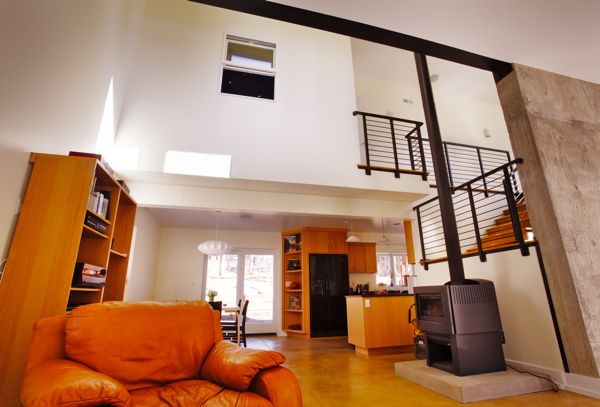
Natural light fills the house. Photo/Sunny Awazuhara-Reed

Early consultation with our insurance company suggested the base rate on the house was very low, but luckily (and through no fault of our own) we had many elements of our coverage that would double in case of a total loss. We were still underinsured, but when the company decided to give us the full cash value of our personal possessions coverage with no required inventory, it seemed that this was a sign that we should proceed and get our project going. Additionally, the county was doing what it could to help get fire victims building quickly. Expedited debris removal (somewhat controversial, I know) and allowing for plans to be submitted in phases (“foundation only” then full plans) also encouraged us to try and get a roof on before the big winter snows.

A plan was taking shape. The big thought was that running the project as an owner-builder (and being on site daily and helping in the construction where I could) would allow us to do something special at the site. And maybe, by creating a network of local builders (and architect Goldman), our project could show that building in a progressive, energy-efficient manner was a viable alternative to traditional construction.

It should be noted that I’ve hesitated thus far to use the term “green building”. It must be recognized that the fire occurred very near the peak of the real estate bubble, when contractors (and homeowners) were promoting all sorts of ways of adding value to real estate. Here in South Lake, the common practice was to buy lots (like the one across from us), ideally with a building allocation, and then build for maximum size and luxury. In other areas (notably the Bay Area), more environmentally sensitive projects were getting popular. An emphasis on energy efficiency and sustainably derived building materials and (sometimes) smaller, more efficiently designed spaces, was promoted under the rubric of “green building”. Of course, plenty of people (especially more traditional builders) noted the other connotation of “green building”, suggesting that you’d better have plenty of it (i.e., money) if that was your goal and you chose to work with “green builders”.

And, indeed, “green builders” do run the gamut. Some we worked with (whom I’ve mentioned) were fantastic. I cannot say enough about David Goldman. The collaborative process and the knowledge and experience he brought to the design were simply outstanding. My hope is that by signing on with Goldman quickly, we helped others make the same choice and that they were equally pleased with his work. Thus far, he has designed four other (completed and occupied) buildings in the burn and is the process of designing a fifth. They may not be to everyone’s taste, but I am sure that they are the most energy efficient structures in the area.

Rebuilding with green design features is paying off. Photo/Sunny Awazuhara-Reed

The hallmarks of his design are beautiful passive solar homes with an appreciation of simple and clean modern design. Most of the homes have wall systems that employ polystyrene (Styrofoam) insulation with cementitious materials (concrete or stucco and plaster) used for structure and/or finishes. One of his biggest innovations was elongating homes along their east-west axis for maximum solar performance. In several cases (not ours), the houses are actually offset from the normal street orientation to maximize this idea. With shallow north-south dimensions and lots of windows along the south-facing sides, these homes (in our very sunny climate) more or less heat up by themselves. And in summer, when overheating is a huge problem, correct sizing of roof eaves for shading is an equally simple solution.

In our house, we have additional energy saving elements, such as a centrally placed laundry and mechanical room with masonry walls to harvest the heat given off by our boiler and our domestic water tank (and the washer-dryer). Moreover, we have an architecturally impressive home with lots of glass out front (including two Trombe walls) and open ceilings and living spaces while still managing to keep the square footage down (1,900 total for the living space). The layout of the house is user-friendly, and, on sunny days at least, it heats (or cools) itself, depending on the season. We will never be able to fully repay Goldman for his great work here, but we did allow him to enter the design in the annual Tahoe Quarterly magazine’s architectural contest, winning for Green Design in 2010.

Likewise, Alexander and Ames of Tahoe Solar Designs were fantastic. I installed our radiant floor heat (as I had in the previous house) and even though there is (currently) no direct connection between that system and our solar hot water system, they provided consultation and direct assistance when I needed it. In the end, we decided on three solar hot water panels that are installed on our garage roof (specifically designed at an ideal angle determined by Alexander, Ames and Goldman) with heat exchange loops to our domestic hot water and our hot tub. The initial cost of the installation was quite modest while the savings are continuous. In particular, I don’t know if I could justify the expense of maintaining a huge pot of hot water (our hot tub) without the knowledge that it is reheated (or nearly so) on a daily basis for much of the year at zero cost.

These were not the only wonderful builders-suppliers and building professionals we worked with on the project. A couple of others, whom I consider more traditional builders (carpenters really) and with whom I particularly enjoyed working, side by side, deserve mention: Lenny Pratt and Eric Arnold.

On the other hand, however, we were extremely disappointed with several builders, building material providers and building consultants, some of who used “green building” as part of their marketing efforts. Many, I believe, had their own pre-existing financial difficulties that “forced” them to charge large amounts of money for poor quality work. In the end, I think it was more a sign of the (desperate) times and the fact that the burn represented a chance (sometimes, perhaps a final one) at a decent payday. Others, I think, were just inexperienced and believed that construction work, particularly if it were “green” or otherwise innovative, deserved (very) high pay for (very) average or even shoddy output. Luckily, by being as involved as I was with the project, we were able to keep these relationships short and the costs of working with these characters relatively low.

One of my biggest disappointments was repeated delays caused by our original engineer. (In the end, we needed three engineers to complete the project, with a special commendation to the final one, Randy Vogelgesang, for negotiating on our behalf with county building to allow us to receive our certificate of occupancy.) Despite all the good work of the county in helping expedite the project, the original engineer (recommended by the company that provided our insulated concrete forms, our primary wall materials) blew off deadline after deadline and delayed our project by seven crucial weeks that first fall. Despite relatively late snows we failed to get the roof on the building until spring. Perhaps if we had been able to roof before the winter, our project might have convinced even more people rebuilding in the burn to try a “greener” approach. (Not to mention saving us a lot of time, money, and snow removal.)

In the end, our building experience, like so many others, was (and continues to be) as big and dramatic an experience as the fire itself. The one event changed our world in a single moment (or day) while the other shaped our views on the community and, of course, the place we now call home: our house. Neither is perfect, of course, but both offer a lot to appreciate.



Poetry reading in Squaw

The Squaw Valley Community of Writers’ annual poetry reading featuring poets Robert Hass, Kazim Ali, Sharon Olds, and CD Wright at the Olympic Village Lodge, 1907 Chamonix Place (off Squaw Valley Road) is June 28 at 8pm.

This reading is an opportunity to hear these renowned poets read their work. Often they will read new work that has been composed over this past week during the Poetry Conference, giving some insight into their process of writing.

Cost is $15/$10 students (no one will be turned away for lack of funds).

Books by the poets will be available for purchase and signing.


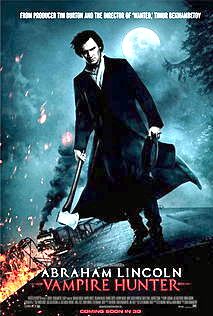
Abe Lincoln as vampire hunter makes for good entertainment

‘Abraham Lincoln: Vampire Hunter (or What Really Caused The Civil War?)’

Rated R

4 bagels out of 5

By Howie Nave

There’s something very cool about taking a historical event in time and then using that as the backdrop for a movie that leaves you thinking, “Hmmmm. Maybe that really did happen after all.”

I think that’s why I loved watching “Raiders of The Lost Ark” a gazillion times because it was set during World War II and maybe Hitler really did have a thing for antiquities. We do know he liked collecting priceless pieces of art, so who’s to say he didn’t know about the ark of the covenant and having possession of it could take over the world?

First off, let me say from the start: when you do see this movie, let your mind just pretend that what you’re seeing on the big screen is true and that maybe it could have happened. After that you’ll settle into a groove of sorts believing that our 16th president was probably our greatest president not just for freeing the slaves, but also that as a vampire slayer too.

And if you’re also a real fan of history (or Abe Lincoln), you’ll probably laugh even louder because of the historical context that this flick has been placed into. I mean, look at “Air Force One” having Harrison Ford playing a kick-ass (literally) president who was above scandal and very ethical, which is more than I can say about some of our current politicians, eh?

I watched “Abraham Lincoln: Vampire Hunter” with comedian Bob Zany, who is also a student of history, so we both laughed when we were introduced to historical figures throughout the movie who entered young Abe’s life and wondered if they had any inclination that Honest Abe was deadly battling the dead? We also cracked up at how good Abe was with an axe and apparently all those years splitting rails when he was younger would pay off handsomely later.

By the way, newcomer Benjamin Walker makes for a perfect young Lincoln, as he is both tall and lanky with a spot-on likeness resembling the real thing. The movie is directed by Timur Bekmambetov (best known for also directing “Wanted” and “Night Watch, Day Watch”) who does a nice job adapting Seth Grahame-Smith’s novel (he’s also the screenwriter) from the page to the visual without making it look corny. Speaking of visual, cinematographer Caleb Deschanel adds a lot realism to visual by giving the movie a vintage, almost black and white look to it but still maintaining some color almost as if the movie were shot in the early and mid-1800s if they had the cameras to do so. I might add that Tim Burton is also one of the producers of this movie.

Without giving away too much, there’s a reason Abraham Lincoln sought out to be a vampire hunter at a very early age but had to wait until he was a young man in order to actually kill one. You see it takes training. He does come across such a man who, as it turns out is also a vampire hunter. His name is Henry (played very seriously by Dominic Cooper) who teaches him the tricks of the trade. It’s also worth noting that unlike the vampires I grew up with (Eric Roberts from “Fright Night” and the all time classic vampire, Bela Lugosi were personal favs) these creatures of the night work (and kill) during daylight hours which means one has to really be on their guard at all times. Darn those “Twilight” movies and their young daylight-oriented vampires.

The cast is pretty good too with Mary Elizabeth Winstead playing the young Mary Todd Lincoln with special kudos going to Rufus Sewell and Erin Wasson who play the sinister vampire pair that will make you want to wear a Plaster of Paris turtleneck sweater just to keep your neck protected no matter how hot it is outside.

Is it a good movie? I think so, especially with the recent splattering of remakes, sequels, prequels and animated characters trying to be too hip for the room you know what I mean? Plus, there’s the added advantage of not having to see this in 3-D but trust me, you’ll be blown away (literally) if you do elect to see it in that format. And for you Abe Lincoln history buffs out there you’ll particularly like the scene when Mary Todd yells to her husband from outside, “Hurry up Abe! We’re going to be late for the theater!”

“Abraham Lincoln: Vampire Hunter” is rated R for violence throughout and brief sexuality with a running time of 105 minutes.

Howie Nave is host/emcee/manager of The Improv at Harveys. You can hear him Monday-Friday 6 to 10am on KRLT FM-93.9.


Number of hours of sleep tied to stroke risk

By Steven Reinberg, HealthDay

Middle-aged and older people who regularly sleep less than six hours a night may be significantly raising their risk of stroke, a new study suggests.

As much as a fourfold increased risk was seen among normal-weight people who didn’t suffer from sleep apnea but got fewer than six hours of sleep each night, the researchers found. Both obesity and sleep apnea are known risk factors for stroke.

“Sleep is important,” said lead researcher Megan Ruiter, a postdoctoral fellow at the University of Alabama at Birmingham’s School of Medicine. “There is evidence that insufficient sleep … increases all sorts of abnormal responses in the body.”

Lack of sleep increases inflammation and causes increases in blood pressure and the release of certain hormones, all creating a greater stress response that can increase the risk for stroke, Ruiter said.

The results of the study were scheduled to be presented Monday at the annual meeting of the Associated Professional Sleep Societies in Boston. The data and conclusions should be viewed as preliminary until published in a peer-reviewed journal.

For the study, Ruiter’s group collected data on more than 5,600 people who took part in a larger study on geographical and racial differences in stroke.

Over three years of follow-up, the researchers found that sleeping fewer than six hours a night was associated with an increased risk of stroke in normal-weight people beyond that related to other risk factors.

They didn’t find any association between stroke and short sleep among overweight and obese people.

Although the study found an association between shorter sleep and stroke, it did not prove a cause-and-effect relationship.

Michael Frankel, director of vascular neurology at Emory University and director of the Marcus Stroke & Neuroscience Center at Grady Hospital, both in Atlanta, commented that “although difficult to define why this may be occurring, one can speculate about a possible mechanism linked to changes in cortisol levels, an important stress hormone that may be in higher levels in people who have shortened sleep.”

Elevated levels of this hormone may trigger dysfunction of the cells that line and protect people’s blood vessels and set in motion the cascade of events that leads to stroke, he explained.

This finding may explain why people without traditional vascular risk factors such as obesity, hypertension and diabetes occasionally have a stroke, he added.

“We know that in about a third of patients with ischemic stroke, doctors are unable to define a cause,” Frankel said. “Reduction in sleep may be contributing in some of these patients.”

“For those of us who chronically work long hours, we may need to listen closely to these findings and adjust our lifestyle to reduce our risk of stroke,” he added.

Controlling blood pressure; eating a low-calorie, balanced diet; exercising; not smoking; not drinking heavily; having regular checkups; and closely following doctors’ advice remain critical for vascular health, Frankel said.

“But attention to proper sleep may be equally important,” he added.

Another expert, Keith Siller, medical director of the NYU Comprehensive Stroke Care Center in New York City, agreed that sleep is an important factor.

“I see this as part of a general message that along with exercise and a proper diet, a good night’s sleep should be included in a healthy lifestyle,” he said.


Energy saving tips to use on a daily basis

By Mandy Kendall

I read something the other day which shocked me (and that’s not easy I can tell you). According to EarthSave.org, it takes 2,500 gallons of water, 12 pounds of grain, 35 pounds of topsoil and the energy equivalent of one gallon of gasoline to produce one pound of feedlot beef. Figures from other organizations differ slightly but the general consensus is that it takes a lot of resources to produce meat, especially beef.

When you consider how many people could be fed on the grain that is used to produce one 8 ounce steak it really doesn’t make sense. If giving up one steak could essentially feed many people, maybe we really can each make a difference? I know it’s easy to think “What can I possibly do that will make an impact?” and not bother trying, but as my dear old Mum used to say. “Where would we be if everyone did that?” If we all decided that we were able to make a difference, just imagine what we could achieve.

Mandy Kendall

So I got to thinking about what day-to-day things we can do as individuals that would make a difference and impact the world in some way.

Here are some Qwik-e tips that really do make a difference:

1. Go meat free at least once a week. If Americans ate just one fewer meat dish per week, it would free up 7.5 million tons of grain, enough to feed the 25 million Americans who go hungry each week. If 10 percent of the world’s population gave up eating meat, it would be enough to feed the estimated billion people who go hungry annually.

2. Paper or plastic? Well, neither is good to be honest. Last year 12 million barrels of oil were used to make the 88.5 billion plastic bags used in the United States alone. Try keeping reusable shopping bags in your car but if you forget the usable bag (as we all do), choose paper, if you will recycle it, or plastic, if you will reuse or recycle it.

3. Bottle your own water. It takes 26 bottles of water to produce the plastic container for a one-liter bottle of water, and that process pollutes 25 liters of groundwater. Stainless steel water bottles are the most durable. If you do have to buy water in a plastic bottle check the number on the bottom first. Plastics with numbers 3, 6 and 7 could pose a health risk so try and find ones numbered 1 ,2, 4, or 5.

4. Unwanted catalogs. Every year, 53 million trees and 56 billion gallons of water are used to produce the 19 billion catalogs mailed out to Americans. CatalogChoice.org allows you to stop unwanted catalogs and help you do your bit for the environment.

5. Laundry. Almost 90 percent of the energy needed to wash laundry goes to heating the water. With modern day detergents most clothes will come clean in a cold water wash and rinse. Also, these days many natural detergents are just as effective at cleaning clothes at lower temperatures as their less environmentally-friendly counterparts. Try one that’s biodegradable as well and double your benefit to the earth.

6. Leaking toilets. Apparently as many as one in five toilets leak, which wastes between 30 to 500 gallons of water a day! To test your toilet, put a few drops of food coloring in the toilet tank and if the dye shows up in the water bowl after 15 minutes or so the toilet has a leak.

7. Paper towels. If every household in America replaced one roll of “virgin fiber” with 100 percent recycled paper towels we could save 544,000 trees. Better yet, try using re-usable microfiber cloths for mopping up those spills.

8. Dishwasher. If you have a dishwasher, running it (fully loaded) without pre-rinsing the dishes can use a third less water than washing the dishes by hand, saving up to 10 to 20 gallons of water a day. Also using the air dry setting (instead of heat dry) will use 50 percent less energy.

9. Standby. Computers and monitors left on overnight or appliances left plugged in will continue to draw electricity even when they are not being used. Unplugging appliances that are not used very often (TVs in guest bedrooms, etc.) can save upward of 20 percent of a household’s electricity bill.

10. Tires. If everyone kept their tires properly inflated (which apparently a third of us don’t do!) we would save the country 2.8 billion gallons of gas a year.

11. Finally, my favorite tip (because it’s got to be the easiest one): Brushing your teeth. If you are brushing your teeth for the recommended two minutes (of course we are), switching off the faucet whilst brushing can save approximately 5 gallons of water. This can be extended to hand washing too. Every little helps.

Until next time.

Mandy Kendall operates Health Connective in South Lake Tahoe. If you have any questions, would like some advice, or would like to request some Qwik-e tips on any health and wellbeing topic, please feel free to drop me an email at healthconnective@gmail.com, visit us on Facebook, or keep an eye out on Lake Tahoe News for regular Qwik-e tips on how to make healthy changes one Quick and Easy step at a time.