Reno takes its tourism message on the road

By Bill O’Driscoll, Reno Gazette-Journal

Reno’s primary tourism agency has reached into the past to move into the future.

A refurbished 1951 Willys Jeep station wagon, loaded with outdoor gear and bearing promotional slogans, is the Reno-Sparks Convention & Visitors Authority’s vehicle to get there.

The freshly painted “Washoe Willys” was introduced Wednesday by the agency as a logical way to promote the Reno-Tahoe region as a year-round tourism attraction.

“Cars are a great conversation starter,” Chris Baum, CEO of the RSCVA, said at a news conference in downtown Reno.

“And a cool car is something a lot of people are interested in. This will draw people to the story we’re trying to tell, that while we have gaming, we’re a four-seasons region.”

He said studies show that 55 percent of Northern Nevada tourists will gamble, “We have to get them here under other pretenses. We’ve got to change the conversation from gaming to outdoors.”

The vehicle bears the RSCVA’s logo on its doors and proclaims “4 seasons — 1,000 reasons” on the side and “Find your passion” on the back.

Rear windows sport stickers of businesses in the area’s Special Events Coalition. Atop the rig sits a kayak, water and snow skis, fishing pole and golf clubs.

Inside, the original dashboard and three-speed stick remain, but the bench seats were rebuilt and re-upholstered.

“Anybody looking at this is bound to see something cool,” Baum said.

While the “Washoe Willys” is an early authentic sport-utility vehicle complete with four-wheel-drive and deep-tread tires, Baum said it’s been gussied up for city streets, too.

“It’s designed to go over boulders, but we made it a little more street-able,” he said. That includes chrome bumpers and a chrome front license plate frame reading “Reno, Nevada.”

Baum said he found the vehicle on the Internet as a partially restored Willys Jeep that already had a modern Buick V-6 engine installed. With the help of several local businesses, he said the “Washoe Willys” was born at a cost of “under $30,000.”

And it won’t just sit inside its home, the Reno-Sparks Convention Center. The RSCVA staff will take the Willys to trade shows, as well as special events in the region, beginning with next week’s Reno-Tahoe Open and, in two weeks, Hot August Nights.

“We think this is the best way to represent the cool things we as a region have to offer,” Baum said.


N. Tahoe Historical Society putting on two tours

The North Lake Tahoe Historical Society will host two tours in August: the annual Home Tour, and the Historic Bus Tour.

The Home Tour (Aug. 2) is exclusive to NLTHS members. Individuals may purchase membership for a $30 annual fee ($5 for full-time students).

The Historic Bus Tour (Aug. 24), which is open to the public, attracts a large crowd, and will likely sell out.

The Home Tour takes place on the West Shore of Lake Tahoe, bringing guests through historical Tahoe homes and unique modern homes. Guests have the opportunity to take in the details of the homes’ unique architecture and character. Tickets are $55.

The Bus Tour takes participants down the fabled West Shore this summer. The tour guide is local Tahoe author Mark McLaughlin. McLaughlin will regale guests with little-known facts and the weather quips and anecdotes for which he is known. A picnic lunch is included with the ticket price. Tickets are $60 for NLTHS members and $70 for non-members.

To make reservations or to get more information on the tours, call (530) 583.1762 or go online.


Art reception, zine workshop at Bona Fide Books

Bona Fide Books is hosting an art reception for Jared Manninen and his collection “Based on a Dream” on Aug. 1 from 6:30-8:30pm.

Manninen began his art career in 1997 working with oils on canvas, and later worked with other two-dimensional media such as pastel, watercolor, and acrylic. In 2010, he began to work strictly in black and white, largely due to his interest in graphic novels and illustrated stories.

“Based on a Dream” and will be at Bona Fide HQ through August, along with some of Manninen’s other work.

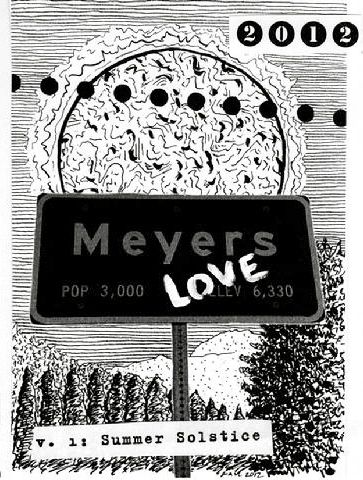
Manninen recently collaborated with Bona Fide Books on a zine about Meyers. It inspired him to learn more about the underground art form.

Manninen will offer a brief, interactive zine-making session at the art reception.

Bona Fide HQ is behind the Getaway Cafe in Meyers at 1069 Magua St., No. 4.


Hotel guest satisfaction drops to 7-year low

By Gary Stoller, USA Today

Overall satisfaction with check-in and check-out, food and other hotel services and facilities, such as pools and business centers, has dropped to its lowest level in seven years of surveys, J.D. Power and Associates’ annual survey of North American hotel guests says.

The survey — based on online responses from more than 61,700 guests who stayed in a North American hotel June 2011 through May 2012 — finds that overall guest satisfaction has declined from a year ago. It dropped seven points on the survey’s 1,000-point scale, to 757.

J.D. Power says guest satisfaction with “the underlying experience” at hotels has deteriorated much more than the seven-point decline indicates. Indicative is how satisfaction with rooms has dropped within a point of its lowest level in the past six years.

A drop in satisfaction with check-in and check-out services, and with food and beverage services, could be a result of the continuing impact of cuts in staffing made during the economic downturn, says Jessica McGregor, a J.D. Power senior manager.

Charging for Internet access also is a sore point. Guests who were charged for access had an average satisfaction score of 688 for costs and fees — 76 points lower than those who weren’t charged extra.

Read the whole story


Marriage in America evolving as people wait to say ‘I do’

By Anita Creamer, Sacramento Bee

She wore a brown floral dress for the ceremony. He wore his U.S. Army uniform, and after all this time, he still worries that it looked too rumpled to pass muster.

When Flo Swanson married Herm Dorion at Fort Lewis, Wash., in July 1942, the future of the world was uncertain – but they were convinced their future meant building a life together. Seven decades later, it turns out they were right.

“We’ve had a wonderful life,” said Herm Dorion, 94, who like his wife is a musician and retired educator. The couple live at the Atria El Camino Gardens senior community in Carmichael.

“I wouldn’t have had another person,” said Flo Dorion, 92. “We’ve had ups and downs, but we’ve been in love the whole time.”

While the Dorions have had an extraordinarily long marriage, it’s not unusual these days for older couples to celebrate 40, 50 or 60 years together. But in the future, marriages of similar duration will likely be rare.

These days, wedding bells are not ringing – at least, not as often as they used to. As a result, marriage in America has evolved. But into what?

For the Dorions’ generation, marriage was a bedrock of stability, the foundation of family life.

“That was the most unusual generation of the 20th century,” said Andrew Cherlin, a sociology professor at Johns Hopkins University. “They grew up in the Depression and the war. Afterward, the American economy was very strong. People were ready to turn toward home and family.

“The effect of growing up in hard times made them more likely to want a stable family life. That’s one reason we see so many long anniversaries now.”

In contrast, the demographic portrait of marriage today shows the upending of tradition.

Only half of American adults are now married, a record low, compared with 78 percent in 1950. While the divorce rate has leveled off, the marriage rate continues to drop: In 2010, 6.8 people per 1,000 entered new marriages, U.S. Census data show, compared with 16.4 per 1,000 in 1946, at war’s end.

And couples today are waiting longer to marry. The national average age of people marrying for the first time is 26.5 for brides and 28.7 for grooms. Researchers suggest the average ages are even higher in urban areas.

Statistically speaking, marriage has become the province of the high-achieving: Two-thirds of adults with college degrees get married, compared with less than half of people with only high school diplomas, the Pew Research Center reported. And people without college degrees are more likely to divorce.

“The people who can get good jobs are marrying and staying together,” Cherlin said. “Those are the college-educated people. Marriage is reflecting the socioeconomic polarization in society.

Read the whole story


Emergencies come in all sizes — are you ready?

By Mandy Kendall

Be prepared.

I was involved in a small accident the other day, nothing serious, just a fender bender. No one was hurt, but what struck me most (other than a rather large truck) was that life is unpredictable and things can go wrong just when you least expect it.

Both drivers were properly insured and, for once, I had all the right documents to hand. In no time at all my car was being towed to the body shop and I had a rental car. I had been as prepared as possible and things went as well as possible.

Mandy Kendall

However, the unexpected could end up being far more serious and, if you are not properly prepared, a lack of emergency preparedness could prove life threatening.

So this week’s focus is on tips for emergency preparedness — or ‘How to get ready for the unexpected”.

Plan routes – Imagine you have to evacuate your house quickly. Find two ways to get out of each room. If an exit is dangerous in its current state, try and work out how to make it safe (a rope ladder maybe needed for a second floor window or obstacles need to be cleared out of the way). You can make a game of it if there are kids in the house. Get the kids to draw pictures of the escape route from the house and show where they would meet you if you can’t leave together. Pick a place near your house and another outside your neighborhood in case it’s not safe to return.

Check other emergency plans – Check on your kids’ school website and with your workplace to find out about their emergency plan. If they don’t have one, maybe offer to help organize one.

Neighborhood – Check with your neighbors, share emergency plans and decide how you might all work together in a crisis. Decide who will check on elderly or disabled neighbors in the event of a local disaster. Find out who has expertise (like medical experience) or specialized equipment that might be helpful during an emergency.

Emergency kit – Other than the usual supplies found in an emergency kit (you can go here for a suggested list) it is also a good idea to have a list of prescription medications needed regularly, a spare pair of eye glasses, photo copies of important documents (driver’s license, insurance, etc.) or anything else you might need urgently for a few days after leaving your house without a chance to take anything with you. Also include at least one pair of shoes per person in the household as well as a change of clothes. Have all these items ready to carry out at short notice in strong packs or bags.

Contacts – Decide on an emergency contact outside your area for family to call to check on each other (with a mobile and a landline preferably), as it may be easier to call long distance following a local disaster. Share this contact with all family members.

Emergency numbers — Make a list of local and state emergency numbers and have a copy for the house and one for the emergency kit.

Pets – Find out in advance who would be prepared to take your pets should there be a household emergency. During a local disaster neighbors may be in the same predicament as you so make sure you know where the local animal shelters are. Visit Humane Society website or the Animal Safety segment on the Red Cross site.

Calendar – Set a date every six months to review emergency packs and stores to replace spoiled or expired supplies. You can use this time to revisit evacuation plans (to make sure someone hasn’t blocked that exit again) and check numbers and contacts are still correct.

Shut off valves – Make sure that all the adults in the house know where the electricity, gas and water shut off valves are. Just remember if you turn off the gas, you must get a professional to turn it back on.

First aid kit – One for the house and one of the car preferably.

First aid training – At least one member of the regular household should be trained in first aid. However, it’s a good idea to get everyone trained and local emergency services or service associations will often offer courses in your area. If you sign up to volunteer at an association like the Red Cross, you will often get training for free.

I know this can seem like a lot of planning and preparation, but that is precisely the point – when an emergency happens we don’t have the time.

Until next time. Stay safe.

Mandy Kendall operates Health Connective in South Lake Tahoe, which aligns wellness seekers with their ideal wellness provider. If you have questions, would like some advice, or would like to request some Qwik-e tips on any health and well-being topic, drop her an email at connect@healthconnective.com or keep an eye out on Lake Tahoe News for regular Qwik-e tips on how to make healthy changes one Quick and Easy step at a time.


Squaw’s village to turn into brew-jazz fest

Cold beers and hot music will come together at Squaw Valley at the 11th annual Brews, Jazz and Funk Fest that supports the Humane Society of Truckee-Tahoe.

Some of the nation’s most recognized jazz and funk legends will perform under the peaks of Squaw Valley, including headlining acts Orgone and Ivan Neville’s Dumpstaphunk. The Brews, Jazz and Funk Fest will take place Aug. 11-12 from 2-8pm in the Village at Squaw Valley.

Festival-goers can listen to continuous live jazz and funk music on two stages while sampling beers from more than 20 breweries including Deschutes, Lagunitas, Sierra Nevada and many more. Beers are $4 each, limited to ages 21 and older. A $5 entry donation to the festival is also requested. All proceeds benefit the Humane Society of Truckee-Tahoe.

The festival is open to all ages with well behaved dogs welcome on leashes.


Vacations no longer mean time completely away from work

By Jayne Clark, USA Today

If it seems like vacations aren’t as rejuvenating as they used to be, maybe it’s because more people are spending more time working when they’re off the clock. Or so say a couple of new polls.

Almost 60 percent of respondents to a survey out this week say taking a vacation doesn’t relieve their stress. And more than a quarter say they’re even more stressed when they return to work after taking time off.

The survey of 1,000 workers (both bosses and underlings) in a range of professions was conducted by Fierce, Inc., a leadership development and training company.

The findings are in line with a related survey reported in Talent Management magazine earlier this month that says more than half of U.S. employees say they will work during their summer vacation.

Read the whole story


‘War Horse’ — a theatrical sensation, moving book

By Kathryn Reed

LONDON – War is hell. And sometimes you don’t have much say about whether you will be a soldier. Your country says fight. You don the uniform or you flee and face prison.

But for the animals, well, they never have a choice. The cavalry charges on. The nays of the horses are not heard as a resistance, if they are heard at all. In WWI almost 10 million horses died on the battlefield.

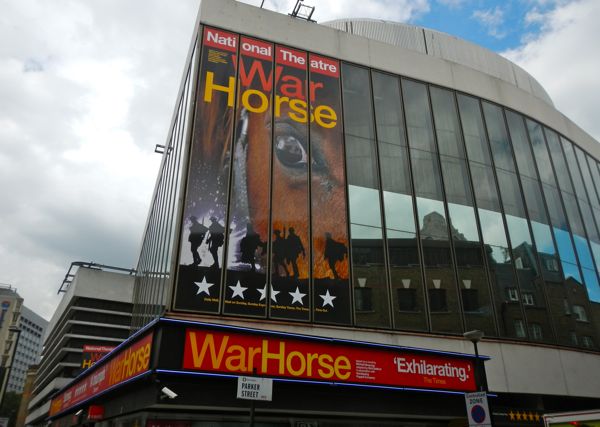
While "War Horse" is sold-out most days-nights in London, on occasion tickets are available at the theater the day of the show. Photo/Kathryn Reed

Joey. He was one of those horses that fought in the battles of World War I and fought even harder to live until the conflict was declared over.

While Steven Spielberg brought the story of Joey to life on the big screen, it was Michael Morpurgo who in 1982 published the book “War Horse” from which the screenplay was adapted.

In 2007, “War Horse” became a theatrical sensation in London at the National Theatre. Today it continues to be performed for sold-out audiences at the New London Theatre on the West End. It comes to the Curran Theater in San Francisco starting Aug. 1.

I cried during the movie, then earlier this month in London at the play and later during my trip abroad as I read the book.

The book, as I expected, goes deeper into this incredible horse’s life. In fact, it is told through his voice – what he sees, hears and feels.

Before the book begins, Morpurgo writes, “In the old school they use now for the Village Hall, below the clock that has stood always at one minute past ten, hangs a small dusty painting of a horse. He stands, a splendid red bay with a remarkable white cross emblazoned on his forehead and with four perfectly matched white socks. He looks wistfully out of the picture, his ears pricked forward, his head turned as if he has just noticed us standing there. … those who look more closely will see, written in fading black copperplate across the bottom of the bronze frame:

‘Joey. Painted by Captain James Nicholls, Autumn 1914.’

“His story is written so that neither he nor those who knew him, nor the war they lived and died in, will be forgotten.”

While the book is my favorite of the three formats of “War Horse”, the play is magical. It’s astonishing to see the horses “come to life” through puppetry.

When I was told puppets were involved, I envisioned strings from the rafters. It’s nothing like that.

In fact, these horses in many ways seem real. The puppetry does not distract from the show. Three people operate each horse – two underneath, and one at the head.

I suppose it took some imagination to be convinced these were horses, even galloping at times, but it was unconsciously that I convinced myself.

“War Horse” is definitely a book worth reading and a play worth seeing.


Beach bash to raise funds for Tahoe man’s medical care

In May, Lake Tahoe resident Sean Riley suffered a traumatic brain injury as a result of a succession of blackouts and falls.

Sean is an off-road tour guide for Lake Tahoe Adventures and his wife, Georgette, works for the Lake Tahoe Visitors Authority and Lake Tahoe South Shore Chamber of Commerce.

Sean has been hospitalized all month, but plans are to bring him home soon. He is doing well, but does have some issues with comprehension and memory as a result of the injury, and has a long road to recovery requiring extensive therapy, home supervision and care.

Not only is the care incredibly expensive, it is also not subsidized by programs Georgette has been applying for. In addition, she has had to decrease her work hours (and income) to travel to Renown Medical Center in Reno since the May incident.

On Aug. 15 from 5-8pm there will be a Beach Bash Benefit at Zephyr Cove Resort to help the family with the ongoing care expenses, which are anticipated to be as much as $2,000/day until Sean’s condition improves. There will be a beach BBQ dinner with live music and a no-host bar, silent auction, live auction, and raffle. Funds raised will be used to help pay for Seans’s continued medical and therapeutic care.

For more information about donating, click on the form; for information about the event, click on the flyer.